
Episode 489 ·
Discipline & Perseverance with Joel Beasley (Hosted by Steve Sponseller)
Today we have a special episode with Steve Sponseller, host of the Tech Leader Talk Podcast interviewing Joel Beasley. Tune in to hear about how Joel learned to code while recovering from a car accident, top lessons Joel has learned from interviewing hundreds of executives, and how the Modern CTO team has started producing podcasts for other companies.
All of this right here, right now, on the Modern CTO Podcast!
Check out the Tech Leader Talk Podcast now at https://stevesponseller.com/blog-page/
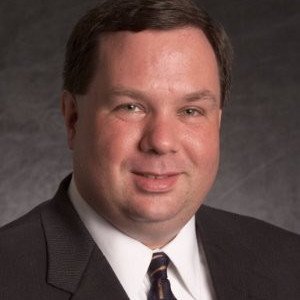
About Steve Sponseller:
I help technology companies create strong and secure intellectual property portfolios that provide a competitive advantage and protect their most valuable assets from being stolen.
A strong intellectual property portfolio is critical for technology companies, which rely on innovative ideas to survive. I help companies identify and protect broad ideas that can disrupt their industry and position themselves as a market leader. I also help companies implement systems for tracking and evaluating all inventions that assist in creating a diverse intellectual property portfolio that protects the company’s core technology and provides defensive protection against overly aggressive competitors.
I believe that every person on your team has the ability to generate creative ideas – and business leaders need to identify and develop those ideas to grow their business. I have seen abundant creativity by working with entrepreneurs and creative people for over 20 years – as an Electrical Engineer, Intellectual Property Attorney and Innovation Strategist. By implementing the proper systems, your organization can benefit from the collective creativity of your entire team.
About the Tech Leader Talk Podcast:
The Tech Leader Talk podcast brings together successful technology company leaders, entrepreneurs, and experts from around the technology industry to share successes, challenges, and examples of what’s working now to build strong tech companies.
Tune-in each week as Steve Sponseller interviews a new leader in the tech world.
Transcript
(Intro Narrator at 00:00:03) Hello, my friends. Today we have a special episode with Steve Sponseller, host of the Tech Leader Talk podcast, interviewing Joel. Tune in to hear about how Joel learned to code while recovering from a car accident, top lessons Joel has learned from interviewing hundreds of executives, and how the Modern CTO team has started producing podcasts for other companies. All of this right here, right now on the Modern CTO podcast.
(Joel Beasley at 00:00:34) Here we go. This is the Modern CTO podcast.
(Steve Sponseller at 00:00:47) Hi, this is Steve, and welcome back to another episode of the Tech Leader Talk podcast. Today I'm looking forward to talking with Joel Beasley. Joel is the host of another technology-based podcast called Modern CTO podcast. He's got over 450 episodes and talked to a lot of fantastic guests.
(Steve Sponseller at 00:01:08) And his podcast has over 75,000 active listeners every week. So I'm excited to talk with him and learn what he's learned from the different tech leaders that he's talked with and what he's learned over the course of several years running his podcast. Joel's a CTO himself. He's the current CTO of Leaderbits, which helps train people to be successful leaders, and that company actually grew out of his Modern CTO podcast.
(Steve Sponseller at 00:01:37) So it'll be interesting to hear how that happened and how that all fell into place. Leaderbits has trained over 2,000 leaders in companies around the world. In his spare time, Joel likes to play the drums and the guitar, and he loves spending time with his wife and daughter. So thanks for joining me today, Joel.
(Joel Beasley at 00:01:56) Yeah, thank you for having me. And the family's grown since we wrote that bio. Now we've got a wife, a daughter, a son, and another son that will be here in September.
(Steve Sponseller at 00:02:06) Wow, you've been busy. You're going to grow exponentially.
(Joel Beasley at 00:02:10) Yeah, let's make podcasts and babies.
(Steve Sponseller at 00:02:14) Okay, well, congratulations. Thank you. I have twin daughters who are both seniors in high school, so we're at kind of a different phase, trying to get them out of high school and onto their next step in college in just a few months.
(Joel Beasley at 00:02:26) Oh, absolutely.
(Steve Sponseller at 00:02:27) It's exciting. All the ages are exciting. They're all different. But so you're a CTO and you've created the Modern CTO podcast. How did you get there? What led you into technology, and how did you land as a CTO today?
(Joel Beasley at 00:02:44) So I really got into technology because of my dad. Super common story, right? The cool thing that he did with technology was he was in the Air Force and they put the GPS systems into B-2 stealth bombers. It was one of the first planes to get a GPS system. He did that for the Air Force. He then came out of the Air Force and started doing freelancing as companies would get their first computer systems and different things like that. And I had some siblings, and so my mom would say, "Take one with you." So nights and weekends, I was in different types of offices around different types of technology.
(Joel Beasley at 00:03:17) And then I was really interested in it, everything from Carmen Sandiego to writing some basic code. And fast forward to about age 12 and I got hit by a car, and I was in a wheelchair for about a year. So I came out of school, and I didn't have to actually go to the school. They just sent a workbook home with me. But the silver lining there is I figured out that I could make money on sites like Scriptlance. They didn't care that I was 12 years old at home, laying in bed with broken legs. They just wanted the code written. So I started making money that way. And then through high school, I ended up building some real estate software because my mom was a real estate agent. And I would hang out at their office and I'd solve their problems by, you know, they would complain, I would write some software, and they'd be happy. And so that worked out pretty well. That ended up becoming a collection of tools that then became a company where I grew engineering teams to teams of teams, so leaders of leaders. So I went through a quick progression from individual contributor, leader of a team, leader of multiple teams, training people to lead teams and multiple teams. And then ended up exiting that and built a couple relationships during that exit and started sharing with some other people about the experiences that eventually became a book I was writing.
(Joel Beasley at 00:04:36) And then before I was publishing the book, I started reaching out to different CTOs to sort of bounce the advice and the experiences I was having off of them before I published it because I didn't want to look stupid. And those conversations were really fun, and I didn't want them to stop. So we turned it into a podcast.
(Steve Sponseller at 00:04:55) Okay, interesting. Now how long ago was that if you're at 450?
(Joel Beasley at 00:04:58) Five years.
(Steve Sponseller at 00:04:59) Okay, that's good. You're way past the average podcast that has seven or eight episodes, right?
(Joel Beasley at 00:05:05) Yeah, that's right.
(Steve Sponseller at 00:05:09) So I'm curious. When you started the podcast, you said it was because you enjoyed talking with tech people, and that was the motivation behind this one too. Was your plan then to figure out some kind of another business to develop, or did that just kind of pop into your head someday after you'd done some episodes and started to see some patterns maybe among your guests?
(Joel Beasley at 00:05:30) Yeah. So the reason why I was doing the episodes is because I wanted to have conversations. But from a business standpoint, the driver for doing the podcast is I thought I'd build a lot of relationships, and then that would open up more opportunities for me because I didn't have a whole lot of relationships. I just had that one exit, and I knew a handful of business people. But I saw other technology people having more success and growing faster.
(Joel Beasley at 00:05:56) And the thing I found that was common between these other people that I didn't have was a good network of relationships. So then the podcast made a lot of sense. When we started doing the podcast, it started to get popular after a couple months of doing it. And I mean, at one point we were doing two, three episodes a day. And I was losing my voice, and my wife is like, "You have to back off because you need to be able to talk to me when you get home. You have to have a relationship." So I backed it down to one a day for several years, and we grew it like that. So then it started to get popular. One of the guests came on one day and said, "Hey, I heard the advice that the CTO of NASA or Microsoft gave on your show."
(Joel Beasley at 00:06:40) "And I've got 50 leaders spread across 10 countries, and I want them to actually take action on that advice. Can you clip the three-minute thing of him saying that, and we can send it out to my people and they can do something with that?" We ended up creating these leadership challenges. I built a small Rails app.
(Joel Beasley at 00:06:58) I asked him if he would pay for it. He's like, "Yeah, I'll pay for it. I have a leadership budget, and we can do that." So I said, "Alright, well, you're willing to pay for it? Are you willing to sign a contract and pay for it?" He said yes. So we ended up doing one pilot challenge, and then we ended up signing him up for a year and built him 50 different challenges. Leadership challenges. Basically, a leader gives some sort of insight, and then we challenge the user to go, or the participant to actually go implement this advice, like maybe giving credit to your team, and you actually will go give credit to your team, but you do it in specific steps.
(Joel Beasley at 00:07:30) And they come back into the system and say how it went. So then that started to do really, really well, and I ended up raising $500,000 from the largest VC in Florida called Florida Funders. It's a great VC. Really enjoy them. And then COVID happened.
(Joel Beasley at 00:07:46) And that part of the business pretty much tanked because nobody needs leadership training to run their business. It's like a luxury. And so when you're faced with making payroll or having leadership training, payroll wins 10 times out of 10, right? So that taught me a lot in the business world about designing a model where other businesses are closely dependent on yours to operate and to be successful.
(Joel Beasley at 00:08:13) So when we lost all that revenue right around COVID—and just to be clear, we still have two or three clients on Leaderbits that just operate it, so it still is out there, but we don't actively have a sales team around it. But when COVID happened, we were like, "We have to make a change. We have to change what we do." And at the time, we were two years and 200-plus episodes into the podcast and people were constantly asking us to advertise. And we were just telling them no because we didn't need to because we had this other way to monetize it. So we created three different sponsorship packages and the rule was there could be no pre-roll, mid-roll, or post-roll ads. No interruption to the content. The only thing they could do is pay to come on because we had a waiting list of six months. And if you have a product release, you can't wait six months to come on the show. You need to come on now. So we created some sponsorship packages where we promote their show more on our—we run more of their clips on our social networks. We give them priority scheduling. They can come on whenever is convenient for them, and we adjust our schedule accordingly.
(Joel Beasley at 00:09:22) So we created these sponsorship packages, did pretty well, sold about $40,000 the first month, about $500,000 the first year and $1 million the next year. And then people started asking us to make them podcasts. Like the sponsors that kept paying us, and then they're like, "Well, it's working. We're advertising on your show and it's working. Can you make us a podcast?" So then we started doing that, and now we have about seven, eight clients over there where we actually make podcasts for other companies.
(Steve Sponseller at 00:09:51) Interesting.
(Joel Beasley at 00:09:52) So it's evolved quite a bit. And I just kind of wake up every day and focus on cash flow and building really great products.
(Steve Sponseller at 00:10:00) Well, that's one of the fundamental business things that you responded to—what your clients and what your listeners wanted. You know, giving the little sound bites and then turning those into activities they can perform, and then as people asked you to do podcasts for them, you do that. So do you do all the production and scheduling and interviewing and everything for these different podcasts?
(Joel Beasley at 00:10:22) Yes. We have about, I think, 13, 14 employees right now.
(Steve Sponseller at 00:10:26) Okay.
(Joel Beasley at 00:10:26) And we use our Modern CTO podcast as, you know, for us we already know all the processes because we've been doing it for so many years, right? And so we just hire more producers and train them. They come train on the Modern CTO podcast, then we start giving them client podcasts after they learn how to operate ours with our standards, and that standard stays consistent.
(Steve Sponseller at 00:10:49) Okay. So you've had a lot of different business experiences and the path that you followed. If you look back on it now in hindsight, what would you do differently?
(Joel Beasley at 00:11:01) So there are a couple different areas. First one I would do differently—let's talk about some of my failures, right? This didn't fail. This pivoted pretty well based off of what I was experiencing, but that's only because I failed way, like a whole lot before, right? The reason why I had success the first time was because I was really close to the customer. I was close to the end user. I was in the office with my mom and my stepdad and their whole team of real estate agents, seeing their problems firsthand. I would write some code and I would watch them, see how they used it, see how they messed up, what they intended to happen versus what actually happened, you know, because there are different levels of computer users, obviously, and an engineer is different than a real estate agent as far as proficiency. But I didn't realize that at the time. That wasn't necessarily intentional. That was just what had happened.
(Joel Beasley at 00:11:53) And then I thought that company did really well and I sold my interest in it and that was great for me. And so I go, "I can do that again," right? So now I'm sitting in the house I built, right, because I'm not living at home anymore. I took that money, built a house and all that stuff, and I'm sitting in the house I built, alone, trying to make the next product.
(Joel Beasley at 00:12:12) And I worked on it for months and months and months, spent all my money, and the product is horrible. Well, the product was—it was great from—it looked pretty and it worked. It was horrible because it didn't solve a problem that was large enough for people to pay money for. That's the difference. That's why I was so clear with that when I was talking about Ben becoming our first customer with the leadership company. We signed contracts first, right? So I made sure that they were actually willing to pay for it. And I've actually seen that mistake happen with a lot of people. They'll create something and, you know, Steve, if you tell me you're creating something and I like you, I'm going to be like, "Yeah, you know, that's a great idea." And then you have to ask me, "Are you willing to pay for it?"
(Joel Beasley at 00:12:55) And then I'd be like, "Uh, maybe." And then if I said yes, you'd be like, "Are you willing to pay for it right now?" And if it's not a large enough problem for me to give you money before the solution exists, then I wouldn't go into that business. That's just me personally. It has to be a large enough problem because customers do that all the time. I see it happen in startups all the time where the companies will contract for the software before it's actually out.
(Steve Sponseller at 00:13:22) Yep. Yeah, that's a good indicator when they pull out their wallet and plunk down some money.
(Joel Beasley at 00:13:26) Yeah. That would have saved me a lot of pain. Human-wise, we can talk about that if you want.
(Steve Sponseller at 00:13:34) Yeah. Do you want to go back to from engineer to individual—from individual contributor to team lead, or do you want to go from not having employees to having employees?
(Joel Beasley at 00:13:44) I guess the employee growth, the latter, the employee growth.
(Steve Sponseller at 00:13:48) Employee growth? That'd be interesting. Yeah.
(Joel Beasley at 00:13:50) Yeah. So I wish I would have learned how to fire people better and how to hire people better. And if you're doing a really good job at hiring, you don't have to do as much firing. But it's really different when it's your own money and the options are get the right people together or be broke. So that takes it to a whole other level. I'd say I burned through a lot of my savings not firing people that should have been gone. And then it got to the point where I had no choice, and I sort of developed that skill. Another thing I developed that helped me a lot was perspective. And I mean, I say I developed, but I gained experience, but I was always researching and reading other people's stuff. And one of the things is this perspective of letting someone go.
(Joel Beasley at 00:14:38) So let's imagine you have somebody—let's say we've got to get specific with this scenario. Let's say I hire somebody, and I think they're going to be good at the job because of A, B, and C, and then they come into the job and they're not performing well at all because of this other thing I didn't even see happening, right? In that case, and let's say it's a non-starter, like it's an absolute requirement, I just didn't identify it and this is just not going to work. I would let that person go and I would take ownership of that.
(Joel Beasley at 00:15:08) I'd be like, "It's my mistake. I hired them for the wrong role," and I would let them go. Another thing I learned with letting people go too is be very short and basically say, "Today is going to be the last day at the company." The reason is, at first I was making this mistake, Steve, of like, I would—I'm a storyteller. I like to tell stories, right? And so I would bring people into my office and I'd tell them this whole story of how I thought, like, this whole thing, and they're sitting there thinking they're consuming some sort of story, you know, with the boss or whatever. And then they kind of were like, "Wait, am I—are you letting me go? Because you're making all these points that lead to me going."
(Joel Beasley at 00:15:53) And so I saw that happen a couple times, and I started talking to other people about how to avoid that. And I found that if you just say, "Today is going to be the last day at the company." And then the other thing I learned is they'll either yell at you and get really upset, which is normal human reaction, or they'll be nice and leave, which is the rarest. And then I'd say the most common is they want to dig into it. "Well, what exactly?" And so I learned do not dig into it. Set up—say, you know, find some sort of line to say that basically lets the conversation end so that they can go take care of their life and don't get into a specific tit-for-tat type deal.
(Joel Beasley at 00:16:38) And they'll try to lure you into that because they want to know, but then just say, "You know, we'll talk about it. We can set up a meeting next week and go over it. But right now I'm going to get your paperwork processed and let you take care of your stuff." Because you don't want to engage them in that moment because that's the moment where the emotions are the highest.
(Steve Sponseller at 00:16:55) Yep. Absolutely. Yeah.
(Joel Beasley at 00:16:57) Yeah. Okay. This is all my personal stuff, by the way. This is just my experience, you know? And yeah, that's good.
(Steve Sponseller at 00:17:05) I have heard similar approaches from other people, so I think that seems to be a strong approach.
(Joel Beasley at 00:17:12) Yes.
(Steve Sponseller at 00:17:12) So the Leaderbits company was kind of created based on some of the trends or the habits you saw across multiple guests. What are some of those most common habits you see of successful leaders in the tech world, the commonalities?
(Joel Beasley at 00:17:28) Yeah. They really care about their people, like in a genuine way, not like in a "I think I should care about my people" way. Like they actually care. They're consistently improving and looking for ways to have an edge. They're usually people of above average discipline, almost always, and they're all people you would admire, you know? And I'm talking about the top 1% of the top 1%. That's how I try to—because I talk to great leaders every day. So I've kind of got past the "what makes a great leader," and then got into the "what makes the backflip exceptional," the best leaders of the best leaders, and looking for sort of those principles. And they just have a lot of experience and they're really great people. And I don't really know how to go a whole lot deeper than that, but they're trying and they care.
(Joel Beasley at 00:18:21) They make you feel heard. They're respectful of you. They're intelligent. They understand their market that they're operating in. They understand how the dollars—how everything connects back to revenue. So I call it "hops from revenue." So like, if I'm an engineer and I'm making a backup module, right, and it's maybe going to make recurring backup of the database or something, and I walk up to that engineer and I'm like, "Hey, you know, how does this connect to revenue?" And most of them won't have an answer for you. But if you talk to some of these great leaders about how things connect to revenue within their organization, it's super, super clear. And then they're able to prioritize projects and things that actually help the company achieve its revenue goals, and that creates a more stable company. So yeah, that is one skill that I've seen at the top tier of leaders.
(Steve Sponseller at 00:19:17) You mentioned that a lot of the top leaders truly care about their team, their employees and team members. So what I was wondering is, of these leaders who are so good at making their employees feel wanted and valuable, how do they do that? What are some examples of some people you talked with that were really good at that?
(Joel Beasley at 00:19:38) So one of the ways they do it—I hope this answers your question—but one of the ways that they do it is they make sure that there's a good pairing between the drive of the individual and the needs of the company. So if I have certain—like they understand the motivations in their team's lives. Like, what is driving this person? Do they just have kids and they want to provide for their kids? Are they in their early twenties maybe, and they really love travel and what they want to do is finance their travel habit? Like, what is driving this person and what does the company need? And if those two things are in line, that's a really great sign. So awareness of that.
(Joel Beasley at 00:20:20) Another thing I've seen is they have, you know, exceptional ability for emotional intelligence to understand, I guess, what I would call the energy of the team. Is the team up? Is the team down? And then they'll have tools to actually, you know, boost morale. Or if things are really crazy, they can sort of level it out with some focus on some work. So they'll understand the energy of a team and be able to raise that or lower that as they need.
(Joel Beasley at 00:20:48) And yeah, those are two things that come to mind that I've seen. And one of the things that I like about this, the reason I'm able to talk about this stuff without a lot of preparation, is because over the course of these five years, I've had—I've been experiencing enormous amounts of problems. And I talk about those problems with the guests who are way more experienced than me. And then I get different solutions. So I'll ask, you know, four or five different top people how to handle this. And then I'll go experiment with it. And then I'll just take away my experience of what worked the best for me.
(Steve Sponseller at 00:21:24) Interesting. So your podcast guests can be part of a board of advisors or something kind of for you, or—
(Joel Beasley at 00:21:29) That is exactly it.
(Steve Sponseller at 00:21:31) Okay. Yep. It's interesting. Yep. So if a listener today is somebody who's in a leadership position, but maybe they're fairly young or new to it—not necessarily young age-wise—how do they start improving, or how do they kind of maybe evaluate where they're at and figure out how they can get better and become one of those exceptional leaders that you've talked about?
(Joel Beasley at 00:21:56) I'd say to start—well, so let's define leadership. There's so many ways, but my favorite is John Maxwell's: "Leadership is influence." And a lot of people think influence in a negative way, or at least I did at first when I heard it. But really, it's just being valuable to other people, right? How are you being, you know, valuable to other people? So you should ask yourself that: How am I useful to this team? To be a leader, there's two types of leaders. There's the people that you want to follow and there's people that you have to follow because they've got the title, right?
(Joel Beasley at 00:22:31) And so you want to become one of the people that you want to follow. Everyone listening already knows there's a person in their circle of friends—and they might be that person—but there's a person in the circle of friends everybody kind of looks to. When humans start to group, natural leaders just emerge. And so being aware of what the team needs, how you can become more valuable to that team. The one basic way, if you're an individual contributor, that you can do that is you can literally go to your manager and say, "You know, what could I be doing to become more valuable to the team?" And most often they're going to brush it off at first. "I don't know. Do your job." Because you typically catch them off guard. And then what you should do is you should dig a little bit deeper to figure out what that thing is that you can work on. Give them some suggestions. Could I be better at communication? Is there a time where I let you down? Or try to figure out what it is that you can be working on.
(Joel Beasley at 00:23:43) And then I'd say a lot of people can do that. A lot of people don't do the next part, which is actually go do—get better at that. Read books. Reach out to people. Find mentors and actually actively become better at that. And then the few people who do that don't do the last part. So a lot of people that get through, "Hey, what can I do to become more valuable? Okay. Communication. Alright, I'm going to go learn how to become better at communication. Okay, I did that." And a lot of people stop there, and they don't do the third thing, which is actually going back, making sure that that person that gave you that insight of how you can improve understands that you're on this journey and hears updates about it.
(Joel Beasley at 00:24:21) So the way it would roll out for me is if it was communication, I would go back and I'd read a book on communication, then I'd send them an email or something or talk about it in my one-on-one. "Hey, I read this book on communication. I learned A, B, and C." And then I would just keep doing that and just keep improving and then share what my experiences are on, you know, things I tried from the books that didn't work, that did work, ask them some questions. And just basically what you're doing is you're showing them that you care and that you want to be there and you want to grow and improve. And just by doing that, welcome to the 1%. It does not take much.
(Steve Sponseller at 00:24:47) I was just going to say that in the organizations I've worked in as an employee and the ones that I work with that are clients, that's a rare person that does all three, and it's not that difficult. And you will improve. You're improving yourself whether it's with that job or something in the future. But yeah, by doing that, you really can set yourself apart and learn. And hopefully, if you move up into more leadership, you're modeling that then for other people in the organization to maybe do the same thing and make a stronger team.
(Joel Beasley at 00:25:16) Yes. Absolutely.
(Steve Sponseller at 00:25:19) There's a lot of changes, obviously, with COVID, and remote work has become even more popular. It was already an issue in a lot of tech companies distributed around the world. But how have you seen that leaders have had to adjust or make changes to handle remote workers in a tech environment?
(Joel Beasley at 00:25:40) So I found that when all this was happening, we had the show going, right? So I got to talk to the CTO of Ford as they were converting their plant to make the generators or what they call the heart respirator things—I don't know—some medical device.
(Steve Sponseller at 00:25:54) The ventilators.
(Joel Beasley at 00:25:54) Thank you. See, that's why Adam's here. So I got to talk to them, and then I talked to people about, you know, what their companies were experiencing. And there were a couple things that I heard. The first thing I heard was in technology, we're already accustomed to working remote, so it wasn't a big stress. Often the CTO became a source that the whole company leaned on to be like, "How do we get our other departments remote? Like, you've got some percentage of your workforce remote or you've had experience." It's really common in technology to have experience working remote. So sales was going to the CTO, like, "How do we get this to happen?" You know? Or HR or whatever the department was, trying to figure out how to get it to happen. So I'd say, strategically, the CTO was more useful in that scenario if they had the remote work experience.
(Joel Beasley at 00:26:29) And the other thing I saw was then the amount of work that came from that—the new laptops, the issuing of devices, and all that work, security work that came from it, making sure people's, you know, security is up and up on their home devices. And a lot of work came out of getting the whole company to be able to do their functions remotely. And so those are the two areas that I saw—that I heard repeated a lot across, you know, basically every interview that year. People wanted to talk about COVID.
(Steve Sponseller at 00:27:20) Of course. Yes. It was the topic. Yes. So what's your biggest challenge right now in your business?
(Joel Beasley at 00:27:29) So right now, we'd say the sponsorship business is sort of capped out. You can only do so many sponsored episodes, and we're selling them all, right? So we're doing well there. That's our base foundation. Building podcasts for other companies is doing well. We just got through the first, you know, seven, eight of them and learned the processes and developed all that. And now we are getting—we're at the point where salespeople, like hiring more salespeople. So that's one of the things that I'm focused on a whole lot.
(Joel Beasley at 00:28:11) The state of the company now is really great because it took a painstaking four or five years to get the right people in place. So, you know, like Chloe, our head of sales, and Adam, our head of production. Like, I'd say the company really started with—there were many people there before them. But those two people had these core attributes that I could build on top of, and it took me a while to sort of realize that the people make the numbers in the sense, right? Like you have to have really, really great people that are doing things that they love in line with what they want to do long term, and they should be like, "I love this job. I can't believe I get paid to do it," right? If you can make that happen, that's magical. So they're rare people. And so, you know, I do a lot of interviews these days of finding different people because they have to be that really great, awesome person in every single department at the company. And because of that, it just takes a little bit longer to grow the company, to find the right people.
(Joel Beasley at 00:29:05) And right now, you know, we are dealing with the inflation concept. So people are competitive, right? And there are companies that have billions of dollars of cash on hand, and they can inflate the base salaries as much as they want, where we cannot. So what we're doing—I'm conservative—and what we're doing is we're building a company that will last. So we gave an inflation raise and everything last year, but we're not blowing things out of the water, paying ridiculous amounts because we have to have these people now. We're like, "We'll just let the business grow at this pace," because what will happen in an inflationary period if you follow Ray Dalio's—there's always deflationary deleveraging, right? Deflationary period in which we'll enter at some point. And then what happens is people get laid off because they're too expensive, and they get rehired for less money, and the market sort of floods with people, and businesses go out of business and, you know, all that type of stuff happens.
(Joel Beasley at 00:30:08) So I've been really clear with the team and our—and over-communicating, which is a core principle of ours, with the team that this is what's happening in the economy, and this is how we're going to navigate through the next, you know, two or three years as these cycles play out. And we're designing all of our cost structure. We save money as a company, and we design everything to provide the most stability possible while also being able to take a portion of that cash and make, you know, kind of crazy bets, right? But they're not, as Jeff Bezos says, "bet the company" bets. They are calculated risk bets.
(Steve Sponseller at 00:30:48) Interesting. That is an interesting situation that we're in. All companies are in today trying to, you know, find the right people, retain them. And—
(Joel Beasley at 00:30:48) Yes.
(Steve Sponseller at 00:30:48) Sounds like you have a good approach there, yeah, without breaking the bank or giving them a salary that you're going to have to cut or just lay them off when things hopefully normalize someday. So—
(Joel Beasley at 00:31:07) Okay. This one girl, Mary Beth Westmoreland, she's one of my favorite CTOs I've spoken to. She said something that has just stuck with me forever, and it is, "Don't shop hungry," in reference to hiring. So, like, you go to the grocery store and you're hungry, you get a bunch of junk food.
(Joel Beasley at 00:31:25) Or if you go hiring and you're hungry, you're gonna get a bunch of junk food. You have to do it very—you have a really good team of people, make that the bar, and then just go about your process and make sure people match. And don't just hire somebody because you have to hire somebody to fill your quota.
(Steve Sponseller at 00:31:43) And if you need to reprioritize or slow down some activities to meet with the staff—
(Joel Beasley at 00:31:47) Oh, absolutely.
(Steve Sponseller at 00:31:47) Meet with what the staff can do—that's probably the smartest long-term play.
(Joel Beasley at 00:31:51) Yes. And because you're a professional development tech leader type podcast, is it cool if I share my favorite leadership quote?
(Steve Sponseller at 00:31:59) Yeah. Absolutely.
(Joel Beasley at 00:32:00) Okay. So this was a big turning point in my life when I heard this. I was at a really low point. And then the next day, I flipped on YouTube, and this guy from like the 1970s—he's not alive anymore, but he was a motivational type speaker, business speaker. His name was Jim Rohn.
(Joel Beasley at 00:32:20) And he said, "The most frustrating thing in the world is expecting above-average results without being an above-average person." And I was like, whoa, because at the time, I was expecting Zuckerberg results, and I was not being a next-level person. You know? I was being average or below average in my habits and my routines and my health and my effort I put in.
(Joel Beasley at 00:32:46) And, you know, people will say often when I'm out—you know, before COVID, when I was doing a lot of speaking at conferences and such—people ask me, "Oh, what's the one thing I can do to become a better leader?" I usually say go to the gym. Like, go develop, go work out, get your health up, and then get your discipline up, because your discipline is not segmented. Like, your discipline bleeds through all areas of your life. Right?
(Joel Beasley at 00:33:10) So you can find an area of your life that you don't have discipline, and you can raise it there, and it's going to raise your discipline everywhere. Things like, you know, not cutting corners or being consistent with improving that communication, because consistency is the thing. Like, everybody knows how to lose weight. Right? Everybody knows all of these things, but the hard thing to do is do it consistently.
(Joel Beasley at 00:33:33) It's not really a knowledge problem. It's a discipline and consistency problem. Right?
(Steve Sponseller at 00:33:37) Yeah.
(Joel Beasley at 00:33:38) And so when you realize that that's the difference between below average, average, and greatness—is their ability to be consistent—then you've figured out the one thing you can hammer on in order to rise up quickly.
(Steve Sponseller at 00:33:54) That's great advice. I've listened to quite a few things from Jim Rohn. He's a fantastic speaker. He's got books full of great quotes to live by.
(Joel Beasley at 00:34:04) That's how I learned sales, by the way. That's how I learned how to do sales, because I only learned sales in the past five years. All my businesses before, I was just the tech guy who built the product and built the teams. I had a business partner. So this is the first time that I've done the business part of it. So that's where I learned sales, because I didn't have a whole lot of money at the time to go spend on expensive sales training, but YouTube had old 1970s, '80s videos of Jim Rohn giving sales training. And I just—he was talking about selling vacuums door to door. That's how I learned how to do sales.
(Steve Sponseller at 00:34:36) Yep. Yep. He's got some great stories. Yeah. Well, we're kind of coming up on our time for this episode, and I just want to thank you for coming. You shared some fantastic information for everyone. What's the best way for listeners to either get in touch with you or learn more about you if they want to? Obviously, I'll have a link to your podcast in the show notes, but how else could they reach out to you?
(Joel Beasley at 00:35:02) Yeah. So if you just type into Google "Modern CTO," it'll come up. There's a book and another book coming soon. And then in the podcast app, if you just type "CTO," it'll be the top result. Basically a yellow background, you'll see a bearded guy. This COVID beard, but it's continued after. So that's it. And if you want to, you can also hit me up on LinkedIn as well.
(Steve Sponseller at 00:35:30) All right. I'll get all those show notes or all those links in the show notes so people can find that easily. So thanks again. It was great. I didn't mention at the very beginning that I've had a few other guests on who are podcast hosts themselves, and some became podcast hosts after they're guests here. But you're definitely the one who's got quite the following and quite the—making the impact. And it was a pleasure to have you on and to learn from you and the leadership things that you've seen both in your own business, as well as the guests that you've interviewed. That was valuable to me, and I know it's valuable to listeners. So I'm glad you could take the time to talk to me today.
(Joel Beasley at 00:36:07) Thank you for the kind words, Steve. Thanks for having me. Thank you so much for listening. And if you found this episode useful, please share it with a friend or colleague who you think would get value from it. And if you have topics that you'd like to hear discussed on the podcast, either add me on LinkedIn or send me an email: [email protected]. Every time I get an email or LinkedIn message, it absolutely makes my day and inspires me to keep going.