
Episode 508 ·
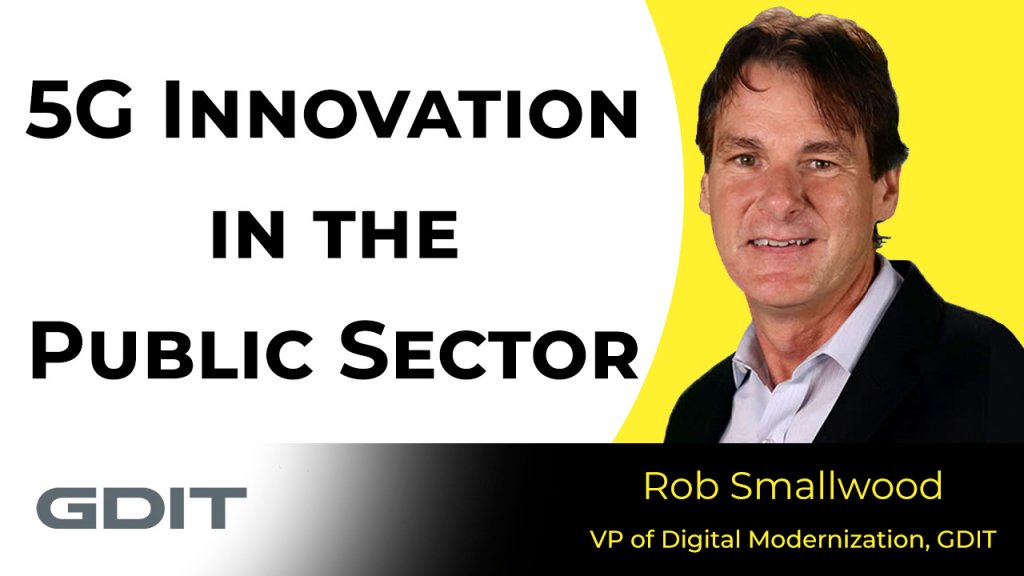
5G Innovation in the Public Sector with Rob Smallwood, VP of Digital Modernization at GDIT
Today we’re talking to Rob Smallwood, VP of Digital Modernization at GDIT; and we discuss how 5G technology is enabling incredible innovation at the edge in government, military, medical, and other applications, how to make remote collaboration feel closer to the real thing, and why being curious is one of the best traits you can have for your career.
All of this right here, right now, on the Modern CTO Podcast!
Check out more of Rob and GDIT at https://www.gdit.com/
Learn more about Lemon.io (mentioned in this episode) here https://l.lemon.io/moderncto, and check out our episode with Lemon's founder, Aleksandr Volodarsky here https://moderncto.io/aleksandr-volodarsky/
About Rob Smallwood:
With over 25 years of experience, education, and training in information technology, electronics, programming, and nuclear energy, I possess the necessary leadership, communication, organizational, architectural, and technical skills required to manage and transform large IT programs and provide overarching IT architectural strategy, direction, and design across all infrastructure technologies. I have proven expertise in all facets and technical disciplines within information technology, both managerial and technical, and have always established myself as a leader and mentor for my teams. My exceptional oral and written communication skills allow me to knowledgeably discuss technical details with my engineers as well as communicate strategy, design, and organizational change concepts to senior C-Level executives as their trusted advisors. In my leadership roles, I have consistently been able to develop and lead highly productive and efficient teams and drive the development of effective and efficient processes and procedures to enhance, automate and streamline project management, engineering, and operational tasks. I realize that the greatest successes are achieved as a team and result from the summation of each team member’s success. Led the development of ITSM4Gov which takes a Lean user-centric service management approach to drive the mission and user productivity.
About GDIT:
We are GDIT. The people supporting some of the most complex government, defense, and intelligence projects across the country. We deliver. Bringing the expertise needed to understand and advance critical missions. We transform. Shifting the ways clients invest in, integrate, and innovate technology solutions. We ensure today is safe and tomorrow is smarter. We are there. On the ground, beside our clients, in the lab, and everywhere in between. Offering the technology transformations, strategy, and mission services needed to get the job done.
Transcript
(Joel Beasley at 00:00:03) Hello, my friends. Today we're talking to Rob, VP of Digital Modernization at GDIT, and we discuss how 5G technology is enabling incredible innovation at the edge in government, military, medical, and other applications, how to make remote collaboration feel closer to the real thing, and why being curious is one of the best traits you can have for your career. All of this right here, right now on the Modern CTO podcast.
(Rob at 00:00:35) Here we go.
(Joel Beasley at 00:00:36) This is the Modern CTO podcast.
(Joel Beasley at 00:00:46) Thank you for being here, man.
(Rob at 00:00:48) Hey, you're welcome.
(Joel Beasley at 00:00:49) So yeah, how did you get started?
(Rob at 00:00:51) I guess it was a general technical curiosity when I was a kid growing up in the seventies. Right? I had this remote control car, and back then it was like a clicker. You would click it and the car would back up, and then you click again and then it would go forward in a different direction. And I thought it would be a great idea to take that all apart and use the servo motor in my stereo to turn it on and off. You know, so things like that. I was always like that. I was always taking things apart and seeing how they worked. And, you know, eventually went into engineering, electrical engineering in college, really math heavy.
(Rob at 00:01:31) And then after that, I ended up in the Navy operating nuclear power plants. Right? So totally different. Totally different from electrical engineering, but it was equally fascinating, if not more so. You know, you go through these journeys and you learn so much.
(Rob at 00:01:47) And then I got out of that and I ended up at Sprint working on some of their older frame relay and T1 equipment and then various other IT computer companies along the way, totally away from electrical engineering. Right? Because I don't design circuits. Back then it was all physical transistors. Now it's semiconductors, and it's just changed so much.
(Rob at 00:02:10) And here I am working in the IT field, which I love. It kinda meshes with my wanting to learn and try new things and watch technology evolve. So it's been a really awesome journey for me. I've been very lucky and very blessed.
(Joel Beasley at 00:02:27) That's cool. So at the nuclear power plant, were you doing, like, electrical engineering stuff or nuclear engineering stuff, or how much crossover?
(Rob at 00:02:36) More nuclear engineering stuff. It was, you know, it had an electrical component because maintaining and making sure all the electronic equipment that maintains, operates, monitors the reactor is in good shape. I mean, there's a lot of maintenance. Right? Because you really don't want any of that to fail.
(Joel Beasley at 00:02:54) Yeah. Yeah.
(Rob at 00:02:55) It's just not a good situation. So there's a lot of maintenance, a lot of preparation stuff. But back then, the other thing was some of the equipment was still using tubes at the time. You know, here I learned transistors, and these people are still having some equipment that actually used tubes at the time. I'm pretty sure they've advanced past that by now, but it was a learning curve for sure. But totally different and more physics rather than electronics. So a lot of physics goes into that.
(Joel Beasley at 00:03:26) Yeah. Having spent a lot of time in, like, the audio field, I that's one of the only places where tubes still get used. Yeah. But anyway, from electrical engineering, nuclear engineering, now you're in IT at GDIT.
(Rob at 00:03:41) Correct.
(Joel Beasley at 00:03:42) For those who might not have heard, we did another episode with GDIT, Mike Cole, the Civilian CTO. But for those that didn't hear that one, can you give us the landscape of what General Dynamics is and how GDIT fits into the picture?
(Rob at 00:03:58) I mean, General Dynamics is the larger corporation. Right? And they have other sister companies like General Dynamics Mission Systems does all kind of cool development of IT type equipment. They do, you know, they've designed stuff that's actually ended up on space missions to Mars and such. Right? Some of those communication equipment. Even got General Dynamics Land Systems. They build military vehicles. Right?
(Rob at 00:04:19) So across the spectrum, we have a segment to build submarines. We have Gulfstream builds luxury jetliners. Right? So that's General Dynamics, a large company across all those different industries. A big focus on government. You know, I would say Gulfstream's not necessarily defense specific. You know, GDIT fits into that, General Dynamics Information Technology, where we act as a systems integrator for federal customers, for state and local customers.
(Rob at 00:04:58) We even have some commercial customers where we're going in and, you know, we do everything from engineering the IT environments, operating, maintaining the IT environments, helping with modernization efforts, anything IT related. You know, 5G is in that area. I mean, for me, my specific role is, and Mike's a CTO over the Federal Civilian Division, which does, like, some of your financial agencies and some of your health agencies. I think State also rolls up in there, and he acts as a CTO over there. For me, I have a cross-divisional growth role as a Digital Modernization VP. It does all your legacy type IT environment, your data centers, your facilities type management, your servers, your computers, your networks, software-defined.
(Rob at 00:05:48) 5G fits in there. All the mobility stuff fits in there, like how you manage your iPhones or Androids. So it's a pretty big area with a lot of different pieces. A lot of it is what people consider a legacy environment, but our customers still have that. Right? Not everything has been moved up to Amazon or Azure or Google. There's still a lot of physical equipment sitting in data centers. So most of that falls under my area.
(Joel Beasley at 00:06:18) Cool. Yeah. And there's also still lots of valid uses for mainframes and all sorts of stuff that we consider legacy.
(Rob at 00:06:27) You would be surprised. Yeah.
(Joel Beasley at 00:06:29) Aren't mainframes really heavily used in fintech still? Yeah. I think someone told me recently that when you send a credit card transaction, it's probably going through a mainframe.
(Rob at 00:06:42) That's very true. Still very big in the financial industry. You know, the funny thing is with mainframes too, everybody thinks that virtualization started with VMware and some of the virtualization technologies, but there's been virtualization on the mainframes for decades, well before VMware came on the scene. And, I mean, VMware did kind of transform how we look at the environment, but that virtualization was already there way back in the mainframe days.
(Joel Beasley at 00:07:11) So as Vice President, Digital Modernization, across all divisions, that's gotta be pretty cool because you get to stretch your brain in all sorts of different areas. What's, like, an area of the business that you're super excited about right now, like a new technology that you're working on implementing?
(Rob at 00:07:28) Yeah. I think one of the biggest ones, especially one that gets a lot of my attention lately, is around 5G. Right? It's a big buzzword in the industry, and I think you look everywhere, you see it plastered all over the commercials when you see the AT&Ts and Verizon and T-Mobile speaking about, hey, you got 5G on your phone. Right? So most of the time, that's not necessarily true. It's more like an upgraded 4G that they label as 5G, but that's a whole separate topic. But 5G is actually more than just what those vendors, those commercial carriers, are providing to connect your phone with the world. Right?
(Rob at 00:08:07) You know, there's a whole aspect of private 5G and how can you use 5G for smart cities. And there, you know, the Verizons and others would fit into that. At the end of the day, though, 5G is really just a connection. 4G, prior to 5G, you know, gave birth to things like Uber or your Waze application on your phone because it improved the bandwidth and reduced the latency so that now you could actually call for an Uber and then you could see the Uber driver driving up on the little map on the phone. Right?
(Rob at 00:08:38) So all that was enabled because of the advancements of 4G. And now we have 5G, which basically has 10 times the bandwidth, 10% better latency, 10% reduced latency, can handle a lot more devices. So if you have a use case on a factory floor, all those sensors that the robots are using to communicate with each other and communicate back to central data center, I can accommodate that. The other thing is it's reduced power requirements at the edge. So it's actually more efficient from a device perspective.
(Rob at 00:09:05) So, but really, 5G, everybody talks about 5G. I'm like, it's really not about 5G. It's really about the edge and everything it's enabling at the edge. So, for example, if you look at a defense customer, you think about, okay, how can they use 5G in their environments, especially in some kind of tactical situation. Right? Maybe they have military vehicles out in the desert somewhere. They have some soldiers somewhere over there. They have drones flying around. They have aircraft having surveillance way up in the sky. Right?
(Rob at 00:09:40) But the idea that those devices and the sensors associated with them can all be communicating, they can be processing the data at the edge, and then they can all be communicating that information that came from that processed data back and forth to one another. And the soldier can be sitting there with some AR/VR goggles and have an overlay of the entire battlefield, knowing where the adversaries are, knowing where his own people are or her people. Right? So it's really amazing when you start looking at the possibilities in that situation.
(Rob at 00:10:13) Or more closer to home, one like FEMA. Right? Responding to a disaster in the Gulf and not having communications. The hurricane maybe took out everything, so you have to stand up some kind of satellite backhaul. But you could use 5G as your communication mechanism there on the ground when you're responding, connecting all your emergency responders, all the equipment that you have down there, you know, doing the rescue missions, any drones or other camera sensors that you might have in the area. So it's not just defense. I think defense has kind of gotten out in front of it a bit more with what they're putting out in solicitations, but there's huge benefits here back home.
(Rob at 00:11:04) The whole idea of, you know, how can you apply it at the border. Right? Because you have all these cameras across the border, and they're all very intelligent. They can tell, you know, if it's a person running, an animal running. It's all, all this intelligence is built into it, and 5G allows you to better communicate across all of those. You know, and it's a safety thing for the agents and other folks that have to work down there, but it also makes the mission more effectively achieved because you have all these insights that you weren't able to have before.
(Joel Beasley at 00:11:31) So you're talking about using 5G on a battlefield or in, like, natural disaster relief. I might not have a strong enough understanding of what's required to implement, like, a 5G communications. Do you need, like, a tower? What's the physical infrastructure?
(Rob at 00:11:47) You do need a tower. Okay. You need a tower to communicate with whatever devices are out there. Right? We call that Radio Access Network, RAN, which the devices, it could be a laptop, it could be a sensor, it could be a camera, it could be a drone enabled with 5G, would communicate back to the tower. And then that would go into, you know, has some edge computing capabilities. You have the 5G core, which translates all that information into something that you can push back to a ones and zeros network on the back end, your more traditional legacy network. And it's all software-defined. It's all software that's running on physical hardware. It's not like you have all these physical switches and routers and stuff. It's all software-defined within the 5G core.
(Rob at 00:12:22) You know, on that backhaul mechanism, it could be an actual wire tying you back in, fiber tying you back into the ones and zeros network. If you're in a tactical situation or you're sitting there at the emergency response, it probably is gonna make some kind of satellite uplink to get back to either the cloud or your data center or wherever you have to be connecting back to. Very simple. Yeah. I mean, those are kind of the main components.
(Rob at 00:12:53) You know, the other thing is there's still, and it's improving, but when you look at the edge use cases, because it really comes back to what are you trying to achieve, what are the outcomes you're trying to achieve at the edge. Right? So that requires devices at the edge that, you know, are AI-enabled to have the intelligence built in. Oh, and they have to be able to communicate through 5G back to that RAN, that antenna I was talking about. So a lot of that's still being developed, and a lot of it's very specialized. Right?
(Rob at 00:13:26) So companies will specialize, for example, in telehealth or telesurgery or something along those lines, or there's others that focus on things like AR/VR. There's others looking at other health applications. You know, imagine using 5G. One of the ones I heard about, I think it's VA or some other hospital network. Right? They're leveraging 5G to layer an MRI image over a patient that they're operating on so that they can be very accurate on where they have to enter, how they go about the surgery, which, I mean, you think about it, it greatly improves the success of those type of surgical operations.
(Joel Beasley at 00:14:08) So the surgeon has, like, some kind of AR on to be able to see the MRI overlaid in as they're, like, cutting in.
(Rob at 00:14:15) It can be that. Or imagine, like, a hologram, because there's a lot of cool stuff people are doing with holograms. One of the things we're doing within our lab is we have one of our vendors that is developing some hologram capability, and they're actually, you know, they have 10 beta sites around the world, and they're gonna let us be one of those beta sites to test out and put that hologram technology within our lab. But it's all enabled by the 5G.
(Joel Beasley at 00:14:43) That's really cool. So by hologram, the only ones that I've seen recently are ones that are in, like, a somewhat thick, like, glass display so that they're able to provide some depth. There's a hologram that I was just reading about the other day. I forget the name of the company that's doing it, but it's like a three-inch thick display. But I assume you're talking about, like, some kind of projection?
(Rob at 00:15:06) Yeah. It's more of some type of projection there where it's actual, because I remember way back when I used to live up north of Chicago. Right? There was a McDonald's out there that had this little case that had the tiny little hologram, and I thought it was really cool, especially in a McDonald's. Right? So, and this is back in the eighties, I think. So all the way back then having things like this. But this is more geared towards the collaboration. Right? Because through the pandemic, we realized that, hey, we have to be remote. I mean, that's great. You know, we realized that people can be productive even if they're not in the office.
(Rob at 00:15:37) But one thing I deal with a lot of times is you don't feel that collaboration and that kind of connectiveness with the other people in the meeting that you get by sitting in a room with a bunch of people. Like, I'm at the office today. But by having things like holograms, it makes the collaboration software out there better able to simulate a real in-the-office type environment, even though people may be all over the country, all over the world.
(Joel Beasley at 00:16:11) So is that also the kind of in-office simulating those interactions for people remote? Are you also implementing that within, like, government agencies and whatnot to improve, like, the hybrid work experience?
(Rob at 00:16:24) We haven't gotten that far yet, but that is on our roadmap. A lot of this technology is still being, still emerging in the market. It's great that our vendor is helping us kick the tires and work out some of the bugs on what they're bringing to market, but it's very exciting to be at the cutting edge and kind of leaning forward on this technology.
(Joel Beasley at 00:16:42) Yeah. That's really cool. So is your team at GDIT or, like, the people you work with developing these technologies or more helping integrate existing technologies with people that have a need?
(Rob at 00:16:55) Yeah, GDIT doesn't actually build products. We do a lot of software development, but we work with our vendor partners to leverage their solutions that they've invested the R&D in. And then we work to integrate that with other vendors that are in our ecosystem, as well as work the integration back into the legacy network and enterprise from a cyber visibility management, monitoring, maintenance type aspect. So we're not building the capabilities, but we take what our vendor partners have and mix it all together and make it work.
(Rob at 00:17:33) And really, especially with 5G, we've realized that we can't go at 5G with a single partner, right? Because as we start looking at the various use cases, some of our customers have maybe a dozen or more different use cases in their environment, which really requires us to have this what I call a coalition. But we've identified a bunch of vendors that we can pull in depending on the use case, mix and match them based on their strengths that they're bringing to the solution, so that we can offer the best solution for our customers. And often that means we can go in and talk to a customer as a group and figure out how best we can help them achieve what they're trying to accomplish. And I find customers are in a couple different spots when it comes to 5G.
(Rob at 00:18:23) Some really have a good understanding of what and where they think 5G can apply within their environment. They struggle a lot of times with, okay, how do I get that actually in my environment? What are the things I have to do to get it from my head actually into satisfying whatever use case it is? And that's where we can come in, GDIT with our vendor partners, and come in and help them figure out how.
(Rob at 00:18:50) The other flip of the coin is the folks that don't really know if 5G applies in their environment or not. I had a conversation with one customer a few weeks ago, and they were like, you know, here's my use case. I'm wondering if 5G would apply in this environment. Would there be a benefit? That actually, at the end of the day, my recommendation along with some of my engineers was that 5G wasn't really the right solution for what they were trying to do.
(Rob at 00:19:17) They could get everything they were trying to do with an upgrade to their Wi-Fi system, right? So as an integrator, it's really about figuring out what the customer's outcomes need to be for them to be successful, and then figuring out what is the right solution that you need to put in place to meet those requirements.
(Joel Beasley at 00:19:35) Okay, cool. Yeah. So you're more or less working as an IT consultancy.
(Rob at 00:19:41) Yeah.
(Joel Beasley at 00:19:41) Is GDIT leveraging AI with your partners at all right now?
(Rob at 00:19:46) Yeah. I would say AI is infused in just about everything we're leveraging, right? So especially when you talk about the edge devices, everything at the edge has some kind of AI capability built into it.
(Rob at 00:19:59) I saw a good stat recently. It might have been Gartner, it could have been somebody else. But by 2025, they were saying that the amount of data that's ingested and processed at the edge will climb to 75% by 2025, which is up from 10% just a couple years ago. There's also going to be an 800% increase in applications actually running at the edge.
(Rob at 00:20:26) So everything's being pushed out. Because if you think about it, you don't want to have a sensor send information all the way back to the data center or something, process that information there, maybe run some analytics on it, and then send it back out to have some action, right? It doesn't sound very efficient. Sounds like a long way to get to what you're actually trying to do.
(Rob at 00:20:49) So if you can build that intelligence into the application as you're running at the edge, it greatly improves whatever it is you're trying to accomplish.
(Joel Beasley at 00:20:57) So what are some of the most exciting end results that are going to be enabled by this increase in computing at the edge?
(Rob at 00:21:06) Yeah, I mean, I've kind of gone into the tactical battlefield type situation. They have this thing called JADC2, which is about connecting all the forces—Army, Marines, Navy, Space Force—connecting them all together when they're in these engagements. So that's one thing. 5G is very critical to those efforts, along with a few other things.
(Rob at 00:21:30) Satellite, obviously, a big one in there. It's going to revolutionize how we go about telehealth, telemedicine. I mean, if you think about it, maybe you have some critical patient that you don't have the skill set on your team to do the surgery that's needed. But over here in California, and you're on the East Coast, maybe somebody, there's a doctor in California that has that expertise, but there's no time to fly them over. So being able to give that doctor the ability to put on some sensors and some visibility type things so they can see what's going on, and then have them do the surgery from 3,000 miles away to save the patient that otherwise would have died.
(Rob at 00:22:13) That's pretty amazing. I mean, a lesser amazing one is the whole idea of having folks do maintenance remotely, right? So maybe going back to a tactical situation, maybe you have your military vehicle sitting out on the battlefield somewhere, right?
(Rob at 00:22:29) Maybe they break down, but you don't have the right mechanics out there to do the repair. Having, giving them the tools to do the maintenance remotely and the repair. We kind of go into disaster recovery scenarios. There's a whole aspect around learning and training and those type of things, enhanced by having AR, VR enhanced goggles and other sensors. A lot of the military invest a lot of time and energy into training their soldiers, right?
(Rob at 00:23:04) And they want it to be as realistic as possible. And typically, to do that when you're having a real world simulation, it's important to have low latency and high bandwidth so you can make it as real as possible so that it gets them used to a kind of a real world situation.
(Joel Beasley at 00:23:25) Yeah. It's crazy on the topic of the telehealth. It's just crazy how we're limited by the specialties that are locked into a single person's head, and if you need that person's care, you have to be with them.
(Rob at 00:23:40) Yeah, I mean, people specialize, right? A lot of doctors specialize in a specific field. They might settle near a hospital that does a lot of that great research, but that hospital might not be where the patient actually is.
(Joel Beasley at 00:23:52) Right.
(Rob at 00:23:53) Right? So you see that all the time. They have some specialty, maybe some kind of pediatric thing, and they have a specialty around doing some pediatric surgery or something, right? Being able to give them the ability to do the surgery remotely is absolutely amazing.
(Joel Beasley at 00:24:11) So before we get towards the end of the interview, I do want to ask you some general leadership questions. So if you could go back to when you were doing hands-on individual contributor stuff and tell electrical engineer Rob a piece of advice that would serve him well as he moves into management later in your career, what would that advice be?
(Rob at 00:24:36) Yeah, I think one of the big ones is communication, from the aspect that you have to convey your ideas to any number of different people, different backgrounds. You may be talking to a CIO. You may be talking to your other technical folks on the ground. So you need to be able to convey what it is you're trying to tell them in a way that they will understand, right? You have to appreciate that everybody has a different background. They're not all kind of nerdy guys that have been working in IT their entire life, right? So you need to bring them to the level that they're going to understand.
(Rob at 00:25:10) The other piece around communication, I think this is critical, it's about two-way. Communication isn't a one-way conversation, right? It's really two-way in the way that you, one, you listen to what other people have to say and you listen to their feedback or you listen to their questions.
(Rob at 00:25:28) But oftentimes, there's an uncommunicated communication back, right? So when you're talking to people, you need to be interactive. You need to watch how they're reacting to what you're saying. Because sometimes they won't say, "Hey, I don't understand what you're talking about." But if you're watching their reactions, a lot of times, you can tell that they don't know what you're talking about. They've kind of lost you, right? So then you kind of back up and go at it again in a different way.
(Rob at 00:25:57) But communication in general, to me, is if you're really looking to excel your career, that is probably one of the most critical things, both from being able to convey the message that you want to convey as well as doing that two-way communication, both from a verbal perspective as well as body language of watching how people are responding to what you're saying to them.
(Joel Beasley at 00:26:21) So how have you continued keeping your communication strong, not just between yourself and your team members, but between your team members and each other, as everyone has had to go remote?
(Rob at 00:26:32) It has been a challenge. I mean, one is you have to have regular meetings, right, where you're talking to each other. I try not to make people go on video all the time, but I honestly think that helps bring people together if folks, as long as they're not in their underwear or doing something crazy, you know? Put the video on. Let me see your face. Let me see your smile. I think that helps bring people together. I think making that regular, something that they can count on. They know what's coming. Make sure you have your agenda ready. Make sure you have them bringing topics. Sometimes actually change usually in the meeting, right? I mean, I'm who I am, but I try to have other people on my team take charge of the meeting and talk about the topics that they want to talk about, right? I mean, I obviously have some, there's always business type stuff. The HR department has these things they want me to tell you, but allowing your folks to talk about things that they want to talk about, talk about things that they got going on, not just from a business perspective and their personal life that they want to share. You know, one thing we tried early on, the idea of having these group chats opened up in the morning—we use Skype internally, well, we're kind of phasing out. But we've historically used Skype here at GDIT internally, but opening up the group chat for the team, kind of maybe putting a question out there for someone to answer or get people's opinions about, not related to work, just in general.
(Rob at 00:28:00) It could be something going on in the world. It could be, what kind of instrument do you play? And how'd you get into that? You know, it could be anything, but I get people talking and it makes them feel more connected. We found that that was very important at the beginning of the pandemic because people were kind of out of sorts, right? After two-plus years, I think people have kind of gotten used to it, and some people are actually going back into the office. But initially, it really was kind of a shock for a lot of people, even folks that might have wanted to be remote all the time. It was still a learning curve for them.
(Rob at 00:28:35) And I think even now, I think we're seeing that most people are going back to a hybrid now. There's certain times I have to come in the office, but if I don't have to go in the office, then I'll work from home, right? I wake up. I have my coffee. I open up my laptop. You know? I catch up on my emails. If I don't have to commute an hour each way going back and forth to an office, then why not?
(Rob at 00:28:59) That's time I can spend balancing my work-life balance, right? Gives me two hours back in my day that I can be either, typically, I devote it to other work, right? I work longer hours typically. And I think that's another thing. I think we find a lot of people work longer hours. What we're basically seeing is people are going in for kind of a mix, two, three days in the office potentially. Others want to be remote all the time. Others want to be in the office more. But for the most part, people are in the middle there.
(Joel Beasley at 00:29:33) So recently, we had on this company called Lemon.io, and it was a really interesting and powerful episode. I was listening in, my co-host Joel was hosting it. But we were talking with their CEO who is the founder of the company, and they're a Ukrainian company. And he was talking about keeping his employees safe through everything. And it was, like I said, just a really powerful episode.
(Joel Beasley at 00:30:00) But I also got to dig in on their company a little bit in preparing that interview. And they're a really cool company that does pre-vetted experienced remote developers for companies that need developers because talent shortage is a really hot topic right now. I've actually done a couple episodes recently on trying to solve the talent shortage. And I'm curious, in your hiring of engineering and tech-centered people, have you tried any of the solutions for pre-vetted talent, or what's been things that have worked for you for hiring?
(Rob at 00:30:36) Yeah, I mean, when we're supporting the federal government, a lot of times, there's certain requirements that we have to meet. You know, some of our customers require that people be U.S. citizens, for example, so we may not be able to reach out to the Ukraine or wherever it might be to get resources in to help. There are times, though, where, especially with companies within the United States that do similar work, where it makes sense for us to have a subcontracting agreement with them because they have a specialty skill that they can bring into whatever it is we're trying to do without us having to ramp up, right?
(Rob at 00:31:15) Because a lot of times, requirements come at us very quickly. And if we don't have the skill sets on staff, I mean, how are you going to get the job done? I think on a personal level, when I'm looking at talent, I'm always looking for folks like I kind of started our interview with, right? I want people that are curious. They want to learn. I want people that aren't going to be scared to jump right in and do things, right? I think one of the things that helped me early in my career was if I had an opportunity to work on something new, I would jump on it, right?
(Rob at 00:31:48) Whether it was storage or something with the servers or network, I got involved in as much as I could and learned as much as I could, and it's really helped me in my career and allowing me to have a really big full picture of what's going on in the enterprise and across. A lot of people have specialties in specific areas, right? And that's great. We need folks with that depth of knowledge in certain areas, but I think having that cross, having been involved in a lot of different areas has helped me, at least in my career, right? But having that curiosity and having that desire to, I think it kind of gets back to just loving technology, right?
(Rob at 00:32:29) I love technology. I love having watched it evolve over the last 30-plus years, right? Of what, you know? We wouldn't be sitting here 20 years ago having this conversation over video. We even give them some of the technical challenges, right? We wouldn't even be sitting here doing this. So for me, looking back over the career, it's just amazing to me how much it's changed and, actually, how quickly it changes now, right? So the other thing you look at when you're hiring people is my title is like digital modernization, right? So, obviously, modernization. Well, sometimes modernization means bringing in new solutions and new capabilities that you may not have the talent on your team to support or even bring that solution in.
(Rob at 00:33:20) So when you're in the planning phases, you really have to plan for how are you going to staff up. And that's not always hiring somebody new, right? Sometimes that's sending somebody to training to learn what this new technology is, how to maintain, engineer, or operate it effectively and efficiently. You really have to, it goes into a lot of planning to make sure that, you know, modernization is great.
(Rob at 00:33:44) It's great to bring new stuff in, but somebody's got to maintain and operate it, make sure it works correctly, not to provide the outcomes that you're hoping to get. Otherwise, it's not going to work. And I think a lot of times the talent piece, sometimes in my experience, a lot of people think about the talent as an afterthought, right?
(Rob at 00:34:03) You really have to do that up front because sometimes it takes a while. I mean, if you've got a six-month training course for someone, you've got to start as early as possible to get them in there.
(Joel Beasley at 00:34:15) Well, on the topic of learning overall, I got one more question for you. What is something that you are learning and improving on yourself right now?
(Rob at 00:34:24) I'm always trying. One thing I recently did was Good to Great. I don't know if you've ever read those type of books. I forget who the author is at the moment. I'm really looking at what do other people, you know, you have a lot of good people, but how they actually get to be great in their jobs, right?
(Rob at 00:34:41) One of the things that I took away is that having a bit of humility when you're especially in a senior position. Right? I think one of the defaults is people get into a more senior position, and they think, oh, well, I'm above everybody. Right? You can't think of yourself like that.
(Rob at 00:34:58) You're just part of the team. Yeah, you might have a little more experience. You might have some great ideas. That doesn't mean everybody else doesn't have great ideas that you need to listen to and maybe consider, right? So I think the whole Good to Great series, they've had Good to Great People Around People and Good to Great Around Businesses. But I think that for me, looking at what has helped other people be successful is a great area. I think it all gets back to having that humility and wanting to collaborate with anyone, because I tell you that you can walk up to anybody on the street, and I guarantee you they have something that you can learn. It may not be related to your job, but there's always something somebody has that you can gain some knowledge or value from.
(Joel Beasley at 00:35:43) I love that, man. That's a beautiful way to wrap up. Before we close, is there anything that we didn't get to touch on that you want to make sure we hit on today?
(Rob at 00:35:51) I mean, getting back to the 5G real quick, GDIT has really been forward-leaning related to 5G. You know, a lot of our competitors are waiting for solicitations to come out from like Defense or other folks. We've been working this for over two years with our vendor partners, and we're actually taking more of a proactive stance around how we go after 5G and edge and being more proactive in getting in, talking to customers and helping them realize, you know, what are some of the potential use cases and value that they could get from implementing 5G, rather than just sitting around waiting for people to ask. You know, because they have confusion, they may not have asked, they may not have put a solicitation out on the street yet. But as much as you see 5G in the news, people are curious, right? So getting out there, talking to them, explaining to them things they may not have realized originally. I'm not the kind of person who waits for people to bring me something. If I think I can provide value to someone, I'm the type of person who wants to shout it from the rooftops.
(Joel Beasley at 00:36:56) Thank you so much for listening. And if you found this episode useful, please share it with a friend or colleague who you think would get value from it. And if you have topics that you'd like to hear discussed on the podcast, either add me on LinkedIn or send me an email, [email protected]. Every time I get an email or LinkedIn message, it absolutely makes my day and inspires me to keep going.