
Episode 582 ·
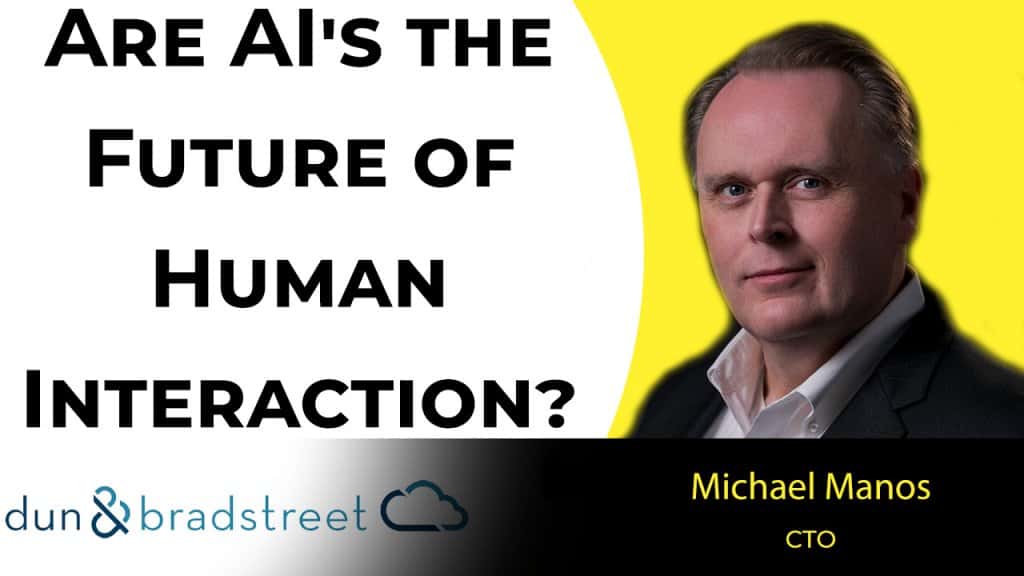
Are AI's the Future of Human Interaction? with Michael Manos, CTO at Dun & Bradstreet
Today we’re talking to Michael Manos, CTO at Dun & Bradstreet; and we discuss why data is becoming increasingly radioactive around the world; whether or not AI will ultimately replace human connection; and the importance of staying glued together by a plan during turbulent times.
All of this right here, right now, on the Modern CTO Podcast!
Check out more of Michael and Dun & Bradstreet at https://www.dnb.com/!
About Michael Manos:
A passionately engaged technology leader with a proven and public record of driving technology-led change, execution and commercial success across numerous industries and business verticals. These industries include Cloud Service Providers, Internet Products and Service Platforms and Financial Services.
A recognized industry expert with over 27 years of experience, also maintaining multiple industry certifications and a proud holder of numerous infrastructure technology, software development, and process-related patents.
I have found my greatest career successes have universally coupled an ability to establish a technical credibility with the teams I lead and a deep commercial understanding of the challenges faced by the business. In that effort it is imperative to drive frequent communication and to demonstrate an authentic, "roll up your sleeves" and "willing to get dirty" work ethic that ultimately builds the rapport and trust within the organization truly needed to drive change and ultimately success in the modern workplace.
About Dun & Bradstreet:
Dun & Bradstreet is a leading global provider of mission-critical data and insights to help our clients compete, grow, and thrive. Delivered through the Dun & Bradstreet Data Cloud and our market-leading solutions, our data and insights help you accelerate revenue, manage risk, lower cost and transform your business. Global businesses of all sizes rely on our data, insight & analytics.
Transcript
(Intro Narrator at 00:00:00) Today, we're talking to Michael from Dun & Bradstreet about the radioactivity of data and the art of gluing your team together. You're listening to Joel Beasley, Modern CTO.
(Michael at 00:00:14) I'm curious to know, have you ever come across any of these technologies throughout your career?
(Joel Beasley at 00:00:15) I'm curious to know, have you ever come across any of these technologies throughout your career that just completely eliminate jobs?
(Michael at 00:00:23) Yeah, of course. I mean, I think every new and great innovation like that, where there's been some new level of automation or some new level of orchestration that has been the jobs killer of whatever particular era or that particular segment, has always just sort of evolved into the next level of complexity. So they all come around, and it just sort of forces the learning curve, and it forces where you have to pay attention. They're always getting more and more complex. So the easy stuff keeps getting automated away, but the hard, complex, more human things still remain in terms of getting out and being able to deliver that. So you can always count on that complexity, at least for now, continuing to sort of press people and press ideas forward.
(Joel Beasley at 00:01:10) What type of cool technology are you getting to work on at Dun & Bradstreet?
(Michael at 00:01:14) You know, it's interesting. So if you look at my career overall, I've been involved in some very big scale. You know, I started out in—I did four different startups. I've done managed services. I've sort of progressed my career. Of the four startups, three were complete failures. One likely wasn't. And then it sort of propelled me into companies like Disney and Microsoft and others. But the interesting thing for me, prior to coming here at D&B, I was in the financial services industry. And, you know, when you want to think about global problems at scale, the movement of money around the world—that's a big set of challenges from a stability perspective, from a responsibility, from an expectations of the customers and the people receiving the money, sending the money, and there's a lot of complexity in that. But one of the things I found since coming to Dun & Bradstreet is data is our business. And when you think about data being the business, a lot of people in technology think about, "Well, I've got a big data lake or I have a big data warehouse," and it's not very significant. But the challenges here at D&B is we do business with 206—I'll call it generically—governments around the world with 206 different regulatory regimes around the data. And I like to say that data is becoming increasingly radioactive. Where can it sit? Who can move it? How can it move? Where can it move to and from? What are the regulations of what can be seen where and by whom locally, at a regional level? And so that increasing amount of—I call it radioactivity—is really making the data space maybe one of the most exciting and hard technology challenges to solve for. Because you're not dealing with things at a pure technology level. You're dealing with it at the human level, at the politics and religion layer of technology, which can be pretty scary and pretty interesting. But the complexity of being able to watch that and how that evolves and how that evolves on 206 different axes around the world is pretty incredible. So my current big thing is probably not surprising—the job that I have today, which is how do you solve for mass quantities of data? Data is just growing and growing and growing. Data around the data is growing and growing and growing. And then you have all these other regulatory and governmental oversight and all these other things that are coming into play, which are really making this incredibly complex—more complex than a lot of companies are really prepared to even deal with in terms of their own infrastructure, in terms of their own software, in terms of how they use that data, how they share that data, et cetera. So I think this is a very interesting set of problems, and it's exciting to be a part of.
(Joel Beasley at 00:04:13) Let's break that down a little bit. You solve for mass quantities of data. Like, how much data? What type of problems are you experiencing?
(Michael at 00:04:20) Think about moving in the magnitude of about five exabytes of data around the world every night. So that's an incredible amount of data to move around. And the nature of that data, because of the nature of the businesses we're in, is really far-flung in terms of the focus areas, right? We have fraud data that we share with banks and financial institutions. We have credit data. We have small and medium business sales and marketing data. We have contact information. We have all of this data that moves to different customers and different varieties. It gets delivered via file transport in many ways. We have an extensive amount of API and API ingestion from our customers around the world. And if you think about it from another angle, we take in a lot of data. So it's not just us taking the data and publishing it out and pushing out to our customers. It's also the amount of data that we have to ingest around the world to be able to get the analytics and insights to be able to create the value for the data that our customers are looking for. So you're looking at somewhere in the neighborhood of 40 to 80,000 unique data sources that get ingested in every day, sometimes multiple times a day. All of that has to get processed. All of that gets unified. The data gets cleaned up. It gets deduped. It gets all of these things, and it gets put into the categorizations for our software analytics in the product platforms that we have to go into it, look at it, extract the insights, and move that data around. It's very complex—much more complex than, to be completely honest, than I really had expected coming into the business. It's, from a technology perspective—and I'm a true geek and nerd at heart—it's pretty amazing to be a part of it.
(Joel Beasley at 00:06:16) So I know Dun & Bradstreet. I got to talk a little bit about it with Anthony. But I'm—yeah, he's a super, super bright guy. Do you get to work with him directly or no?
(Michael at 00:06:24) Yeah, he's my boss. He and I work together. We see each other every day.
(Joel Beasley at 00:06:29) Dude, is he not, like, incredibly smart?
(Michael at 00:06:31) He sure is.
(Joel Beasley at 00:06:32) I met that guy. I got off that call, and I was like, "You know, Josh, I feel like a chimp." He's just bright.
(Michael at 00:06:43) Yeah. He's—every time you sit down with him, he has such incredible insights, not even just from our own business, but taking in analogs and other things from other businesses. He's been a great person to work for.
(Joel Beasley at 00:06:56) One of the things that you said a minute ago was about fraud data, and I didn't know—I don't know if you can talk about it publicly—but I didn't know that you guys were in that business. For me, as a business owner, I found out about you because somebody said, "Hey, we need your DUNS number." And this was five years ago, and I was like, "Oh, what's a DUNS number? Okay. I have to go get this Dun & Bradstreet number." I got it, and it looked like a business credit sort of scoring deal. And I was like, "Okay, cool." But it's a lot more than that. Can you tell me what it is?
(Michael at 00:07:24) Yeah. I think of the DUNS number as sort of a universal ID that can be leveraged and shared across—you may use it in your tax filings. You may use it in your applications for loans from banks and small businesses. When you think of it, we have a huge practice around trade data. So we collect who you do business with, who they do business with, which allows us incredible insights into things like the supply chain around the world—being able to understand who does business with who, what those relationships look like. And then you combine that with the sales and marketing data. You get insights into who the officers of the company are, who has controlling interest. You get all sorts of unbelievable levels of understanding around the businesses and how business really truly works around the world. And I think we routinely get asked for information when you get into everything from not just business-to-business, but, you know, when sanctions came out in the whole Ukraine-Russia conflict, et cetera. Understanding who does business with who is part and parcel of trying to figure out whether you're in violation of sanctions or non-violation of sanctions is unbelievably complex. And I would say the modern business world is becoming increasingly complex, like its data, becoming more and more reliant on that data. And we sit—we're sort of like the firm that you may not know is even there, sort of looking at and getting this information and being able to derive those insights for you as a customer or as a customer of the data to be able to figure out and make those assessments of your potential customers as well.
(Joel Beasley at 00:09:06) For the data about who's doing business with who, is that something that they opt into in their accounting systems? Why would they do that? What's the benefit for them?
(Michael at 00:09:17) Well, for most companies, it's also—I mean, it's a way to establish credit. So you go into fraud. Now the opposite side of that, obviously, is credit. And so now I'm like, "Look, I pay my bills on time. Here are the people that I pay my bills to. Here are my suppliers. Here's—look, I'm paying my net 30, net 60, net 90. I'm a good corporate citizen inside the ecosystem." That helps build the overall credit profile of any particular business. So the addition of being able to track that and share that information has benefits to be able to say, "You know, look, I'm more apropos to get a loan," and "Look at how well or how strong my business is," or "Look how deep my supply chain might be," and being able to source the parts and materials that I have to deliver a contract for one of my upstream customers as well. So having that out there available sort of helps the company itself from a credit perspective. It helps from a fraud perspective in general, make sure that the right people are doing business with the right people potentially, and then ultimately to really sort of ensure the security of commerce today. I mean, maybe that's a little bit big and grandiose, but that's kind of the way I look at it.
(Joel Beasley at 00:10:30) So you're like a giant API?
(Michael at 00:10:32) Yeah. We got more APIs than you can think of depending on the source of data, et cetera. We do our best to aggregate it so you can consume that as a customer of ours.
(Joel Beasley at 00:10:43) Are they putting in other metadata, for example, other than just payment-related stuff? You know, they have the vendor onboarding forms that you get. And we got one yesterday, or last week, that there was 47 questions on it. It was a long one. It was a long one. You had the standard, you know, what's your tax ID and your status and all that. But then it had a bunch about security, which is okay, cool, because we were just doing a sponsorship. We're not embedded in their company. So that's cool. And then there were 20 questions related to slavery and pipeline—you know, obviously for manufacturing companies and things like that—and all of this other data, which, obviously, nobody wants slavery in their supply chain, right? But they were asking us for our policy to prove that, and I'm like, "Well, that's not really—we're all American citizens, and there's 15 of us."
(Michael at 00:11:37) So that metadata, that extra data, is that—are they just holding that at their companies, or are they pushing it out further? Would they be incentivized to give that data to you guys, or is that just for them?
(Michael at 00:11:48) So it's interesting. So what you're talking about is part and parcel of the ESG initiatives, right? You know, SEC is going to require a bunch of ESG—environmental sustainability and governmental controls in place. A lot of companies just keep that sort of in-house. Whether that's shared or not shared is sort of up to individual companies on where to share them. And that attestation that you were talking about where they were asking you, "Do you do all these things?"—that may only be going back to the firm that asked you that question. But, inherently, when you think about ESG and the requirements in all businesses around the world, it's very big, obviously, in Europe. It's big and it's becoming bigger and bigger here in the United States. And around the world, these requirements for ESG continue to grow. And if you think about, if you wanted to get scored at an ESG level, that giant questionnaire that you were talking about—in some cases, even bigger—it's a self-attestation. So someone sends you the big document, you look at the big document, you score—to your point, "No, we don't do slavery," "Yes, we use coal," or "No, we don't use coal"—and you kind of fill out this large, large spreadsheet. One of the things that we have found—and, by the way, it's self-attestation. So we kind of assume that you're telling the truth. Generally, the world assumes you're telling the truth until it's found out otherwise or there's some upfront level of rigor to sort of go and do due diligence against that information to come back and answer it. One of the benefits that we found, and this was a big thing that dawned on us this last year, was that we have—because of the trade data that I talked about earlier and because we have these deep relationships with ecosystems, different industries, ecosystems, et cetera—we know your addresses, we know the addresses of all your offices. We could compile a score and a report for ESG that was not a self-attestation, but we could actually go—we had all the data. We knew where all the—we knew what the power makeup was in Istanbul, and we knew what the—and so we were able to create a very interesting third-party observational ESG-type of score and view into your firm that we could also use and utilize, that you could use and utilize, for picking potential partners or getting a score on yourself or looking at your own supply chain if you want to maintain a minimum ESG score with the people that you do business with because it transfers. I do business with someone who does bad things or uses maybe inefficient ways to do those things. I want to know about it as a supplier. So it was an interesting take on the metadata that we did. So we had the data, and then it was really an extrapolation and an application of the metadata that we have along with some other pieces that was able to create this product. And that's pretty indicative of the data challenge around the world—is the more data you have, the more insights, the more metadata gets created, and all of that has value. All of that has value if you know how to apply it and where to apply it. And that's where the tricky bit comes in. Do you have data engineers and data scientists who are smart enough to find these correlations? Or to the point you made earlier in the conversation, is there an AI aspect that's kind of looking for unintended correlations in this data, or between data and metadata, or between metadata and metadata? That's a lot of data. But, in general, it's a pretty exciting space to be a part of and to be involved in.
(Joel Beasley at 00:15:29) Are we at that point with AI? I'll give you a quick example. So three or four months ago, I did a recap of all of our customers, and I sorted them by the best-paying customers, the ones we like doing business with the most, and all of that. And then we tried to figure out, what's common between the top 20% of our customers and extract insights. And you can go down this rabbit hole and create a data swamp deal, but
(Michael at 00:15:54) We were trying to figure out—
(Joel Beasley at 00:15:55) What's the most interesting, valuable things? And I couldn't help but think about, like, there must be some tool out there where I can just feed it my sales data and be like, tell me really interesting things about my sales data. You know, maybe in North America my closing ratio is, like, twice as long as it is in Saudi Arabia, right? Or just interesting things. Are we at the point where AI can just sift around data and come up with interesting things, or no?
(Michael at 00:16:23) I think we're at a point right now where that intelligence of drawing out those conclusions—it really depends on the data that you have and then the application of the AI and deriving the answers. You know, there's a lot of weird unconscious bias. As you interrogate the data, you're interrogating it from a perspective that may bias the answer or the result. And so, getting it—I think there's still a lot of complexity in AI. AI is there. It can draw those conclusions as long as your initial question wasn't loaded with a certain set of bias in terms of what the potential answer could be or lead that correlation into a certain direction. It's getting a lot better. Don't get me wrong. I don't know if we're there yet. You still need these data scientists who are able to figure out these more interesting correlations. So I don't think the human is dead yet in that process. But in terms of the big, heavy horsepower, the capabilities are there and the speed is there. And, you know, the speed and velocity at which that work can get done is at unprecedented levels in our society as a creature upon this planet. It's never been as fast as it is today.
(Joel Beasley at 00:17:39) So there's no AI running loose on those five exabytes of data just emailing you interesting things about it?
(Michael at 00:17:46) Internally, there—of course, yeah. Internally, we've got lots of data we're applying it in, and we've got data scientists that are and data engineers that are constantly looking at what those types of algorithms are producing and looking at, et cetera. But, you know, a lot of it has to do with when you're starting to deal with different businesses with different ecosystems and different dependencies. That's not something AI is gonna know out of the gate. So understanding how to build, for lack of a better term, a rules engine that sits over the top of that, that can ingest those observations or ingest interesting tidbits of how certain industries work and how they may or may not differ from other industries—there's still some things that have to be fed into the machine to be able to draw those things. And that's where industry expertise comes in. That's where deep ecosystem understanding of understanding that this is—they look the same, but they're not really the same in terms of how it works. You have to feed those models with the right sets of questions or the right sets of rules by which to start doing that analysis. We have that both in terms of systematic as well as good old-fashioned brainpower doing the same kind of work.
(Joel Beasley at 00:19:02) Yeah. And we're seeing that in the public space because, you know, my wife knows what GPT-3 is, and she signed up and asked it questions. And everyone's getting really comfortable with these systems that are just generating text, and I think we can all see the future. And, you know, when people see it, a lot of people were arguing on Twitter, as they do. You know, is it artificial general intelligence and all of this type of stuff, right? And my whole thing was, okay, if it's smart enough to come up with answers, that's like step one because it doesn't need to have consciousness. It just needs a directive to go execute a series of recurring tasks, right? Like, if you built a knife and you're like, oh, it's not gonna cut unless I tell it to cut—it's like, well, if you put yourself on a loop telling it to cut, it's just gonna cut all day, right? So it's pretty interesting to see what's going to happen with this AI in the next five years. But, man, am I looking for all the different use cases as it comes up? And it's—I mean, we saved probably 30% of our producers' time at the company just off of this one tool that's, like, a hundred dollars a month. It's crazy.
(Michael at 00:20:12) That's amazing. That's great. But I think, to your point, it's telling you where things are, you know, where things are going. Increasingly, though, you asked it the question to get you—or your producers asked it the question—to figure out what to go solve for. And that's the piece that we're not necessarily there just yet, right? We're still counting on you to figure out where I can solve that. You know, to ask the question of where I can save that money is a big deal. And we're getting there, but it's not—we're not at Skynet yet. There's no Terminators yet, but hopefully not anytime soon.
(Joel Beasley at 00:20:45) No, no. Yeah. Because it would be so interesting to just feed the ChatGPT all my business data, like everything I have from Slack messages and everything, just say, how can I improve my business? And having it spit out a list of, like, you don't know about this tool. You're not using it, and, you know, it's very efficient for what you're trying to do. And, you know, if it could just put money in my bank account, that'd be cool too.
(Michael at 00:21:06) As long as it doesn't conduct podcasts.
(Joel Beasley at 00:21:09) Right. Yeah, right. I enjoy that. But that is one thing that I think it will not go away for a while, the human-to-human interaction. Yeah. I mean, I think it'll be novel to have the deepfake type AI maybe do an interview with, you know, something that's realistic to a human or something of that nature. But humans like to get together since we've been gathering around the campfire, and I think we'll do that all the way through the AI apocalypse.
(Michael at 00:21:37) Look, I see. Right. You know, it's funny, I've been a part of big transformations for most of my career, going in, driving big change in companies. And people ask, you know, they'll ask me, they'll be like, what's your secret in being able to be successful at it, et cetera? And it's interesting to me that I can—we could talk about business processes. You could talk about technology, transformational approaches. You could talk about going to the cloud, or you could talk about these things. But at the end of the day, being able to connect with other humans on a common—you know, to your point, we are wired to sit around that campfire and tell each other stories and connect at a level that is meaningful, that you don't get out of a business book or you don't get out of a technology application. You don't get out of AI. And I think, to your point, when you're coming into companies that have transformative agendas to be able to transform or modernize, et cetera, understanding that human dynamic and being able to connect with those—with the humans around you—to be able to drive the passion or, you know, ignite the fires inside people to drive that transition is probably the most important thing. At least that's what I found as a CTO. That's the raw natural resource that you wanna go fight for. That's the thing that really matters. That's the thing that will get you to a transformative end state. It's not necessarily just the tools that you bring to bear. It's that human element that is so important. So I agree with you 100%.
(Joel Beasley at 00:23:10) I think it's fascinating how the trend is, after all of these episodes and talking to all of these technologists, that you start off with thinking the technology is the most important thing, the tools, and then you slowly learn—some people quicker than others, and always pain involved—about how important the humans are. And then, you know, so if I talk to startup people who are in their twenties, it's tool, tool, tool, data, data, data. And if I talk to people who are running, you know, Verizon or NASA, you know, they're like, you know, growing people. It's all about the people. And they're these very experienced engineers, so they aren't just, you know—a lot of engineers would like to write off some of the executives as, oh yeah, they're just, you know, kind of technical, and they just—but, man, you get people like Kyle Malady from Verizon who can just spin up conversations about frequencies and everything, every little nook and cranny of the pipeline of technology at Verizon, and he's a good leader. It's just fascinating to talk to them.
(Michael at 00:24:08) Yeah. Look, I think that's what makes the difference, right? That's the differentiator. That's the force magnifier for any company. Being able to combine those two things together will get you everywhere.
(Joel Beasley at 00:24:21) So what's your day-to-day look like right now as a CTO?
(Michael at 00:24:24) You know, we're at year end, so it's a big mad rush to complete a bunch of projects. We've—you know, we had probably six or seven hundred different project initiatives in the company over the course of the last year, which we're wrapping up just the last little bit of it. So we've had a very successful year from a technology perspective. And, honestly, right now it's all about planning for next year. What are we putting our money on? Where are we putting the resources to continue to further both the transformation that we're going through internally as well as, you know, the features and functionality and capabilities of the products for the next year? So it's a—for a lot of people, it's kind of the time of year where things slow down. It's the time of year where things start to speed up, and you're really having to think aggressively about what you're gonna get done in the next year or so. And that's my favorite time of year, actually. Holidays aside, it's really more—this is you get to spend maybe a little bit more of your time on the strategic as well, you know, and the planning of where you wanna go as you wrap up the last bits of what you've been able to achieve. So this time of year right now, that's what's exciting. That's what my day is, day in and day out—come in and forge the future.
(Joel Beasley at 00:25:40) I could tell you're a highly productive person because, on that way, I tell everybody, you know, all the big improvements to the website or whatever will happen in the November, December time because when there's a lot of—like, trust me, I enjoy the holidays. I spend it with my family. Like, I have a good work-life ratio, right? But there is such thing for me as too much time off. And then, you know, sometimes when the way the weekends land or whatever, I've got a day or two where I'm just anxious, and so I'll just go do some work. And that's when—so, in my mind, I'm always like, okay, December is when I'm gonna put together that one project because I'll have a couple spare days to do something fun.
(Michael at 00:26:18) Yeah. I think we view ourselves as productive. I would tell you my wife has probably got a different perspective on that wonderful trait that we both have.
(Joel Beasley at 00:26:28) Mine too.
(Michael at 00:26:30) But I—
(Joel Beasley at 00:26:30) I do wanna talk about volatility in the marketplace. One example for me is, I told you at the beginning of the show, we make these shows for other people. And often, the people that are hosting the shows are high-level executives at the company—COOs, CTOs, CEOs, right? And across all of our shows, we're seeing marketing teams come and go. And it's kinda crazy because we'll have these contracts and we'll have these people, and then all of a sudden, the whole team, like eight people, are gone, and there's someone new coming in. And so we'll just have to have, you know, the conversations. So I'm sitting here—you know, I hear in the news that things are crazy. My revenue is doing fine. I'm not freaking out yet, but I'm also staying as lean as I possibly can while continuing to grow. And then I start seeing these, you know, this little transition happen over the past two months because you heard about recession all the way since summer, right? But I didn't see anything happening. Now I'm seeing these executive teams start to shake up, for lack of a better term. Are we gonna see more of that? Are you seeing that at all?
(Michael at 00:27:29) Yeah. Look, I think we're heading into some pretty interesting times. Interesting defined like scientifically interesting and not necessarily positively interesting. To your point, the first signs with people talking about recession started happening, you know, months ago. There's always a lag on that, and usually people don't define when a recession happens until it's over or until you're really, you know, really into it. But, you know, we're seeing—you look at the challenges in the marketplace. We're seeing a lot of trepidation from our customers, from other consumers of, like, what's gonna happen? There's a lot of hesitation that's going out there to try to figure out where is this going to end up that we—you know, we talk about whether we're in it or we're not in it. You got different economists talking about whether we're in it or not in it. I haven't heard too many people say we're not going to be in it. So I do think that—take a step back and look at the entire ecosystem. You are seeing some hesitancy. And I think that hesitancy is something to be wary of. I think a lot of people are wanting to be a little bit more cautious. We definitely see that even in our own approach. We don't wanna go crazy like gangbusters unless we understand, you know, what the market conditions in larger ecosystem looks like. Our customers are doing the same thing and having the same conversations with us. So I think whether it's a real recession, half a recession, the recession's over, I'm not sure. You definitely see a lot of hesitancy, and you see that even in terms of, you know, from our perspective, from a data perspective. We have certain segments of the world that are consuming—you know, think about fraud, right? The amount of people trying to consume more and more data about fraud, who's going out of business, who's got strong supply chains, who has all of those things—yeah, that business for us is taking off. The more opportunistic ones, you look at it and go, wow. You know, is now the time to be doing brand-new marketing campaigns for something? So you see this hesitation in the market across different product suites. And one of the benefits that we have at D&B is, you know, the mix of products we have sort of serves regardless of which way the market is going. You know, if it's going up in a recession or we're having a big bull market or something, we have the ability to kind of shift the weight on our legs to where it's going. But, absolutely, we definitely see that volatility out there. I don't know if I would call it volatility in the sense of super bad things happening, but I would definitely define it as a hesitancy, I guess.
(Joel Beasley at 00:29:59) Got it. So it's just, like, little tremors. You're seeing just some little stuff happening here and there.
(Michael at 00:30:04) Yeah. I think there's a lot of people being cautious, right? I think it's—if it is going bad, I don't wanna jump too fast, too far. I'll keep taking the baby steps to make sure I make the right decision or that I have the ability to redirect in a different way if I need to. And I think you see that, you know, all over the place.
(Joel Beasley at 00:30:23) Yeah. I mean, our business was born out of COVID. We were licensing our interviews as leadership content. And then in one week, we lost 90% of the revenue, and then we started taking on sponsors, and then we grew to a million dollars a year. And then we did that for two, three years, and then we started making the shows for other companies. But—and that's why I like to ask about, you know, executives like you who are really in it, who are around a lot of data. Like, what are you seeing? Because I'm trying to figure out, like, what everyone's kinda trying—we're, like, walking in the dark. You know?
(Joel Beasley at 00:30:50) We're trying to figure out exactly, are we at the place where everything's really cheap and we should jump on stuff and make investments? It doesn't feel like that. It feels like everyone's kind of just holding the purse strings pretty tight and waiting to see what happens in Q1.
(Michael at 00:31:04) I think you're going to see that hesitancy probably. I mean, I'm by no means an economist, so I'm a technology guy, so I'm probably the last person you should talk to about that. I would say that, you know, in general, I think you're seeing that pretty much across the board. One thing I can guarantee you is the moment that we should be buying because we're at the lowest point, et cetera, I will guarantee you I will miss that window.
(Michael at 00:31:28) Regardless. So regardless of the data that I have access to, I will probably still miss it.
(Joel Beasley at 00:31:34) I know. It's always hard to, well, you can't really predict it. It's just kind of something you realize. But I'm curious to know, all of your data, do you have a product that's like a small business product that would compete with something like a ZoomInfo? Do you know ZoomInfo?
(Michael at 00:31:47) Yeah, sure. Yeah, we have Hoovers, which has been around for a very long time. Hoovers has been a product of ours that really focuses in the same market as they are in. But it benefits from the scale and the breadth of the data that we have on the international basis threaded to the same level. So, yeah, we absolutely have products in that same space that compete exceptionally well in that market.
(Joel Beasley at 00:32:12) I want to give them a try. We use ZoomInfo pretty heavily, and after you talked about all this data, I was like, I might as well just ask if he has it. So how do I learn more about that? What do I do?
(Michael at 00:32:23) Well, you can obviously go to the D&B website, which is dnb.com, to learn more about our products and services. You know, we have a lot. So the one thing I would say is be a little patient, because you look through—I talked about all the different markets and all the different data tools and assets that we have inside the company. But, yeah, you'll find it. It's pretty easy to find in the SMB space on the website.
(Joel Beasley at 00:32:45) All right. SMB, and it's called Hoovers, like the platform name?
(Michael at 00:32:48) Yep.
(Joel Beasley at 00:32:49) Awesome. I'm always looking for alternatives, and I've explored three or four, and I haven't found anything that's better. And so I haven't come across Hoovers, so I'll check it out.
(Michael at 00:32:59) Yeah, look. In fairness to the entire industry, the staleness of the data is sort of directly proportional to the volume and velocity of how business moves around the planet. And so as you go through that from a data perspective, the volume of data that changes—depending on the data set, the data that's 24 hours old may have great data or bad data depending on your use case, et cetera. So really dialing that in and solving the, I'll call it the staleness—maybe that's the wrong word, but the understanding of when does that data change, how often does it change, what's the velocity that it changes inside the systems, how long does it take for that to get published out? It's a very—it sounds like it should be an easy problem, just speaking candidly about myself. To me, that sounds like, well, that's a very easy technology problem to solve for. But when you think about how often data can change or where it can change or what the velocity of that change could be and is useful for the people that consume that data, it gets very complicated very fast. So it's definitely not for the faint of heart. Seems easy at the top side, but when you get into the nuances of how that would mechanically work, it's challenging.
(Joel Beasley at 00:34:19) Yeah, Anthony got into a little bit of that with me because I was exactly that. I was like, oh, it's not that hard. And then he just started talking about how they do it and the cases they run into and how they solve for certain things. I'm sitting there, like, Slack jawed, like, oh my goodness, this is incredibly complex. You know, the audience is mostly technology leaders, people that want to grow and improve in their career. I'm curious to know, we were just talking about volatility and uncertain times. How do you keep your team focused and on track?
(Michael at 00:34:48) You know, having a clear plan is important, right? So understanding the work. If you think about what we do here, my relationship with the head of our product and the head of business—whether it's the business internationally or here in North America—the product teams, we have to stay glued together to be able to make sure that the goals and deliverables that the teams from a technology perspective are working on are completely aligned. And that's a hard thing to do. If you think about, you know, there's a new cool thing that's happening out there, let's shift, let's adjust our products to be able to get there. Being able to move quickly against a set of plans and understand those impacts is really tough. And it's part of the transformational journey that I've had here at D&B, which is, how do we become more agile? Not in a development sense, although certainly part of that as well when you think about agile development. But really the agility of being able to sort of pick up, change direction very quickly, and get resources on problems faster. It requires a level of alignment that is not necessarily technical in nature. It's because the whole of that body has to move in unison together. It can't just be a tech thing. It can't just be a product thing. It has to be both of those moving together. And keeping people engaged in that process boils down to—and we talked about this with the campfire story that we talked about—communication. If you boil down any success that I've had in my career, the ability for me to communicate the changing needs and the challenges that the company is having and being able to change and communicate the why of the changes are, and you treat people like adults, and you say, I'm willing to give you—hand you information that's imperative that we make this change to—and you do that in a clear and transparent way, I have found that teams respond to that very quickly, and they get used to that level of communication that allows us to move agilely—again, not development route necessarily, but move agilely to be able to move our products in a quicker succession to where we need to go. For example, I send out a note to my organization every Friday, and the note is a little bit more informal. The note is, here's what we've done well. Here's what we've really sucked at. Here is what things we should be getting better at. Here's the things that we need to be focusing on. Here's the big push on products. Here's what we're seeing in the marketplace. We talk to the technology community at large to make sure they understand the drivers of why we're making, if we have to make a change, why are we making that change? If there has to be a shift, why are we making this shift? What's the value of that shift? And you have to trust that the people are going to be responsive and understand. And if they don't, be open to receiving that communication back to say, I don't know what that means. You're talking—how is that even related to this? Or I'm an infrastructure person that does router configurations. I don't know how I tie what you just said to my job. And it's your job as, in my case, the CTO, or as any technology leader, to draw the bridges, to draw the connections so that the teams can understand it. And once they're lined up, there's no telling how fast your organization can go and how much change or how much you can accomplish from a product perspective or stability perspective or whatever angle you're going to look at that through.
(Joel Beasley at 00:38:21) Is the communication a cultural aspect that was instilled by the founders?
(Michael at 00:38:25) So for sure. For me, because I'm relatively new—I've been here a couple years inside the company—the founders at D&B, D&B is a 200-year-old company, and it's gone through many different changes and evolutions in its career over that 180 years. But always at the core of it, the way I think about it is, way back in the beginning, there would be people that would ride their horses into a town and go, oh, Joel's the blacksmith, and Josh is the grocery store owner, and take that information back. You know, it would be in big ledgers. It would be—but it was always sort of in and around data. And we have that consistency all the way through of that data as being sort of the primary base element for, you know, 180, 200 years in the company. But that touchstone of getting to the people and making sure those people are aligned, I think, is more important, especially in my own belief system, in a transformative position where we are in the company—really being, shifting gears into an aggressive growth culture—to be able to make sure that that communication is key. And so, you know, it's probably always been there, but we've given it some extra steroids, and we make sure that it's there, it's common, it's consistent. People know every Friday they're going to get the weekly mail from me, and maybe it's good or maybe it's bad or maybe it's, you know, whatever it happens to be. But, you know, just talking in a plain voice around things that people care about matter, and drawing the lines that might be harder to see is important.
(Joel Beasley at 00:40:00) Did you pick that skill up from a mentor or a leader that you had?
(Michael at 00:40:04) Yeah. I mean, I think it's a hard-fought lesson. You know, I came out of school a coder, moved into telecommunications and then infrastructure, et cetera. And I think, you know, especially people like me, however you want to define that, right, they come out thinking it's all about the raw, pure intelligence, and of course this should be something that everybody understands if they put three seconds of thought into this. But, you know, your own experience starts to shade the way you communicate and how you think about that, and you constantly have to take a step back. And I had a couple of different career mentors who really reinforced that with me, that the value of what that can bring in being able to bring a lot of people along with you. It was a hard-fought lesson, but eventually it sunk in.
(Joel Beasley at 00:40:52) Oh, thank you for sharing that. I want to watch the time here. We got five minutes or so to wrap up and get you on to your next adventure. Is there anything that we didn't cover that you wanted to get out there to the world?
(Michael at 00:41:04) I don't know if there's anything additional. I would say that we talked a little earlier about that radioactivity of data, and it's a hard problem that I think a lot of companies have, sort of, it's not necessarily on their radar, right? If you're a big data company or you consume lots of data, it might be a little bit more. But you think about the changes that, if you're a company that does business with Europe and you think about all the changing requirements—and I'm not talking about just GDPR. I'm not talking, like, you know, there's the EU. They have a set of requirements, and then there's individual nation states inside the EU that have little twists and turns on their own interpretation of data privacy or what kind of data, whether or not business data is considered part of the PII or personal identifiable information. How do you think about those things? That's changing at a nation state level, at a sub-state, province level. Even in some cases, you're starting to see emerging changes at a city or local locale or region level where those things are starting to become more complex. And you as a business are not going to get a free pass because you don't necessarily know that, you know, data in Spain, in this state of Spain, in this city has these requirements. How are you going to manage through that? How are you thinking through that? How are you thinking about the fact that all EU citizen's data, EU citizenry's data, is supposed to be stored in France or in the EU, or there are certain countries you can't put it in? This is an area where I think that there's a coming tsunami of change and challenge that the industry as a whole, regardless of what industry—whether you're talking health care, whether you're talking financial services, whether you're talking, you know, even just general sales information, how do you, you know, or retail or your payments or all of these things. That's a level of complexity that I think is on the horizon that we're going to start having to deal with, maybe in smaller waves at the beginning. But at some point, that volume and velocity of change is going to come in and disrupt us all if we don't start thinking about those challenges now. I have the benefit, or maybe the horror and terror, of having to deal with this on a global basis. And so I can see these signs coming a little bit faster. I see these emerging challenges around the world from Asia, from Europe, from South America, from here in the U.S. and North America. It's something that, you know, it's not a clarion call to arms or anything like that, but I think we've got to start preparing for that as an industry, or any technology professional who deals with data. It's something we have to be wary of.
(Joel Beasley at 00:43:52) Do you have a product that helps you with that?
(Michael at 00:43:54) Boy, if we had that, we'd be—no, we don't have a product yet to deal with all of that. But it's a level of, again, the complexity there is really significant, and it's at the strange intersection of technology, but also legal. And also, you know, there's, like, think about any company's legal department. We have a great legal department here, but are they really dialed into changing privacy and data laws in Luxembourg? I don't know. I'm picking countries at random. But, like, it's a harder challenge to solve, and it's a harder challenge to solve technically in terms of understanding how you build out a solution in that space.
(Joel Beasley at 00:44:32) Yeah, it's tough because they will sue you.
(Michael at 00:44:36) Yes, especially if you give some sort of, like, we attest that this data is true and accurate and moved in the right way. So it's something I think that a lot of companies, a lot of the multinationals are starting to struggle with. But, if you're on eBay and you're selling something to someone in Germany, are you in violation of German law? I don't know. I don't pretend to be a lawyer, but it's something to think about.
(Joel Beasley at 00:45:00) Yeah, it definitely is. You're already starting to see it in some of your products and services where they'll ask me, like, I registered for something the other day, and it asked me where I wanted my data center to be. And it wasn't like I was spinning a server up. I was just joining a SaaS application, and I clicked the, you know, North America region. But they had other regions in there too, and I just assumed that that's to handle some sort of country specific. You know, at first the conversation was just U.S., and I think California was pushing a lot of it too with their compliance for handicap websites and things like that. But then you saw it over in, you know, the UK and all. Those were the two main conversations, but people forget there's like hundreds of other countries, right?
(Joel Beasley at 00:45:40) And while two are on our radar causing entire industry buzz to get these things sorted out, if other countries start deciding that, which clearly that's starting to happen, we're gonna have to have some sort of tools that are going to help us at least manage. Because there's obviously gonna be no magic button because you're gonna have to fundamentally change how you store data in an application, right? But there's gonna need to be some sort of tool or service or something that helps you manage the compliance and then manage your risk because, you know, we're not gonna comply to 300 different countries.
(Joel Beasley at 00:46:11) We'll just comply with maybe the top three or four.
(Michael at 00:46:15) Well, it depends on where you do business, right? And or where your customers are or where your customers' customers are, you know, if you're a platform and service. So very complex thing to start thinking about. And again, not sure people are thinking about it, but it is out there, and it is a, the level of the water is rising. That's what I would say.
(Joel Beasley at 00:46:33) Well, thank you so much. We made a podcast. How do you feel?
(Michael at 00:46:36) Feel good.
(Joel Beasley at 00:46:38) Thank you so much for listening. And if you found this episode useful, please share it with a friend or colleague who you think would get value from it. And if you have topics that you'd like to hear discussed on the podcast, either add me on LinkedIn or send me an email, [email protected]. Every time I get an email or LinkedIn message, it absolutely makes my day and inspires me to keep going.