
Episode 418 ·
CTO & Chief Data Officer at The Zebra - Meetesh Karia
Today we’re talking to Meetesh Karia, CTO and CDO at The Zebra. And we discuss the benefits and practicality of having a full-blown data function in an organization. How Meetesh has utilized Andela to build internationally distributed engineering teams, and why it’s important to create a culture where nobody gets in trouble for an honest mistake.
All of this, right here, right now, on the Modern CTO Podcast!
To learn more about The Zebra, check them out at https://www.thezebra.com
To learn more about Andela, check them out at https://andela.com/
Check out Meetesh's podcast, Tesh on Tap!
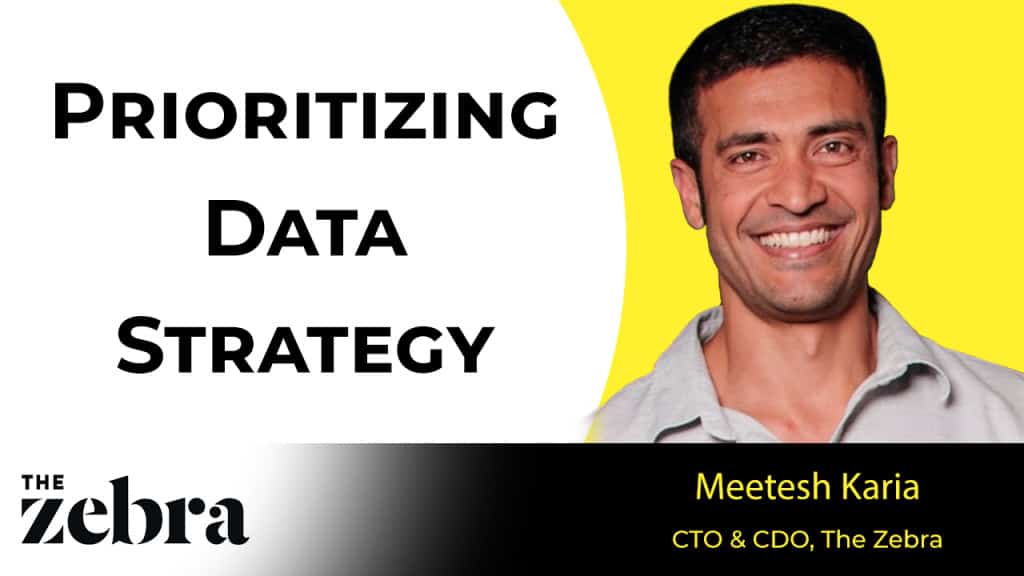
About Meetesh Karia:
The tech career of Meetesh Karia started early, as his father was an electrical engineer bringing home a TRS80 with a tape drive. Computers just clicked, as he dialed into BBS systems, built computers installed with Slackware & Linux. Early on, he also dabbled in AI (is that even a thing?), building neural networks to predict weather patterns.
He has played competitive sports for years – in fact, he has won a national championship in the masters division of ultimate frisbee (and met his wife playing the sport as well). He bases a lot of his leadership philosophy in tech around what he has learned from sports. Self proclaimed – he’s one of those people that can’t just sit still.
In January 2013, he was approached to create and own the technology and team around a product that allowed people to compare insurance providers – from scratch. Meetesh made the decision to onboard and started the journey to build the Zebra.
About The Zebra:
The Zebra is the nation’s leading car and home insurance comparison website. Since 2012, The Zebra has led the charge to bring transparency to the auto and home insurance industry – to make insurance black and white.
The Zebra’s unique and powerful technology provides real-time rates and educational resources to inform consumers and help them find the coverage, service level, and pricing to suit their unique needs, while simultaneously helping insurance companies connect with the consumers they best serve in today’s digital world.
Insurance in black & white.® Compare quotes from top insurance companies in seconds.
Transcript
(Intro Narrator at 00:00:04) Hello, my friends. Today, Joel is talking to Meetesh, the CTO and CDO at The Zebra, and they discuss the benefits and practicality of having a full-blown data function at an organization, how Meetesh has utilized Andela to build internationally distributed engineering teams, and why it's important to create a culture where nobody gets in trouble for an honest mistake. All of this right here, right now on the Modern CTO Podcast.
(Joel Beasley at 00:00:38) Here we go. This is the Modern CTO Podcast. There he is.
(Meetesh at 00:00:52) Hey, man. Good to see you again.
(Joel Beasley at 00:00:54) Good to see you.
(Meetesh at 00:00:55) You're the man of—
(Joel Beasley at 00:00:55) The hour, my friend. How do you feel?
(Meetesh at 00:00:58) I feel great. I'm excited to get another chance at doing this, and it's fun. We've been heads down for a while. Sometimes it's fun to step back and chat about some of the things I'm thinking about.
(Joel Beasley at 00:01:10) Yeah. So what's been going on since we hung out in Austin?
(Meetesh at 00:01:16) We've been going through a pretty large-scale company transition. We aligned on some of our objectives and have been transitioning the teams in terms of how we work, and gone through a lot of that stuff, which we're right in the heart of. Really just focused on saying we went into the pandemic at 160-ish people with certain ways of working, and we grew to almost 400 during that time. And we had tremendous growth, but now operating and running and executing at a 400-person company versus 160 with a hybrid workforce, with more people that have joined during the pandemic than we had before—some of the things that worked to get us to where we were aren't necessarily the ways that'll work getting us forward.
(Meetesh at 00:02:09) And so it's really around creating the alignment that was a lot easier when you're walking around the office, right? Helping to reinforce that, put in structures so that they support the things we need to do today versus what we needed to do before—a lot of things like that. So it's good stuff. Good problems to have.
(Meetesh at 00:02:29) All about problems of scale and growth.
(Joel Beasley at 00:02:31) That's awesome, man. 160 to 400. What's the biggest thing that stood out to you from the 160 to 400?
(Meetesh at 00:02:41) You know, can I give two things?
(Joel Beasley at 00:02:43) Yeah, for sure.
(Meetesh at 00:02:44) Because there's two. So I'll say that the first thing that stuck out to me is that, you know, there was an article I found recently that talked about this, and I can't recall where it was, but it said that when you join a team, regardless of what leadership is saying, you learn the most about how to work and how the company works from the people around you. And so when you're 160 people and adding a handful of people, there's a lot more people around you that have been at the company for a while that know how it works, that can help with things like—we're a very open, very transparent company, right? You can reach out to me. You can walk by my office, reach out to the CEO. We have a Slack channel where you can just ask questions openly, and that's what we want. But that's not the norm in a lot of places, right?
(Meetesh at 00:03:31) There's a lot of places where it's like, "Oh, you know, I can't go bother the CTO or the CEO. I can't take their time and they're on this other level," kind of thing. And so people bring their previous experiences in. And when you have a lot of others that have been here, it's like, "No, you should absolutely—" you know, reinforcing, "You should go talk to them. You should bring it up." You kind of build that culture and you keep it going. When you get to where we've added so many people—more than what we had—throughout the pandemic where people have been remote and not in the same place, who do you work with the most? More likely than not, you're working with people who haven't been here that long, who didn't come up with that, right?
(Meetesh at 00:04:16) So you're not getting that positive reinforcement or that direction around preserving the ways we work, which was so critical. And so that's one of the biggest things is that we've seen far more of people coming in who just operate by nature differently and who don't necessarily innately understand how they should work with leadership, how we like to work. And that's a learning for us too, which means we need to do more overt, explicit education on that or communication around how we work. So that's probably one of the biggest ones.
(Meetesh at 00:04:56) The second thing I'll say is that there's just a different dynamic in people's—I guess if you've read "Five Dysfunctions of a Team"—people's first team, right? Whereas at 160 people, you're still where the entire engineering team is kind of in it together. That's their first team. That's who they operate with. But when you grow much larger, those people's first teams and whoever they operate with is the very specific team that's focused on the area of the code base or the business problem we're trying to solve, right? And so it gets smaller. And even within a department, there's less kind of interaction. And so people are—that kind of closes in.
(Meetesh at 00:05:39) And so the natural—you have to do more to build that communication, that teamwork, that collaboration that, you know, you might expect at a smaller team would just happen naturally. But it doesn't happen naturally there because just by necessity of the fact that people can't know or talk to everyone.
(Joel Beasley at 00:05:59) Do you have someone in communications now that you work with?
(Meetesh at 00:06:04) We do. I mean, we have some people on internal comms here. We've also—one of the biggest things we did is bring in kind of—build an ops department, an ops team, which has been key in terms of helping wrangle all of our processes, our communications, you know, gather all of the information that was kind of spread out, kind of consolidate, standardize on things. And so that's a big work in progress throughout all of this too.
(Joel Beasley at 00:06:31) Yeah. That's really cool. I like that. It's kind of creative, right? You don't hear about it a ton.
(Meetesh at 00:06:41) Yeah. You know, I guess you hear a lot about problems with scale or needs to change, and, you know, on the technology side, it's all about, "Okay, well, you know, how do you run technology at scale? How do you support traffic? How do you release it, deploy it, build it, maintain it at scale?" And on the people side, it's more around management and growth. And what I hadn't seen a lot of is the change in the relationship between teams and the change in the relationship between leaders and the teams as you grow.
(Joel Beasley at 00:07:14) And so that's something you recently gotten experience with?
(Meetesh at 00:07:18) Yeah. You know, I think every time we've kind of hit a new stage of growth, there's, you know, you get that one little thing where when it's 10 people in a room and I'm working with a developer directly, and then all of a sudden it goes to we're bigger and now there's a layer of management between, right? That there's this sense of loss for the developer and for me, right? Like, I need to now figure out as a leader how to stay on top of what's happening without micromanaging, without staring over someone's shoulder, you know, begging for status reports. But they also now have the sense of loss where they were working directly with me and now are getting information kind of filtered down, or, you know, there's not that direct relationship. And so it happens at every stage. And I think this was our reckoning of it happening at this stage too.
(Joel Beasley at 00:08:08) Your company's growing. You've got a lot of people. You've got new people coming in. You've got existing people. It sounds like, based off of knowing you, that you guys have a pretty motivated, driven culture over there. What stands out to you about the next generation of leaders? What are things that they're doing that stand out to you where you're like, "I want to give that person more opportunity"? How can I stand out to Meetesh?
(Meetesh at 00:08:35) That's a great question. And I think the biggest thing for me is retaining that sense of ownership or drive that, you know, maybe was kind of more prevalent or easier when we were smaller, but in a larger organization. Which is, you know, one of the things that I kind of look at as a leader is—and maybe stereotypically—the bigger we get, the more, the easier it is to fall into patterns and ruts and get stale. And we can't. I don't want to be that organization. We won't get to where we need to be as a company if that happens.
(Meetesh at 00:09:17) And so what really kind of strikes me is people who maintain that spirit of, "I see a problem. I'm going to go fix it, or I'm going to figure out how to fix it." And that drive and that ownership from everywhere—not just from leaders, but from, you know, individual contributors all the way through the leaders—I think is what really, really sticks out because we need those people. That's what we built the company on and that's what is going to get us forward is that mindset that I'm not okay with things that are broken just because, but I want to go try and fix them, right? And so those are the people that we like to elevate and bring up—the people that aren't scared of that.
(Joel Beasley at 00:10:06) So you just bake that into your culture, so at each level leaders are looking for that.
(Meetesh at 00:10:11) Right. Absolutely. Yeah. I mean, that's one of the things people have asked me: "Who ends up doing well at Zebra?" And I was like, I talk about people who take that kind of ownership. We're not a micromanaging culture. We don't want to be a micromanaging culture. We want people who crave the responsibility and the accountability and want to go grow and learn from it. You know, I came from—I worked at Trilogy Software back in the day, which was really about, you know, high growth and high learning, but we got thrown to the fire, right? And it was scary at times, but we were given protection. Right? We were given that air cover to make mistakes and learn from them, and that's how we were able to move quickly, how we were able to grow quickly and learn quickly. And I truly believe that.
(Meetesh at 00:11:03) You know, I've told my teams that no one is ever going to get in trouble for an honest mistake, right? That's how we learn. It's how we move fast. What we need to do from them is not make the same mistake. We need to learn and grow, right? And not be negligent or lazy, but make honest mistakes, right? That's how we go fast. That's how we move forward, as opposed to kind of treading lightly and being scared to go and take some risks.
(Joel Beasley at 00:11:29) That's pretty cool, man. I like it. And I like to see you grow and the company grow. I think we should give a little background about what The Zebra is, what they do.
(Meetesh at 00:11:40) Absolutely. Yeah. So thanks—thanks for having me on the show as well. The Zebra, we are a digital insurance comparison site. We started initially in auto insurance and have expanded into home, renters, and then kind of working through other verticals. But our job is really to be an advisor for consumers to help consumers understand insurance as a whole, what they need, what goes into pricing it, and then help match those consumers with the right carrier and policy for that. And so that is, in a nutshell, what we're trying to do—bring a little bit of transparency, a little bit of kind of matchmaking, a little bit of education and trust to this industry that, you know, it is something where the whole advent of the insurance agent was because it's a complicated and complex product, and it's not something tangible or easy to understand.
(Joel Beasley at 00:12:38) Yes. Yeah. And I remember I had previously a license in Florida to own and operate an insurance agency. And this is like way back in the day, and people were hacking together these things called multi-raters, which would just screen scrape and go input and physically recreate, because they were all apps on desktops—you know how you would get quotes? And the agents were doing that to try to get multiple quotes quickly.
(Meetesh at 00:13:02) Yeah. Man, you described exactly the situation we picked up with in 2013, when we started with, "Okay, how are we going to get rates?" And it was that situation. You know, you had multi-raters that were doing this that were desktop apps. You know, insurance carriers who hadn't invested in building APIs. The ones that did have APIs were based on standards which were more like suggestions. They were so old-school APIs, not JSON, not modern REST APIs or anything else, right? And then on top of that, you know, there was this hesitancy to price transparency where carriers didn't want to be commoditized. They didn't want to be what they called "spreadsheeted." And they had seen it happen in the UK, in other parts of Europe, in South America. And, you know, you have carriers who have invested a lot of time and money in building their brands and their differentiation that saw price transparency as completely opposite to that, right? So what you described is actually right where the state of the tech and industry was when we started.
(Joel Beasley at 00:14:10) So you guys don't actually write insurance yourself, correct? You compare—it's more like there's, like, a Policy Genius thing. I don't think they're a competitor. They do it for life insurance, right?
(Meetesh at 00:14:20) Policy Genius is actually very similar. Like, they're a friend of mine in the sense that they're in life insurance, but they do a very similar thing to what we do. We just operate in different verticals. But it is—they're also a licensed agent or, you know, broker, just like us. We're a licensed agent-broker. We both have call centers. We just have started and focused on different lines of insurance.
(Joel Beasley at 00:14:48) So is it like an app? Can I download a Zebra app, or is it a website?
(Meetesh at 00:14:53) No. And it is a website—desktop and mobile. And, you know, we thought about the app and, you know, we looked at it and said, you know, this is something that you're—while we want people to shop when it's the right time, there's not a whole lot of, like, "I'm going to check this every day," right? You know how many people—you shop for insurance when something happens, right? When something changes in your life, when your policy renews, when prices go up. But that's a periodic thing. It's not a consistent thing that you're going to do daily, weekly. You do it maybe every six months, every 12 months, right? Something like that. And so, you know, in looking at it, we're like, "At some point, perhaps an app makes sense. Not right now."
(Joel Beasley at 00:15:37) Yeah. Yeah. It's funny because, you know, a large part of my career was just building apps, like app apps. And for the longest time when I did this, you know, leadership company, and it was leadership software, people were asking me, "Oh wait, are you going to do an app? You going to do an app?" And I'm like, "No, because it's not functional for the end user." Like, the last thing you want to do is make a group of executives go download an app to take leadership training. I was like, "It should just come to them, like cracking the lobster, you know, for the customer." It should just arrive right to them in the most easy way with off-links and everything. But yeah, I like it. And then I was also thinking, I was like, "Well, you could probably store the insurance cards in there or something," but then that would somewhat blur the line between who you are and what you're doing, right?
(Mitesh at 00:16:22) Well, I mean, when we talk about where we want to go as a company, right, our whole goal is to be an advisor for these consumers. And if you think about, you know, if you walked into Joe's insurance shop on the street, they know about you. They know what drives you, what your family is like, what your needs are, but they also know what policies you have. And so ultimately, what we want to do is bring that online to where there is this notion of a digital wallet or where you can have all your insurance cards and your policies in one spot and see them. And that's when I think a mobile app makes sense.
(Mitesh at 00:16:59) Right? Where I can pull it up and, you know, when we get to the point where, obviously, we have to do a good job of educating people that we're not the insurer. Right? What we're doing is helping bring it all together. But that's where I think there's value: one touch, here are all my policies.
(Mitesh at 00:17:16) Right? And here's how I do, you know, if I need to make changes or learn something about it, maybe that's not directly through us. Maybe it's contacting the carrier. Maybe it is calling us. Right?
(Mitesh at 00:17:24) But all that stuff's right at your fingertips. That, in my mind, is where we can have a ton of value.
(Joel Beasley at 00:17:31) But I'm just personally curious because I know exactly what you were talking about with the SOAP stuff and everybody was so disjointed. And it's almost as if they intentionally defunded their own API teams so that people wouldn't do this. Where is it at today? Is it accessible, or how do you guys interface with these companies?
(Mitesh at 00:17:49) Yeah, it's far more accessible now, and it's because there was enough traction and enough push for price transparency, enough motion in the industry to where carriers finally realized we have to do this or we're going to lose out on market share. Right? And that's where it started shifting. And so carriers have invested in some of the APIs, at least for part of the experience. Right?
(Mitesh at 00:18:15) Which is, in general, for auto and for a lot of these, there's one API call for what's called an estimated quote or a rate estimate. Then you get a second one for a bindable quote or policy, and then the third call is for payment and binding the policy. Right? And so that's the generalization, but that's kind of what it is. And in general, companies had invested in that first one, the estimate, and sometimes the first and second one, but not as much in the binding and documents and policy. But that's slowly starting to shift.
(Mitesh at 00:18:48) And so, you know, we're seeing more and more of that stuff happen, more and more technology companies coming in to help be the plumbing and the middlemen there. And so the technology hurdles are less than they were, you know, almost nine years ago. But what still remains the biggest hurdle to someone coming in are the relationships with the carriers, which is, you know, you can integrate the technology all you want, but if you don't have the relationship with the carriers, you haven't proven the value, you haven't proven it, then you can't do anything with the APIs. Right?
(Mitesh at 00:19:27) Because you still have to be appointed. You still have to have budget and the relationships and that proven track record of matching high-quality consumers with those policies, them retaining, et cetera. And so that's probably still the biggest barrier to entry for someone trying to do this: building that set of relationships.
(Joel Beasley at 00:19:49) Yeah, it's tough. And I remember going around doing that in real estate. There were like 930 different MLSs, and you had to go around to all of them to connect them.
(Mitesh at 00:19:59) Yeah. Yep.
(Joel Beasley at 00:19:59) So when you went from 160 to 400, was most of that customer success or customer service or engineering?
(Mitesh at 00:20:09) Yeah. You know, I'd say that there was a big chunk that was engineering, data, product. And then we definitely added to our sales team and agency. And then, you know, added some to the marketing team and other parts. You know, we built up the ops org, as I mentioned. So, you know, there was some spread out throughout the company, but a big chunk was engineering and data.
(Joel Beasley at 00:20:37) That's exciting, man. I want to—was your podcast related to the Zebra engineering team, or is it just something else that you were doing?
(Mitesh at 00:20:45) Oh, the Tech on Tap?
(Joel Beasley at 00:20:46) Tech on Tap, yeah.
(Mitesh at 00:20:48) Yeah, yeah, yeah. No, so it was actually related—it was a few different things. It was related to engineering, but part of it was, you know, during the pandemic, we're like, okay, you know, what can we do that's interesting? I have a network of a lot of leaders around town, but around the U.S. that I've worked with, or even beyond the U.S. Can we just have some interesting conversations about topics that are relevant right now? And it was, you know, it was kind of to tie it to things that we were doing in engineering at the time. But, you know, right around last summer, it was a lot about diversity in hiring and the challenges we were facing hiring, but also diversity in general.
(Mitesh at 00:21:31) You know, we talked about things like compensation, which were important, about remote working, about hiring practices. You know, we talked about data and how modern data stacks and where that's moving. You know, I talked about cannabis tech actually with a buddy of mine who was an early foray into cannabis tech and what it was like to build in an industry that, in some ways, could have taken advantage of a lot of technology out there, but because it was related to cannabis, you have technology providers that didn't want to work with them. Right?
(Mitesh at 00:22:08) It was just kind of like, hey, what are some good, interesting conversations we can have during this time when we're all sitting at home?
(Joel Beasley at 00:22:18) Oh yeah. I remember early on in the show, in the first 50 episodes or so, I had someone on—I think his name is Roger.
(Mitesh at 00:22:28) That was Roger. Roger's my buddy. Roger. Yeah.
(Joel Beasley at 00:22:31) Yeah. Okay, so he did—yeah, we were talking about that because he did the payments. It was a POS system, right? Baker Technologies.
(Mitesh at 00:22:41) Dude, so Roger and I went to college together, and we were a year apart. We were good friends.
(Joel Beasley at 00:22:46) Oh, dude, that's crazy. You know what's even weirder is I type notes while we talk so I don't forget things. And I was typing a note—I was like, as you were talking, I was like, oh, that's right. You know, with the Tech on Tap, Meetesh does a really good job with personal branding. Is that his PR, or, you know, what is that? Because every time I meet people that are awesome, they also know you. And so it's like—
(Mitesh at 00:23:11) Yeah, well, I really appreciate that. And, you know, it's funny because we could go tongue-in-cheek and my wife tells me I'll talk to anyone. Right? But to some extent, it's true because I genuinely enjoy people. Right? This is—it's not facetious. It's not facade. I do—I minored in psychology. You know, there's parts of anthropology that are fascinating to me. I just genuinely enjoy people and I'm curious and interested in people and their stories and what they do. And so I do meet a lot of people, and I talk to them. But, you know, for me, it's not a chore. Right? For me, I don't look at networking or this as something I have to do. It's just part of naturally what I do because I like it. And so, you know, I've built up connections with people throughout my career and life and try to keep some of it up just because I'm curious and interested in what they're doing, that, you know, I feel like I can learn a lot from them, share what I have. And so, yeah, I know a lot of people, but it's kind of gone well that way for me, I guess.
(Joel Beasley at 00:24:20) Yeah. And you are just a good person. You go around, you talk to a lot of people, build relationships, and then opportunities emerge versus, let's say, you sit down and you put an hour in your calendar a week to intentionally do this. Right? Did I get that right?
(Mitesh at 00:24:34) Yeah. Exactly. Cool. Yeah. I never did that, but thankfully, I think different people need different approaches, right, based on what comes naturally. I never felt the need to do that because, you know, to your point, I just kind of was myself and took what became opportunistic, and thankfully that, you know, that helped me.
(Joel Beasley at 00:24:56) Yeah. Dude, I want to talk about Andela. Can we talk about Andela?
(Mitesh at 00:25:00) Let's talk about Andela.
(Joel Beasley at 00:25:01) So the first time that I heard—I wonder if we can even dig up that old episode. But when I first talked to you a few years ago, you introduced me to Andela, and I went and looked them up. And then from there, I heard more people using it and more people using it. And then I went and talked with them and went through their whole onboarding process and everything like that to hire some engineers. And I've just heard really awesome things. What is your relationship with Andela?
(Mitesh at 00:25:35) Yeah. So, you know, we started with Andela back in 2016, so now, you know, five and a half years ago when they were pretty early on, and we were still, you know, early and needed to grow our team pretty quickly. And one of the things that we hit was a sweet spot of good people on the Andela side and then good people in Nigeria and at the time in Kenya too on our team who were just looking for a great opportunity. And it was almost kind of this perfect mix of timing and talent and everything.
(Mitesh at 00:26:15) You know, I kind of likened it to what, you know, India was like back in the late nineties, early 2000s before a lot of competition came in, is that there was a ton of great talent available. There wasn't a lot of competition yet, and, you know, it was this perfect timing. And we got some phenomenal people. We still have, I believe, 14 team members working with us, and some of whom have been with us this whole time. And they just brought a natural passion to it, right?
(Mitesh at 00:26:51) Where, you know, in the industry, what we were seeing was there was a little bit—I hope I'm not offending anyone—but there's a little bit of entitlement. There was a little bit of, you know, there was certainly this feeling of, if I'm an engineer, I have my choice of jobs. I can demand all this and that. Whereas you looked at these folks where it's like, I have an opportunity to do something bigger, to learn, to not only learn and grow myself, but learn and then take it back and invest in my local community. Right?
(Mitesh at 00:27:25) And so the passion and the motivation and this desire was different. It was different than what it was here, and it was infectious. Right? It actually grew the entire team. And so we had a phenomenal experience in terms of bringing in this talent. We integrated them right into our teams, as part of our teams. We adjusted schedules as we could. We would fly over there once a year, fly the team out once a year. You know, we were investing in video technology, remote technologies from way back, and found some great talent, actually.
(Joel Beasley at 00:28:12) That's exciting, man. Yeah, when they were telling me—I went through the process. They were saying, oh yeah, they integrate with your team and your culture and you'll bring them to the States or you'll go over there. And I just thought it was a really interesting model. I'm not sure how much it's changed. I know they've done some change to their model. Are you still keeping up with that?
(Mitesh at 00:28:33) I mean, I've kept up with it some. I've gotten a little further away, but they have changed a lot. Right? You know, a number of things that have led to it, which is, you know, more competition, more scale in terms of needing to bring in more developers to serve more companies. So they've expanded countries and geographies. You know, the nature of the pandemic—they had originally kind of centers where they got big offices, served lunches, provided a lot of support and coaching, but it was all about bringing people in to a certain place. During the pandemic, that couldn't happen. And so now they went, to my knowledge, completely distributed. Right?
(Mitesh at 00:29:29) And so they invested in the technology to support and, you know, helping people with their laptops and internet, all that stuff. But there's no longer this kind of, you know, bring everyone into a certain place. And so, you know, prior to the pandemic, we had this notion of almost having two offices, right, which was we had our Austin office and we had our Lagos, Nigeria office. And even in the office in Lagos, there was kind of like a bullpen area where our entire team there sat together. So it really did feel like two offices, not like Austin and a bunch of people were, you know? And so that shifted some, which has also, I think, made it different for new team members joining on. Right?
(Mitesh at 00:30:01) The ones that experienced that retain a lot of that collaboration and cohesiveness kind of innately versus the ones that are coming on after that. And so I think a lot of that has changed in terms of, you know, if we were to start with Andela today versus back then, I think the experience would be different. Right? I still firmly believe that what's kept the 14 people, why we've had such success, is that it really does come down to people. Right?
(Mitesh at 00:30:32) And their original mission of, you know, brilliance or talent is distributed and opportunity isn't—I completely agree with, which is that, to me, it doesn't—it's not about Nigeria, Africa, China, India, Pakistan, Europe, South America. It's not about is it this company or that company? It really is about the people. Right?
(Mitesh at 00:30:56) And there are great people everywhere. And it's just a matter of that opportunity, of connecting them. And then, you know, if you can do it, it really just boils all down to the people.
(Joel Beasley at 00:31:08) I love it. Yeah, you're right. You can find great people pretty much anywhere. That's one of the interesting things when I started to travel internationally was how similar all of humans are. There's definitely some little things. We got some different food. There's some different ways that we go about our day, but 80-plus percent of it is we're the same.
(Mitesh at 00:31:32) Right. Exactly. And, you know, it's funny because you go to other cultures or you watch, you know, a lot of travel shows or food shows, and you see people in other cultures, and you're like, you know what? Everyone has their own—I know someone like that, but over here. Right? And I know there's just commonisms where you're like, we are all people. We are all humans and have the same basic needs, desires, drives, and just have different traditions and customs and food and backgrounds.
(Joel Beasley at 00:32:05) Yeah. And work ethics too. I gotta be honest with you. Different cultures have different work ethics.
(Mitesh at 00:32:11) I completely agree. And, you know, I think a lot of it just comes down to that's your culture, but also what you faced in terms of growing up and what challenges you faced, what obstacles you had to overcome, I think, in my mind, drives a lot of your work ethic too.
(Joel Beasley at 00:32:28) Oh, for sure. I watched this whole documentary on Japan being so advanced and being such workaholics to the point where they have a word in their language for when you die working at your desk.
(Mitesh at 00:32:42) I've heard of this. I can't remember what it's called, but I read something about that.
(Joel Beasley at 00:32:46) Yeah. I always butcher it or forget it. But yeah, when I read that, I was like, oh, that's interesting why. And it was apparently because after Hiroshima, I think is what it was, they worked so fervently to rebuild that. And then that never stopped. Like, that energy and that spirit didn't just stop after they had rebuilt back from the destruction. It just kept going and it launched them. I mean, if you think about it, we hear a lot about Japan and their technology, but if you look at them on a map, they're fairly small for how much we hear about them.
(Mitesh at 00:33:22) Yeah. Oh, yeah. Absolutely. I mean, that's a great example of the reputation they've built and the positive reputation they've built and what's come out of the hard work there.
(Joel Beasley at 00:33:35) Yeah. Dude, that's exciting. Have you been to Japan?
(Mitesh at 00:33:38) I have not. It's still on my list. I've made it to Hong Kong. I've been to India a tremendous amount of times, but I still want to go to a lot of Southeast Asia and East Asia there.
(Joel Beasley at 00:33:51) No, I haven't. One of my friends is from Russia and he, for a while, he did videography around the world. He would just go to these different destinations with companies to film. And he was telling me, I was like, of all the places you've been, he's been to 50-plus countries. I was like, where's the one place I have to see? And he was like, Japan. And I was like, why? And he said the technology there is so advanced and so common, it's just mind boggling.
(Joel Beasley at 00:34:19) I was like, oh.
(Mitesh at 00:34:20) That's cool. I've heard great things about it. And it's funny. We've been watching this show on Netflix, slight digression, but it's called Somebody Feed Phil, which is by Phil Rosenthal, who was the guy who created Everyone Loves Raymond.
(Joel Beasley at 00:34:35) Oh, okay.
(Mitesh at 00:34:36) And so, you know, it's ostensibly a food show where he goes around to different places and eats different food, you know, but some in fancy restaurants, some with chefs, some in dives. But it's also a travel and culture show, which is phenomenal. And it's endearing, and it's cute, and it's funny, and it's educational, and it's a great show we watch with the kids. But I've learned so much about different places, you know, in Asia and Europe and everything from watching this. And it just reminds me of what you brought up of there's so many surprising things that you're like, woah. I never knew that. Wow. That's awesome. Right? I can't believe they do that. You know, it makes me want to go visit all these places.
(Joel Beasley at 00:35:18) Yeah. We're always looking for good content to watch with the kids. Ours are younger. They're age four and two. How old are yours?
(Mitesh at 00:35:25) Mine is almost 14 and 11 and a half. So—
(Joel Beasley at 00:35:28) So a little bit older.
(Mitesh at 00:35:29) A little bit older.
(Joel Beasley at 00:35:29) Yeah. Yeah. You've got to keep them engaged.
(Mitesh at 00:35:32) Yeah. Exactly. Well, and they love to travel. So, you know, they're now like, well, we've got to go here. I want to go try this place. I want to go to that. Keeping a list of all the places that at some point we're going to have to go.
(Joel Beasley at 00:35:44) Yeah. Tell them, make a list. Keep it cheaper. Exactly. Oh, man. So I do have a question for you about this. I saw it, and I was like, I don't know if we should have him on the show. Um, but it said your role is CTO slash CDO. What's with that?
(Mitesh at 00:36:03) It is. So CDO, in this case, Chief Data Officer, not digital. And so if we rewind way back, one of the areas of technology that has been a thread throughout my entire career has been data. I actually started dabbling, and I wrote a back prop neural network in 1992 or '93 because I was fascinated with AI at the time and the brain and how it worked. And then throughout my early career, I started working on databases, you know, getting deep into query optimization for SQL Server, for Oracle, for DB2, Postgres when it first came out, and started working with ETL pipelines and Talend and cubes way back before the term big data really was around. And so a lot of the underpinnings of data, you know, data engineering, data architecture, warehousing, a lot of this stuff was really just kind of part of what I did and part of one of my areas of expertise. And so, you know, coming into Zebra, I knew that data was going to be critical. Right? We're going to have access to competitive data. We're going to be consumer scale. It was going to be a big part of who we were, both for how we make decisions, but also how we serve consumers better and carriers better. And so I just kind of ran a lot of our data strategy. We built our own event pipeline, our warehouse, our BI tools, and it was all part of engineering. What happened, you know, as we grew is that that was part of engineering and data science became part of engineering, but our analysts were completely distributed. They were hired by the teams. We didn't have any governance or data stewardship. We didn't have any kind of cohesive leadership and strategy or vision around it. And, you know, early last year, we realized in order to truly realize the potential of the data and get it, we needed to kind of centralize it. And it needed to be from the leadership level all the way down. And so in looking at it, you know, in terms of who had the most experience, who had—I clearly have loved data. We said that this is very heavily and closely tied to technology, but it's not the same as engineering. And so we created a sister org out of that, which is focused on data and has all those roles, data engineering, analytics engineering, analysts, has data science, it has data stewards and governance, and really focused on our entire data solution and working with the rest of the company too. And so that's where when I kind of took on both roles of Chief Technology Officer and Chief Data Officer.
(Joel Beasley at 00:38:58) Do you get two paychecks?
(Mitesh at 00:39:01) I wish. Oh, that'd be fantastic.
(Joel Beasley at 00:39:03) We should talk to somebody about that.
(Mitesh at 00:39:06) Yeah. Yeah. I'm going to take a note here. I'm going to go back to our CEO. I was like, hey. You know what? I think maybe it's time for multiple paychecks here.
(Joel Beasley at 00:39:14) Yeah. Just tell him I said so. And I'm okay. He'll be like, I don't care. So I'm curious though. Like, first of all, I didn't know that about you, so that's awesome. But I'm curious about how that plays out functionally day to day. So I'm just going to ask a couple weird questions maybe. And so you've got this data team, they're in charge of data. How do they get to do their job? But over here in engineering, you know, we're adding a new feature and I need to add a new column right into the database. How do they work together or separate responsibilities?
(Mitesh at 00:39:53) Yeah. That's a good question. And so I guess it comes down to, the separation is not on the database layer for runtime. Right? So the product engineering teams will still maintain their own data, their databases, and runtime stuff. But the translation or the difference really comes down into schemas and events. Right? And so the layer is really around, we want to track, you know, much like you might do with Google Analytics or with a Segment or whatever, events around what happened, what a user did, you know, what we learned about a user, what transactions, cost information. And we have, you know, we built support for schemas and schema validation. And so, you know, they really kind of collaborate on what these schemas are, release them, and then it's up to the product engineering teams to fire those events that then get go into our data pipelines, get pulled in, and then the data team takes over in terms of aggregating it, modeling it to make it available for data science, for analytics, for business intelligence, and then in our BI tools as well. Right? And so that event pipeline and the data there is really the separation or the line or the interface there. And so it's less of the, you know, oh, I own the database versus this, but more around our data warehouse and events and that stuff that the separation happens.
(Joel Beasley at 00:41:28) Yeah. That makes sense. I found Segment a few years ago, and when I did, I was like, oh, this is really, really interesting.
(Mitesh at 00:41:35) Yeah. We looked at it and then we were like, you know, they do a lot of great things. And at the time we were also like, I don't think we can afford them and this is important for us. So let's go build what we need.
(Joel Beasley at 00:41:47) Oh, yeah. They were the first—my experience was they were how I learned about that type of model because now there's hundreds of companies that do it. Right. But I had never seen it before. And when I first saw Segment, I was like, this is so neat. And you're right. It wasn't cheap.
(Mitesh at 00:42:06) Yeah. Yeah. Well, and you know, there's so much that we can do off of it in the future too. That's not just analytics. And, you know, where we're moving to is you can do a whole lot of real-time decisioning. You can build models to support, you know, runtime data science, like personalization and things like that, where through the event pipeline, we can understand, is this the first time someone's come to the site? Have they been there before? Did they get stuck somewhere? Can we provide personalized education or messaging around that? You know, do we based on what we know about a consumer, can we give them specific options? Right? Can we show them more or less information based on, you know, what we have learned or know about them? But a lot of that time, you need that information instantly. Right? You need to understand what happened before. And so, you know, getting these events, processing them, building that architecture to support that, that's one of the most interesting, you know, things we have kind of going on right now.
(Joel Beasley at 00:43:07) Yeah. It sounds like the data department, for lack of a better term, they seem to interface with the entire organization, because I would have to be talking to marketing if I'm going to be changing stuff on the site and copy and things like that. How do ideas bubble up and propagate? How do they come about? Let's say I'll give you an example. You know, you just rattled off, okay, based off of them coming to the site, we could show them different content, right? The problem that I have found with data science and all of that is there's an infinite amount of things you can do. It's like super hard. So, I guess to form a better question is how do things come up and then or how do you choose what to focus on?
(Mitesh at 00:43:58) That's a great question because we've seen that challenge too and is actually, you know, going back to what we started talking about, one of the things we're looking to address with this transformation is, you know, we still have our data science team as a team, but we've also now, you know, as we've aligned to OKRs and objectives, we've embedded data scientists with some of the product development teams. And they're focused not on initiatives, but on achieving certain objectives and key results. And then, you know, that's where the team now and what they, you know, they're like all the smart people we've hired get to help figure out what are some ideas and how best might we go solve those things. Right? Like, how might we hit this target? How might we better serve our customers? And that's where I think we elevate or provide the opportunity for our data scientists to say, hey. We might be able to do this, or, you know, here are some ideas of, you know, how we might personalize or, you know, work through that. Whereas, you know, sometimes it can be so distant or separated to your point that it's hard to make progress or get that right at the forefront of product development.
(Joel Beasley at 00:45:18) What is data mesh?
(Mitesh at 00:45:20) So data mesh. Say, one of my favorite topics in data right now. And I guess, you look at where data has come. Right? As a modern organization, you've kind of gotten to where you're like, okay. We have all these roles, this, what we understand a lot more about it, but it's been centralized. Right? Centralized is great in terms of consistency, standards, knowledge share, you know, knowledge, et cetera, but it doesn't scale up. And we're facing a similar problem to what engineering faced when, you know, microservices came out and domain-driven design and all this stuff is we have a monolith in some ways, and how do you scale? And, you know, data mesh is akin to that problem, what, you know, microservices and, you know, domain-driven design was, which is how do we build the plumbing, build the infrastructure, and the pieces that require a lot of data-specific knowledge centrally, but then empower and enable teams that know their domains to own the data for their domains and then piece it together in a mesh. Right? And so that's really what this, you know, the concept is about, and it, you know, it's pretty new in terms of figuring out in practice what works and what doesn't, what are the things we can take from engineering, what are the things that don't work the same way, but really about how do you scale modern data works.
(Joel Beasley at 00:46:54) That's pretty neat. I like that. Mitesh Mesh.
(Mitesh at 00:46:58) It's Mitesh. Oh, Mesh Tesh.
(Joel Beasley at 00:47:01) Mesh Tesh. There we go. That's much better. All right. What other topics did we want to get to today? Did you have anything else on your mind?
(Mitesh at 00:47:11) No. I mean, I think the only other one that kind of ties again, and this is both because of my position as a CTO and CDO is, like, what parallels and differences are there between, um, site—SREs, infrastructure, DevOps, site reliability engineering, and kind of support on the engineering side and data. Because, you know, if you look at it on, you know, the engineering side, there's been a lot of progress in terms of things, you know, on site reliability engineering, like defining SLOs and SLIs. Right? And, um, monitoring observability, providing, you know, there's tools around PagerDuty around understanding how the health of your services, being able to direct that to the right teams to diagnose, you know, things around being able to have kind of push-button deploys and rollbacks with containers and, you know, Kubernetes and a lot of this stuff. So there's been a lot of advancement there that has helped solve this issue of something breaks, what broke? How do we know that it broke before the consumer, you know, the customer does? How do we get the right people online? How do you fix it quickly? How do you, you know, how do you diagnose it? All that kind of stuff. But then you have similar problems of data, but it's not as far advanced in terms of how you handle it, which is, to some extent, it's a similar problem, but it's a lot harder to know if your data is broken. Right? In some cases, if the data doesn't show up at all, okay, you can say it's broken. Right? But what if it's off by a percent? Is that within acceptable thresholds? 2%? What if it's a trend? Right?
(Mitesh at 00:49:03) How do you say when the trend is off versus not? What if it's just that, you know, you typically had only 70% of your data was non-null, and now it's 65%. Is that an indicator of a potential problem or not? Right? And so determining if something is right or wrong is a lot harder.
(Mitesh at 00:49:27) And then because we haven't yet gotten to a data mesh or something more distributed, you have this model that's so understanding like rolling back or figuring out how to address it is harder too. And so there's a lot of still open questions in my mind of how do we solve some of the same problems that were solved in engineering, but with data, which is a slightly different beast, than how much can we borrow and versus how much is just not applicable.
(Joel Beasley at 00:49:57) That's interesting. I was talking with, it was ANI Solutions and Broadcom. They're like ANI Solutions is like a reseller slash partner implementation person for Broadcom, and Broadcom's just like a giant gorilla, right? But I was talking to someone specifically, and Adam, if you remember their name, that'd be great.
(Joel Beasley at 00:50:18) But I was talking to someone specifically about like reliability, and he had done reliability at some other like, I think it was FedEx. He had done reliability at FedEx like way early on. Anyways, what we were talking about was like quality of customer experience, and you know, they were definitely,
(Mitesh at 00:50:38) or a big part of
(Joel Beasley at 00:50:39) the conversation was these dashboards that they would build that would watch like key customer experiences, like, you know, going through a checkout process, and it would score them. And then based on the score, you could even determine like dollar amounts, like how much this is costing you in failure or identify like opportunities of efficiency rather than just like, you know, digging around a New Relic for what should I optimize today? You know, I'm assuming because I happen, like I know you a little bit, that you guys are doing a really good job of that, like internally. Have you built custom tools for that, or did you fall in love with some third-party tool?
(Mitesh at 00:51:16) On the engineering side or the data side?
(Joel Beasley at 00:51:20) On the side, the customer success side. Like, are these systems operating? Can someone get from quote
(Mitesh at 00:51:28) to binding? Got it. Yeah. Yeah. We've utilized a lot of good tools.
(Mitesh at 00:51:33) Right? So we've used FullStory in terms of being able to go view and understand user experiences and see physically, where people, well, I mean physically where people are getting stuck in the process or confused, right? And so that speaks, I think, less to the engineering side, more to the product and UX side of things, right, to understand what part of the journeys are there. But then we do actually, this does tie into the data, but we use Datadog.
(Mitesh at 00:52:00) Right? We can look at, you know, dashboards and metrics. We have our logs going to there too to tie that all in to understand the health of our systems and how they're performing. And we've developed some of our own stuff on top of that for alerting and, you know, like, ensuring that we're tracking the SLIs and alerting when we, you know, kind of exceeded our error thresholds and things like that by using PagerDuty, using Slack, and a lot of those other tools. So we've kind of pieced together a lot of the, you know, some of those tools there.
(Mitesh at 00:52:34) And then what we've also done is, because we're tracking events and, you know, like we're tracking things down to when someone clicked on a button to when they changed a form field, how long it, you know, takes between them, and we're sending that through our events and looking at it in Looker, which is our, you know, BI tool, we can see shifts in the data, right? And so we haven't yet gotten to where we've, you know, automated a lot of the anomaly detection.
(Mitesh at 00:53:03) But you can see and say, well, why did this conversion percentage drop? Let's go dig into it, right? And we can look at the data and then go track it back through to, you know, Datadog and the logs. Or, you know, it used to take X amount of time to go through our funnel, and all of a sudden after this deploys, it's taking longer.
(Mitesh at 00:53:20) Why, right? And or this segment of consumers, right? You know, we might talk about, we'll get some consumers that come in where we get some, the where the consumer's coming in from, they've already provided some information.
(Mitesh at 00:53:34) And we want to create a good consumer experience, so we'll try to capture that information and prefill it so the consumer doesn't have to provide it again. And we might see something where it's like, oh, from this one, you know, source of traffic, our conversion rate dropped. Why is that, right? And then we'll look in.
(Mitesh at 00:53:50) It's like, oh, this thing was getting timeouts, right? And so we're not getting all the prefilled information. And so we've kind of taken all a lot of these tools, some of which are, you know, kind of best in class from modern tools, and put together our own solution out of it.
(Joel Beasley at 00:54:04) That's pretty neat. What do you call the team that sits around and watches that dashboard?
(Mitesh at 00:54:08) Everybody. Everybody. The whole company. Yeah. No.
(Mitesh at 00:54:15) I mean, to some extent, we, you know, the dashboards, you know, is a little bit of everybody. The, we've where we've really matured a lot in the last year or so is we no longer on the, you know, the engineering and, like, site and SLI and SLO side of things, we're not really, like, watching a lot of those dashboards as much as we're getting alerted automatically.
(Joel Beasley at 00:54:41) So you've kind of figured out, like, the key things to track, and then you've set systems up to, okay.
(Mitesh at 00:54:47) Right. Exactly. And so then we've, you know, we've focused our SRE team on building the tools and the observability and those alerting, the, you know, the mechanisms, and integrations so that the teams that own the services or those areas of the code get alerted automatically as opposed to someone having to pay attention to it. And so, you know, that's an area, I think, over the last probably almost two years, we spent a lot of time on and have matured a lot on there.
(Joel Beasley at 00:55:15) Yeah. You can just tell by, you know, at all the different things you're saying that your company is definitely going from, like, growth to scale.
(Mitesh at 00:55:23) Yeah. I mean, that's probably the biggest thing, right? Which is just back to, you know, what do we need to do to get this to a thousand-person company at some point, right? Like, what do we need to put in place? And at some point, watching dashboards becomes, it just doesn't scale the same way, right?
(Joel Beasley at 00:55:39) Yeah. Thank you so much for listening. And if you found this episode useful, please share it with a friend or colleague who you think would get value from it. And if you have topics that you'd like to hear discussed on the podcast, either add me on LinkedIn or send me an email, [email protected].
(Joel Beasley at 00:55:59) Every time I get an email or LinkedIn message, it absolutely makes my day and inspires me to keep going.