
Episode 473 ·
Feedback & Strong Culture = Scaling Successfully: with Mark Rees, CTO of Xero
Today we’re talking to Mark Rees, CTO of Xero; and we discuss what it’s been scaling a fast-growing tech company in New Zealand, how Xero differentiates itself with its culture to attract top talent, and why it’s imperative to keep tight feedback loops with your customers, developers, and leadership.
All of this right here, right now, on the ModernCTO Podcast!
Learn more about Xero at https://www.xero.com/
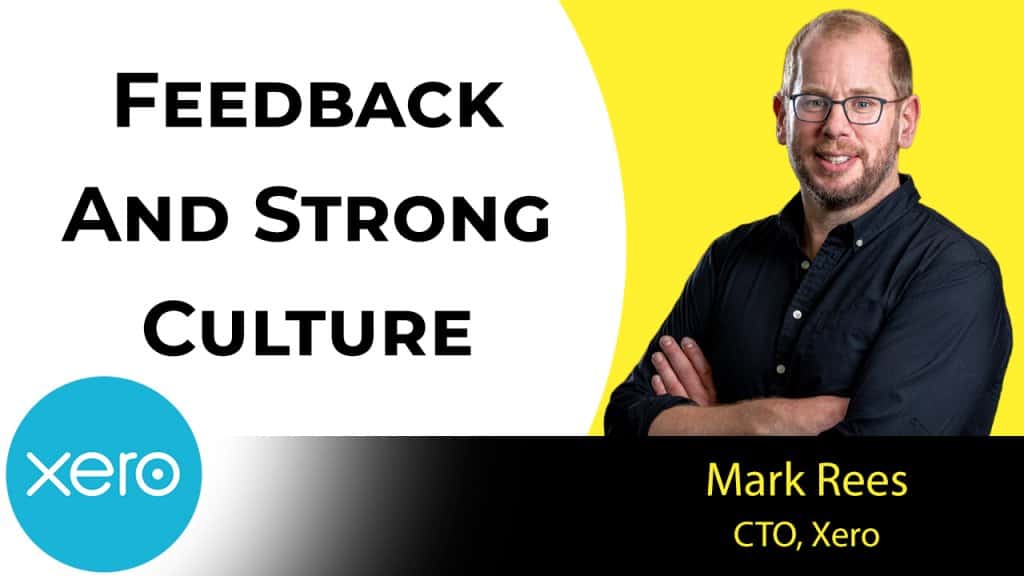
About Mark Rees:
Mark Rees is responsible for Xero’s global technology strategy and direction.
At the center of Mark’s role is enabling Xero’s platform for innovation, growth and operational excellence with the support of world-class talent across Xero’s platform, security, data, engineering and architecture teams.
In his time at Xero, Mark has been a key part of driving some significant achievements at the company; not least of which is the scaling of Xero itself; from a startup to a global tech company. This scaling has been relentless — from 10 teams to 14, then 22, 36, 60, and now over 100.
Prior to joining Xero, Mark was Chief Technology Officer at Microsoft New Zealand and Chief Product and Technology Officer at Trade Me.
Mark graduated from the University of Canterbury with a PhD in Chemistry and a Bachelor of Science in Chemistry and Mathematics. He was also a research fellow at Technische Universiteit Eindhoven.
About Xero:
Xero is a cloud-based accounting software platform for small businesses with over 2.7 million subscribers globally. Through Xero, small business owners and their advisors have access to real-time financial data any time, anywhere and on any device. Xero offers an ecosystem of over 1,000 third-party apps and 300 plus connections to banks and other financial partners. In 2020 and 2021, Xero was included in the Bloomberg Gender-Equality Index and in 2020, Xero was recognised by IDC MarketScape as a leader in its worldwide SaaS and cloud-enabled small business finance and accounting applications vendor assessment.
Transcript
(Joel Beasley at 00:00:02) Hello, my friends. Today we're talking to Mark, CTO of Xero, and we discuss what it's been like scaling a fast-growing tech company in New Zealand, how Xero differentiates itself with its culture to attract top talent, and why it's imperative to keep tight feedback loops with your customers, developers, and leadership. All of this right here, right now on the Modern CTO Podcast.
(Joel Beasley at 00:00:33) Here we go. This is the Modern CTO Podcast.
(Mark at 00:00:45) I started at university, actually. I studied science. I did an honors degree and then a PhD in theoretical chemistry. So it's kind of understanding the world. It was a lot to do with a certain complex system of polymers and how they grow, and I really loved the kind of depth you can get to understanding a really complex system like that and how it works and how it fits together and, you know, delving into understanding it more.
(Mark at 00:01:13) So I did those degrees in New Zealand, and then it's a very natural thing in science, but also particularly for New Zealanders, to go and live somewhere else. So I left and I moved and traveled to Eindhoven in the Netherlands, which is pretty much as far away from New Zealand as you can get. And I did a postdoc there, so a co-sponsored piece of work between a university and a company. So I did that for a year, and I got to the point where I sort of felt like a bit of a crossroad. So I'd been doing all the science for a long time.
(Mark at 00:01:50) And I was looking ahead at the rest of my career, thinking, do I want to stay working at university and the life that comes from that? And I decided that I wanted to do something a bit different, maybe a bit more business-oriented, a bit more dynamic. So this is kind of before all the great online courses that are around the world today. So I taught myself Java during that time, and then I traveled with my wife and moved over to London. And I spent four or five years there working for a whole bunch of companies and really immersing myself in lots of different types of technology companies and domains and problem spaces, and it's actually one of the most satisfying parts of my career.
(Mark at 00:02:39) I remember working—I worked at a hedge fund for a while, and, you know, I'm working on this really interesting, kind of mathematically complex problem, and you have that feeling when you're writing code and you get in in the morning and you get immersed in that problem you're trying to solve. And before you know it, it's 2:00. You started to get hungry, but you have that real sense of flow and kind of immersion. And so I really love that.
(Mark at 00:03:04) And so I did that for the time we were there, and then I reached the point with my wife that we decided we had to decide between staying in the UK or coming back to New Zealand and starting a family. So we moved back to New Zealand. That's really the start of my career, and still really hasn't looked back. I think it's like many careers. It's a bit of serendipity in the way it plays out.
(Mark at 00:03:27) You know, you kind of study something, and then you are in a situation and you're presented with an opportunity and things kind of evolve from there, like the way you talked about your career. It's not like it's a plan you draw up when you're 18 and you follow it. There's more just you meet these people and this opportunity happens and this person goes away or something, and things go from there. My path and my career is a bit like that as well.
(Joel Beasley at 00:03:50) That's really cool. So you spent a lot of time in academia. Why did you decide you wanted to enter the business world?
(Mark at 00:03:59) So to me, I think about it a bit. So I think academia would have been great, and getting lost in a narrower problem space and understanding it really in depth is something that I enjoy. But I felt like I wanted a bit more diversity and change and the opportunity to experience lots of different spaces and problems. Rather than going deep in one area, I, by nature, I think I enjoy the change that comes from working in different spaces and different domains. And so it seemed to me that working in business and technology would give me a sort of more dynamic kind of work environment with lots of different problems and spaces and change.
(Mark at 00:04:37) So, you know, my job is very busy now. Sometimes I look back at some of my friends who are professors and I'm jealous of the opportunity they have to kind of have all that space to think, because, you know, that's a real luxury when you end up running a big team. But it was that choice of kind of change and dynamism that I really wanted, rather than just focusing on a narrow space. Does that make sense?
(Joel Beasley at 00:05:06) So you're at Xero now. Am I saying that correctly?
(Mark at 00:05:10) Xero. Yeah, that's right. Yeah.
(Joel Beasley at 00:05:12) Cool. So how did you meet the team and get involved there?
(Mark at 00:05:15) Yeah, no. So Xero's an accounting software-as-a-service platform. It was founded in Wellington, where I'm from. It's pretty unique in New Zealand. It's probably the only technology multinational that has started from New Zealand, and so it started in Wellington. Wellington's a really quite small city. It's like 400,000 people, and so, you know, I was working for Microsoft in New Zealand, and I did some work for Xero, some consulting early on. But the nature of that city is there's lots of connections between everyone because it's quite small, so I had a bunch of friends there. I was just like, wow, this is really exciting, a rapidly growing company in a really interesting domain with technology problems that are kind of fascinating, which you only, I think, get in really big tech hubs around the world—the problems of kind of scale and growth. So there's the opportunity to live in New Zealand, which I love, and work for this company that was growing quickly, facing kind of technology and growth challenges that are really the kind that the really big tech companies face. So it's the best of both worlds.
(Joel Beasley at 00:06:34) Yeah. That's awesome. That's something on the podcast that we recorded yesterday. Joel was talking about how he lives in a pretty rural area of Tennessee, the United States. And they have brand-spanking-new Internet out there because they just didn't have any Internet infrastructure until like two years ago.
(Joel Beasley at 00:06:59) They just got it. So they have the latest fiber. He has like gigabit up and down. And he was talking about how it's just really cool that now you can live anywhere and run a tech company, and there's not as much brain drain from these smaller areas. People are able to stay where they love and bring value to their local communities, which is just super cool. It kind of sounds like that's where you're at.
(Mark at 00:07:28) Yeah, it's amazing. I think even with the pandemic and the changes there, it's kind of moved in the opposite direction of what it did in the past, where people have—when I—I know we've experienced lots of New Zealanders coming back to New Zealand who have been working overseas for the Googles and Microsofts and Facebooks, coming back because of the pandemic and realizing that they can have great careers with tech companies like Xero and others around the world now, based in places where there's a great quality of life and great communities that you can become really connected with and contribute to. I think it's fantastic.
(Joel Beasley at 00:08:09) Yeah. That's really cool. So what are some of the biggest challenges that you're solving today? You mentioned that that's one of the fun parts of the job.
(Mark at 00:08:18) That's the best part. Yeah. So Xero's—I've been at Xero for about nine years now. So it's been growing really quickly. We've got about 2.7 million subscribers spread around the world, close to 4,000 people.
(Mark at 00:08:35) And a lot of the challenges I work on are really to do with balancing out two things, which I think are really core to a CTO role. One is there's always this pressure to ship valuable things for your customers more quickly. These product tech companies are all about meeting customer needs in a really beautiful and creative way. That's definitely our philosophy. So you have to spend a lot of time on enabling and hiring and growing your capacity to deliver great product to the customers.
(Mark at 00:09:07) At the same time, you need to continue to earn that customer trust, especially in a domain like accounting when you're dealing with financial data. So we need to make sure that the site is really stable, that it's secure, that we honor the commitments we make to our customers about how we use their data. So there's these two forces, right? You need to accelerate and drive change and go quickly, but at the same time, you need to manage trust and stability and security.
(Mark at 00:09:34) That's kind of the intrinsic kind of balance. What makes it interesting, I think, is it's not a static problem, right, because the growth means that the number of engineers that are working on that or the number of customers, the number of locations is changing all the time. So it means that the set of solutions you develop to solve that problem and get that balance right when you have a million customers is really different from when you have three million. So you need to challenge yourself to be kind of skating to where the puck is or thinking ahead to make sure that you really evolve your ways of thinking and planning and hiring and leading and all those things to adapt to the environment. One example of that is we used to, when we were all in one location in Wellington, we used to do a lot of kind of in-person sharing and communication sessions, and, you know, you could probably walk around the office and connect with everyone.
(Mark at 00:10:33) Now with—we have engineering teams in about five or six countries, 10 locations around the world, and staying present with them, which is really important as a leader—you can't connect with them in person, and that's kind of accelerated by the pandemic. So I kind of adopted this mechanism of writing a blog or an email every week just to try and share what I'm thinking about, to connect with all those things, to try and make sure that you create some connection and presence. But I use that as an example of how you kind of have to really evolve the way you think and lead as things change. And, I mean, the interesting thing about that is it requires a lot of feedback to know how to change, and so I think being really curious and open-minded and connecting with lots of people in the company is really key to that.
(Joel Beasley at 00:11:22) So, yeah, obviously feedback is key to having really effective change and constant change. How do you conquer the challenge of getting really good feedback at scale? Because you're talking going from one to three million customers. That's a lot of people to talk to.
(Mark at 00:11:40) Yeah. It's a hard problem, and I'm not saying I think that we have solved that completely, but I think it's just—it's feedback from the customers and also feedback from the staff as well, right? And so I think it's a mindset thing about curiosity and seeking it out.
(Mark at 00:12:00) We have some really good programs for connecting with our customers. I do this thing that I love where every month we have these detractor calls. So there's a set of customers who are really unhappy or who have left the platform. So we set out some members of the leadership team. We have an hour, and we call up three of those customers, and we talk to them about their experience or why they're unhappy or why they're dissatisfied. And the customers are normally quite surprised to have the CTO calling them and appreciative of it, but you learn so much about the end user experience and the kind of wrinkles in the way things are working and the reality of the product and the choices you're making, which is really fantastic.
(Mark at 00:12:47) I really love that. And that makes it real, and that's a good balance to all the quantitative data we get based on the feedback about the product's usage and NPS surveys and all the tools that we use to try and understand that customer base. I think that direct contact with customers and those stories—that's the most visceral kind of feedback you can get as well. And the same kind of applies to understanding the people, you know, the Xeros. There's the—we use OfficeVibe and those tools to kind of understand and get feedback, but there's no substitute for talking to people and hearing their experience. So I try and focus on spending some time on that as well.
(Joel Beasley at 00:13:28) Yeah, absolutely. So tell me a little bit about the product itself. I know it's a SaaS solution for accounting, but what is the problem that you solve that, like, you entered market and people are like, wow, we have to go to Xero because this was unsolved previously?
(Mark at 00:13:47) Yeah. So our customers are really small businesses. So they're plumbers and they're builders and they're small online businesses. And those businesses, they are often started because the person has a passion for what they want to do, and they care about their business and growing and that stuff. And they don't normally have a passion for bookkeeping or tax returns or invoicing or stuff like that.
(Mark at 00:14:11) So they want to focus on their job and how they can run and grow their business and earn a living for their families. So we built some great cloud software that really streamlines that experience for them to do everything that comes to financially related to managing their business. So that ranges from invoicing to preparing, sending out their invoices to their customers, and getting paid. That's a really key workflow. Managing the cash that they get in business—a lot of these small businesses, they run their business based on how much cash they have. That's really key.
(Mark at 00:14:45) And so helping them understand the payments they're receiving and the payments they're making, that's really important in getting a view of how much money they have anytime. And then the whole process of preparing and filing tax returns, and that often happens in concert with their accountant or bookkeeper. And there's a couple of things that I think are really key to how well Xero has done. The first is the real focus on a beautiful experience. We know that our customers, they don't seek out the opportunity to do their bookkeeping, but we've spent a lot of effort on the design and user experience. So it's actually as pleasurable as you can possibly make it. So they really enjoy it.
(Mark at 00:15:14) And then also, many of the customers have a partnership with an accountant and a bookkeeper. And, you know, the proverbial end of year, you have a box full of receipts, and you give it over to—but the cloud software and the ability to collaborate allows them to work together on the same set of data in real time. So it cuts a whole lot of friction out of that process and allows the accountants to sort of transition into being business advisors or kind of coaches rather than administrators. So that flow of the data and administration and being taken care of by the software—they can focus on giving really good advice to these small businesses, helping them grow and run their business better. So that's the kind of power of Xero. Yeah, there's a lot to go with that.
(Mark at 00:16:13) I think because—and there's, look, this change was driven by the cloud computing wave, but we are really excited, investing heavily in the way we can use the data we have about our customers to change the experience. Because you think about accounting as one of those domains where there's massive opportunity to improve customer experience with data and machine learning. So that's a big bit for us, and that's a really exciting journey.
(Joel Beasley at 00:16:43) Yeah. Like, you have the proverbial stack of papers coming in at the end of the year. Are you using some machine learning tools to understand what's even in the stack and then sort and make it useful?
(Mark at 00:16:57) 100%. Yeah. There's three kind of categories of work in that space. One is the one you described where, you know, the small businesses and, you know, I'm sure you're the same as me. A lot of the way you buy and sell things ends up online and then the PDFs and email, and, you know, that's the paper of these days.
(Mark at 00:17:19) So we've done a lot of work to help these customers ingest those PDF documents into Xero, you know, with OCR and machine learning technology. So all the friction of getting the data into the product is taken away. We also get lots of feeds of data from the, you know, banks and PayPals and Stripes of the world. So there's a lot of work on that ingestion. And then at the core of accounting, it's matching, right? So it's matching, you know, the invoices you've set up and created with the payments that come in. So there's a lot of technology about reconciling those two sides of the ledger. And so we put a lot of work into matching technology to reconcile, say, something that comes in from your bank feed, a statement line, to the invoice that you sent out for, you know, the job you did at work. That's a fun machine learning problem as well that we've made some really good progress on.
(Mark at 00:18:13) And then the third category of things is actually the most exciting, right? So once you get high quality data in the software and you've categorized it in terms of accounting, you can start to use it to do all sorts of things. Like, we launched a product last year that does cash flow projections. Like I said, these businesses, a lot of the way they run the business is based on how much cash they have. So we can look ahead and say, oh, this is the money going out for payroll. This is historically what you've spent. This is what your cash flow looks like into the future. And so how about we chase these invoices for you that are late so you can manage that dip in cash flow that comes. So just to take away all that worry, you know, that the small businesses have so they can focus on their jobs. It's almost like this idea of business on autopilot, right, where you set it up. You set a set of objectives with your accountant, and the software helps you run it effectively to get to where you want to go. And so there's just so much opportunity in that space to do interesting things. And then, you know, there's opportunities with benchmarking, you know, accountants using benchmark data about what other firms do, give advice to their customers. So you can see why someone's paying more for something or a similar business paying more tax or less tax. You know, the comparison is a really powerful tool we can do as well.
(Joel Beasley at 00:19:37) That sounds incredible. We've been talking to several AI experts and, like, philosophers on the podcast recently because we've been kind of chasing the topic of, you know, what happens in 20 to 50 to 100 years when all the jobs get automated away. So there's been, like, a lot of conversations around ethics and AI, and there's big examples on, like, getting loans based off of algorithms and whatnot. But I imagine in accounting, you're more following rules than, like, making decisions that can help or harm someone. Is there much of an ethics discussion around?
(Mark at 00:20:13) Oh, there's a big ethics element to it as well. Like, we have been quite focused on that. So, you know, for example, we allow customers to access services, which means they can borrow money against their invoices. So we started by, we made a series of public statements last year called our responsible data use commitments, which are statements we made publicly about the way we're going to consider the space and the way we're going to treat customer data and the way we're going to, the standards we're going to set ourselves for the way we deal with bias, which I thought was really important. And we have an external advisory group, you know, accountants and small business owners and experts and stuff that are kind of advisors to us on the things we do in this space. It's an obligation for platforms like us to be really forward thinking in the way they deal with it. Of course, I think the other key part of preparing to deal with these problems as well is the diversity of the teams you have as well. So, you know, I think that's kind of probably one of the most powerful things, ensuring that the team of engineers and product leaders and scientists they're working on represent the diversity of your customers and kind of culture that flows through the company as well. So it's something we're, it's amazing. Like, I think you just as a SaaS platform like us, you can look at other bigger companies and go, oh, that's the kind of problem they're going to have to deal with because of the coverage in the news and the scale and stuff. But I think it's really important to go look if they're going to learn for yourself about yourself and kind of be very curious about the space that you can encounter those problems as well.
(Joel Beasley at 00:21:55) For sure. There's a saying I've heard a couple times around cybersecurity, never let a good disaster go to waste. And I think that applies to disasters of algorithms going rogue as well.
(Mark at 00:22:11) I'm hoping the world is changing a bit to put more value on trust and ethics with data and companies. You know? I think it is. I think that's a really good thing.
(Joel Beasley at 00:22:23) I agree. Like, everyone I talk to, observability is a big focus and making sure that, like, you actually know what's going on. They're not creating a black box. So, yeah, I think that's a really good thing. And it sounds like you guys are doing all the right stuff in terms of the setting up the inputs for success for your algorithms. But I'm curious. How do you monitor the outputs to look out for any bias occurring? Where do you look for red flags is my question.
(Mark at 00:22:52) Yeah. Yeah. I mean, that's a really challenging problem, right? Like, the nature of these algorithms means interpreting and unpacking the logic behind the decision making is not, and there's a bunch of science evolving around explainability of these algorithms, which I'm sure you've had people talk to you about. And so that's something we're investing in understanding and building capability and monitoring as well. I think it's not something that we have a bulletproof solution for yet, but it's a focus and we ask the teams to have plans in place to monitor and assess bias as part of the design of that algorithm before it's kind of reviewed and signed off. But, yeah, I, that's, I'm not sure we have a silver bullet solution. It's just something that we're aware of and planning and investing our and growing capability for. It's definitely an emerging area of science as well. I think there's some good steps being taken and evolving kind of explainability and, you know, the understanding of some of the logic behind the choices that are made by the algorithms.
(Joel Beasley at 00:24:00) So you mentioned earlier a huge tool for combating the bias in AI is having a strong diverse team. So I want to talk a little bit about hiring and, like, how you get there. Hiring, obviously, hot topic today with the Great Resignation and everyone is fighting for top talent. So what are some ways that you all are attracting top talent at Xero?
(Mark at 00:24:25) Yeah. It's been a really interesting time period of the pandemic in terms of hiring and the stories about the Great Resignation. It's something that we've been, you know, we're paying a lot of attention to it before then, but really acutely so. And it's the lot of people out of the country. We had the kind of reverse effect. Initially, this would have a brain gain effect where when the pandemic initially hit, lots of New Zealanders and Australians who had been living other places around the world decided that it was wise to come back to this part of the world because of the uncertainty around COVID. So we had a really great spike in hiring. So I've been, you know, before I've been in Xero for nine years. In that period, we've always, we've never been able to hire our targets around, say, product designers. We've always had more heads than people, and so that initial period was the only period we managed to hire those targets in the history of the company, all the great people coming back. So that was really positive to start with. And then we have had a period of really low attrition. I think Xero is kind of at the scale and stability that it's a good place to be during the uncertainty of the pandemic. So we have historically low attrition, lots of people, you know, staying in their jobs since then. And we've actually done really well on our hiring as well through this period. Like, we had the biggest hiring year in the history of last year, and we were able to hire all the people that we planned to, which is fantastic. So there was a really interesting kind of McKinsey study that talked about the Great Resignation and how there's companies that are really suffering from it, but there's also companies that have really benefited from ability to hire as well. So we've done well so far, but it's something that's really changing almost day to day. The borders in New Zealand and Australia and around the world being closed has really driven up the amount of competition and, therefore, the amount of wage inflation. I think we historically hired, about 19% of our hires were immigrants to New Zealand and Australia. And with the borders being closed, of course, that's a section of the people you can't hire, so that's driven competition in the markets as well. There's also some really interesting trends, I think, that have been accelerated by the pandemic. There's almost a globalization of the workforce. You know, we talked before about working in remote locations, but we find each of the companies announced now sort of adjusted their mindset to say, oh, it's actually okay to have people working in New Zealand even if you're a startup based in the Silicon Valley or New York or something like that. So we see some, not like a massive number, but to, you know, sort of American-based startups and stuff. So it's becoming more globalized and kind of, locations mattering less, and that's creating some competition on its own.
(Joel Beasley at 00:27:23) Yeah. So do you hire internationally or just mainly in New Zealand?
(Mark at 00:27:28) Internationally. So we have big development locations in New Zealand, so Auckland, Wellington, Melbourne, and then Toronto and Denver, a few locations as well. And so we're growing a lot in the Northern Hemisphere because that's where a lot of our customer growth is. So we're growing that as well. But it's really, it's really competitive. Everywhere you go for tech talent, it's really competitive. We moved to, you know, naively, we moved to Denver to start with to say, oh, this might be a good location where there's less competition, but, of course, there's not. There's intense competition everywhere. And, um, I think, you know, we're lucky because I think we try to differentiate ourselves in terms of our culture and in terms of the flexibility we offer ourselves. So trying to really adapt to what's changing in the world about how people want to work. So, you know, more opportunities around part-time work and remote work and all those kind of things that people really value, I think. And so that's been a positive in terms of our ability to hire. Also, just explaining the quality, the problems people can get to solve as well, which I think remuneration matters, of course, but people also want to work on things that mean something, work with people that they respect and have the flexibility to kind of fit their work into their life. And that's, I think it's really great how that's kind of evolved quite quickly and changed with the pandemic, and we've been trying to move with that as well.
(Joel Beasley at 00:28:54) That's awesome. Yeah. Culture's been, like, at the top of mind recently because as I mentioned to you at the beginning of the call, we're, like, launching this new line of business and hiring a bunch of people. We've actually had several evolutions, but we're moving from a company that makes a podcast to, like, a podcast production agency that has lots of producers and lots of salespeople. And now it's suddenly, like, I'm working with lots of people that are coworkers first, and then I get a, like, friendship with them second rather than just, like, the people we were doing the startup with. And so just today, our CEO had us all just put in items in the Slack. Like, what do you want our values to be? What do you want our culture to be? We're, like, deciding these things right now. So I'm curious. What are some of your favorite parts about the culture at Xero?
(Mark at 00:29:47) It's a great question, and it's really important to us. And it's really something we focus a lot on as we've grown and spread out around the world because, I mean, Xero is interesting because lots of companies, we're kind of the inverse, right, of a lot of tech companies which start in US and they spread out around the world. We started in New Zealand, really small country, and it's gone the other way. And what that means is you have to spread early. You can't build because the amount of talent is smaller, so you have to kind of, you end up being globalized and spread out more quickly. So thinking about the culture and how you maintain it in lots of different places has been a key part of what we've been thinking about. The culture at Xero, we have these single word values that are really deeply ingrained in the company, and so they're kind of markers of the culture and how we communicate. So there's a couple that I really love. One is human. So this is, I mean, this is just a really compelling strength of Xero as a company is that there's a focus on the humanity of the people that work in the company and the customers. And so that kind of kindness and care really comes through our culture. I think it's part of the New Zealand culture is like that as well, and so that's really deeply baked into how we work. So there's a lot of focus on the care we take for our staff and the way we treat each other and, you know, the way we care for our customers. That's a key value. There's another value around beautiful. This is really about the focus on the quality of the experience of the customers of the software. Like, it talks about, you know, this idea that we have these 3 million small businesses who are people that are passionate about what they do, who want to focus on the craft and the care of what they do. They don't, they want to spend less time on the software, so our core proposition is making that a beautiful experience, making it streamlined and easy so they can get back to things they do. And it's a pretty powerful message in terms of the impact we have on our staff, so that's deeply. And then another one that I kind of, there's not that many, but the one that stands out to me is the one around challenge. And I think that's, you know, we talked a little bit about feedback and companies, and, you know, we had, we just had our company kickoff of the year, and we had Kim Scott who wrote Radical Candor talk, which was awesome. But that's the kind of thing we think is really important because that frank and free flow of information and perspectives about what's going on in the problems and how you lean into them, it's just so important for companies, right? Because I think almost all the challenges and the problems and most of the solutions are known within the company. It's just people sharing them and people feeling safe enough to call things out. So that's something we really want to lean into and is a kind of growing part of our culture. So, yeah, I think it's one of Xero's strengths, actually.
(Joel Beasley at 00:32:57) You just mentioned how a lot of times the solutions are in the heads of the people that you already have there, and you just gotta get the best ideas out from everyone. A piece of advice that I heard that I really liked around getting the best ideas from everyone was when you're in a creative session meeting or you're getting together with the intention of ideation, not deciding that you have to have the answer at the end of the meeting and giving space for everyone's brains to work on it in the background after. And obviously, that's good because the longer you stew on something, you might come up with something even better. But what I thought was really cool about that and being intentional about doing that is it gives space for people that are just more shy to speak up. And so that the loudest ideas aren't always the ones you go with.
(Mark at 00:33:50) I really like that as well. I think that's a lot about being a leader is creating that space for people to kind of acknowledging that, as you said, people work in different ways. I think it's easy to assume everyone's like you. You know? And I think the way you learn that with a team is, you know, kind of create a space for them to talk to you about what, because I'm, for example, I'm the person I can quite quickly make decisions.
(Mark at 00:34:14) That's just the way my brain works. But I have, you know, in my team, I have some of the smartest people you can imagine, but some of them like to take the time to contemplate things. So, and think things through, and that's really important. So if you rock up in a meeting and go, here's the problem. What's the solution? Then you don't get the best out of people, where sharing, you know, as simple as sharing a preread or talking about a problem and then, as you said, not expecting the solution straight away. Coming back to it some other time is such a powerful way to unlock people.
(Mark at 00:34:49) I think that kind of mindset is not, that people are quite different about how they process things and think about them. And you wanna get the best out of the team, you have to be intentional about how you think about setting that up.
(Joel Beasley at 00:35:01) So before we come up on time, I wanna ask you a couple leadership questions. We've been talking about leadership, but so your direct reports are, I assume they're also leaders. You're leading teams of teams at this point. If you could design the perfect leadership training program for your direct reports, what would be the most important one to two concepts?
(Mark at 00:35:22) Yeah. Two things that I think are really important with leaders of teams. One, the first one is kind of patience. So it's a little bit related to what we were just talking about then is that, you know, there's a lot to get done in companies like Xero quickly. And quite often, I have found and that I talk to my teams about is that, you know, as a leader of a big team, you set some objectives and work together with them on the strategy.
(Mark at 00:35:50) And then it's a lot about waiting long enough to let things play out because, you know, the more senior you get, I think, the slower it feels for things to happen. But that's, it's just creating that space for teams to kind of go through the cycles of understanding the planning and working things through. So that kind of patience is really key. Most important thing you do when you lead people is that open and candid feedback. I think that's a really big obligation as a leader to be able to kind of have the skill to give people the feedback about how they're going to help them develop.
(Mark at 00:36:25) Like, I think that kind of, that skill you develop all the time and the bravery to do that is really important. Lots of people, I think, can flow through their careers of just taking an easy path on that. But great, talented people, they want to get better and they want to learn. And so developing the skills and the bravery to talk to your staff and give them feedback about how they can get better and develop is like, is one of the biggest obligations of a leader, I think. And so I think making sure you learn how to do the coach and kind of give feedback to your teams and encourage them to do that with their teams is really critical.
(Mark at 00:37:07) It's really important. Those would be two things.
(Joel Beasley at 00:37:11) That's something that I've particularly been thinking a lot about is being very proactive with getting feedback several times in the episode, but being proactive about providing feedback. And if anything at all is not the way it should be running, just telling those people rather than sitting there and stewing on it, like, why they should know how to do this. Like, that's not helpful for anyone or the company. And so that's, someone told me as some of the best advice I've heard is that no one should ever be surprised that they're being let go. Like, you gotta give the feedback early and often that, hey, this isn't working right.
(Joel Beasley at 00:37:54) And if it continues to not work right, this is what will happen. That's, yeah. You're just hitting on something that has been a big learning for me because I've just been the kind of an individual contributor for a long time, producing and making things. And I have complex processes in my head that I think everyone should know. And then, when you have to translate those to other people, you have to get really good at giving that feedback.
(Mark at 00:38:23) I mean, the best moments in my career have been those moments where you've had someone you respect who's taken the time to think hard about the things that you can do to get better, and they've explained it to you with some skill and some examples that has a massive impact. Sometimes it can unlock, you know, a lot of frustration. Like, there's that perspective and thinking about it and seeing things. It's a really, it's the nature of these jobs as well that, you know, if as CTO, I think I would spend, you know, 85% of my time on things relating to people. That's the vast majority of my job is all the things that are key and core to leading people and leading big teams and communicating to them.
(Mark at 00:39:07) That's the core part of the job. I think it becomes less technology and more leadership and engagement with peers and, you know, communication more than anything else.
(Joel Beasley at 00:39:18) So I got one more question for you. If you could go back to Mark at his first time he's promoted to a leadership role in your career, what's one piece of advice you would give yourself then?
(Mark at 00:39:33) Yeah. That's a great question. I think there's different transitions you go through as you develop as a leader. One thing that I found how hard when I transitioned from a sort of an individual contributor to a leadership role is that I love the experience of creating things and directly and the kind of hands-on work of building software. And so transitioning into a role, you get time to do that.
(Mark at 00:39:59) Less was a difficult transition because you live more and you experience rewards more through the work of others. And so I would have encouraged myself to think about how I was gonna get the satisfaction I got from creating things through different mechanisms, and they can be something on the side or it can just be adapting the way you think about the value you're providing. So I think I found it, and I see some of my teams go through a phase where they feel like, oh, I'm not doing the thing that I was doing to deliver value in my job now. And what am I about, and how do I get the satisfaction I had before, in what I do. So I think facing to that problem, you know, kind of learning about the value that you provide as a leader and potentially finding kind of avenues to get that satisfaction from something else is really important to step into.
(Mark at 00:40:58) I mean, that kind of changes as you get more senior and you get, you understand your role more, but I think for that initial hands-on technology to leadership role, it's a really important thing to get your head around. I think you also, you need to keep some connection with the work of the people you manage, but you just, by naturally, get less time to do that, and some people find that change quite hard, and I did initially.
(Joel Beasley at 00:41:20) Yeah. You're kinda hitting on a spot for me. I'm, right now, not actively making a lot of things anymore. And I get to watch my, like, my coworkers creating all this cool content. And I'm like, man, that looks like fun.
(Joel Beasley at 00:41:39) Like, but I'm finding it really exciting to focus on the results that are happening. And that's super cool to watch. And also, thinking about the impact that I get to have of, like, kinda created a line of business that is now providing employment for these people that I like. And that's so cool.
(Mark at 00:42:03) It's amazing. I agree with you. Like, the satisfaction you get from leading groups of people, seeing them develop, and the impact you can have is amazing over time. Like, it is deeply rewarding. I mean, there's nothing better I find in my job than hiring great people, giving them opportunities, and seeing them develop.
(Mark at 00:42:23) Like, it's deeply satisfying.
(Joel Beasley at 00:42:25) Well, I wanna be respectful of your time. Before we wrap up, do you have anything that we didn't get to touch on today that you wanna throw some attention towards? I know you guys are always hiring. If people heard this and they wanna reach out, where can they find you?
(Mark at 00:42:44) Yeah. We have a career site, xero.com/careers. I think we covered everything really well there that I wanted to talk about. Yeah. But we are, we are growing really quickly.
(Mark at 00:42:56) We have lots of fantastic jobs across engineering and data science and places around the world. And, you know, like, I'm biased, but it's a really, it is a really great place to work, and we have some fascinating problems for technologists to work on.
(Joel Beasley at 00:43:15) Thank you so much for listening. And if you found this episode useful, please share it with a friend or colleague who you think would get value from it. And if you have topics that you'd like to hear discussed on the podcast, either add me on LinkedIn or send me an email [email protected]. Every time I get an email or LinkedIn message, it absolutely makes my day and inspires me to keep going.