
Episode 458 ·
Ultra Wideband & the Future of Telecom with Kyle Malady, EVP at Verizon
Today we’re talking to Kyle Malady, EVP & President of Global Network & Technology at Verizon; and we discuss Verizon’s rollout of ultra wideband and millimeter wave technology, the R&D labs working on cool tech within Verizon, and what to expect in the future of telecom.
All of this right here, right now, on the ModernCTO Podcast!
To learn more about Verizon's technology, check them out at https://verizon5glabs.com
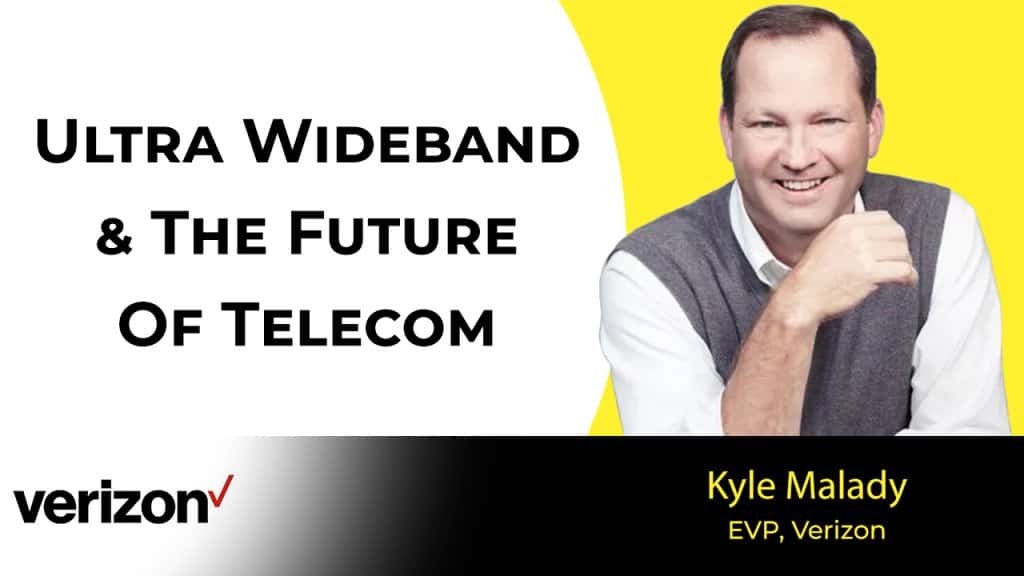
About Kyle Malady:
Kyle Malady is the EVP of Global Networks and Technology and CTO of Verizon leading more than 45,000 dedicated employees. His organization leads Verizon's efforts in building the 5G network, the platform for 21st century innovation. He is responsible for the nation's leading wireless network, the nation’s largest residential fiber broadband service in FiOS, and a vast IP network serving global customers in over 145 countries, making up the Intelligent Edge Network. He is also responsible for VZ's product development including the development of Mobile Edge Compute. Additionally, he oversees the VZ Information Technology systems, including the digital transformation of customer and employee systems.
Malady began his career in the late 80's as a cell site technician for NYNEX Mobile Communications, which became Bell Atlantic Mobile and turned into Verizon Wireless through mergers. During his tenure he has held a variety of positions in operations, planning, technology, engineering and finance. Most recently, Kyle was head of the Core Engineering and Operations organization within GN&T. There he was responsible for the planning, design and operation of Verizon’s global voice, data and IP networks as well as the engineering and operation of the Intelligent Edge Network.
Kyle has also served as Verizon’s vice president of New Product Development, with responsibility for developing core technologies that enabled new products and services. Under his leadership, Verizon launched platforms such as VCast Music and Video, VZ Navigator, Push to Talk, VZ MobileWeb, the Verizon App Store and other platforms that served as the springboards for the next generation of wireless data services. He was instrumental in developing and commercializing 4G LTE.
About Verizon:
As one of the world’s leading providers of technology, communications, information and entertainment products, Verizon is transforming the way people, businesses and things connect. Here, we have the ability to learn and grow at the speed of technology, and the space to create within every role. We’re a diverse network of people driven by our aspirations and shared purpose, committed to shaping the future. Together, we are moving the world forward — and you can too. Pursue your ambitions and shape your future in a career here.
Transcript
(Intro Narrator at 00:00:02) Hello, my friends. Today Joel is talking to Kyle, Executive Vice President and President of Global Network and Technology at Verizon. And they discuss Verizon's rollout of ultra wideband and millimeter wave technology, the R&D labs working on cool tech within Verizon, and what to expect in the future of telecom. All of this right here, right now on the Modern CTO Podcast.
(Joel Beasley at 00:00:33) This is the Modern CTO Podcast. I wanted to catch up with you before we did this. About like five minutes before I'm doing this interview, I get a message from Adam and he says, "Hey, his title is not CTO anymore. He's now EVP, President, Global Network and Technology." And I was like, "That's exciting. That sounds like a cool title." And I was just curious from the last time we talked, I think about two years ago to now, how has your role progressed and how have things changed?
(Kyle Malady at 00:01:11) Well, I mean, the title—I'm still doing the same job, right? But the title, we just made a few org changes kind of to simplify some things. So I relinquished the title to the person who's actually going to run really my real planning, hardcore tech area. So I just gave that title up to him. I mean, my job still is exactly the same. But a lot has changed since we last talked. I think we talked quite a bit before COVID, and so many things have happened technology-wise and in society and around the world, and new things keep popping up every day. So it's a vastly different industry and world since we last talked, actually.
(Joel Beasley at 00:01:56) Yes, we met in a simpler time.
(Kyle Malady at 00:01:59) Yes, it was a much simpler time.
(Joel Beasley at 00:02:01) Yeah. And actually, one thing I wanted to catch you up with, because it's been so long—you gave this piece of advice about time management, about slicing up your time into like a pie chart. And I took that quote and went around the world and injected it into one of my talks, and I was like, "Kyle does this." And so I don't know if you know that, but it happened.
(Kyle Malady at 00:02:20) Oh, good. Oh, cool.
(Joel Beasley at 00:02:21) And I've gotten so much positive feedback.
(Kyle Malady at 00:02:24) You have? I mean, that's—I mean, for me, because I still use that, and that's actually what helped me—we changed our org a little bit, and I found that I wasn't spending time on some important things that I felt I needed to and not giving it the right amount of, you know, I just wasn't—I couldn't put the time aside to work on it like I wanted to, and that resulted in a lot of why we did this org change. So now I've come up with my plan on how my time is going to go, and I think the new structure will support it. So I actually, you know, I use that quite a bit in practice as well.
(Joel Beasley at 00:03:01) Excellent. And can you just give me like the quick overview of that for people who haven't heard it?
(Kyle Malady at 00:03:07) Yeah. So I'm always, all the time, looking at where am I spending my time on any given day, and I keep track of it, right? So am I spending most of my time internally, just working with my people? Am I spending my time outside working with partners and vendors? Am I with customers? Like, where is my time allocated to? And what I do before that, I think about where do I think the optimal mix of my time is, right? Because it's a mix of everything. And what do I think that should be? And then as I go through days, I look at how I'm really doing it, and then I make adjustments as I go. But sometimes, unfortunately, what happens is there's not enough hours in the day, and then you need to readjust and you look at, okay, where am I going to spend my time, or what do I need to do with my organization, or what do I need to do otherwise so I can get back to the area that I think I need to be in.
(Joel Beasley at 00:04:00) Absolutely. And for me, it's been a lot about what I've been learning. So I guess when I met you, this was more of a hobby, the podcast. Now it's my full-time job and we've got about 11 people. So it's turned into this big thing and it's super exciting. But so I've been learning—as I'm talking to people like you and other great leaders, I'm also going through the growth of my business. And so I'm implementing some of this information and trying it and getting some real experience with it. And your time management stuff always rings in my head. In fact, I actually have a recurring event in my calendar that fires off every three months to make sure that I'm spending time correctly.
(Kyle Malady at 00:04:36) Oh, well listen, I mean, it's worked for me, and you put—you could put your own kind of wrap around it, how you want to use it. But especially, like, yeah, congratulations. I've looked at your website and you continue to get more and more content on there, and that's great. Now you have more folks working for you. Now, you know, now you're helping—you have an organization that now you have responsibility where people are working for you, and you have to feel that responsibility because they have livelihoods on the line as well. And you know, you're trying to grow your business, and then for you, you're the CEO of this company. So you really have to watch where you're going to spend your time, and unfortunately, some of the time you probably find right now, where before it was fun and you could spend maybe more time in the fun parts—now there's bits and pieces right now probably that aren't so fun, but you need to spend time on them. And you know, that's good. It's driving you some rigor for you.
(Joel Beasley at 00:05:26) Yeah, it's motivation to grow the company further so I can take those tasks I don't enjoy doing and offload them into a new role.
(Kyle Malady at 00:05:36) You could do that too. Yeah, absolutely.
(Joel Beasley at 00:05:40) So one thing I was excited to talk about, I just learned about this, but Verizon decided to make all calls to Ukraine free.
(Kyle Malady at 00:05:48) Yes, absolutely. We do that quite a bit, Joel. So when there's—when our customers are having times of angst or, you know, a lot of times when there's natural disasters or tornado comes through somewhere or there's some forest fires or hurricane or things like that, we tend to give free calling. So, you know, it gives people one less thing to have to worry about when they're dealing with a time of crisis. So, you know, it's something we do quite often.
(Joel Beasley at 00:06:18) Yeah, it's been amazing how the world has responded to this whole thing. I saw somebody tweeted at Elon Musk and they were like, "Hey, we need Starlink," and he literally got them Starlink, I think, within 72 hours. And then you guys are making calls free. It's just like, it's very empowering. I've got a team member and a good friend—I've worked with him for like 10 years—who's actually in Kyiv. And so we email back and forth every single day, and he just says it's like an action movie. He goes, "It's quite honestly crazy. It feels like an action movie, and every day is just entirely different."
(Kyle Malady at 00:06:53) Well, you see the things on the news and it's just really upsetting. You see all the people that have to leave their country and all the little kids and, you know, you see these bombs and people being killed, and it's just such a—seems just such a waste of life, or I'm not sure exactly what, frankly. But we do what we can in terms of our customers in the country there, because, you know, Verizon is a worldwide company. We have services in over 145 countries around the world, and of course some of our customers have operations in Ukraine, Kyiv. And so we are supporting them as best we can while there's a war going on there. So, you know, we're very, very anxious about security, and you see a lot of things going on about cyberattacks and other folks picking up, you know, attacking now Russia and other places. And so there's a lot of activity going on cyber-wise, so we're really on high alert to make sure everything that's going on in our networks is good and we're not being attacked or, you know, bad things are going on inside our networks. That's something that's top of mind at the moment.
(Joel Beasley at 00:08:02) So is that just you keeping your CISO close, or—
(Kyle Malady at 00:08:06) Oh, well, we have a CISO, we have a large cyber group here that makes sure everything's—you know, we're not being attacked, et cetera. Or if we are attacked or if we see issues in the cyber world, we're able to respond accordingly and keep our networks and customers safe. But this just raises the—you know, it just heightens the risk that's out there as people take up their computers to do things. So, something that we're keeping our eye on, and really our hearts go out to everybody in Ukraine, and hopefully something happens here that this stops soon.
(Joel Beasley at 00:08:44) Yeah. And this weekend, my pastor actually addressed it, and rarely do they address things that are happening in society, right? And the takeaway that I got from that message was do what you can where you're at. So a lot of people want to do something huge and some big superlative, but it's really just wherever you're at in life right now, whatever your means are, whatever your positioning is, just do a little something. And if we get billions of people to do a little something, it'll make a huge difference.
(Kyle Malady at 00:09:12) Yeah, no, I think that's really good advice. I mean, I think there was—you know, Gandhi, I think at some point, he said, you know, think globally but act locally. So if you can do, you know, you could do lots and lots of little things, help out. So I think that's really good advice from your pastor.
(Joel Beasley at 00:09:28) So I am a Verizon customer. I have been for at least a decade. And I think two or three weeks ago—I'm in Tennessee now. So I was in Florida the first time we talked. We moved to Tennessee. And about two, three weeks ago, this little UW thing popped up next to the 5G on my phone, and it started going way faster. And I was just curious, what is that?
(Kyle Malady at 00:09:53) So that is probably—you are seeing our C-band deployment, what we call our C-band deployment. So for those folks who aren't totally into the wireless industry, when the industry started decades ago, there was a small, kind of thin sliver of spectrum that was allocated for companies to build cell phone networks out of. And then as time went on, though, people—you know, more and more people started using the devices until such time as we are, where at one point there was maybe 10 people in a 50-mile radius area that might have had a phone in the back of their car, to now every single—you know, everybody has them, and they're using a lot more data and a lot more bandwidth. So over time, the government's put out more bandwidth, and, you know, we've always been—so you can add capacity by adding more spectrum. And there was an auction just recently we call the C-band auction, which we won a lot of spectrum in. And basically, we were able to more than double the amount of spectrum in one fell swoop than we had in the whole, like, 30 years before in something we call sub-6 spectrum. So what does that really mean, all that gobbledygook? It means your phone can support a lot more capability and a lot more speeds. And what we're doing is not only does it give you more capability on your mobile phone, now we're also starting to offer fixed wireless access, so broadband to consumers' homes, you know, as a potential competitor to, say, the cable folks. So it opens up a lot more business for us, but the capability is astounding. If you probably—if you did a speed test when you were doing that, you probably got over 300 megabits a second or even more, depending on where you were. So that's the kind of speeds that we think are also going to unlock people's creativity on what you can do with your mobile phone. So, you know, the platform we're building has so much more capability than, say, even LTE, and way more than the 3G technology. It'll allow developers and innovators to come up with new ways to use this platform to come up with even more new and cool user experiences for us consumers. So it's just—that you saw that makes me really happy because we're in the really early days of deploying this. We already cover 100 million people, but we're aggressively building out the network day after day after day so we can cover everybody at some point.
(Joel Beasley at 00:12:34) No, it's awesome. I'm out in the middle of nowhere, kind of. I'm an hour outside of Nashville, to give you an idea. And so it's a more rural area. And the interesting thing is everybody had waited like 15 years to get fiber internet, and they got it last year. And so we just bought the home a few months ago. So that was a huge selling point for them. "We have fiber internet now." And then I came out here and like, man, gigabit internet speed. And I thought about it and I said, you know, when these late adopters, right, to tech—like internet—when they're buying this technology and integrating it, they're buying newer, better technology than what's in my town, because my previous town had it for 30 years.
(Kyle Malady at 00:13:19) Right, right, right, right. Well, that's true. That's true. And so that's why we're excited about what we're doing here with C-band and another spectrum swath called millimeter wave that even gets crazier speeds. We're getting three to five gigabits a second on a mobile phone in these kind of areas. But those are for more dense urban kind of places because it doesn't carry as far as the C-band. But that's our whole goal—the new technology that we have, we can deploy ubiquitously and over wide swaths of the country and give people choice in terms of how they use their broadband. So we're just at the early days of it, but now we're finally getting after it. People used to ask me back in the days of LTE—probably you were just a youngin' then, as they might say in Tennessee—but, you know, back then, DSL was kind of the big broadband, and people said, "Well, LTE is pretty good. Why don't you start marketing it?" The problem was we didn't have enough spectrum, and the technology wasn't quite as robust as it is now. But now because we have the spectrum and more robust technology that we can get something called more bits per hertz, we can actually do this for folks now, and it's easy setup, boom, you know, you're on. The other thing that's important about it is a lot of people just want to buy broadband now. They're not necessarily interested in getting either the telephony portion of a bundle and/or linear TV, because everybody has their own—you know, they have their own things that they subscribe to, and that seems to be more and more of a thing. So people buying just à la carte broadband is really something that we see continuing to grow, and I think we're positioning ourselves in a good spot to really help folks have choice.
(Joel Beasley at 00:15:05) Yeah. I follow Jim Gaffigan, a comedian—
(Kyle Malady at 00:15:08) Yeah, he's funny.
(Joel Beasley at 00:15:08) —online. Yeah. He did this post like two weeks ago. He says, "I have a business idea. We should bundle all the streaming apps together and call it cable."
(Kyle Malady at 00:15:18) Well, you know what's funny? I mean, that—it is funny. But if you remember back in the day when cable—you had paid television, there wasn't a lot of commercials on it. There was none, right? And now, you know, now you're paying, plus you see commercials endlessly as well.
(Kyle Malady at 00:15:36) You know, I don't watch a ton of TV, but my kids have subscriptions to a lot of the things, and I find myself using the subscriptions more than linear when I do watch, just because I can watch what I want when I want it, and I can pause it and I can stop it and all these kind of things. So, you know what? Listen, I'm behind in this regard. I get it, because I spend most of my time working and doing other stuff.
(Kyle Malady at 00:15:59) But it's really interesting how it's evolving.
(Joel Beasley at 00:16:02) Oh, yeah. I've got the young kids, right? So they like their shows, and it's amazing to see how all the contracts work where this network has seasons one through five. This network has seasons six through ten, all the licensing and everything.
(Joel Beasley at 00:16:16) And you're right, the commercials. I just noticed that because I got the Peacock one so I could watch the Super Bowl and the Olympics and stuff, right? And they do different tiers. It's like, how much commercial you want? You want a lot of commercial, you're $3.99. And then even at the highest paid tier, they still do commercials, but the way that they justify it is we're just gonna advertise other shows on our network. So they'll still do a ten second thing or whatnot.
(Kyle Malady at 00:16:46) Right. No, it's a—but that's, you know, that part of the industry, that's what they're always gonna look to do. Like, how do they get more eyeballs? How do they get more advertising dollars for what they're doing? How do they slice it up? But clearly, that's the trend, right? People do move off linear, and we see that just gonna continue to go. And by the way, mobility, right? So a lot of people wanna watch their stuff when they're mobile too now, just not sit in front of a TV. Or the other interesting thing that I always find is now, you know, when the kids are home from college, there's four people in there, and everybody's watching something different on their iPad or their computer or something else. So it's interesting how things are changing.
(Joel Beasley at 00:17:26) I did have a 5G question for you. Since last time we talked, there was—5G came out. I think one of the reasons why you came on the show was you were announcing that there was the first town in Texas or some state was getting 5G. It was some big thing that we were excited about. But the internet had their conspiracy theories and whatnot about 5G. And I laughed a little bit at it because I understand the electromagnetic spectrum and whatnot. And, you know, I have pulled up that Google image search of electromagnetic spectrum to show people stuff so that they can have a good understanding of where the sun is and where microwaves are and all of this. But I was curious, what were your initial thoughts when that came about?
(Kyle Malady at 00:18:12) Oh, well, I mean, you know, clearly I know the science of this stuff, right? So there was—when that first came out, there was a lot of noise, and then there was the conspiracy theory that 5G caused COVID as well, which was a whole other kind of odd thing, right? People are entitled to their thoughts, but I just always point people back to the science of it all, and if you really wanna understand it, you can go on to the FCC websites, and you can learn a lot more. There's a lot of data, there's a lot of science behind all this, and, you know, just make yourself aware of what really the science is all about. And obviously, you have because you understand the difference between sun and low band frequencies and what the differences are, so there's a ton of science out there on the safety of all this, and I just, you know, if you have any doubts or anything, I just say go read that. The FCC has a really good site that you can look this information up on.
(Joel Beasley at 00:19:12) Yeah. It's not brand new science. This has been around. We've been using this for a long time.
(Kyle Malady at 00:19:19) A long, long time. Yeah.
(Joel Beasley at 00:19:22) So right now, what's going on in your world? What are you talking about with your peers? What are hot topics going on at your level?
(Kyle Malady at 00:19:30) Yeah. I mean, there's a lot of things. One big thing is you've seen a lot about ransomware. That is, I think, if you go around and you talk to different CTOs and different companies, that's top of mind, you know, making sure that you have the right policies in place, you have the right technology in place to make sure that you can deal with some of these. The big thing right now, a lot of it is having people come back to work. So, you know, now it seems like things are settling down a little bit and currently in Verizon. Actually, starting today, we're encouraging folks to come back into the office, who were in the office in the March time frame, to start kind of practicing coming back to work, if you will, right? So we call it Work Forward and start figuring out how people can work in a hybrid environment, right? And it's gonna take some practice because now as the proliferation of video, you know, video meetings, things like BlueJeans, and people got used to working in that environment, now having a mixed mode environment where some people might be in the office and in a meeting room and others will be on a video chat. You know, how does that all work? And, you know, I found it interesting when everybody was on BlueJeans calls, there was a certain democracy to meetings, because, you know, everybody had a little chiclet, and people got used to interacting in that way and looking at everybody, and, you know, I thought from my perspective, the meetings were very efficient and on time, almost to a fault, because you could fit more meetings in because you can end exactly at 3:59 and be on your next call at 4:00, right? So I think we all just kind of fit more and more meetings in, which I'm not sure was the best. There is something to be said about walking from meeting room to meeting room and chatting with somebody, right? So I think we're gonna get back to that, but there's a lot of work going on right now to try and make sure that when folks come back, they have the best experience, and we can optimize this kind of hybrid mode of working that we're anticipating is gonna be the norm, frankly, going forward.
(Joel Beasley at 00:21:52) Yeah. And as you say that, you know, chaining meetings together and things of that nature, it's, for me personally, it's been such an evolution about how I think about that statement, right? Like when I was just an engineer just doing engineer stuff, I thought about it differently than when I was an executive than when I think about it even differently when I get to go and meet past guests and see them in their offices and see what does it look like running a 50 or a 100,000 person company. And they're definitely—I guess, to articulate this the best, it's so interesting to me how most of the things that run our economy are conversations between humans.
(Kyle Malady at 00:22:35) Yeah. I think that's absolutely right. Yeah. That's absolutely right. I mean, that's, you know, leadership matters, right? And how people think and view things and internalize things and then how they make decisions. I mean, let's go back to Ukraine and what's going on over there. I mean, you could—that's a case study in trying to figure out what certain people are thinking here and there, right? And that goes on in the business world every day. What are motivations and how do you perceive them and how do you react to them? And, honestly, in a COVID world, you kinda lose some of that interaction where you can gain insight because, you know, I kind of like to manage a lot by walking around too. Like, I just like to go and stop in somebody and see them in the lunchroom or go see them in their office and talk about things, and there's something about a human interaction that I think you get more feedback and feeling about what's really going on than if you're just staring at the screen. So I'm really happy that COVID is starting to come down a little bit, and that our folks are gonna start coming back into the office, and we could start getting that human interaction again. Because I also think that's where the serendipity happens, right? A lot of the good ideas and a lot of things we work on are more, you know, there's a lot of serendipity, just the water cooler discussion and getting ideas, where in a BlueJeans world and in Zoom world, everything is so, you know, you set the meetings up and they go for x amount of time and they're all structured. And I think there's something to be said about unstructured time and just chatting with people.
(Joel Beasley at 00:24:11) Oh, 100%. I was talking with Harry, the CIO over at Zoom about this. There's this thing that we have as humans. Like we can feel each other's energy when we're in—it sounds silly at some point, but you can definitely feel someone's energy in the room. Like if we, you and I had this exact same conversation in person together and across the table from each other, we would walk away feeling like we knew each other much better than just this digital one. And so that's the magic sauce that we haven't been able to even really isolate because it's not your posture, it's not necessarily the rendering, there's just something there, and I look forward to watching technology attempt to figure out what that is, and I think it'll teach us a lot about ourselves.
(Kyle Malady at 00:25:01) Oh, I think you're gonna see some of it. I've already seen some really cool tech in the VR world that brings a lot of different technologies together to try and do just that. I don't know if it's gonna succeed or not, but there are a lot of people working on that kind of thing. We'll see what happens. For me, right now, though, I like the—we're gonna try this balance of, you know, hybrid work where you have the opportunity to work from home sometimes and be on video calls, but also be in the office sometimes. And so we'll try and strike a balance of, you know, kind of efficiency, but also that serendipity and having people still interact with each other, and then give people a little bit of flexibility in their daily lives. And so I think there's a—we learned a lot from COVID, and I think there's good things that came out of it that we can incorporate into how we work going forward, and we're gonna try that out. And we'll see where it goes. Kind of a big experiment at the moment for everybody.
(Joel Beasley at 00:26:02) I know. Luckily, in technology, that was a lot less foreign to us because, you know, so much—so many of technology projects have, you know, you'll have a team or so remote and so we have, we had different skills or, you know, I've done work from home before and that's how I learned to handle work from home depression because if you just switch from office to home and you just sit in the same spot, you'll start to get depressed. I don't, I mean, I haven't found the person who doesn't, right? But you have to learn how to move rooms or go to Starbucks and you have to learn how to make your schedule set up so that you're still getting that human interaction. And I love it. The ultra wideband and such, I was like, I just tell my wife, I was like, I wanna know, but don't tell me because I'm gonna ask Kyle.
(Kyle Malady at 00:26:48) She's like—
(Joel Beasley at 00:26:49) She's like, you could just Google it. And I'm like, I know, but you can Google the answer to so many things. I like to just have the question and then text the person I know that's the smartest in that area, you know?
(Kyle Malady at 00:26:59) No. That's cool. That's cool. So let's see. The other point I make on that thing too for us has been there's a lot of focus on coming back to the office, but more than half my people never, you know, they don't work in the office, right? So they were out working all during COVID to make sure we could keep our networks up and, you know, you have sales channels and so, you know, and all that stuff is coming back to more normal too. And so across the board, it's just gonna be interesting to see how this all plays out. It's really an interesting kind of, you know, it's nothing that we've ever witnessed before and see how we kind of rotate out of the COVID and into the next version of work, if you will. So that's what we're thinking about a lot here.
(Joel Beasley at 00:27:42) Wanna get people into the office and get them to start working on 6G.
(Kyle Malady at 00:27:46) Yeah. Well, you know, it's funny you bring that up. Even before we had 5G set out, there were people talking about 6G. I'm really, you know, well, there—6G will, you know, there will be a 6G, but it's yet to be determined what kind of technologies come together to actually make that a thing. Right now, 5G is incredible. It gives us so much capability that we're gonna be able to build and make a platform for people to just make new experiences on. And, you know, the other thing that you might wanna think about when you talk about 6G is, typically, these Gs last for about a decade or so, right? So, you know, it takes that amount of time to kind of develop all the new technologies to go into a next one, because to make a G, you need a significant amount of new capabilities, and it isn't just one thing ever. It's a whole bunch. You need radios, you need chipset technology, you need a whole bunch of things to come together. So before you really start seeing a 6G, I'd say you're probably gonna be out a decade or so.
(Joel Beasley at 00:28:50) So who gets to name the Gs? Who decides that?
(Kyle Malady at 00:28:55) Yeah. It's largely standards bodies, and at some point, some people rally around the term, you know, because telecom is—to make it all—all of the technology needs to be built on a standard, and then to have the standard, everybody needs to agree on the standard. So lots of different people from lots of different companies all across the world come together, you know, and start, you know, what is the new technology that you can bring to bear, and all these standards bodies then standardize the tech so then everybody has the same blueprint from which they can build things. And that's why your phone will work in, you know, you go over to Europe or you go over to Asia, and your device will work. If everybody just kind of did their own thing, then, you know, you wouldn't have interoperability. So standardization is important, but those groups who come up with these standards, they're typically the ones who, you know, decide, okay, this is a G, and they'll start working on the technology for it.
(Joel Beasley at 00:29:54) So I asked around to some people. I was like, hey. I'm talking to Kyle again. Do you have any questions for him? And one of the questions I got was about how they do the Gs and if they'll ever change it. Like, Apple went to Roman numerals randomly at ten. And so do you think that they're gonna ever change it or did it start out at 1G, 2G?
(Kyle Malady at 00:30:15) Here's what's funny, because the G stands for generation, right? So the 1G was not—nobody even called it a 1G. It was just, you know, cellular. And then the G started coming around more when you got to 2G, because then it's like, the second generation of the technology and then the third generation and then the fourth, right? So now we're up to the fifth G. You know, Apple does it because of marketing purposes. You know, the industry ends on this path or Google for that matter when they're naming Android.
(Kyle Malady at 00:30:47) Right? They went a different way. They're doing desserts. But listen, it's a bunch of nerds running this stuff, and they'll probably stay with 6Gs because it makes sense to them.
(Kyle Malady at 00:30:55) But who knows? Maybe they'll come up with something at some other point. Who knows?
(Joel Beasley at 00:31:00) My, we're doing some remodeling, and my contractor guy called me a nerd. He goes, oh, I'm sorry. I don't wanna be, like, offensive to you. I was like, dude, that doesn't, you can call me a geek. You can call me
(Kyle Malady at 00:31:09) a nerd.
(Joel Beasley at 00:31:09) It's like, I love technology. It's what I do.
(Kyle Malady at 00:31:11) Yeah. If you are, you are. It used to be, I guess, back in the day not so cool, but, hey, I'm a total nerd.
(Joel Beasley at 00:31:19) So I heard that you guys are doing something with an Audi car. Do you know about that?
(Kyle Malady at 00:31:24) Oh, yeah. Well, listen. Once again, when you go into the 5G and the platforms we're building, now you have, like you experienced, much more bandwidth wirelessly. Right? And then also something you might have not noticed is the latencies are much better.
(Kyle Malady at 00:31:41) So back to my point about we put these platforms out, and it gives developers the ability to come up with new and interesting ways to do things for their customers. So we're super happy and proud to be working with Audi so we can bring connectivity to their vehicles. And you hear all about, you know, all the tech that's going on inside of vehicles and autonomous driving and, you know, entertainment in them, and someday you just get in it and it drives you to wherever you wanna go. You know, what you need to make that happen is you need those things I just talked about, the currencies we call them. You need the bandwidth.
(Kyle Malady at 00:32:19) You need ubiquitous coverage. You need, you know, latency characteristics. You need to be able to potentially do computing at the edge of the network so the car doesn't have to do so much computing and waste energy. So all these things, we've been working and testing with a lot of partners, and we're super happy to be working with Audi. You know, they have a great brand. They're cutting edge technology wise, and we're just super happy that they've decided to work with us on forwarding, advancing, you know, what they can do for their customers, frankly.
(Joel Beasley at 00:32:51) How much of your time do you get to spend, like, hanging out with the R&D people seeing the next generation of technology? I mean, I know Audi is like a partner, but I'm assuming you have, like, an R&D department inside of Verizon.
(Kyle Malady at 00:33:01) Yes. We have a fairly large one. We have a lot of different labs throughout the United States that we work with partners on to bring, if they wanna try something out, if they have a new business model or they have some new devices or they have some new software. We invite them into what we call our 5G labs. And depending on what vertical you're in, we actually have different labs.
(Kyle Malady at 00:33:24) The one I was just at recently was, we had over for the Super Bowl, we have a lab very close to where the Super Bowl was being played in LA, and that one's more of our sports and video and entertainment lab. So we were showing off different CIOs from the teams and some other folks in technology, what we have in that lab. And, you know, one of the coolest ones, I think, is we've been working with the Suns, the Phoenix Suns, on using computer vision and AI ML to help them, help their players understand biomechanics and what's going on, how their bodies move and how they shoot at different times, and if they're tired, if they're not tired, all these kind of things to improve performance for athletes. And that's just one of them. We have a bunch of things with crowd control and, you know, how do you, apps on your phone so you can understand where the hot dog line has the least people in it, all these different things. And even entertainment inside the venue.
(Kyle Malady at 00:34:30) So at the Super Bowl, if you were in the Super Bowl, part of your ticket, you could use our app, and you could see seven or eight different camera angles on the field. So you could be watching the game, but you could also be looking at your phone and looking at different cameras throughout the field, and that's only because of our platform and all the bandwidth we're bringing in with millimeter wave and C-band and the like. Before, with just like an LTE or 3G, you couldn't even get your text out. So now you have all these capabilities. And the point is in these labs, this is where we do a lot of the R&D and working with partners to come up with cool things.
(Joel Beasley at 00:35:08) That's pretty cool. Did you get to go to the Super Bowl?
(Kyle Malady at 00:35:11) I did go in because we worked with the guys who built it early on to put our millimeter wave radios in there. So that Oculus thing, the big TV. So inside of there, we put our radios. When it was on the ground, we put our Verizon Wireless radios in there so millimeter wave could get throughout the whole bowl of the stadium. So we were working with those folks before they broke ground, and so we went out there to go check it out during its premier event.
(Joel Beasley at 00:35:48) Dude, that is so cool. Was it fun?
(Kyle Malady at 00:35:51) Yeah, it was fun, but it's stressful too, right? So you got, you know, this is we're a big partner of the NFL, and this is kind of their marquee event, and, you know, we wanted everything to go off without a hitch, and so I'm pretty happy once it's kind of over and people have left, and I know the system worked well.
(Joel Beasley at 00:36:10) Oh, man. You're, my head's running, like, every product launch or every rollout. Like, you're right. It's an event and you're there. It goes by fast and you just pray that, like, everything goes really smoothly.
(Kyle Malady at 00:36:22) Everything will. And but, hey, you know what? We have the best engineers in the business, and it went off without a hitch, so, you know, kudos go to all the engineers and technicians and everybody out in LA who did a, for us, just a fantastic job. And great partnership with SoFi Stadium, those folks who built that. We really came up with a good design, and it really was, we were really able to show it off in SoFi Stadium. And we think this is gonna be the norm because if you pay the prices you pay now for tickets to go to games, you need, I think you need more than just getting your seat. And I think a lot of, you know, teams realize that, and they're starting to invest in technology, and nothing like you'd see in SoFi, but I think over time, you'll see more and more of the tech coming into the stadiums to give fans a better, more kind of a better experience than, you know, what they're used to in the modern day.
(Joel Beasley at 00:37:18) Yeah. So you said that they were using AI and ML on football player, like, movements?
(Kyle Malady at 00:37:23) Well, we've been doing it with the basketball leagues, but it's translatable to other sports for sure. You know, because it's interesting. You may not even notice. I don't know, Joel, if you play any sports or not, but, you know, how your body moves when you're tired is vastly different than when you're not tired.
(Kyle Malady at 00:37:41) And your body moves differently even, you don't think you're tired, but you're showing signs of it. So your body's not telling you you're tired yet, but you can tell through analytics that you're getting there because things are a little off. And, you know, that's the kinda, you can give that feedback to players instantaneously so they can feel it. They, you know, that's a competitive advantage for them, not only for the team, but for them to get better. So I think these are the things you're gonna start seeing this merger of technology and sports, not only for entertainment for us as fans, but also for the players as well.
(Joel Beasley at 00:38:20) Oh, absolutely you're exactly right. Like, so growing up I did mostly baseball and then a little bit of football. And then as an adult, I do like Brazilian jiu-jitsu. So like just like a fighting type sport.
(Kyle Malady at 00:38:34) Mhmm.
(Joel Beasley at 00:38:34) And so like you'll train to failure in those things, right? And so you get to watch yourself go from, you know, hey, I'm showing up, hey guys, what's going on? To you can barely move.
(Kyle Malady at 00:38:46) Move. Right.
(Joel Beasley at 00:38:46) Yeah. And so to watch yourself degrade is interesting. I learned it too with working out to be more calm and breathe better because if you're going, your brain sort of shuts down your decision making and you kinda get stupid and you can do too much weight and hurt yourself or something like that. So being able to sort of step outside and watch yourself, now that's a hard thing to do. Right? I'd like to think I do it all the time, but it just happens sometimes. But to now be able to have this idea of being able to have technology that can monitor you or somehow give you some sort of insights so you know where you're at, that's brilliant.
(Kyle Malady at 00:39:24) Yeah. So it's next level stuff. So we're excited. But that's just an example of what we're trying to do and partner with others. Right? Because like I said, we're just building the platforms, and then we partner with other people to try and, you know, bring these solutions to our partners. So it's exciting stuff for sure.
(Joel Beasley at 00:39:43) Did you know that in Formula One racing, they actually limit the amount of time that these teams are allowed to, like, do simulations and such?
(Kyle Malady at 00:39:51) Yeah. Probably. It's because you can probably get a competitive advantage depending on how much compute power you have. So absolutely. Well, here's, I'm glad you brought Formula One up. So down, you know, it's coming to Miami in May down by the Hard Rock Stadium there. So we've already, we're in the midst of putting up all of our network to support the Formula One race that's gonna be down there in May. So we're putting up the 5G millimeter wave and C-band so you can get your UW on your phone when you're down there enjoying the race. So that'll be another good showcase of the technology that we're putting out there.
(Joel Beasley at 00:40:29) So what you did at the Super Bowl and what you're doing down in Miami, this is basically coming down to technology that relieves congestion?
(Kyle Malady at 00:40:36) Yeah. Absolutely. That's a great way to think about it. And then, you know, think about, we live in kind of the app age. I mean, you know, I've been doing apps forever, but you're limited to a certain extent about what the capabilities are on the device you're putting the app on and then what the network can do. Right? So we're trying to leapfrog all of that into the next generation. Right? So that's when, you know, I talk about the currencies and the bandwidth and the latencies, and then adding on to that what we call mobile edge compute. We're putting compute at the edge of the network instead of being far back in a local zone or something. Put it right at the edge of the network, and then having that interact with the device.
(Kyle Malady at 00:41:19) So now you can do things that, you know, developers can do things that they couldn't even imagine before. And that's the kind of thing that we're gonna go after right now, to kind of leapfrog the technology way forward. So you could do things like I just talked about with the Suns and the performance. There's so many different applications for it, and that's, but we gotta get the networks out there and get people starting to develop to it. But we're just at the beginning, and, you know, I think we got a really bright future with these cool, neat things that are gonna be coming.
(Joel Beasley at 00:41:54) Thank you so much for listening. And if you found this episode useful, please share it with a friend or colleague who you think would get value from it. And if you have topics that you would like to hear discussed on the podcast, either add me on LinkedIn or send me an email, [email protected]. Every time I get an email or LinkedIn message, it absolutely makes my day and inspires me to keep going.