
Episode 532 ·
The Beginning of The Blockchain Revolution with John Mediana, founder of NFT Nashville
Today we’re talking to John Mediana, founder of NFT Nashville; and we discuss how to get comfortable with the oncoming blockchain revolution; the generational adoption of web3 technologies; and the societal impact that this technology will have for years to come.
All of this right here, right now, on the Modern CTO Podcast!
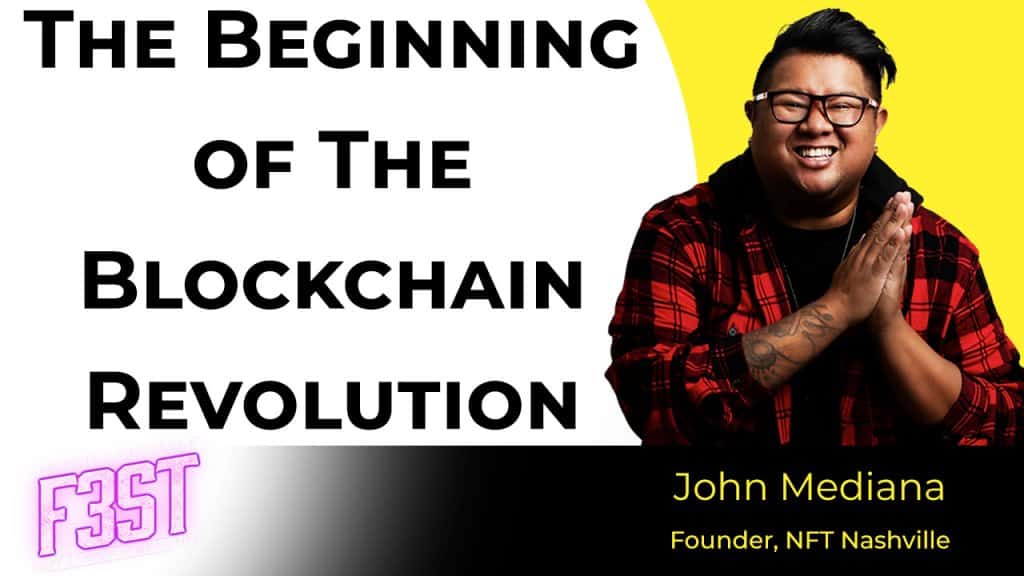
About John Mediana:
Husband. Dad. Ideator. Bringing communities together in WEB 3 | 🏴Relic Pass 👑 Block Queens 👾Pixelated ➡️Founder/CEO of Executive Brand Growth
About NFT Nashville:
NFT Nashville is a diverse community that is taking Music City into of the ever-expanding metaverse! NFT Nashville is all about bringing awareness to those who are curious about WEB 3.0, Blockchain, Crypto and NFTs.
Transcript
(Intro Narrator at 00:00:03) Hello, my friends. Today we're talking to John, founder of NFT Nashville, and we discuss how to get comfortable with the oncoming blockchain revolution, the generational adoption of Web3 technologies, and the societal impact that this technology will have for years to come. All of this right here, right now on the Modern CTO podcast. Here we go.
(Joel Beasley at 00:00:31) This is the Modern CTO podcast. How do you help businesses? Because they're consumers in their everyday life, so they're going about, they're seeing the Coinbase, they're seeing these people make these crazy monkeys that are trading for—
(John at 00:00:50) Insane money.
(Joel Beasley at 00:00:53) But how do you take that view that's in their head and then allow them to see the difference between that economy and the underlying blockchain technology? Or do you not even try?
(John at 00:01:03) I try. I really try because it's almost like you've got to tackle it head first, which is like, hey, let's not go past the way it's being utilized right now. If we could see that that's silly—these JPEGs of monkeys and stuff like that—let's look at the technology behind it. And if we can have that conversation, we're one step closer to allowing businesses and companies to realize that they could apply this in any innovative way that they can. It doesn't have to be JPEGs.
(John at 00:01:33) It could be token-gated access to a community, a membership. Any contract that's written could be replaced through automatic systems now. Blockchain and public ledger and proof of stake, proof of concept, all those things now, and it could take the middleperson out of everything, and it could just be fully automated.
(Joel Beasley at 00:01:56) I saw the most interesting use case that I've seen was in real estate.
(John at 00:02:00) Yeah.
(Joel Beasley at 00:02:00) Doing it with the titles. Because title search is a massive industry.
(John at 00:02:04) Yeah, right now we even have real estate people in our community at NFT Nashville, and they are literally selling homes as NFTs. But what really it is is a contract. It's a token. Anything that you can write as a contract can be on the blockchain and can be legalized, like an actual legal contract, binding contract. So that's the fascinating part. And Tennessee itself has been the first state to accept a DAO, a decentralized autonomous organization, as an LLC entity. So that is huge because the more we recognize this could be used in real estate, it could be used in healthcare, it could be used in government systems, it could take away all the clunkiness and logistical nightmares and headaches of the human aspect of it, right? Human error. It could innovate and make progress in the tech space and for businesses, local businesses, and B2B companies and big corporations.
(Joel Beasley at 00:03:06) And then how do you get people to feel comfortable with it? Because they'll think like, my first thought being in real estate for so long, real estate tech, was okay, the first time I found out how it actually works—
(John at 00:03:19) Mhmm.
(Joel Beasley at 00:03:19) And where's the thing that you actually own your home, and it's a piece of paper, and then but what happens if that piece of paper gets destroyed? How do you get it? And then you realize, okay, well, there's these records at the office and you can go get another one and so on. And then it's like, well, whoever controls these records controls who owns what property.
(John at 00:03:37) Yeah.
(Joel Beasley at 00:03:38) And it sort of makes you feel a little uneasy in a sense that it's that simple, but it just doesn't happen. People don't randomly lose their homes because of insider issues with government things. But when people see the new technology, they're like, oh, that's not reliable, or I'm scared of it, or I don't understand it.
(John at 00:03:57) I think with everything, when it comes to adopting new technology, it's a high risk because it's the unknown, right? So I think that the best way to build more trust or trusting in the technology is demonstrating. And it's just getting in the weeds and test, learning, and adapting and optimizing as you go, just with everything. In the very beginning, in NFTs, in this space, it's just that we're literally in the third trimester if this was a baby, right? It hasn't even been born yet, right? It's been nine to twelve months that NFTs have been in existence. And the technology is so new, and we're so early that if we're trying to judge this thing on a timeline sheet of innovation, well, it's not even a baby yet.
(Joel Beasley at 00:04:44) I feel like it's more like the bachelor party.
(John at 00:04:46) Yeah, and it is, right? Because there's some people that celebrate, but sometimes you've got to pay the consequences. People have lost a lot of money. And it's a risk, but the risk is, if you don't innovate, you die, right? If you don't adapt, you just fall off and you miss out. But not only that, if there was a piece of technology that could make life easier, especially when it comes to the tremendous, just so tedious task of how long it takes to close a deal on a house or going through that whole process. If we could have a system that vets all the processes and simplifies it in an easier process for people to purchase and sell homes and show proof of ownership, wouldn't that be a better way to go about doing real estate? And if you could solidify and create a concrete kind of approach to it, which is blockchain because it's public ledger and it's all built on transactions and all these things. Tie that to the process—of course, you can build now, your title could be on a smart contract and ownership. And if you have the digital rights or it's connected to you as your digital identity, right, your digital wallet, then you won't need to find that loose piece of paper and be afraid that it's going to get burned down one day.
(John at 00:06:10) What if you had a house fire or this and you've got to go get another copy and then the filing records of things like we lost it? A lot of people have that situation when it comes to healthcare too. In the healthcare world, how there's still filing cases that people go through, and if they are trying to get some work done, they're like, well, we can't find your file. It's human error, right? So how can we move towards a future that reduces or closes the gap on human error but still creates validity in the system? And that's blockchain and NFTs.
(Joel Beasley at 00:06:44) And then how do you handle—and I'm not considering you a insane technical—
(John at 00:06:49) Yeah, yeah.
(Joel Beasley at 00:06:50) Lower-level expert. How would you handle, you know, the guy who's lost his hard drive that had millions of dollars of Bitcoin and he's trying to get through the—that was you.
(John at 00:07:01) I have, and I found my Bitcoin wallet in 2013, and I've lost my seed phrase. Yeah. I'm in the hunt for my seed phrase. But I think when we first go into it, we have to, just like anything, we're taking a risk. Yeah. And that's what we signed up for. We know the importance. It's the importance of the risk of new technology or being an early adopter. You know, my first—even going to the most ground level of my first NFT that I was purchasing was a rug puller scam. I lost a thousand dollars, right? Because I was just testing, learning, adapting. I wanted to experience my first purchase, and this was over a year ago. And I felt like because I'm an early adopter, I'm going to have to go through a lot of the early adoption challenges that every technology person, every engineer faces when they're getting into a space or a new territory, right?
(John at 00:07:57) So I had to go through that and it was challenging and I lost money. I mean, I know a lot of people that lost more. But now I can share my experience and say, hey, this is some red flags. This is some things to look out for. This is my mission now to help people with securing, making sure that they're safe in the space, making sure that the security is locked in. And it's my mission to help others not have the experience I've had in the very beginning.
(Joel Beasley at 00:08:27) Yeah. What is NFT Nashville?
(John at 00:08:30) NFT Nashville is a community that is based—my biggest focus with NFT Nashville is educating people that want to learn about Web3, blockchain, and crypto and NFTs in the metaverse. And we're a community that puts on monthly events, you know, weekly meetups, micro meetups, but we're really curating Web3 in the city of Nashville and beyond. So we're finding others that are innovating the space—projects, businesses, just case studies—and bringing them and providing a platform for them to share their experiences and sharing their lessons and their learnings with people that are curious about blockchain, that are NFT-curious, that are skeptics. And we believe that it's the future. So we want to focus in the next five to ten years on how do we move that conversation forward and not make it as scary as people see it as, right?
(John at 00:09:32) So these are the conversations I love having every single day. I'm not afraid of a good, you know, well, I heard it's a scam. And it's like, well, yeah, I mean, everything's a scam if you see it that way, but don't burn the village down just to cook the chicken.
(Joel Beasley at 00:09:49) Yeah. You don't cancel email because the prince asked you for money and you got scammed.
(John at 00:09:53) Exactly. So NFT Nashville is really about bringing education, sharing innovation in this space, and connecting people and allowing people to network with other people in the space, in this Web3 space.
(Joel Beasley at 00:10:07) So they're referring—with all these new technologies, they're sort of summed up with Web3? That's the word that we're using?
(John at 00:10:14) Yeah, we're using the word Web3. If you don't understand the word or if you're listening and you don't know what Web3 means, I'll kind of break it down really simply. So we're referring to Web1 as connection to information. That's search engines like Yahoo, Bing, Ask Jeeves, right? Those connections to emails, sending information through emails. And that was the information stage. That's Web1. Web2 is connection to people. So that's when Myspace, Friendster, Facebook showed up, Instagram, Twitter. That was kind of the Web2 phase where you're now connected to people. The problem with that is that these platforms that you're connected to, they're centralized, so they own all the information. So yes, it's free, but you're the product. So you as the person, your content doesn't belong to you. It belongs to their platform or the one hosting, like Facebook. And since you're the product, they sell you to businesses that want to put advertising in front of you. That's how they make their money. So this is what a centralized kind of approach is, and that's Web2.
(John at 00:11:15) Web3 is connection to ownership. So we call it decentralized. And what is beautiful about the Web3 space, this is all things blockchain and crypto and very decentralized approach. That means that no one owns the servers or no one owns the data. It's being built across multiple servers around the world, and we call these people miners. And what they do is they create more blockchains that is vetted numerically and with data so that it's like a public ledger that is agreeing with all the servers saying, like, okay, John sent Joel one Bitcoin. And then all these servers or computers, they're going back to their ledger and saying, is that true? Did John have enough Bitcoin to send to Joel?
(John at 00:12:08) So it started with Bitcoin back in 2011, and it evolved from there in 2016 with Ethereum making it a programmable blockchain now. So it's not just peer-to-peer anymore that you're exchanging funds, but now you could program, like build a website on the blockchain that's connected to a currency as well. So now it's kind of evolved, and that's the exciting part where Web3 is this terminology that is meaning you can have ownership now. And you're the one that owns the data, not Facebook.
(Joel Beasley at 00:12:44) I was talking about that with Sir Tim Berners-Lee.
(John at 00:12:47) Yeah.
(Joel Beasley at 00:12:47) Right? Yeah. Probably the coolest interview I have ever got to do as far as names go. But he was working at MIT currently on this project where, and the way he described it to me, I think a year or two ago, was it's very complicated, and he's really smart. I'm a monkey, right? But what I took away from it is I'd have the bucket of my data. Let's say I've got my healthcare data, my finance data. All my data, it's in my bucket, my pod. And then I can see that the bank has access. I can give the bank access to read out of my bucket. And I can also give them access to write in and out of my bucket. And so I always hold the data. And I think that's really interesting because when he was describing this new internet that's going to come about, it's almost the same words you were using where it'll be decentralized. It'll be yours. How that'll look and will express itself in incredibly different ways, I'm sure, as we try to figure it out. Yeah. Yeah.
(John at 00:13:44) Yeah. What I love—and this is something called proof of privacy. Alright. So privacy now, because of Web3 and the technology, you own the keys, right? You get to allow what the world, what you want the world to know about you, and what information you allow companies to use, right? So that's the beauty of blockchain. That's the beauty of Web3 is that before, our stuff is just out there, right? It's just—if people, they say, I forget what the percentage is, but people already have your logins, and they had it for years.
(Joel Beasley at 00:14:20) Oh, yeah.
(John at 00:14:21) They have your email information. They got all that stuff. You just don't know it, right? So now, it's not completely eliminated, but now you have the power, right, in your hands. You have the keys to let people know, like, what do you want them to see or not.
(Joel Beasley at 00:14:35) Yeah. I look forward to that becoming more of a thing.
(John at 00:14:38) It should be. Yeah.
(Joel Beasley at 00:14:38) Because in America specifically, I think it's very un-American to have to go to my healthcare provider and ask them for my records as if it's some sort of privilege I have. It's like, that's my data.
(John at 00:14:49) Yeah. It belongs to me, right? So a lot of times, and this is what people feel about their property and their funds in the bank. This is the biggest issue we have. How many times have you heard stories of people going to the bank and be like, I have X amount in the bank, and you won't allow me to access my funds? And but it belongs to me. And they're like, well, no, you need about a week or however long because they don't actually have the funds. So you're like, wait a minute. Why does it work like this? There should be a simpler way of ownership. So Web3 is literally true ownership where when you're using crypto like Bitcoin or Ethereum or all those things, you could transfer. That's a 24/7 approach, and you don't have to call the CEO of the bank or Bitcoin to be like, hey, can you release my funds? It's instantaneous, and it doesn't sleep. So things can be traded twenty-four hours, seven days a week. No holidays or breaks or anything like that, which is the beauty of decentralization.
(Joel Beasley at 00:15:49) When I bought this property, we were really tired and everything. It was the end of the day. We had done all the walkthroughs and whatnot. It was 3:00, and we were at the closing place. And we go to sign the forms. He goes, okay. Where's the wire transfer receipt? I was like, well, no one's given me the wire information yet. He goes, well, here it is. So I go on my phone. I do wires on my phone all the time. I'm going to go wire the money. I was like, this exceeds your limit of wiring. And I'm like—they're like, please call. So I call, right? And they're like, oh, sorry, sir. You have to go into a branch.
(Joel Beasley at 00:16:17) I'm like, that's whatever. Where's the nearest branch? It was in Nashville, dude.
(John at 00:16:22) Are you serious?
(Joel Beasley at 00:16:22) Yeah. So I had to drive an hour and like fifteen minutes. And so I'm sitting there talking to the people at closing. I was like, alright, if I leave right now, I'll get there like five minutes before it closes.
(Joel Beasley at 00:16:32) Yeah. And so I got the manager of the bank to agree to wait for me and everything. And he was really cool when I got there and everything. But that was so close to it not getting to happen that day.
(John at 00:16:43) Make or break, you know, just our everyday life of the difficulty level of getting access to your own funds that you supposedly own. And not having access is one of the biggest challenges that I think people don't necessarily feel, but they feel it when urgency happens. Right? The beauty that I love about web three and how it's evolving right now is access to ownership. It's that you actually own it and you can do whatever you want, whenever you want, however you want with it. Obviously, there has to be regulations. But currently, it's just a beautiful thing because you can just send people, like, oh, yeah, I'll take care of that. Boom. And there's no penalties. There's no nothing. It's not like you've got to call anyone up.
(Joel Beasley at 00:17:29) I know. No, it feels good. The ownership feels great.
(John at 00:17:32) Yeah.
(Joel Beasley at 00:17:33) Alright. So talked about what the conference is. It's got the community behind it. Let's talk about when is it.
(John at 00:17:40) Yeah. So it's happening Labor Day weekend, which is literally, as of this recording, it's in seven or eight days from now. So we've chosen Labor Day weekend, obviously, because Nashville always gets traffic. This is the number one hospitality city in the world right now. Nashville is a hot spot. So we knew that people were coming in for Labor Day. And our whole goal for these festivals or these events is a bridge between web two to web three. Right? So I call this the chocolate covered carrot, meaning I want to invite you to be entertained, but I want you to leave educated. Because if we're truly leading the space in innovation and education, we have to come to terms that no one knows about this. And I just view it like that. If nobody knows about this, how would my approach being a marketer—what would my messaging be? What is my approach to onboarding people into the space on a massive level? Right? How do I explain web three? How do I explain ownership? How do I explain these things? And these are the things that we're talking about through the festival. And yeah, so it's happening this Labor Day, September first through the fifth, and it's a choose your own experience, which means, like, hey, if you want to come for education, we've got two days at the Hilton, the DoubleTree Hilton. It's like a conference style. And if you want to be entertained and hear from keynote speakers, we have a two day pass to the Nissan Stadium. That's happening Sunday, Monday. And if you want something like networking or connecting with people, we have a four day music crawl, nightly music crawl. So all throughout the weekend, we have over 30 activations happening throughout the city. You could participate and get discounted rates on drinks, on food, on beverages, and come hang out, network. Because it is Labor Day weekend, we feel like this is the best opportunity to get in front of most people since they're traveling to the city, having a good time. So we're like, how can we integrate this and become a bridge and help people learn about this more?
(Joel Beasley at 00:19:45) So you were saying activations? Is that, like, what is that?
(John at 00:19:49) Activations in terms of the venues and stuff is we're going to have some sort of NFT blockchain experience throughout the city. So one of them is even learning about NFTs and actually getting your first NFT. So part of the ticketing is, because of our good friends from Co Labs, their NFT marketplace thing, they're helping us use NFT tokens to gift to anyone that's going to participate in our event. So they could receive their first NFT and it's like a collection. So every venue that you go, you could collect an NFT token, and then we could put them all together and you'll get one solid NFT from the whole event. So it's kind of like a gamifying type of thing of, you know, where's Waldo, but like—
(Joel Beasley at 00:20:36) Like catching Pokemon?
(John at 00:20:37) Exactly. Catching Pokemon. Exactly. But it introduces this fun aspect to what the space is all about. And at every venue, we have our performers, we got DJs, we got people that are in the music space that are putting their music out as NFTs. They're all performing throughout the venues and stuff like that. So we're going to have little activations throughout the city, and it's going to be super rad.
(Joel Beasley at 00:21:01) How do you put music out as NFTs?
(John at 00:21:03) It's really simple. So normally, you would have, like, anything that's digital can be an NFT. So it's not just JPEGs. It could be audio. It could be video. It could be animations. It could be a PDF. It could be anything really. And what's really cool is you could even have token gated NFTs, meaning that, like, let's just say you have a membership pass that if you own one, you could unlock perks, utility. Like, let's just say Modern CTO had a membership NFT pass. Right? Anyone that holds that pass could have access to exclusive workshops, events, meetups, merch, anything that you could think of bringing value to a community. If you hold that pass, now because you hold it through an understanding that you have the wallet ID or the identity on the back end, you can gift your community with certain things just being part of the community. So it's like a membership, but it's digital now. And the music aspect is you could put audio, tie that into artwork or pieces of art, like album art, and you could actually put that on the blockchain. And people could mint it and own your music. And what I love about music NFTs is that it kind of cuts the middle person out. Right? So it closes the gap on the friction between the musician or artist and the audience. So imagine, who's one of your favorite artists?
(Joel Beasley at 00:22:34) Miley Cyrus. I'm kidding.
(John at 00:22:38) You're not kidding.
(Joel Beasley at 00:22:38) That's what we're going to use, though.
(John at 00:22:39) Let's use Miley. Right? So imagine this. I think of it like this. Because music NFTs, we're in Nashville. Right? So it's fascinating to me, practically, what does this look like for an artist? Okay? So if Miley first started off her career and she came out, I'm just going to use this term, like vinyls, vinyl records. Right? Imagine her first song being on a vinyl, and imagine if she only produced a hundred of those and that was it, and she never produced anymore. Right, at the very beginning of her career. Can you imagine how much that vinyl would be worth? And can you imagine if you hold the vinyl, how much clout you would have of, like, I was the first person to buy one out of a hundred rare vinyls of Miley's first track. Right?
(Joel Beasley at 00:23:25) But you just own the ownership to the track. Like, you could physically listen to it if you didn't. Oh, I get it. Because the song's out there, but the medium is the vinyl. So the popularity is—
(John at 00:23:34) So the song is out there. Yeah. But who actually could say that they own the vinyl? Yeah. Alright. So the thing is, my idea or this whole concept is imagine if that's now a digital asset, right, on the public blockchain. Like, if she made a hundred physical vinyls, you don't know who owns those things. But you could probably sell it if you go to the record shop and, you know, of course. But she doesn't make any money when you sell that thing. Right? So you would only gain that because you have ownership. But now because it's a digital asset, every time that thing is sold on the third market or whatever, you as the owner get money from it depending on how her career does or the scarcity or the value that that NFT holds. Right? And because it's tied to a smart contract, Miley could get her royalties instantaneously. And in the smart contract, she could put her producer, her bass player, her mom, her dog, whoever she wants to gain any percentage on royalties anytime that NFT is traded. So if you hold it, you have value because you own it. You could do whatever you want with it. You could use it for whatever you'd like, but you could also play it and listen to it as an NFT. Or you could sell it because you own it, and then the artist also gets money from every sale because of royalties. And it's instantaneous, like I said, with blockchain, 24/7. Alright? So they don't have to wait. Artists don't have to wait six, seven, eight months for a check to be cut and shipped to their door as a residual kind of pay. It's instantaneously transferred through blockchain.
(Joel Beasley at 00:25:10) That's pretty cool. And what a place to talk about that, Nashville. Right?
(John at 00:25:14) Exactly. And this is the message that we have for these musicians and creators. And this is becoming a creator economy where the power is actually getting put back in the creators' hands. Right? And this is why record labels are coming to our meetups every single month trying to learn, because if they don't adapt or adopt this technology, they won't exist, and they'll become the Blockbuster of our time.
(Joel Beasley at 00:25:38) Yeah. Now what's the next generation think about this? Are they really into this type of stuff? Because I find myself not caring much.
(John at 00:25:46) Funny story is that the next generation is so involved because of their adoption into Fortnite and gaming. So that taught them that they would spend ridiculous amounts of money on digital stuff for their Fortnite or, you know, they buy these things in their apps. Right? So they're already spending money. They never got them access to anything and they could never resell it or anything like that. So the idea of NFTs and owning something and a digital asset, I believe in the next five years, owning a digital asset will be as normal as owning, you know, a computer or a cell phone or whatever. Right? Because of the idea of, like, they're already onboarded. They already know what it's like to make transactions for a digital asset and not like a physical good. So what that does is that, easily, NFTs was the easy next adoption for them. So they're one of the largest generational people that are purchasing NFTs and doing NFT gaming, play to earn. They're literally, there's little games on the blockchain that you could earn tokens and money, and they're making money by playing video games. And they're putting value on these platforms because of the user base. And they've already been doing that for the past, you know, especially during the pandemic. It's been like a thing because they couldn't do anything else except for gaming. So now they're like, I could earn money doing this. Let's go.
(Joel Beasley at 00:27:19) At what point does this become Ready Player One in real life?
(John at 00:27:22) It's already happening.
(Joel Beasley at 00:27:23) It's already happening?
(John at 00:27:24) It's already happening. We just haven't heard it yet because they're not good at marketing.
(Joel Beasley at 00:27:28) Yeah. You know who I'm having on the show later today is this guy who built contact lens, and you put it inside and it's like a display.
(John at 00:27:36) Are you—yeah. I've seen those. So AR is going to revolutionize, and I'll say it on your show first. Like, blockchain and AR is going to revolutionize how we function as a society and how we even—it's going to change fitness and health. Alright? It's already trying to do that. It's going to change, you know, gamification. It's going to change the gaming world. It's going to change a lot of things using AR, even on your phone and making it more humanized. Like, I've seen technology that you put on, and in a game, if you get shot or anything, you could feel it. Yeah.
(Joel Beasley at 00:28:15) Tactile feedback. Yeah.
(John at 00:28:17) Exactly. So I'm like, they are making this stuff. Like, it is Ready Player One.
(Joel Beasley at 00:28:22) Oh, yeah.
(John at 00:28:22) Like, I feel like we're already there. We just need more mass adoption to happen. It's a scary thought, but yet an exciting thought at the same time. And I'm like, you know, half of me is like, do I really want the future to feel like this or look like this? And then the other half of me is like, I'm ready. Like, this is awesome. This is exciting. I can't wait to see what innovation comes out as a creative, you know, watching the thing grow and becoming an innovative space to be like, wow, look how far we've come.
(Joel Beasley at 00:28:49) It's like all the components are there. So if you were in the, you know, in the 1950s or '60s, you would see all of these computation machines, various parts of the computer. And then you would have television as well. Right? But then you sort of see them all come together into this one thing as the technologies independently advance from each other.
(John at 00:29:11) Yeah. I'm really excited to see AR and technology being used in health care. Like, I was watching videos of doctors using AR technology to do surgery. Yeah. And I'm just, like, this is so fascinating to me because it's amplifying the human aspect of who we are, like our limitations as humans. And that's what interests me the most about technology. It's not about these JPEGs or, you know—
(Joel Beasley at 00:29:44) The monkeys, bro.
(John at 00:29:45) The monkeys. Right? It's about how it amplifies human to human impact.
(Joel Beasley at 00:29:50) Yeah.
(John at 00:29:51) And I think that's the direction that I get most excited about.
(Joel Beasley at 00:29:56) These are things that you can only have in a society if the food, the water, all the core aspects are there. It's like a privileged aspect, like a higher level of society.
(John at 00:30:08) Yeah.
(Joel Beasley at 00:30:09) Because if those things were interrupted immediately, what you would do is you would just cut the things that are physically unnecessary.
(John at 00:30:17) Yeah.
(Joel Beasley at 00:30:17) But it's interesting to think about if that's web three, like Ready Player One type progression, what is web four?
(John at 00:30:24) That I'm curious.
(Joel Beasley at 00:30:25) Yeah.
(John at 00:30:26) Yeah. I'm curious. There's some people claiming that they're working on web five. I won't say your name's Jack Dorsey of Twitter. But I'm just saying, like, okay, let's figure out what web three is first. And then, like, web four, what does that look like? Because web three, if it's connection to ownership, I could imagine web four is connection to human traits. Like, you know, interactions. You know what I mean? Like integrating the human aspect of experience.
(Joel Beasley at 00:30:58) Biological. Biological. Yes. Biological integration. That sounds creepy, just saying it.
(John at 00:31:00) So biological—I heard it here first, Modern CTO—is biological integration. Dude, I've talked to so many crazy people.
(Joel Beasley at 00:31:09) One dude put an electronic stent up the jugular into the brain, into the brain blood vessels, and then you could use that to control a computer that they made a special operating system just by thinking. And you could tweet. You could use the internet. This is insane. Literally. Today. Like, that is in somebody. That is a thing that's already been happening. And the difference between it and a lot of the other solutions that are more common is all those other solutions require you drilling a hole into your skull. Yeah. This does not. It can go right through your blood vessels.
(John at 00:31:39) Yeah.
(Joel Beasley at 00:31:39) It's insane.
(John at 00:31:40) It's crazy. And I don't know how many listeners are, like, Bible thumpers or believers, but they're like, this is the end times. You know how I feel sometimes. And then the other part of me, the innovative part and the creative part is like, man, I'm so curious to see how this evolves.
(Joel Beasley at 00:31:56) Spectacular explosion at the end.
(John at 00:31:58) Yeah, exactly. I'm just like, wow. Because, you know, even Elon Musk, right? Let's not—by the way, the mission to Mars isn't the actual thing. Like, everyone thinks that's the thing. But his actual true mission, like with Neuralink and all this stuff, is sending people to the ends of the galaxies.
(Joel Beasley at 00:32:18) Interplanetary space.
(John at 00:32:19) Interplanetary. Because if you can encapsulate just thought and all those things and put it in a humanoid or a robot, you could now travel as long and as far as you want forever and ever and ever. And he's trying to preserve the human species or race. And it's just like, if you understand that part, it's like, okay, so Mars is just a stepping stone to get to where he wants to go. I think it's like, is he crazy or is he a smart dude? But I think there's a little in between, between crazy and smart.
(Joel Beasley at 00:32:50) Yeah. People are dynamic.
(John at 00:32:51) They are. They really are. But I'm here for it, eating my popcorn. Like, alright, what are they gonna do?
(Joel Beasley at 00:32:56) I know. I read the book of Joel. That's a scary book. I was like, what am I named after? I asked my parents, like, why did you name me this? The guy just speaks crazy words about the end times, and it's a short book, and it's an interesting read, but I was hoping for more like a Matthew or a Mark or a Luke or something.
(John at 00:33:18) Like, I want the details.
(Joel Beasley at 00:33:20) I'm the crazy one. I'm the crazy end of the world run around person. And I was like, alright, well, Armageddon, here we go.
(Joel Beasley at 00:33:27) Yeah.
(John at 00:33:27) No, man. But I think you're right. I mean, we don't know the time or day of all this stuff, but it's fascinating to see. I think the compound effect of technology, right? In these last few decades, it's taken millions of years to progress to this point in time on our planet, at least, to get to this place of technology where it's so advanced that it's actually rapidly changing on a daily basis. Before, it was on a yearly basis, right?
(Joel Beasley at 00:34:00) Oh, I know.
(John at 00:34:01) The progression and compound effect of technology is fascinating.
(Joel Beasley at 00:34:05) Well, it's become a full-time job, and I can't keep up with it. My entire job is to go find interesting people in technology leadership and interesting technologies and have them on a show. And there's so many advancements in so many corners of everything that it's impossible to even keep up, let alone just having a normal job and trying to keep up with it.
(John at 00:34:25) Maybe that's where AI comes in and kind of consolidates a lot of it.
(Joel Beasley at 00:34:28) And then they can just live my life for me. No. But alright, so it's NFT Nashville. The actual—I know it's Labor Day weekend, but the actual dates of September are?
(John at 00:34:38) September 2nd through the 5th. It's a four-day event. Friday, Saturday, Sunday, Monday. And yeah, it's gonna be exciting.
(Joel Beasley at 00:34:45) How do people get tickets? What is the website?
(John at 00:34:47) Right here, you can go to festwitha3f3st.life. Three is for web3, obviously. It's a web3 event. You could get tickets there. The cool thing about NFT Nashville is we will have these annual events where we're putting on festivals. This is the first web3 music and arts festival in Nashville, by the way, in history. And this is the second event in the blockchain space that has ever been on an NFL stadium. The first one was Gary Vaynerchuk at VeeCon in Minneapolis early on this year. But it's pretty outstanding. Like, for me, I'm just like, wow. That's a pretty huge deal. But what I love is that we're a community, and we do monthly meetups as NFT Nashville. We provide workshops, education. We're gonna be doing free online courses on YouTube and stuff like that as we bring more people into the community. And so we're really trying to amplify what's happening in the space and really showcasing and curating people that are doing some crazy amazing things in the space. So that's what we're all about.
(Joel Beasley at 00:35:50) That's exciting, man. Inspiring to people, right? They can come see the technology where it's at today and where it's going. One last story. So I talk often about the venture capital company that invested in me because they're a huge part of my journey. I was having a call with them, like an update networking call, like two weeks ago. And one of the girls said, hey—they knew I was in Nashville currently. Like, hey, are you going to NFT Nashville? And I'm like, where have I heard of that before? Like, I don't know. I don't know. So, yeah, one of my friends is speaking there, and some of us from the VC fund are gonna go up there and listen and everything. And I was like, and then it struck me, and then I was like, you know what? I think John invited me to something with NFT. So I went back and looked through my text, and then I went on Google and I googled, you know, founder of NFT Nashville, and there pops up your face. I was like, what? I was like, I haven't talked to John in four or five months. And this is what—well, we talk a little bit about kids and unrelated stuff. But I was like, he's at Nissan Stadium, the stadium in Nashville, putting on an event. And wow, has this thing grown quickly in the past five, six months?
(John at 00:36:56) Yeah. Yeah. We kind of poke fun at—NFT time is a week is a month. In NFT time, things move very quickly. And because it's so new that it's a small pond right now. So you could be a big fish in a small pond. I think less than 2% of the world knows about NFTs or blockchain, alright? So it's just like, it's so early. So you're not late. This is very early. Very, very early. It's just so fascinating how our lives cross paths, and you're like, what's this? Oh my gosh. This is John. Yeah. Yeah. That was crazy.
(Joel Beasley at 00:37:31) Yeah. Well, it's awesome what you're doing. I'm glad that we could have you on. There's some promo codes. What are the promo codes for people who are gonna buy tickets?
(John at 00:37:39) They're going to go to our website. When they click on the link, they're gonna type in MCTO20 for the Eventbrite platforms, and they're gonna type in MCTO50 to get 50% off at the Nissan Stadium, the two-day pass. So we're excited to—well, first of all, thank you so much for inviting me on such short notice. And, you know, I love our conversations anyways. So thank you for allowing me on the show and promoting the event. It's gonna be great. And yeah, man. I just appreciate it.
(Joel Beasley at 00:38:12) Been a pleasure, buddy. We did it, man. We made a podcast. Whoo. Feel good?
(John at 00:38:16) Let's go. I feel great.
(Joel Beasley at 00:38:18) Thank you so much for listening. And if you found this episode useful, please share it with a friend or colleague who you think would get value from it. And if you have topics that you'd like to hear discussed on the podcast, either add me on LinkedIn, or send me an email, [email protected]. Every time I get an email or LinkedIn message, it absolutely makes my day and inspires me to keep going.