
Episode 344 ·
Ivana Naeymi-Rad - Providing Clean Data for Healthcare, & Enabling a Culture of Radical Candor
Today we’re talking to Ivana Naeymi-Rad, the COO of Intelligent Medical Objects. And we discuss how IMO helps healthcare providers have clean and useful data. Tips for working through self-doubt in your career, and why having a culture of radical candor helps to move a company forward.
All of this, right here, right now, on the Modern CTO Podcast!
To learn more about Intelligent Medical Objects, check them out at https://www.imohealth.com
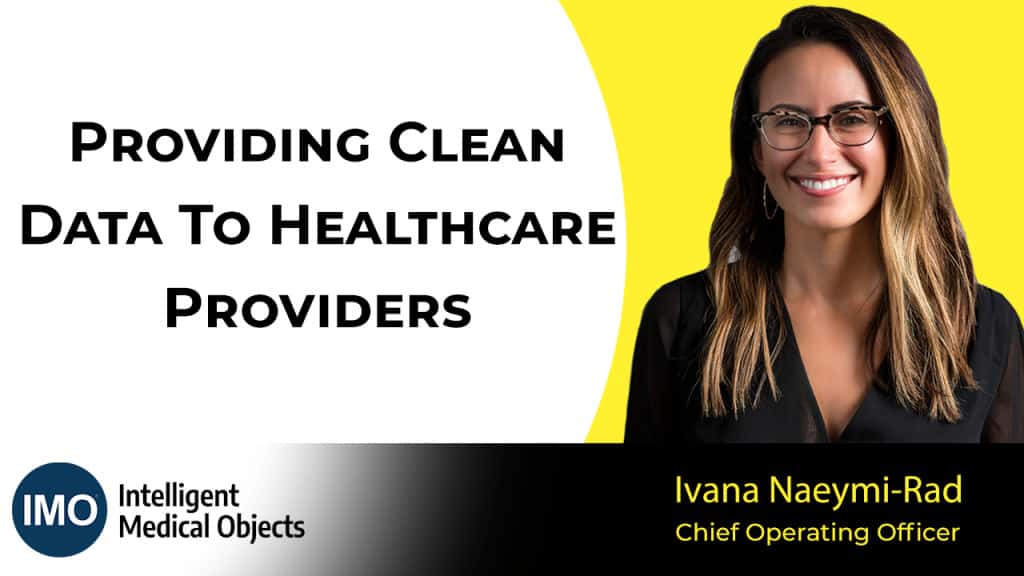
About Ivana Naeymi-Rad:
Ivana Naeymi-Rad joined IMO in 2012 where she now leads the company’s software engineering, content development and delivery, project management, and enterprise IT departments.
Ivana came to IMO with over 15 years of software engineering development and data experience in various industries including e-commerce, government, academia, and online advertising. In previous roles, she led numerous engineering teams at both Jetsetter/Gilt Groupe and Yahoo.
Ivana earned a Bachelor of Science in Computer Science from the University of San Francisco and a Master of Science in Computer Science from the University of Southern California.
About Intelligent Medical Objects:
At IMO, we are dedicated to powering care as you intended, through a platform that is intelligent, intuitive, and intentional. Used by more than 4,500 hospitals and 500,000 physicians daily, IMO's clinical interface terminology (CIT) forms the foundation for healthcare enterprise needs including effective management of EHR problem lists, accurate documentation, and the mapping of over 2.4 million clinician-friendly terms across 24 different code systems. We offer a portfolio of products that includes terminologies and value sets that are clinically vetted, always current, and maintenance-free. This aligns to provider organizations’ missions, EHR platforms’ inherent power, and the evolving vision of the healthcare industry while ensuring accurate care documentation and administrative codes. So clinicians can get back to being clinicians, health systems can get reimbursed, and patients can more easily engage in their own care. As intended.
Transcript
(Joel Beasley at 00:00:00) Hello, my friends. Today, Joel is talking to Ivana, the COO of Intelligent Medical Objects, and they discuss how IMO helps healthcare providers have clean and useful data, tips for working through self-doubt in your career, and why having a culture of radical candor helps to move their company forward. All of this right here, right now, on the Modern CTO podcast. Here we go. This is the Modern CTO podcast.
(Joel Beasley at 00:00:42) Yeah. We're super pumped to have you. I love learning about different industries and what's going on. And, you know, my brother and stepmom are both physicians. So—
(Ivana at 00:00:52) Oh.
(Joel Beasley at 00:00:52) It is common around the holiday dinner tables to hang out and talk about the intersection of IT and health. And so I'm super pumped to hear it from you. But I was curious about, like, your background and how you got to IMO.
(Ivana at 00:01:08) Yeah. Oh, man. So my background in school was I was a computer science major, both undergrad, grad school. And, you know, had an early introduction to a lot of data early on. So actually, my first internship was at the Internet Archive.
(Ivana at 00:01:25) I don't know if you're familiar with the Internet Archive. Yeah. The Wayback Machine. So, yeah, one of my first projects was to go through and parse logs for anything that wasn't, you know, kosher for the Wayback Machine. So I really had a lot of early exposure to tons of data and was really intrigued by it.
(Ivana at 00:01:48) And then from there, you know, went to a university environment where I built out a business system, so an accounting and finance system, and really learned the importance of, one, you know, business and money, which is an important skill to learn early on. But just the importance of transactional data and how to handle it, how to handle sensitivity. And that ended up becoming the business office's system for all of the University of California schools. So also exposure to seeing how to scale in a big way. And that scale took me to Yahoo and then to a startup called Jetsetter, where I felt like I learned more in those three to four years than I did probably in all my schooling.
(Ivana at 00:02:34) It's just around being a Jill of all trades and playing a bunch of different roles in an organization and scaling systems to meet the demands that ecommerce demands and being customer obsessed. And I knew after that that, one, I didn't want to work at a startup anymore because it was just, as exciting as it was, it was a little too much. But I knew I wanted to solve big problems, and I knew that I had the skills that were transferable. And I felt like healthcare was one of those things where we're better to play, you know, to make humanity better and to be able to foundationally change the way that we think about taking care of patients. And that's how I ended up at IMO because we're very much foundational in healthcare, and I'm happy that I made that transition.
(Joel Beasley at 00:03:24) And what type of products does IMO build?
(Ivana at 00:03:27) Yeah. So we're a healthcare data enablement company. And so really what that means is we build solutions that bring data quality and integrity to healthcare. So for example, our flagship product, which is called IMO Core, is—imagine you're a provider sitting with a patient at the point of care. So, probably your family has interfaced with IMO many times.
(Ivana at 00:03:49) And you're, you know, logging into an electronic health record searching for a problem that that patient may have. That terminology, that vocabulary is our content in over 85% of the country's health systems. And that content then gets mapped to a number of code sets. So in healthcare, there's a lot of administrative and standardized code sets that are used for reimbursement with insurance companies, and then reporting for things like population health and cohorting. And we do all of that mapping for our customers.
(Ivana at 00:04:26) And we also create solutions that can clean the data later on in the process as well if it wasn't IMOized upfront. And then help them create some of those cohorts later on. So we do a lot of sort of the foundational, I would call it, language and definition of healthcare.
(Joel Beasley at 00:04:46) When you were in middle school, is this what you thought you'd be doing with your life?
(Ivana at 00:04:51) I don't think so. No. You know what's funny? I've always been a big gamer, and so I knew that I was gonna be in tech in one way or another. But, yeah, don't think I would have envisioned being where I am today now.
(Joel Beasley at 00:05:07) So I do have some experience, like, seeing—I actually got to see, like, my record inside the, like, the EMR or the EHR or whatever, and it looks like a different language. So—
(Ivana at 00:05:20) Yeah. And imagine being a doctor where all you want to do is sit and provide the best form of care for your patient. I mean, it's one of the primary causes of provider burnout. And, you know, we're very close with all of the EHR vendors. You know, they're our partners, and I know they're trying very hard to solve this problem too.
(Ivana at 00:05:43) But, you know, we've got a ways to go.
(Joel Beasley at 00:05:46) So did you work for this company before? And then—or is it—did you work for a different IMO?
(Ivana at 00:05:51) Same IMO. I was an intern at the time. Yep. And so started getting a flavor of what was coming. But IMO was a startup for probably twenty-plus years before we kind of embarked on this new private equity-backed growth trajectory that we're on now.
(Ivana at 00:06:12) And so at that time, that flagship product I talked about was still kind of being thought through. It was a lot of consulting work and throwing, you know, spaghetti against the wall and seeing what stuck. And we're a much different company today.
(Joel Beasley at 00:06:28) Can you give me a better understanding for some context of, like, people listening? What's the size of IMO?
(Ivana at 00:06:35) Yeah. So we have a little over 300 employees now. And when I joined nine or so years ago, it was a little under 100. So we've grown pretty significantly, pretty quickly. And I mentioned 85% of the U.S. healthcare market.
(Ivana at 00:06:54) So there's 500,000 providers that use us every day. And then we're also in 14 countries outside of the U.S. too. So there's a lot of, you know, translational type of work that we do, not languages, but different ways of thinking through how things are said. And yeah. So it's gotten—it's grown a lot. It's grown a lot.
(Joel Beasley at 00:07:17) So you've been there nine years currently?
(Ivana at 00:07:19) Yep.
(Joel Beasley at 00:07:20) Why do you stay?
(Ivana at 00:07:22) Always exciting. It's always exciting. And, you know, I mentioned that I came here because I had a passion for solving big problems, and healthcare was something that's always been top of mind for me. I feel like we're always embarking on a new big problem that we have the opportunity to solve. And I feel like, you know, with COVID-19 and everything, the community within healthcare IT has really banded together to solve some of these big problems.
(Ivana at 00:07:52) And I think now is the best time to be in this industry. And, and like I said, I mean, I am most foundational, so we're in a lot of these big conversations.
(Joel Beasley at 00:08:02) What's the culture like there?
(Ivana at 00:08:06) The culture is very passionate, similar to how passionate I am about solving some of these big problems. It's similar here. There are people who have been here since the beginning that are still here. So that have been here for over twenty years. And so you have sort of this legacy passion, plus this new blood that has come in, who sees this as a big opportunity to solve problems.
(Ivana at 00:08:37) I would say the culture too, you know, I see your radical candor book behind you. You know, we are—awesome. Oh, it's amazing. Scott. Yeah.
(Ivana at 00:08:45) Oh, she's so good. She's so good. But I would say, you know, we're trying to be a culture where people are more open and direct with each other. And I would say that's one of the big transitions that we've made as an organization through this, you know, from going from being a startup to a private equity-backed growth company is talking more about being collaborative, being more team-based versus having that hero culture that used to kind of exist before, being more strategic, process-focused. And that's where, you know, that open and direct kind of communication comes in.
(Ivana at 00:09:19) But we're also very focused on diversity and equity and inclusion. And, you know, yeah, I would just say we're just—we're focused on goals. You know, we're focused on doing big things together.
(Joel Beasley at 00:09:33) Nice. Yeah. I'm a big fan of, like, finding really great thoughts and amplifying them. That's one of the reasons why I have her book back there. I like ideas that can spread and I always like feedback.
(Joel Beasley at 00:09:46) I was recently—this past week—I was asking for feedback from, like, people on the show. Right? They come on and say, oh, I've listened to the podcast. And the feedback I got, two or three times this past week was to have more women on the show. Mhmm.
(Joel Beasley at 00:10:00) And I was like, okay. Cool. But to be honest with you, it's kind of hard because we have a challenging time booking guests sometimes. This is an interesting conversation to have, though. Because it's for me, it's kind of hard to talk about this because I'm worried, like, I'm not gonna say the right thing or it'll come out awkward.
(Joel Beasley at 00:10:21) But I'm a big fan of having tough conversations.
(Ivana at 00:10:24) It's tough. I mean, in my role, you know, I've been intentional about bringing on diverse people on my leadership team, you know, and I said I wanted a female security leader. I did. You know, I looked for that, but, you know, I think we need to be more intentional about those types of decisions. And, yeah, make it become more of a norm so we don't even have to have these conversations.
(Joel Beasley at 00:10:50) Right. We're in—this is our, like, societal puberty that we're going through. We're all getting connected to each other. Right? I mean, a hundred years ago, we weren't connected the way we are now.
(Joel Beasley at 00:11:00) So we're more connected than ever. We've got new ideas coming. We can't even keep up with the advancements in technology. And so, I think everybody just should extend a little bit of grace to everybody else to, like, figure out how to get through this together.
(Ivana at 00:11:12) I agree. I agree.
(Joel Beasley at 00:11:14) So tell me a little bit about your team. What does it look like?
(Ivana at 00:11:18) Yeah. So I oversee product development at IMO and my team is, obviously, I'm biased, but one of the strongest teams that I've ever seen. I mean, so I, again, was really intentional about how I hired each of the roles based on where we were in the maturity of the organization. So, for example, one of the first roles I hired was a head of engineering. And I knew at the time, we were going from being sort of the serial entrepreneurial startup to something that needed more rigor.
(Ivana at 00:11:52) So I looked for someone who had that process focus that came from a big tech organization. And so brought on someone from GE Healthcare who had been there for a number of years and killed it. I mean, he came in and really turned things around. And what I really like about him too is not only did he add that rigor, but he empowers his teams in ways that, you know, we're all learning from. You know, we learn that you set high-level expectations and then let your teams kind of go off and do their thing.
(Ivana at 00:12:22) And then I have—I mentioned this head of security. So, you know, I wanted someone who could come in, obviously, with a very strong security foundation, but with someone who could also be sort of the face of IMO as it relates to information security and could really be a thought leader in this area. And she's very much proven that she can do that. On the content side, so I mentioned we're a terminology—we have terminology as a core part of our product. I liken it to almost a manufacturing type of a world where it's sort of like, you know, a clinician thinks of a new term that needs to get created and it has all these steps that need to happen before it gets released and then put into the technology that we serve up.
(Ivana at 00:13:09) And so I wanted to look for someone who came from a manufacturing background and maybe had some Six Sigma process improvement, you know, waste elimination, risk reduction, all of those things and brought on someone with that background. And then the last, you know—well, too, my enterprise architect who is my innovator. So he very much, you know, appreciates the process, but is also thinking ahead and how we can continue to innovate. And then my portfolio management leader, who is someone who I didn't want to have the healthcare bias because I knew there were some antiquated, you know, processes in healthcare. And she comes from PayPal.
(Ivana at 00:13:50) And so bringing in a, you know, more modern approach to agile portfolio management and thinking about how we can evolve that way. So that's my team. I think they're kick-ass. They work really well together. And, you know, for me, it's all about setting those high-level expectations and empowering them to do what they gotta do.
(Ivana at 00:14:10) And, you know, I'm very hands-off from that perspective because it just works so well.
(Joel Beasley at 00:14:17) I like the way you describe your team. I've never gotten that response that way before.
(Ivana at 00:14:21) Oh.
(Joel Beasley at 00:14:22) Yeah. You kind of like, archetype them and describe what they do. And, yeah, that's cool.
(Ivana at 00:14:27) Yeah. Yeah. And, you know, the personalities too, they all gel. You know, there's some introverts, some extroverts, some, you know, that are more passionate, some that are more reserved. And I think it's a good mix of different types of people. It's a good team.
(Joel Beasley at 00:14:46) Yeah. It's one of our jobs as leaders. Right? To make sure we have the right people doing the right job and working with each other.
(Ivana at 00:14:53) Yeah. Absolutely.
(Joel Beasley at 00:14:54) Who are some of your favorite leaders?
(Ivana at 00:14:58) So, you know, I would say I guess I'm all over the place with this answer. But our current CEO, and I'm not just saying that because she's my current boss, but she really came in knowing exactly what she wanted in an organization. So she very much came from this background, had this formula down for how to grow a business and make it successful. And she really transformed our culture in almost a seamless way. And, again, you know, kind of modeling that empower, set the high-level objectives and empower.
(Ivana at 00:15:38) And it's worked really well. So she's one. You know, it's interesting. And then I go to, like, an Elon Musk, you know, where it's the innovator. Right?
(Ivana at 00:15:48) The brains and the really excited, passionate leader type that I tend to follow, you know, outside of our company. Satya Nadella obviously comes to mind. I mean, those types where, you know, they're just thinking outside the box and moving the needle. And I feel like as technologists, especially in healthcare, there's so much needle moving that needs to happen fairly quickly.
(Joel Beasley at 00:16:16) Are you guys able to use any sort of, like, machine learning type of futuristic AI technologies over there? Do you get to geek out over there?
(Ivana at 00:16:24) We do. We do. Yeah. So our—I mentioned the manufacturing, you know, kind of assembly line that is the content team. And I'm not giving them enough credit because they do incredible work, really incredible.
(Ivana at 00:16:38) I mean, they're some of the best informaticists and MDs in the country that do this. But there's a lot of manual work that they have to do, you know, where some of them have these massive books where they're paging through trying to find definitions of terms and figure out how to map them appropriately. And so we've, you know, we've logged a lot of decision-making data over time. And so, we've been able to leverage machine learning to automate, you know, internally a lot of those processes while continuing to preserve the curation mindset and making sure that they're very much still, you know, fundamental in that process. And then, you know, on the customer-facing side, we have developed a product that allows healthcare companies to clean their data afterwards, after the data is captured in a data warehouse or a big health information exchange.
(Ivana at 00:17:43) And that's where a ton of machine learning comes in. Right? So you're matching to the best term, and there's a ton of—it's like a search. You know, it's where you're continuing to enhance your search algorithms.
(Joel Beasley at 00:17:55) And it's learning as it's growing.
(Ivana at 00:17:57) Right.
(Joel Beasley at 00:17:58) That's awesome. Yeah. Are you guys building any futuristic stuff? You got any secret projects going on for the future of technology? Are you focused right now in these core lines of business?
(Ivana at 00:18:11) You know, I wouldn't say that it's super sexy and exciting, but health care data quality is a big problem. I mean, it's preventing us from doing so many things like being able to assess populations at scale and understanding what's going on. You know, I almost liken it to a product manager who's trying to assess a feature, you know, how well it's doing in the market. And all the data that they have is that someone accessed that feature. Like, they have a timestamp, and that's all they have. Right? In health care, it's kind of the same story. It's like, okay, here's a diabetes population. We have no idea what else we can get out of this population. And so that fidelity and that granularity is where we're really focused. And that's a big, big job to try to fix that problem. But that's really our mission is to fix that foundational problem.
(Joel Beasley at 00:19:09) Yeah. One conversation that comes up a lot around our dinner table with my brother and my stepmom is, like, when is it going to be that I just have all my health care data right here? Yeah. And I get to give it to people as I see fit, and it's like my data and I own it.
(Ivana at 00:19:26) Yeah. Yeah. So we call it the democratization of patient data, you know, the ability to give that ownership to patients. And you're already starting to see it a little bit with COVID-19 where, you know, patients, first of all, there's a lot more telehealth happening. And so the ability to have access to your records digitally is becoming the norm, whether it's through patient portals or, you know, through a record that you're getting emailed to you. But patients are really wanting to learn and advocate for themselves and partner more closely with their providers on their care plans. And honestly, I would say that's sort of the North Star for me is how can we get our doctors, our nurses, our nurse practitioners to go back to doing that? You know? It's like they're so enthralled behind the machine. That's the problem that we're all trying to fix.
(Joel Beasley at 00:20:22) Yeah. I got to talk to Sir Tim Berners-Lee, creator of the World Wide Web. Oh, no way. Yeah. Oh, it was so cool. And he's building this new layer of the Internet, if you will. These pods of data storage where you will own the data, but it'll also be connected to its source. So like, if I have a bank application, right? Like, right now I have to log into my banking company's brand technology. But what if I had this pod, and it was basically a mirror of all of the data that's in there, but it's in its raw format. So I could build an app on top of it or say do something with it. So you'd have a pod for your banking data. You would have a pod for maybe two or three pods for your health data. And then you can have this abstraction to build third party app developers and come in and build on these new abstractions on top of it to give you experiences like never before. Because right now, my dentist data is not connected to my primary care physician's data, who's not connected to my other doctor's data, who's not connected to this one. And this blood bank's different than that one. And this lab company has different data sets on me. And they're all disparate and decentralized. They're all separated. And if we could put them all in one place, in one standard format, and that was one of the concepts—like, you could just push the raw data to it and the system is gonna help figure it out. But I was just really excited about the future of us having our own data and it being sort of in my control. And then me being able to adjust access permission control. Right? Like if I wanted to leave Facebook, I could just, you know, turn off their ability to write to my pod and I could just have it and leave Facebook and I have all my data there and that'd be so cool.
(Ivana at 00:22:13) That is really cool. Yeah. I mean, that scenario that you described—all of the disparate data sources and how none of it really talks to each other. None of it even makes sense. Even if you were just to compare it side by side, it looks completely different. That's where we're trying to play, right, is that interoperability between all of these different platforms and being that translation layer so that everything means the same thing and that you can have the ability to merge in, you know, those different pods and do what you're talking about. So we would hopefully be playing a big role in that going forward, but that's really neat.
(Joel Beasley at 00:22:51) Yeah. That's why I'm so excited to talk about them. Like, the creator of the Internet is creating essentially a second Internet, these new standards, all this new plumbing and piping and technology. It's called Inrupt.com. It's innovation and disruption together—Inrupt. And I was just blown away by what they're doing, you know. I kinda just sit there in awe. And you're like, yes. And you take notes. Tell me more. Tell me more. But I had, um, it was a recent one. So I did the prep interview preps, you know. I do them like a week before, so I can get to know you and think of thought, like, questions and stuff I have for you. And I just couldn't help but connect these. So I was like, IMO should definitely build something as this or or just at least be watching for the transition for people to start implementing this technology even if it's not gonna happen for a little bit. Because you are in the most beautiful position to build something that's very useful for these data sources coming together.
(Ivana at 00:23:51) Yeah. And you know what's interesting? I mean, there's a lot of big open source organizations in health care that are trying to do this. There's regulatory type functions that are trying to solve these problems. It's like, but there isn't just one group that's banding together that's saying, hey, everybody, this is the right way to do it. And let's figure this out together. And so we're trying to play a role in a number of those different camps right now. But, yeah, I mean, this sounds like it's another one that we should be looking into as well.
(Joel Beasley at 00:24:25) Yeah. It's to me, when I see it with my limited experience, like, I've never built a health care piece of technology. But there's two problems. The first problem and I think we're trying to solve or at least from this conversation I've had, everyone's trying to solve both problems at the same time. Like, here's a new standard. I had a similar experience in real estate where there was this thing called RETS, Real Estate Transaction Standard, but there was 20 versions of RETS. And so then you had to create these mapping systems to map the NIST standards. I'm like, what's the—this is chaos. So when I was talking, I was with a couple medical people. I was kinda understanding that maybe that's the way it is over there. And if we could—so the two things that I see need to happen and please correct me because I don't know a whole lot about this. First part is I want my data. Just give—just push the raw—you don't need to build any complex APIs. You don't need to be doing any insights. Just push me my raw, a mirrored copy of the database tables where my data is. Just push me a raw copy so I have access to it.
(Ivana at 00:25:28) Yep. Yeah. I mean, the problem is how many disparate data sources that all of your raw data is in. Right? And so even your primary care doc, like you said, I mean, there's no access to your dental data or even when you went to the hospital. Right? What happened? What transpired at the hospital unless you explicitly push it over? And by the way, that comes over through a fax, right? It's not even something that the system picks up. So, you know, it's like, it's either an OCR that gets put up against the fax PDF that comes through or someone who's probably the receptionist is trying to read it and type it into the system for the provider to see when—I mean, it's, um, there's a—yeah. There's a lot of room for improvement in a lot of these processes.
(Joel Beasley at 00:26:17) Yeah. I was at a medical office. I was hanging out with the staff, and they literally took faxes that came in and then scanned them into OCR technology so that they could extract the data. And I'm like, this seems backwards to me. It seems like a waste of paper.
(Ivana at 00:26:32) I know. But you know what? That's more reliable than a lot of the interoperability APIs that have been created between these EHRs. Because each EHR has implemented their interoperability API differently than the other one. So, you know, having them talk to each other is a challenge.
(Joel Beasley at 00:26:51) So at what point in the loop do they come to you? So does the EHR company come to you and say, hey, we need help with this translation, or is that your customer?
(Ivana at 00:27:03) No. So our customers are typically the hospitals, the doctors' offices, but we need to work with the EHR so that we're integrated into the workflow. So I mentioned at the point of care, you know, we are really basically the standard in all of health care for that terminology. Then they'll come to us when all of their data is aggregated in the data warehouse because it's coming through all these different disparate data sources and say, this is a mess. You know, we need your help to clean this up and make sense of what this data means. And if it's even specific enough, did we lose data when that data came over? Help us understand that. Or help us clean when there's duplicate records. And so that's typically when we get engaged also is at the beginning and then sort of at the end when it's in a data warehouse.
(Joel Beasley at 00:27:57) Got it. Nice. Okay. I have a better understanding now. I'm getting it. I'm not the smartest, but I'm persistent, my friend.
(Ivana at 00:28:03) You know, it's complex. It's really complex, you know. And I mean, there's so much more complexity to it, but at a high level that's kind of how we play.
(Joel Beasley at 00:28:12) I wanna talk a little bit about leadership, success, things of that nature. Is that cool?
(Ivana at 00:28:17) Oh, absolutely.
(Joel Beasley at 00:28:18) Okay. So what has made you successful in your career?
(Ivana at 00:28:25) I would say forming relationships. And I would argue that that is probably the success that I see of some of the most successful people on my team, you know, whether they directly report to me or under them. You know, the relationships that you create, especially if you're kind of crossing into another department, another group, also outside of the company networking. That's really been a key to my success.
(Joel Beasley at 00:28:58) How do you do that well?
(Ivana at 00:29:00) I think so for me, it's had to be targeted. Right? So targeted to a specific objective that you're trying to accomplish and really rally a cross-functional group of people behind it. And I would say even too, you know, externally finding people who are like-minded and actually not like-minded and learn from them. You know, I think that's what a lot of my external relationships have been—have been key learnings about how other people are leading their organizations, where they've done well and where they haven't done well. And internally, it's about that collaboration, bringing people together to solve a common problem. And yeah. Like I said, I mean, I think the most successful people know how to do that really well.
(Joel Beasley at 00:29:49) And let's do a hypothetical question for you, like a fun one. Okay? Um, let's say you're driving down the road and up next to you pulls Elon Musk in his Tesla. Yeah. He rolls his window down and with the South African accent, he says, hey, I wanna show you the newest Tesla. The Roadster, the one that no one's really seen yet. It's really exciting. Supposed to hover. I hope it hovers. So you go back to his factory and he's got a time machine there. Right? And because he didn't want to tell you the time machine because then he would have told all your friends on the phone that you're going to see his time machine. Right? So he was very—he's a smart guy. So you get—you go on this time machine, but you go back to yourself at your first internship and you get to give yourself one piece of advice for your career. What would that be?
(Ivana at 00:30:41) Don't take things so seriously. Yeah. And I, you know, I think you hear a lot about this, you know, with women in science, women in leadership roles, you know, the imposter syndrome, the, you know, not feeling like they're good enough. And, you know, I wouldn't say that it's ever been that extreme for me, but I think I've taken things a lot more seriously than I needed to. And, you know, just take a step back and have fun. What you're gonna be going through is a lot of fun. Enjoy yourself. I would say it's probably what I would tell myself.
(Joel Beasley at 00:31:16) I tell myself that a lot too. And then I go back to just pushing really hard.
(Ivana at 00:31:22) Yeah. I know. I know. It's like, okay. Let's get back to business already.
(Joel Beasley at 00:31:26) Yeah. I go in these cycles where when I am burning out or I'm getting too stressed out, you know, going at it too hard, I'm like, alright. Just remember that I'm constantly looking back and if I were to look back at myself, I'd be like, relax, chill out, everything's gonna be okay. And then, you know, you just—you push. I have a question about imposter syndrome for you though.
(Ivana at 00:31:46) Yeah.
(Joel Beasley at 00:31:47) I have been trying to understand this one for a long time. So for about two years, as of the thought process that I don't understand this imposter syndrome. It sounds silly. And I—because the word imposter means to—like it's like got roots in evil. Like I'm here to do something evil. I'm going to pretend to be someone else to do something evil. So I was like, alright. Well, I don't understand that part of it, but let me try to understand it more. And then I had a breakthrough a couple weeks ago when somebody connected the fact that, like, imposter syndrome is just self-doubt. It's just like a—it's like the generation just relabeled it. Because if you look at all the attributes of imposter syndrome, it's just—it's self-doubt.
(Ivana at 00:32:30) It's self-doubt. It's self-doubt. It is the feeling that you are in a position that you are not equipped to handle. And, you know, it's very much—yeah, it's that feeling of I'm not good enough and there's someone else that can do this better, someone more experienced who can do this better. And, you know, I would say I've heard in a lot of, you know, mentoring sessions with women, whether it's at IMO or outside, I hear that a lot. Like, I'm not experienced enough to feel like I can take on this manager role, or I need a little bit more time before you promote me because I'm just not ready for it. And the reality is we wouldn't be having these conversations if I didn't think you were ready for it. You know? And so that's really what it is at its root is that self-doubt.
(Joel Beasley at 00:33:24) Do you ever use to say talks for mentoring women? What's the type of advice? Uh, you said you listen to the podcast. I'm sure we have a lot of other women that listen to the podcast. We get the feedback to have on women. So when I'm here talking with you, I've gotta ask, like, do you have any advice that you would give women who are coming up in their career right now?
(Ivana at 00:33:44) Yeah. I mean, I would just say, listen, I mean, what you're feeling are real feelings. I mean, you shouldn't deny the fact that you're feeling a certain way. But the reality is you're capable of a lot and that you should give yourself some credit and some space and some time to try something new and see what happens. I mean, what is the worst that can happen? That's typically where my head goes is, what is the worst that could happen? It's real. And the worst isn't that bad, you know? So, would you rather regret it later that you didn't take something on or that you didn't make a move that could potentially change your life, your career, or, you know, just sit back and stay comfortable? So I'd say go for it.
(Ivana at 00:34:33) Just go for it. You can do it. But there's some individual contributors that are so good at what they do, and there's always a tendency to try to promote some of those strong individual contributors, and they end up not being the best managers. And so I think it's important to also temper that advice with the right type of person.
(Joel Beasley at 00:34:53) Yes. That's super important because I don't know if there's any other way around it, but you make the mistake a few times and then you learn what that type of person looks like, and then you just stop making that mistake in the future.
(Ivana at 00:35:05) Yes. Yes. Exactly. Exactly.
(Joel Beasley at 00:35:08) Some of these lessons, there's no advice. There's nothing you can say. You just have to kind of walk through it.
(Ivana at 00:35:15) Yeah. And by the way, I should mention that it's not just women that I hear about the self-doubt from. I've heard it a lot from men too. I mean, it's a real rampant anxiety that people feel, and I think it sucks. It's like we've got to try to get out of that headspace as much as we can.
(Joel Beasley at 00:35:36) Oh, I've heard equally. I've never thought that, like, women talk about it more. I hear it in tech is where I hear it. I hear it in tech.
(Ivana at 00:35:46) Yes. That makes sense. And it's almost like you need a few successes to combat it. You know, it's like, okay, alright, I can do this. I am cut out for this. And it just takes a few of those and then they're typically on the right path.
(Joel Beasley at 00:36:02) I want to go a little bit deeper if we can. And we can, like I said, we can talk with the team, we can edit it out. But I don't know. I just kind of feel it sometimes. Right? Have you ever been in a position where maybe you feel like your gender held you back or somebody was being sexist? Have you ever had firsthand experience with this?
(Ivana at 00:36:24) I have a number of times. So in school, I would say, I mean, at the beginning, you know, being one of two women in my graduating class in computer science, I mean, was already just, you know, it's very clear the disparity. But early on found a really good support system, and I felt like that worked well. But there was one time where I went into a lecture, and it was in grad school where the professor called me out in an auditorium of 300 people, pointed at me, and asked if I was in the wrong room.
(Joel Beasley at 00:37:05) Wow.
(Ivana at 00:37:06) Yeah. And my assumption is none other than that I'm the only female or, you know, one of a handful of females in the room. So that stuck with me. You know, I still talk about it. By the end of that class, he had asked me to become a teaching assistant because I was one of the highest-ranked students in the class. But after that, I would say in work, you know, I mean, there were a number of kind of sexist comments that had come out that I'm happy I stood up to and said something about. And I would say, you know, it's not even just gender, but we're talking a lot about diversity, equity, inclusion, and IMO too. You know, if someone's uncomfortable with a comment that someone makes, the best thing you can do is have a conversation with that person because you were directly impacted by it. And that person will never forget that conversation that you have with them. And so, you know, I feel like that's always been my tact is anytime some comment was made to me or about someone else where I've been there, I've always been very open about how I feel, and it's worked really well. And I think as leaders, we have to promote that within our teams too. And, you know, I think one of the instincts as managers too is when you hear someone on your team has said something that's inappropriate, is to go talk to them and teach them. But the reality is, or coach them, that the person who took offense talking to that person is the most impactful possible way to approach that situation. So yeah.
(Joel Beasley at 00:38:53) Yes. Hold on a second. You just dropped some knowledge here. Okay. You're saying that if I'm a manager of a team, right? And person A said something to person B, person B didn't like it and came to me. Right? Rather than me going and sort of interacting with person A, I should coach person B to go approach person A and have this sort of discussion.
(Ivana at 00:39:18) Yes. Yes. Because imagine if you were person A and your manager is the one who tells you how this other person felt, and you probably can't disclose who this other person was or what the scenario was. You weren't there. You don't know exactly what happened. It ends up becoming a he said, she said conversation. And so the most impactful thing to do is to hear the emotional impact of what that statement had on person B. Right?
(Joel Beasley at 00:39:47) Absolutely. And I'll even take it a step farther because the way I would feel if a third party came to me, I would be upset. What? I can't say stuff now. It wouldn't even be about what I said. It would just be about my ability to communicate. Well, I'm not communicating right, or what? They're not going to even approach me or talk to me about this. I can't even, you're being ambiguous as to who it was and when it was. How am I supposed to change my behavior? How can I change my behavior?
(Ivana at 00:40:09) I didn't say that. I didn't say that. Right? I didn't say it like that. Right? Yeah.
(Joel Beasley at 00:40:13) Yeah. The walls go up. Right?
(Ivana at 00:40:16) Totally. Totally. And that's back to the radical candor. Right? It's feeling safe, feeling like you're in an environment where you can trust that the person you're giving feedback to isn't going to retaliate, isn't going to freak out. But should that person retaliate, then we've got a very serious performance problem that the manager needs to deal with. But yeah, I mean, that's the type of culture we're trying to promote.
(Joel Beasley at 00:40:44) I like it. We're making some progress here today. I wasn't expecting this stuff. This was not in the prep or the notes or anything. But I think it's good conversation to have.
(Ivana at 00:40:55) Yeah. No, it is. It's important. And it's so important right now. I mean, with just the way the country is and the way conversations are going. And you heard about, you know, Basecamp, right, where they released, we're not talking about anything political, anything sensitive anymore, and people are leaving. Because the reality is those conversations are happening, and we just need to start dealing with them. Because if we ignore them, you know, it just continues to compound the problem even more.
(Joel Beasley at 00:41:25) Oh, exactly. I know. This is recent too. This is just a couple weeks ago.
(Ivana at 00:41:29) I was blown away. Under the rug. Right?
(Joel Beasley at 00:41:31) Yeah. They said, you cannot have these conversations in our software. And I was like, oh, that's interesting. So I think if I saw that, I like to flip things around on myself. Like, let's say my company was bigger. I have a small company. We have less than 15 people. But if I did see this going on, if I saw it was like a political channel and there was like extended amounts of conversation that people were having debates in there, I would address it differently. I wouldn't ban a topic of conversation on the work Slack. What I would do is I'd say, let's take these top two or three ideas that we're all talking about. And let's have, like, let's all get together, like an off-site or something. Maybe get an expert that has some, I'm just making this up off the top of my head. Let's get an expert that has way deeper knowledge than we do. Bring them into our off-site and let's just discuss these with an open mind and get them out there.
(Ivana at 00:42:23) Yeah. Someone who's unbiased. Right? Yeah.
(Joel Beasley at 00:42:25) You can...
(Ivana at 00:42:25) Come in and educate. Yeah. And I mean, you know, there may be some things that are inappropriate too. And I think as leaders, we just have to kind of make that judgment call. But I think, you know, stopping it or trying to sweep it under the rug or, yeah, just not trying to empower people to educate and have some of those important conversations is the wrong approach right now.
(Joel Beasley at 00:42:50) You know, listeners reach out to me all the time through LinkedIn and they all share what's been helpful. And so I'm always trying to just figure out how we can serve the audience better. That's the job here. Right?
(Ivana at 00:43:01) Yeah. And, you know, one of the other things that we did, if it's useful, is we set up a diversity, equity, and inclusion steering committee that's really focused. And it's not all executives. It's actually a lot of a grassroots kind of team who are focused on looking at some of the culture within IMO and making some of those calls. Right? And that scenario that we went through, right, person A, person B, that was a scenario that was discussed in the steering committee. You know, what is IMO's take on how we should approach something like that? And it was very much the manager should not be involved in this. This is something that is culturally aligned with our open feedback, you know, direct kind of impact conversations that we need to have with people. And so having that steering committee is also something that was important for us to make this progress.
(Joel Beasley at 00:43:57) A hundred percent. This has been a fascinating conversation. I want to do a call to action wrap-up if any of the potential. Describe who the customer is, why they would buy, and then how to find out more about your company.
(Ivana at 00:44:09) Yeah. So our customers are the providers, really anyone in healthcare who is looking to solve data quality challenges. And if that is something that you're experiencing and you want more information, then, you know, reach out to me on LinkedIn or you can go to www.imohealth.com and learn a little bit more about us. We have some really cool informational videos on our website and we have a ton of open positions too. So please check us out. And if you're interested in any open roles, reach out to me.
(Joel Beasley at 00:44:47) Thank you so much for listening. And if you found this episode useful, please share it with a friend or colleague who you think would get value from it. And if you have topics that you'd like to hear discussed on the podcast, either add me on LinkedIn or send me an email [email protected]. Every time I get an email or LinkedIn message, it absolutely makes my day and inspires me to keep going.