
Episode 515 ·
Real Estate Tech in 2022 with Emiliano Delucia, CTO of PLACE
Today we’re talking to Emiliano Delucia, CTO of PLACE; and we discuss how PLACE provides the end-to-end tech stack for realtors to run their business, what it has been like scaling the business as demand has exploded in the housing market, and how Emiliano is constantly working to identify and raise up talented leaders in his organization.
All of this right here, right now, on the Modern CTO Podcast!
Check out more of Emiliano and PLACE at https://place.com/
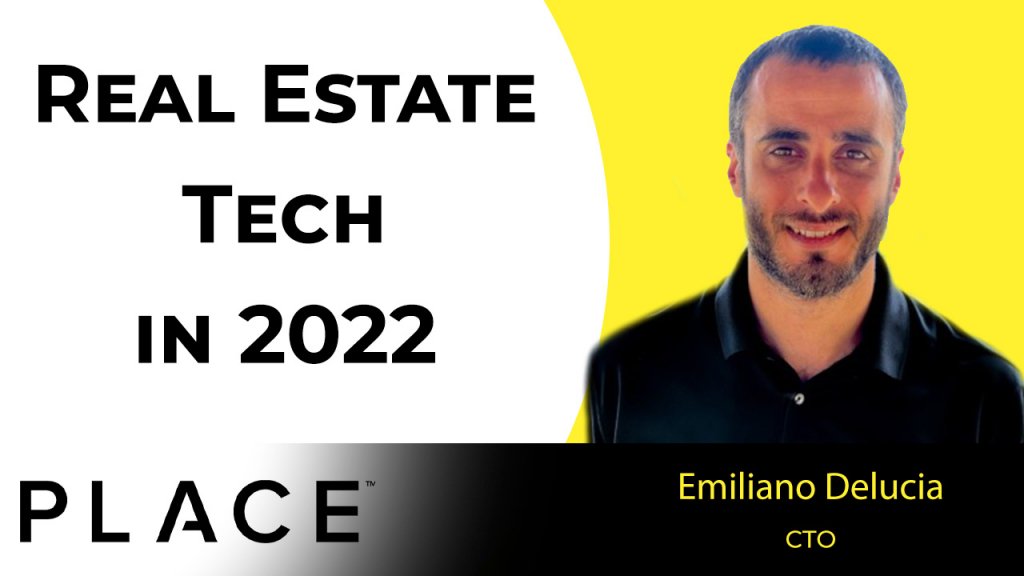
About Emiliano Delucia:
Emiliano is a strong technical and strategic leader focused on building and delivering software solutions with high customer value. Proven track record with 20+ years of experience developing and implementing complex distributed, scalable, and highly available software applications for startups and major companies.
Passionate about software engineering and architecture, with a particular focus in Cloud native systems, Machine Learning, AI, distributed computing, and micro-services.
Extensive experience managing small and large teams, budget, talent development, and personnel performance with a particular focus in the overall strategy to meet the company's goals.
Ability to analyze needs and product requirements to create a design and manage development through Software Development Life Cycle, implementing Agile methodologies.
Deep understanding of logic and reasoning to identify the strengths and weaknesses of software systems.
About PLACE:
PLACE is an end-to-end technology and business services platform designed to simplify the real estate lifecycle for both consumers and their real estate agents. We partner exclusively with leading real estate teams, regardless of brokerage, in 100+ locations across the United States and Canada. Some of the nation’s top producing real estate teams choose to partner with PLACE because, unlike many of the other tech companies in our industry, we feel cutting-edge proptech should support the hardest working agents instead of eliminating them.
At the forefront of our business is a consumer services model that takes the guesswork out of real estate. Clients of PLACE-powered agents will have access to a one-stop shop that streamlines the traditionally complicated process of buying, selling, maintaining, and investing in properties. Our upcoming products include in-house mortgage brokers, title and escrow services, an insurance portal, and a home improvement network referral system, among other exciting initiatives.
In addition, PLACE’s proprietary technology and business services platform helps agents offload up to 75% of their operations tasks so they can focus on being a key advisor to their clients. PLACE partners value relationships over transactions because we take care of team accounting, bookkeeping, human resources, in-house legal, design and marketing, videography, talent acquisition, business training and coaching. Agents within PLACE-powered teams have access to employee-like benefits that are notoriously unavailable to Realtors, even at the highest production levels.
Our industry is changing and we want to bring the best candidates along for the ride. We are actively recruiting for new PLACE partners, open positions within our headquarters team, and on behalf of existing PLACE partners across the US. If you want to contribute to changing the real estate transaction and homeownership process for the better, join us today.
Transcript
(Joel Beasley at 00:00:03) Hello, my friends. Today we're talking to Emiliano, CTO of PLACE, and we discuss how PLACE provides the end-to-end tech stack for realtors to run their business, what it's been like scaling the company as demand has exploded in the housing market, and how Emiliano is constantly working to identify and raise up talented leaders in his organization. All of this right here, right now on the Modern CTO Podcast.
(Emiliano at 00:00:32) Here we go.
(Intro Narrator at 00:00:33) This is the Modern CTO Podcast.
(Joel Beasley at 00:00:41) So how did you first get into technology?
(Emiliano at 00:00:45) Yeah, so originally from Buenos Aires, Argentina. I've been always passionate about technology as a kid, trying to resemble CPUs and trying to put them back together, which was usually the challenge, right? Putting things back together. But I'd take things apart and investigate a little bit the technology that is inside things, inside toys, inside computers, and all that. But, yeah, I'm also passionate about soccer.
(Emiliano at 00:01:11) So in Argentina, it's a very common sport there, but I ended up in this situation where I like soccer a lot, but at the same time I like technology, and played for a couple of teams there, smaller teams there in Argentina. And at some point I was like, you know what, you have to decide what you want to do with your career. And I like technology a lot, and I said, let's just go for it. And took a couple of programming courses, very small things.
(Emiliano at 00:01:35) At that point it was Basic or even Visual Basic or something like that, many, many years ago, twenty-five, thirty years ago. And I fell in love with programming. Right? So started working on some small jobs on programming and learning a lot at the beginning. Went to college, did computer science there in Argentina.
(Emiliano at 00:01:53) And in the middle of it, I fell into a particular position that was software development but very focused on geographic information systems, like systems that oil and gas services companies use to do research and development mostly. Right? So I really liked that. A lot of math involved that I love, and decided to go in that task. Right?
(Emiliano at 00:02:13) Doing programming, but at the same time being very focused on geographic information systems. So I worked for a couple of organizations in Argentina, oil and gas, and then a company that was very focused on GIS, on geographic information systems, and worked there for around seven years or so as a developer and then got into a developer lead kind of role. And after that, we decided with my wife to come to the U.S., came here, worked for the same company for a little while, and then took a job in Houston in a smaller company focused also on this type of systems for oil and gas companies here in the U.S. So worked for them for around three years or so. We grew the company drastically, and we ended up selling the company to Halliburton, which is where I transitioned there to an oil and gas services company that was not only focused on this type of systems that I liked, but also in several other things.
(Emiliano at 00:03:05) Right? So there I had the opportunity to transition into other areas that were not only GIS focused, and ended up leading their platform as a service kind of team there for a while. Pretty big team. Lots of opportunities to learn at that point where it was like the beginnings of transitioning to the cloud for the organization. So I had a lot of opportunities to learn about all the different cloud vendors that you can think of and evaluate each of them, evaluate the features that each of them have.
(Emiliano at 00:03:34) So I had a big opportunity there to learn about cloud there. Anyway, worked there for around four or five years as an engineering lead for them, leading some different initiatives and big teams there for Halliburton. And at some point, I started missing that small environment kind of company. And I was talking with my wife—we're in Houston still—and I was like, "Hey, you know what? I really missed that environment where you do a lot of things that are not only related to your role, but also things that you are doing to help the company grow, because in that craziness is where you learn the most."
(Emiliano at 00:04:10) Right? So I ended up deciding to move on from Halliburton, joining a startup here in Austin that was called LiveEarth. So we built an IoT data pipeline for different companies, some government-related, some private companies, with a visualization platform around that.
(Joel Beasley at 00:04:29) What is an IoT data pipeline?
(Emiliano at 00:04:32) So basically, ingesting IoT data from thousands and thousands of sensors out there, all the way from a sensor in a tire of a bus to see actually the pressure is good, to video management systems, to weather sensors, to fire trucks and police department locations, and things like that. Right? So we engaged with several organizations, again some very government focused, like police departments or fire departments where they want to see where the cars were positioned and things like that, with the Army to actually see where their drones were flying in the battlefield and things like that, and with some private organizations to monitor the video management system that they had and to do some face recognition and things like that through their video.
(Emiliano at 00:05:17) Right? So pretty cool tech. We built that all from scratch. After a couple of years working there, I decided that it was just time for me to do something different. And I got a call from Red Ventures, big company. They own a lot of brands.
(Emiliano at 00:05:33) They basically specialize on bringing brands and customers together. Right? So they have marketplaces where you go and compare different products and make decisions, all the way from your first credit card, let's say, to a loan to renovate your home, or things like that. So I joined them to lead their credit cards organization, then moved into a bigger role to lead all financial services for them as a technology leader. And, yeah, was there for around three and a half years.
(Emiliano at 00:06:00) Great company, great culture, great people. Made a lot of friends there that I'm still talking to. So I really, really liked the organization. And, yeah, a few months ago I got a call from Ben Kinney, our founder of PLACE, and started talking. Really liked the guy.
(Emiliano at 00:06:18) So we connected very, very quickly. And he basically told me a lot about PLACE, about the opportunity ahead of us, about the platform that we're building, and he needed someone to lead technology for the company. And it's been a couple of months, and here I am. So I'm really in tech for them. So that's a quick background on my journey in the past fifteen, twenty years.
(Joel Beasley at 00:06:38) That's really cool. So you've really had your hands in a lot of different layers of the tech stack throughout your career. So what drew you to PLACE today? What was really appealing about coming on as CTO?
(Emiliano at 00:06:53) Yeah. So one of the key things that I usually look for is what does the culture look like and how people are in the organization. Right? So beyond the company opportunity that is there—and we can talk about it too—but I focus a lot on culture and people. And when I started meeting people from PLACE, I realized that the culture is amazing. The people were super welcoming, and all their leaders are focused on bringing people on board that are just great people to work with. There might be some skills here and there that you may or may not have that you will pick up because you are smart enough.
(Emiliano at 00:07:29) Right? But at the same time, it's the focus on bringing good people to work with that can keep pushing the business forward. That was super attractive because we have an amazing team. Very smart people. Again, very good people to work with. The culture amazing, and the opportunity ahead of us is huge.
(Joel Beasley at 00:07:46) So can you fill myself and the listeners in on what PLACE does? And then I really want to hear about what the opportunity ahead of you is, because you've mentioned it and it sounds exciting.
(Emiliano at 00:07:56) Yes, yes, it is. It's a big opportunity. I mean, PLACE—we basically developed a technology platform that provides all top agents with every tool and service that you can imagine that they need to run their business, all in one place, and pun intended there.
(Emiliano at 00:08:12) Right? So we provide admin support and marketing and branding and lead generation, legal, HR services, and all the basically back office infrastructure and training also that the agents need to run their business. Right? So basically, they can be less worried about the technology and the friction with technology and just focus on what real estate agents do, which is sales. And at the same time, we provide that world-class real estate platform for them.
(Emiliano at 00:08:49) Right? Regardless of what brokerage they are affiliated with, because we're agnostic on that area. Right? So we also built pretty much the best-in-industry CRM that is there for real estate. So our customers use that a lot. And overall, we eliminate the need for multiple technology platforms to do all the things that I just mentioned. Right? So it's everything all in one.
(Emiliano at 00:09:13) And with several opportunities that we have ahead of us, which is what I was mentioning, to keep expanding at that one place through different acquisitions that we are thinking of, how we grow our products organically too. But the idea is that every single real estate agent and team would have one place where all their needs are fulfilled for their business.
(Joel Beasley at 00:09:37) Cool. So it's like everything you need of a virtual office to operate the business side of real estate so then they can spend their time actually moving property. Is that correct?
(Emiliano at 00:09:51) Pretty close. Yeah. Yeah. And every service that you can think of. Right?
(Emiliano at 00:09:55) Where, let's say that you're buying a home and beyond having the platform for all the CRM and having all the interactions between the agents and the buyers or sellers, whatever the situation is, then also offering all the products that are associated to or are including our platform, all the way from mortgages and insurance and home services in the future that will be part of this one place, one stop for real estate agents.
(Joel Beasley at 00:10:24) So how has the housing market going crazy recently affected your day-to-day at PLACE?
(Emiliano at 00:10:31) So if we look at what happened in the past year and a half or so, which has been an insane market where there's not enough inventory out there and we are all looking into prices going up of houses, affordability being tougher and tougher because there's just not enough inventory—beyond the craziness in the market that helps our business to keep growing because we provide that platform for the agents to be managing all these transactions that happen on the market for real estate, which is thousands and thousands of transactions that we handle for our agents where they can still forget a little bit about the technology that is needed behind the scenes for that and focus on selling.
(Emiliano at 00:11:12) Right? But beyond that, the market has been insane so far. We all know that the economy is getting into a fairly uncertain spot at this point, moving towards a potential slowdown. But at the same time, we know that we can come back stronger from that. We have a huge client base.
(Emiliano at 00:11:41) Right? People that trust our platform a lot, that have been with us for a very long time, that know all the value that we provide. So there are some things that are a little more uncertain about the market today, especially on the real estate side. But at the same time, we are confident that we are going to be navigating this very successfully.
(Joel Beasley at 00:11:50) So as CTO at PLACE, what's some of the coolest tech behind the product that you get to work on?
(Emiliano at 00:11:58) Yeah, we use a lot of technology stacks, and in different areas of our software we use different technology stacks depending on what we need. We believe in using the tech that basically fits what you're building, that is most efficient for what you are building. So we are working on a lot of cool stuff. On the CRM side, we have several technology stacks that are very attractive for developers out there. That's why we are attracting very good talent to our teams. And without revealing too much of the magic that happens behind the scenes, we are using very powerful cloud-based technologies in microservices environment architectures, where we can not only have our architecture very flexible—where you can build certain services with one technology or another—but also makes it very efficient.
(Emiliano at 00:12:49) Right? Because a new developer could come in with experience in a particular stack and can build services in that stack too, which can live with other services that are in different technologies. Right? So we adopted a very flexible and cloud-based architecture. And the same thing we do for all the real estate sites that we develop as well as all the marketing tools that we develop, where we pick technologies that are not only fit what we need but also are attractive for tech talent out there that want to work in those technologies.
(Joel Beasley at 00:13:21) On the CRM side of things, as more and more privacy regulations and data compliance rules come out, is that a challenge that you're working with on a day-to-day?
(Emiliano at 00:13:31) So the short answer is yes. We have to be very careful with compliance and security overall for our platforms because we're handling data that's very valuable for our customers, and we need to make sure that that's protected and the right data systems are in place to store all that. So the technology ecosystem is always very challenging towards that.
(Emiliano at 00:13:54) Right? Because there are always new threats on the security side. There are always new efficiencies that you can find on new data models. So we keep evolving our platforms constantly towards those two areas, especially talking about security and data.
(Emiliano at 00:14:09) So we are working on data warehouses that we are putting in place for the company. We are putting new security models in place that will make us stronger and more robust. Right? So those two areas are always very, very challenging for any organization, not only for PLACE. But we are taking the right steps towards being very robust in those two areas.
(Joel Beasley at 00:14:33) Very cool. Yeah, that's just something that's been on my mind because one of our podcasts that we produce as a company is very focused on that topic of data compliance within CRMs. But another area that I have on my mind a lot these days is keeping your contributors close to the customers and implementing feedback, because our company is at that small stage where we have a set of clients and we're constantly evolving our processes as they provide feedback to the service we're giving. So it's really important that every producer, who is kind of our equivalent of an engineer on a software product, is constantly getting and implementing feedback directly from the customers.
(Joel Beasley at 00:15:20) Yeah. And so I'm curious, how do you keep your engineers close to the clients and focused on product outcomes?
(Emiliano at 00:15:29) Yeah, I think we need to talk about both, right? The engineering and the product organization that end up collaborating very closely to actually achieve that. And that intersection, I think, is something that I'm super passionate about, right? The intersection between product and technology, and then how the customer gets in that loop and we make things happen for them. So if you see how organizations place product management or product owners in their organization structures, you're gonna see so many different approaches out there. Right? So there are organizations that you're gonna see product owners in their own isolated organization, product owners reporting to the business side, product owners reporting to the technology side.
(Emiliano at 00:16:13) But each of them have this common goal as, like, how can we be more efficient from the product side, listening to our customers and translating that into requirements that get into our products. Right? But at the end of the day, that intersection between product and tech is what enables that full life cycle of product development, right, in general. And talking about what we just talked about on the data side, I will add the other two dimensions into that too, right, which is design and data that add into that product life cycle that we're talking about. Right? And of course, the marketing side also plays a big role, right, when they are then releasing products and all that too. Right? I would say, from my perspective, regardless of the reporting structure, right, organizations that end up with a solid intersection, right, meaning partnership and collaboration between tech and product, are the ones that end up succeeding. Right?
(Emiliano at 00:17:10) You know, you think about it, right? As a leadership team, we have to make sure that the technology roadmaps are always fully aligned with the product roadmaps. Right? Because, basically, at the end of the day, the product team is my main customer. Right? Because they are actually interacting and listening to most of what the customers are asking for. Right? So I think that's the key responsibility from our side of the leadership level, to make sure that our roadmaps between tech and product are always very well aligned. And the other thing that we need to think about is what our product owners do. Right? Going back to that feedback loop that you were talking about. Right? Because, you know, if you think about product ownership, right, beyond defining product requirements and being responsible for product market fit and writing specs for the features that are gonna be built. You know, I believe the product organization has a much bigger role, right, which is getting to the right understanding of what the product needs to meet the customer needs. Right?
(Emiliano at 00:18:13) That's critical. Right? Because that's what actually comes back to those engineers, to the development team. Right? And beyond that, you know, creating that strong bond, right, with the customers, including that feedback loop that you were talking about that allows us to be more closely aligned with customers' requirements. Right? But, of course, all this cannot happen without that strong technology team. And that's what I'm talking about, this intersection. Right? That cannot happen without that strong technology team that can help to build what the customers need. Right? That's where I believe that intersection becomes very interesting. Right? Our product owners are also very focused and responsible, right, to explain the whys behind the features that our engineering teams are building. Right? Because our engineers are always very curious. Right?
(Emiliano at 00:19:07) Which is what we want from them. Right? It's like they don't just wanna build something for the sake of building it. Right? They wanna understand what is the impact there for our customers, why we're building this. Right? So that why behind the functionality and the customer experience needed is what our product owners are also in charge of explaining to our tech teams. Right? The other thing I think is important in our dimension towards this intersection, right, is the product owners will always be part of these technical discussions too. Right? So it is important, right, that they're in these meetings, our product owners can help make trade-offs, for instance. Right?
(Emiliano at 00:19:46) Between, like, hey, if we take this approach, it's gonna take this long. If we take this approach, it's gonna take this long. But here are the pros and cons of this, here are the pros and cons of this, and help us to—so I think that we are beyond those days where product owners were more like, oh, yeah, I don't understand the tech very well, but this is what needs to be built. Right? Well, I think we're way beyond that. Right? It's like product owners are more and more integrated into the day-to-day with tech. Right? Where they listen to different technology approaches and they help making decisions. Right? Because that could, you know, make a big difference between delivering the product on time with the right features and functionalities that the customer needs. So that discussion, that feedback from the product owners could be making a big difference. Right?
(Joel Beasley at 00:20:31) Yeah, I wanna dig in a little bit on what it looks like in practice to manage that cross-section between tech and product. So how regular are the meetings between the tech team and the product team, and how do you—what is your role in ensuring the quality of the communication between the teams?
(Emiliano at 00:20:53) Yeah, I think one of the key aspects of this role is sometimes realizing when you need to be the glue between some of these teams. Right? Because you're gonna notice all the time, right, there is a communication gap. Right? Or this team didn't hear about this dependency with this team, or a product owner brought a particular requirement that may end up affecting another product. Right? That would have some implications if we do that. Right? So you, as a technology leader, right, in my role, I'm in contact constantly with our product leaders and listening to what each of their teams are producing and see if there are things that will have interactions between each other. And we also get together as a team to identify those potential challenges. Right? We get together pretty much at least once a week to discuss about interdependencies between teams, you know, features that we're bringing for our teams to develop and how other teams could help, right, for—you know, let's say that there's an integration needed between two products and how teams can help each other, or if there is any gap on something that needs to be built and there's a service that is not there, so another team can help. So the interaction happens very, very often between product and tech. There are, you know, daily ceremonies that we call where our product owners meet with our development teams to prioritize things, to get to know status on activities that the tech team is working on.
(Emiliano at 00:22:21) And then there is always that interaction behind the scenes, right, between certain technology leaders and product leaders on more futuristic view on things, you know, projects that have a bigger scope that would have to be developed in the near future, and how do we start planning on that while the tech team still focuses on certain things that we need to develop soon. Right?
(Joel Beasley at 00:22:42) Awesome. Yeah, it sounds like you have a really tight-knit organization with a lot of communication happening, which is really good.
(Emiliano at 00:22:49) There's a lot of communication happening. I'm not gonna say that we're perfect. There are always opportunities for us to keep improving that, but we try to make sure that communication flows in every direction. Right?
(Joel Beasley at 00:22:59) Yeah. So where's an area right now that you're currently improving yourself as a leader? Like, what's something that's currently challenging you?
(Emiliano at 00:23:09) Yeah, I think I keep working on better ways to keep identifying leaders for my organization. Right? Leaders that—it's not about the title that they have or they will have. Right? Those people that have those skills and that desire to move into leadership, you know, is something that I keep working on. Right? I keep researching and talking to different people and making sure that I'm always kind of in recruiting mode, if you wanna call it. I'm not talking about recruiting externally. I'm talking more like always trying to identify, oh, this person has certain skills that are very valuable for a leadership position. Right? And some people may just be upfront and say, hey, I'm interested in moving towards leadership. But some people may not, and they may not realize that they have the skills. So I'm kind of in that always recruiting kind of mode where I'm trying to identify, you know, skills that are available for leadership, I'm trying to bring people into leadership roles when I think that they have the skills. Right?
(Joel Beasley at 00:24:08) So what are some of those skills? Like, if I'm an engineer on your team and I wanna impress you and I want to let you know that I have what it takes, what do I do as an individual contributor on your team?
(Emiliano at 00:24:21) You want the secret recipe here to impress me? Give me the sauce. No, I mean, it's mostly simple things that sometimes you just don't make an effort to actually show it. Right? And it's just part of how you work, what your personality is, what your experience is, and all that. I don't really believe in leadership that comes on board or leaderships being in an organization for a while that tell you, hey, you have to respect me because I worked for this company or I've done this or I achieved this in the past and all that. Right? Just showing credentials all the time to impress someone else. I'm more towards skills or traits that you find, like, you know, being curious. Right? Someone that is always willing to learn. Someone that's always looking into learning something new. It doesn't matter how much experience you have or which companies you work for. Right? Just staying curious in your career, I think, is critical. Being self-aware. Right? When, you know, things go wrong. Right? Let's go and embrace it. Let's go and accept it. Hey, I failed on this.
(Emiliano at 00:25:20) And my team didn't do this very well, but this is my responsibility. This is my fault. But here's the plan on how we're gonna fix it. Right? So making sure that you're not—I'm not observing someone that is blaming someone else or, you know, saying, oh, this person didn't do this. That's why we failed. It's usually, for leadership, it's like when something goes wrong, it's on us. Right? As leaders, because we are responsible for it. If something goes well, the team did it. Right?
(Emiliano at 00:25:50) And that's how it works. So, I mean, that's how our responsibility as leaders, right, is to make other people in our teams successful. Right? And when things go wrong, it's just our responsibility. Right? It doesn't matter who did what. Right? But at the end of the day, we are responsible for our teams. Right? Finding people that are humble, right, in general. Right? And just taking advice and learning. Right? Keep learning constantly. Being a team player. Right? Someone that, you know, again, I think that we are way beyond those days where you were okay if you were okay with your manager kind of culture. Right? It's like, oh, I'm fine with my manager. Everything is fine. Right? I think that we need our people to be team players, people that can interact with everyone in the organization and work with everyone and work with all the leaders. If you are on the technology side, you can work with product, you can work with design, you can work with the business team, you can work with our people and HR team, you can work with our training team, so that everyone in the organization can feel comfortable working with you. Right? And going back to the first concept that we were talking about, like, bringing people that are just great people to work with.
(Emiliano at 00:26:46) Yeah. So I think those are the key things that I value a lot. Right? Not only for leaders, but just for people in my teams. Right?
(Joel Beasley at 00:27:02) Yeah, I wanna highlight what you're talking about with managing the failures and the wins with your team, because that's something that I'm really big on here. And it starts with trust that you have a great team. Because if something falls through the cracks at our company, my first thought as the leader is, how could I have caught this? What system could have been in place for this to not have happened? Because I trust that my team is full of great people that aren't just out there doing sloppy work.
(Emiliano at 00:27:37) Yeah. Yeah. Definitely.
(Joel Beasley at 00:27:38) So it's more of, like, what systems, what processes, how can we prevent this in the future?
(Emiliano at 00:27:45) Definitely. I mean, we monitor that all the time, but at the same time, I can tell you how I evaluate myself too. It looks like—just an example. Let's say I'm going on vacation for two weeks. Right? If I go on vacation for two weeks and my team can keep working independently, being efficient, and doing all the things that they need to do without me and the team, that means from my perspective, I'm doing a good job.
(Emiliano at 00:28:10) Yeah. Now if I'm going on vacation for two weeks and in the middle of my vacation, I get a call, like, yeah, we don't know how to do this, or we need you for doing this, or we need you for doing that. That means that there is a gap that I need to fix. Right? There is something, some knowledge that I need to transfer, something that, you know, my team should know how to do that they don't know yet, and I need to work on that gap and make sure that my team can be, you know, independent. Right? It's not about making ourselves as relevant as we can, right, in our roles. It's about empowering our teams, right, and making sure that they have all the tools to succeed even if we are not around for a short period of time. Right?
(Joel Beasley at 00:28:47) Yeah. Yeah. You always wanna be working yourself out of a job, increasing your bandwidth so you can start solving the next hard problem.
(Emiliano at 00:28:55) Yeah. And for that, I think that, you know, one of the things that I can think are very important for that is picking your mentors, right, during your career. People that will train you and mentor you on things that are important for particular roles that you may face during your career. And that can be super challenging because you're not just walking around and saying, hey, can you be my mentor? Hey, you know, do you think that you can do this? And, you know, sometimes it's like, you know, they become your mentors without you even thinking about it or planning on it. Right? In my experience, I have probably three mentors in my career, and they know who they are because of how these things happen. Right? That you just start interacting with someone, and the impact that they have in your career, in your life becomes way bigger than you expected, and those people become mentors without—
(Joel Beasley at 00:29:43) Yeah.
(Emiliano at 00:29:43) Forcing it into a mentorship kind of relationship. But those people that I think I had a big impact in my career, I ended up teaching me pretty much most of what I know about leadership. Right? I've been a humble servant for my teams and helping people grow and develop their careers.
(Emiliano at 00:29:59) Right? Being humble. You know, that humble leader that basically that main objective is making your team successful and helping your team develop their careers is what I learned from them. So we definitely, you know, those leaders that obviously empower others, right, that are not focused on making themselves relevant, as I was saying. Right?
(Emiliano at 00:30:22) It's more about the metrics that we use to make sure that our leaders are learning the right things, right, and staying curious and being humble and all that. Right? But that comes a lot from mentors that you have in your career. And sometimes you see certain leadership styles that you don't like, but you also need to think about which mentors did this person have maybe, and they may have driven some of those behaviors right for them. But as long as those people are also open to learn new things, open about, you know, new leadership styles and being more collaborative is what ends up defining these good leaders that you need for your organization. Right?
(Joel Beasley at 00:30:57) So when you identify a leader that maybe has some of those bad habits, how do you approach having the conversation with them to let them know and steer them on the right path?
(Emiliano at 00:31:10) Yeah. I think one of the things that people sometimes confuse is being nice with actually being weak. Right? You know that sometimes people, oh, this guy's too nice. So, you know, he might not be a strong leader.
(Joel Beasley at 00:31:24) Yeah.
(Emiliano at 00:31:24) Well, that's far from the truth. Right. Right? So you can be a very nice person, but at the same time, be very direct and decisive, right, when things need to happen. And also being very feedback driven.
(Emiliano at 00:31:38) Because that's what I learned in the past several organizations that I've worked for, which is constantly being feedback driven. I mean, deliver feedback on time is sometimes way more important than just the feedback. Right? Because, you know, if we get to the end of the year and I tell you, hey, Adam, you know, you should work on this and this and this. You will tell me, yeah. But it would have been nice if you had told me this six months ago so I could be actually working. So when we get to the end of the year, everything is great. Right?
(Emiliano at 00:32:04) So that's what I mean. It's like when you get to, you're talking with your leader at the end of the year, it's like you should be fully aware of what your opportunities are, what are the things that you need to be working on. And then decide, hey, I saw that you were working on this, but, you know, maybe you can keep improving on this area. And that's what I look at. Right? Our constant feedback. Right? Conversations constantly with our leaders on, hey, I'm seeing these gaps. I'm seeing things that you could improve in this area. And then it's up to the leaders on how they take it. Usually, you want people in your team that are receptive to constructive feedback. Right? It also has a lot on how you deliver that feedback.
(Emiliano at 00:32:43) Right? You're usually delivering that feedback on, these are not issues. Right? They are opportunities that you have for your career. These are things that you can improve. This is how, and then build a plan with them and work together with them to get to where they need to get, especially when there are very specific skills that need to be developed, or there are some relationships that you need to work on across the organization. Right? Or there are trust concerns. Right? They're, you know what? Doing this and this will improve, you know, the trust that these leaders have with you. So building that plan together and having that feedback loop happening very often during the year, I think is important for basically improving your leaders' performance. Right?
(Joel Beasley at 00:33:22) Yeah. That timely feedback is also a very core tenet to me in the way I operate. Although, I need to find a more positive way to frame this because it's the most extreme. But the way I think about it is nobody should ever be surprised that they're getting fired. There should always be so many steps of feedback and opportunities for improvement before getting to that point.
(Emiliano at 00:33:49) Yeah. It is definitely impactful, but the thing I can tell you that there are gonna be moments in your career where someone may be surprised that they're being fired. Right? And that's on us as leaders. Right? Not providing timely feedback and as well as not identifying self-awareness issues, right, on certain moments. Because there are people that's like, no, I think I'm doing great.
(Joel Beasley at 00:34:11) Right.
(Emiliano at 00:34:11) Right? And if we don't provide feedback, well, actually, these are some of the opportunities you need to work on. It's like they're gonna keep thinking, oh, no, I'm doing great. Right? And you don't wanna make a decision behind the scenes on, like, oh, yeah, this people shouldn't belong here and say, okay, did you provide that feedback? Did you talk to them about it? Do you work on an improvement plan for them to actually get to where they need to get? And the answer is no and the gap is on us as leaders. Right?
(Joel Beasley at 00:34:34) Yeah. Absolutely. That's exactly what I was trying to get at, but you helped me explain it. So thank you so much.
(Emiliano at 00:34:41) Yeah. And also I think the other thing important is that when you start transitioning to leadership, it's where you really need to learn about how to communicate things. Right? And then how to help others transition from being that individual contributor to leadership too. Right? So I think those things are pretty critical for our teams.
(Joel Beasley at 00:35:01) Yeah. So we are coming up close to time, and I got one more question that you're perfectly leading me into here. What is one piece of advice that you would have wanted to give yourself when you were first transitioning from individual contributor to management?
(Emiliano at 00:35:17) Yeah. I think the first thing that we all struggle with is getting that feeling of accomplishment. Right? Especially in technology, right, where you are that individual contributor that is delivering features and programming this and delivering this thing. Right? And I feel accomplished because that's now in production and the users are using it and all that. And when you start jumping into leadership, you're not in that critical path, maybe coding those features anymore, right, for certain roles. So there are some organizations you keep coding, right, but in some others, you are, you're a leader that your responsibilities are way different. Right? So I struggle a lot at the beginning, like I'm not feeling accomplished. Right? Because it's like I'm not delivering anything. But then, you know, when you realize that you are delivering way more than that. Right? When you are empowering your teams and training your teams to develop something, when you're being that glue that we were discussing about before and finding these gaps in communication and in interactions, right, between people. When you start understanding your impact as a leader that people are getting better because of your mentorship, your training, that was a key part, a key piece that took me years to understand. Right? To feel accomplished going from being that individual contributor. Right?
(Joel Beasley at 00:36:33) Oh, absolutely. That's something that when I first stepped away from being hands on, I was depressed that I didn't feel like I was making anything. And, yeah, likewise, it took a while to wrap my head around the value that you can provide by leading your team. Although, I know a lot of CTOs come on and will sometimes share various tech hobbyist projects that they still get to work on.
(Emiliano at 00:37:03) I do a lot of—I mean, the way for me to stay very connected is more on the architecture side. Yeah. So getting with my teams, discussing architecture of certain systems that we are trying to build, discussing about performance, about, you know, security and more higher level topics that will have a big impact on the products. That's something that I'm still super passionate about and I keep, you know, working with my teams on every organization that I go to. Right? Be having an impact on architecture based on the experience that you also accumulated, right, from other projects that you worked for in the past. Right? But I think that another thing I will tell you that is, that it was very important, right, when you are transitioning, right, between being that individual contributor and being a leader is finding also, this is critical. Right? Finding a leader that will actually give you a chance, that will provide the adequate support, right, we need when basically transitioning into a leadership mindset. Right? And I think that's one of the most critical things. Try to identify leaders around you. Find those leaders. Find humble people, right, that have, you know, enough experience in leadership that will give you that chance, that will invest in you. Right? Because you're not gonna have all the leadership skills for a particular role when you jump into leadership. Right? But there's someone that's willing to invest in you and tell you, hey, you have the skills, but you don't have this. I'm just gonna help you to polish those skills. Right? I think finding that opportunity is the most critical thing at the very, very beginning, right, in this transition.
(Joel Beasley at 00:38:31) I think that's fantastic advice. Is there anything that you wanna make sure we get out to the world? Any extra shout out you wanna make here? Sounds like you guys are growing fast. Do you wanna make a hiring plug at the end of the podcast here?
(Emiliano at 00:38:44) We are growing a lot. Yes. We are hiring pretty much for every position you can think of in technology all the way from design and product to, you know, engineering. We're hiring for leadership positions, you know, on data leadership, on security leadership. So, yeah, we're growing our teams all over the place, again, pun intended. But we keep growing a lot. We are getting very, very smart people to join us. Right? Because, again, the opportunity that we have ahead of us with our all-in-one platform is amazing. And, again, if you're on the job hunt or you're thinking about a job transition, join PLACE, great people to work with, great culture, and a lot of fun, you know, technology talent challenges there.
(Intro Narrator at 00:39:29) Thank you so much for listening. And if you found this episode useful, please share it with a friend or colleague who you think would get value from it. And if you have topics that you'd like to hear discussed on the podcast, either add me on LinkedIn or send me an email [email protected]. Every time I get an email or LinkedIn message, it absolutely makes my day and inspires me to keep going.