
Episode 577 ·
What Makes a Great CTO with Dennis Baden, Global Managing Partner, Technology Officers Practice at Heidrick & Struggles
Today we’re talking to Dennis Baden, Global Managing Partner, Technology Officers Practice at Heidrick & Struggles; and we discuss the soft skills that separate good CTOs from great CTOs; why it’s crucial to open yourself to networking at every stage in your career; and why the lines are being blurred between CIOs and CTOs.
All of this right here, right now, on the Modern CTO Podcast!
Check out more of Dennis and Heidrick & Struggles at https://www.heidrick.com/en!
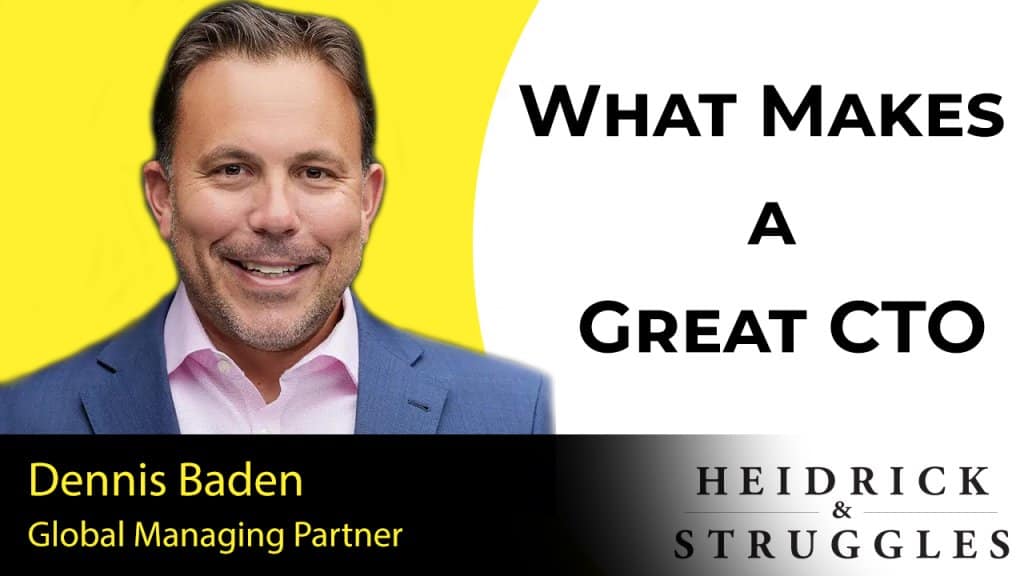
About Dennis Baden:
Dennis Baden is a partner in Heidrick & Struggles’ Boston office and global managing partner of the Technology Officers Practice. He is also a member of the Financial Services, Technology, and Digital Officers practices. Dennis has worked with a wide variety of clients, particularly in the recruitment of senior technology and operations leaders across industries, as well as chief executives and general managers for the utilities and software/solutions providers that support the industry.
About Heidrick & Struggles:
We Help Our Clients Change The World, One Leadership Team At A Time®.
Heidrick & Struggles International, Inc., (Nasdaq:HSII) serves the executive talent and leadership needs of the world's top organizations as the premier provider of leadership consulting, culture shaping, and senior-level executive search services. Heidrick & Struggles pioneered the profession of executive search more than 60 years ago. Today, the firm serves as a trusted advisor, providing integrated leadership solutions that transform leaders, teams, and organizations.
Heidrick & Struggles experts operate from principal business centers in North America, Latin America, Europe, and Asia Pacific. For more information about Heidrick & Struggles, please visit www.heidrick.com. To learn more about our culture change business, visit www.senndelaney.com
Transcript
(Intro Narrator at 00:00:01) Today, we're talking to Dennis from Heidrick and Struggles, all about what it takes to go from a good CTO to a great one. You're listening to Joel Beasley, Modern CTO.
(Joel Beasley at 00:00:15) Dennis, what's up, buddy?
(Dennis at 00:00:17) How you doing? It's nice to meet you.
(Joel Beasley at 00:00:19) Nice to meet you. This is it. We hang out. We talk.
(Dennis at 00:00:22) Sounds great to me.
(Joel Beasley at 00:00:23) So I found out about you guys about seven years ago. I was working on a project. It was a private project, government related, and somebody wanted a really popular technology leader to come in. And so I won't mention names of the companies or people or anything, but basically, it was an incredibly high-profile individual, and I was like, this is so cool. And they told me, they're like, yeah, this company is the best recruiting company on the planet. Like, when you need a big hitter, you go to them. And I'm not saying that to fluff you guys up. This is actually what happened. And so I had always, in my head, put you guys as the premium brand. Right?
(Dennis at 00:01:02) Yep.
(Joel Beasley at 00:01:03) And then when my team was like, hey, do you want to have a conversation with them? I was like, absolutely. So I'm really excited. So what do you do there?
(Dennis at 00:01:10) So I've been here just coming on thirteen years, and I look after our CIO and CTO practice globally. I've been doing that since I joined the firm, and that cuts across all of our different industry segments as well. So as you can imagine, we've been pretty busy the last couple of years.
(Joel Beasley at 00:01:30) So do you manage all the teams that then subsequently manage all the recruiters, or how does that work?
(Dennis at 00:01:36) Yeah. So there's a number of us in the practice globally that focus exclusively on CTO work, CIO and CTO work. So yeah, we're all part of one practice. We get together regularly. We share ideas. We all sort of have our own clients, right? But we partner very effectively as well because we all kind of focus on different industry sectors, right, and become very specialized in usually a certain industry.
(Joel Beasley at 00:02:07) Okay. So is it a little bit like a Deloitte-type model where there's a bunch of independent people kind of working together?
(Dennis at 00:02:13) It's exactly that. Yeah. And, you know, when I say CIO and CTO, I mean, that's the crux of what we do, but we also do a lot of CISO work, a lot of cybersecurity work, a lot of Chief Data Officers, data and analytics, digital transformation, so Chief Digital Officers. I think, you know, it's always C-level. So it's usually kind of the top job and maybe one level down, right? Like a head of engineering, head of infrastructure, head of architecture, you name it. But that's basically what we're all doing on a day-to-day basis in the practice.
(Joel Beasley at 00:02:43) Well, that's pretty cool. So what do you see as trends happening right now with the CTO, CIO space?
(Dennis at 00:02:50) My gosh. It's, you know, as I mentioned earlier, we had a record year last year, and this year is trending in the same direction. I think we're all wondering what's going to happen in 2023. Right now, there's been a little bit of a shift in the market. You know? But I would say that's been the biggest trend. Right? It's just there's just been so much demand for particularly CTOs, actually. Those that have the deep engineering product skill sets and experiences. It used to be that it was essentially product or software companies that needed a really good software engineer or a good CTO. Now we're seeing it across all industries, right? Financial services, we have banking clients, healthcare clients, you name it, right? And they're all looking for that CTO profile, right? Whether they're building client-facing applications or platforms or APIs. You know, it's been sort of an evolution. Right? It used to be a CIO or that IT function was very critical, and now we're seeing that, again, all industries really have a need for that CTO profile. Right? Because technology is just driving so much of what we're seeing out there in terms of business transformation.
(Joel Beasley at 00:04:07) So I'm curious. I've got a lot of questions related to this stuff.
(Dennis at 00:04:11) Yeah. Fire away.
(Joel Beasley at 00:04:12) If we were to do an 80-20, would you say that 80% of the people, the CTOs, CIOs, they're staying within their vertical, and I'm using that like industry? Like, they're staying within healthcare, and the 20% are ones that hop across industries, or is it not that at all?
(Dennis at 00:04:28) Great question. You know, I could take a stab at sort of a breakdown. I would say it's a little bit closer to 70-30, maybe even 65-35 of those that kind of stay in their lane, right, in their industry. And then those that, you know, what we call cross-pollinate, right, and work across industries. I mean, I think where we see that the most is a lot of our financial services clients that are really becoming much more technology-enabled and much more focused on technology. They want to hire people from Silicon Valley in the tech companies, right? So we see a lot of folks coming from tech into financial services, into healthcare, and then we see the reverse too, right? I mean, financial services in particular has a lot of really strong engineering talent that are now getting recruited to the Facebooks, the Googles, the Amazons as well. So I would say we're seeing a lot more of that than we ever did in the past.
(Joel Beasley at 00:05:23) That's pretty cool. Yeah. I've seen some industries hook up like that, like a marketing data industry, maybe interested in a specific part of the industrial world because they both deal with high volumes of certain types of data, and they'll find these weird connections between them, and they're like, yeah, we recruit from over there. So that's pretty interesting. You're a recruiter. You know, the company's a recruiter, so I think you are the most valid source of information to figure out why people stay at their jobs. Why do people stay at their jobs versus taking a higher pay and a better position in the ranks and higher pay? Why would people stay at their job?
(Dennis at 00:05:59) Number of different reasons, right? On the most cynical side, it's the risk averse. They're comfortable where they are, right? They don't want to have to start over building relationships, things like that. But I think the main reason is really a company's culture. And what I mean by that is, have they had the opportunity to work in a couple of different areas, right, to really round out their skill set? Every couple years, are they changing jobs within the company, you know, moving to a different business line? I think we see a lot of CVs like that, and if we see someone that's been somewhere, you know, fifteen, twenty-plus years, we actually do want to see that every couple of years, you know, they've been promoted, they've moved around a little bit, they've really kind of challenged themselves. But I would say, you know, again, that kind of a culture where there's a clear career path and trajectory, and it's, and you'd be surprised, right? Like, compensation a lot of the times is lower down on the list, right? A lot of times those folks that stay at one company for so long, if anything, their compensation has been a little bit more depressed and they could make more to your point if they've gone elsewhere. But I would say again the culture of the firm, career path, flexibility is another thing that we're seeing a lot more of these days, right, since the pandemic. The ability to work from home. A lot of engineers, you know, they don't want to have to come into an office five days a week. You know, they want that flexibility to live where they want and work where they want to. So I think those are some of the big, big reasons.
(Joel Beasley at 00:07:27) Yeah. There's that, you know, Maslow's hierarchy of needs, right? You get to a certain point and then it just becomes about like, okay, well, with the difference between $300,000 a year and $500,000 a year, would that change my life? I really like working with these people, things like that. Is that right?
(Dennis at 00:07:46) That's exactly right. Yeah. Yep. I mean, the grass is always greener. Right? And by the way, we wouldn't be in business if a lot of people weren't picking up those phone calls. Right? And open to exploring other opportunities. But I think, yeah, I mean, those are the main reasons that people, you know, there's some longevity with some folks.
(Joel Beasley at 00:08:04) Now do you recruit across the spectrum, or do you primarily just do C-level?
(Dennis at 00:08:16) C-level CTO, and like I said, one level down. Occasionally, you know, if it's a really large company, right, we can go a couple levels down, but really our sweet spot again is that kind of C-level and minus one.
(Joel Beasley at 00:08:30) And so that's like your group, they have those types of relationships. How are they, I mean, I kind of understand it. Right? Because it seems like there's a bunch of the independent people together, so they probably have longer term, personal relationships with these candidates versus spray and pray on LinkedIn. How do they build these relationships? Do they have, they been in this for ten years, and they're, they've been in recruiting, and they know these people, and they've seen them around? Like, is that what makes you guys unique?
(Dennis at 00:08:55) I like that. What was that spray and—
(Joel Beasley at 00:08:57) Spray and pray. Yeah.
(Dennis at 00:08:58) Spray and pray. I hadn't heard that one. That's a really good one. Yeah, I think it's a combination of everything you've said, right? It's about having, it's really about being a trusted advisor, right? Not only to our clients but to the candidates. You know, I've been doing this for thirteen years as I mentioned, right? So there's some candidates that I've been in touch with for over a decade, right? Where we've become not only just professional acquaintances but actually personal friends, right? And they've kind of grown to trust us, you know, as that intermediary, right, between the client. So it's a lot about that. It's the Heidrick brand, you know, as a firm. You mentioned it, you know, at the outset. Right? We've been around for a long time since the fifties. And over the years, we've just, you know, we've just built such a strong reputation as reputable trusted advisors to our clients and to our candidates, right, and keeping in touch. And, you know, even if we're not working on a particular search, just taking the time out to speak to CTOs and advise them, right, on career decisions and just taking that time. I think over the years, that really kind of builds up a lot of goodwill.
(Joel Beasley at 00:10:02) One of the things I was curious to know from you, I had one friend who was in Boston, and he had tried to recruit me for a job at Mailchimp, seven or eight years ago, like, before the podcast. Right? And I was like, no. And then he, you know, he kind of followed me over the years, and then he saw the podcast. And then I started having some people tell me, early on in the podcast in the first couple years, like, hey, you know, I'm making this move. They would tell me off the show and start developing these relationships and going to this conference. And basically, I had lead gen, right, for high-level technology people making moves. And so I called him up, and he's like, well, that's not really how it works. Like, I kind of have two clients that I really recruit for and, you know, we're trying to expand and things like that. So I sort of found out that, you know, they'll hook up with a couple relationships, like independents or a group of three or five of them or sort of hook up with a few relationships and then recruit almost exclusively for them. So there wasn't a network to refer to or anything like that. Some people ask me because I talk to so many people. They're like, hey, you know, do you know anybody here? I'm looking to make a move. And so I don't have currently a good connection if one of your crew within your team, I should have at least somebody to connect them into that has a national or global reach.
(Dennis at 00:11:14) Absolutely. Happy to do that. We can exchange information after, but, yeah, it'd be great to keep in touch. I mean, we do that all the time. It's funny. There are a lot of CTOs out there that are just expert networkers. Right? And they have incredible networks themselves from going to Amazon re:Invent and all of the major conferences. Right? And, you know, sometimes I joke with them that they should be, you know, they should come over and join us. Right? Because they have such large networks. But, yeah, absolutely happy to kind of build the relationship.
(Joel Beasley at 00:11:42) Yes. I always tell everybody, look, whether you think it's stupid or not, start building some, a personal brand is literally, some people are turned off by it, but it's quite literally just a way for people to engage with you when they're not directly speaking to you.
(Dennis at 00:11:54) Totally agree.
(Joel Beasley at 00:11:55) Just content that you're making and putting out there.
(Dennis at 00:11:57) Totally agree. And it's not always innate. Right? I mean, you know this better than I do. Right? That type of personal branding is not innate in a lot of engineers. Right? Yeah. They kind of want to code, they want to build stuff, they don't want to deal with all the other noise and things that it takes, right, to build, you know, a great career. Right? So I think that's great that you advise folks on that.
(Joel Beasley at 00:12:20) I actively resisted it, making the change. And then what I found was I was forced to out of the circumstance of a business growing. And then I found that for me personally, the one thing I enjoy more than software engineering is helping and being a part of the journey of growing an individual in software engineering. So then I found, okay, if I have a team, A, I can have things that I want to exist in the world way faster because I've always been working on them, and B, I get to participate in the lives of these other people? And for me, that was just 1% greater than the feeling I got from engineering at least. And so I made that switch.
(Dennis at 00:12:58) That's great. Yeah. And that's, you know, I think that's what actually separates a great CTO from a good CTO. Right? Wanting to actually lead a team, build a team, and do everything it takes, you know, outside of just the pure, you know, kind of engineering, right, and technical work. So and that's what our clients want as well. Right? Like, it's not that hard to find the technical capabilities. Those are oftentimes, you know, the table stakes. Right? It's like all the other softer leadership skills, right? Can you attract talent? Can you retain talent? Those are what our clients are asking for more than have they built anything cloud native and what sort of languages do they know, right? That never comes up, especially at the C-level, right? It's all around kind of leadership, strategic vision, and those types of things that, again, aren't always innate in engineers.
(Joel Beasley at 00:13:50) No. But when they have it, they have it.
(Dennis at 00:13:52) Oh, yeah.
(Joel Beasley at 00:13:53) So I'm 34 for just context so you better understand.
(Dennis at 00:14:01) Ten years older than you, but just as handsome. Right? So—
(Joel Beasley at 00:14:02) When I was earlier in my career, I would look at these other technology leaders, and I was like, you know, I'm a better engineer than they are. Like, why are they up there? You know, why can't I be in that role if I have those skills? And I realized really, really, really quickly, first of all, a bunch of 30-year-olds are not going to follow an 18-year-old. Right?
(Dennis at 00:14:21) Yep.
(Joel Beasley at 00:14:21) But on top of that, I guess what it is, is it's difficult for the age gap, but you also don't have the experience in the relationships. Like, the experience of just interacting with other C-suite people. Right?
(Joel Beasley at 00:14:37) The experiences of helping, you know, understanding P&Ls and the experiences of having a reputation so that when you do make a move, like when I got that government project I mentioned earlier, one of the benefits, because I got that in my early twenties, was the several years of building teams I had. So when I got the project, I just picked up the phone and called the people who I knew would execute on it right the first time, and there would be no issues. So I was really comfortable putting my name on it. You know? So that is a huge premium, especially when people are making switches in their job or when they're switching out a position.
(Joel Beasley at 00:15:12) I mean, are people often switching positions, or are companies switching in and out positions when everything's going perfectly?
(Dennis at 00:15:18) No. Right? I mean, if things are humming along nicely, there's not a need to shake things up. Right? I think oftentimes, you know, when we talk to a new client who's thinking about replacing their CTO, it's about all the things we're talking about. Right? They don't have the buy-in across the leadership team. Right? They're not able to influence. They're not able to communicate at the board level and articulate the vision for technology. So again, it always comes back to those softer skills that is usually why someone gets replaced in their role. Right? And also what a client wants to see in their next CIO or CTO.
(Joel Beasley at 00:15:58) When people are performing the action of replacement, let's say a CEO or a board, do they find the replacement before they let the current person go?
(Dennis at 00:16:06) Usually not, but it depends on the circumstances. A lot of our searches are confidential. So we actually use non-disclosure agreements for the first couple weeks, sometimes even bleeding into a couple months of a search. Right? So I would say it varies. We usually advise making the announcement or talking to the incumbent at least a few weeks into the search. Because even when you're using NDAs, there's always risk that it's gonna get out there.
(Joel Beasley at 00:16:33) They know each other.
(Dennis at 00:16:34) It's a small world. Yeah. Exactly. You want to put all cards on the table eventually. So we usually advise trying to make that announcement or communication as swiftly as you can.
(Joel Beasley at 00:16:45) Now I'm curious to know a couple different tips. We talked a little bit about building our network. You're constantly working with teams that are building and expanding their network. What's your best networking tip?
(Dennis at 00:16:57) I think it's being open to hearing from folks like myself. Right? Even if you are having a blast in your current role, not looking to leave. Right? Having the conversation, building the relationship, because you never know when the tide's gonna turn and you're gonna need to use the resources of a search firm or recruiter. So it's really just picking your head up even when things are going very well, updating your resume. Right? Just keeping everything current, knowing that things can kind of change on a dime. So that's what I would say is just being open, have the conversations, refer people, be helpful where you can. Right? And not just with recruiters, but with colleagues, with junior people in the organization. Take the time. Right? And that's how you kind of build that credibility and you build that network.
(Joel Beasley at 00:17:53) Yeah. Because the last thing you want is to not have the relationships when you need them, because it's typically a pretty scary moment when you just found out that you don't have a position anymore. And to try to go build a genuine relationship, it's just not—if anything, whatever you build during this time is only going to help you in the next one.
(Dennis at 00:18:13) We hear that all the time from candidates. Right? That all of a sudden get laid off or are looking for another role, that they wish they had had these conversations sooner. Right? So they're not caught flat-footed. And most of the time, our clients actually are interested in more of the passive job seekers. Right? Not those people that are pounding the pavement. You know, it's actually those folks who are doing really well where they are. Right? But are just open to exploring, you know, potentially a better opportunity and expanding their network as well. Right? I tell candidates, if they say, "I'm really happy, I don't want to leave," "Well, just have a conversation." Right? Worst case scenario, you're adding someone new again to your network. You're building a relationship. Best case scenario, you find out it's your dream next job.
(Joel Beasley at 00:18:56) Right? I agree. That's, uh—I want to keep making analogies back to dating, but I'm not.
(Dennis at 00:19:05) Well, it is like dating. Right? You know? And it's like finding that perfect kind of marriage.
(Joel Beasley at 00:19:09) Yeah. You know, does it get like that? Does it get fun?
(Dennis at 00:19:12) Oh, yeah. Yeah. We're always interested in where folks are going. Right? We hear the rumors that someone's leaving a certain seat. We're always very curious about where someone's going. And, you know, again, the last couple of years have been such a busy market that good CTOs—they're getting lots of calls even on a daily basis. Right? So it's—we always advise our clients, like, you have to have a value proposition and something differentiating about your organization and the role. Right? If you really want to attract talent, because the good folks are getting called left and right by premier organizations. Right? So you've got to give them something to really think about.
(Joel Beasley at 00:19:54) What's the most common mistake people make with their resume?
(Dennis at 00:19:58) I would say not necessarily with the actual document, but what we see on the resume is if there's too much what we call sort of jumpiness. We see that a lot in the CTO world, especially. I mean, some of it makes sense. Right? These folks like to build something, and once they've been at a place for three or four years, they want to move on to the next challenge. Right? It's become more of a status quo environment. But I would say that's one of the first things I look for. Have they shown some longevity in tenure somewhere? Because, you know, if you see someone who's been eighteen months there, two years, six months, you've got to wonder how much could they actually have accomplished in a year over that period of time. Right? So I would say that's the biggest mistake. Right? It's just people that are constantly jumping around to new opportunities.
(Joel Beasley at 00:20:47) And I think it's interesting because that's one of the first disqualifiers. I'm always looking for, first of all, who's the person that realizes that that is a bad thing and adjusts their resume to tell a different story. And secondly, I want the person who's gonna hang out for three to five years. Like, I want that—you know, not your whole life, but for me, what I'm looking for is I don't want to pull someone in, train them. They're actually learning at six months. They're doing something useful. You know? Twelve months in, at least at an executive level, you've just got started. Right? You just got in that budget cycle, and you're gonna do something now.
(Dennis at 00:21:22) Absolutely. And there's oftentimes some circumstances. Right? So if we do see a resume like that, oftentimes there's a rationale. Right? The company was acquired, or there was a geographic reason to move. Right? So sometimes there are very legitimate reasons, but we just want to make sure we really understand those transitions. Right? And everyone gets one kind of get-out-of-jail-free card. Right? You see a lot of, you know, around that 2000 time frame during the dot-com boom. Right? You see a lot of twelve-month stints. That's obviously understandable given where the market was.
(Joel Beasley at 00:21:54) Yeah. There's definitely a spectrum of jumpiness. Right?
(Dennis at 00:21:57) Right.
(Joel Beasley at 00:21:58) And I know a guy who—they raised venture capital, and then they hired him to help expand their product and, you know, grow it. And his task was to hire 200 engineers that year. Right? So he went on and started his task, had hired like 150 of them within the first year or something to that number. And then the founders had overspent their money, and they had to make massive cuts across the organization, and they laid off like a third of their workforce, and they're like, "Sorry, we don't need to expand anymore." So that was like a short-term example. And I say that because there's always that big "but." It's like, yeah, we see the story. As you said it professionally, we want to understand the transition. Right?
(Dennis at 00:22:37) Right.
(Joel Beasley at 00:22:37) Because there's the people that don't transition at all, then there's people that have a hundred of those stories. And it's just kind of like, I feel like if I brought you in, you would just be the hundred and first story. There would just be some other reason why you would leave in a year.
(Dennis at 00:22:50) Right. Exactly. You know, if there's a common denominator. Right? I mean, like I said, you're right. There could be misaligned expectations, company shifts directions. I mean, there are very legitimate reasons to have a short stint, but you don't want to see too many of them. Right? Because then you start to scratch your head a little bit.
(Joel Beasley at 00:23:05) Right. Right. I'm curious to know. Okay. So I go around on LinkedIn. Right? We post our clips and everything, and I add guests and things like that. That's why I see the jobs in the sidebars and whatnot. And there's inevitably two or three that sort of cycle different brands that I see that I'll see for months at a time, and it'll be something like 900K a year, confidential search, you know, whatever. Like, are these things real, or are they fishing for future stuff? Or can you explain to me what those are and who's doing that?
(Dennis at 00:23:37) Yeah. I mean, I think they're probably real. Right? And we have a lot of clients who might start off posting something on LinkedIn or on their website. Right? And I think they pretty quickly realize, once they're flooded with 200, 300 applicants, that as they sift through them, maybe 1% are qualified for that role, and the rest is just folks kind of trying to apply for something and seeking employment. So at the level that we operate at, at that kind of C-level, C-minus-one, it's very rare that our clients will post something on LinkedIn. So I think you're right to have kind of a wary eye, but I also think it's just not a very effective way to go about your job search. Right? Or if you're the client, to find the right type of person. Right? Because, again, you get flooded with a lot of different types of resumes. And the strongest CTOs out there aren't necessarily monitoring LinkedIn for job postings. Right? You have to go and search for them and find them. So, you know, I think you can get lucky and occasionally a posting like that will work out. But I think, more often than not, it's not the best way on either side to find a role.
(Joel Beasley at 00:24:55) What's hot right now in the recruitment space? What are you talking about with your peers?
(Dennis at 00:24:59) Yeah. You know, when I think about the conversations I'm having most often with clients, first of all, it's what kind of leader do you need? Right? That's kind of where the conversation starts. Is it a CIO or is it a CTO? Right? We often have that discussion with clients. I don't know how you think about this, Joel. I mean, the way that I've thought about it or the way we think about it is CIO is, again, more of the IT parts of the organization. Someone who runs the corporate systems, HR, finance, legal, ERP systems, someone who runs the help desk, end user, someone who can lead the infrastructure environment. Right? And then CTOs—more focused on the engineering and the building of products. So that's sort of how we—one's more internally facing, the other's sort of more externally facing. So that's oftentimes where our conversations start with clients. And then it's building out the profile for the ideal CTO. And I think the things that we hear the most are technical capabilities. Right? That ability to kind of be hands-on and have credibility with the engineers that are gonna be reporting into you. Strategic vision, being able to kind of build the vision for a platform, for a product, whatever the case may be, and then being able to deliver on that and articulate the vision to get the buy-in to do what you need to do. Right? And then I think it's those softer skills that we talked about. Our clients—they want good leaders. It's never been harder to find good engineering talent. Right? So they want a CTO who can attract and retain top talent. And then the last thing I would say is just diversity. You know, particularly in the technology domain, it's difficult. But our clients—not only do they want, but they need diversity of thought and an inclusive workforce. That's something that we're talking about on a very regular basis. That's also something that's critical to Heidrick as an organization, making sure that we're providing a diverse slate of candidates on any search that we work on.
(Joel Beasley at 00:27:08) Yeah. Diversity of thought is one of the most important things in the world, because for me as an entrepreneur, you know, if you have on one extreme a bunch of, let's say, Stanford-educated business people and that's most of everybody on the executive team, and then you have someone come in who's an entrepreneurial person who didn't go to college and who scrapped from the ground up, that's gonna give you incredible insight and advantage to the team. Right? To your point of the CIO, CTO—that is the most common question I get asked, and I answer it the same way you do. So—
(Dennis at 00:27:44) And the lines are blurring. Right? Like, we have some clients that come to us and say we need a CIO. Right? And then when you hear actually about the skill set, it's kind of like a cross. Right? They want someone who can run the IT landscape, but also be building client-facing products. Right? So I think we're seeing those lines blurring like crazy, particularly, again, in some of the other industries that haven't traditionally had a CTO.
(Joel Beasley at 00:28:08) Yeah. I think there's also a lot of benefit to having experience being on a C-suite team, because you kind of find out that the titles are for the outside world, and you have this inside circle, this group of people that are running the business and making decisions, and each one is aware of the other one's competencies. Yeah. Right? And it's sort of like, okay, I'm the most competent technical one here. So when we go outward-facing role, I'm gonna wear that type of title. So younger people in their career are sort of obsessed with becoming the title. And then the way you actually get there is becoming obsessed with solving the problems for the business.
(Dennis at 00:28:44) Exactly. I think that's something we hear all the time. Right? There's just a disconnect in attention between the business and the technology organization, and they just need someone who can kind of bridge that gap. Right? And that kind of goes back to that strategic vision that I talked about. I mean, a lot of times we hear from clients that their current CIO or CTO—it's more of an order-taking organization. Right? But we need someone who can be proactive, bring ideas to us about how we can kind of enhance the business and really drive value through technology. But I will say, I mean, it's still a candidate's market. And what I mean by that is, you know, oftentimes clients come to us with a wish list. Right? They want all those things that I described. They want the technical skills, the leadership, all of that.
(Dennis at 00:29:28) And it's our job to kind of manage their expectations about what's attainable out there in the market. What's that going to cost you? And then also, where can you give on some of those pieces? Because, again, even though the market is starting to turn a little bit and everyone's worried about a recession, we're still having lots of conversations.
(Dennis at 00:29:50) I don't think it's going to soften all that much as it relates to good CIO and good CTO and good engineering talent. And I think what we hear the most from CTOs is they want to know that they're joining an organization where technology is critical to the business. Doesn't necessarily have to be the core focus of the business, but it has to have a seat at the table and be a real enabler and not just a support function, a back office function.
(Dennis at 00:30:19) They want to know that there's some flexibility in where they live, and those are the things that are differentiating clients from really attracting top talent. Is there a trajectory, like I mentioned earlier, if it's not the top job coming in the door, what is the path to get there? What's the reporting structure? Oftentimes, that's an indicator of how critical technology is to the organization.
(Dennis at 00:30:41) Is it to a CFO? Is it more of a cost center? Is it to a COO? Or is it directly to a CEO?
(Dennis at 00:30:47) And you're going to be a member of that executive leadership team. So I would say, again, these are the things that we hear the most. And I would say the last thing that's always very critical to good candidates is that they're going to be building something or transforming something.
(Dennis at 00:31:03) Not just inheriting something that's running smoothly. They want a challenge. That's not as interesting to strong candidates. They want to know that they're going to be able to make an impact and make their mark on something.
(Joel Beasley at 00:31:17) There's definitely times for both people too. I'm definitely the impact person. And when I was less mature, I'd kind of scoff at the routine person, and I realized that's the only way you can build a big business. You need those people who are just consistent and just execute on the process and deliver.
(Dennis at 00:31:35) Up and running and deliver. Yep.
(Joel Beasley at 00:31:37) Quick question. I'll share a small story, and then it'll lead to the question. So when we were around episode 100 or something like that, I was emailing—I was like, you know what? I'm going to email the CTO of Verizon. Long shot. Long shot. But we've been getting good guests, and let's give this a go. Within five minutes, Hans called me. I was blown away.
(Joel Beasley at 00:32:01) I was like, maybe it's because I'm a Verizon customer and he noticed the numbers.
(Dennis at 00:32:04) Yeah. Right.
(Joel Beasley at 00:32:06) I don't know. But he's like, hey. So you don't want to interview me because in two or three weeks, there's going to be news that I'm the CEO, and then there's this new guy, Kyle, who's going to be the CTO. And so you want to set up an interview with Kyle and just set it out a couple months or whatnot.
(Joel Beasley at 00:32:21) And I was like, oh, thank you so much. And he introduced me to the comms people and all that good stuff. And then I started to see a little bit of that—not a crazy amount, but I've seen it enough where I can say it's something that's happening in the marketplace, these CTOs becoming CEOs. Have you seen that?
(Dennis at 00:32:37) Absolutely. It's funny. We talk about that as a practice all the time. I mean, ten years ago, you saw it very rarely. There were very limited exceptions to someone who was a CIO or a CTO that ended up taking on the CEO role. But I think that's something I actually even should have mentioned earlier. Oftentimes, that's something that our clients are looking for. If it's a role reporting to a CEO, oftentimes the CEO says, I'm looking at this person as a potential successor to my role.
(Dennis at 00:33:05) Those are things we never used to hear. So we're definitely seeing it more and more across all industries too. It's not just in the technology industry, but we're seeing that across the board.
(Dennis at 00:33:17) So I think there's never been a more exciting time to be a CTO or CIO out there.
(Joel Beasley at 00:33:24) I know we talked a little bit about it, but I can't remember. Is it currently increasing, staying the same, or decreasing, this movement of the CTOs?
(Dennis at 00:33:32) Well, I'm sure you heard about the great resignation that everybody talks about. And I think there's some truth to that in our world. 2021, particularly the first half of 2021, there was a lot of movement. So now, oftentimes, when we kick off a search, there's someone that we think is perfect for the role, but they've only been in their new role for six months.
(Dennis at 00:33:53) So there's still tons of activity out there, but a lot of it did really happen in the last twelve to eighteen months where CTOs are just starting to kind of get their legs underneath them in a new environment. But, you know, that's when we tell clients, look, think more broadly. It doesn't have to be a sitting CTO.
(Dennis at 00:34:12) It could be a number two that's running engineering, that's ready for that next step in their career. So that's always something that we advise because the pool is limited that brings all those attributes that we've been talking about. So we always advise to keep an open mind on industry, on sort of level of seniority, and things like that.
(Joel Beasley at 00:34:34) That makes sense. That makes sense. What's the busiest season for recruiting?
(Dennis at 00:34:39) I'll tell you. It's been every season the last couple of years. Everybody thinks the summertime slows down, and I would say maybe it does a little bit in August. And then, oftentimes, people think it slows down in November and December as we get near the holidays.
(Dennis at 00:34:54) But that's also not necessarily true. It's actually a great time to start a search because a lot of folks are starting to get their bonuses and start to think about what might be next. They reflect over the holidays, they start to think about what might be next, there's that sort of inflection point. So, there's really no rhyme or reason. We've been busy all four seasons.
(Joel Beasley at 00:35:13) Okay. So it's pretty consistent.
(Dennis at 00:35:14) It is pretty consistent. Yeah.
(Joel Beasley at 00:35:16) So it's not like traditionally if we talked five years ago, it's not traditionally a seasonal business. It's just fairly consistent. There's some small little things sometimes, but mostly it's not like a whole three months where you guys are dropped down.
(Dennis at 00:35:28) No. Unless there's some major market event or something, then no. It's been very consistent. If you look at the numbers over the last couple of years, every month we're confirming a similar amount of searches. So, again, who knows what next year's going to bring, but I think we're still bullish.
(Dennis at 00:35:45) Just in the work that we do, these folks are still so critical to organizations that—
(Joel Beasley at 00:35:54) Well, I'm an optimist in general. So for me, you just have to figure it out. You just figure it out with what's in front of you. So if the market's up, you have to figure it out. I never thought the market being up would be a problem for my business, and it is because it's harder to recruit talent when the market's up.
(Joel Beasley at 00:36:08) So there's going to be problems when it's up. There's going to be problems when it's down. There's going to be problems the entire time.
(Joel Beasley at 00:36:14) So if you don't want to deal with them, get out of leadership.
(Dennis at 00:36:18) Yep. Exactly. Yeah. Exactly. I think one of the good things about Heidrick too, as I think about this is, even if the search work starts to quiet down, we've got several different aspects to our business.
(Dennis at 00:36:30) We've got an on-demand talent solution business. If a—
(Joel Beasley at 00:36:33) Oh, really?
(Dennis at 00:36:34) Yeah. That needs a project to get over the line over a three month period. We have those types of executives that we can put in for, you know, on an interim or temporary basis. We've got a whole consulting business as well. So, even if our search business slows down, we've got these other areas where we're working around executive assessments of leadership teams.
(Dennis at 00:36:57) We're doing succession planning. We have a culture shaping business. So, you know, I think that's a good thing. We're really kind of delivering a holistic service to our clients. And again, if one area is lagging a little bit, chances are there's another area of our business that's picked up steam, particularly our on-demand talent business that we have.
(Joel Beasley at 00:37:16) Is that to compete with a Toptal type deal where you just get engineers on a quarter or on a monthly basis or something like that?
(Dennis at 00:37:23) Yeah. And it's across all functions. It's not just technology. But, yeah, if someone needs a CFO or a head of accounting for a three or four month project, we have those capabilities.
(Dennis at 00:37:35) Or if someone's going through an agile transformation in our world, needs a scrum master or something of that ilk, we can provide that on a, again, on a temporary—
(Joel Beasley at 00:37:45) That's pretty new for you guys. No? I haven't heard of that.
(Dennis at 00:37:48) It is. Yep. It's a business that we just acquired over the last couple of years. So but it's been incredibly busy, and it just keeps getting busier. If a client's not sure they want to hire a full-time resource just to get a project delivered, then that's when they use our on-demand services.
(Joel Beasley at 00:38:06) That's pretty interesting. And then, you know, when you were saying succession planning, culture shaping, leadership type stuff, I thought, well, that's brilliant because you get by people coming to you for recruiting, that's lead gen for these other services. Because I've had people try to recruit me, and I was like, I would never work at that company because of the culture. And that's a lead for someone to—if you guys see that, you're like, look.
(Joel Beasley at 00:38:29) You're not going to recruit great talent. I'm sure you're honest and you coach your clients. You're not going to get great talent if you have this horrible internal culture.
(Joel Beasley at 00:38:37) And so let's go over to our culture shaping business, and let's have them clean some stuff up before we can find you somebody that's great.
(Dennis at 00:38:43) That's right. Yep. And we've been around for a long time. So we use a very data-driven methodology across all of our engagements. We've got years and years of data and insights that we've gathered. So that works well across all of our service lines.
(Joel Beasley at 00:39:01) I want to sort of wrap up with some tips real quick. Let's say we've got some small companies like me. We're, you know, 15 people, 25 people. We're not necessarily at the point where we're going to be recruiting huge deals. What's just one really good recruiting tip if we're trying to DIY?
(Dennis at 00:39:19) I would say be flexible on where the person lives and works. We live in a different world now, so that's one. Oftentimes, we have clients that want someone at the headquarters and have to be there five days a week. That's not really resonating in this new kind of world that we live in.
(Dennis at 00:39:38) So that would be one. The other one is make sure you're all aligned on expectations and that there's a real value proposition. There's some excitement around what you're trying to do. Because excitement—people will feel that. They'll feel that energy in during the interview process. So I just gave more than one, but I would say the top one is that flexibility on where someone can do their work.
(Joel Beasley at 00:40:03) I've hired, I think, two or three people in the past three months or something like that. And the one thing that I heard from all of them was that when they're interviewing, most of the companies are like these eight-step processes. What's the deal with that?
(Dennis at 00:40:17) That's a—yep. Look, I think you can look at it in two ways. We have lots of clients where they want candidates to meet ten, fifteen executives. I think it's good in a lot of ways for both sides.
(Dennis at 00:40:32) You want to make sure it's going to be that right marriage and the right fit culturally and otherwise. So it can be a really good thing. And this is an important life-changing decision for someone. So sometimes I think it's great. Meet as many people as you can. Other times in this dynamic market, you've got to move fast because these people have several opportunities on the table. So, you know, we're constantly paranoid as search folks. We always ask that question, what other processes are you engaged in?
(Dennis at 00:41:04) So that we can advise our clients, hey, you need to move fast. Otherwise, we're going to lose this person. So speed sometimes is absolutely critical, but other times, you want to take your time and you want to make sure you're getting it right. So, again, I think both can work. It really depends on the organization.
(Joel Beasley at 00:41:22) So what I have found and for context, maybe I've hired and fired 100 people. And personally, like, not just one of my team members hiring them. I was in the interview and I hired them. And I can say pretty confidently that no matter how many times I meet with them or how much time I spend with them, there's no way to know until you hire them.
(Joel Beasley at 00:41:45) And then you see how they do the first couple weeks, what their attitude is getting in and how they think about things. No matter how much dating you can do, until you actually get in there, it's just not the same. I've never been good at predicting it, and so I'm a hire fast type person. So I'm like, hire fast, come in, they either crush it or they don't real quick.
(Dennis at 00:42:04) That works very well also. I also think that's where, you know, a company like Heidrick comes into play. Because we're referencing these folks.
(Dennis at 00:42:14) We're learning everything we can about them to ensure that it's going to be a successful fit. So, again, I think both ways can work. But there's no question you have to move fast in this market, but you kind of want to do enough diligence as well. You're right. There's always going to be an element of risk in anyone you hire of it not working out.
(Dennis at 00:42:33) But I like the fact that you'll just move fast and go with your gut. I'm sure that works out more often than not.
(Joel Beasley at 00:42:38) It's working in the $50,000 range. I don't know if it works in the $500,000 range.
(Dennis at 00:42:42) Right. Fair enough.
(Joel Beasley at 00:42:43) I'm not—I haven't done a lot there. But—Yep. So I think some of the human principles stick. What else did we want to get out there to the world? Do we have a call to action for the business?
(Joel Beasley at 00:42:52) Go to the website. What's the website?
(Dennis at 00:42:55) It's heidrick.com. So you're welcome to go to the website. You can find me on the website or on LinkedIn. Happy to kind of build relationships with anyone that's out there.
(Dennis at 00:43:06) And I think, you know, just in general, it's sort of what I was just sharing. We're a very trusted global advisor to our clients. We work with over 70% of the Fortune 1,000. Also work with a lot of startups and high-growth companies. So, you know, we're always happy to take on new clients and to meet new people and add them to our networks.
(Joel Beasley at 00:43:28) Amazing. Thank you for doing this. I'm thoroughly impressed. I knew you would be awesome coming from the company and seeing your background, but we did it, man. We made a podcast.
(Joel Beasley at 00:43:37) How do you feel?
(Dennis at 00:43:37) Awesome. We did it. Thank you, Joel. Yeah.
(Joel Beasley at 00:43:40) Thank you so much for listening. And if you found this episode useful, please share it with a friend or colleague who you think would get value from it. And if you have topics that you'd like to hear discussed on the podcast, either add me on LinkedIn or send me an email: [email protected]. Every time I get an email or LinkedIn message, it absolutely makes my day and inspires me to keep going.