
Episode 498 ·
The Business of Tech - with Dave Sobel, host of the Business of Tech Podcast
Today we’re talking to Dave Sobel, host of the Business of Tech Podcast; and we discuss how there’s rarely only one right way to do something, benefits of bootstrapping your business and having strong fundamentals, and why it requires a whole lot more than just laptops and webcams to enable true “work from anywhere” in your organization.
All of this right here, right now, on the Modern CTO Podcast!
Check out the Business of Tech Podcast at https://www.mspradio.com/show/business-of-tech/
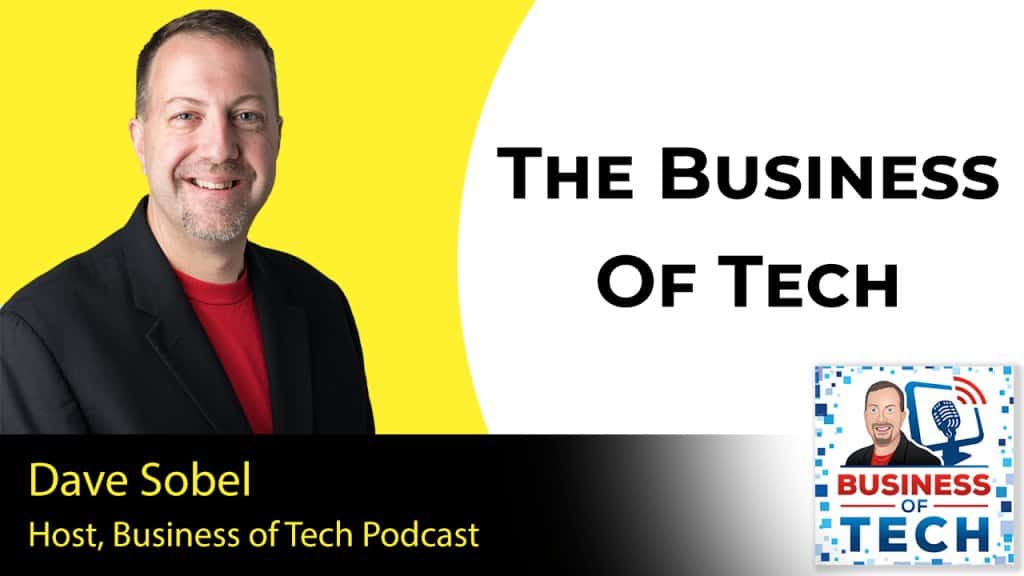
About Dave Sobel:
Dave is the host of the Business of Tech podcast, and owner of MSP Radio. Dave is regarded as a leading expert in the delivery of technology services, with broad experience in both technology and business. He owned and operated an IT Solution Provider and MSP for over a decade, both acquiring other organizations and eventually being acquired. This firm was a winner of multiple awards, including being a finalist for Microsoft’s Worldwide Partner of the Year in the Small Business Specialist category. After his MSP experience, he has worked for multiple vendors at such companies as Level Platforms, GFI, LogicNow, and SolarWinds, leading community, event, marketing, and product strategies, as well as several M&A activities.
“The Business of Tech” is a leading IT services focused news and analysis podcast and YouTube show, with thousands of listeners and subscribers. He also co-hosts of the podcast “Killing IT”, and authored the book Virtualization: Defined. He was a CRN Channel Chief, on the CRN UK A-List, a Channel Futures Circle of Excellence winner, one of Channel Pro’s 20/20 Visionaries, and has a MSPmentor 250 member for multiple times. Dave has been recognized as one of the top virtualization experts globally as a Microsoft MVP for Virtualization. Dave has served on the executive council for Managed Services and Emerging Technologies, the Vendor Advisory Council, as founding Chair for the Mobility Community for CompTIA.
Dave holds a bachelor's degree in Computer Science from the College of William and Mary. He is a dynamic voice within the IT community, a former member and facilitator for Heartland Technology Groups and passionate about collaborating with clients and peers on utilizing technology to advance organizations. He lives just outside Washington DC with his wife and two cats. His interests include travel and food, cheering the Washington Nationals and Capitals, smoking barbeque, enjoying craft beers, and collecting and playing retro and modern video games among others.
About The Business of Tech Podcast:
Each day, the flood of technology news hits. In an industry that always changes, those who deliver technology services need to focus on the information that matters to them. The Business of Tech podcast focuses on the news you need to know. Covering both the story and why it matters to the way services are created and delivered, channel veteran Dave Sobel brings you up to speed and gives you resources to go deeper. With insights and analysis, this five minute podcast focuses on the knowledge you need to be effective, profitable, and relevant.
The podcast is hosted by Dave Sobel, a leading expert in the delivery of technology services with broad experience in both technology and business. He owned and operated an IT Solution Provider and MSP for over a decade, both acquiring other organizations and eventually being acquired. This firm was a winner of multiple awards, including Kaseya’s Cutting Edge and ConnectWise’s Best New Idea, as well as being a finalist for Microsoft’s Worldwide Partner of the Year in the Small Business Specialist category. After his MSP experience, he worked for multiple vendors at such companies as Level Platforms, GFI, LogicNow, and Solarwinds, leading community, event, marketing, and product strategies, as well as several M&A activities.
He was named a CRN Channel Chief multiple times, to the CRN UK A-List, as a Channel Futures Circle of Excellence winner, to Channel Pro’s 20/20 Visionaries, and has been an MSPmentor 250 member for multiple years Dave has been recognized as one of the top virtualization experts globally as a Microsoft MVP for Virtualization. and author of “Virtualization: Defined. A Primer for the SMB Consultant.” Dave has served on the executive council for Managed Services and Emerging Technologies, the Vendor Advisory Council, as founding Chair for the Mobility Community for CompTIA.
Transcript
(Intro Narrator at 00:00:03) Hello, my friends. Today, Joel is talking to Dave, host of the Business of Tech podcast, and they discuss how there's rarely one right way to do something, benefits of bootstrapping your business and having strong fundamentals, and why it requires a whole lot more than just laptops and webcams to enable true work from anywhere. All of this right here, right now on the Modern CTO podcast.
(Dave at 00:00:31) Here we go.
(Joel Beasley at 00:00:32) This is the Modern CTO podcast.
(Dave at 00:00:42) So I shoot all my videos and my daily show. I shoot from the spot, so it splits. I do the daily show, goes out as a five-minute piece, and it gets rolled together into a 25-, 30-minute piece that comes out on Fridays as a weekly YouTube version.
(Joel Beasley at 00:00:56) Okay, but are you airing the five-minute segments on some platforms?
(Dave at 00:01:00) Yeah, so those come out as the audio podcast. So every single day I drop a five- to seven-minute podcast, which is the daily audio version. That same version rolls out as a video show once a week, so depending on how people like to consume their content.
(Joel Beasley at 00:01:14) Yeah, and what's that podcast about?
(Dave at 00:01:16) So the core idea is if you're in IT services, you need to get a sense of what's going on in the news. So I do—it's a news show, but I include with every segment a piece called "Why Do We Care," which is where I give some commentary on why I selected the story or what I think is important about it or what it illustrates about a trend. So it's a daily news and commentary show for IT service providers.
(Joel Beasley at 00:01:39) There's enough news in IT services to support a show?
(Dave at 00:01:43) I believe so. I've been at it more than three years now, and I have something to talk about every single day. Oftentimes it's elements of following up on trends or new research or new data. It's incremental changes. But if we look across cybersecurity, there's always something—there's always something going on, a new announcement, a new warning.
(Dave at 00:02:03) I'm tracking legislation and all the privacy laws that you have to track. I'm tracking all of the changes in return to work. Oh, by the way, we had a whole pandemic during this time, so there was all the changes, the health information you needed to know and the technology stuff you needed to know. There's market condition stuff. Oh, there's announcements of what's happening with credit or employment or hiring.
(Dave at 00:02:26) There's always something going on, and keeping track of all these various threads—it's a lot of work for providers. So that's what I'm trying to do, to give them some insight.
(Joel Beasley at 00:02:35) Oh, nice. Okay. So I had made it more narrow in my head. I thought you were only reporting on managed service provider industry-specific news.
(Dave at 00:02:44) No, it's got to be much broader than that. And in fact, I actually think a lot more about what they need to know in terms of dealing with their customers versus what they need to know on their back office. I don't spend a lot of time worrying about the tools they're using or the partnership programs they're leveraging. That stuff's really easy to find.
(Dave at 00:03:03) It's much more about what do you need to know to be effective in delivering your services as you point towards your customers.
(Joel Beasley at 00:03:12) Okay. Okay. And how long have you been doing this for?
(Dave at 00:03:15) About three years now. And it started as—I was an MSP for a decade. I worked for software vendors for another eight, delivering tools to those providers, and then now this job for about three years.
(Joel Beasley at 00:03:28) Is this your full-time gig?
(Dave at 00:03:29) This is all I do.
(Joel Beasley at 00:03:31) How have you monetized it?
(Dave at 00:03:32) So the way I look at it is—so I sell ads. It's really kind of that simple. I've got a couple of different models. Most of my revenue comes from ads. I have some Patreon supporters that people support stuff directly.
(Dave at 00:03:43) I also do some consulting, but the vast majority of how I make money is ads. And the way I really boil it down to is there is actually some value in an ad in a world where everyone wanted to do webinars and these long, extended pieces of fluff content. I said, you know what I can do? I'm going to boil it down to actually five to seven minutes of stuff you actually care about, and I'm going to embed one ad—a 30-second pitch for somebody telling you about their widget. There's nothing wrong with that.
(Dave at 00:04:14) There's value in knowing about what somebody is up to in a short bit versus having to sit in some long, 30-minute fluff, hour-long fluff webinar, which, by the way, we've all sat in those things where the content really isn't that good and you really turn out realizing that's really just an embedded ad.
(Joel Beasley at 00:04:32) Yeah, there's this weird webinar crowd. So we did some sponsored webinars at my business several years ago. 400 people showed up and zero conversion. And it was all in their target market, and I was just like, all right. So I started digging into the audience more, and it was a lot of competitors and people who just were hanging out listening to it as maybe some type of entertainment. So I'm not a fan of the sponsored webinars anymore.
(Dave at 00:04:57) Yeah, and the other piece that I've kind of rebelled about is during my vendor time, I spent eight years flying around the world, hitting my million miles by walking on a stage, and I would do market analysis and walk providers through. And by the way, these events also were an element of trying to collect leads and drive leads. And I got that world, and I said, you know what? I think this isn't sustainable, and I also think digital is going to do better.
(Dave at 00:05:26) I think we're going to be able to do better. And I say now, I talk to more people in an average week than I would have in months of traveling, pounding pavement and going out to conferences. I can do more in a week than I could do in months. That's the difference now, and I can do it in a much more affordable way for those that want to do some messaging with me. So that's the basic business model with what I'm doing.
(Dave at 00:05:49) And it's maybe a little naive or optimistic on my part, but I kind of believe that good analysis, people will listen to and they recognize that I have to pay the bills. So they're okay with it.
(Joel Beasley at 00:06:02) Yeah. And often if you know, like, and trust the person that you're consuming content from, then they're typically picking relevant ads. And if you're doing it right, then it's not super annoying. And also there is a show or two that I'll listen to that has an ad from the host, and it's cool with me mostly because the ad is almost always connected to something that's happening or something that's new.
(Joel Beasley at 00:06:27) So I'm either learning about something new or some sort of advancement. And so if it's interesting, then it really works out well for the audience.
(Dave at 00:06:35) Yep. And that's my business model. And I don't mind—for those who are interested, the economics are good because the value of a B2B ad is just way higher than a B2C. I know I'm targeting my content and what I produce for owners, business leaders—the people that are writing the checks for significant investments from a technology perspective. And my advertisers want to reach that audience, and so I help them do that.
(Joel Beasley at 00:07:02) That's brilliant. What made you want to start the podcast? What was the moment that you were like, "I need to start doing this show"?
(Dave at 00:07:08) Well, it's an element of—it's the trend of my career. So when I left—when I sold my managed services business, everyone said, "Oh, are you going to be a consultant?" And I was like, "I don't want to be a consultant. I actually want to keep learning, and I want to deliver some value." And I went to the software vendor side, and I did two different companies during that eight-year run.
(Dave at 00:07:28) And it was time to do something else, and I'd hit that same kind of entrepreneurial moment of, "Oh, what am I going to do next?" And I have the same question. "Oh, are you going to be a consultant?" It's like, "No, I want to actually figure out a way to deliver some value that's different from that."
(Dave at 00:07:41) And I have respect for those that deliver consulting, but it wasn't me. And I looked and I knew—I was a buyer for a long time because when I was at those two software roles, my job was about helping IT services companies be better. Basic premise was that if we helped them be better, they'd buy more software. It's a pretty basic idea, right?
(Dave at 00:08:01) But it actually really works. So I would help them grow their business or would help them identify new opportunities or how to market or how to sell. And I said, you know what I'm looking at? When I looked at the space and how I delivered content, I said, you know, I think there's an opportunity to go back to basics on kind of journalism. And I'm still a little uncomfortable with calling myself a journalist, although I'm really trying hard.
(Dave at 00:08:23) I'm more comfortable with analyst, but I'm an aspiring journalist, I guess, is a better way to say it. And I said there's some real value in what good journalism is—going out there, covering a story, but also then giving the analysis, which is what I think I'm good at. And I said that could be useful. I think that's interesting. And I also knew what I was as a vendor, as a buyer.
(Dave at 00:08:46) It's hard to get your message out there in a crowded space. And I said, "If I can combine those two knowledge—hey, I'm pretty good at the analysis, I'm pretty good at the news piece and understanding the markets. Oh, and I understand what these vendors need from a delivery perspective. I bet I can put those two things together and make a business out of it." And here I am three years later.
(Joel Beasley at 00:09:07) Nice. Nice. And do you have a sales team? What's your—and we can cut this part out, but I'm just curious.
(Dave at 00:09:12) You're looking at the whole company.
(Joel Beasley at 00:09:14) Oh, nice. All right.
(Dave at 00:09:15) Cool. It's all me. I'm the writer. I'm the producer. I do everything myself.
(Dave at 00:09:22) I work with—my wife's a video producer, so she helps me with a good portion of that production stuff. I've got some people that I work with that I outsource components of the work to. But from a sales perspective, yeah, that's all me. So I sell the packages. I put it all together, and then I write and produce the podcast too.
(Joel Beasley at 00:09:41) That's amazing. Well, we should have another call sometime because I went through that as well. But I don't go as far—I don't call myself a journalist. I've got a smart research team who asks some interesting questions, but I myself, I liken me to a fairly advanced monkey. I can ask some questions.
(Joel Beasley at 00:09:59) I can talk to some people. I can hang out, but we haven't gone the whole Dark Net Diaries, deep journalism style.
(Dave at 00:10:08) Either. I'm much more comfortable with analyst. I definitely view myself as an analyst, but I keep reminding myself that if I aspire to be a journalist, that's the right direction. I'm doing it right when I'm going that way.
(Joel Beasley at 00:10:22) Your heart's in the right place.
(Dave at 00:10:23) Yes, exactly. I've even gone to great lengths. There's a big ethics statement on my website. I actually have posted, "This is how I operate the business." So, you know, my financial holds—because I have stock in my old company, right, that I was a vendor at.
(Dave at 00:10:37) I think it's important that people know that because I still cover those companies. So it's posted on my website. "Here's the way I make money. Here's what I do sell. Here's what I don't sell.
(Dave at 00:10:46) This is what I will do. This is what I won't do. And these are my ethic guidelines," and I talk about it. And at the end of every show, there's, "This show was written under ethics guidelines available on this website."
(Joel Beasley at 00:10:56) Nice. You should put a little asterisk on there. Be like, "If you got all the way to the bottom, you probably need a new hobby."
(Dave at 00:11:01) Exactly. Exactly. I hope there are people that care that much. You just kind of have to laugh.
(Joel Beasley at 00:11:07) Yeah. Yeah. That's actually not a bad idea. We have our rule for sponsors—we first start with all the products we use and then go contact them, and we're like, "Hey, we actually like your product. It's super easy for us to say we love it because we've been using it."
(Dave at 00:11:22) Right. I'm also a little lucky in that—so at the last job, one of my roles was actually building the integrations programs, right? So I know all of these other reps at these other companies. I was pretty well known. I'm reasonably well known within my little corner of the universe.
(Joel Beasley at 00:11:40) Dave's famous.
(Dave at 00:11:41) I like to laugh, and it's called channel famous, where it doesn't mean anything. Over in my small little portion of the world I'm well known, but it does not translate to anything real. But that also meant that I know all the right people to call when I—so I mean, I've got advertisers like Cisco, Trend Micro, Acronis. I mean, these are companies that you know because I've been doing business with them for 10 years prior.
(Joel Beasley at 00:12:06) Oh, yeah. Relationships are everything. And I'm household famous. Everybody in my household knows me, and they all like me, and they all want something from me.
(Dave at 00:12:16) I always call it sort of channel famous, and there's this element of—because I did the conference circuit for such a long time, and my wife would go with me sometime. And I'd walk around, and I would talk to all these people, and I would know everybody. And she'd laugh, and she goes, "Yeah, they kind of all know you there, but when we go anywhere that matters, no one knows who you are." It's exactly the humbling kind of response that you need to get from your spouse.
(Dave at 00:12:41) They'd be like, "You're famous in this very insignificant portion of the world. Just remember that it is just that corner."
(Joel Beasley at 00:12:50) Yes. And that's a fun realization too, because I would go on these mini tours, right, and do a bunch of conferences back to back. And you're going backstage, and everybody—it's really easy, and then people will line up to talk to you after the talk.
(Dave at 00:13:04) Oh, yeah. Exactly.
(Joel Beasley at 00:13:05) Right? And then you're in Starbucks and there's just—
(Dave at 00:13:08) Right.
(Joel Beasley at 00:13:08) Or something weird.
(Dave at 00:13:09) Nobody cares. Nobody cares. And you know exactly what I'm talking about, where you just talk to this big room, and you just did this whole presentation, and you get all this recognition, and it's like—and then you go to the coffee shop and nobody knows who you are.
(Dave at 00:13:21) That's exactly the way that it is. And I always try and remember that. It's like, that is not famous. That is just doing your job.
(Joel Beasley at 00:13:30) Oh, yeah. I've talked to some other people—household-name-type people—and they say it's the same thing. They're like, "Yeah, when you're at home, it is exactly the same as when you're at home right now."
(Dave at 00:13:38) Mm-hmm.
(Joel Beasley at 00:13:39) And when you have your group of friends, it is exactly—nobody cares. You're just judged based off of your character in context of your relationship to them.
(Dave at 00:13:47) Which is, by the way, I think super healthy. That's important to be that way and to recognize that. Let's put this all in perspective.
(Joel Beasley at 00:13:55) Oh, yeah. So speaking of this—I love that, by the way, you introduced me to this term "channel famous"—let's talk a little bit about reputation. And you're a public figure in your industry, and how has this sort of impacted—well, I guess I kind of know how it impacted your career because you're doing this now full-time, but let's give some insight or advice to people who kind of want to be more well known in their space. What should they be doing or thinking about?
(Dave at 00:14:23) It's a great question to sort of think about. So for me, it was always about just taking advantage of opportunities to help others. Really, that was what it came down to. When I first started running my MSP, I attended a lot of things, right, because I wanted to learn and I wanted to understand what other people were talking about. And then I realized, "Well, I have some ideas too," so I'm going to put that together in a way and present those.
(Dave at 00:14:47) And in the early part, it was I put in applications. Every time there was a call for speakers, I put in the application and I gave my ideas too, and I got selected some. And then you start doing it. It's actually even easier now because you have these amazing things called cameras and microphones, and we can all do it online, and you can start sharing your stuff very openly. And that's just how I started doing it. And, you know, it's the very typical, like, it took fifteen years to be an overnight success kind of thing.
(Dave at 00:15:14) Right? This is the, I've been doing this for a very long time. Like, going out there and talking and presenting and writing and blogging and all of those things. I started doing that back in 2005. And here I am, you know, this many years later, actually doing it full time, but it took this long to get there.
(Dave at 00:15:33) But you have to just start. And I look at it and say, like, just focus on the things that you actually can deliver some value on and have some insight and expertise in. And that does not have to be everything. You do not have to weigh in on everything. Know what you are good at and weigh in there.
(Joel Beasley at 00:15:54) Oh, yeah. Yeah. I just ask questions. No. But when I started this whole thing, the person that I looked up to or looked at was Gary Vaynerchuk.
(Joel Beasley at 00:16:05) Big marketing guy online. And he was talking about just share what you know to somebody who doesn't know that. Because to make it into, like, an engineering software analogy, it's like once you know how to do hello world and boot some sort of environment up, there are so many people that don't know how to do anything of that nature, that don't even know how to open up a terminal, or they don't know about brew, or they know, like, zero. And so you can actually become an educator just on learning that basic stuff. And some of the smartest people I've gotten to talk to that I've gotten to bring on the show, like authors and things like that, I was like, how did you write that book on Ruby?
(Joel Beasley at 00:16:40) And he's like, oh, I didn't know anything about it. So I write a book to learn about the topic. Yeah. Like, well, now you're seen as a world class expert.
(Dave at 00:16:48) Yeah. I mean, it really is, it really is where it's come from. You just have to help. Just have the vision of helping. I mean, my first IT services business was really just the idea of, well, we're going to help people with their technology. That was the job.
(Dave at 00:17:01) And I'm actually a bit of a believer in Bob Burg's book, The Go-Giver. And one of the principles in there is always deliver more in value than you're paid. And so if you're always delivering value, the money does find a way to flow. Like, it flows back in. And I just think about that all the time.
(Dave at 00:17:21) I just work really hard to make sure that I'm delivering a lot of value every day, and people will reward that. The universe will reward it karmically, or I'll get paid for that kind of expertise. But if I always deliver a little bit of value, I'm doing something right. And if you think about it from that perspective, you'll always go far. And I also then, particularly recently, is I try and push more toward actually having an opinion and a perspective on something, but not holding it so dear that I'm not willing to deconstruct it or change my own mind on things.
(Dave at 00:17:57) I think the thought process and deciding how I came to the conclusion is actually more interesting than the conclusion itself.
(Joel Beasley at 00:18:06) Yes. Because we have a hundred thousand years of exchanging stories, and so our brains are, like, really able to accept stories.
(Dave at 00:18:14) Exactly. So I, particularly, you know, in the past couple of years, I've been, I like to make bolder statements about things, but it's more about the analysis of why I came to that statement that's more important to me. And I always end the thinking with the, and if you think I'm wrong, please go forth and make more money by proving me wrong. That's a completely fair way in the marketplace of ideas to show that I'm completely wrong, and I will celebrate that because I think there's more than one answer. I think somebody could take my idea and do something incredible with it, make a bunch of money, and I think somebody else might go, oh, Dave's totally wrong, and do something completely different and also make a ton of money, and that's more the point versus right for right's sake.
(Joel Beasley at 00:19:05) Yeah. And that makes it hard when giving advice too, because people want to know the recipe. And I'm always trying to think, you know, I spent a long time, Dave, out there trying to, like, figure out, like, the formula I could give them. And the only thing I can come up with that's, like, universally accepted for all my experiences is persistence. Like, if you just decide you're not going to give up and you know the direction that you want to head, I have never seen somebody, like, make a commitment to, like, do this until they die and work as hard as they possibly can and go for some specific direction or some specific goal, and they'll not hit it.
(Dave at 00:19:43) Right. You just have to keep going. And I'll couple that with it with a willingness to fail is okay. Like, you're not going to get it right on the first try. Nobody gets it right on the first try.
(Dave at 00:19:55) They don't get it right on the fiftieth try or the hundredth try. You just need to make sure that you get it right over time. If you just keep working at it, you will figure out a way to solve the problem. You've just got to have the, as you said, the persistence to do it, but also then understanding the iteration that happens over that process. You will learn the right and wrong way to implement that over time.
(Dave at 00:20:16) I can give you my recipe. It only works for me, and it generally only works over time. But I hope you can take that idea and adopt it to your own methodology and use that. And those patterns of recognition is what we actually do find in trends. Right?
(Dave at 00:20:32) So we can find a bunch of trends by looking for those patterns of things that work over and over again for lots of people, and we can take that experience and do something with it. But you're exactly right. Like, ultimately, it's just about keep working at it.
(Joel Beasley at 00:20:45) Yeah. Because I was, like, totally, completely average, and I heard this quote. I was expecting, like, you know, you see in the headlines and the TechCrunches and all that, you know, Series A, Series B, exit for however many billions of dollars. And I was watching that, and I was like, man, I've been writing code for, like, a decade. What are these people doing that's, like, you know, different than me?
(Joel Beasley at 00:21:05) And then I found out it was a lot to do with relationships, and so that's one of the reasons why I started the podcast. But when I wasn't being an exceptional person, I was super frustrated because I wasn't getting those results, and I started researching on, like, what I could do better. And I came across this quote by Jim Rohn that said the most frustrating thing in the world is expecting above average results without being an above average person. And I was like, oh, that's what I'm doing. I'm expecting these amazing whirlwind type of results, and I'm just, like, barely showing up every day and just coasting.
(Joel Beasley at 00:21:38) And so then I switched, and I thought it would take me, you know, ten or twenty years, but it didn't, you know. I mean, obviously, from the moment I decided it didn't, I had over a decade of experience in my industry when I decided to really start, you know, going after it, but it only took a couple years until I got as far as I thought I would get in my lifetime.
(Dave at 00:21:58) Well, the other thing to really focus on, and it's because we get real wrapped up in this in tech, particularly these days, is you hear about all these, you know, the valuations and raising all the money and all of that kind of stuff. And what they don't often talk to you about is the fact that most investment portfolios also have a long list of failures, like money that was lost. I like to actually push back, and I do this kind of in fun but very intentionally. Investors are not really investors, they're actually gamblers. They are just taking a bunch of money and they're putting it out on the roulette table and they're hoping they come up a winner.
(Dave at 00:22:34) But they actually lose more often than they win. They just have to win big those few times to offset all those losses. But nobody else likes to talk about the losses because they're just not as fun and they're not as glamorous, and we're not in a society that glamorizes failure. But by the way, all those investors, gamblers, have lost a ton of money too, like a ton of money by being wrong. That doesn't mean that they stop gambling, it just means that they over time get somewhat better at that.
(Dave at 00:23:07) But they're much more like baseball hitters from an average perspective than they are perfect nailers. They're really happy with a batting average of 300. They're really happy with that. Remember that when you talk about all these people that are doing all these investment rounds, and I've raised all this money and the investors, like, the gamblers like them. Okay.
(Dave at 00:23:30) But you know what? We don't talk about all the ones they missed, but that's okay too. I'm not criticizing the failures. Just don't view it as this lens of perfection because it isn't.
(Joel Beasley at 00:23:40) Oh, yeah. And I also, you know, started making more friends that had companies like that, and I started talking with them. And I found that I would much rather grow from cash flow and be, like, the largest shareholder and have control of the board and take the company where I want to take it than the amount of red tape that comes with all of those rounds. I mean, it's absurd. They restrict, like, everything, and you basically are an employee of the collection of VCs that have invested in you.
(Dave at 00:24:07) I am so old school when it comes to businesses. I like bootstrap. I like, like, old school principles of revenue and profit margin and, like, I want to see basic business fundamentals. Like, I'm way into all of that. And I'm much more interested in celebrating somebody who runs a one, a five, a $10 million business who did that and built that than I am, and just, you know, run it at a wonderful 17% margin.
(Dave at 00:24:37) Right? They're, like, dropping that level to the bottom line. I'm much more interested in that than somebody that has taken all these massive risks and massive investments and is just pumping out cash. Because I think those smaller businesses, besides being, like, fundamentally useful, there's so many more of them, and they drive so much more of the economy. I'm much more interested in that success than I am in these one-off big ones.
(Joel Beasley at 00:25:01) Absolutely. And plus, they have more experience at the entry level. Because if you just raise a bunch of capital and you start hiring a bunch of people, you get really good at, what, hiring people. But as far as operating the business from a lower level, like, when you're in it until the first employee, and then you hire people, and then you're going forward, you get so much experience, like, with all of how everything needs to be set up to scale it, and you get to spend so much time down there.
(Dave at 00:25:25) Yeah. Well, it's, I mean, it's, I love that space. It comes back to like, why do I do what I do now? It's like, I love those bootstrap fundamental entrepreneurs that are doing it with their own cash and that are just building fundamentally sound businesses. I'm so much more interested in that.
(Dave at 00:25:43) I think it doesn't get enough attention because it's maybe not as flashy or it doesn't hit the big numbers. But, man, it's just so much more rewarding, and I enjoy that space so much more.
(Joel Beasley at 00:25:55) Oh, yeah. When I see people get excited and they all congratulate each other on their rounds, before I'd be like, oh, it's so cool, so cool. Now I'm like, they just sold part of their company. They just lost a piece of their business.
(Dave at 00:26:05) Right. Exactly. Look, I want everyone to be successful, whatever that means to them and whatever they define success as. But I'm much more interested in this version of it where it's just very fundamentals based.
(Dave at 00:26:20) Like, are you bringing in revenue that is solid? You're delivering more value by that. You're putting that into the organization through basic fundamentals. Like, those never go out of fashion, and there's a reason for that.
(Joel Beasley at 00:26:34) Absolutely. Now we got really far without even mentioning the name of your podcast, but we'll put it in the description and everything.
(Dave at 00:26:41) Yeah. Sure. The name of the show is The Business of Tech. Comes out, yeah, I said every business day. I do five to seven minutes of news and commentary with the hat of, like, what do you need to know if you're in the business of delivering technology to customers?
(Dave at 00:26:58) What do you need to know that's going on right now? And there's a ton of stuff. Like, there's so much stuff in terms of legislation. There's tons of stuff going on in terms of market trends. We do end up talking about a ton of security.
(Dave at 00:27:09) I freely admit I'm really interested in the transformation of work that's going on right now. I think that's just a fundamentally interesting area full of opportunity to be explored, and these are the kinds of topics that I cover on the show.
(Joel Beasley at 00:27:22) What's happening in the transformation of work?
(Dave at 00:27:24) Well, everyone's super obsessed with this idea of what hybrid means. Like, does it mean are we in the office two days a week, three days a week? But what I actually think the interesting trend is is those that are figuring out how to deliver work, not in the old way. Can we do it asynchronous? Can we do it without bringing people together at the same physical space and time?
(Dave at 00:27:51) Can we measure performance truly based on output versus performance theater of being in the office? There's a lot of old rules that have been broken down by the two-year experiment we all conducted on one another, you know, called the pandemic, and some really interesting space to break down the old idea of work and in particular the old idea of the way management was done. I think that space is rich for really new ideas. It's very much technology enabled, which is why I'm so focused on it on my show, because anybody who's delivering technology services should be super involved with it. But true work from anywhere isn't just throwing people out with a laptop and a camera.
(Dave at 00:28:38) It's about building the culture and system around it to allow individual workers to be much more independently effective. That's a totally different management style. It requires different culture and investments and measurements, and that's hard. Like, that's not easy to do, and it's transformational for a lot of businesses. But I always quip, anything in mystery, there is margin.
(Dave at 00:29:03) So anything hard means if we do it well, we can make a lot of money doing it well.
(Joel Beasley at 00:29:11) Yes. And for me, as far as building the company remotely that we've done, it started in person, and then the pandemic happened, and then it went remote. And then we made a conscious decision to keep it remote. And like you said, it requires you to just adjust your processes as a business, puts a premium on having people who are driven and who you don't have to babysit. So for a long time, I had a lot of frustration, Dave, with, like, babysitting and checking people and trying to push people and dealing with people who were intermittent.
(Joel Beasley at 00:29:46) The worst are the intermittent people that are, like, intermittently good.
(Dave at 00:29:50) Because it's frustrating.
(Joel Beasley at 00:29:52) But I eventually just got to the point where I'm like, alright, we're either going to hire the most amazing people, and we're going to do, like, if we're in the interview and we're doing a back flip and we want them, that's the feeling we have to get if we're going to make a hire. And so slowly but surely, over the past two years, I've transitioned my company to only include those people. And that's created this really interesting sense of community where everybody can really rely on each other, and they're referring their friends that also have those attributes, you know, rather than us coming up with a culture statement and saying, this is who we are, be like this. I said, everybody, I just want you to write, like, your favorite thing about how we work together, and we extracted the culture values out of that, which I thought was pretty interesting. But, yeah, you're right.
(Joel Beasley at 00:30:36) We had to change everything about how we work, the tools we used, how we communicate with Slack, how we do connecting. We still get together once every three months for a dinner and then a team activity the next day, and then it's a half day. So, you know, we see each other for a couple hours every quarter, and it's not mandatory. But that way, we still get to meet in person and get that benefit of getting to know each other. We always play this game of how tall is that person.
(Dave at 00:31:02) Right. But your story is exactly what I'm illustrating. It changes the way you manage people, the way you measure them, the expectations of communication. You know, I'm a good geek at heart. So you think of Office Space. Right? The Lumberghs of the world can't roam the office and call that management. That's why I think so many organizations are screaming, "We must go back in the office," because they're lazy managers and they don't want to do the hard work required to be transformational. Some organizations may not do it, but I also think by doing it, it unlocks all kinds of potential and creates much stronger, better, agile organizations, and it's why I spend so much time on this. By the way, it's all technology enabled. Right? It requires good technology, but the technology has to be implemented well in a culture that supports it with process that supports it or it didn't work.
(Joel Beasley at 00:32:01) Oh, yeah. We made a lot of mistakes along the way trying to figure it out. The hardest positions to hire are new positions because they're not already known on what the output can be for that position. So we're always over communicating when we're bringing on or doing something new. But hiring for an existing position is super easy because here's the spreadsheet. Here's the output. Here's week over week what it should be. And it makes it really great for the employee because it takes all the mystery out of, am I doing a good job? And just focus on hitting those goals. And then you have to make those goals simple enough to not have it be such a pain to maintain the data collection of them. So it's definitely more of an art than it is a science, figuring out how to get those things right, just the whole trial selection variation process.
(Dave at 00:32:50) Well, good people management is art, not science. Yeah. Now, there is science to it. I do believe that there's method and process and measurement that can be done to it. But to be dismissive of people, people are messy, that always implies art.
(Joel Beasley at 00:33:07) Oh, you're exactly right. I had a conversation the other day. We were talking about managing people, and they were like, how do you teach that? If I'm gonna develop a, let's say you're a team member of mine, Dave, and I'm gonna develop a relationship with you. Well, from my experience, my advice would be to get to know Dave and get to know what's going on, what drives him and what's, you know, a little bit about his personal life and all of that. That's all highly subjective to how I execute that. Right? If I start interrogating you about your personal life, that's very different. So it's this weird art where people can interpret it very much the wrong way. But at the same time, it's a requirement to sort of have that relationship because I don't believe you can lead people without knowing who they are and what drives them.
(Dave at 00:33:51) Yep. And by the way, a lot of that is not necessarily what happens in the business context. Oftentimes, we have too many of these business conversations forgetting that these are people with all of the bits outside. What's their family like? What do they want out of life? What's their situation going on? And you always have to have a space for understanding people as a whole and their motivation being much more than just the things that they're doing in their work role.
(Joel Beasley at 00:34:19) Yeah. Because how do you teach people how to be a great person and care about people? You don't really teach them.
(Dave at 00:34:25) Well, they do. It's usually called parenting.
(Joel Beasley at 00:34:28) I have two, and I have a third on the way, and I will tell you 100% I became a significantly better manager and leader after having kids because having kids is similar to the old mainframes that you could walk in and see the transistors and see everything because everything is happening that a human does, but on this magnified level. All the emotions are magnified, all the dis-, everything is just really, really visible. And it's intangible, sort of weird statement, but yes, having kids definitely affects your ability to lead people.
(Dave at 00:35:01) Right. And by the way, I don't have kids, and so my wife and I, that was one of those bits where I always describe it as it's an active decision. And two decisions came immediately after that. The first was if you're actively deciding that you have to do the fun things, you can't just sit at home. So we're active travelers, and we go to concerts, and we do the things that two people without children should do with that time. But the second thing we made a commitment to was it also means you have to be a good family member. So I'm very proud of being an uncle. My wife is very proud of being an aunt, and you have to be involved with the rest of the family because I think that's the other bit where I get that experience of helping for the same reasons that I like to help others in business. I like to help my nieces and nephews as much as I can because that also makes me a better person. I learn about how to communicate with people and what education is important and those kinds of things. So I really do value those skills, and you don't have to necessarily be a parent to even embrace those.
(Joel Beasley at 00:36:01) You don't have to be a direct parent. I would say that, to your point, community. If you're in community and there's children and there's varying degrees of relationships, you can pick up a lot as well. We participate in our local church, and I see a lot of that there when we're hanging out with our friends that have kids, and our kids aren't necessarily there. You can pick up a whole lot by being, I guess the premium, Dave, would be on relationships. Right? If you have a lot of well maintained relationships and you're exploring, I would say one of the things that's really interesting to me is after I met my first hundred people from the podcast, everything changed. Right? Because before that, I had barely known anybody. I was definitely more reserved and quiet. And I had a handful of really close, five or six really close business relationships, and that was it. And then I interviewed a hundred people, and I was like, man, I don't know how to say it. But if I could just get everybody to interview a hundred people and get to understand and have these deep conversations, not hi, hello at the cash register, hour long conversations about life or leadership or technology. If you could get people to talk to enough other people, you just get this massive benefit.
(Dave at 00:37:15) Humans are social creatures. Yeah. It's important to embrace that and know that that is actually some of the real value. Because I always like to connect this back to the workplace. When we talk about the future of work, I actually think that some of what's gonna happen with workspaces is exactly what you've just described. In your own business, you talk about getting people together on a quarterly basis. I think these spaces are gonna become much more about collaboration and socialization rather than sitting at a desk to be a task worker. And that will require new things. And by the way, that can also be done electronically. You can build entire communities online. You know, we've alluded to, hey, I'm a video gamer. Right? That's a whole space where community is built entirely online. And it can go good and bad too. That's a whole space that has ups and downs, but you can grow really positive communities that come out of online, but it has to be. All of these are deliberate choices.
(Joel Beasley at 00:38:19) Yes. And that's why I know I'm bringing up our company a lot, but it's, you know, what I spend a lot of my time on. But we do this thing where we are very explicit. We're really good with our calendars. It's part of our culture. Everybody's really, we use our calendars as our task list essentially. So we all have blocks and predictable things. And I hate the idea, the feeling that you're chained to a desk. So we have a huge premium on, hit your KPIs, do the things you need done, make sure that there's enough time in your day to be able to live your life. Right? And then have a very clear start and end of every day. And then when you're not at work, be not at work. And if anything is hanging over, you didn't get it complete by the time work is over, let it go to the next day. It'll be there for you. Because what I was finding is if you don't set that as the expectation that you need to stop working when work is over, people will continue to work. They'll do it to sort of want to stand out or to get extra things done or whatever. So I've been very, very clear with people to stop. And the reason is because if they're working past the work hours, they're not investing in their relationships, and then that affects the quality of work during work hours.
(Dave at 00:39:34) Yep. This is a marathon, not a sprint. Oh, yeah. I mean, my big thing is I'll say for my own work habits, my devices have nearly no notifications at all. I always laugh and go, there's always more email. So why do I care to be alerted on its arrival? There is always more email. So I turn off all those notifications. You know, I've, I use Slack and Discord and a bunch of those tools, but for the most part, notifications, just off.
(Joel Beasley at 00:40:01) I think we just became best friends.
(Dave at 00:40:04) I'm not, I don't wanna be interrupt driven. It just doesn't, and there is very, very few things that are actually true crisis. And if you treat that everything is a crisis, nothing is a crisis. But instead, you just go like this. We just will work on things at the correct priority. We'll work on them at the time that makes sense. There is no real emergency because I wanna have space for actual emergencies like people's health, their families, those kinds of things. Oh, and by the way, the occasional time when there truly is an emergency where we want to do something about it. But that should be so rare as to almost be nonexistent in the business world if you're doing it right.
(Joel Beasley at 00:40:48) Yeah. No. I have never met anybody else that does that. So I think April or May when the pandemic happened, that time of year, I had more time, right? And I was researching about how to do my do not disturb during podcast episodes, how can I improve it or set it up better? And then I saw my, they had just come out with screen time or something, and I saw how many pickups I was doing a day for notifications and all of this stuff. And I said, well, what if I just leave it? What if I just turn them all off? And just be in do not disturb 24/7. And so I said, alright. You know what? I'm gonna try it for thirty days. I'm gonna turn off all my notifications. Quickly, I realized I need to keep text on and call on because my wife needs to be able to get through to me. And so I did that, and I haven't gone back. So my team knows that I check Slack when I sit down and I'm doing my work. And, you know, when Slack's minimized, I'm not getting involved with Slack. I'm doing my work. And then if there's a problem, we have this great culture at my company, Dave, where people just call me. If there's something that they need, they just, so we're constantly calling each other throughout the day if we need things that are urgent or, you know, a client needs something immediately, they'll give me a call or whatever it is. And, honestly, I like that way better than handling...
(Dave at 00:42:02) I, yeah. I'm exactly, you know, it's funny because I was, you know, before I, I have a podcasting mode for my which makes sure everything is off with actually the exception of my wife. She can break through the focus areas because if she needs to talk to me, that's actually important. It's, and she has chosen to call me at a time when we are not together. That means she's made a deliberate choice that that's important. But, otherwise, there's not a crisis that requires it. Yeah. I'm a big believer in sort of no notifications. I haven't had email notifications in years. And most of the interrupt kind of stuff is very, very targeted and deliberate. I'm a big believer of, I'm a Mac guy and an iOS guy. So I've actually set up all the focus modes. I even have down to, personal ones where, if I'm at certain friends' houses, it goes into personal mode, and only this collection of four or five friends can text during that time. Because we're hanging out. I wanna spend time with them, and I don't wanna be interrupted. So I use those to be very focused and very in the moment.
(Joel Beasley at 00:43:06) Yeah. They've gotten so much better now. You can create your own custom ones and do it. Before, it started out with just a switch. Right? Just do not disturb, and then it got so much more feature rich. And I'm super happy that the world is leaning that way.
(Dave at 00:43:20) And by the way, as leaders, if we're gonna be, you have to own that responsibility if you want your people to do it too and the people that you work with. And if that's the way you do it, you have to embrace that. You know? And it was, it's one of those things where when I go on vacation, you know, I usually try and spend once a year, and I turn off everything. I don't read email when I'm away for a few days because I want the disconnect time. I'm very deliberate about a long out of office that tells you, here's how to get help. Here's all the ways, all the systems that I've done. You shouldn't need me for anything while I'm gone because I've done a really bad job if I'm so vital that I can't step out for a moment. You really want to make yourself so that you aren't that integral to it, and anyone wants to be able to step out for a moment and do what's important to them.
(Joel Beasley at 00:44:10) Oh, yeah. So from five o'clock, so after work, until after dinner is no phone time. So my wife and I would take our phones, put them in the cupboard, and then we just play with the kids and they love no phone time. Right? And that way, you know, we're consciously making the decision of, okay, I'm gonna put away my professionally engineered distraction device so I can focus on my kids. And because for a while there, we just found each other sitting on the couch on the phone, and the kids would be crawling on us and trying to knock the phones out of our hands and get our attention. And I'm just like, this is not who we need to be. So we instituted that, and it's worked pretty well.
(Dave at 00:44:47) Yeah. I'm a believer in that kind of stuff. And by the way, you know, back to my basic premise, if you're building and using technology correctly, it should enable this kind of behavior, and it should make it easier to do, not harder.
(Joel Beasley at 00:45:02) Yes. Yes. Are there any topics that we didn't get to? I saw we're coming up close to time here, and I wanna make sure that we cover everything that you wanted to cover. Is there anything we haven't touched on?
(Dave at 00:45:13) You know, we've covered a bunch of this stuff. The main thing that I want to make sure that I've relayed is, I know a lot of your audience are those CTOs and those people that are working within organizations. The last bit to cover for me was this thought of, look, I get the CTO role and it's very internal. IT services companies are partners. These you should not view the audience that I spend my time thinking about.
(Dave at 00:45:39) First off, I would say you're part of that CTO because you deliver IT services. But those companies that do this delivery, they are partners more than competitors. You need to bring in those that area of expertise, and this is an area that I've marinated in for a very long time. You know, these are organizations that are dedicated to delivering those services for customers that need help, of which you are one. So if you're a CTO in an organization, you should be looking at this space saying, "Yeah, this is a way to extend my capabilities and bring in expertise," versus viewing it as a competitive space.
(Joel Beasley at 00:46:16) Nice. Nice. Yeah, we do that a lot too. Like, with Slack, we don't build our own Slacks. We leverage Slack, right? And then I'm always looking for ways to not build things from scratch and to find people who eat, sleep, and breathe it. One of the things we started doing after we did sponsorships is sort of sold all of our inventory, and then we started making podcasts for other people. So through that whole process, we learned just an absolute ton about what it's like to be a partner on somebody's team versus being a vendor and being really focused on that. So, yep, I like the whole partnership model and not rebuilding everything from scratch.
(Dave at 00:46:58) Yep. And that's definitely what I mean. It's very much what I preach, and this is all a collaborative environment. And so for me, that's always the answer. Is can we find a way to make things work together? And ultimately, it comes down to financial alignment. I don't mind talking money on this part. You've got to find a way for everybody to be benefiting during that process. And if everybody's financial motivations in business are aligned, things will work out. It's always guaranteed because that's how the system flows. Works really well when we can align that way.
(Joel Beasley at 00:47:28) Absolutely. All right, everybody. Go listen to this podcast. Go subscribe. What is it, Dave?
(Dave at 00:47:33) The show is called the Business of Tech. It's easy to find at businessof.tech, the big blue button. I'm on all the podcatching platforms. And if you like the video version, you can catch it at YouTube. I'm at youtube.com/mspradio.
(Joel Beasley at 00:47:46) Thank you so much for listening. And if you found this episode useful, please share it with a friend or colleague who you think would get value from it. And if you have topics that you'd like to hear discussed on the podcast, either add me on LinkedIn or send me an email, [email protected]. Every time I get an email or LinkedIn message, it absolutely makes my day and inspires me to keep going.