
Episode 398 ·
Corey Bertram, CTO at Rokt - Making Ecommerce Smarter
Today we’re talking to Corey Bertram, the CTO at Rokt. And we discuss how he helped create what is now a small industry around chaos engineering. How Rokt is integrating personalized recommendations into transactions, and how to create a space where people feel comfortable admitting they don’t know something.
All of this, right here, right now, on the Modern CTO Podcast!
To learn more about Rokt, check them out at https://rokt.com
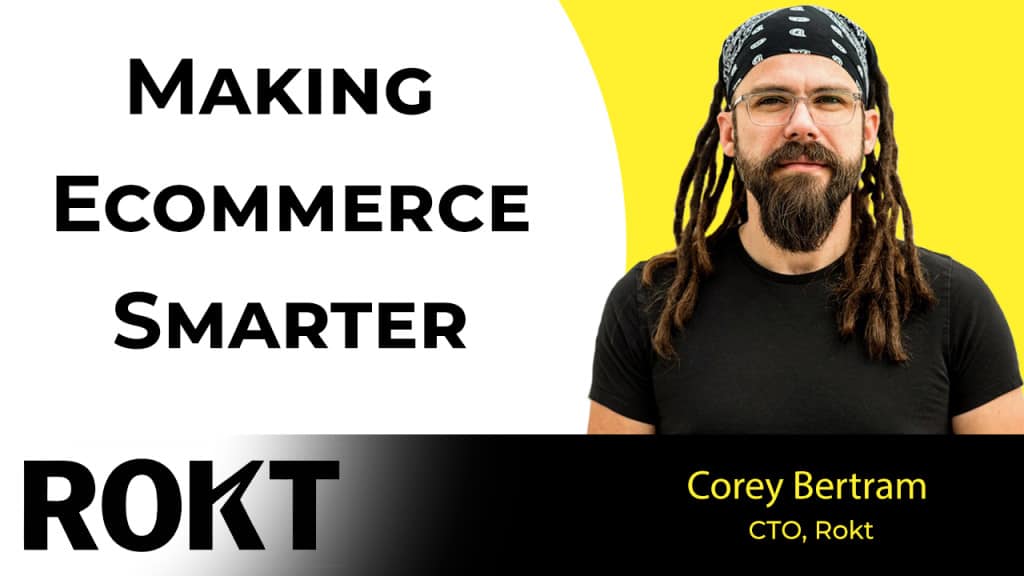
About Corey Bertram:
As CTO, Corey leads the strategy & execution for Rokt’s engineering team and technical vision.
Corey has over 15 years of experience as a digital entrepreneur and technical lead. Prior to Rokt, Corey oversaw Datadog’s Infrastructure & SRE teams through its extensive multi-cloud growth in its lead-up to IPO. Corey also led the engineering division of Timshel, building the underlying platform technology for the Hillary Clinton 2016 presidential campaign. In his time at Netflix, Bertram oversaw the expansion of the company’s Chaos Engineering functionality as its customer base grew globally to over 75 million customers.
Corey is based out of NYC.
About Rokt:
Rokt is the global leader in ecommerce technology, powering the Transaction Moment™ of best-in-class companies including Live Nation, Groupon, Staples, Lands' End, Fanatics, GoDaddy, Vistaprint, and HelloFresh. Rokt's mission: To make ecommerce smarter, faster, and better.
Through its proprietary technology, Rokt enables its ecommerce clients to increase brand engagement and unlock new revenues in the Transaction Moment™, allowing them to stay ahead of their competition while delivering a superior and individualized experience for each customer.
Founded in Sydney, the company now operates in the US, Canada, the UK, Ireland, France, Germany, the Netherlands, Denmark, Sweden, Norway, Finland, Spain, Australia, New Zealand, Singapore, and Japan. Learn more at rokt.com.
Transcript
(Joel Beasley at 00:00:03) Hello, my friends. Today we're talking to Corey, the CTO at Rokt, and we discuss how he helped create what is now a small industry around chaos engineering, how Rokt is integrating personalized recommendations into transactions, and how to create a space where people feel comfortable admitting they don't know something. All of this right here, right now on the Modern CTO Podcast. Here we go.
(Intro Narrator at 00:00:33) This is the Modern CTO Podcast.
(Corey at 00:00:44) So, you know, I grew up around computers. Typical—thought I was going to be a game designer for a long time, and then kind of got really into the internet and decided I wanted to go into security and be a hacker. Ended up in the DC area where I went to school and got a degree in CS and ended up focusing in computer security and thought, like, this is it. I've made it. I'm going to go into the NSA. I'm going to go into the government. We're going to be seeing all the cool exploits, all the zero days, and then realized how much I did not enjoy that line of work and how much I craved a little more openness, a little more customer-facing, and really wanted to make that transition. So pretty early on in my career, I transitioned over to startups, ended up here in New York City.
(Corey at 00:01:39) Did the whole startup thing—sleeping on the floor, sleeping on couches, just making it work. Failed a startup, definitely learned some lessons there. And then ended up out in California one weekend and met some folks from Netflix, and they're like, "Just move on out here. Let's do it." And so two weeks later, I was moving out to Netflix and ended up there for about three years where I transitioned into more of a reliability role and somewhat of a leadership role, overseeing a lot of production outages, thinking about what that means for the business, how they scale globally, which ultimately led into the work I did with chaos engineering. Really on the ground floor there—Chaos Monkey had already existed, but I ended up building out what was then known as Chaos Gorilla, which simulates availability zone failure, and then moving on into Chaos Kong, which simulates a regional failure. And that really drove—it was based out of a lot of outages and learnings that they had had working on top of Amazon, and it really drove a lot of the migration into multi-region for them as they realized AWS regions aren't as nimble as you might think. From there, I ended up building out a startup, left there and built out a startup that was building technology for nonprofits.
(Corey at 00:02:59) This ended up working and basically running all of Hillary Clinton's 2016 presidential campaign's technology from the ground up—everything from build-deploy processes to donations to events, pretty much the entire data platform as well. And so built out that company for about three years, completely remote, was flying back and forth between New York and DC or San Francisco. Did that for about three years, and then obviously that didn't turn out the way we all hoped. Things kind of went sideways at the end there.
(Corey at 00:03:33) But we were a customer of Datadog for the entire time, and I'd gotten to know the team there quite well. And they reached out shortly after we were kind of spinning things down and said, "Hey, move to New York. Let's do this." So I joined Datadog, inherited the SRE team, which was a handful of folks, and then kind of built out what was the infrastructure org there, really led their migration into Kubernetes and containers, and went through just a tremendous amount of growth in the time I was there in terms of just infrastructure and overall company.
(Corey at 00:04:04) When I left, we were closer to a hundred folks within infrastructure and a handful of teams doing a lot of different things from developer experience to compute, network, to SRE, and a number of other things as well. And so brought them up to IPO and then took a year off. And then COVID hit the world, and I decided to get back in the game. And here at Rokt, it's been an interesting year so far. It's definitely a bit of a turn for me in my career in terms of just the type of products I work on and how close to the customer I've been in the past.
(Corey at 00:04:42) And I've loved it. It's absolutely everything I've wanted it to be and more.
(Joel Beasley at 00:04:47) Dude, that is a crazy journey. I want to hear a little bit more about a couple different parts of that. So with the chaos, when you're talking about simulating regional outages, is that like Netflix was relying too heavily on a centralized area of AWS's servers?
(Corey at 00:05:09) Yeah. At the time, we were multi-region, but they were fairly siloed. And so what we decided is it would be great if we could move customers between regions because there had been—this is back in 2012—there had been a couple pretty significant AWS outages that had taken out entire regions, or at least services within regions that really kind of ended up being huge news stories for Netflix at the time and Amazon. And we decided, listen, we think Amazon is going to get there, and they're going to build out their resiliency story.
(Corey at 00:05:43) But at the same time, we want the levers as well to choose our own journey. A lot of complexity that went into that is just simply customer data and how do you kind of transition that level of load. When you think about just how much of the internet is Netflix traffic, seamlessly moving that amount of traffic from one data center to another is not an easy task and can take some time. And spinning up tens of thousands of nodes just to handle the load is not an easy thing. And so a lot of lessons learned there. It was not exactly the most seamless of transitions when we first built it.
(Corey at 00:06:21) Usually, I think when we first did it, it was up to an hour. And quite frankly, clouds are not infinitely scalable. Sometimes you run out of nodes and you can't launch anymore, and suddenly you're halfway through these exercises and Amazon goes, "There's no more computers. Sorry." And so that was always interesting. I'm responsible for a pretty major AWS API outage that is a result of just the way their APIs work and the way that we were kind of transitioning these things, ended up breaking down Amazon for a few hours. A lot of lessons learned there on both sides. And, you know, Amazon was a really great partner to us and worked with us to try and figure out how to do that more seamlessly. And today, if you look at what Netflix has been able to achieve and where that project's kind of evolved, it's fairly seamless when they transition traffic from one region to another.
(Corey at 00:07:09) It's really a seamless global fleet of compute. And that's something that I laid down the foundation for, but obviously the team has taken it and really run with it over the last ten years. So super interesting.
(Joel Beasley at 00:07:24) That's really cool. So is it like today, if whatever server your show is running on goes out, it can just move you over to another one and you don't even notice?
(Corey at 00:07:34) Correct.
(Joel Beasley at 00:07:35) That's nuts. That's really cool.
(Corey at 00:07:36) It's pretty wild. Some of the tech there is really kind of top-notch, and then obviously it's been evolved over the last fifteen years, and so they've had some time to think about it.
(Joel Beasley at 00:07:48) Yeah. So one thing that I also picked out when you were just telling me about your story, you said you worked on a presidential campaign for three years. And, I mean, for all I know, I'm only bombarded with ads for a year and a half. So how does—how did that happen? What's it like getting approached by a campaign in, what, like 2013 for the 2016 election?
(Corey at 00:08:13) Yeah. It was mostly—we had a serious investor who came in and then ended up finding me and a few others and then saying, "Hey, I want to build technology for the nonprofit space. And ideally, I'd love for it to be used within the next presidential campaign, whoever the candidate is." And so we just started building.
(Corey at 00:08:33) And honestly, we had no idea what we were doing. None of us had any experience in campaigns. Quite frankly, I have to be honest with you, I hadn't voted before that. I was not the most socially minded human being at that time. I was a little younger, a little dumber. And so, you know, I think the goal there was just build top-notch tech. Right? And that's something that has really not existed in the campaign space for a long time. And Obama made a bit of a splash in 2012 when he ran and kind of built out his technology function, but they were still kind of always chasing. Right?
(Corey at 00:09:07) There's only so much you can do in the 18 months or so that exists of a campaign. And you're constantly just chasing and putting out fires. And so the goal here was to kind of get a bit of a head start on this and to build a sustainable platform and then to look at other applications for it. So we didn't just serve the presidential campaign. We ended up working with the Red Cross and UNICEF and a couple other pretty serious organizations because, generally, they all try and build very similar tech where you're raising donations, you're hosting events, you're collecting data and sign-ups and interest, and you're kind of building a narrative around a user base, and then kind of figuring out how to target and how to best get the most of that base that you have built.
(Corey at 00:09:50) And so it's interesting, especially as technology has kind of advanced over the last couple of years. Things are more complicated. The web is no longer just, like, build an HTML page and put it out there. Right? It's, you know, you're building APIs and you're building platforms and there's security aspects and it's progressive web apps and there's mobile. And so there's a lot that goes into these things. And so really getting a head start there makes a ton of sense. And also building a platform that evolves with time so that you're not constantly rebuilding the same thing and reinventing the wheel every four years made a lot of sense at the time.
(Joel Beasley at 00:10:23) Yeah.
(Corey at 00:10:23) So we did that for the first 8, 12 months that I was there. And then when it became clear that Hillary was likely going to be the front-runner and the leader and running, we ended up reaching out to her team. And through our investors and whatnot, we were able to kind of make that connection, and then we basically ran with it. We set up their original AWS account and did the foundations and their build pipelines and just all those things that—where do you start? Right? How do you just start shipping code into a campaign? And obviously there's a lot of tools that have come out over the last couple of years that if I was going to do it again, we'd take a much different path. Probably wouldn't roll our own on all these things. But at the same time, when we were talking about 2014, a lot of these companies just didn't exist.
(Corey at 00:11:07) A lot of this tech wasn't necessarily there or was in its very infancy, and we weren't sure if it would work or not or if they'd even be around by the end of the campaign. So we ended up doing a lot of building that foundation and the building blocks there. It was a learning experience, especially for me, building a company from scratch, building it completely remote. And we didn't have office space for the first 12 months I was there. And then when we did, everyone was basically—people would show up and they'd be like, "Oh yeah, just decided to come in this week," and then you wouldn't see them again for another three, four months. Really, really interesting model. This was before remote was really taking off, and something I'm really proud of. We ended up building that company out to about 50 people.
(Corey at 00:11:50) And it was quick. It was heavy. And then, again, you look at the way campaigns get built out. You have volunteers show up day one, and it's like, "Build technology, make the website, collect money," and you're like, "How?" And then there's a lot of other technology in that space from some companies that have been around that is very old, very antiquated. You know, like, "Here's a SOAP API that I get to interact with." This is going to be fun. So yeah, very interesting path. I don't regret it.
(Corey at 00:12:25) Obviously, it didn't turn out the way we wanted it to. Shutting a company down is always tough and a lot of lessons learned there, but super rewarding experience, I think, for everyone who was involved. And I've ended up working with a lot of those folks over the last couple of years off and on. And, you know, a couple of them are here with me at Rokt now. So it's pretty wonderful.
(Joel Beasley at 00:12:42) Yeah. Yeah. And like you said, it had a lot of other use cases with nonprofits in general and can be recycled for the next campaign and everything. So it doesn't sound like a waste.
(Corey at 00:12:54) No. Not at all. Yeah. A lot of lessons learned, and a couple of the guys that we were working with are still in the space. One of the guys I worked with ended up being Joe Biden's CTO for a period of time, and very interesting. That space is super fun, super challenging. Every day is a fire. And so you're constantly on your heels, and you're constantly trying to adapt and evolve. But great group of people, people who really care and they're passionate, not just in the campaign space, but in the nonprofit space. Meet some really wonderful people.
(Joel Beasley at 00:13:27) Yeah. That was one thing that I didn't know about, like the business and the technology roles, the type of job titles that exist within government. And so on our podcast, we had Obama's CTO on, Harper Reed, I believe. He was, yeah, CTO of the United States. Like, what a job.
(Corey at 00:13:52) Super cool. Great group of people. Honestly, they care and they want to make things better for all of us, and that's something that I really admire. And it's wonderful to—you get invigorated by being surrounded by those folks every day. They create this atmosphere where you're like, "Oh, 14-hour day and I'm working on a Sunday? No big deal."
(Joel Beasley at 00:14:14) Yeah. I do not know if I could do that. So let's go back a little bit before you're working at Rokt. You're sitting at home in the pandemic and you have the idea like, "Maybe I should get a job. I don't have much else to do." Why'd you pick Rokt?
(Corey at 00:14:31) Listen. Yeah, that absolutely is the case. I dragged my feet quite a bit. I was very much enjoying some time off and relaxing, not stressing about computers. It's been a while since I had the chance to do that, and so I really was very cautious about kind of getting back in the game. But quite frankly, I knew from one of my first conversations with our CEO that this place was different and that this is a place I wanted to be. And even then, I really took my time and did my due diligence. I talked to everyone. I interviewed for three and a half, four months just to be sure that I was like, "Do I really want to do this?"
(Corey at 00:15:11) Do I want to work again? And I don't regret that at all. I think I made the right decision. I talked to a lot of other companies. I think Rokt is fairly unique in that, you know, we are a New York company through and through, and we push in performance and we really want to succeed and strive.
(Corey at 00:15:28) People here care about that, and they're bought into the mission and the goals of the business. But we don't take ourselves so seriously, and we take that step back and we find that time to relax and enjoy the ride and really get into it. I think that's super important. Right? If you're not having fun, if you're not enjoying it, if every day you wake up and you dread going to work, it's not worth it.
(Corey at 00:15:50) Right? And I think that we've managed to create a place here at Rokt, a business where people enjoy coming in. They enjoy the people that are surrounded by every day, and that's something that is so important to me this time around. Yes, you can always drive and you can push, but I don't want to work with jerks.
(Corey at 00:16:09) I want to laugh a little bit every day. I want to go home and I want to feel accomplished. I want to feel good about what we did even if we fail. Right? We won't always get it right.
(Corey at 00:16:16) And I want to celebrate those moments and celebrate the learnings and then take that and come back the next day and apply it and move on.
(Joel Beasley at 00:16:25) Yeah. That's awesome, man. So can you tell me a little bit about what Rokt does?
(Corey at 00:16:29) Ultimately, in my mind, I think Rokt is connecting different ecommerce providers to create a better experience for the end user. I think that we want the end user experience to be something that is enjoyable. We don't want to sacrifice that. We want to create opportunities for everyone involved to further a transaction, to further that moment that you are checking out and say, hey, are you also interested in this? Is this something that could potentially benefit you?
(Corey at 00:16:55) Whether that's parking when you go to an event or ticket insurance or suggesting a credit card, you know, potentially a co-branded credit card, or even some of these other aspects of like, do you want to—we recognize that you signed up for Hulu. Do you want to get a—you want to try out Disney Plus? Do you want to try out another streaming service? And I think that if you can do that and you can cater it to the end user and you can get really into who they are and what they care about, I think it does create a better experience for the end user.
(Corey at 00:17:30) And then, ultimately, it creates more value for our partners. And ultimately, it's kind of a win-win-win for everyone.
(Joel Beasley at 00:17:37) So it's like when you're checking out for a concert or something, they'll—it'll pop up right after you got your ticket, like, hey, here's also parking.
(Corey at 00:17:47) Historically, that is where we kind of focused ourselves. What we're doing now is moving further into the transaction moment and creating opportunities to add parking to your cart. So it's a seamless transaction despite the fact that there's two different providers. We're kind of stepping in and helping facilitate the transaction between those two providers and connect the two in a way that is fairly seamless to the end user. So that the friction there is very, very low, and the value to them is very high.
(Joel Beasley at 00:18:16) Interesting. So to do that, you have to build another UX layer on top of—
(Corey at 00:18:22) Exactly. We spend a lot of time, energy, and effort working on our front-end web SDK to make sure that it works with a varying—the front-end space at the moment is a very wild west, and has been for some time now. There's a lot of different ways to implement websites, a lot of different approaches, and we build out a toolset that works with everyone. And at the same time, it's very quick, very performant. Especially within ecommerce, you know, and that's ultimately what we're doing is we're connecting ecommerce providers. They care about performance, especially some of the bigger sites and some of our bigger partners.
(Corey at 00:18:59) To them, performance is everything. You know, monkey brain clicks things that are fast, and that's just kind of the way we all work. And so we're ultra, ultra focused on that. And so keeping that ultra lean while being able to configure it to the nth degree so that it looks and feels like a seamless experience for the end user so that it doesn't jar them. It isn't a jarring experience of the entire checkout process.
(Corey at 00:19:22) Really, you know, recognizing that that checkout process is so critical. Right? And if you mess that up, ultimately, it results in dollars lost for everyone. And so we're very cautious about how we influence that page, about how we touch it. And at the same time, you're also talking about a very highly secure experience, and so security ends up layering in very deeply to what we do as we think about, how do we seamlessly make this happen while at the same time protecting the end user, protecting the data streams, protecting the ecommerce providers because they're also very protective of their datasets.
(Corey at 00:19:58) You know, we don't want to be in the business of being shady. I think we really want to be a good partner here and a good partner, not just to our customers we work with, but also the end users. Ultimately, that's something that's really important to me, especially coming out of the security space. I don't want to be the front page of a newspaper saying, oh, Rokt did this with this dataset. Right? That's the last thing I want, and that's the last view I want of us. Right? I want people to have trust and faith in us that we're going to be good shepherds of this as we think about how to use it and how to apply it to create a better experience.
(Joel Beasley at 00:20:32) Yes. So how personalized are the recommendations? Is it if two different people are buying the same thing, can they get recommended different stuff?
(Corey at 00:20:43) Absolutely. We really cater to the end user, and that's something that is really important to us. A lot of recommendation engines in the past have kind of bucketed human beings based off of certain aspects and certain inputs into the algorithms. Our models and our machine learning are fairly advanced now, and they're getting more advanced on a daily basis as we kind of really tune that into who is the individual and what is important to them. And something that, you know, it's kind of our secret sauce and something that we are very proud of.
(Corey at 00:21:19) And again, I look at that team and I look at what we're doing, and we're taking that smarts and we're applying it to a lot of different aspects in the business. It's really impressive. You know, anytime I can make a computer do work for us, I'm a big fan. It's less work for us. It's less things we have to tune and touch and change. And we're seeing a massive amount of success.
(Corey at 00:21:33) You know, it gets us being a 300-person company, you know, it has kind of transformed our ability to really compete with the bigger players because we're putting so much smarts into everything that we do. You know, it's really a force multiplier internally.
(Joel Beasley at 00:21:47) Yeah. This is kind of making me think of a while ago, we had the CTO of PayPal on the podcast, and my co-host Joel asked him, what does the future of payments look like? And he said it's ambient. And when he explained that, he gave an example of when you ride an Uber, when do you pay? It's like, well, you don't pay. You just get out of the car.
(Joel Beasley at 00:22:09) And it charges you automatically. And then Amazon's implementing that with the stores where you can just go in and pick up some stuff and walk out and you pay at some point somehow. And this sounds like it's on that same trend of just making things more frictionless and more seamless.
(Corey at 00:22:30) Absolutely. And that's something that we've also seen, and we're actually working with partners like PayPal and these big payment providers. And we're just looking at some of the other options that are kind of in that space, the buy now, pay later, et cetera, and figuring out how can we seamlessly integrate those for the end user knowing what is their preference. Right? What are they more likely to choose?
(Corey at 00:22:54) And being able to provide that and guide them through that, you know, it does—again, it's we're reducing friction in the checkout process. We're reducing friction in the entire experience. And ultimately, that leads to a happier customer, you know, and then ultimately, that leads to more purchases. So people buy things from people they like, and they tend to be repeat customers, and that's something that we want to help our partners get to.
(Corey at 00:23:19) And so we're constantly looking at opportunities like that, and I think that ultimately is the evolution of this entire space. I think we're ahead of the curve, and I'm pretty proud of that. And so I think what we're doing right now and who we're working with is seeing the benefits of this already today. But, yeah, definitely keeping a very close eye on this globally because I do think that you're going to see a massive shift in ecommerce as we kind of barrel that direction on all fronts.
(Joel Beasley at 00:23:44) Yeah. So are you still doing any chaos engineering today at Rokt?
(Corey at 00:23:50) We are. And for better or worse, it has followed me through my entire career. You know, this has kind of spawned an entire industry to some extent. There are companies out there that have built themselves on chaos engineering.
(Joel Beasley at 00:24:05) We talked to one a while ago, Gremlin.
(Corey at 00:24:08) Yep. Yeah. Very familiar with those guys. Know quite a few of them. Couple of them worked with me at Netflix.
(Corey at 00:24:15) Very, very interesting. You're seeing that space evolve not just from, like, hey, turn the computer off and see what happens or cut the network and see what happens, but other failure scenarios and injection of failures into real-time runtimes and understanding how the system reacts to it. I think every company goes through a journey of deciding how much of that they're going to do. You're also seeing a lot of that technology and the thought processes that came out of that from back in the day—circuit breaking and, you know, you're seeing a lot of that apply into the cloud-native space and what's happening there in the infrastructure space, around Kubernetes and the sidecars that are kind of popping up.
(Corey at 00:24:53) It's a pretty interesting evolution. I think it's a healthy one for the industry. It's something that rather than having to tack it on as an aftereffect, you're just building it with the baseline. It's already there. And I think that that's ultimately the way we need to go as an industry.
(Corey at 00:25:09) And I think companies like Gremlin are pushing that agenda. And I think that in the cloud-native space, there's a lot of open source here that is absolutely building this and baking it into who they are. There's also—you know, it is a bit of a double-edged sword. I've seen a lot of companies try and inherit chaos engineering and really go a different direction where the goal is not just break shit. Right?
(Corey at 00:25:32) And then if all you're doing is breaking stuff and being like, told you so, you're not really helping the business. And I think there was this weird time frame in there, and it's less so nowadays, I see it less nowadays, so at least I pay attention to it less. But there's definitely a place there where SREs were creating chaos engineering teams, and then they were just going around blowing things up. And it's like, great. You can throw a grenade, but can you catch one?
(Corey at 00:25:59) Right? And that's really, I think, the goal of that work. It's how can you stop the grenade from hitting its intended target and protect the service from itself and really kind of building that in and giving you those levers. And if anything, making those levers smarter so that you don't have to pull them. Right? They're just automatically switching when things are going sideways. Again, I think in the space right now, you're seeing a pretty massive evolution of that and then a shift in the—you know, I kind of hope chaos engineering as a buzzword goes away to some extent. I just think about this as resiliency within our applications and infrastructures in general. And so I'd love to see an evolution there. And I think, again, as more and more folks inherit cloud-native, as they think about Kubernetes or containerization, and as the cloud providers build out these functions, this is going to be baked in at its very core.
(Corey at 00:26:51) And, hopefully, your end developers won't even have to think about it in most cases. Right? Or at the least, it'll become second nature. Like, hey. We're going to build the thing this way or the framework we're using takes advantage of these things and cooperates between each other and understands when it's failing and then pulls itself out of rotation and things like that.
(Joel Beasley at 00:27:09) So I want to get a better understanding of what that reliability engineering looks like specifically from your perspective at Rokt, because you guys are building a really advanced UX layer that relies on the backend of other partners. And so they have to have their own reliability. It sounds like—
(Corey at 00:27:32) It's turtles all the way down.
(Joel Beasley at 00:27:34) Yeah. It sounds really complex to try and ensure the reliability of every single part. And, man, my mind is just running in a lot of circles right now as I'm discovering awake.
(Corey at 00:27:49) Yeah. Welcome to what keeps me awake at night. This is absolutely something that we are highly focused on as a business, you know, especially as we move further into the transaction moment and as we're seeing this massive shift of just purchasing in general into ecommerce. You know, our partners and our partner success is our success, and so we're kind of piggybacking on top of them. And so we're seeing just a massive amount of growth this year, you know, just on all fronts, never mind our engineering team, but the infrastructure and just the footprint that we have and our global scale.
(Corey at 00:28:25) You know, ultimately, we need to be close to our customers, and our customers are global. And so we are already distributed multi-region, looking at multi-cloud. And there's a lot of technology that we're kind of layering in here and complexity that we're laying in here to protect ourselves. From a resiliency standpoint, you know, we need to be better than anyone that we work with, and we really have to hold ourselves to a higher standard so that even if they're having a problem, we can protect them from us, quite frankly, because we potentially could DDoS them. And so there's an interesting world here where we have to work with the engineering teams of our partners and really find a model that works for both and understand their systems and then understand ours.
(Corey at 00:29:05) And we come up with individual agreements with everyone to kind of create those contracts. And it is a very personal experience, quite frankly, with everyone we do integrate with. And it's something that we spend a lot of time, energy, and effort thinking about. It has led to pretty significant rearchitectures of our technical stack over the last couple of years and continues to every day right now. You know, we're midway through a pretty significant shift that is just intended to build resiliency. Because, again, our partners have pretty high standards that they want to hold us to.
(Corey at 00:29:35) You know, we agreed to some pretty aggressive SLAs, and, you know, it's always my goal here is to make sure that we hit those, right, and that we are a good partner and that, you know, they do build that faith and trust in us. If we, you know, trust is easily lost, and that's something that, you know, I've grown up really truly believing, and it's something that is hard to build. And we've spent a lot of time and energy really building that trust.
(Corey at 00:29:57) And, you know, I don't want a single misstep to completely lose that. And obviously, our partners, I think we have great relationships with them, and they're always willing to work with us, but we need to be ahead of the curve here. You know, the technology is evolving at such a rapid pace that we're constantly looking at what is the latest and greatest, and how can we apply it without being, you know, too risky to the business and too risky to our partners. It's this really tough balance.
(Joel Beasley at 00:30:22) Yeah. So this conversation has kind of reminded me of, we've done a couple episodes with Auth0 recently, if you're familiar with them. Yeah. So I feel like they're in kind of a similar position in a different vertical of, like, they've created some really advanced technology around identity and authorization.
(Joel Beasley at 00:30:39) And they're coming in and trying to do that for other companies. But they run into like build versus buy sometimes in their sales process. And I was curious, do you run into companies that hear what you're doing and they're like, oh, maybe I could just try to build my recommendation thing?
(Corey at 00:31:00) We do. We do. Ultimately, I think what the proof is important, right? Like, we ultimately, it's what does the actual numbers say? And we are an ultra data-driven company, and we let it drive really all of our decision making. You're always going to get that, you know, especially I know that we do the same thing internally, right? We look at vendors and we're like, well, we could build that. And it's like, yeah, but could we? Yes. You know, it's, you're always like, oh, you know, yeah, we could probably build 50% of that, you know, in a month or two. That last 50%, that last 10% is everything.
(Corey at 00:31:33) And it's like, that's what defines and makes or breaks businesses in my mind. So I never shy away from at least exploring the conversation around, should we build this internally or not? But at the same time, I think, you know, let the experts be the experts in certain spaces. We're really good at what we do in the optimization space, and, you know, we can prove it and we have the data around it. And ultimately, you know, our product suite is so advanced and so complex that, you know, we can prove it in certain ways.
(Corey at 00:32:00) We can say, hey, start here. Create a narrative with them that says, well, we've created this much uplift as a result of our recommendation engine or as a result of, you know, our speed and agility here and our partnerships that we're able to open up for you. And then kind of transition that into a greater integration and, you know, further in stream to the transaction. You know, these things never just happen overnight, right? They evolve, and partnerships evolve, technology evolves. And so we're constantly conscious of that, and we've created a suite of tools that kind of lets us follow that customer journey in a way that I think is pretty unique and something that, you know, requires a lot of time and effort and energy to really think out and to create. And so it's, again, it's something that I think really kind of sets us apart from a lot of the others in this space.
(Joel Beasley at 00:32:50) So I understand that moving further into the transaction and, like, getting to that point where you can add multiple things that are relevant to each other to the same cart and checkout is a very big task. But I'm curious, what is the even more beyond future after that? What's the longest term that you see?
(Corey at 00:33:19) That is a good question, one that we talk a lot about. I think there's a couple avenues that we can go there. One, I think moving into the transaction is such a, we're at such an early stage, you know, globally, just thinking about the industry in that conversation of what actually is possible there. You know, you kind of mentioned it earlier. It's like, it is all about reducing friction for the end user, but creating value as well. And so I think what you're going to see is this, like, massive conglomeration of all these different vendors and, you know, a seamless interaction. You're always going to have some of these bigger players who I think create these little bit of fiefdoms and, you know, very much in a walled garden and then say, we don't want to play nice with anyone else. We can do everything. Not naming any names here, but some of the biggest retailers in the world.
(Corey at 00:34:11) And then you, you know, you have others who are these smaller players in the space, but they still represent a huge proportion, you know, in combination of the overall global market. And they're interested in creating these opportunities. Like, they don't necessarily have the engineering force or the task to really open up. And so I think that there's an interesting thing here around mobile and web as these technologies evolve, as the security space evolves, how can we continue to create more and more connections? Not just saying, hey, here's a JavaScript API that, you know, connects this API and that API and somehow makes it all work. I think there's deeper connections here, especially from a security and privacy standpoint where, you know, you want to become more of a first-party vendor and you want to have very specific datasets that only apply to certain users because they're, you know, people are protective of their data and really kind of getting a very catered experience for an end user. You saw some of this a couple years ago in, you know, some of the subscription boxes like, oh, do you like this and this and this? And, like, I think some of that dataset should be influencing, you know, a greater global market space of everything that you're looking at. And for the vendors who are willing to kind of share that data, there's a real potential here to, like, create a really unique opportunity for the end user to kind of get a super catered experience that I don't think we've seen before.
(Corey at 00:35:31) You know, unless you live in these big walled gardens that, you know, everything you've purchased comes from the same vendor and, like, you get a box from certain individuals every day. Unless you're like that, you know, I think that you don't necessarily have these opportunities right now. And I see something like Rokt potentially enabling that and companies in this space just kind of thinking about how do we create, you know, this global dataset without, you know, being too, or being very cautious of the privacy concerns there and everything else that kind of factors into that. It's a balance. Again, it's going to be such a balance here, and I think that we're going to be very cautious around how we approach that, but I do see things kind of evolving in that direction. The technology that, you know, supports all this, yeah, it'll probably be all front end at some point. We'll be stuck writing weird web assembly or something of that nature. You know, who knows? But at the same time, like, there's a real challenge here around just wrapping your head around the scale of this data. And that's something that, you know, I think a company like ours really uniquely is positioned to kind of understand that we've seen the rapid growth, especially in ecommerce, and a lot of vendors aren't really ready for that. You know, that does require a fairly deep understanding of what to collect, how to look at it, how to analyze it, and then how to delete it.
(Corey at 00:36:50) Right? Like, use it to influence, you know, the model, but don't use it, you know, don't be evil with it. And so there's, like, always going to be a challenge there. And I think that a lot of companies don't want that to be their focus, right? They want to focus on the customer journey. They want to be thinking about how do you find and explore content? How do you find, you know, a sweater, right, that you're looking for? And how do we get you to that sweater as fast as possible and make that that part of it? But then what else do you want to buy is like a much more interesting problem. And or, you know, after you get to an event, like, if you just don't have a car, don't show parking, right?
(Joel Beasley at 00:37:26) Yes.
(Corey at 00:37:27) How do you know, you know, when you're selling a ticket or something, how do you know if a user has the car or not? Like, it's just that dataset is very, very tricky to kind of nail down, and it's even harder to kind of attribute it to the right person and to understand that about that individual.
(Joel Beasley at 00:37:43) So Tim Berners-Lee, the inventor of the World Wide Web, he also said that we'll eventually be all front end engineers, no more backend development, but I didn't really get that. And you just mentioned it too. What would that look like? Like, what does that world look like? I'm just trying to wrap my head around that.
(Corey at 00:38:04) Yeah. I listen. I think that I hope not in my career we get there because that sounds miserable to some extent. I can see more and more of the data processing and offloading heading into browser. There will always be that secret sauce that companies are very protective of. And how do you, you know, make some of these decision making as in how do you, you know, get that data in and then spit out the result that you're looking for. I think you're going to see that for quite some time. But the, you know, the journey and, like, just being able to kind of, like, as bandwidth increases and we can kind of push more out there, I think there's an opportunity here for us to really push a lot of that end user processing onto the individual. There's a lot of compute power out there, quite frankly, right?
(Corey at 00:38:55) And not having to pay, you know, a big cloud provider a lot of money to process that data would be really great, you know, from a just from thinking about my bill every month. Definitely something that I'm interested in. So we'd love to push most of our data processing down into the browser. And then again, I think, you know, as you think about creating these seamless experiences as you combine ecommerce providers and, you know, all these different vendors, I think that there's an opportunity there to kind of do a lot of that heavy lifting and that offload and the processing on the individual's users and say, well, hey, here's where the model says, hey, you should reach out to this, this, and this, and then have that pull in those datasets rather than having to correlate it on the back end and push that. I think there's an interesting world there. Obviously, I don't know if we'll get there, and I think that there's a lot of different vectors at play here. There's a pretty entrenched industry that is likely not in support of this. You know, when you think about the cloud vendors, they very much want you to continue to buy compute and services from them.
(Corey at 00:39:58) And so I don't see the industry making a super fashion, but Tim's a much smarter man than I am and has far more experience than I do and likely is onto something here.
(Joel Beasley at 00:40:10) Yeah. I mean, because he's trying to build out, like, kind of a new layer on the web. But right now, it's pretty crazy stuff. I recommend looking into it.
(Corey at 00:40:19) But I believe he was at Google, right? And I think, you know, you see some of this influence within what Google has been doing over the last couple years. You know, they've tried to bring all the world's information together. And I think that that's, you know, a pretty admirable and interesting challenge. It also gets scary, right? You know? And so our industry has this problem of, you know, how big is too big and how much data is too much data. And so it's definitely something I think a lot about.
(Corey at 00:40:43) You know, I tend to be very conservative. I run an ad blocker. It's something that, you know, I very much want to be cautious of as we build out, you know, and Rokt's place in this world and how can we be good partners, but at the same time be, you know, protective of the end user, is something that's very, very, you know, at the cornerstone of who I am. And because as a consumer, that's what I care about. And so, you know, I want to be very cautious about that, and I think you're seeing right now the Googles and the Facebooks and these bigger, large organizations start to butt up against these problems, especially, you know, from a legal standpoint, from a compliance standpoint, especially as you start thinking about the global market space.
(Corey at 00:41:21) It's a super hard challenge and requires a lot of lawyers.
(Joel Beasley at 00:41:27) So earlier when you were talking about doing your due diligence before joining Rokt, you mentioned that, like, the culture was a big part of it for you. How would you describe the culture at Rokt?
(Corey at 00:41:39) I think we hire explorers. I think we hire creators. We hire engineers. We hire builders, right? And that's something that I love. I am ultra, execution is everything. Delivery is everything. Like, I love that. I love that mentality.
(Corey at 00:41:53) But I also love the, you know, at a cornerstone of our culture is this, you know, this thought that we enjoy the ride, and that's something that really resonates with me because, again, life is very short. And if you're not enjoying the people you're working with and if you're not having fun with it and you're not, like, laughing a little bit every day, I don't know why you're doing it. I really don't. You know, I think that we work in technology. We can work on a lot of different things, and there's a lot of different opportunities out there. So finding a place that really resonates with you and, you know, who you want to be and how and who do you want to work with, I think is the most critical piece to get right. Everything else kind of flows after that. Obviously, we have a pretty interesting technology challenge, and that certainly didn't hurt my decision making. I like being performance driven. I like the, you know, shooting for low latency, you know, skimming off milliseconds here and there just to, like, get that performance and eat that. I like the high scale. I love growing organizations. I think all of that, you know, really resonated with me personally. I also think, you know, there's an interesting thing that happens when you have a company that's, you know, 200, 300, and you start to grow it out to that five, six hundred person. It's fairly unique, you know, and it's something that you, I don't think many people get exposure to when you work at these companies that have five, ten, fifteen, twenty thousand user or individuals in the business, right? You get to be a little more nimble. You get to kind of, like, pivot and maneuver. And that's something that I've really come to love at Rokt is we're not afraid of change. We're not afraid of trying things. We're not afraid of failing and getting it wrong because we course correct very quickly. And that's something that I think, you know, a lot of organizations kind of lose as they grow.
(Corey at 00:43:20) Or sometimes they've just, it was just never a part of who they were. You know, I love that. That is so deeply ingrained in who we are as a business. That's something that, you know, I want to build an engineering culture around. I want to be continue to push and try and explore. And we want to always get it right, and, you know, we're going to try a bunch of different things. And as the business grows, we have a lot of interesting opportunities to try a bunch of different things. And I want to take full advantage of that because, like, eventually, it's that one thing that sticks that you're like, this is it. This is the next, you know, billion dollars in revenue for us, and that is so exciting, right? It unlocks a ton of opportunity. It creates a lot of new challenges. And again, if you're not being challenged, if you're just coming to work every day and spinning your wheels, like, what are you doing? Why bother? Right? Like, let's go. Let's move. Let's do something.
(Corey at 00:44:14) Let's, I want to create the next big thing, right? And that's something that, you know, again, I think is just intrinsically in who we are as a business. It's, like, deep, deeply ingrained, and it's really kind of wonderful.
(Joel Beasley at 00:44:27) So how do you screen for that in hiring that hunger for change?
(Corey at 00:44:32) It is very hard. I think everyone is capable of this. I really do. I think some people have been stuck in organizations and kind of taken paths in their careers that they just haven't had the opportunity to do it. I think that, you know, everyone, if you show them that path, if you show them that door, wants to take it.
(Corey at 00:44:52) I've never found someone in my career who's like, "I just want to come to work at nine and then leave at three and close some tickets." Very, very rarely have I ever come across anyone who's willing to admit that. I think it's really just this opportunity of giving someone a chance, right? And to find someone who is hungry for it and to show them that door, because some people just don't even know it exists.
(Corey at 00:45:18) And I really do think that, you know, this is something that we want to hire everyone. I just want to create those opportunities for people to shine and to see their best selves and create those opportunities for teams to just go for it. Right? And so that's a challenge.
(Corey at 00:45:34) And obviously, I do think that we have some significant technical challenges. So we have a high bar here, but at the same time, we hire a lot of new grads. And that's something that, you know, it's really just like, are you thirsty? Are you hungry? Are you ready for it?
(Corey at 00:45:49) There's going to be challenges here. You're not going to know the answer to everything, but you're surrounded by people with a lot of different experiences, a lot of different backgrounds. Someone probably knows the answer. And if we don't, we'll get there together, right?
(Corey at 00:46:00) Let's sit down and hash it out. And so I don't necessarily think that there's a perfect candidate for any role. I think that you cater the role to the candidate, and you find where they are, and you understand where they are in their career. And you create that opportunity for them, and you kind of guide them through what you think can potentially unlock their potential.
(Joel Beasley at 00:46:20) So I feel like it's pretty challenging to create a space where people will actually feel comfortable saying, "I don't know the answer to this. Well, how do we do this?" How do you promote that transparency and openness?
(Corey at 00:46:36) Transparency is at the core of Rokt. We have an open career ladder. Our comp bands and our comp is shared with the entire organization. Every decision-making process that we go through is well documented. We're ultra, ultra transparent about the changes that we make and how we got there, and we include the people in those decision-making processes because there's a high degree of trust amongst everyone here.
(Corey at 00:47:02) And I think that that is something that we really value. It's something that is kind of intrinsic to who we are. If you didn't have that trust, you get into these situations where certain people make decisions and it just comes from above, and that never feels great, especially within any engineering org. I really want to foster that communication, right?
(Corey at 00:47:20) Yes, there's some people here with fifteen, twenty years of experience, and they've been doing this a long time. Guess what? Some of these young kids come in, and they've just got brilliant new ways of looking at problems, and they come up with some brilliant ideas. And so we try and foster that communication, and we put out RFCs, and we ask people to just come in and swing. Give your feedback.
(Corey at 00:47:40) Right? And there's no wrong answer here. It's just a different way of thinking. It is always a challenge, right?
(Corey at 00:47:47) Especially because some people have come through some pretty traumatic experiences in their career, and they aren't used to that. And, you know, really working with them and working with our engineering leaders to kind of work with individuals and to help them understand that it's okay, right? It's okay to be wrong. It's okay to say, you know, stick your hand up and go, "I don't know."
(Corey at 00:48:08) And to not fault that, right? We made a pretty significant move where we moved away from individual performance bonuses to company performance bonuses. And we realized that we were just getting it wrong, right? We were incentivizing the wrong things, and I'd rather—I think overall, we want to celebrate the success of the business rather than the success of the individual. That doesn't mean we don't celebrate people when they have these huge wins and we don't go, "Hey, this was amazing. Great job." We still do all that, but we want to raise the organization together rather than have heroes, right?
(Corey at 00:48:42) I say it a lot. I don't hire heroes. I hire people who want to come in and grow together, right, and who want to accomplish together. I think heroes burn out. I've been a hero in my career, and quite frankly, I learned some really tough lessons along the way.
(Corey at 00:48:57) And, you know, I just don't think it's a good path. I don't think it's a healthy path, right? I want to hire collaborators. I want to hire people who see the best in everyone around them and want to help grow them.
(Joel Beasley at 00:49:12) So how do you celebrate the little wins with your team and kind of promote when something good happens?
(Corey at 00:49:20) We have a whole channel dedicated to this where people just every day, this team did this, this individual did this, this customer gave feedback on this. Every day we celebrate the wins here, and it's actually sometimes it's too much because you can't keep up with it. You're like, "Oh my god, there's so much good stuff happening." I think it's good.
(Corey at 00:49:41) I think it's important to do that. We have a pretty serious recognition system internally where we empower every team to kind of take that time and then give them the funds that they need to kind of celebrate those things on a quarterly basis. And quite frankly, you know, it's just a matter of paying attention, right? I think it's on all of us, especially your leadership teams, to keep an eye out and make sure that people feel—it's so easy for someone who's out in front of customers every day to get those accolades and whatnot.
(Corey at 00:50:09) But when you're working on a backend data system and, you know, so many of these award systems don't necessarily reward that. I actually think Rokt was kind of getting to a space where the company was growing so massively that the way we were rewarding things before wasn't necessarily working. And so we took a minute. We took a step back and we said, "How do we make this better? How do we make sure that these teams without as much of a loud voice, you know, they're not as vocal."
(Corey at 00:50:36) They're the kind of—this team sits in the corner, and all they'd like to do is look at math models, and that's fine, and they're wonderful at it, but no one really knows what they're doing at any given time because they're very quiet about it. You want to create an opportunity for them to really have that win and find a way for them to celebrate for what works for them. And it's not a one-size-fits-all, and every team, I think, gets to kind of decide here how they want to create that narrative. But it is on us as leaders to make sure that, hey, are we doing this right?
(Corey at 00:51:06) Is are we actually applying what we're preaching? And so, you know, it's definitely something that we talk a lot about at a leadership level of, "Hey, did that—this team did really great, and we should say something about it because it was super impactful to the business." And it creates a better narrative, I think, for every individual here to know that your work is noticed, right?
(Corey at 00:51:27) I spend time with every team here. I try and do that on a fairly frequent basis just because I want to know what they're working on. I want to understand what their wins were. And we use an OKR process. So every quarter, we get to kind of celebrate and then look at what did we achieve in the last couple months.
(Corey at 00:51:43) And I think it works out really well.
(Joel Beasley at 00:51:46) Yeah. That sounds awesome, man. Yeah. I think you hit on something that I've thought about a lot here at our company is that it's so much easier to celebrate—like, when someone makes a sale, obviously they post that in the Slack. It's like, "Oh, cool. We got money. Yeah."
(Joel Beasley at 00:52:01) Then if my associate producer has a killer week where he just made a bunch of stuff, I mean, our release schedule is fairly constant. So you don't even directly see that when something huge happens.
(Corey at 00:52:18) Business as usual for most folks. Yeah. Yeah. And it's but it's not. There's a lot of time, energy, and effort that goes into that work, and I think it's important to recognize that.
(Joel Beasley at 00:52:27) Yeah. Definitely. So we are coming up on time here. Before we wrap up, is there anything that we want to make sure that we hit on before we wrap up? Anything you want to plug?
(Corey at 00:52:38) I would say, listen, if you're looking for new opportunities, if you're interested in some pretty hard technical challenges of scale, data, and just general massive growth, this is something—I would love to talk to you about Rokt. I'd love for you to apply. And obviously, we're doing some really interesting things here. I love it. I love coming to work every day.
(Corey at 00:52:59) And, you know, it's my goal to make sure that everyone else does as well. And so, yeah, if you're looking for something new, let's chat.
(Joel Beasley at 00:53:07) That's awesome. Yeah. Can they just reach out to you directly?
(Corey at 00:53:10) Or careers page. Check out our careers page. It's rokt.com, R-O-K-T. And I'm always interested in chatting or quite frankly, yeah, email me. It's corey at rokt.
(Corey at 00:53:20) I'm okay with that.
(Joel Beasley at 00:53:23) Cool.
(Intro Narrator at 00:53:26) Thank you so much for listening. And if you found this episode useful, please share it with a friend or colleague who you think would get value from it. And if you have topics that you'd like to hear discussed on the podcast, either add me on LinkedIn or send me an email, joel at moderncto.io. Every time I get an email or LinkedIn message, it absolutely makes my day and inspires me to keep going.