
Episode 357 ·
Colleen Berube - Focusing More On Customer Experience & Give Employees Context About Your Company
Today we’re talking to Colleen Berube, the CIO at Zendesk. And we discuss how CTOs and CIOs can be focusing more on customer experience. Why you should provide employees with as much context about the organization as possible, and how creating a great experience for your employees will create a great experience for customers down the line.
All of this, right here, right now, on the Modern CTO Podcast!
For more on Zendesk, visit them at https://www.zendesk.com/
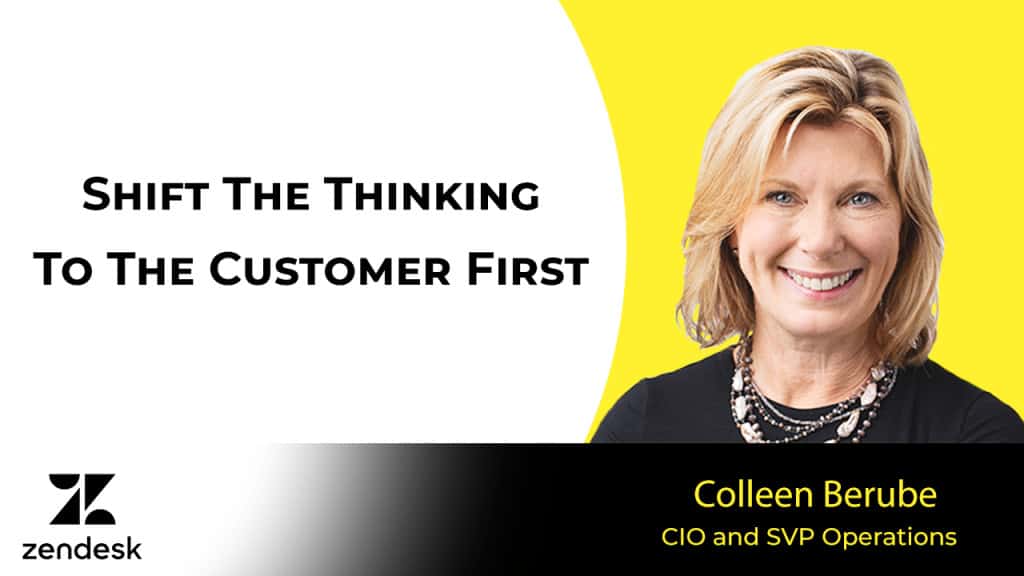
About Colleen Berube:
Colleen is a Silicon Valley IT veteran with a fresh perspective. With over 20 years of business transformation leadership experience at companies ranging from pre-IPO to the Fortune 100, she creates and delivers innovative strategies and solutions that create top-line growth and deliver bottom-line results.
Her strength comes from a unique combination of solid business acumen paired with experience across multiple industries and business models. Whether leading digital transformation, implementing new systems or innovating the customer experience, she's committed to creating an inspiring vision and delivering positive business outcomes.
Colleen's work style is defined by collaboration and open communication. She has high standards for herself and others around her. She is consistently recognized for her ability to build and lead top-notch technology teams. She's known as a courageous and pragmatic leader.
One of Colleen's personal passions is rowing. She loves the sport and it has taught her countless lessons about discipline and teamwork. Off the water, her other passions include food, wine and travel.
Additional of expertise: business transformation, business model change, SaaS, services delivery, solution implementation, web development, commerce, big data, analytics and operational excellence, innovation.
About Zendesk:
Zendesk started the customer experience revolution in 2007 by enabling any business around the world to take their customer service online. Today, Zendesk is the champion of great service everywhere for everyone, and powers billions of conversations, connecting more than 100,000 brands with hundreds of millions of customers over telephony, chat, email, messaging, social channels, communities, review sites and help centers. Zendesk products are built with love to be loved.
The company was conceived in Copenhagen, Denmark, built and grown in California, taken public in New York City, and today employs more than 4,000 people across the world.
Transcript
(Intro Narrator at 00:00:01) Hello, my friends. Today, Joel is talking to Colleen, the CIO at Zendesk, and they discuss how CTOs and CIOs can be more focused on customer experience, why you should provide employees with as much context about the organization as possible, and how creating a great experience for your employees will create a great experience for customers down the line. All of this right here, right now, on the Modern CTO podcast.
(Joel Beasley at 00:00:31) Here we go. This is the Modern CTO podcast.
(Colleen at 00:00:43) After college, I did various different things, and at some point decided, people are doing bigger things. I want to do bigger things. And so I decided to go to graduate school and get my MBA, which I did. And when I came out of there, it was coincidentally at exactly the same time that we were moving to Silicon Valley. And so I really started my career here working in a hardware company in operations, doing control charts for the QA department. And I really spent several years just sort of learning about how operations works and how do you run a manufacturing line and all that kind of thing. But I was the person that was always tinkering. You know, I need to figure out how to make this report easier to produce, or how can I take all of this manual work out of this? So I was always looking for where there were tools so that I can make my own job easier.
(Colleen at 00:01:48) And at some point the IT director started coming and trying to recruit me to come work in IT. And I kept saying, I don't want to work in IT. Why would I want to work in IT? And the end of that story is after that I left there, I kind of said, hey, maybe it's not a bad idea to think about going and working where people do this kind of work.
(Colleen at 00:02:09) And I ended up getting picked up by SAP when SAP was just hitting the North American market. I was part of the first group of people that was formally trained as part of their professional services organization in North America. And I spent six years traveling all over the world, implementing SAP in all different kinds of companies. And it was an amazing learning experience, a ton of fun. You know, it was the sexy company at the time. I just learned a lot about how companies work. What's the same between different kinds of companies, what's different, how to do things well, how not to screw them up. And that kind of foundation experience really took me forward from there. After that, I transitioned into working inside companies, leading IT teams, and that's really what I've been doing for the past twenty years.
(Joel Beasley at 00:03:05) That's crazy. You loving it now?
(Colleen at 00:03:07) I love it. I love it. I love sitting in the space between what the company needs to do and how you use technology to make it happen. And we like to think of those jobs as technology jobs. And of course, in many ways they are, but they're just as much about the operational processes and the people as they are about the technology.
(Joel Beasley at 00:03:33) Yeah. And when all of those things come together, magic happens. Absolutely. You like technology. Now you're sitting in what I call the fun spot where you get to connect to the technology and the people and the problems, which is extremely rewarding. It's very entrepreneurial, but I saw that you got to work at Palm in your history. They used to be the crown jewel. I remember you would go to Staples and you would look at all the different Palms that existed. What did you do there?
(Colleen at 00:04:00) Well, I joined Palm when they were part of 3Com and there had been a decision made to spin Palm out as an independent company again. And so if you think about that, you know, if it was a business unit inside 3Com, when they were spinning the company out, they had to create all the shared functions again. So they had to build an HR department and a finance department and an IT organization. And so I joined them. I was one of just the first couple of people in the IT organization. I was responsible for the enterprise applications. And what was so interesting about that is we had a very short runway because we had to get off of the 3Com systems, and we had to put our own systems in. So it was greenfield, and you had a mandate that you had to have it done within a relatively short period of time. Ton of fun doing everything at the same time, building the network and the systems and the data warehouse. And it just was a lot of fun and hard, of course, but that's when it's the most rewarding, right?
(Joel Beasley at 00:05:11) Yes. I like your style. I'm already a fan of you, Colleen. Who were you when you were a little kid? What were you into? What were you like if I were to run into you and we were both in middle school or high school? What would you be like then?
(Colleen at 00:05:26) I guess two things come to mind when you ask me that question. The first one is I'm sort of the person that everyone gets along with, right? Sort of a bridge builder. I do that still today, but I even did that when I was younger. And the other thing is I was always drumming up something to be in charge of. So I was always leading, I guess, is one way to say it. The story I like to tell is in high school, I was the one that organized the boycott of the school lunch.
(Joel Beasley at 00:06:01) I love it.
(Colleen at 00:06:03) Yeah. So I think that component of relationship building and leadership are two common themes throughout my life.
(Joel Beasley at 00:06:14) I have kids and my daughter, she is fiercely independent. She reminds me of you. She is always telling us what to do and I'm like, Mela, she's a little leader. My son, well, he's still just, he's a banshee. He's just crazy right now. He's only two. But yeah, I like that. And when I see that in people I'm attracted to it. I'm always like, you know, how do we help grow that within them? Because those are the people that are literally leading the world and making the future and, you know, you want to support them and help them grow.
(Colleen at 00:06:45) Well, you know, I see this in my daughter too. And one of the things I find most fascinating, I think you'll find as your kids get older, is that you really are, in so many ways, exactly who you were when you were born. Right? My daughter, I remember when I first took her to daycare, and I came to pick her up on the first day, I remember the woman saying to me, you know, Caroline, she kind of sits back and she scopes everything out before she goes and engages with the other kids. And here we are twenty one years later and she's exactly the same. She has to know what she's walking into before she goes into it. And so really honing in on what are those characteristics of our younger generation that we can nurture and hone so that they can become their best selves in their adulthood. Right?
(Joel Beasley at 00:07:42) So are you advising her now? You said she's 21 or so. With her career. I know I think it's interesting because probably some of the people who are just entry level starting to work for you are probably close to your daughter's age, right? So you're kind of coaching and mentoring the next generation, but you also have one of them. Do you see similarities or differences between that?
(Colleen at 00:08:03) Yeah. You know, girls go through this phase where you can't coach and mentor them, so she's coming out the other side, right? So, yeah. Now she comes to me for advice. And it's interesting, she picks the things that she knows mom is really good at. So if she has to give a presentation at school or something, she's like, can I practice it with you? You know, but yeah, for sure. Look, I think it's one of the super fascinating things for me as I move on in my career is to understand the people behind me, what's different about the mindset of their generation. Right? And people today value things differently than they did when I was coming up earlier in my career. Right? And even when you were introducing yourself, you talked about this a little bit, you taking ten weeks to go with your family and do something. I would have never, I could hardly convince myself to take two weeks off, you know? So, but people have realized now, and I see this with my daughter to your question, right? She sort of has watched me sacrifice and give up things that were important to me to do what I, that was the way I went about it. And her perspective is those things are too important to me. So I'm going to find more balance in my life.
(Joel Beasley at 00:09:27) Yeah. It's a wake up call. I mean, this pandemic, I think has, I mean, I don't even have to say I think, I mean, look at the property data alone. People are moving around, they're changing their lifestyles. I just got a letter from my attorney yesterday in the mail, and I was like, oh, I hope this isn't a bill. And it was a letter saying that, you know, they moved to be closer with family to the other side of Florida. And I was like, awesome. You know, they're like, after the pandemic, we wanted to be closer to family. And so everyone's moving around and doing things. And for me, you know, losing my mom four years ago was a big deal in my life because she was completely fine. And then out of nowhere, she had a stomachache, went to the hospital, and then they found out she had cancer. And then six weeks later, she was gone. And so it was just this, you know, bittersweet thing of being there, you know, with her as she passed on. But then also realizing how finite life is. And then I just made a decision that, you know, I need to prioritize this as much as I prioritize my businesses or my hobby projects. But in all fairness, it's two weeks off, eight weeks there. It's two weeks off, maybe six weeks there in Montana. And then those days, I'm working Tuesday, Wednesday, Thursdays, and then two weeks off back. So it's not ten weeks off straight. I don't know if I could do that.
(Colleen at 00:10:47) Even so, you're taking the time to have space with your family and to go have new experiences. And I think that's amazing.
(Joel Beasley at 00:10:56) Yes. Yes. Thank you. Thank you for the support. I wasn't expecting that. So tell me about how you got started at Zendesk. How did you meet the humans at Zendesk and decide to join?
(Colleen at 00:11:07) Oh, well, it was another CIO who put me in touch with Zendesk and said, hey, you know, I think that this would be somebody you guys should talk to. I ended up, once I connected with Zendesk, the process moved very quickly. I think six short weeks later, I was at a desk at Zendesk. I love my job at Zendesk. I have the luxury of, first of all, working at a company where people are amazing. Business is exciting. You know, the company's successful. Of course, those things are all fun, but it's really the company's going through this inflection point where we've been a high growth company, we're continuing to be a high growth company. We just crossed last December a billion dollars as a company, which is a really important milestone for us. We had set our sights on it. We achieved it. And now we're thinking about how do we get to multi billion dollars? And, you know, as that old saying goes, what got us here won't get us there. Right? So I am getting to work in this space similar to Palm that you mentioned earlier of how do you really scale a company that's growing this fast? That needs to move from less formality to a little more formality in terms of processes and so forth. And then the third component is I'm pretty passionate about customer and employee experience and being with a company where that's the topic that they're all about. And I get to talk about it with people like you, Joel. That to me, that was a trifecta. So I love it here.
(Joel Beasley at 00:12:48) So relationships, you got introduced through another CIO.
(Colleen at 00:12:51) I did. Yeah.
(Joel Beasley at 00:12:53) So what's your official title there?
(Colleen at 00:12:56) I am the chief information officer and SVP of enterprise operations.
(Joel Beasley at 00:13:03) That is so cool.
(Colleen at 00:13:05) It is cool.
(Joel Beasley at 00:13:05) That is neat. That is neat.
(Colleen at 00:13:07) What's kind of fun about it is I have the technology piece, of course, CIO. Right? But in addition to that, I have data and analytics. And then I took on last year this operations piece. So I feel like, which almost never happens, I have three legs of the stool. I have the process, the technology, and the data. And so what we're really doing is working on how do we bring those three things together in powerful ways.
(Joel Beasley at 00:13:34) That is very cool. You know, I've kind of taken for granted that Zendesk has been a solution as far back as I could possibly remember. Right? And it's just been around for such a long time. And so I know what it is. I'm sure many people, but can you give me a quick overview, 10,000 feet of what Zendesk does?
(Colleen at 00:13:53) Sure. Zendesk is a SaaS software solution that companies use to provide, our legacy is providing a support experience. So many companies use it for their customer support organization, but we've extended beyond that and really help companies provide customer experience to their customers whenever they engage with them.
(Joel Beasley at 00:14:17) That makes sense because you're good at taking in people that are having problems, and that's the worst state they could possibly be in. And so it makes sense that you're naturally able to extend to just engaging with people around the complete experience.
(Colleen at 00:14:35) Yeah. And many companies use this as well for their own internal help desks, like the IT help desk and the HR help desk and so forth. So it's, you know, what's unique about Zendesk that actually even when I joined, it took me a little while to completely wrap my head around it, is that the software was purposefully created with the intent of being easy to use and to make complex things simpler. And we've all seen, you know, working in technology, how things just seem to get over engineered. There's too many fields. It's too complicated. It's hard for users to use it, and they get caught up in it. And so what's special about Zendesk is this purposeful intent around ease of use and also how easy it is to implement it. You can go in if I sent you to zendesk.com today and you wanted to get a site up and be taking tickets within an hour, you could do it. And so as a result of that, our business really started with smaller companies kind of picking it up and using it in that way. And over the course of the past, you know, however many fourteen years, we have now companies that are still a lot of small and medium sized companies love using our product, but also a lot of big players use our product as well. Companies like Netflix and Airbnb and so forth.
(Joel Beasley at 00:16:13) Yeah. I've built you into products before with your integrations. As I was building, I got used to using Zendesk and we knew the toolkit and we just kept shipping with that because it was just, it's easy, and it worked. And then before this call, this morning, I said, oh, this is great. This is the day I get to talk to Colleen. And I was like, you know what? I need to go catch up on, it's been a couple years since I've seen. I went in. It's completely different. It's beautiful, by the way. Even the home page is beautiful, but the entire experience, the way you guys do the tabs when you're logged in, it's like there's a ticketing and the, I don't know. It was just, your designers have only gotten better.
(Colleen at 00:16:54) Yeah. Thank you. Thank you. We're pretty proud of what we do. I don't know if you saw as well, but we bridged into the sales space. So we have a sales automation technology as well as Zendesk Sell.
(Joel Beasley at 00:17:07) Yeah. You know what? I saw it, and I completely put it outside of my mind because I was like, I want to just go through and create a ticket and see what it's like. But tell me about this because I run a company. We're small.
(Joel Beasley at 00:17:19) We have about 15 people, but I have a sales team, like five people. And we currently are using a mix of a couple different tools to get what we want done. But tell me about what you do for sales.
(Colleen at 00:17:30) Well, the product as it stands today is really targeted for that more small and medium business space. It's very similar in sort of basic concept in terms of easy to use, a little more of a focus on social selling. And our goal is over time to bring as much of this together so that we move to more of providing a CRM solution for our customers. So, you know, as you start using different parts of our product offering, you're getting that fuller picture of your engagement with your customers.
(Joel Beasley at 00:18:06) That's interesting, because then it'd be like end to end. You could pick someone up from a lead, follow them all the way through sales to being a customer, and then supporting them.
(Colleen at 00:18:15) That's right.
(Joel Beasley at 00:18:15) That's how you get to billions of billions.
(Colleen at 00:18:17) Yes, yes it is.
(Joel Beasley at 00:18:19) Sales tools are something I don't mind spending money on. Every time I have to spend money on a non-revenue generating thing, I'm like, it hurts.
(Colleen at 00:18:25) Doesn't it? Yeah, yeah.
(Joel Beasley at 00:18:28) But if I can reduce someone's ramp or I can make sales a better experience for the customers going through, I am all about that. That's a good place to make investments. I think that's a smart move for you guys.
(Colleen at 00:18:39) Isn't it fascinating what's going on on the messaging side and how business is changing through messaging?
(Joel Beasley at 00:18:47) Yes. Tell me more.
(Colleen at 00:18:50) Well, you know, for a long time we've been a company that provides omnichannel options for our customers. Right? So if you want to make it possible for your customers to connect with you via phone or via email or via a chat experience, we have all of the different ways for you to do that. And it really empowers companies to meet their customers where their customers want to meet them. And of course, you know, with the advent of social over the past several years now, people want to engage with the companies they do business with via social. So we started by providing connections to some of the most important social channels. We have integration with WhatsApp and Instagram, but we're also now really moving to lead with social or with messaging as kind of a primary way for people to get support and to get help.
(Joel Beasley at 00:19:54) Let's say I have your products and someone mentions me or connects with me on Instagram and they're complaining. Like, that could go into Zendesk?
(Colleen at 00:20:04) Yeah. You can just connect with Zendesk directly through Instagram and say, "I'm having a problem with this," and get help there directly without having to get on the email or submit a web form or go to a special place for it. And what's kind of cool about that, that's different than the other experiences, is your conversation with that company can be persistent. If you can't respond right away, you can get back to it later. You can do it at your leisure. But, you know, the chat starts—you've been through this experience—the chat starts, and you're waiting for the person to respond to you. And if you're afraid if you don't respond fast enough they're going to say, "Okay, I guess you're not there anymore," and hang up on you, right? Well, that goes away in the messaging world, and you really can kind of have this ongoing conversation with your customer. And it's all about providing the experience that your customers want, right? This is the world that we're in. Instead of doing it on the company's terms, you want the customer to feel like their engagement with you is on their terms.
(Joel Beasley at 00:21:10) I like that. Yeah. Meet the customers where they are.
(Colleen at 00:21:13) Yeah, yeah.
(Joel Beasley at 00:21:15) Yeah. Whenever those chats happen, I was just in one the other day and it loads and it puts my question already into the chat, and then, like, "Hey, how are you today?" And I'm like, you see the question already. You know there's a problem. But yeah.
(Colleen at 00:21:29) That's a bad bot experience.
(Joel Beasley at 00:21:32) I know, I know, I know. Yeah. Do you guys have bots though? Do you have chatbots?
(Colleen at 00:21:39) We have a feature of our suite that's called Answer Bot, and it really just tries to help answer your questions automatically so that if, you know, as a company, if you can get a person's question answered more quickly without having to engage with a human, you can get that done. And from a customer perspective, if you can very quickly get the answer without having to wait on that chat channel, you know, to provide that service for them. So yes, we do. And we've just introduced new features in our workflow builder technology where you can start building some flows into that. So you can—if you're chatting with someone or if the Answer Bot is interacting with you and you want to get to an agent, you can have it automatically direct you to a human. So yes, we do.
(Joel Beasley at 00:22:30) That's pretty cool. Do you see any of these big companies using it in really creative or different ways, like doing integrations with it in specific ways? Or do you have any cool case studies to talk about?
(Colleen at 00:22:43) I think, you know, one of the most interesting case studies that comes to mind for me is we do a lot of work with the Four Seasons. And the Four Seasons is really kind of a leader in terms of—if you go and stay at their hotels, they want to connect with you personally and engage with you and stay connected with you throughout your shift. They want you to feel whether you're laying next to the swimming pool or you're in your room or you're somewhere else and you need them, that you can connect with them directly and quickly and easily. And so they use a messaging channel to make that available for you. But what you'll find is as soon as you check in, they connect with you, they tell you how to get ahold of them. They'll ping you and ask you if you have the right pillow. It's like it's that really top-notch service, but it's provided to you in a way where it's connected to the experience that you're having.
(Joel Beasley at 00:23:43) That's so cool. I wonder if anyone's meshed this—because you have a pretty robust API to interact with, I remember that—I wonder if anyone's meshed this with Alexa at all. I bet you, if you ask me—
(Colleen at 00:23:53) They have. Yeah, yeah. I bet you they have.
(Joel Beasley at 00:23:55) Especially like the hotels that are starting to get involved with the Alexas where you can order room service and stuff through them.
(Colleen at 00:24:01) Yes.
(Joel Beasley at 00:24:02) Yeah. I bet you—I bet you at least one, if you guys are at a billion dollars in revenue, I bet you one person, even if it was like a side weekend project hackathon type, that one person's done something with Zendesk and Alexa.
(Colleen at 00:24:13) Yeah. You know, one of my kind of hobbies, I guess, is—I really have this passion around customer experience, and I find it fascinating just even observing myself when I have something new put in front of me, or I have a new experience, how it changes my expectations. Right? So for example, over the course of the COVID year, you know, I needed new contact lenses. And normally I would go to my optometrist, I would get my eyes checked, and they would give me contact lenses. And obviously during COVID, that was more of a challenge than it would normally be. I really didn't want to go to the doctor's office. So I said, "I'm going to just go look at this online, see if there's anything I can do online to just order them." So I went and signed up for 1-800 Contacts or whatever it was, and I scanned my box and it was pretty easy to sign up. And then I put in the name of my eye doctor, and they came back pretty quickly and said, "You know, unfortunately, we contacted your doctor and your prescription is expired." And I was like, "Oh, okay. Now what?" You know? But they said, "It's okay because we can give you an eye exam." Have you seen this?
(Joel Beasley at 00:25:34) No. But that's what I was thinking as an app developer. When you started talking, it's like, I hope they've—I hope they've put it—because you can tell how far away you are from the phone through the camera on the front, right?
(Colleen at 00:25:43) Right. And I'm thinking the whole time I'm doing this eye exam that there is no way, right? But I did some research on it, and it turns out the efficacy of that exam is equal to going into the office.
(Joel Beasley at 00:25:57) Why wouldn't it be, right?
(Colleen at 00:25:58) Why wouldn't it be? You're looking at—
(Joel Beasley at 00:26:01) Some letters that are lit up. They're black letters, white background, and it's a certain distance away from your face.
(Colleen at 00:26:05) It's kind of the same, right? And so I finished the exam and, like, two days later I have my contact lenses at my front door. So sometimes you have these experiences and your whole paradigm changes, right? You're like, "Now I'm thinking of the world a little bit differently, and I expect something different in the future when I think about getting contact lenses." And I think we're at the point where we have so many things happen to us every day, we almost don't even realize that this is happening to us all the time. And expectations are going up all the time. And so for companies, this is the subject of the day, because if you're not attending to that in terms of how you think you're engaging with your customers, you're putting yourself at peril.
(Joel Beasley at 00:27:00) You're right. And no one's immune to this. If you're a company that makes concrete, every business has to deal with these principles and these rules.
(Colleen at 00:27:10) Yes. And COVID has been amazing in terms of accelerating that thinking. It's almost like we've gone through this trough that forced us to determine when did physicality really matter and when did it not matter?
(Joel Beasley at 00:27:27) Right. When's the book coming out, Colleen? Are you writing a book?
(Colleen at 00:27:34) I'm not writing a book. Should I write a book?
(Joel Beasley at 00:27:39) I vote yes. Because, you know, I was curious. I did see when I was looking into you that customer experience, CX, is something that you're really into. And we all want our products to be better and improve them. And do you have a top tip or two or three things to do to check your customer experience? What's the most important thing in customer experience? What do I need to be thinking about as a technology leader when it comes to customer experience?
(Colleen at 00:28:10) You know, I think if you're a technology leader inside a company, I think the most important thing is to shift the thinking to the customer first. You know, one of the things I like to talk about as an opportunity as a CIO is, a pretty traditional thing a CIO would talk about is, "What are our business requirements?" Well, what if we just started talking about "What is the customer experience we want to create?" Right? It's a different mindset. And so I think business leaders—I wouldn't even just say technology leaders—need to be thinking about what is the experience that their customers have and how do they start looking at the world through that lens, so that as they're running their business and deciding what's important in their business and driving, that they're focused on the things that are going to deliver on their customer experience promise.
(Joel Beasley at 00:29:06) I like that. I have a—I'm hoping you could help me with something right now. So you're at this large company, billion-plus in revenue, right? And I'm down here, 15 employees. And the way I'm making decisions heavily depends on what customers want, but also is connected to revenue. And what's the things I can do to improve the business that are the closest to revenue? At your size of an organization, I mean, I think these principles are still true, but how does that actually look? Like, how do you do that? How do you interact with the finance team? Or how do you figure out where to put your—how close you are to revenue when it comes to certain features or movements you're making?
(Colleen at 00:29:50) Yeah. Well, you know, at the end of the day, it's not different probably than what you do. We have to instrument our business and instrument our customer experience so that we know as we try different things, how it impacts the experience and how it impacts the revenue. Right? Those things, you know, are definitely related. What's interesting is when you talk to people about the importance of customer experience when they're going through a buying experience, not only is it important to them, but they're actually willing—two-thirds of them are willing—to pay a higher price for a better experience. So it's not like, "How do we figure out how they're related?" They're absolutely related. If you make it easier for people to get things done, if you make your business more responsive to them, if you're more transparent with them, they will come to you. They will gravitate to you because that's what customers want.
(Joel Beasley at 00:30:55) Is this something that's embedded in Zendesk culture?
(Colleen at 00:30:59) Yes.
(Joel Beasley at 00:30:59) Okay. See, that makes it so much easier to understand, because it's not just you there with these thoughts. This is part of the culture.
(Colleen at 00:31:08) It's a centerpiece for us, for sure.
(Joel Beasley at 00:31:12) One of the areas that we want to touch on was about hybrid workspaces. Because I was talking with the production team, and then after we were talking about that, it came up with Rob, the CTO I interviewed from Vertu. And they do end-to-end encryption for emails and cloud-based data, like Google Drive, you know, encryption, hybrid workspace type concept. And so I was asking him about what the future is, and it kind of emerged to me for the first time as, you know, this hybrid workspace is like its own world that I am just kind of learning about the name of it. But can you kind of help demystify that for me?
(Colleen at 00:31:51) Yeah. You know, I mean, I think what's interesting about this is because of COVID—I mean, because we've all worked in the past, pre-COVID, in environments where we had some people who were in the office and some people who might be calling in. We've been doing that for 25 years, right? But again, our paradigm has changed because of COVID. We all figured out, like, if you stretch the boundaries and you send everybody home, can we be productive? And the answer was, yeah, actually, you can. So now as we start looking at the prospect of going back into the office, so to speak, it puts companies in a position of asking questions like, "Well, how should we use the office and when should people go to the office and do we really need people to be in the office all the time?" And so for us, like a lot of other companies, we're looking at moving to a model where maybe as much as 40% of our employees are fully remote. The remainder of the population, we expect to be in the office maybe two to three days a week, not five. And obviously we make room for, you know, if there's individuals for whatever reason they need to come to the office five days a week—maybe they don't have a place at home that really is conducive to them working or there's other circumstances to consider. But this now you have, by definition, a large percent of the population that will always be on the phone, so to speak, and some that will be in the office. And so what companies are working through, including ours, is how do we kind of set new patterns and norms around working in that fashion? Right? So we ask ourselves questions like, "Well, if we want to get everybody together and 30% of the team can't come in person, should we have a meeting? Is that okay?"
(Colleen at 00:33:51) Or would it be better if everybody in that case stayed remote? Because one of the things that's kind of interesting about everybody going remote is it really created this sense of a level playing field, right? Everybody sort of working in the same way has the same constraints. It's always the case if you're the person dialing in and everybody else is in the room, you're at somewhat of a deficit, right? You can't see the body language, you can't... So I don't have any magic answers to this, but I think there's really fascinating questions that companies are working through.
(Colleen at 00:34:25) And I personally am a little bit of a believer that we just need to kind of set some guardrails and step into it and then learn and see what are the new patterns that we fall into.
(Joel Beasley at 00:34:35) Yeah. Taking it one step at a time. I was...
(Colleen at 00:34:38) Yeah.
(Joel Beasley at 00:34:38) I was seen on LinkedIn a couple days ago. They did a poll about people being willing to take less money or more money based off of if they were going to come in or not. So I think one of the things people said that they would... if they had the choice between making 30% more salary or continuing to work from home, they would pick continue to work from home. And that was the overwhelming majority. And I was like, whoa.
(Colleen at 00:35:02) That's... Really? Yeah. That's fascinating.
(Joel Beasley at 00:35:04) I know. I'm a media person. I just... I'm not emotionally tied to the numbers. I just find interesting things, and I was like, that's actually really, really interesting because I like being around people. I like being in the office, so I'd take the 30% more and go in.
(Colleen at 00:35:21) Yeah. Yeah. Yeah. Me as well. You know, I miss... I even miss the train ride to the city.
(Colleen at 00:35:29) Right? Like, I miss all of it. But for other people, you know, being in their home space and having more focus is really good for them. Right. So it kind of comes down to how do we create an environment where people can work their best.
(Colleen at 00:35:46) And then how do we handle these get-togethers? Right? Like, I think it's something we still need to work through.
(Joel Beasley at 00:35:52) We're doing it. We're...
(Colleen at 00:35:53) Working through it.
(Joel Beasley at 00:35:53) We're not going to solve all the things today on this podcast. Alright. I think you're a fascinating person. And whenever I find fascinating people, I want to talk about leadership. And I'm curious... Like, it's such an ambiguous word. It's used so many different ways. What comes to your mind when you hear the word leadership?
(Colleen at 00:36:16) Many things, but at the end of the day, what I think about is I think about the impact on other people. So how do you inspire people? How do you coach and mentor them? How do you bring teams together that do amazing things together? Those are the components of leadership that I enjoy the most.
(Joel Beasley at 00:36:44) Now I'm going to ask you how you do all that stuff. How do you inspire people?
(Colleen at 00:36:52) For me, one of the most important things that leaders do is create context for the organization. So helping people understand, you know, for example, what is the competitive environment we operate in at Zendesk? Where are we at our maturity? What are the things that we need to achieve this year? And why are they important?
(Colleen at 00:37:17) What are the barriers that we have in the way? If people understand the environment they're in, the context they're in, they are in a better position to do their piece of that job better. And so inspiring is first about creating context. And then secondly, it's about casting a vision or a picture of where that particular part of the organization needs to go, and getting people excited about it. And you do that by... you know, it's really storytelling at the end of the day.
(Colleen at 00:37:53) How do you tell a story that people can envision in their minds? And how do you do it in a way that they feel it in their heart? And when people have it in their mind and they have it in their heart, they will work to make it happen. They will make it successful.
(Joel Beasley at 00:38:12) What are some of the mistakes that you made early on when you first started leading teams?
(Colleen at 00:38:18) The first thing that comes to mind for me with that question is really around probably around learning how to build good teams, right? So, you know, when you're first in the business of hiring people and building teams, you make a lot of mistakes, right? You don't really know how to get under the covers when you're interviewing people on what do they really know? What are they good at? What are they not good at?
(Colleen at 00:38:52) And so I made mistakes in some of the people that I hired. I made mistakes expecting things from people that they weren't capable of, and you learn along the way how to get better at that. But that's the first thing that came to mind when you asked me that question.
(Joel Beasley at 00:39:09) Yeah. I like it because it's almost weird because I feel like we almost need to change the word mistakes to something else. I mean, after, you know, hundreds of these interviews, it's the prerequisite. And it's like you... there's no book you're going to read, right, to get it right because you have to walk through it. You have to make the bad hire.
(Joel Beasley at 00:39:28) Yeah. And then you have to let your teams make their own mistakes within a certain...
(Colleen at 00:39:34) Yes, yes.
(Joel Beasley at 00:39:34) Tolerance level. But, um, yeah. It's... I don't... we will come up with another word eventually. I'll let you know when I figure it out. I'll write you back.
(Joel Beasley at 00:39:44) Okay? I'll be like, Colleen, we figured it out. Okay. It's called experience, not mistakes.
(Colleen at 00:39:51) Yeah. Yeah.
(Joel Beasley at 00:39:52) Well, I wanted to make sure that we touch on all the topics. I know you have a hard stop here coming up. I want to make sure we touch on all the topics that you want to get out there, that we get plenty of promotion and love for Zendesk. Is there anything that we haven't covered yet that we want to get out there?
(Colleen at 00:40:08) Um, you know, yeah. What I... one of the things that I find really fascinating is the connection between employee experience and customer experience. We talked a lot about how important customer experience is. Well, the truth of the matter is as well is that as individuals are having those increasing expectations with different products and companies that they engage with, they're bringing those expectations into the office. And so it's really important as a business that you think about how you're providing your employees with a good experience.
(Colleen at 00:40:47) And even more interesting is that it's kind of the virtuous cycle between customer experience and employee experience. There's definitely a direct line between the two. So if you look at the research, companies who have happy and engaged employees have 81% higher customer satisfaction, and companies that have the highest satisfaction ratings have 80% more engaged employees. So, and I don't know which one causes which, but the fact of the matter is they're totally related. Right.
(Colleen at 00:41:20) And I believe that, you know, one of the things you get out of as a CIO, making people's job easier internally and helping them have a good experience, is you get evangelists. They now viscerally understand what that looks like for a customer. They want to create it for a customer and it feeds into the machine, so to speak.
(Joel Beasley at 00:41:44) Yes. It's like, have you ever been in a Tesla store? Half the salespeople are customers. They're not even actual salespeople. It's like...
(Colleen at 00:41:51) Exactly. Exactly. That's a great example. And...
(Joel Beasley at 00:41:55) So you've got those types of people... customers of Zendesk, they're just evangelists for it, and they tell everybody they love it. Yeah.
(Colleen at 00:42:01) Evangelist for the product. That's right. So one of the fun things I get to do in my job is we actually run Zendesk for Zendesk in my team. And we get to create those experiences using our own products.
(Joel Beasley at 00:42:15) There you go. I heard a CTO over at... CTO or CIO over at Atlassian, and she said she referred to it as drink your own champagne instead of eating your own dog food. Yeah. I was like, wait...
(Colleen at 00:42:28) That's much better. Yeah. It's like, way classier. I would rather have the champagne than the dog food.
(Colleen at 00:42:33) Yeah. Yeah.
(Joel Beasley at 00:42:35) Thank you so much for listening. And if you found this episode useful, please share it with a friend or colleague who you think would get value from it. And if you have topics that you'd like to hear discussed on the podcast, either add me on LinkedIn or send me an email [email protected]. Every time I get an email or LinkedIn message, it absolutely makes my day and inspires me to keep going.