
Episode 573 ·
How Internal Disruption Can Lead To Success with Brian Dhatt, CTO of BigCommerce
Today we’re talking to Brian Dhatt, CTO of BigCommerce; and we discuss how to be prepared for a surge in business; why internal disruption is necessary for growth; and how composability is shaking up ecommerce today.
All of this right here, right now, on the Modern CTO Podcast!
Check out more of Brian and BigCommerce at https://www.bigcommerce.com/!
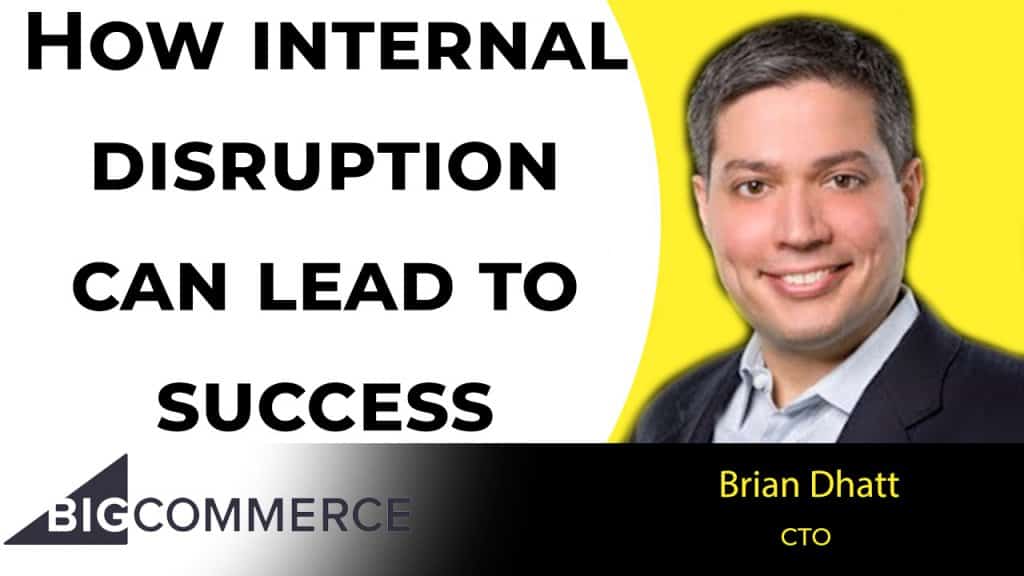
About Brian Dhatt:
Since joining as the company’s first CTO, Brian has been instrumental in guiding the company’s improvements in platform security and performance. In 2019, Brian led the migration of BigCommerce’s hosting infrastructure to Google Cloud Platform, and also played a key role in BigCommerce receiving its ISO 27001:2013 certification. Under Brian’s leadership, the BigCommerce platform has been designed to maximize uptime, minimize response time and ensure a secure environment.
Prior to joining BigCommerce, Brian served as the CTO at Borderfree, where he led all aspects of Product and Technology for a platform that powered global ecommerce across 220 countries. During his tenure, Brian was part of the company’s successful IPO as well as its acquisition by Pitney Bowes.
Over the course of his 20-year career, Brian has held executive leadership positions at Jetsetter, Gilt City and POPSUGAR — a company which he co-founded. Additionally, he has led technology efforts for globally recognized brands, including Best Buy, Starbucks, Restoration Hardware and Estée Lauder, among others.
Brian holds a BS in Computer Science from Duke University. He lives in San Francisco, California with his wife.
About BigCommerce:
BigCommerce (Nasdaq: BIGC) is a leading Open SaaS ecommerce platform that empowers merchants of all sizes to build, innovate and grow their businesses online. BigCommerce provides merchants sophisticated enterprise-grade functionality, customization and performance with simplicity and ease-of-use. Tens of thousands of B2C and B2B companies across 150 countries and numerous industries use BigCommerce to create beautiful, engaging online stores, including Ben & Jerry’s, Molton Brown, S.C. Johnson, Skullcandy, SoloStove and Vodafone. Headquartered in Austin, BigCommerce has offices in London, Kyiv, San Francisco, and Sydney.
Transcript
(Intro Narrator at 00:00:01) Today, we're talking to Brian, CTO of BigCommerce, about the latest trends in ecommerce and growing into yourself as a leader. You're listening to Joel Beasley, Modern CTO.
(Joel Beasley at 00:00:16) Morning, Joel. Brian, how are you doing?
(Brian at 00:00:19) Doing well. How are you doing today?
(Joel Beasley at 00:00:20) Fantastic. I'm in Tennessee, Nashville area. It is crisp and cool and blue sky, so I'm super spoiled with the weather today.
(Brian at 00:00:29) I can imagine. I'll be in North Carolina in a few weeks, so I'll be enjoying a little bit of the same.
(Joel Beasley at 00:00:34) Yeah. The holidays, you gotta get that mountain time.
(Brian at 00:00:37) Absolutely. Yes. I live in San Francisco, so right in the city here. I've spent probably fifteen, sixteen years of my life in San Francisco.
(Joel Beasley at 00:00:47) Why did you go out there? How did you get out there?
(Brian at 00:00:49) Yeah. So I would say I have always been a geek. My entire life, since a very young age, I have been drawn to technology. I went to school. I was, of course, as technologists are, pre-med because I said, hey, I'm going to go off and try to become a doctor someday. But I kept getting drawn back to technology. So I did both pre-med and computer science. I then moved to my first company, a little company called Sapient, which is actually a big consultancy in technology. Started off in Atlanta. Met my then girlfriend, now wife, and we were around Atlanta for a little while, and she said, hey, I think we should live in San Francisco. And I said, sure. Let's do it. And so showed up sight unseen back in 1999, and it was wild here as a technology destination. You know, you would be riding the bus. People would be walking around asking folks, like, hey, are you looking for a job in technology? Are you, where are you working? It was just, there was electricity out here for technologists. And so I wanted to get aboard that. I wanted to be in the place where all the most important things were happening in tech at the time. And so landed at a really good time. And yeah, been here for many years ever since.
(Joel Beasley at 00:02:03) Did you transfer with that consultancy, or did you get a new job?
(Brian at 00:02:07) I literally, I quit, showed up here, no job, ended up just kind of interviewing around a little bit and ran into this little consultancy that was one of the first ecommerce consultancies that was focused on building Java-based ecommerce stores. And so I said, hey, that sounds interesting. Now, the other aspect of it that drew me to it was their office had this great music playing all the time. They were all deadheads. And so you walked in the office and there was great music playing, great group of folks. They said, hey, you know, I met them, heard about the work, thought it sounded really interesting. They said, come back at five. We're having a little party in the office. And so came back, met even more folks, and then signed up, and that was my first job in San Francisco.
(Joel Beasley at 00:02:53) Oh, nice. And how long did that go on for?
(Brian at 00:02:55) That was, gosh, I think now maybe four or five years, I think, I did that. And the cool thing about it was they were ambitious. They built J.Crew. They built, you know, I worked on things for Starbucks. I worked on things for Best Buy, which I later ended up doing a lot more with. But worked with just blockbuster retailers that were really interested in being some of the first companies to make their mark on the web. And really, actually, you know, when we were starting to figure out, like, how should payment processing work? How should shopping cart work? We were just building that stuff from scratch. And so it was kind of, it was fun to be at the formation of what is a lot of modern ecommerce with a lot of really, really great folks who have gone on to build other great companies and do other great things across the retail sector.
(Joel Beasley at 00:03:47) Did you ever run into Elon Musk, like, at the YMCA or something when he was sleeping under his desk?
(Brian at 00:03:53) No. Never did. I ran into a lot of great folks. Like, I have so many good memories because a big aspect of the Bay Area at the time was it was social. So you would go and work and then you would go to the TechCrunch party, you know, the famous TechCrunch parties where everybody in the startup world showed up. And it was, you get starstruck by other folks who are trying to build cool tech out here. So ran into all sorts of folks, but, you know, never into Elon out here.
(Joel Beasley at 00:04:23) I'm glad you mentioned TechCrunch because when I was younger and starting out in my career, I'd see these, you know, websites and news sites. And being a software engineer, I just saw them for their technology. And then I started, I got a company and then made my first trip to San Francisco and started getting involved in meeting business people, and I realized, oh, they do dinners. They have events. There's a community and culture, and it's sort of like it's growing, and it's so much more than just their CMS with writers. And that really helped me understand, you know, going out to San Francisco and participating in that really helped me understand the different dynamics that there are to business.
(Brian at 00:05:02) And, you know, I think the other thing that I loved about TechCrunch, Mike Arrington and Ohm Malik, if you remember Giga Ohm, they were enthusiasts. They loved this stuff. There are a million products out there in the industry, and they were always focused on the new stuff that was happening, the cool stuff that was happening. So they were, I feel like, cheering tech on and encouraging it rather than looking for ways to poke holes into it, which is why I think there was that positivity that, hey, I can go take a chance type attitude out here.
(Joel Beasley at 00:05:35) I love it. I tell people, in hindsight, it makes sense I do what I do because my dad was an engineer, my mom was a cheerleader. I get really excited about technology.
(Brian at 00:05:44) And you have to love technology if you're going to be a technologist. It's a very frustrating field otherwise. I've spent nights and weekends and weeks chasing down bugs. I've built so many things that have failed over time. And I don't think if I loved it, if I had no enjoyment of just the raw, putting my hands on the keyboard and having a good time building things with other people, this would be a really frustrating industry to be in. And so I loved being around a lot of other people like that who just actually loved building things.
(Joel Beasley at 00:06:19) And did you spend a lot of your career in ecommerce? Because I know you're at ecommerce now, and I know you just, you said the first place you worked was Java ecommerce type stuff. Did you spend your whole career there?
(Brian at 00:06:28) Most of my career, interestingly, has been in ecommerce. You know, the first set that I was building, that's where we're building foundation. Like I mentioned, hey, what's the right way to interact with a credit card processor? How do you handle returns? How do you do subscriptions? The basics. And over time, I looked to build more and more and more complex things. For me, in the beginning, because I was just hyper-focused on the pure tech aspects of it, I was focused on scale. I mean, so I went from working with smaller retailers to really large retailers. So Best Buy, back when the PlayStation 2 came out, was a really, really fun place to be because at the time, solving that kind of volume problem for one of the most coveted products in the holidays, it was fantastic. As a, you know, again, going back to my roots as a geek, it's just an interesting problem to try to solve.
(Joel Beasley at 00:07:21) Like, the traffic must have been crazy.
(Brian at 00:07:23) Right? It was. And, you know, you can imagine if you announce a product is coming at, you know, 12 p.m. on this date, you've got folks who are absolutely slamming the refresh button to try to get it the moment it happens. So even if you have a thousand shoppers at a time, 10,000 shoppers, 100,000 shoppers, they're each hitting you 10 times as hard as they normally would to try to get a really rare product.
(Joel Beasley at 00:07:47) You gotta get those Taylor Swift tickets, bro. That's where it's at.
(Brian at 00:07:51) Well, and that even goes to prove. Right? There are bigger and bigger and more fun scale problems as you go up. I can only imagine the inside of Ticketmaster during that sale. That must have been pandemonium. And sometimes you get it right and you're heroes, and sometimes you don't. And it feels, you know, terrible. It feels bad.
(Joel Beasley at 00:08:10) Yeah. It surprises me when I saw the whole thing. I'm not really into the news, but I kind of, you know, get glimpses of it. And when I saw that whole thing happen, I was like, how is Ticketmaster, in whatever the brands are that were associated with it, how do they not have surge built into their primary use case? I mean, they sell tickets, and I get Taylor Swift is huge, but, I mean, they have to have at least several artists that are at 50 to 60% of that surge and shouldn't, like, wouldn't the systems be in place? So I was just kind of curious about that. Do you have any insight in there?
(Brian at 00:08:44) Yeah. You always try to be prepared for any of these situations that you can anticipate. I will say, you know, I've made mistakes. I've made tons of mistakes over my career. And these systems, they're very fluid. You're adding code to them every week. You're changing them every week. The way users interact with them changes every week. And so there's always that one thing you didn't think of. And it may be a little tiny thing, but you try to anticipate that, you try to test for that, and every once in a while, you fall on your face, which, again, I feel for the folks inside of Ticketmaster because I've been there. I've been in a place where, hey, I disappointed a merchant or I disappointed a team because, hey, it was a silly little mistake, but guess what? We had a bug or we had a point of scalability we didn't think of, and that feels absolutely awful to disappoint folks who either are trying to get something or folks who are trying to sell something. So we spend a lot of time on that now, you know, honestly, every day trying to think of how do we make sure that that's never a worry for the folks that work with us so that they can worry about building their businesses, you know, finding the best merchandise, you know, building the biggest, best business that they can.
(Joel Beasley at 00:10:00) And so you're at BigCommerce today?
(Brian at 00:10:04) Yes. BigCommerce has actually been around for quite a while. It got started, I think, about sixteen years ago in Sydney, Australia. And BigCommerce was originally a shop producing software, mailing list software, downloadable shopping carts. So software used to go on, purchase, and then install on your own system.
(Joel Beasley at 00:10:27) CPanel, man. That's where it was at. Like, the moment I heard that BigCommerce is coming on the show, I was like, I instantly flashed back to that old-looking cPanel of, like, clicking that as the cart option.
(Brian at 00:10:37) And, you know, the funny thing is, some of that code still lives around from the way olden days. You know, it's a system that's evolved a lot since, you know, downloadable installable software, but there are the roots of it that you can still see there from sixteen years ago.
(Joel Beasley at 00:10:53) Are you, like, hosted now? Like, it's like a Shopify type deal or is it still downloadable?
(Brian at 00:10:59) So we're fully SaaS, meaning we host everything. We take care of security, scalability. We are constantly releasing new versions of software behind the scenes just, you know, as part of our continuous integration, continuous deployment. We're just evolving the platform every single day right now. So, yes, we're fully SaaS. So, you know, again, a retailer hopefully just gets to worry about building a business, marketing their business, finding new customers, and doesn't really have to think about, are my servers up? Do I have disk space? Do I have enough capacity? All that kind of stuff. We take care of that stuff for them.
(Joel Beasley at 00:11:36) If they surge from their Turkey Day sales or Black Friday sales, you guys got it covered?
(Brian at 00:11:40) We do. That, it's one of the most fun times of the year. Interesting within our merchant base. So we're global. And so we've got retailers in over a hundred countries around the world, and they each surge at a little bit of different time. And it's one platform for all of the retailers. So you can imagine we've got capacity, let's call it about five times what we think the expected peak will be. And we can add more. We're in Google Cloud, so we can always add more capacity to the mix in a very, very short period of time if we need to. But their little peaks often just kind of cancel each other out or they become one more smooth curve. And so what we don't have to do is expect that every merchant goes to five x their normal traffic all at once. They kind of have a, each of them has their own pattern, their own marketing, and their own schedule. So we absorb that all across the platform on their behalf.
(Joel Beasley at 00:12:38) And then what's your role specifically there?
(Brian at 00:12:40) Yep. So, I'm the chief technology officer. So, I look after our product or technology or UX, you know, kind of all things technology at BC.
(Joel Beasley at 00:12:51) And there's peak seasons throughout the entire year, but this part of the year just has several of them back to back, right?
(Brian at 00:12:56) It does. And interestingly, they've changed a lot over the last few years. Everybody has started promoting earlier and earlier and earlier. So we used to say, hey, you're gonna get into the week of Thanksgiving, and that's game time. And it's still, it's still the busiest time by far, but we saw traffic start to pick up in October because everybody is shooting a little bit earlier to say, hey. Let me get this, you know, pre-Black Friday deal in the inbox.
(Joel Beasley at 00:13:27) I was getting them, like, at Halloween. Like, the day after Halloween, I started getting, like, early Black Friday specials. I was thinking to myself, isn't that, like, a month, like, thirty days away?
(Brian at 00:13:37) Well, and so it's changed the way we think about peak season here because, you know, we used to, we do a lot. We scale up systems, you know, out in Google Cloud, we say, hey, let's add a ton of capacity. And we have a schedule that we work through all that stuff on. We scale up services. We do a lot of just kind of care and feeding to make sure we're absolutely ready. And we keep having to move the date, you know, further back because retailers are always creative about how to get the best share of wallet and, you know, be that email that you open in your inbox.
(Joel Beasley at 00:14:09) At your size and scale, if you can share the number of people in your org, like, generally in your technology org. And then who is around you? Like, obviously, you don't have 40 direct reports. Right? You have, like, a handful of direct reports, and those in a business as it grows tend to be the people overseeing the things that are most important to the business. So I'm always kind of curious to see, like, who is around the CTO at your scale. Can you share some of that?
(Brian at 00:14:35) Absolutely. So, within our organization, we've organized into a couple discrete groups. So I've got, of course, we have a head of product, and he leads both the UX side of the house and the product management side of the house. And so you can imagine there's a scale team that sits in both those organizations, which sits side to side with any of our engineering teams around the world. We've got a head of software engineering. Software engineering, I'd call the engine of us getting things done on a road map and done in the product. This is the largest portion of our organization, hundreds of engineers. You know, pre-pandemic was spread across four locations, post-pandemic all over the world. And each of these teams is responsible for an aspect of the product. You can imagine there's a team that spends all their time thinking about the shopping cart, or there's a team that's spending all their time thinking about payments or promotions and so on.
(Brian at 00:15:33) So essentially, his organization is broken down into small teams that each take responsibility for some aspect of our platform. There's, of course, an infrastructure team. They're the ones who are making sure we are reliable, scalable, and operating well in all the locations we have data centers around the world. Cybersecurity is another team, and they're really focused on making sure we are staying ahead of the bad guys and protecting our merchants, protecting our company. They're also doing things like thinking about compliance with PCI and GDPR privacy regulations and so on.
(Brian at 00:16:14) And lastly, we have somebody sitting in the seat of platform strategy, and they're thinking broadly about remixing the platform. When we run into a new opportunity or we're trying to think through a new problem, they think broadly across all these teams. And they say, hey, you know, could we be thinking about putting together BigCommerce and another company differently? You know, our strengths together, could we be thinking about building differently? So actually getting into the architecture and saying, why don't we crack that open? You know, it's constraining us right now. And so we have one person who kind of disruptively thinks about how should we be changing the way we're thinking about this platform and how should we be thinking about, you know, especially where do we partner out in the industry to create an offering which is stronger than we can on our own.
(Joel Beasley at 00:17:05) That's smart to have that team. Yeah. You have to evolve or you die, right?
(Brian at 00:17:08) Exactly. Well, you really, when you are thinking about the same problem all day long and you've been thinking about it for years, you get stuck a little bit. You know, you say, hey, I know exactly what I need to do here. And so sometimes you need somebody to come and look at the problem from the side and say, hey, have you thought about? And so that's been really effective for us to actually disrupt ourselves internally. Because if you don't do that, some other company does. And so I'd rather have that kind of disruptive force inside that says, we could be better, we could be stronger, but you have to think about this problem differently.
(Joel Beasley at 00:17:44) Now is that baked into your culture, or do you have some sort of process for that?
(Brian at 00:17:49) It's a little bit of both. I would say in the olden days, so when we first got started with us, it was not really baked into process. It was just we had some folks who we said, hey, you're really smart. Why don't you go think about this problem? Over time, we've realized that's a strength of ours. And so we actually say, hey, when you are planning out your roadmap for the next month, for the next year, for the next couple years, you might want to go talk to somebody here. And so, yeah, a lot of teams will go seek advice. We'll say, hey, here's what we're doing, or here's how we've thought about the industry, thought about the problems we're trying to solve, and just get some input. And so it's a little consultative right now, but it also can be very explicit where we say, we actually have an opportunity, but we don't know how to solve a problem. And so you can work with that team and say, hey, help us understand how we should approach this problem in the industry, and we'll go from there.
(Joel Beasley at 00:18:49) You could work at any e-commerce company in the world. Why BigCommerce?
(Brian at 00:18:53) I love the scale of what we do. The big thing for me is I've got a great background working in enterprise retail. So some of the largest retailers in the world, I've gotten to build systems for them or build systems alongside them. Here, when I met the team and I understood the scope of work, the huge retailers that had chosen this is the platform, I was impressed. I said, oh, okay. Wow. It's not just one big retailer. It's lots of these big retailers have said there's something good here. And then, you know, the big X factor for me beyond that was the people. I had never run into a team as strong as the BigCommerce team. I spent a lot of time with the technology team, and they walked me through, you know, those great whiteboard sessions to say, hey, here's how this system works. Here's how it scales. Here's how we manage releases and deployments. And I was just so impressed. I then went across and I talked to the sales team, to the marketing team, to the finance team to just better understand what makes this place tick. And it was absolutely one of the best teams I've ever run into in the industry. And so I thought I could have a really great time building something here, building a culture, building a team, and hopefully building something where folks would look back years from now and say that was the best place I ever worked.
(Joel Beasley at 00:20:13) Did you have all those conversations prior to joining or did you join as a consultant and kind of float around? How did that roll out?
(Brian at 00:20:19) No, I did this all prior to joining. I spent a lot of time thinking about what I wanted to do next after my last company. Had a good exit for my last company.
(Joel Beasley at 00:20:29) Oh, you were a founder?
(Brian at 00:20:30) No. I wasn't a founder. I was the CTO of a company, but we took it public. Eventually sold the company. And then, you know, years later came out and just took some time to say, I don't know what I want to do next. And so the good news was I had a lot of time to actually make a decision about, well, what should the next chapter of my career look like? And I spent a really good amount of time with the BigCommerce team because, you know, A, I love e-commerce, but, you know, I just thought there was something happening here that was really special. So, yes, I spent a lot of time prior to joining with especially the key folks that I'd be working with to try to understand how, you know, what kind of challenges they were facing, what they thought the future would look like. And I just thought I'd have a lot of fun doing that with them.
(Joel Beasley at 00:21:18) That moment in life when you had your exit and all of that, you got your financial freedom and that, was that the first time you had financial freedom in a big way, or did you have it growing up and things like that?
(Brian at 00:21:29) You know, I've been relatively lucky over the years. I would say, you know, like that first company that I ran into out here, that was sheer luck that I ran into such a great group of individuals building what were some of the first great e-commerce sites on the Internet. And I probably chose that more for the fact that they had great music and great beer at their party than I knew exactly what I was doing at the time. I would say more often than not, I made a lot of choices since then based upon people. And there were people I met there. There were people I met elsewhere. And so I've been extraordinarily fortunate to just have a really great set of opportunities through the years that has let me keep making good choices for myself.
(Joel Beasley at 00:22:13) Yeah. Wasn't it a weird feeling? Or at least I'll share for me. You know, people always say the hypothetical question, like, oh, if you could do whatever you want, you know, if I write you a check for this or whatever. And what would you do? And you try to answer it, and you think you have a good idea. But when the moment actually comes—
(Brian at 00:22:29) Yes.
(Joel Beasley at 00:22:30) It is scary. It is confusing, and it's like, whoa. I can actually do what I want to do. And then to figure out what that is, for me, was quite the journey. I guess, help mature me a little bit, trying to figure out where I am in life and who I want to be and how I want to spend my time.
(Brian at 00:22:48) That was the same for me. I took, I think it was about six months it took me to actually reset to where I could even really do something other than just do the same job again, because it's so easy once you finish doing something to jump into something that looks exactly the same. You know, we're creatures of habit, I think, that way. And so that's why I like to take a little time off to clear my head and say, you know, time is your biggest investment that you make. And so I really wanted to be sure that the next thing I did, I would feel great about it, you know, years later. And I do.
(Joel Beasley at 00:23:26) I'm 34, just for context. What advice would you give for me?
(Brian at 00:23:31) The biggest thing is keep making mistakes. Keep taking chances. At every point in my career, I can say over the years, I always was, you know, personally, I was more risk averse than I think I should have been. And we're resilient, right? We're naturally resilient as humans. And so I'd stick my neck out there more. I would worry less about, hey, is this the absolute perfect thing for me to do right now or is this the right opportunity for me now? Just go give more things a shot. Go give more things a try. And then I would say, too, keep going young. I feel like, again, as long as you love what you do here, you're going to keep growing, you're going to keep changing, you're going to keep doing new things. And so I would just say, you know, concentrate on learning, developing, and growing, and the right things will happen next.
(Joel Beasley at 00:24:24) I agree. And as far as my research talking to other people, what I've—you hit on a couple things that I've seen come up across successful people, and it's that they manage to maintain their curiosity deep into their career. And at the same time, they'll make decisions based off of relationships or interest and problem over a higher salary.
(Brian at 00:24:49) Yes.
(Joel Beasley at 00:24:49) And, you know, because you have success. Of course, people make it six figures. Great. You know, you achieve, you know, whatever success. But then there's the people who have the financial side and the joy, and they may—and they're still really happy, and they're still waking up and loving what they do. Of course, there's difficult days. You know, it's not always pretty. But for the most part, the 80% is they're really enjoying, you know, growing the people around them and what they're doing. And I've never had somebody talk to me on the show or off the show and telling me hopping from paycheck to paycheck or hopping for a higher pay raise is how I got to where I want to be. Right. I know a handful of people who are depressed that do that. And I'm like, you know, I feel for them.
(Brian at 00:25:37) Same. It is extraordinarily easy, especially over the last few years in technology to just—you get recruiter inbounds every single day. Every one of my engineers, you know, every one of my leaders, you know, myself, there's always an inbound saying you could do this and sure, you could eke out 10 more, 20% more, and, you know, not really advance your own cost, not really, you know, kind of go further down the path that is going to make you happy, is going to really make you become what you can. And so, you know, I'm with you in thinking about, well, what's the strategic move for me? Or what's the thing that's actually going to bring me happiness in this industry? Or, you know, bring me to a place where I'll be proud of myself if I actually get this done? And so I think that's a really important lens to use when you look at your career and the choices that you make in your career.
(Joel Beasley at 00:26:32) For people that are listening to you talk and they're hearing about the culture and, you know, your enthusiasm for what you do, and they might be interested in joining your team or applying to BigCommerce, where would they go to do that?
(Brian at 00:26:45) Sure. We have—if you go to bigcommerce.com/careers, we've got a great career website. We also have bigeng.io, which is our engineering blog. And we have a lot of engineers talking about cool things that they're doing here at BigCommerce and scaled things that they're doing, culture things that they're doing. It's a really wide variety of great experiences directly from the mouths of engineers at BigCommerce.
(Joel Beasley at 00:27:12) That must help with recruiting a lot.
(Brian at 00:27:14) It does. I read it prior to coming to the company. And then interestingly, what I found is savvy merchants actually read that as well. Because when they're evaluating us as a platform, they may go see, as an example, an article about how we built a highly scalable data pipeline. And they'll say, okay, this company actually looks legit. I can trust them to, that, you know, behind the scenes, they're doing the right thing for my business. So, I found a lot of times when I'm talking to a merchant that's considering BigCommerce, they've actually read our engineering blogs, which when we started down the path, we primarily put it up because we wanted to recruit and we wanted to get great engineers to say, hey, that's a place I want to spend time.
(Joel Beasley at 00:27:59) Nice. And that's bigeng.io?
(Brian at 00:28:05) That's correct.
(Joel Beasley at 00:28:05) Nice. Do they have a podcast?
(Brian at 00:28:05) We do not on the engineering side yet, but that's a great idea.
(Joel Beasley at 00:28:08) Does BigCommerce have a podcast?
(Brian at 00:28:10) We do. If you were to go look at the bigcommerce.com/blog, you'll see interspersed in there, we've got some podcast episodes talking to some of the big and great retailers that we're working with.
(Joel Beasley at 00:28:22) Oh, we got to give a shout out to the podcast. If people are opening their podcast app right now, where are they going to type in to find it?
(Brian at 00:28:30) They would look for Make It Big by BigCommerce. And it's a great collection of retailers who are doing great things on the web. It's a great collection of partners and technologists who are thinking about doing things on the web as well.
(Joel Beasley at 00:28:43) Oh, nice. Nice. So the main company has a blog and a podcast. The engineering part has a blog. So you guys are putting out tons of content for people to come and get to know you.
(Brian at 00:28:54) We are. And I would say one of the most important things we're doing right now is trying to get more into the developer community because we're a platform. We're a putty for folks to make great experiences on top of. We're hoping people build really creative things with us. And so one thing that we are trying to do more and more of is get out and actually speak at developer conferences, meet more developers, and actually help them understand how can they use us or how can they use us as a building block to build something great. So, yeah, we've got traditional marketing, but we also are really big on developer marketing as well.
(Joel Beasley at 00:29:31) Nice. What is the big thing happening in e-commerce? I'm not an e-commerce nerd. I always like to ask, you know, you've got you and you've got the Shopifys and your competitors and all of those things. What's the big thing you're all talking about right now?
(Brian at 00:29:44) I think the biggest point of discussion at the moment, especially when you're choosing a platform, is about composability in your platform or composable commerce. And so this is a fairly new trend where folks are saying, my brand is different. My customers expect different things out of me. And so what they don't want is to just have an out of box, one size fits all type of experience for their customers. They want to think about what are the components I can put together that will create the experience that best represents my brand. If you imagine the olden days when—did you have the very first iPhone?
(Joel Beasley at 00:30:35) Oh, yeah.
(Brian at 00:30:35) And you remember there was no App Store? There were just the set of Apple apps there that made up the iPhone, and you couldn't do anything else with it. It was a great device. But the day that the App Store came out, you could start saying, I want to use Gmail for email. I want to use, you know, not yet at the time, but something like Spotify for music. You could kind of put together everything on your phone in a way that made sense to you. And retailers are doing the same thing right now, where they're saying, I need a different customer experience because I want my customers to feel different when they're working with my brand. And so we're just seeing folks want to kind of take components of platforms like ours, components of other platforms, and then mesh them together in a cohesive way that really, really represents them well.
(Joel Beasley at 00:31:16) That's interesting. Somebody just asked me to be on a panel, and I'm going to try to connect these two things real quick. And they said, they want to talk about the future of SaaS, but not cost basis and things like that. Right.
(Joel Beasley at 00:31:28) They just want to know what's the big opportunities. And so I looked back at how I've been interacting with SaaS as a whole, and they just define it as the SaaS products in the industry. And recently, I use a lot of Zapier. Right? I use a lot of tools to connect things as connective tissue. And what I found is that about three weeks ago, I made a fairly substantial purchase of a product based on the fact that it had a first party integration into my CRM so I wouldn't spend 10 more grand in Zaps. And I thought to myself, okay, if we're talking about the future, it might not be this massive disruption of this new technology or this new company.
(Joel Beasley at 00:32:07) It might just be the behavior change, and some of the companies that happen to have more first party integrations will just grow bigger. Right? I'm a small business. Right? We're 15 people.
(Brian at 00:32:19) But I
(Joel Beasley at 00:32:19) definitely think there's businesses that are starting to think about the rising cost of the connective tissues
(Brian at 00:32:24) Yes.
(Joel Beasley at 00:32:25) And additional points of failure for managed service providers if they're managing the service and choosing products. Why would you choose a product that has to have an integration like Zapier when you could reduce the points of failure and choose a first party integration. So I think that that's going to be a—do you see that happening at all? Am I out in left field here?
(Brian at 00:32:44) No. I think you're right on. Especially, you mentioned small business, but every business owner is trying to just compete, is trying to build something bigger and better out in the market. And so you have to have that freedom to make choices that you think are going to drive the best outcome for your business. And so you can imagine, I'm sure you've got somewhere in the set of technology you have, something will do email lists. But you probably have a more advanced email marketing platform that you've chosen because, you know, it's going to personalize the message. It's going to give you better analytics. It's going to give you better, actually, outcome from the audience.
(Joel Beasley at 00:33:22) Because they focus on just that. You're exactly right. That's exactly what I said. We have the sequences in our CRM. We don't use them. We use a specialized tool that's really, really, really good. Because we don't want to look stupid with automation. Right? That's the worst.
(Joel Beasley at 00:33:35) Absolutely.
(Brian at 00:33:35) Well, and two years from now, you may have a new one of those because there's always new tools. There's new technologies out there. And so that's exactly composability. And I think this is for e-commerce, but just in general is being able to say, I have an easy way to swap things in that are going to make my life, my business, my company better.
(Joel Beasley at 00:33:59) Composability. Are you guys pioneering that term or is that something that's just floating around there right now?
(Brian at 00:34:04) No, there's a number of folks both within e-commerce. There's a great group called the MACH Alliance that's focused on composability and commerce. So there's an industry-wide recognition that this is really the future for, you know, growing businesses will be this constant ability to say, I need to be able to remix my tech.
(Joel Beasley at 00:34:26) Yeah. So that's the big thing. Do you mind if I name drop you when I do that panel? Love it. You're like, composability.
(Joel Beasley at 00:34:32) No
(Brian at 00:34:33) problem at all. No. And the beauty of it is, I think composability, like, just back to the iPhone. Right? It applies across most technology choices that we make is, you know, your car may have navigation, but you want to use Waze. Or your, you know, your phone may have a set of defaults, but you want the apps that you want to choose. And so again, like, why wouldn't your business be the same where you actually get to choose everything which you think is going to make it great?
(Joel Beasley at 00:34:59) I just found out about three weeks ago that my vehicle has navigation because I just Apple CarPlay everything. And we tried—my wife and I tried this experiment. We're like, can we go a whole weekend without cell phones?
(Brian at 00:35:11) Right.
(Joel Beasley at 00:35:11) It is very hard.
(Brian at 00:35:13) Yes.
(Joel Beasley at 00:35:14) It is very—you need them so much, and like, there's a safety aspect. We're like, alright, we'll keep them off, but with us or something like that. And, again, we have the kids and everything. And so that's the last thing you want is to get—I live in a rural area. Get in a bumper-to-bumper, and you don't have the cell phone. They're like, what are you—what's going on with you?
(Brian at 00:35:32) I missed—you recall those old analog days of kind of the Atlas, and you'd flip through and say, what part of the country am I in, and where do I need to go from here? Oh, yeah. Little guides about where the gas stations were and restaurants were. Those were good times. I don't think probably your kids have any concept that that existed, though.
(Joel Beasley at 00:35:51) Absolutely not. They're too busy on their tablets learning Japanese or something. I don't know. But you crushed it, man. We did it. We made a podcast.
(Brian at 00:36:00) Yeah. This is a great conversation. I enjoyed it.
(Joel Beasley at 00:36:02) Thank you so much for listening. And if you found this episode useful, please share it with a friend or colleague who you think would get value from it. And if you have topics that you'd like to hear discussed on the podcast, either add me on LinkedIn, or send me an email [email protected]. Every time I get an email or LinkedIn message, it absolutely makes my day and inspires me to keep going.