
Episode 505 ·
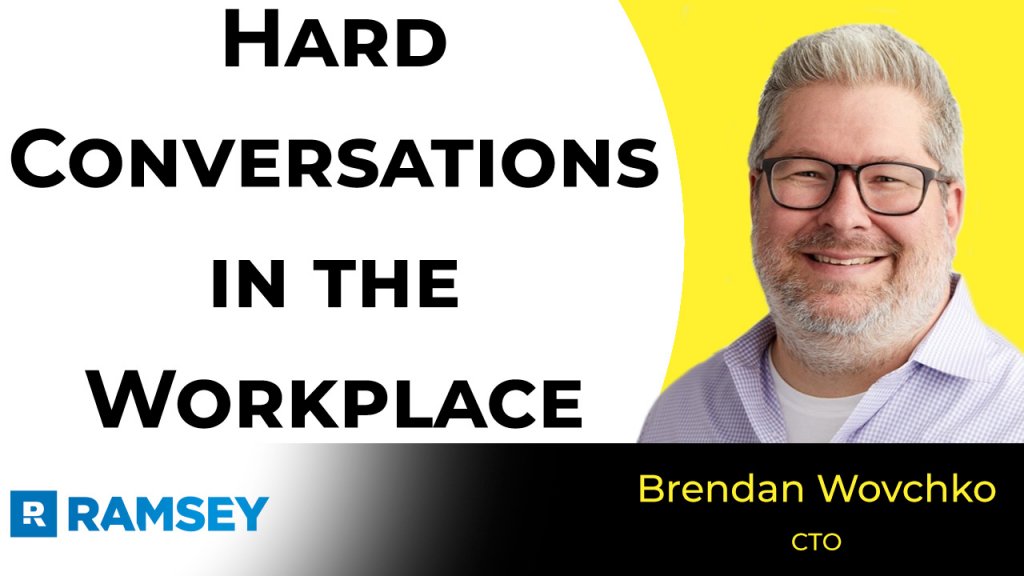
Hard Conversations in the Workplace with Brendan Wovchko, CTO of Ramsey Soutions
Today we’re talking to Brendan Wovchko, CTO of Ramsey Solutions; and we discuss how to have hard conversations in the workplace, the philosophy of Brendan’s “emotional firing,” and the advantage of having a nonexistent credit score.
All of this right here, right now, on the Modern CTO Podcast!
Learn more about Brendan and Ramsey Solutions at https://www.ramseysolutions.com/
The most difficult part of preparing for an uncomfortable conversation is choosing the right words to describe the problem. Look over this PDF. It should help you identify the problems at hand and give
you the right words to express them - Planning an uncomfortable conversation.
About Brendan Wovchko:
I lead a fast-growing team of ~250 engineers, product managers, project managers and agile coaches who make an amazing impact on millions of Americans who are working hard to get out of debt and achieve financial freedom. My primary responsibilities include leading our product engineering leadership team of 30+, helping drive our plan for becoming a more digital organization and guiding our strategies for managing and improving how we work.
About Ramsey Solutions:
Ramsey Solutions provides biblically based, commonsense education and empowerment that give HOPE to everyone in every walk of life. New York Times best-selling author Dave Ramsey created the company in 1992 as a means to provide financial counseling and education. Ramsey Solutions has since grown to more than 1000 team members.
Ramsey Solutions measures its success by the number of lives changed through our message. “The Ramsey Show” is heard by more than 20 million listeners each week on over 600 radio stations and digital platforms. More than 5 million people have been through Financial Peace University, and over 1 million people have attended Live Events across the country. Foundations in Personal Finance, a high school and college curriculum, is offered in more than 10,000 schools and educational institutions.
Ramsey Solutions also offers speakers and personalities that cover a variety of topics. Rachel Cruze, Christy Wright, Ken Coleman, Dr. John Delony, George Kamel, & Courtney Dyksterhouse have spoken to thousands of people across the country and worked with many media outlets.
Transcript
(Intro Narrator at 00:00:03) Hello, my friends. Today Joel is talking to Brendan, CTO of Ramsey Solutions, and they discuss how to have hard conversations at the workplace, the philosophy of Brendan's emotional firing, and the advantage of having a nonexistent credit score. All of this right here, right now, on the Modern CTO Podcast. Here we go.
(Joel Beasley at 00:00:27) This is the Modern CTO Podcast.
(Brendan at 00:00:37) So the uncomfortable conversations topic kind of came up originally as a curriculum. It wasn't really like a stage talk. So I used that curriculum to teach my group of 42 leaders at Ramsey how to have uncomfortable conversations with people, right? Because it's a leadership skill that's hard to do and hard to learn. Our live events team, our EntreLeadership team, took notice of some of the internal training I was doing, and they said, "Oh, hey, this would be great if you did it at one of our events."
(Brendan at 00:01:07) I ended up taking this four-hour, six-part training thing that I developed for my leadership team and condensed it down to a forty-five minute talk. And I've done it a couple times at our EntreLeadership events. So it's an interesting thing because there's a short version of it, and then there's a really long version of it, depending on what you're doing. But I was going to suggest, if you wanted to focus in on this topic, there is a download that we could actually give people.
(Joel Beasley at 00:01:38) Yeah, we can put it in the show notes.
(Brendan at 00:01:40) Because there's enough to talk around the topic, but really the piece that people find most valuable is this conversation guide on how to actually construct an uncomfortable conversation. You know, it gives them options. They can check things and circle things and fill in the blanks, and it will build a storyline or a template that you can bring into an uncomfortable conversation with you if you're really freaking nervous, which most leaders are. So I actually think that's kind of what made the topic popular, because it wasn't just this esoteric, philosophical talk on the importance of doing uncomfortable conversations.
(Brendan at 00:02:26) Although that's in there, there's hard tools to teach you how and how to practice doing it. So, yeah, if we're going to talk about the topic, you know, offering the download would be pretty important because if you try to just verbally talk through the format, it gets pretty jumbly pretty quick. You know?
(Joel Beasley at 00:02:47) I want to know about the day that you decided you needed to make this.
(Brendan at 00:02:57) It's pretty interesting. The day that I decided that I needed to make this was not one of those really bad situations where I'm in the middle of an uncomfortable conversation and I don't know what to do. It was actually the exact opposite of that. So I was sitting on my couch one night with my wife, and she gets a text message. Not unusual for us. We get text messages at night just like everybody else does. But I see her look down at her phone, and you could kind of feel the air change in the room. And I was like, "Oh, wonder what she just got." Right? And she kind of paused for a second, looked at me, looked back at her phone, and then just hands me her phone. And there is a text message on her phone from a woman named Anne, and I had just fired Anne's husband that morning.
(Joel Beasley at 00:03:46) Oh, no.
(Brendan at 00:03:48) And all the text message says is, "Hey." Right? And then, you know, you get that little animation on your iPhone that apparently some brilliant designers and engineers at Apple came up with to signal to you that somebody is typing a really long message on the other end.
(Joel Beasley at 00:04:04) Mine is off.
(Brendan at 00:04:04) Oh, yours is off.
(Joel Beasley at 00:04:06) Yeah. Yes, sir.
(Brendan at 00:04:07) Yep. And so, my wife and I are both sitting there looking at our phone in suspense. Like, "Oh my gosh, what message are we about to get from Anne?" You know? Because there's that fear, like, you're about to get your doors blown off because, as unfortunate as it is, I had to let her husband go. And the message that I got back—I mean, it's not a direct quote, but these words are kind of seared into my mind. Right? She said, "Our husbands just finished walking an uncomfortable road together." And she said that the outcome was tough, but the process was loving and fair. And she said, "I hope we can still be friends." And I remember particularly that part that said "the process was loving and fair." It just kind of rocked me, you know, because up until that point in my career—I've been doing leadership for about ten years—every time I ever did an uncomfortable conversation, it was brutally bad for me. It was brutally bad for the other person. And this was the first time I had walked through something like that and somebody, in a subtle way, almost came back and thanked me. And, you know, Anne's going through this moment where her family's in total turmoil. Right? Her husband just lost his job. It was a bad situation. But she took a moment to acknowledge how we handled the situation. And as a leader, I don't think there's almost—I don't think there's a bigger win than that. Right? So that caused me to kind of wake up and realize, "There is something I did right this time that I've never done before."
(Brendan at 00:05:38) So I kind of walked the situation backward and just started writing down, "What did I do? What sequence did I do it in? What do I want to repeat?" And when I got all that stuff down on paper, I was actually amazed by how much information I was able to kind of regurgitate. And then when I started bringing that to other leaders, they started to treat it like gold, you know, because to me, one of the hardest parts about leadership is basically learning how to model for other people things that were never modeled for you. So for me, in my experience, you know, I've worked with lots of great people over time, but I come from that generation of technology folks, you know, the first generation of the web. And there were not a lot of people in my experience along the way who were able to give me really great leadership advice. We were all kind of figuring it out at the same time. So one of the challenges for me being that first generation web guy is, now I have hundreds of people who work for me. I've got 40-plus leaders that work for me. And a lot of those folks are a little younger than me, you know, the next generation. So I've had to figure out, "How do I model for them what has never been modeled for me?" And that's a tall order. You know, it's hard to do. So the uncomfortable conversations topic is one of the first times I really stepped into that and said, "Okay, I've identified something here where I've got some success. Let's make sure that I get that out for other people to learn too."
(Joel Beasley at 00:07:10) I want to talk about—I want to give a specific scenario.
(Brendan at 00:07:13) Yeah. Yeah.
(Joel Beasley at 00:07:13) That way we can work through it. So the details are going to be in the worksheet, which we're going to attach to the conversation, so people can walk through the formula. But just conversationally here, one of the toughest conversations anyone has to have as a leader is letting someone go.
(Brendan at 00:07:27) Right.
(Joel Beasley at 00:07:27) And so what is the high level, the milestones that you think of when you're going through that process?
(Brendan at 00:07:34) Right. So it's funny you bring up that example, because that is the most frequent thing that people bring up. And if you're not careful—and this happened to me when I first started teaching on this topic—you start giving people tools about how to have uncomfortable conversations, and wouldn't you know it, the first thing that they do is they're like, "Oh, great. I finally have the tools to fire this guy or fire this gal." Right? And I figured that out pretty quick when I started teaching this. And I really had to get everybody to pump the brakes and be like, "Whoa, whoa, whoa. I didn't give you these tools so you could just start firing people. I'm giving you these tools so you can take ten steps backward and hopefully avoid ever having to fire someone." Right? So the way I kind of break it down in my head is there are really five types of uncomfortable conversations, but six things you have to do. And when you're dealing with somebody and you've got some maladaptive behavior going on, you have some unwelcome behavior, the first thing that you really have to do, that most people don't pause and do, is get really, really clear about the problem. Most of the time when you're sitting down to talk with someone about a problem, you're really just kind of boiling up all the frustration that you have as a leader. Like, they didn't do this, or they disrespected me in some way, or they didn't follow instructions, or, you know, whatever it is. And you're actually acting pretty emotionally.
(Brendan at 00:09:13) Process of having different kinds of uncomfortable conversations with people. So the first one, the first uncomfortable conversation, I call first contact. So first contact is the uncomfortable conversation you have with somebody where you're addressing the maladaptive or the unwelcome behavior for the first time. Right? It's also the hardest of all the uncomfortable conversations because you're broaching that elephant in the room, you know, and it can be really uncomfortable. Once you have that first uncomfortable conversation with people, you then want to walk into a pattern of coaching. So, you know, you've identified the problem in that first contact conversation. You've probably identified some action steps of what needs to happen.
(Joel Beasley at 00:09:54) Can we make it more real?
(Brendan at 00:09:56) Yeah.
(Joel Beasley at 00:09:56) You can fire me. All right. So my—here. My performance—I'm a leader on your team.
(Brendan at 00:10:02) Oh, okay. That would be great.
(Joel Beasley at 00:10:04) Product. Right?
(Brendan at 00:10:06) Is that an option?
(Joel Beasley at 00:10:08) I'm a product, and my performance has dropped. I started out strong.
(Brendan at 00:10:11) Right.
(Joel Beasley at 00:10:11) We're three months into it.
(Brendan at 00:10:13) Right.
(Joel Beasley at 00:10:13) Had good references, but my performance has dropped.
(Brendan at 00:10:16) Right. Okay. Well, can we make it even more real?
(Joel Beasley at 00:10:21) Okay.
(Brendan at 00:10:21) Okay. Let's say that you're a leader on my team, and you have a team member that's not performing well. And you came to me recently, said, "I feel like I need to go put this guy on a ninety-day plan." Right? So you've now put him on a ninety-day plan. And I got an email from this person who's on a ninety-day plan last night that they are fifty days into their ninety-day plan, and you've not checked in with them. You've not given them any coaching. Other than having them sign some sort of document that says, "Hey, this is the behavior change you've got to have," you're kind of ignoring them. So I've got to sit down with you and say, "Oh my goodness. I knew you were new in this ninety-day plan. I knew you were walking into some disciplinary action with a team member, and you were letting them know, 'Hey, some things have got to change.' But I don't really feel like you're holding up your end of the bargain as a leader. You're either intentionally or unintentionally participating in leadership neglect. And your neglect of this team member is going to cause this team member to lose their job." And I mean, that would be a pretty on-point way to describe the problem.
(Brendan at 00:11:31) Yeah. And again, we've got a template for all this. You know, the first thing that I like to tell people is, if this were a real scenario between you and I, and, you know, I call you into my office, you know, there's a power dynamic there. You've got to acknowledge the power dynamic. So the first thing I—and, you know, when the power dynamic happens, people aren't thinking logically. Right? Their thinking moves back to their limbic system. They're in fight or flight. So the first thing you've got to do when you're having an uncomfortable conversation with people is you've got to get them out of the limbic system. You've got to get them up to their prefrontal cortex, where they're actually thinking, logically. And so when somebody comes into my office, I don't make small talk. I don't ask them about their weird pets, or their kids, or their spouse, or anything like that. Within five seconds of somebody sitting down in my office to have an uncomfortable conversation, I let them know two things. I let them know, "Hey, this is going to be an uncomfortable conversation, and don't worry, nobody's losing their job today." Within five seconds, I've kind of set the tone with the person, and I've addressed the elephant in the room. And then, you know, once you've gotten that out of the way on the front end, then you can move into talking about the severity and the impact of the situation, stating the problem, you know, and then getting through some conversation about the issue.
(Joel Beasley at 00:12:51) Okay. I like that.
(Brendan at 00:12:52) So that's the first contact conversation. Okay. Once you move past that first contact conversation, now we're going into a coaching pattern with someone. You know? So I would probably say toward the end of that first contact conversation, "Well, hey, let's get together again tomorrow. I want to help give you some coaching." And what I tell people about coaching is, "Hey, coaching's going to go really well if you do two things. One, you've got to actually apply the coaching that I'm giving you. And two, you have to share my urgency around how important this is to fix." Right? And if you're really clear with people and give them that level of clarity, like, "Hey, this is going to work out. This coaching is going to go great if you apply my coaching and share my urgency," you have now set the rails on the coaching conversations you're having with people. And so you're able to come back in your second coaching conversation or your third coaching conversation, and you're able to ask them, "How well do you think you're applying my coaching? And how effectively do you think you're sharing my urgency?" You actually compare some notes. And the other thing I'll do in coaching conversations too is bring in the feedback of other leaders. So let's say there are a couple of other leaders that are working closely around you, and they're also aware of the situation where you're kind of unintentionally flubbing this guy's ninety-day performance plan.
(Joel Beasley at 00:14:17) Okay.
(Brendan at 00:14:17) Right? I would probably reach out to some of those leaders that work closely with you and say, "Hey, are you noticing Joel spending a lot more time with this team member? Are you noticing Joel coach this person? Are you noticing Joel giving this person a disproportional amount of his attention? And do you see the person benefiting from it?" And, you know, I reach out to some other leaders that work around you, and I'd ask them to kind of score you on it, like one to five. Are you doing those things? And are you sharing the urgency?
(Joel Beasley at 00:14:48) Is this just conversationally, or is there an actual document?
(Brendan at 00:14:51) No. There's actually—I can include that in the download. Yeah. There's a real format that I use.
(Joel Beasley at 00:14:57) Oh, cool.
(Brendan at 00:14:57) And then I bring that into the conversation with you too. Because if you're not careful in an uncomfortable conversation situation, it's really easy for the conversations to become unnecessarily adversarial.
(Joel Beasley at 00:15:08) Oh, yeah.
(Brendan at 00:15:09) My role is to be a coach to you. So I tell people, be a coach, not a cop. My role is not to be law enforcement. My job is literally to be on your side of the table trying to help you through this problem. The thing that should be the adversary to you is the problem, not me. So my job is to come alongside you, coach you, so we can get rid of the problem, and we can continue to walk forward together. But too many leaders, when they get into that first contact conversation or that coaching conversation, put themselves unknowingly in an adversarial situation with the other person. So part of staying out of that adversarial pattern is bringing in feedback from other leaders. Because if the only feedback you're getting is just from me, it just sets us up for an adversarial situation. Right.
(Brendan at 00:15:59) So do you want me to go through all five? I'll rip through them.
(Joel Beasley at 00:16:02) Rip through them. Yeah, I'm curious.
(Brendan at 00:16:05) The first kind of uncomfortable conversation is the first contact conversation. Second kind is a coaching conversation. And you can have, you know, you and I could have one coaching conversation and it go fantastic, and that's it. We just need one and then we're done.
(Brendan at 00:16:19) Or we might need two or three. I'll tell you what I don't usually do. I'm not gonna do four, five, or six coaching conversations with somebody. If we're two or three into it and the person's not, you know, sharing my urgency and doing their work to solve the problem, we're gonna move beyond coaching, the next level. And this is a really weird phraseology that we use at Ramsey that you're not gonna hear anywhere else.
(Brendan at 00:16:44) And I gotta explain it the moment I say it, because you're gonna be like, what is that? We call it an emotional firing. And it sounds really harsh, but it's actually a kind of an act of mercy, honestly. What an emotional firing is is a conversation with a team member where you say, hey, we've been doing this coaching, and you're not applying my coaching, you're not sharing my urgency, this is not going well. And so I need you to make a choice.
(Brendan at 00:17:11) I need you to make a choice as to whether you wanna keep on fighting to save this situation, or whether you're ready to tap out and surrender and maybe move along in your next job. So the goal of the emotional firing is to cause someone to have the emotions of a termination without experiencing the material consequences of the termination. And that can sound harsh, but what it's going to do is it's going to make real for you the situation that you're in. So let's say, again, this fictitious situation where you've had somebody on a ninety day plan and you haven't been paying adequate attention to that team member, and they're suffering because of your leadership neglect. And I've been coaching you through it, and you're not spending more time with that team member, and you're not investing into that person, and you're not coaching them.
(Brendan at 00:18:00) Well, when it would come time for that emotional firing conversation, I'd say, like, Joel, up to this point, you know, we've now had three or four conversations about this. And I've told you, I'm gonna stay your steadfast advocate as long as you do two things: as long as you're taking and applying my coaching and you're sharing my urgency. And not only just me, but a couple of the leaders around you have noticed that you are not applying the coaching and you are not sharing the urgency. So I think we've just reached a place where you gotta make some tough decisions. And I'll be honest, you've got two options.
(Brendan at 00:18:37) One is you continue to run down this path and you fight for your job and you make this work, or the second is you decide to punch the eject button and say, like, alright, this isn't for me. But I want to be really honest with you, and I want to tell you, if after three coaching sessions, you've made this little progress, I just want to be honest with you and tell you, like, I don't think this is going to work. I have a low level of confidence that in a fourth or fifth coaching conversation, that you're gonna make the forward progress that we need to save this. So I really want you to think about that. I want you to leave the office early today.
(Brendan at 00:19:11) I want you to go home, and I want you to think about this. I want you to talk to your wife about it. And I'd want us to get together first thing tomorrow morning, and I want you to tell me, do you wanna fight, you know, continue to fight for your job and try to save it? Or is it time to tap out? And usually, at this point, if there's some severance on the table, I'll offer it and say, you know, if you decide to tap out, we'll strike you a check for, you know, whatever that amount of money is to kind of ease your transition to your next thing.
(Brendan at 00:19:40) So that emotional firing is actually a really handy tool. Most people skip it. They just go from coaching, coaching, coaching, to you're fired. So if they come back tomorrow and they say, no, I still want to fight for my job, what I'll say to them is, well, I shared with you yesterday, I think the odds are pretty low that this is gonna work, but I respect the fact that you wanna fight for your job.
(Brendan at 00:20:02) I just need to tell you that I've written a ninety day performance plan for you, and I already have it printed, and I hand it to them and say, I just want you to understand that this ninety day performance plan, there's two things you need to know. There is zero wiggle room on this plan. If you get 95% through this plan, 95% is not enough. It has got to be 100%. And by the way, on day 91, or on day 2,091, after this performance plan is over, if you fall back into these same behaviors that we're addressing now, it's gonna be a no warning termination situation.
(Brendan at 00:20:42) And I'll have them, you know, read through that performance plan and make sure that they feel good about it. If they don't feel good about it and they wanna start negotiating, that's generally where I roll back and say, hey, listen. This is not a negotiation situation. Like, if you're not comfortable with this plan, that's you telling me that you wanna hit the eject button.
(Brendan at 00:21:01) So that is the fourth type of uncomfortable conversation is the ninety day plan. So, we got the first contact, we've got the coaching, we've got the emotional firing, and then we've got the ninety day performance plan, or whatever the length of the performance plan is you do. And if for whatever reason the performance plan doesn't go well, then you move into a termination.
(Joel Beasley at 00:21:21) Is that performance plan, is it structured in a way that, like, it doesn't require an enormous amount of work for you to follow up with them? Like, in that plan, are they responsible for making changes and communicating them to you? Or are you hunting people down for this? Or what's going on in that ninety day plan?
(Brendan at 00:21:36) Well, again, they need to take the coaching and share the urgency. So part of sharing the urgency means they need to be in good contact with me. They can't hide from me. But honestly, I am still in coaching mode. I have not written this person off.
(Joel Beasley at 00:21:49) Okay.
(Brendan at 00:21:49) Because remember, as leaders, we don't have groups of people that are subservient to us. Our job as leaders is to serve those people. And even when we're in an awkward and uncomfortable situation with a team member that might not be doing everything right, that does not relinquish me from my requirement to serve them well. So I will apply more attention to a situation. I'll be checking in with people.
(Brendan at 00:22:13) I'll be having lunches with them. A lot of people will create distance during those performance plans, because they feel like it's so awkward. And what I like to tell leaders is, it will only get awkward if you make it awkward. I want somebody to feel, if they're going through a performance plan, or if they're going through coaching, or any kind of thing, I want them to feel literally like I am right next to them fighting alongside, trying to save this. Like, I want people to know that if in the unfortunate event that I have to fire you, like Anne's husband, that they are 100% confident that I've done everything humanly possible to save the situation.
(Brendan at 00:22:50) So, yeah, there is responsibility on their part, but it is not the person on the ninety day plan's job to drive the situation. It is still my job to drive the situation.
(Joel Beasley at 00:23:01) You are very nice.
(Brendan at 00:23:04) Well, you know, my goal is not to be nice. My goal is to be tough but fair. You know, when I first started doing this leadership thing fifteen years ago, I was leading really small teams. I'm in a situation now where I lead 250 people, you know, and that team is just growing all the time. You know, it takes a lot of emotional maturing as a person moving from a team of five people to a team of 250 people.
(Brendan at 00:23:32) The growth that you have to go through as a leader is enormous. And one of the biggest aspects of growth that I think that you go through is you really start to develop a positive association with discomfort, which I know sounds like a really weird thing. But, you know, when I was a younger leader, man, discomfort was just, you know, it would just wreck me. Right? If I had to have an uncomfortable conversation with somebody or I had to confront someone or, you know, any kind of conflict was really, really hard for me.
(Brendan at 00:24:03) But I got some great mentorship myself. I remember when it was. It was sixteen years ago, actually. I had somebody say to me, anything that you have the tendency to avoid needs to become the first and only priority to you. And that was incredibly powerful advice.
(Brendan at 00:24:24) It also took me probably five years to even be able to partially start to implement that. Because it requires so much emotional fortitude to get to a place that when everything inside your physiology says, oh gosh, this is uncomfortable. I don't want to do it. And you can train yourself to react by making the thing you desperately wanna avoid the number one thing that you're gonna do, and you are gonna be relentless until it is done. You know, when you develop that skill as a leader, and it takes a long time.
(Brendan at 00:24:58) And if I'm really honest, you know, I'm only 95% there. You know, I mean, maybe one day I'll get to 100%, but that still feels like pretty far away. You know, when you can embrace discomfort, when you can get comfortable being uncomfortable, it is a really powerful situation to be in as a leader because things just don't scare you the same way anymore, because you have history that tells you that you will survive. So my goal is not to be nice. My goal is to be tough but fair.
(Brendan at 00:25:31) You know, I don't enjoy having uncomfortable conversations with people. I don't relish it. It's not a power thing for me. I still dislike it. But I've just learned that the thing that separates an okay leader from a great leader is somebody who is willing to do the thing that they don't want to do.
(Brendan at 00:25:49) You know? It's discipline. It's discipline. And I really think that there is an epidemic in modern leadership when it comes to people not, like, the reason why we have these leadership jobs is because we should have the integrity to do the right thing even when it's hard.
(Brendan at 00:26:07) And unfortunately, I see with a lot of leaders nowadays, they're not willing to do the thing of integrity, that the situation demands, and it is obvious that it needs to happen, but they allow their discomfort to put their hands on the steering wheel and, you know, steer the boat or ship or car, whatever analogy you want to use, in a different direction, you know. And, you know, relevant to this audience, right, the myth that's out there is that if you're a technical leader, if you're an engineering leader, it's somehow okay to be bad at people stuff. And let me just set the record straight on that. It is absolutely a lie. And if you aspire to be a great leader in technology, you almost have to be better at people stuff than the next guy or the next lady.
(Brendan at 00:26:59) Because the people that we lead aren't always necessarily the most emotionally aware people. And so we oftentimes have to go a further distance in coaching people and helping people, helping them mature as individual contributors. So in a lot of ways, we almost have to be better at it than the next cat that's out there, you know.
(Joel Beasley at 00:27:22) My brain's hung up on a couple things I wanna address. When you were first talking about, you know, the uncomfortable conversations and the distance and all of that, like, the five parts, I thought you were going to go, like, firing, body odor, you know, different—
(Brendan at 00:27:37) You know? That's a real thing.
(Joel Beasley at 00:27:41) Conversations. But then we talked a lot about, like, letting people go, and it seems like this framework can be applied to the other subjects. Right?
(Brendan at 00:27:49) Mhmm.
(Joel Beasley at 00:27:49) But I felt like it was really long. Is there ever times when it's not that entire process of coaching and then coaching and then, oh, okay.
(Brendan at 00:27:59) Yeah. I mean, you know, if you have situations where somebody's safety has been violated, if you have somebody who has been legitimately abused or somebody has abused their power in a really kinda disgusting way, I have no problem with escorting somebody's butt straight into the parking lot instantly. But those are typically situations where, unfortunately, because of where I work, I don't have to deal with that garbage all that often, but I have in past jobs. Those are situations where you are either in the middle of a situation or skirting awfully close to something that could probably result in a civil suit, or we're talking about serious, serious stuff. And I don't mean, like, somebody suing my company.
(Brendan at 00:28:45) I mean, like, something that happened between two people that's gonna cause a divorce or is gonna cause a, you know? There are situations where things can definitely be sped up and be instant. But I would put those in the bucket of what I would refer to as moral turpitude. If people get into, you know, really dicey territory, I don't need to coach somebody through sexual harassment.
(Brendan at 00:29:08) Right. You sexually harass somebody, your butt's gone instantly on my team. You know? But if somebody's having more of what I'd call, like, behavioral skill problem, you know, interpersonal skill problems—
(Joel Beasley at 00:29:21) Got it.
(Brendan at 00:29:21) Then, yeah, I'm gonna put a bunch of time in. Yeah. Again, as leaders, we owe them that. Now if somebody's like, they just started, like, it's their fifth day on the job and they're doing all kinds of weird stuff, okay, maybe not. But if somebody's been on the job for five years or ten years, I owe it to them—
(Brendan at 00:29:37) To work it through with them. Yeah.
(Joel Beasley at 00:29:39) Let's take a moment to talk about Ramsey, the company. Right. Recruiting is one of the reasons why a lot of people come on the show.
(Brendan at 00:29:47) I'm on the show because I like you.
(Joel Beasley at 00:29:48) That's it. I wanna give a plug for Ramsey Solutions. And the reason why I wanna do this is because I came and I got to visit the buildings in person and see the studios, and you gave me a tour, and you had lunch with me, and you had that thing that you really liked a lot. And the guy, like, knew your order.
(Brendan at 00:30:09) Oh, yeah. Philly Cheesesteak.
(Joel Beasley at 00:30:10) The Philly Cheesesteak.
(Brendan at 00:30:11) Yes.
(Joel Beasley at 00:30:11) So the environment was unbelievable.
(Brendan at 00:30:14) Yeah.
(Joel Beasley at 00:30:15) Incredibly welcoming.
(Brendan at 00:30:16) Yeah.
(Joel Beasley at 00:30:16) You could see the joy on people's faces.
(Brendan at 00:30:20) Yeah.
(Joel Beasley at 00:30:21) The amenities just blew me away. Right? And I remember having a conversation with my wife after I got home, and I said, man, I've gotten to visit so many companies and experienced so many teams and talked to so many people. And I go, that is, like, one of the only places I think I would ever wanna work if I wasn't an entrepreneur.
(Brendan at 00:30:41) Yeah.
(Joel Beasley at 00:30:41) Because it just felt like there were so many great people—
(Brendan at 00:30:44) Yeah.
(Joel Beasley at 00:30:45) There, and they were all aligned working together towards a goal. It was a great atmosphere, and just everything about it was awesome. So—
(Brendan at 00:30:52) And that's what happened to me. I am a lifelong entrepreneur. Ramsey is actually the first full time job I've ever had. Ramsey, slowly over a period of a couple years, became my company's biggest customer. And as I got to know Dave and I got to know the operating board and a lot of key leaders at the company, I fell in love with the place.
(Brendan at 00:31:08) And I ended up selling my company to take a full time job at Ramsey, which a lot of my friends were like, you're crazy. But best decision I ever made. That was five years ago. Best decision I ever made.
(Joel Beasley at 00:31:19) And are you guys hiring right now in technology?
(Brendan at 00:31:21) Oh, yeah. Yeah. I mean, I've got a hundred open developer roles.
(Joel Beasley at 00:31:25) Where do people find that?
(Brendan at 00:31:26) Yeah. Ramseysolutions.com. Yeah. We've got all of our jobs listed there. Always hiring great engineers, always hiring great product managers, always hiring great project managers, product designers.
(Brendan at 00:31:38) You want me to tell you a little bit? Yeah. To everybody a little bit about the company? So Ramsey Solutions. The background of the company is in 1988, our CEO went through a devastating set of financial circumstances, ended up causing him to go into bankruptcy. He was a young entrepreneur in his twenties, and he had kind of amassed a small real estate empire.
(Brendan at 00:31:59) And he did it the way that people are still doing it today, which is he debt financed the purchase of a whole bunch of buildings. And the bank that he was working with got purchased by a bigger bank. And when that new bank was reviewing their books, they said, "Who's this 26-year-old guy that's got like, you know, $34 million of debt? That seems pretty risky." So they called his loans, which caused a multi-year domino effect of just financial tragedy. And that created an—and, you know, our founder's name is Dave Ramsey.
(Brendan at 00:32:28) You might find that name familiar. That created a real awareness on Dave's part about how toxic debt can be to your life. And so as bad as that situation was for he and his family, after he kind of dug himself out of that hole, he decided he wanted to start helping other people that had gone through the same thing, that were in financial tragedy, and wanted to not only help people get out of that financial tragedy, but hopefully, if he did his job right, help other people from ever getting into it. So that birthed a company called Lampo, which eventually became Ramsey Solutions as we are today. So now 25 years, 30 years later, post that situation with Dave, you know, we use digital product and terrestrial radio and book publishing and one-on-one coaching and live events.
(Brendan at 00:33:15) You know, we're a multi-disciplined company that uses all those different approaches. We reach about 25 million people a week to kind of tell the story of not only just how to get out of debt, but how to stay out of debt and build a future of financial freedom. You know? So that's what the company is all about. It's fantastic.
(Brendan at 00:33:35) You know, it's one of the few places—I'll just speak for myself, you know, as an old crusty software engineer—it's the first job I've ever had in my life where I get to go to work every day and hear endless stories of the life change that our customers have helped create for themselves by using the products that we make. And not just change for themselves, but changes for their kids. It's generational change. You know, when people learn how to get detached from the toxic debt culture that we live in in America and learn to live life on their own terms, beautiful things happen in relationships and families and marriages that last generations.
(Brendan at 00:34:17) So it's a really amazing, fulfilling place to work. And, you know, you mentioned that having visited, you can tell that on people's faces.
(Joel Beasley at 00:34:25) Oh, yeah.
(Brendan at 00:34:26) You know, we're not doing engineering work for the sake of engineering work. We're doing engineering work because we know it's changing people's lives, and that's a lot of fun.
(Joel Beasley at 00:34:34) Yes. Back to the Philly cheesesteak. When you're standing in line—
(Brendan at 00:34:36) Yeah.
(Joel Beasley at 00:34:37) An engineer or two walked up to you, and you're just talking with them, and you introduced me. And I went to one of my defaults, which is, "Hey, what language do you program in?" And he goes, "Whatever language is needed to solve the problem." And I was like, "Oh, that is great."
(Joel Beasley at 00:34:52) I was like, that is the perfect—that is the answer.
(Brendan at 00:34:55) Yeah.
(Joel Beasley at 00:34:55) So I was sold at that point.
(Brendan at 00:34:57) Yeah. We're very, very lucky. I probably don't tell them enough how honored I am to get to work around 250 software folks that are so aligned in terms of the mission of helping change people's lives. It's a different breed. You know, we like to joke and say it's almost like a rare air that we get to breathe at Ramsey.
(Brendan at 00:35:21) When you have people that genuinely care about the things that they're doing, it creates an environment that you can't manufacture. You know, it's passion.
(Joel Beasley at 00:35:30) People want to see—I know you have popular consumer apps in the store to help you manage your money. And you have a couple of them, right?
(Brendan at 00:35:36) Oh, yeah. Yeah.
(Joel Beasley at 00:35:38) What's the one that helps you manage your money? I think you can hook your bank accounts to it and look at the percentage of your spend.
(Brendan at 00:35:42) Yeah. So we have a subscription that we offer the public called Ramsey Plus. And Ramsey Plus really has two primary products in it. The first is an education product. It's a series of different videos that really helps you understand kind of the Ramsey way to manage money.
(Brendan at 00:36:00) So that's more of the education piece. And once you understand the philosophy of how we teach people to do money, then you need a tool that's gonna walk with you every day, you know, to make sure that you kind of carry out the plan. And we have a tool that's included in Ramsey Plus called EveryDollar—
(Joel Beasley at 00:36:17) That's what I—
(Brendan at 00:36:18) —which is, I don't know what it is now in the App Store. It's one of the top apps in the App Store for budgeting. But I think probably at this point, we've got pretty close to about 15 million users.
(Brendan at 00:36:30) I mean, it's a pretty, you know, large-scale app. So, yeah, EveryDollar is a budgeting app, helps you do what we call a zero-based budget, which is—most budgeting happens in the rearview. Right? You make all your bad money decisions, and then you try to reconcile it at the end. Yeah.
(Brendan at 00:36:47) What EveryDollar is really there to do is help you to get a plan for every dollar of your income and then help you execute that plan as you've designed it. You know? So it is a unique budgeting app in that it kind of carries a different philosophy with it than Mint or a lot of other, you know, kind of even better-known budgeting apps.
(Joel Beasley at 00:37:09) Ramsey's created a culture around being out of debt. Yes. And it's on their radio show that airs constantly. It's within all their teams, and there's now their sub-shows. Like, I got to have Ken Coleman on like a week or two ago.
(Brendan at 00:37:23) Right.
(Joel Beasley at 00:37:23) We got really off topic, and I just had him coach me through some stuff from the past. And so it just got really raw and real fast. But he was a great human being.
(Brendan at 00:37:32) Oh, Ken's a great guy.
(Joel Beasley at 00:37:33) Yeah. And so, you know, it's in the culture, and so people can—you know, you can start with the app or I honestly heard about it through church. That was my first exposure to the like, the church provided that financial training to people, right?
(Brendan at 00:37:47) So—
(Joel Beasley at 00:37:47) That was my first exposure to it. That was years ago. You guys—
(Brendan at 00:37:51) Have—
(Joel Beasley at 00:37:51) —been doing this for a long time.
(Brendan at 00:37:52) That's a long time.
(Joel Beasley at 00:37:52) Yeah. And then I saw the technology, and I downloaded EveryDollar. And my wife and I, we've been together for eight years. And I was doing it really well myself, and then I sort of got her into it—
(Brendan at 00:38:04) Right.
(Joel Beasley at 00:38:04) —as well. So I don't hear that conversation a lot about this—your spouse and you coming together, yeah, like, financially and—
(Brendan at 00:38:11) Yeah. The pop culture around money nowadays, there is an endless list of things that people have accepted as normal, even in their marriages around money, that, from our perspective, you know, just isn't great. A lot of couples don't do money together. That is also the reason why the number one reason for divorce in America is money. Really?
(Brendan at 00:38:35) Yeah. And money fights, money arguments, misalignment around that. You know, we're in the money business, but we're really in the marriage business is what we like to say around Ramsey. The vast majority of customer feedback that we get is, "Man, I found you guys because I was desperate about my money, and now I have a different marriage than when I started." And that's just amazing to hear, you know?
(Joel Beasley at 00:39:03) Does the Ramsey course specifically coach couples on this? So that's in the material?
(Brendan at 00:39:07) Yeah. It's how to come together. And, you know, one of the things that we say is, you know, in every relationship, there's a nerd and a free spirit when it comes to money. Yeah. And you gotta figure out who you are.
(Joel Beasley at 00:39:17) I'm the nerd.
(Brendan at 00:39:18) You're the nerd. I'm—
(Joel Beasley at 00:39:18) I'm the nerd.
(Brendan at 00:39:19) You're the nerd. I'm the free spirit. Yeah. My wife is the nerd. And so what you gotta do is you gotta figure out like, "Oh, okay. Well, you know, what's that dynamic there in your marriage? How can the nerd help the free spirit? And how can the free spirit help the nerd?" You know, because everybody brings something that's, you know, valuable to the table. It's not that the nerd is superior to the free spirit.
(Joel Beasley at 00:39:39) Oh, I used to be the free spirit, and then I lost all my money.
(Brendan at 00:39:42) Oh, yeah. Yeah. Well, that'll—
(Joel Beasley at 00:39:43) That'll do it.
(Brendan at 00:39:44) That'll do it. Yeah. Yeah.
(Joel Beasley at 00:39:46) Yeah. That was before—before my wife, yeah, right? I made money, lost a bunch of money, had some debt, then I was like, "This sucks."
(Joel Beasley at 00:39:54) Yeah. And then I just—for the past 10, 15 years, I've had one credit card with a $500 limit, and I buy gas on it to keep it active.
(Brendan at 00:40:04) Yeah.
(Joel Beasley at 00:40:04) And other than that, like, if I don't have the cash for it, I can't afford it.
(Brendan at 00:40:08) Yeah. Yeah. You know, our advice tends to be pretty extreme.
(Joel Beasley at 00:40:12) Oh, yeah.
(Brendan at 00:40:13) You know? And a lot of people are like, you know, "How do you live in a world without a credit score?" Like, you know, my wife has a zero credit score right now.
(Joel Beasley at 00:40:22) Oh, really?
(Brendan at 00:40:23) Or actually, it's a non-existent credit score. Mine is plummeting in that direction because it's only been until recent years that I've—you know, like, even if you're not living a credit card lifestyle, you'd still have a mortgage. You can still have other things that'll kind of maintain your credit score.
(Joel Beasley at 00:40:37) Yeah.
(Brendan at 00:40:38) But it's funny because a lot of the folks that work at Ramsey that have been working the plan, where you end up at the end is you get a bunch of millionaires. Yeah. Which is really strange to say. A lot of people think the American dream is dead, and it is far from dead. You can become a millionaire in America without inheriting a dime from anyone.
(Brendan at 00:40:55) You know? In fact—
(Joel Beasley at 00:40:56) You got those research statistics, right?
(Brendan at 00:40:57) Yeah. We did the largest research study of millionaires that's ever been conducted. And we found out that it is more likely that the average millionaire in America has not inherited a dime from anyone. And believe it or not, two of the most common—and this will be great for this audience—but two of the most common careers for people who retire millionaires are school teachers and engineers. Really?
(Brendan at 00:41:22) Yeah. I have more millionaires on my team than I could ever really talk about publicly, and it's not because these folks are making ginormous salaries. I mean, they make good money as engineers do. But it's not what you make. It's what you keep.
(Brendan at 00:41:40) We've seen some really amazing things. In fact, that's one of the hardest things for me is holding on to senior engineers because I literally have guys on my team who are 45 years old retiring. Yeah. And a lot of people who might be listening to this might be 45 and don't even know if they're gonna be able to retire. The good news is, yes, you can.
(Brendan at 00:42:00) You still can. It's not too late.
(Joel Beasley at 00:42:02) Oh, yeah.
(Brendan at 00:42:02) But our advice tends to be intense. But if you do it, it will work.
(Joel Beasley at 00:42:08) A good time to start was for me when you're at the bottom and you have nothing, yeah, right?
(Brendan at 00:42:13) Yeah.
(Joel Beasley at 00:42:14) And you're just broke and you're dirt poor. And then I just made the decision, "I never wanna be in this spot again." Yeah. And so as I go up, I'm never gonna—like, I will always consider—and I don't know if I'm more extreme than the Ramsey solution. I consider 50% of my income my income.
(Brendan at 00:42:32) Yeah.
(Joel Beasley at 00:42:32) And so I do all my—so I save 50%.
(Brendan at 00:42:36) Yeah.
(Joel Beasley at 00:42:37) And then I live off 50%. And then in that 50%, I'm still doing the savings and everything like that.
(Brendan at 00:42:43) Yeah.
(Joel Beasley at 00:42:43) And I just have done that over and over and over. And people will say, "Okay, well, it's a lot easier when you're making a lot of money and when you're at the—" It's like, yeah. But I started at zero, right?
(Joel Beasley at 00:42:51) And like, I had that mentality at zero.
(Brendan at 00:42:54) Yeah.
(Joel Beasley at 00:42:54) And that's how I got a little bit farther ahead. And then I could invest more in myself, and then I could try more risky things, and then I could just keep that, yeah, going.
(Brendan at 00:43:02) Yeah. Probably the journey for you is a little different than most people. Because when you start at zero, it's one thing. Most people don't start at zero, they start at a giant negative number. So our advice typically is geared mostly toward people that are overwhelmed or maybe even drowning in consumer debt.
(Brendan at 00:43:20) Like, how do you dig out of that hole? You know? So our advice is a little bit more geared to that, but I think that's an awesome strategy that you use. I do something approximately similar, yeah.
(Brendan at 00:43:30) You know, now that I'm in the phase of life than I am now. You know, it's just really fun to see the lives that people get to live when money no longer has to be the biggest quantity. And the thing that we love to talk about is—with where I am in my life, kind of similar situation to you—I started living out a lot of these principles long before I ever made really any significant amount of money. You know, I get to live a life now that gets focused on generosity, not trying to figure out how I'm gonna get an interest payment to Citi or Chase. You know, what's in my wallet?
(Brendan at 00:44:04) Money. Money is what is in my wallet. Nobody ever retired on airline miles. You know, the tricks that debt companies have managed to fool us into to get us addicted to their products is gross. You know, it's a wonderful life being able to get to focus on—you know, I've got a 15-year-old son.
(Brendan at 00:44:24) He's never had to live a life of debt. He's never seen that. He's never seen his parents live that, fortunately. Although there was definitely a time where that was a big part of our lives. But what he has gotten to see is how you live a life that's debt free and how you can live with enormous generosity to the people in our world who need it the most.
(Brendan at 00:44:43) And that is an—it's an incredible gift to be able to give a child that, you know, to teach them that, you know, that way of living.
(Joel Beasley at 00:44:51) You have some sort of routine that you do with your son where you go on this website and you make some investments to? Yeah. Yeah. I went on the website. What's it called?
(Brendan at 00:44:58) Kiva.
(Joel Beasley at 00:44:59) Kiva. I went on the website. You don't really get a return.
(Brendan at 00:45:01) No. You don't.
(Joel Beasley at 00:45:02) I was like, well, I was all excited sending to my account. I was like, where's the returns? I couldn't find on the listing page. I was like, "Where's the percent of return?" There's none. You pay the fee—
(Joel Beasley at 00:45:09) Yeah.
(Joel Beasley at 00:45:09) —to help them lend the money.
(Brendan at 00:45:12) Yeah. There are two nonprofits that I just love dearly, Kiva and Charity Water. You know, Kiva is a really interesting model in that when you—you're basically funding small business loans for people in early developing nations. You know, they pay those loans back, but when they pay the loan back, it doesn't come back to my pocketbook. It kind of comes back to my account balance.
(Brendan at 00:45:39) And you do that for years, and you're not funding somebody's sewing machine or funding small projects anymore. You're at a point where it's like, let's go build a building in Fiji, you know, because those contributions you make over the years kind of roll over on each other and it gets bigger and bigger. So I'm a big fan of Kiva and Charity Water too, which they're an amazing organization. Scott Harrison, who's become a friend, is their CEO. And their whole model is 100% of every dollar that people give them go toward building wells in communities around the world that can't make any other forward economic progress until they actually have clean drinking water.
(Brendan at 00:46:25) Right? It's solving the problem that unlocks other opportunity. And so, you know, the way that Scott funds the operations of the organization is through donations from high net worth individuals to keep everybody's salaries paid. But for the normal guy, you know, that's making—
(Joel Beasley at 00:46:42) Giving $15.
(Brendan at 00:46:45) $15 hits the ground in Kenya or wherever that directed giving goes to. It's awesome. There are amazing things out there.
(Joel Beasley at 00:46:53) Yeah. This is so great. What else do we need to talk about? What other topics do you have on your mind?
(Brendan at 00:46:59) You know, I think I'm like any other leader. Leadership's always on my mind, you know, where you grow next, what the hardest problems are in front of you. Uncomfortable conversations is something that I've enjoyed talking about for the last couple years. I think the latest kick that I've been on is really the topic of accountability, because I think accountability is also one of those skills that, as leaders, we have to model for other people, but it hasn't necessarily been modeled very well for us. At least that's my story.
(Joel Beasley at 00:47:32) And what does healthy accountability look like?
(Brendan at 00:47:34) Yeah. Oh, man, we could sit here for hours. You know, for a lot of people, accountability is scary because I think a lot of leaders fear misusing their authority and hurting people. So accountability is not a weapon. It's actually a tool to serve people. But it can accidentally get used as a weapon if you don't have its twin brother, which is expectations. So if you really want to get great at accountability, you have to know where to put your energy. In my experience, you gotta put 99% of your energy on expectations, getting really great at setting expectations with people. And if you do a really great job, you master setting expectations, then accountability is really easy to do.
(Brendan at 00:48:26) Because all you have to do at that point is just talk to people about what you've already talked to them about, the expectations. You know? So, yeah, we could easily fill up another episode on that topic.
(Joel Beasley at 00:48:35) Well, that's what we'll do next time then. Okay. Thank you so much for listening. And if you found this episode useful, please share it with a friend or colleague who you think would get value from it. And if you have topics you'd like to hear discussed on the podcast, either add me on LinkedIn or send me an email: [email protected].
(Joel Beasley at 00:48:56) Every time I get an email or LinkedIn message, it absolutely makes my day and inspires me to keep going.