
Episode 572 ·
Napster; The Future with Brandon Wolf, CTO of Napster
Today we’re talking to Brandon Wolf, CTO of Napster; and we discuss how Napster is bringing its disruptive spirit back into the market; the intersection of web3 and music streaming platforms; and the essence of servant leadership.
All of this right here, right now, on the Modern CTO Podcast!
Check out more of Brandon and Napster at https://www.napster.com/us!
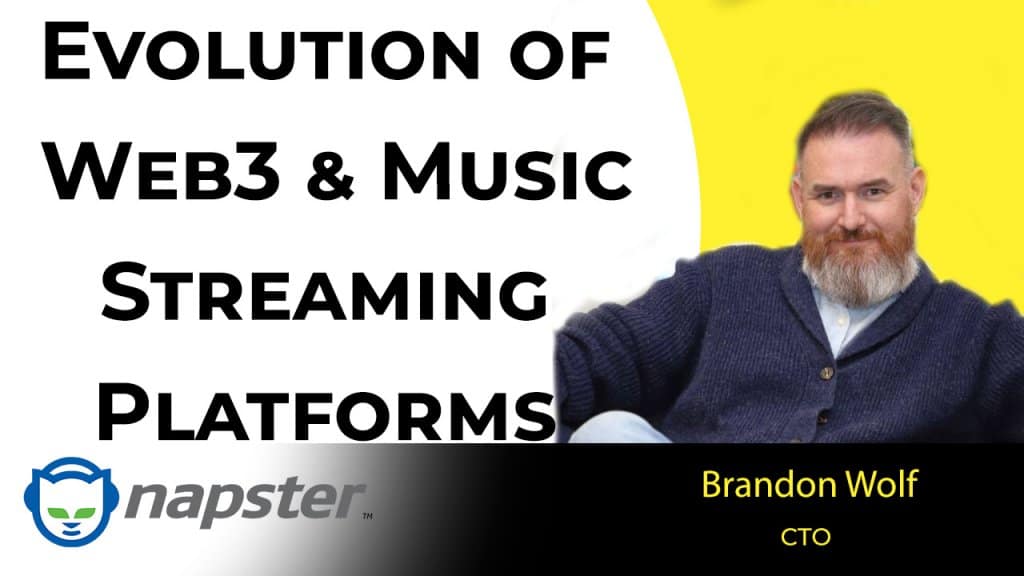
About Brandon Wolf:
Highly adept problem-solver and executive-level software development and delivery expert. I am a seasoned and industry-recognized expert in software development, architecture, infrastructure, and implementations.
About Napster:
Napster was the original music industry disruptor of the Web1 era. A name steeped in innovation, we are proudly synonymous with music. We started a revolution as the very first platform to imagine how we would all enjoy entertainment in the future.
Utilizing peer-to-peer technology, the original Napster put fans front and center by creating a new means of music distribution. In subsequent years, it evolved into a fully licensed subscription-based music streaming service.
The recently refreshed Napster is currently available in 33 countries across a wide range of connected devices.
At Napster, we believe that diversity of thought, experience, and background are critical to our success, and we’ve created a culture that supports, inspires, respects, and includes all individuals (including colleagues, customers, contractors, and suppliers).
Napster is an equal opportunity employer, and we do not discriminate on the basis of race, colour, sex, sexual orientation, religion, gender identity, marital status, age, disability, parental status, national or ethnic origin, veteran status, citizenship, or other protected characteristic. Working with us is solely down to your talent, experience, qualifications, and professional competence.
This policy applies to every aspect of life at Napster, including recruitment, hiring, training, advancement, and termination. The Napster family live this policy because it’s the right thing to do. It’s who we are.
Transcript
(Intro Narrator at 00:00:01) Today, we're talking to Brandon, CTO of Napster, about how the company is disrupting the music industry yet again, this time through Web3 technologies. You're listening to Joel Beasley, Modern CTO.
(Brandon at 00:00:18) Joel, how are you, sir?
(Joel Beasley at 00:00:20) Fantastic. I love your microphone. Do you do a lot of podcasting?
(Brandon at 00:00:23) I don't. I've done a lot of presentation type things and some videos and whatnot, some streaming here and there. But I think you're on the same run. This is the SM7B, right?
(Joel Beasley at 00:00:32) SM7 is the only way to go, man.
(Brandon at 00:00:34) That's right.
(Joel Beasley at 00:00:36) When you messaged me on LinkedIn, it was the funniest message I have received the whole week. And you had said, "I'm the CTO of Napster. Yes, we still exist." And I just started laughing. I screenshotted it. I texted it to my producer and my wife, and I was like, this is hilarious. So do you get that a lot?
(Brandon at 00:00:52) I get that a lot. We all get that a lot. It's either, if you're under 35, the question is, "What's Napster?" If you're over 35, it's, "Oh, Napster. I remember Napster." And a lot of good memories. I mean, it's an iconic brand. But a lot of them are like, "I didn't know you guys were still around. I didn't know you guys were still streaming." And we're really going to work hard to change that.
(Joel Beasley at 00:01:11) Yeah. As far as media goes, entering the public media, Napster was one of the first tech brands to really do that in my lifetime.
(Brandon at 00:01:18) That's right. That's right. I mean, it was the original disruptor. I've been around long enough to remember it. I was a user of it back in the day, and I really dug into the history of it to understand it a bit. So, I mean, yeah, it started in 1999. Everybody knows the name Sean Fanning and Sean Parker, and they created this thing to basically be a peer-to-peer file sharing service. Primarily, it was used originally for me for bootleg copies. You couldn't go and buy concerts of Pearl Jam that performed in Memphis in '97, which was a great concert. There's a lot of these things that you just couldn't get at a CD store at Tower Records or whatever. So MP3s, which was a very new thing at the time, and some of them were taken from literally cassette tape recordings. And so they were not high quality. They were not great, but they were adequate for the time. And that eventually expanded to commercial, you know, which was exacerbated by the ability to rip and burn CDs.
And so, obviously, the history of that is pretty well known, I think, for Napster if you do know Napster's history. And if not, we got into a lot of trouble around the RIAA and copyright infringement. But it's important to note that Napster really ushered in that MP3 era to start to replace physical recordings as the media of choice for people to listen to music. And then two years and two lawsuits after Napster was founded, or a couple lawsuits after it was founded, Napster 1.0 was essentially shut down. The company went bankrupt. And again, the important footnote there is that while they lost the legal battle, the actual war, the transformational war that occurred, was won because consumers got to say, "Now we don't want to just go buy an entire CD for one or two songs that we enjoy. We want to buy that. We want it on a track selection. We want a little more à la carte. We want it instantly. We don't want to have to wait for this to appear. We want to be able to get it right away."
And then in the aftermath of that, there was a company called Roxio that purchased the brand and all the remaining assets. This was for about $5 million or something ridiculously cheap in 2001. They later sold it to Best Buy in 2008 for $121 million, I think, at the time. But at that time, Roxio had a product called Pressplay, which is more like music purchasing. You could just go online and purchase those songs. So they tried to take the legit form of that. At the same time, while this is going on, there's a company called Rhapsody that's been built, and they're running in parallel. And they had this engine called Aladdin that they, I think, purchased from listento.com and tuneto.com. And they were the actual first streaming service around 2001.
And this all converges right around 2011 when Rhapsody bought Napster. And then a few years later, 2016, something like that, they basically phased out the Rhapsody name and became just Napster. Now it's important to note that the parent company of Napster is Rhapsody International. You'll see some Rhapsody stuff here and there, but Napster is essentially the brand of the product. And now in 2020, a couple years ago, MelodyVR stepped in and they purchased Napster. They were trying to interject some virtual reality, some video. They added video to the platform. They were trying to bring virtual concerts, things like that, to the mix.
And then 2022, COVID took a hit. Everybody took a hit on that. But 2022, Algorand and Hivemind, Algorand being a layer one Web3 blockchain, purchased Napster. And so now I was hired on as an Algorand employee. And one of my first tasks was, we need you to come in and build this bridge to Web2 and Web3. We're trying to reinvigorate that renegade disruptor moniker of the iconic brand of Napster, and Web3 was the way we wanted to do that. So I was put in and then eventually moved my way into the CTO, the interim CTO position. And so that brings us to today. Sorry, a little long-winded history, but it's a long story. I mean, it's 20 years.
(Joel Beasley at 00:05:16) Yeah. It's moved around a lot, and it's in pop culture and everything. Yeah. Like, last month, I was watching The Italian Job.
(Brandon at 00:05:24) Okay.
(Joel Beasley at 00:05:24) And, you know, the large part of that is the guy that is one of the thieves was the guy that created Napster, and it was stolen from him or something like that.
(Brandon at 00:05:33) Yeah. Yeah. It's also mentioned in The Social Network. I have daughters, and yeah, they're all younger, and they hadn't heard of it. And they just said, "Oh, Dad's working for some company called Napster." They don't know. Then they watched The Social Network, which was really the story of Facebook, and I think Sean Parker's in that. Justin Timberlake plays him. And that scene became very popular on TikTok, and they're like, "They mentioned it on TikTok. Oh my gosh. You're famous." Like, not really, but I had nothing to do with all that. I'm just here now. So it's just, yeah, kind of funny how that comes around in pop culture from time to time.
(Joel Beasley at 00:06:06) So when I found out we had a date booked to talk, I was like, oh, I got to do my research, so I went and signed up for a Napster account. So thank you for making it easy to sign up quickly and all of that. And then my first thought was, this is a blue Spotify. The interface is blue, right? And I was like, this is Spotify. But it was slightly different, and I didn't dig deep enough into it because I'm not a power user of Spotify. So I wouldn't be able to compare the granular features. So I figured I'd just ask, you know, Brandon, what's the big differences between Spotify and Pandora?
(Brandon at 00:06:41) That's a great question. Yeah. First thing, you know, it's important to know the missions are different. You know, Spotify is, look, you can go and watch The Playlist on Netflix, which talks about their history. It's very interesting. I watched it myself. But we're really about bringing the artists and fans together. And so that artist focus and the fan focus is really what we're zeroing in on. This isn't to take anything away from Spotify or YouTube Music or iTunes, but we're very invested in that particular piece. And Spotify, iTunes, YouTube Music, they're not really my North Stars in terms of what I look at from a, like, what's going to be the Napster of the future. I don't want to be strictly beholden to just playing piggyback. First of all, we don't have the resources to match those. Secondly, what the streaming platforms, all of them do, including us, is they create a very isolated experience. In Spotify, you can go in and you can have a friend and you can see what they're listening to and possibly even listen along. But there's no real room for collaboration, like, hey, you know, you and I'll share a playlist with you, but let's make one together. Let's have a jukebox party at the house. We bring some fans and friends over. We can sit around and add music to it individually from our own phones and just create a working group playlist, things like that.
So we want to explore that more, not only from the user experience side, but also from the artist experience side. One of the things with the reports that you may have seen out there is how much royalties are actually given back to the artists in the forms of their royalty payments. Napster has been noted as higher. Now I will caveat to say that that's based on a very limited test set or sample set of data. It's not always going to be the case because each contract is very different per the labels, per the artist. It's just not quite something you can zero in and say Napster pays their artists more than anybody else. But where we're looking at with the Web3 aspect, where we're bringing in, you know, what Algorand is trying to do, is to open up multiple segments that fulfill a largely untapped market. And this is really three areas. The community building, which I talked about, because, look, we can start to build organic communities around the genres that you're interested in, the sub-genres, the artists themselves, the music festivals that you attend. We can start to gather this information and give a more curated experience around that. The second is going to be music distribution via NFTs, which I can talk about in a bit. And the third would be the royalty reporting, which is a big problem in the industry that every one of the DSPs and anybody who does music distribution shares.
But from a user experience side, coming back to your question, it's just a blue Spotify. It's a fair point. You know, we had to make this major relaunch, what we called N'21, which was launched earlier this year. And a lot of that was a couple years of culminating updates to the user experience and the platform itself, the back end, the front end, all of that. We did almost a complete revamp.
(Joel Beasley at 00:09:37) It looks great. It looks great, by the way.
(Brandon at 00:09:39) Thanks. And it's, yeah, but once we launched it, it's like we were still trying to play piggyback, so we can't keep looking at that. Look, we want the behavior to be familiar. We don't want it to be something like, I've got to learn an entirely new thing of, like, where do I get to my playlist? And they call it a library, and we're calling it my music. And, you know, all these differences just confuse people because they have a much larger audience than we do, and we don't want to make it difficult for them if they want to choose to use our platform. So hopefully that answers your question, at least in a bit of a roundabout way, because it's not that we looked at it and go, let's just do this. Let's just do that. It's kind of like user experience and behavior patterns all seem to align when it gets to "I want to get to my playlist as quickly as possible. I want to search and find music based on metadata that is common and easy to categorize and find information on, and then create, curate my own list of that and mark my favorites, and then just go back and listen to it at will."
(Joel Beasley at 00:10:33) Now you keep mentioning the name of the parent company. Is that also a cryptocurrency?
(Brandon at 00:10:38) It is. So Algorand is a layer one blockchain, so their cryptocurrency is called the Algo. Now it's a pure proof of stake. It was actually founded by a Turing Award winner, which is basically the Nobel Prize in computers, Silvio Micali, back in 2017 before the Ethereum merge and they moved to a pure proof of stake type of model. We were already doing that. It's super fast. Transactions are super fast. Fees are super low, very scalable, highly secure, never been forked, never been hacked. And so, you know, when I hired on, those were the things I was looking for from a tech company to say, well, I don't just want to join any cryptocurrency company. I'd like to join one that is actually going to be legitimate.
(Joel Beasley at 00:11:24) Yeah. And I hold some of that.
(Brandon at 00:11:26) Oh, you do? Okay. Yeah. Yeah. Good. Good.
(Joel Beasley at 00:11:28) I hold cryptocurrency not as investment really. Like, I don't think about it. It doesn't come up in my investment portfolio conversation. The way I look at it is I own things based off of the utility of the coin. So Filecoin, love Filecoin. You know, the Interplanetary File System just sounds cool. Obviously, that's the direction we're headed. Will it be worth something? I don't really know. I don't care, but I want to own some of it. You know, I only do it with the amount of money I'm willing to completely lose. So I got some. I keep some on my exchange. I keep some in, like, I think it's like a Trezor or something like that, some type of physical wallet.
(Brandon at 00:12:09) Cold wallet. Yeah.
(Joel Beasley at 00:12:10) Yeah. Yeah. And so just to kind of understand, you know, what the kids these days, what they're doing.
(Brandon at 00:12:17) Yeah. Yeah. It's still so relatively new. I mean, you know, Bitcoin's been around for quite a number of years now, going almost getting close to a decade, I think. And even the adoption of that in terms of business usage of it, which is really what Algorand focuses on. It's not just like, hey, go buy our token and let's all make billions of dollars together. This is not a FOMO catch up to the Bitcoin, "I should have bought it when it was a dollar," type of thing. This is utilizing the tech to actually solve problems and not trying to find problems or use the tech as a hammer to where everything becomes a nail. But it's really, you know, where can we apply practical usage of a blockchain technology, which is really just a distributed database in the cloud. IPFS just takes that to an nth degree in terms of now storing files rather than just little blocks of small data.
And so I think, you know, in terms of a crawl, walk, run, we're at the drool phase, especially when we're talking about NFTs, which are really, really early and a lot of misunderstandings about what NFTs are and what they're actually used for or supposed to be used for. People confuse them like, "Well, they're just JPEGs. Why do I care about owning a, I don't want to pay $1,000 for a JPEG to sit in a wallet on my phone that I could just download and have it for free." There's a lot of, I think, misunderstanding around that, and it's just, you have the Web3 technical team people who are actually talking about it, and you have the marketing and business speak people who are trying to synthesize that, and the translation gets wildly lost along the way.
(Joel Beasley at 00:13:53) Yeah. From what I understand, it's like, I don't want a picture of a title. I want what comes with the title.
(Brandon at 00:13:59) Right. Yeah. Right.
(Joel Beasley at 00:14:00) I don't really understand it deeply. So is that what it is? Like, this is the graphical representation of the ownership?
(Brandon at 00:14:05) The NFT is the actual — you want to think of it like a certificate of authenticity, meaning you own this image. I can't speak to the utility of that. People will infer value based on it. But from a long-standing or from a future, forward-looking standpoint, that's not where it's going to stop. I mean, we're looking at using music NFTs.
(Brandon at 00:14:27) You know, this is a very emerging market right now. Like, how do we take the JPEGs out of the equation? Let's put a music file behind that. And what can we do with that? How can we use that now as part of a streaming platform to say, okay, we will mint the NFTs for this song, and anyone who has ownership of the song can now stream it.
(Brandon at 00:14:45) And every time you stream it, part of a smart contract reads that and then writes that out to the chain as you streamed this song for five seconds on this date at this time, and then that becomes part of the royalties payout, which right now is super problematic. But I'm sorry, coming back to the actual blockchain, you're like holding versus trading versus the commodities of it. I think what people need to understand is blockchains only make money when blockchain is being used. And so you're right to invest in things with utility.
(Brandon at 00:15:13) It's the smartest way to do it. You want to look at the long-standing efficacy of, is this going to — who's using it? Why are they using it? What are they using it for? And then what does that entail in terms of a future prospect?
(Brandon at 00:15:25) And that's how you should make your decisions based off that. I don't really personally focus on that commodity side of it, the commercial side of it, like trading, buying, selling, holding. It's more about utilizing the tech in a way that's going to solve actual problems, because it is a very advanced — you know, we're going from a very centralized type of architecture to a decentralized, which is different than a distributed architecture. And as we move to decentralized and this now puts ownership back into people's hands, privacy is a huge issue right now. Any social media out there, you're going to be concerned about, well, what data am I putting out there and how do I get it back?
(Brandon at 00:16:00) How do I take it with me? Web three, which is the third evolution of the web from a read-only — you're just reading web pages — to read-write. You're now able to update and edit things and interact with data to read, write, and own, which is Web three. You can now take your identity with you wherever you go. I would like for you to be able to log in to Napster.
(Brandon at 00:16:21) Your identity is there, and if you decide to leave Napster and go to another place, you can take it with you. We don't keep it. We don't own that. You can take it with you. All your preferences, your playlists, what you like, what you don't like, all of that goes with you to the next streaming service, and so on and so forth.
(Brandon at 00:16:35) Then coming back around to the music NFTs, that is something that we can — you know, we've looked at using IPFS. Like, can we put the music out there? The legalities are just too difficult because now we're back to being a piracy company, and obviously, we don't want to go back to that. Not at all, the first time. We're not going to go back to that.
(Joel Beasley at 00:16:51) Yeah.
(Brandon at 00:16:52) Yeah. That's a real throwback and dangerous territories. But, you know, it's worth looking at the tech, and that's my point.
(Joel Beasley at 00:17:00) Yeah. Have you guys considered or are you in the process of building infrastructure for it to solve this royalties problem?
(Brandon at 00:17:08) We have. So it's important to note the background of what this royalty — I mean, how royalties work now. And look, I'm not an industry insider. I haven't been in the music industry for a number of years, but I was able to glean a lot of this. And essentially, how it works is if you're the artist and I'm the streaming provider, you know, you give me your music, and then I tell you how many people streamed your music and when and how.
(Brandon at 00:17:30) I give you a report on that, and then I tell you how much I owe you. So it is not even a real — it's a very trust-centric model. Like, you have to really trust the data that I'm giving you is accurate, and then the money that sits on top of it accurately reflects the data. That's also very slow and sluggish. It takes a number of months to crunch the data, process the numbers, run the stuff out, get this to you.
(Brandon at 00:17:55) Then there's a back and forth like, well, hang on a minute. You know, is this right? Is this wrong? You're doing a little — it's a negotiation. And then there's the actual payment, which also takes a little bit of time to get those out.
(Brandon at 00:18:05) This is a huge problem that everybody faces. iTunes, Spotify, it's an industry problem. And by utilizing the chain now, what we can do is we can write that out. It is, again, it's a distributed database. It's near real-time.
(Brandon at 00:18:20) So you can see that information that's out there. It's still private and secure. We would never put individual users out there. It's just a user with this abstract ID streamed this song for this long on this date. And that's now readable from, you know, the other side, from the labels or the artists themselves.
(Brandon at 00:18:37) So you don't have to trust us because the blockchain doesn't lie. We can't artificially change things. It has to be by consensus. So as we're writing out there, it's being confirmed by multiple systems. They can see all of this, and they're like, I trust that this data is accurate now.
(Brandon at 00:18:51) Also, on the tail end of that is the payments, because there is a token assumedly behind that. Then this is very long-term future. It could be to where we're instantly paying as a result of that. It doesn't need to be this one lump sum check that we're sending out to make payments. So it would be fractions of a cent for each stream, but that will accumulate over time, and then you would have, basically, the data would be accurate and trustable, and then the financial aspect of it would be dealt with as well.
(Joel Beasley at 00:19:18) That's pretty interesting. And so do you think that there's an incentive for Spotifys and Pandoras to move to this? Is there an incentive on the publisher's end?
(Brandon at 00:19:28) Yeah. We're not the only ones who have tried to tackle this. I mean, this is — you know, I don't know what they're doing specifically on there, but, you know, what we'd like to — I'd like to move us to is to be the platform for that. Like, Spotify can link to our NFTs and play the music from our content streaming platform through them, still take their amount of money. We get a small cut of that, and it's, again, recordable on chain.
(Brandon at 00:19:51) You know, that's a long-term vision and definitely not on any roadmaps anywhere that I would publish, but, you know, these are kind of visionary type things that I'm looking at. Like, how do I solve this for the industry, not just for us? And it helps Napster, helps the industry, helps artists.
(Joel Beasley at 00:20:05) I was just talking, I think, a week or two ago with the guy who's credited as the father of SSL. Okay. And he was over at — obviously, it was a team and it was a lot of people and it was a whole thing — but he had assumed a leadership position after having some success in technology at Netscape, and they were trying to solve this problem, the industry problem of this data and the commerce advancing. And so SSL was a proposed solution, and then he took it from idea to completion. And he realized, I think he said like three-quarters of the way through, he realized that the only way that this thing was actually going to happen was if they went and they made it a standard.
(Joel Beasley at 00:20:42) And that they, like, no one specifically owned it, and there was some tech organization. I forget the name of it. But and he's like, that would be the only way we could make it work. So they got together with Microsoft and some of the other big companies, and they're like, would you adopt the standard if we make it an open thing? And then everyone said, yep.
(Joel Beasley at 00:20:59) And then that's SSL. And so that might be a valid way to do it.
(Brandon at 00:21:04) Yeah. I mean, a lot of these emerging techs become mainstay because of that, because it becomes, you know, either some type of ISO standard or it becomes just an adopted standard. You know, it's like, well, this works. You know, we're now — you know, APIs are done through OAuth almost invariably. You know, we've got gRPC and, you know, we've got all these other ones, but those become technical standards in and of themselves because it's ubiquitous wherever you go.
(Brandon at 00:21:35) You know, OAuth is OAuth. You know, whether you choose to use it or not is a different story, but when you do, you know how it works, you understand that underlying mechanics of it. And this I think follows the same route. SSL, TLS, you know, all that came about as a result of we have a serious problem in the — you know, that is absolutely omnipresent in terms of how do we secure web pages, you know, that are there. You know, we're interacting with them now, and how do we make sure that that data transmits from receiver to sender unhindered? Same with how music is being done.
(Brandon at 00:22:04) How do we transfer that music, stream that music to somebody else, and we know that that's being recorded correctly? Because we have a lot of fraud that's out there too. We have a lot of these bots that come in and create artificial plays and strum up a lot of playlists and, like, we're paying for things that actually people aren't really using. They're just bots. And so, yeah, I'm with you.
(Brandon at 00:22:21) I mean, I would love to see — I mean, there's a lot of standards I wish were in place in multiple markets, you know, because I come from legal tech and I come from fintech and, like, the standards are — they're frayed everywhere.
(Joel Beasley at 00:22:33) Yeah. I had a podcast pop up on my, like, you might want to listen to or new tech podcast. And I was like, oh, cool. Someone's doing another technology podcast. Like, I love these things.
(Joel Beasley at 00:22:42) And so I go subscribe to it, and they were, like, you know, two episodes deep, and they had, like, 975 star reviews. I was like — I was like, I've been doing this for 600 episodes. I know what the natural review, if you don't bother people for it, and then I know what you can get if you do bother people for it. And I was like, they just bought the reviews.
(Brandon at 00:22:59) Yeah. It's a real problem that we have to face. You know, I don't know how the others are dealing with it. I mean, we talk to a lot of the same providers for fraud prevention, and they say, oh, we've done this for Rhapsody or for Pandora. We've done this for, you know — and, you know, we look at, you know, how it's going to be done.
(Brandon at 00:23:16) Can we do it on the edge? Can we do it after the fact as a part of reporting aspect? You know, my preference is I want it done real-time as everywhere as possible. But it's kind of wacky, and you can't really attribute it to, like, well, who's doing it? Like, the labels wouldn't do this.
(Brandon at 00:23:31) The artists really — they go through the labels. So how is this being done? Like, we can't really attribute causality to it. We just know that it's happening. Yeah.
(Brandon at 00:23:40) So it's strange, but I think that is definitely a gamification of the system, for sure.
(Joel Beasley at 00:23:46) So what was the actual moment that you got this offer to work with Napster? I mean, that must have been pretty cool.
(Brandon at 00:23:53) Yeah. It was right away, actually. So when I was hired on at Algorand, it was kind of, we're going to figure it out as we go. Like, they knew they wanted me to come on board. They, you know, they had a lot going on at the time.
(Brandon at 00:24:07) There was a massive list of projects available to work on. We were looking at creating, you know, coins for tourism within specific countries, you know, so that you come in on a cruise ship and you could use a cryptocurrency to buy things at the different ports of call and stores and whatnot without having to do fiat transfers and go buy the local currency, things like that. We were looking at things like that. We were looking at using the blockchain to provide what's called a proof of truth. So there was a consensus-based truth model because, you know, we were in a political climate at the time that, you know, fake news, false news, artificially inflated, sensationalized headlines were creating a lot of different things in the media industry, and they wanted to — well, can we shape this to give us just facts and give us more information using blockchain technology and a consensus method?
(Brandon at 00:24:56) And then there was Napster. So when I got hired on, you know, I really didn't know what I was going to do day one. Had no idea. You know, I knew I was going to be helping people build bridges to Web three. And then one of the names came up with Napster.
(Brandon at 00:25:08) I was like, well, that's a blast from the past. Tell me more about this. What do we need to do here? And they said, well, we just acquired them, and, you know, we're really — you know, their name is just well-known as the original disruptor in the industry. Web three is a potentially disruptive technology.
(Brandon at 00:25:26) Let's see if we can make this happen. So I was like, yeah, let's do it.
(Joel Beasley at 00:25:28) Are you still exploring, or do you know the disruptive thing that you're going to be doing?
(Brandon at 00:25:33) We have — so I tell you what, we went through four months of ideation, just kicking over the possibilities, the art of the possible, what we could do. We had a lot of industry set people that have been in this for years. We've got people that work at Napster that have been here since the Rhapsody days 20 years ago. You know, they're still — because they know where the bodies are buried, and they know the mistakes that have been made in the past. So learning from them has been super helpful.
(Brandon at 00:26:00) And we have people that are serious Web three media type folks too. It's like, what about this? How do we deal with that? How do we — you know, what can we offer in terms of collectibles? Like, can we make album art something that's collectible for people?
(Brandon at 00:26:12) And people can maintain collections because people like to have that type of interactivity and that involvement. And when you talk about fans, they're short for fanatics for a reason. They really are invested in the artist. And when we talked about NFTs, music NFTs are — you know, you'd have a hard time naming five digital artists that do NFTs, but you could probably name five musical artists who could do NFTs, and some of them do. Snoop Dogg's doing NFTs, you know, T-Pain's doing NFTs.
(Brandon at 00:26:39) I mean, nothing new under the sun right now, but they're all just very experimental. So we're like, well, what can we — how can we shape this into something that's going to be a realistic thing? And we want to make it as seamless as possible for users because, look, no one's going to come in here understanding crypto. No one's going to come in here understanding blockchain this, Web three that. Like, what does it look like for me as just a general — I just want to listen to music, man.
(Brandon at 00:27:02) I don't need to be bothered with all this other stuff. I want to get in and play my music. And so we're looking at things like, you know, maybe we can do NFT tickets, you know, to the events. You go and buy your tickets directly through the app, show your phone just like you do if you're boarding a plane, scan the barcode, you're in. You know?
(Brandon at 00:27:19) So we're trying to reach out beyond just digital streaming, music streaming, but kind of create experiences for fans. We've got some explorations we're doing into the metaverse too. Is this something we want to be a part of? You know? Is this something that we can maybe, you know, bring some disruption to as well?
(Brandon at 00:27:35) Is this a disruptive technology at all? So I think we've zoned in on — we started out with just all these just whiteboarded brainstorming type of ideas, and we've shaped them down to — we try to be analytical about what has the most impact for the artist and what has the most impact for the user, what has the most impact for us, and what's the level of effort that's going to be needed in this, et cetera, et cetera. And now I think we've got that down to a pretty good comprehensive list at least for our next year. I don't like looking beyond, like, three to six months because things are going to change, and it's just planning that out for that far. You're just going to go back to the drawing board anyway.
(Brandon at 00:28:14) So I don't know if I'm answering your question
(Joel Beasley at 00:28:16) on that.
(Brandon at 00:28:16) I mean, that's a
(Joel Beasley at 00:28:17) Well, you're saying words and they sound good, and that's the purpose of the show.
(Brandon at 00:28:22) It's legible. Good.
(Joel Beasley at 00:28:23) Now for me, one of the things I'm constantly reminding myself of is that when I think something is interesting or I like something or I don't like something, that's really only good for people who are really similar to me. So I try not to come up with too many thoughts about, for example, you mentioned Twitch or video streaming game watching earlier. When I saw Twitch come out, I wouldn't have invested any money into them. Yeah. I completely dismissed it.
(Brandon at 00:28:51) I was like, I
(Joel Beasley at 00:28:52) grew up playing video games. The whole point is yelling at the person and pushing them until you get the controller and it's your turn again. You know? I was polite, but that definitely happens as a kid.
(Joel Beasley at 00:29:05) And the idea that I would spend my free time to sit down and watch someone else play a game was so far beyond my realm of understanding. I was like, no. And then I look at it, and there's billions of hours of views or users, and the esports industry is massive. Now, okay, I get a competition. These people are casually going about their day playing these games, talking about different things, and they just have tens of thousands of people watching them do this.
(Joel Beasley at 00:29:34) And I was like, man, that is super interesting. I think I would be interested in something like that if it was, like, I like music a lot. If it was, you know, Taylor Swift sitting down to write a song, I'd be like, oh, this is kind of cool. Yeah. I'd watch.
(Joel Beasley at 00:29:47) I watched her Netflix special or whatever, and I was like, you know, you have to respect her. She just owned the top—I can't name 10 of her songs, by the way, but she owned the top 10 billboard. Did you hear about that?
(Brandon at 00:29:58) Yeah. Yeah.
(Joel Beasley at 00:29:58) Yep. Dude, that's insane.
(Brandon at 00:30:01) Yeah. And it changes so quickly, and you're right. A lot of the artists are, you know, really, when you ask them what they want, you know, obviously, Taylor Swift doesn't need any more money. She doesn't need any more fame. You know? That's probably not her guiding thing. A lot of them are about fan interactions, about how they deal with fans. Something that Taylor Swift does is she has a close circle of friends that she brings over, and they do, I think they do baking parties at her house or something like that. You know?
(Brandon at 00:30:26) Nice. I'm not the biggest Taylor Swift fan of the world, so don't quote me on that. I just know that that is a driver for them is to have that bridge between the fan and the art that their own fans, because that's how they grow. Really, what they want is distribution. They want their music to be heard.
(Brandon at 00:30:44) And to do that, you build these organic communities, and the organic communities will extend their reach. And to your point about Twitch, same thing. You know, you look at them, they're not the best gamers in the world. These are not pro gamers and things like that, but what they have is a community that is built around them.
(Brandon at 00:31:00) So you watch their chat. If you can keep up with that crazy scrolling that some of them have going on, but they have a community around them. A lot of them jump on the Discord in between the streams that happen, you know, and they're all kind of centered around this subject matter that they all care deeply about, and that's the organic communities. And I think with music, you can definitely recreate that magic, and that's, as I alluded to earlier, that's one of the things that's missing.
(Joel Beasley at 00:31:23) Are you guys doing original content or just communities?
(Brandon at 00:31:27) You mean what's being produced?
(Joel Beasley at 00:31:29) Yeah. Like, do you guys do your own shows? Like, you know, Spotify bought Joe Rogan, but Spotify also makes some of its own show. Not they didn't buy them. They did whatever their deal was with them.
(Brandon at 00:31:38) We don't. Yeah. No. Right now, it's strictly music. We've dabbled with the idea of podcasts. You know, do we want to offer podcasts? We would rather, I mean, I think the general consensus is we would rather integrate with something that already has that. That way, when you're maintaining your list of favorites and things like that, you're not having to go to four different platforms to listen to your, like, I have my favorites on Spotify because that's where I go to listen to my podcasts. If I had to go somewhere else and then, like, okay, how do I get this over there and how do I get that? You know, am I going to get notified by three different apps that the same guy, you know, Joel just published a new video or a podcast?
(Brandon at 00:32:15) You know, we want to try to make it, again, it's got to be about the user experience. Like, what are we adding? Are we just trying to keep up with the Joneses? Are we just leapfrogging functionality? That's really not a business model for us.
(Joel Beasley at 00:32:27) Yeah. You're a Marine.
(Brandon at 00:32:30) I am. Yes.
(Joel Beasley at 00:32:31) Yeah. Tell me about that. What did you do in the Marines?
(Brandon at 00:32:34) I was a musician, actually.
(Joel Beasley at 00:32:35) Okay.
(Brandon at 00:32:36) Yeah. So yeah. I was born and raised in a small town, Evansville, Indiana. Middle school, high school, I had a friend whose mom was a CIO at the time, and they had a home computer. And that was a super rare thing.
(Brandon at 00:32:53) Small town Indiana having a home computer. This is like the eighties. And I became fascinated by not only what it did, but what it could do. You know, I just fell in love immediately. It's just mind blowing at the time. I asked my parents for a computer while everybody else wanted TVs or Air Jordans or Walkmans. You know, I'm asking for a computer. They kind of raised an eyebrow. They thought, I guess, it might keep him out of trouble for at least a little while. He'll probably lose interest and throw it in the trash.
(Brandon at 00:33:15) So they got me, I remember waking up vividly to, I still see the image in my head today, seeing a computer desk, an old oak, you know, eighties computer desk with an Atari 800 XL hooked up to an old black and white television set with a cassette tape, hard drive, floppy drive. I don't know if you call it hard drive, floppy drive, disk drive, and a big ribbon over the top of it. You know? So I played with that all the time. I mean, I was just tinkering, and I'd get magazines. I'd go to user group meetings and, you know, all this stuff, and I was really interested in it. This is middle school, high school. And then after high school, I joined the Marines, and that's where I was stationed in Hawaii, which, as you can imagine, was pretty rough to be put in Hawaii. It's like, alright. I guess.
(Brandon at 00:33:59) But I was as a musician. And while I was there, I bought a Packard Bell. In the military, we had these things on base called PXs, post exchanges. You said you're a military brat. Right?
(Brandon at 00:34:08) So you know that? Yeah. Yeah. So it's like the Walmart on base, whatever. And you got this store credit. One of my roommates got a TV set. One of them got a stereo. I got a computer, old 486, this Packard Bell. And I started to tinker with BBSs, configure my own Winsock to get on the Internet, which was very new at the time. There was really nothing there on the Internet. I remember using mIRC for the first time. Chatting with somebody in real time around the world was just, again, another mind blowing experience. It's been one of those kind of eureka moments after another. And so, yeah, I went in anyway. I was went in as a musician, and when I got out, really, the only thing I was qualified to be was a security guard. So that's what I did.
(Brandon at 00:34:46) You know, I was a security guard at a casino, and they happen to be rolling out a new piece of software called Windows 95. I'm like, hey. I know Windows. Like, oh, cool. You want to come in and we'll do a little bit of work for us? I did, and they eventually offered me a networking operator job where they were replacing these old AS/400 mainframes with Windows 95. A big jump for the time. I sat in the bottom of this casino boat with a microwave link back to land into the Internet, you know, and this was late nineties, teaching myself HTML and Perl because there was nothing, I did was fix printers, you know, most of the time. So it was the graveyard shift. So I was there from like 11 p.m. until like seven or eight in the morning.
(Brandon at 00:35:26) So I had nothing really to do. So I sat there and learned HTML and Perl, taught myself how to do web design, graphic design, et cetera, became a webmaster, where it eventually went to work for Caterpillar, which is, you know, Fortune 50 company. I was the webmaster, which are everything. You're the graphics guy, the networking guy, you're the programmer, you do it all. And then things started to become more specialized. This is around Y2K. And I'm like, I don't really want to pick one of my favorite children, you know, of the tools that I built in my belt. So I went into more project management. That took me into legal tech. You know, I went to work for a law firm. Then I went to work for a legal tech startup out in Silicon Valley called Intapp, and then BentoBox and then Napster, Algorand, Napster.
(Joel Beasley at 00:36:06) Nice. And then what would you credit your advancements between your roles? Was it relationships? Was it recruiters? How did you get a leg up?
(Brandon at 00:36:14) I think it's the constant curiosity and self, you know, the autodidactic nature of, I've never set foot in a computer class. You know, I don't have a computer science degree, but I went from developer to CTO. I think just off of just being naturally curious about things and wanting to understand. It's an engineering mindset, you know.
(Brandon at 00:36:35) I don't think you become an engineer. I think you just naturally are an engineer, and it's what you do with it is really what matters. So I had that engineering mindset. I like to understand how things work. Can I break this and put it back together again? I do the stuff with, you know, just outside of technology too. And a lot of people are like that. And I think that credit is constantly keeping up with it, but that's what drew me to it in the first place because it changes so much. This is not static. You're not a factory line worker stamping the same piece of metal as it walks across the conveyor belt.
(Brandon at 00:37:03) You know, you're always having to learn. Learn what's coming out. When cloud came about, like, I was all about that. I was just invested in this. Like, this is amazing. Nobody really knew what it was. It's kind of like Web3 now. So it was this kind of ubiquitous term. What is cloud? Where is the cloud? How does the cloud work?
(Brandon at 00:37:17) But that's the part of being a technologist is that you have to keep up with it in order to be good at it. But you should have a natural curiosity and love of that in order to, and it just kind of perpetuates.
(Joel Beasley at 00:37:27) When people that are, I want you to think of a person right now who's within your org. You don't have to name them. And they're doing well, and they're showing signs, and you're thinking, hey. Maybe I should invest a little bit of my time into them and opportunity. What are those things that they're doing that are standing out to you?
(Brandon at 00:37:45) So it would be initiative. You know, I think the initiative is going to be the first part. You've got some people are very much heads down. Tell me what to do, and I'll do it. And I don't want to devalue that type of work at all because they're usually very good at that too. And that's just that's how they like to operate. But if we're talking about advancement, you know, primarily to a leadership role or managerial role or something like that, and I don't believe in just because you do a good job, you're therefore qualified as a manager. It's two totally different skill sets in most cases. But for that person that you just described in that scenario, I would say the initiative has to be there from a, like, I am going to take this on. Now the initiative has a lot of different aspects to it.
(Brandon at 00:38:26) One of them is a nonconformist mindset. I'm not just going to follow the status quo. I'm not just going to follow the direction set. I'm going to challenge the conventional thought that's out there. I personally love Socratic method people who think like that that are very questioning of things and they ask questions in a way that kind of lead them to a truth.
(Brandon at 00:38:45) And that to me shows initiative too when you are honestly seeking truth in terms of solutioning or designing or architecture. Like, these are the things I look for for people that are moving on that. That's an initiative based aspect for me, not just getting the job done autonomously.
(Joel Beasley at 00:39:00) Yes. That is one of the things that, you know, we track here, I guess. When I was first starting this, I was trying to figure out, you know, what's the recipe for a great leader?
(Brandon at 00:39:09) Yeah.
(Joel Beasley at 00:39:09) So we did all these interviews, and we asked them all these questions, all these leadership related things, and we started tracking them in a spreadsheet. And I was trying to figure out what's that one formula? And after 600 episodes, I've come up with the following one or two things. Number one is everybody has something that anchors them, some sort of system or something that they find very important that they do religiously and consistently. And then curiosity, that's the other thing. And then to become better, it's like people would ask me, I was like, how do I become better tech leader? And I used to answer like, oh, you know, check out this book or check out this whatever resource material. And then I realized after living, so I'm interviewing these people, I'm building my business, I'm implementing their advice in my business, and then sometimes it goes great, sometimes it doesn't. What I end up finding out is that it's really, really difficult to constantly improve yourself, but that's the answer. So when people ask me now how do I become a better leader, I'm like, well, how many days do you work out?
(Joel Beasley at 00:40:07) What's your diet look like? Because if you're constantly improving yourself and improving those areas of discipline, then that makes you a better leader because leaders are typically people that you want to follow. You're right. That's why it's so interesting when people get up early. You notice how much respect someone gets if they wake up at 4:30 in the morning.
(Joel Beasley at 00:40:25) But if you're in a different time zone, I
(Brandon at 00:40:27) mean, I'm like
(Joel Beasley at 00:40:28) Yeah. It's not the act of it being 4:30 in the morning. It's the act of it's something difficult that you don't want to do and they can do it. And so having that realization, I was like, okay. Cool. So all I have to do is do really difficult things for the rest of my life.
(Brandon at 00:40:43) Everything else will go well. Yeah. I love the parallels to that. And, yeah, the one question I ask of everybody I interview for a leadership position, whether you're managing two people or 250 people, what is your definition of leadership? That's what I ask them. And I look for the one thing that I've taken away as my definition of leadership, and mine actually comes from my time in the Marine Corps. I served under this three star general at the time. His name was Charles Krulak, and he later became commandant of the Marine Corps. And he was a decorated Vietnam veteran platoon commander, Purple Heart, Silver Star, you name it.
(Brandon at 00:41:14) His father was General Krulak, commandant of the Marine Corps during World War II. So we're talking about an organization that deals in life and death every day, and then, you know, so leadership from this type of individual is going to be well received. He came to one event we were at. It was just kind of we were all very low rank, you know, E-1s, E-2s, E-3s. And it's like, let me ask you something.
(Brandon at 00:41:35) What's your definition of leadership? He walked around and asked her, and we were like, oh, you know, it's setting the example and it's the constant improvement, those things. He nodded and he's like, look, all of the answers you gave, none of them are wrong. You know, I'm not looking for a right answer here because let me tell you mine just to help you out. He goes, it is just this simple, serve those in your charge.
(Brandon at 00:41:54) So what we now know of is servant leadership, and that has stuck with me to this day, and I evolve that all the time. So when I ask someone coming in for a managerial role, what's your definition of leadership? They're not gonna give me a wrong answer. Now they're gonna give me a true honest answer, but what I look for in leaders are people who actually serve those. You've gotta be there for them.
(Brandon at 00:42:12) You need to be reliable. People don't follow people because of titles. They follow people because they believe in what they're actually after. This is a Simon Sinek type of...
(Joel Beasley at 00:42:21) I love that guy.
(Brandon at 00:42:22) Yeah. Same. Same. So that type of philosophy, like, I can incorporate. He did a study on the military too, which is super interesting.
(Brandon at 00:42:28) But, you know, I think there's got to be that inherent trust there that I trust this person to look after my best interest, and therefore, I'm going to make sure that I earn that trust every day, and I've got to earn their trust every day. That's just important to me. And trust goes laterally too. You can't have a good C-suite without that trust, you know. I have to rely on the CMO, the CFO, COO, all of them.
(Brandon at 00:42:53) There's a trust that's inherent across the board and top to bottom as well. You've got the technical teams, the trust between the users, the trust between the C-suite, like I mentioned, board members, investors. And CTOs, I think, need to be highly attuned to that audience so that they can, you know, talk about what they're doing and build that trust in a way that's not ivory tower or siloed. So to me, that's imperative to a well-functioning, not only leadership body, but a leadership individual.
(Joel Beasley at 00:43:19) It's like the opposite of FTX.
(Brandon at 00:43:21) Right. Yeah. Shoot.
(Joel Beasley at 00:43:24) Oh, man.
(Brandon at 00:43:25) Yeah. So right. So right.
(Joel Beasley at 00:43:27) For your leadership question...
(Brandon at 00:43:28) Yeah.
(Joel Beasley at 00:43:28) You said, okay. What is leadership? And if I were to answer you influence, what would you think of that?
(Brandon at 00:43:33) I would want you to expand on that because influence could mean you could influence in very negative ways, or in negative methods, not just the output. But, like, I would say, yeah, define that a little further. You know, say more.
(Joel Beasley at 00:43:46) Yeah. Well, I was reading some leadership author a while back. He had said leadership is influence, and I was like, well, that's interesting, because, like, let's rip that apart. And the way he had explained it was leaders have followers. Right?
(Joel Beasley at 00:43:59) To be a leader, you have to have a follower. And to have a follower, you have to have influenced somebody, right? Whether it's just your presence influencing them. So it's like not the negative connection to the word, but like in a positive way, like, you have to have impacted them or influenced them in some way, shape, or form in order for them to know that you exist, in order for them to even follow you. And then it's like, okay.
(Joel Beasley at 00:44:19) So, like, how do you do that better? Right? And you'd be really useful to people. You figure out, okay. Here's these people. How can I be, like, incredibly useful for them?
(Brandon at 00:44:27) That's servant leadership to me. Yeah. That's servant... yeah. So I would say based on that definition, yeah, you would meet what I was looking for. I mean, I think with influence, some of that can be, I don't wanna say artificial, but indirect.
(Brandon at 00:44:39) You know, again, it goes back to the title thing where, you know, you're a manager. You have manager after your name. Therefore, you have an air of authority around you because of that title. That's what you're paid for. So, therefore, I have to follow you because it's part of the org chart.
(Brandon at 00:44:53) I'm now your follower. So that's an indirect thing. But are you a leader at that point? I mean, if you can influence me directly, totally with you on that. Yeah.
(Joel Beasley at 00:45:02) Yeah. And I specifically mean influence in the positive way. Like, the influence I was taught. Yeah. Yeah.
(Joel Beasley at 00:45:07) Yeah. So alright. What other leadership advice do you have that's really great?
(Brandon at 00:45:11) I mean, there's some things, again, just because we've talked about the Marine Corps, you know, that influence that it's had on me. And, look, I didn't serve very long in there, but, you know, it's a life-changing event. And if I had... it was, you hate it when you're in, but you miss it ever since, you know, ever after you leave. I still take away a couple things, both from that and then just things that I picked up along the way. And one thing is I also assume what's called a rule of three.
(Brandon at 00:45:34) And, you know, you'll hear me when you hear me talk, I talk in patterns of three. Like, these are the three things that we're looking at. Like, when I talk about the Web3 area being primarily driven by these three areas, it's simpler for people to process. It's easier for me to remember. You know, it's more manageable.
(Brandon at 00:45:49) So three direct reports, if at all possible. That hardly ever works out because organizations are organizations. But two things that can work and have worked for me has been setting three objectives, you know, for either the quarter, the year, whatever the case may be with proper OKRs. They gotta be measurable, actionable. They can't just be, like, make things better, do things faster. You know, it's gotta be something like actual tangible that you can look back on.
(Brandon at 00:46:14) But also focusing on three things at any given point. Like, I am always thinking about three things that I'm gonna do for the day, and those can change. You know, you're not locked into those because priorities will change. But that way, I've maintained that. That comes from the Marine Corps.
(Brandon at 00:46:28) They did this rule of three. They actually tried four, things started failing. So, like, okay. That's it. Three.
(Brandon at 00:46:33) Three is all you get. And I think, again, with an organization based on a life and death scenario, that's something that I can take as influence. Something else that I've taken away just organically as a tech leader is I look for my own leadership and my own peers to respect the tech. And that does not mean it needs to be revered. Alright?
(Brandon at 00:46:52) So I don't wanna confuse respecting technology with revering it or holding it to some higher. It's not on some pedestal. But I have a common mistake that I see is to diminish the importance of technology in any vertical, but especially in tech companies. Because I think Marc Andreessen said it best. We're all basically tech companies at this point now.
(Brandon at 00:47:10) Yeah. Everything is based on that. So I think when it comes to people who are outside of it or even inside of it, respecting the technology, just knowing that it's an important vital piece. It's not just some simple thing or it's not some overly complicated thing. Like, just treat it for what it is.
(Brandon at 00:47:23) It's just essential to the operational efficiency of any organization, whether you are a tech company or not. So I think that'd be the only other things I'd say.
(Joel Beasley at 00:47:33) What are your three objectives for this quarter if you can share them publicly?
(Brandon at 00:47:36) For this quarter, they're part of my major OKR. So I have operational stability, and I've got metrics around, like, what that may actually mean. So, like, the amount of downtime that we're allowed to have, the amount of SLAs that we're allowed. And then revenue growth is my second one. So that is how does the tech support the business objectives in a revenue growth pattern. So retaining the partnerships that we have, offering new services and new products and new features that are out there that has a measurable revenue side to it because we've got to grow Napster and get out of this...
(Brandon at 00:48:11) I can't believe you're still around question. And then the third is having that Web3 strategy in place. So that is, you know, what is it that we're looking ahead and beyond just, like, maintaining the ship, putting us on a growth pattern based on our existing strategy, but also, like, what our new piece is. So we are working through the Web3 tech strategy, putting together a white paper for all that, exploring a token launch, those kind of things.
(Joel Beasley at 00:48:37) Well, dude, this is great. And by the way, if you are in Nashville, we got, like, an 1,100 square foot studio. So we've got, like, multiple microphones and, like, seating and stuff. So you can come and do a show in person. So that's always possible too if you're interested.
(Brandon at 00:48:49) Yeah, man. That'd be rad.
(Joel Beasley at 00:48:51) Yeah. Awesome.
(Brandon at 00:48:52) Then I could geek out on your tech.
(Joel Beasley at 00:48:53) Yeah. Thank you so much for listening. And if you found this episode useful, please share it with a friend or colleague who you think would get value from it. And if you have topics that you'd like to hear discussed on the podcast, either add me on LinkedIn or send me an email [email protected].
(Joel Beasley at 00:49:13) Every time I get an email or LinkedIn message, it absolutely makes my day and inspires me to keep going.