
Episode 585 ·
From Sales to CEO with Bill Burns, Chief Product & Solutions Officer at Zebra Technologies
Today we’re talking to Bill Burns, Chief Product & Solutions Officer at Zebra Technologies; and we discuss Bill’s journey from sales to CEO; how the on-demand is evolving alongside technology; and why listening to customers first is the key to success.
All of this right here, right now, on the Modern CTO Podcast!
Check out more of Bill and Zebra at https://www.zebra.com/us/en.html!
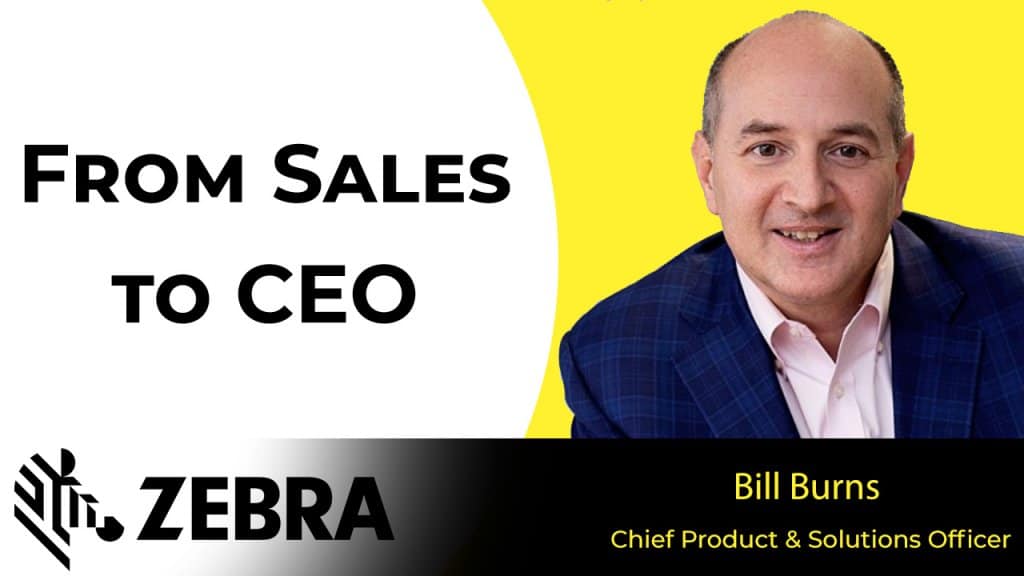
About Bill Burns:
Comprehensive experience with a proven track record leading corporations and business units focused on bringing commercially successful products and services to market that deliver unique business value through anticipating market demand, strategic planning, financial analysis, product development, execution of marketing and sales strategies, customer relationship building and a ‘must-win’ attitude.
Repeated success achieving aggressive financial goals through building, mentoring, motivating and leading high-performance organizations. Extensive leadership experience in dynamic, challenging and multicultural business environments with a focus on distinct markets, customer segments and technologies.
About Zebra:
Zebra (NASDAQ: ZBRA) empowers organizations to thrive in the on-demand economy by making every front-line worker and asset at the edge visible, connected and fully optimized. With an ecosystem of more than 10,000 partners across more than 100 countries, Zebra serves customers of all sizes – including 94% of the Fortune 100 – with an award-winning portfolio of hardware, software, services and solutions that digitize and automate workflows.
Supply chains are more dynamic, customers and patients are better served, and workers are more engaged when they utilize Zebra innovations that help them sense, analyze and act in real time. In 2021, Zebra expanded its industrial automation portfolio with its Fetch Robotics acquisition and increased its machine vision and AI software capabilities with the acquisitions of Adaptive Vision and antuit.ai.
Zebra is #25 on Newsweek’s inaugural list of America’s Most Loved Workplaces and on Forbes’ list of America’s best employers for the fifth year.
Transcript
(Intro Narrator at 00:00:01) Today, we're talking to Bill from Zebra about the technology and trends behind the on-demand economy. You're listening to Joel Beasley, Modern CTO.
(Joel Beasley at 00:00:15) One of the things, though, that when I was researching and looking into you that I was really curious about is how you went from your role in product and solutions, and now you're becoming the CEO. And I was hoping you could tell me about how that happened.
(Bill at 00:00:28) Yeah, sure. I started my career actually in sales. Early in my career, I spent the majority of that in sales and then sales leadership. And then I took over the role of Product and Solutions Officer. So think of that as leading the product management teams and engineering teams within Zebra.
(Bill at 00:00:45) So the folks that ultimately decide on what products we're going to bring to market and solutions, and ultimately how do we position those in the market and how do we price those and promote those into the marketplace overall. So I lead those teams here at Zebra across our product lines. And we announced just about a week and a half ago or so that in March, I'll take over as CEO. You know, we've got a cross-functional team across the organization. So our current CEO, you know, thankful to Andrew's leadership, he's going to take on the role of Executive Chairman.
(Bill at 00:01:21) I'll take the role as CEO. And then one of my direct reports, Joe White, will actually take on the role of Chief Product Solutions Officer. So we saw it as a succession planning opportunity to grow my career into the CEO role here at Zebra. I've been a CEO in the past. Joe's career into leading the product solutions team, and we've been part of the executive leadership team working cross-functionally across the organization with our sales organization, marketing, supply chain, legal, finance, all those things.
(Bill at 00:01:53) We say it takes a village to get done and service our customers, and I've been a member on that team and now taking on the CEO role. So excited about it.
(Joel Beasley at 00:02:00) So the current CEO that's becoming the Executive Chairman, what are the differences as far as day-to-day from CEO to Executive Chairman?
(Bill at 00:02:09) Anders Gustafsson is our CEO today. He'll, as Executive Chairman, take over his primary responsibility of leading the Board of Directors as Chairman. So that's his primary role. And then he'll assist in places where I ask for his assistance or that he can coach and mentor or have insights after being CEO. He's only the second CEO of Zebra, a 50-year-old company.
(Bill at 00:02:34) He's been CEO the last 15 years. So having him still here to kind of rely upon and work with—we've worked together across two other companies prior to this for the last 20 years. So we have a great working relationship. So, you know, he'll primarily lead the board and the agendas around the board, but also assist me as necessary.
(Joel Beasley at 00:02:57) So was Zebra a family company for a while?
(Bill at 00:02:59) No, it was, you know, founded 50 years ago and then was a publicly traded company as Zebra Technologies. It grew into about a billion dollar specialty printing business, predominantly. Think of labels on boxes to ship in e-commerce. Think of it as hospital wristbands. Think of it as labels inside electronics, anything that's thermal transfer printing.
(Bill at 00:03:21) So it's not ink. It's actually heat and thermal transfer onto labels, so it doesn't come off, doesn't smear, those kinds of things. That was about a billion dollar business. In November 2014, they closed on a transaction from Symbol Technologies, which was acquired into Motorola.
(Bill at 00:03:40) So Motorola's enterprise business they acquired. So billion dollar company acquired $2.5 billion in revenue from Motorola. Again, as a public company, Zebra became a $3.5 billion company in November 2014. And today, we're almost $6 billion in revenue.
(Joel Beasley at 00:03:57) So the printing I'm very familiar with, like the receipts. My parents, at one point, owned a restaurant, and so I used to play with the thermal paper all the time. Right? I thought it was so cool. But now when I was reading about the company and trying to—I mean, you have 10,000 plus employees.
(Joel Beasley at 00:04:14) Like, you got a lot going on. So I'm trying to consolidate it so I can understand it. So you're doing this printing stuff. You're acquiring other companies. Right now, I think your mission is regarding frontline workers at the edge being visible, connected, optimized.
(Joel Beasley at 00:04:31) How does that connect? Are we still talking paper there, or is this something different?
(Bill at 00:04:35) Yeah. So I mean, I think the business started as specialty printing, as I said. The acquisition with Enterprise from Motorola brought to the business what we call mobile computing devices. Think of it as mobile devices, basically in the hands of retail associates, used in hospital environments with nurses, used in package delivery. You see them all the time.
(Bill at 00:04:59) They're rugged mobile devices that are used either inside the four walls, so inside warehouses and hospitals and others, or in package delivery and others. That's our largest business unit. And then second to that is our printing business unit. Our third largest business unit would be scanning. So think of it as the scanners we talk about seeing Zebra in everyday life—the scanners you see in a supermarket that scan your water, the scanners in the supermarket that are flatbed scanners that scan your groceries.
(Bill at 00:05:25) They're used in industrial applications as well inside warehouses. So there are three primary core businesses we talk about them. And then we've entered new adjacent markets. So think of it as rugged tablets. So think of a tablet in rugged, just like you'd see a mobile device.
(Bill at 00:05:43) Radio frequency identification. So a way to identify goods electronically through radio frequency signals. Those are our new adjacent areas, smart supplies, temperature-sensing supplies that we print off those same printers. And then three new areas we've invested in. First is warehouse automation and robotics.
(Bill at 00:06:04) The second is machine vision. So think of it as the idea of reading a barcode, but then looking at the characteristics of something—are the parts in the right place when you're manufacturing something? And the third is retail software. So think of it as the retail associate using that mobile device I talked about, but then having software on it to leverage their task management or communication in the store, those kinds of things. So we think of it as kind of core, adjacencies, and then these new expansion areas that Zebra's invested in today.
(Joel Beasley at 00:06:30) When you start talking about the devices, because I've got my families and like my brother and my stepmom are both physicians. And so I have spent a large amount of time in hospitals and things like that. And I also like to shop at like Home Depot and Lowe's and stuff. And every time I ask them for something, I've noticed in the past year or two, they say, "Hold on a second," and they pull out this little tablet. It's not a—it's like a—what do you call the handhelds? They're not tablets.
(Bill at 00:06:54) Mobile computer. Mobile computer, we call it.
(Joel Beasley at 00:06:56) Okay. Now, are you making the physical devices and manufacturing them, or are you just doing the software part?
(Bill at 00:07:02) Yeah, so we actually develop and design those. We have contract manufacturers that actually manufacture for us. But yes, we're the manufacturer. We design it and ultimately build to our specifications those devices.
(Bill at 00:07:15) We also have in retail software today that I mentioned, software that allows those associates within a retail store to collaborate and communicate to each other. Because our retail customers tell us, "Hey, if we have two retail associates that are three aisles apart, they may as well be in a forest. Literally, they're that far apart from each other." And if you want an engaged associate, and today where labor is hard to come by and you want somebody to stay with your company, you want them to be able to collaborate, have a little bit of fun on the job, be able to talk to each other. You want the manager of the store—think of a large, big-box retailer, the amount of associates.
(Bill at 00:07:50) And if a manager needs to find somebody, you know, the biggest question asked on a walkie-talkie today is "Where are you?" So they can go over and have a conversation—a one-on-one conversation they don't want to have over a walkie-talkie. Right? So task management, communications, sending tasks to the associate that says, "Hey, there's a customer in front of the store waiting to pick up an order. Can you come to the front?"
(Bill at 00:08:02) Those kinds of software allow the retail associate to be more enabled in their job each and every day and to be able to be, you know, more productive, more efficient in what they do every day.
(Joel Beasley at 00:08:23) So I am curious because machine vision, retail software, warehouse automation, robots—all of these things, and you're the Chief of Product. How are you organized? Because these are a lot of different things that are really deep areas. Are your teams focused in specific areas? Are you building technology across that's reusable across all of the areas? Tell me about that.
(Bill at 00:08:49) So, I mean, we're organized today in business units. So business unit leaders that lead these product management teams—I said the teams that really know the market, spend the most time with customers ultimately, that work with our customers, our partners to make sure we bring the right products and solutions to market. Those teams decide and work with our engineering teams to say, "Hey, what's the best technology to use to bring that product and solution to life ultimately?" And by doing that, then we bring new solutions to market in a highly educated way. I mean, we really understand the market.
(Bill at 00:09:24) We really understand the market dynamics. We really go out there and spend a lot of time on voice of customer. Right? It's the idea of we get a lot of feedback before we bring a product to market. By being organized by business units, you said we're doing a lot of different things, so you need specialized teams. So in that case, we have specialized engineering teams for each one of our product areas. But we also share where we can. So think of it as user interfaces. We want the user interfaces across Zebra software to all look the same to our users.
(Bill at 00:10:02) We want to use the same teams to do regulatory within the company or program management that we use the same development processes across the company. So where we can, we share resources as well to get uniformity across the organization. We also share an advanced development organization. So each one of the individual business units that are experts in their area focused on really bringing their own product and solutions to market and working with our partners and sales teams to position those in the market, they also leverage a Chief Technology Office that ultimately looks at advanced technologies. Sometimes they span across the organization.
(Bill at 00:10:32) So we say if artificial intelligence or computer vision or areas like that may be used across the different business units, then we'll develop it inside our Chief Technology Office and then share it across the group. So highly expert teams in our business units, as you said, because you need to be. The same person who's an expert on printing isn't the same expert on barcode reading, isn't the same expert on robotics. Right? So separated individual teams, but leverage wherever we can across those teams—advanced technology, regulatory, program management. All those are important to share.
(Joel Beasley at 00:11:08) What happens in the Office of the CTO?
(Bill at 00:11:11) Advanced technology development. So think of it as areas in which when you're developing core products, there's always a list of features, near-term features, functionality, things that you need to bring to market. And it's easy to steal those engineers away from the future, meaning that you see something happening in the future that you want to start that development. But the minute there's a near-term customer feature you need to get done, you take those resources and move them to the near-term feature. So by having an advanced development team, you kind of cordon them off, you kind of make them a separate group, and then they ultimately work on the future.
(Bill at 00:11:47) And like I said, things for us would be artificial intelligence. It would be voice activation in mobile devices as opposed to touch. Right? It would be voice response. Right? Instead of scanning a barcode, maybe I can ask the mobile device, "Do you have that tool you're looking for in Home Depot or others?" through a voice command. Could be areas like computer vision.
(Bill at 00:12:15) So the advancement of, you know, looking at actually an item on a shelf and identifying what it is as opposed to needing to read a barcode.
(Joel Beasley at 00:12:24) That's pretty interesting. I'm curious, like, because it's the future and you're building—I guess we'll say running experiments. Right? How do you define the start and the finish of an experiment?
(Bill at 00:12:39) It all depends. I think that, you know, how advanced the technology is, we leverage others. So we, you know, organically invest a lot of—about 10% of our revenue in R&D today. So we invest a lot of money in R&D. Much of it goes towards near-term developments, but we also cordon off a certain amount of development dollars to actually go into these advanced developments.
(Bill at 00:13:02) And you don't always know, meaning that sometimes you say, "Hey, I'm working with a vendor on an advanced—think of an advanced wearable device, like a glasses kind of device to do virtual reality." Or augmented reality is probably the better example where I'm looking at what's happening around me, but it's augmenting me with additional information. Where's an item to be picked within a warehouse? Then we look at multiple different technologies and we try to apply those into that. Sometimes it works out, sometimes it doesn't either.
(Bill at 00:13:38) It doesn't work out technology-wise, meaning the advancement that you were working with another vendor or doing on our own doesn't play out the way you think, or it does. And it is really advanced because you started early in that technology. Sometimes it doesn't work out commercially, meaning that despite having the best technology, it doesn't get adopted. Right? Or it gets adopted much later than you think. So you're too early to market.
(Bill at 00:14:01) So I think it's finding this balance of advanced technology doesn't always work out, and you've got to be willing to say, "Okay, that didn't work out. That's okay. I'm making multiple investments and they're not all going to work out." Or you've got to say, "Hey, sometimes they don't work out commercially." But that's what happens when you're doing things like around advanced development and really true innovation across the industry.
(Bill at 00:14:24) Most of the time, we're pretty good at really understanding the market and making those work out, but it doesn't always be the case.
(Joel Beasley at 00:14:30) Who actually decides what idea you're going to experiment with?
(Bill at 00:14:35) It's typically our business unit leaders getting together with our Chief Technology Officer. So it's a combined kind of decision. We look across the portfolio and say, "These are technologies that we're seeing." I typically find it—you know, my experience in my career is that it comes from two areas, predominantly. One is that when somebody in our organization spends a lot of time with customers and partners and hears the same theme, but there's no real solution for it today, but they see what the solution could be if we made an investment in technology that ultimately could get them there.
(Bill at 00:15:13) The second—because if a customer tells you what the solution is, likely somebody else has told them. So it's somebody who can see beyond what the customers can see today and says, "Let's go invest in this area because I see this problem coming up over and over again, and no one has a solution." The second is technologists, people who are heavily into technology that say, "This can change the way things can be done. I can take this from a processor in a customer's site or a data center and I can move it to the cloud and it can be so much more efficient." Or there's an advancement in technology that can increase the speed something's being done or the way it's done today.
(Bill at 00:15:48) In those cases, it's advanced technologists. So I think it's two areas. One, it comes from people who spend a lot of time with customers and can see beyond what the customer can see. The second is technologists, people who can see that innovation around technology is emerging to a point where they can apply that emerging technology into a new use case that people haven't thought of before. Those are two areas I see that really play out.
(Joel Beasley at 00:16:11) So just having a good culture. I also saw that you're ranked like 25 in the US or world or something like that. You can correct me. But for a desirable place to work, I'm curious to know a little bit about that.
(Bill at 00:16:24) Yeah. I mean, Zebra is, first of all, a great place to work, and we think culture is something that we spend a lot of time on. I think ultimately, our people is really what makes Zebra. It's what the most costs in a technology company are—the engineering teams, the product management teams, the sales teams, right? It's all about people, right? Because we're innovating new products. We're not manufacturing. We're using contract manufacturers. So in this case, it is the people who actually drive the innovation across the company. And I think that we view culture and talent in hiring, retaining, developing that talent and giving them opportunities to grow their careers as the company grows is really, really important from a Zebra perspective because the number one thing we have is our people and they really are—you know, we talk about it takes a village, right?
(Bill at 00:17:17) The idea that it truly takes the whole organization. It takes my product and solutions team to bring the right products and solutions to market. We rely on our marketing team to go market them. We rely on our sales team to sell them around the globe. We rely on our supply chain team to build them and get them where they need to be. We rely on our services team to service them. And it takes all those—finance, HR, legal—all those combined to really service our customers. And that's the way we think about it. And I think at Zebra, what you'd find is that people really care about each other. They ultimately want to work for the company. They know if the company grows, they'll grow their career. And they really care about each other beyond just a work relationship. They truly care about what did you do on the weekend? And, you know, what are you doing next weekend? And how's your family? And how are you getting along personally? And so there's a lot of those conversations about people having personal relationships, but then that builds trust within the organization, especially when you're cross-functionally organized. There's got to be trust where we trust it. Ultimately, I can build the product, but I got to trust the marketing team is going to market it and the sales team is going to sell it. And it builds that trust across the organization.
(Joel Beasley at 00:18:25) Yeah. That's what I thought when you were describing how this process works with the advanced technologists and the people who spend time with their customers connecting and mingling. You didn't answer with, "There's a quarterly meeting where we decide what it is." And so that led me to believe that you guys have a pretty great culture because you don't see that happening in companies that have poor cultures.
(Bill at 00:18:50) Yeah. I mean, our customer relationships are the same way, right? I think that we're a trusted partner to many of our customers because we really talk about true outcomes. We're not talking as much about technology. We got the National Retail Show coming up, our largest trade show of the year here in January. And we'll talk to our customers about things like enabling that retail associate, right? That mobile device you talked about in the hands of the associate, but then layering on our software to really have an engaged associate, somebody who enjoys coming to work and has the technology and tools to get their work done. We talk about the idea of having inventory management, which allows customers to buy online and pick up in store because they know what the inventory is in the store. They know where to go pick that inventory. They know where to replenish the shelves so customers are more happy when they come into store because there's items on the shelf. And lastly, customer engagement. So, you know, do I use those same mobile devices to allow a customer to pay? Or as you said, look up an inventory item? Do I have it at another store that I can—they can go there and get it, or I can have it delivered to the store or delivered at their home?
(Bill at 00:19:56) So we think of our engagement with our customers in a way of driven by outcomes, not by technology. Technology is a way to get to the outcome, but ultimately, if you have more engaged retail associates, if you have better view of your inventory overall, and if you can engage your customers in a different way and we can enable you to do that, then we have high-value solutions that are enabled through technology. But it's through that partnership and that trust our customers have in us.
(Joel Beasley at 00:20:24) Can I share two retail stories that I've had recently? Like, they were bad experiences and I'm hoping that maybe you can call them up and get them on Zebra equipment or something. All right. So the first one, and these both have happened in the past month. The first one was I had gotten my wife a birthday present or something, and it was a mixer. You know? She really wanted this mixer. And so I ordered it, and then they gave me a window at Walmart, like, when I could pick it up. And I showed up early because of just the whatever the schedule was, like, way early. Like, it was 12:00 for the pickup, and I was there at 9AM. And so I said, "Hey." I went in. I said, "Hey. I'm here early. I want to pick this up." And they said that it wasn't possible, that I had to—because of the way their technology was and the pickers and the whole system—that I had to actually cancel the order digitally and then go pick it up physically. And at other stores I've done this before, right? Like Target and things of that nature. So that was one, right? The next one was I went to—this is Walmart again, so I've got to call somebody at Walmart. The next one, I went to go pick it up. I was on time in the window, and I'm sitting there in the numbered spot, and my wife checked in. And I'm sitting there for like, twenty minutes goes by, thirty minutes go by, I start getting agitated, texting my wife, like, "Hey, you asked me to do this quick favor for you to pick up this baby formula or whatnot." And what happened was this: Walmart tracks your location on your phone, on your app. So when my wife placed the order, it was connected to her phone. And when she checked in, even though she entered a spot and said "I'm here," it didn't send it to the people because it knew that she wasn't physically at the location. And it didn't notify her of this. And so I finally walked in and I explained it to them. They go, "Oh yeah." They go, "We hear this all the time. Everybody gets real upset about it." And I was like, "Hint hint." Do you do any of those software systems? Can I blame you guys or love you guys for it?
(Bill at 00:22:31) No. No. No. We don't. We do mobile devices, though. But, yeah, I mean, I think there's always challenges in technology, right? I think that from a retailer's perspective, this idea of buy online, pick up in store is, as you know, through COVID has become an acceleration of that, right? And I think that the retailers are investing in technology—all of our retail customers—to be able to enable that experience and make it better, right? And sometimes the best technology trying to make it better, trying to identify you actually pulling in the parking lot as an example, once you're looking for your wife's phone, backfires a bit at times. It doesn't work quite as well as we'd like. But, you know, I think in most cases, the person that pulls in goes, "Wow, that was neat. I just pulled in and they knew I was here," right? In probably 99% of the applications or time. So I think that, look, I think the technology will continue to be refined. I think that they'll continue to make software updates to say, you know, who actually is going to pick up the order. And then if it's someone different, you know what that is. I think it's an application that has exponentially—in the past you'd go in and pick that mixer up, right? And now you're looking at for the convenience and I don't think that's going away, but I think the technology and software around it will continue to evolve. There'll be eventual software that'll interrupt the process that says, "Okay, you're coming at noon. I've got to pick these 10 orders first and I can wait on noon to pick yours." That'll interrupt and say, "Hey, you know, you've walked in the store now, make you the first order to be picked, go pick it and then go on to the next nine orders." And that's just, I think that's just the evolution of technology, any technology. And I think that there's a little bit of growing pains on how much that technology has accelerated in the use of convenience, you know, this on-demand economy, right? The idea that I ordered something yesterday—or Sunday, actually. They said, you know, "Do you want it in, in literally a few hours to your house?" I'm like, "Really? I'm like, okay, I'll take it then. Why not, right? I'll have it tonight, you know." So I think that the technology will evolve to get it there. I think that it's all the right intentions and I think that trying to get the right features and functionality.
(Joel Beasley at 00:24:49) Oh, yeah. And I'm super happy about it. I was just hoping maybe a Walmart engineer had a solution. That's the one thing that's hard about being in technology and you developing products your whole life. I'm sure you run into this as well, is when you have this experience with technology that's not good, your brain just is thinking of all the ways it could be solved. And I want to go knock on the door.
(Bill at 00:25:09) There's lots of corner cases, right? There's lots of corner cases in technology that no one's quite thought of, right? Or thought of, but you just can't care, you know, in first release, second release, third release, fourth release of the software. It continues to evolve and then you cover all those use cases over time.
(Joel Beasley at 00:25:28) Oh, yeah. And it's amazing how fast everything is kicking up. To your point about the on-demand economy, we just welcomed our third child into the world about three months ago, Atlas, and he's awesome. But it was—it's tough, you know, because we already had—you know, the first one was a little bit easier because we just had—it was just one and then two, and then now third, you've got to take care of the two and then have the third. And we got to—and when we had Aria, this idea of, what is it called? Instacart, where you can press, you know, put the products in and they bring it to you. That wasn't around as far as I knew when we had our first child five years ago. But we did it so many times. And we live—just to give you some perspective, we live twenty minutes outside of town on a farm, and they will bring the groceries to us the same day that we order them from the grocery store. And that is unbelievable. It's so futuristic.
(Bill at 00:26:21) I think that people have gotten used to that, right? COVID is—there was those technologies were here before and seen, but not used to the level of which they've been used in COVID. And I think that customers have been going back to the stores. Don't get me wrong. I think that ultimately, we'll find a balance between the two. There's lots of items that you ultimately know exactly what you want. You know what baby diapers you want, you know what formula you're going to go buy if you were in the store. There's no guessing about it. You know exactly what it's going to be. You like that brand and that's it. And I think that in those cases, I think we're seeing more and more people just say, "Hey, there's no reason. I'll just buy online, either pick it up while I'm driving by as you did, or have it delivered right to my house." There's no decision point in that. I think that places where you know, "I want to go shop, I want to go look for what color sweater, what the new style is," or, you know, "Hey, I want to go pick out steaks at a supermarket," or "I'm not sure what I really want for dinner tonight," right? "So I'll go kind of look around and decide, is it chicken or steak or pork chops or others?" There's still a place for brick and mortar grocery stores and retail establishments that will be here for a long time. I was in the mall on Sunday finishing up Christmas shopping, and the mall was, you know, crowded, right? A fair amount of people. Now, not probably as crowded as it had been ten or fifteen years ago, right, when everyone would be going to the store on the Sunday before Christmas to finish Christmas shopping. A lot of people like me, I did some online shopping before I actually got in the car and went to the mall, but I wasn't really sure what I wanted as a present for my wife. So I'm like, "Okay, let me go to the mall and I'll go into a couple of different stores and find some things because I ordered the things already that I knew what she wanted online, but then I wanted to go find some unique things that ultimately wasn't on her list."
(Joel Beasley at 00:28:11) I like the brick and mortar experience as well for discovering new things to see them. For example, we just did this yesterday at Home Depot. We wanted to get a freezer for our garage because, again, new kids were outgrowing in our fridge. And so we said, "Hey. Let's do that." And we couldn't really tell what 14 cubic feet was on a screen, on a picture. It's like they all look the same. And so we just drove down to the store and looked at it and just bought it in person because it was way easier to understand what the product was in person.
(Bill at 00:28:48) It's hard sometimes online. We actually literally do the same thing. We ordered a watch for my son for Christmas and picked it up—my, you know, buy online, pick up at store, right, at Macy's on Monday. My wife went by and then kind of got it home and we looked at it last night and said, "It's a little bit bigger than we thought for his wrist. He's not a big guy at a sophomore in high school, right?" So we're like, "Maybe that's not the right choice," but you couldn't tell online, right? It's just too hard, right? And then we're like, "Well, we probably should have went in. You know, we should have taken that drive Sunday afternoon, should have went into the store and should have went and picked out what we really wanted." You know, if we knew, if we've seen it before, it would be different. So I think there's going to be a balance in this, really a balance between e-commerce and there's going to be a balance of buy online pickup store, and there's going to be a balance of home delivery, and there's going to be balance of people going into stores. And I think we talk about this as omnichannel. People want to buy no matter what means they want to buy through, right? They want to do it on a mobile device. They want to do it on a laptop. They want to do it in a store. They want to do it and pick it up in a different way. And I think that's the investment you're seeing in technologies. And as you mentioned, Walmart and others are all investing in hardware and software solutions to be able to enable that. Is it always perfect today? No, but it'll get there. It'll get there.
(Joel Beasley at 00:30:00) And so you're primarily selling the devices, like the physical devices. Are you, for some clients, building those pickup systems and building software for it? Or is it just exclusively building the devices?
(Bill at 00:30:14) Yeah, we've invested both organically and through acquisition in retail software. So think of it as, I mentioned some of this before, collaboration software. So the idea that you and I can talk across those mobile devices and communicate to each other within the store, or the manager can communicate to the store associates. Another area is task management. So the idea that we can send tasks to a retail associate to say, you know, the shelf is empty in Aisle 5, there's stock above the shelf, go just move the stock from top of shelf into the actual shelf for customers.
(Bill at 00:30:47) Or that stock isn't on top of shelf, it's in back of store. So go to back of store, grab those goods, put them on the shelf, restock the store overall. Or there's an interrupt, kind of your example. Hey, I'm stocking a shelf today, but a customer comes in, go pick this order for the customer and then go back to your task. We've got software that values those tasks.
(Bill at 00:31:08) So think of certain inventory items have higher profit margins than others. So it looks across the store and says, hey, what's the highest value task? Or is it the higher urgency task, meaning it's gonna snow tomorrow in New York City? So ultimately go put the display on and make sure display of snow shovels is full compared to just doing something else within the store. So we look at analytics around it and then prioritize the most important tasks.
(Bill at 00:31:33) Another area is workforce management. So think of a Home Depot, the example you used, where I need somebody for plumbing and lumber and plumbing. And I need somebody at the customer service counter. I need cashiers in the store. All those are scheduled.
(Bill at 00:31:49) And then I can change schedules. So I can use the same mobile device and I can switch schedules with you. I can say, okay, I want to trade schedule for tomorrow, for the next week. So how do I manage the workforce and know that I've got the right coverage model in the store? And then how do I let associates kind of have self-service around it?
(Bill at 00:32:07) So the last area where we'll focus on is kind of planning. So think of it in time planning and execution together. So the idea that if you order a certain number of, let's use a snow shovel example again for a store, and you order 10 snow shovels for every downtown store within New York City, and three of the stores out of 100 don't sell their snow shovels, as a planner, you kind of look at the numbers next year and go, hey, maybe I shouldn't order 10 snow shovels for that store.
(Bill at 00:32:40) They didn't sell them out last year. Maybe. And if you knew execution took place, what you would have found out was those three stores never put the snow shovels out in time for the first snowstorm. So you can tie planning and execution together. This idea that says, hey, next year when you go to order them, you go, oh, I still need to order 10 for that store, but we need to make sure the task is executed and the snow shovels are put out before the first snowstorm to sell them.
(Bill at 00:33:07) So it wasn't a problem in I ordered too many. It was a problem that execution didn't take place. So can I tie planning software and execution software together is another focus area for us?
(Joel Beasley at 00:33:17) Whether it's stored logic as far as that specific case that you gave me, inserting a bunch of cases, or some sort of AI thing that could look at all these possibilities and sort of bubble up a lot of suggestions and let the human kind of pick the things that make the most sense. Are you doing any of that? So that they would just get a notification saying, hey, you might wanna check out the snow shovels here. There might be something here.
(Bill at 00:33:41) Exactly. So it's using AI techniques and outside data, everything from weather to social media trending, to others, to be able to help the planner. And the idea would be the majority of items the planner can let just go through the way they always have. So you don't have to look at every item and say, snow shovels, salt, everything you need for a winter storm, right? Ice scrapers for your car, every item.
(Bill at 00:34:08) But you look at the anomalies, right? Basically, the software will say, hey, you should take a look at this. And here's what's trending on social media, and here's what's happening weather-wise. And take all those factors into account and allow you to make better decisions as a planner.
(Joel Beasley at 00:34:23) And are these devices, I wanna get back to the devices for a second. I saw this, you know, we use this term edge computing, but when I talk to IoT people who are putting sensors in manufacturing that's checking the vibrations to see if equipment's going to fail, they use edge computing. And I talk to people that are doing smart cities and they're using edge computing. How do you see this term edge computing? Is it the devices that they're holding?
(Bill at 00:34:45) Yeah. I mean, we think of intelligence at the edge, right? We talk about this enterprise asset intelligence vision for Zebra, where every worker and every asset at the edge is visible and ultimately optimally utilized inside our customers' environments, right? So the edge is really important because that's where productivity takes place and it's where the most data is, the sensing of what's really happening in real time.
(Bill at 00:35:11) So, you know, we think of the past as systems of record. I thought what I had in inventory was this or that. It was a system of record. Now I can tell real time what's in inventory. So the more information I have on this edge of productivity, whether you call it edge computing or just edge sensing, the idea of edge of productivity, I can take real time decision-making and make a business more effective and more efficient.
(Bill at 00:35:35) So where should the truck driver go next to pick up that load? Because I know where the forklift is and I know where the pallet is he's going to go pick up. What is the next high-value task a retail associate can go do to be able to add value and sell more within a retail store? How do I know what plane is gonna come in next so I can direct the people working on the tarmac at an airport to what plane to unload next, right?
(Bill at 00:36:05) And then ultimately where's that baggage going through sorting using things like RFID tags. So we think of this edge or point of productivity at the edge is not really in the sense of big data, but we think of taking those sensors and information and using it in real time. And if you can use it in real time, then you can impact the efficiency within a customer's business.
(Joel Beasley at 00:36:25) Have you run into the creepy AI thing? And what I mean by that is I had a conversation last week, and they were discussing technology that would consume some of your personal data, maybe make a suggestion where you wanna go eat based off of your past calendar events. And they were talking about the struggle of, you know, the fine line of being creepy. But when you're talking, I'm thinking a lot about work. And it sounds like most of the insights you're doing is just making their jobs easier. So I don't necessarily have the same standards for the data at work as far as creepiness versus the data in my personal life.
(Bill at 00:37:01) From an AI perspective, no. We don't really run into that from a business environment because it's really around business decision-making, right? You know, what order do I pick next because I have an interrupt? How do I trend weather into AI? How do I use more analytics to make someone's job more efficient?
(Bill at 00:37:21) So it doesn't really play a role there. I think that employees do worry about being tracked, right? Where are they? So one of the things we do is we track the NFL players on the field with our player tracking solution. You see it advertised as next gen stats on NFL games.
(Bill at 00:37:39) Sometimes the players will say things like, you're only tracking me on the field, right? You know, kind of jokingly, right? So, you know, the idea that you ultimately use RFID tags to track someone, some individual, some person, I think people find that a little challenging, right?
(Bill at 00:37:56) And I think that when you look at some of the benefits, like safety, right? If I'm in a large train yard, right? And I want to know where employees are to make sure everyone's safe and I give employees a real reason why it makes sense. An application we used to use location solutions for is painting aircraft at Boeing, right?
(Bill at 00:38:17) And they had several accidents where, because someone's, you know, that you're doing multiple lifts at the same time and spraying literally paint on an aircraft that, you know, paint lifts bumped into each other and someone got hurt, right? And then you have safety and then people say, I get it. Then it makes sense, right.
(Bill at 00:38:36) So, or can I do my job more efficiently within the warehouse? Because ultimately I'm going to meet up with a robot. And if the robot knows where I am, it'll come closest to me, as opposed to me walking further to go where the robot is because it doesn't know where I am. So in that case, if there's a value in it, I think it becomes, you know, significantly less creepy as you say. So not as much in AI, but I would think in locationing, there was skepticism in the past about, are you tracking me? Why are you tracking me? Those kind of things. But I think when you show real use cases, safety, efficiency, and others, people say, oh, that makes a lot of sense.
(Joel Beasley at 00:39:12) Yeah. When you give transparency, like the guy I was talking to was Brad, and I said it wouldn't be a creepy stat if it said at the bottom, the suggestion was because of your calendar event history, click here to turn off. Like, if I saw that, I'd be completely fine. I would then get the decision if I wanted that to continue. But you did mention robotics, and I know we have an upcoming conversation with one of the recent acquisitions. Is that correct? Fetch Robotics? What questions should I be asking over there?
(Bill at 00:39:43) I think that, you know, we think of robots as really cobots, collaborative robots, right? The idea that, you know, taking steps out of workers and making them available to take higher productive tasks. So think of goods transport from one location to another. So moving pallets in a warehouse from one location to another.
(Bill at 00:40:02) Think of it as moving trash or moving goods to the assembly line where, you know, the workers can stay focused on higher value tasks. And then the steps of somebody moving goods from one location to another, which is a pretty menial task overall, can be done by the robots. We think of a warehouse worker in the past when picking orders would walk probably 10 miles a day, right? Now you can station workers in separate aisles and then the robots do the walking. So robots go aisle to aisle with bins on them and stop next to where a good needs to be picked.
(Bill at 00:40:36) The actual worker picks the good, scans it, puts it in a bin, and the robot moves on to the next worker three or four aisles away. In the past, the worker would have to go to Aisle Number 1 and then go to Aisle Number 5 and then come back to Aisle Number 3 and then go to Aisle Number 10 to pick that order. So a lot of just walking, right, ultimately across the customer base to do that. And today what we're seeing is, you know, in our customers, the worker and the robots working together to be more efficient in their environment.
(Joel Beasley at 00:41:09) Yeah. A couple of years back, I knew this guy who worked out a lot and I asked him, you know, what type of calories are you consuming, what type of macros. And he had worked at a loading dock, essentially. And he was consuming five to 6,000 calories a day because of the physical, you know, he was an athletic person, right? Not extremely big or extremely small. But that was just fascinating to me about the actual caloric energy needed to do all this manual task. And then at the same time, I'm over here doing this tech show and I see these, you know, Boston Dynamics robots doing backflips and I'm like, it's gonna be, it's gonna happen soon.
(Bill at 00:41:46) Yeah. So I think the idea that, you know, robots and people working together is really the key to the future, right? I think ultimately that if there's tasks that ultimately are really mundane for workers, ultimately it can be replaced with robots and people can do more higher value tasks. I think that again, it's not replacing the worker, it's just taking tasks away that, does a worker really need to walk 10 miles, to your point, a day in a warehouse if the robot can walk and the worker can pick, right?
(Joel Beasley at 00:42:16) I want to wrap up with a couple of leadership questions. Is that okay?
(Bill at 00:42:19) Sure.
(Joel Beasley at 00:42:20) All right. So you went, you started out in sales, then you were CEO multiple times, different companies, and now you're becoming the CEO of Zebra. What is a trend that you've that you've seen, like a lesson that you've learned multiple times or a piece of advice that you got that really helped you make these transitions?
(Bill at 00:42:41) I think the advice is trying to see, kind of listening to customers first, right? I think that, you know, what is the problem truly to be solved? When you're doing innovation, it's really, am I solving a real problem that someone has? And ultimately, is it their most important problem, right?
(Bill at 00:43:00) Because there's lots of problems you can solve and it's not the most important problem to them. And the reason you don't sell that solution ultimately is because, yeah, it's important, but it's not as important as something else. And everyone doesn't have an infinite number of resources or dollars to spend on solutions. So first is listening to the customer, really understanding how important something is when you're going to go innovate. Second is the market dynamics around it.
(Bill at 00:43:24) How big is that market? How many people have that real problem? And to be real specific around it, because I think sometimes you can just count the number of hands in an industry and say, okay, you know, that's the world's my oyster, right? But is it really, right? Is it really that many people who could use the technology?
(Bill at 00:43:44) So it's kind of market sizing, market dynamics, you know, out there today and what's happening across the industry. And I think third is can technology solve it, right? Is the problem that ultimately needs a technology solution? So I think that, you know, from an innovation perspective, I think of it in those three areas that if people are thinking how to innovate, it's, you know, listen to the customer first, really figure out their most important problem, figure out the market size and dynamics.
(Bill at 00:44:11) Does it really make sense? Will they buy it if you build it? And is technology really the solution? Is it just a process of workflow change or is it really technology can change the way something's done? And if you do that, then you'll have a really ultimately successful innovation and product solution that you bring to market.
(Joel Beasley at 00:44:30) I like you, Bill. You know what you're doing. All of these lessons have cost me so much money to learn them.
(Bill at 00:44:35) I think that sometimes we convince ourselves that, you know, this is a tough problem and we should go solve it. But the question is, will anybody spend any money to solve it? Like, are they, is it the number one thing they got to go solve, right? I think, and is the market big enough?
(Bill at 00:44:48) Because some people may need to solve the problem, but if it's only 10, 50, 100, 200, 1,000 people around the world need to solve it, you know, versus tens of thousands or hundreds of thousands, the market's a lot smaller.
(Joel Beasley at 00:45:03) Yeah. And then you compete for attention. So like, even if it is a good problem and there's a big market, is that the biggest fire that they have going on? Because I've had products where people are like, this is great, I would love this, but we have a burning building that's twice as big over here and everyone's focused on that. And so, yeah, I call it, when we test things and try new products now, I'll run like cold emails or ads with landing pages just to see, I call it how much pressure's in the marketplace because I can take a stream and divert the water, but I can't like take a dry stream and make it a stream. And that's half the battle.
(Bill at 00:45:41) Yeah. Yep. You know, we call it voice of the customer, right. And really understanding how important something really is. You know, we've deployed technology solutions that customers would say to us, your solution has tremendous value, but I'm putting it on pause because I have something more important.
(Bill at 00:45:55) I gotta go get it done, right? And we'll get back to it, but for right now we're gonna wait. That's just another example of, you know, hey, in that case you even had the customer set, you're deploying across their infrastructure, and they go, it's important, it has a great ROI, but I just got something else to do, right?
(Joel Beasley at 00:46:13) That's happened to us. We started, you know, we did the podcast sponsorship and then we started making shows for other people last year. So we've picked up about fourteen, fifteen shows in the past year, and it blows my mind how people will pay $50 to $90,000, sign the contract, wire the money, and then just ignore us. I'm like, I don't get it, but okay. It's definitely the exception, not the rule, but it's just—and you know, when you talk to them, it's kind of interesting because one of them I did pull aside and I was like, hey, what's going on? They're like, oh, we're spending $300 a month on this over here and we've got to focus on this, and yours is $7 a month or something. We've gotta really focus on this thing over here with webinars or whatever it may be. And as a business person, like, I get it. You know, I respect it.
(Joel Beasley at 00:46:59) So, best piece of leadership advice that you would give your direct reports that you haven't already shared? Or what behaviors are you looking for when you're thinking about who am I going to invest my time into? I think you said his name was Joe, right, the next person coming up? Like, what was it about Joe that was like, he's the right person for this?
(Bill at 00:47:22) It's all about people, right? I think ultimately, continue to build and develop the people who work within the entire organization and the relationships across that. I think that we truly work together as a team. Joe didn't work for me. We worked together as a team. And I think I see it the same way across the entire organization, that ultimately if we're all pulling in the same direction, if we're truly all aligned in what we want to go accomplish, no matter what our roles are in the organization, then we'll be successful, right? I think that's what really matters to our customers. A good friend of mine used to say we play a complex team sport in technology. And what that means is really it takes the whole organization. Some say it takes a village, right? I think that in Joe's case, or my case, the business unit is just one piece, right? Product management engineering is just one piece of us being successful. Our marketing team, as I said before, has to market it. Our sales team has to sell it. Our supply chain team has to be able to build it, right? And we rely on each other. And when there's product challenges or somebody wants the next generation feature, or we got to go build the next generation product to go compete in the marketplace, then it's, again and again, a collaboration between, well, what are the requirements? How do we go build it? What's the technology? What's the innovation across it? You know, how do I build it at the lowest cost so I can ultimately make the most money or sell it at a price that my customers want to buy it? So it truly takes a village. And I would say that, you know, the most successful executives and people really focus on talent and culture and building that strong culture of people first, customers first, and then ultimately, how do we go drive innovation to solve hard technology problems? But people are the center of all that.
(Joel Beasley at 00:49:13) And if people are interested, they're hearing you talk about culture and such, they're interested in joining Zebra, how would they do that?
(Bill at 00:49:20) Yeah, I think zebra.com, right? Ultimately, you know, we've got our jobs posted there, certainly on all the other job posting sites. We're always looking for great talent, people who are committed to ultimately driving innovation, driving profitable growth across the business. And it's across all aspects of our business, as I said. So we're truly one team and we're always looking for great talent.
(Joel Beasley at 00:49:45) Were there any other call to actions or things we wanted to get out to the world today?
(Bill at 00:49:49) I think it's an exciting time for Zebra. I think that, you know, our core markets across retail and transportation logistics, manufacturing, and healthcare all remain strong. Our product portfolio is as strong as ever. We continue to work closely with our customers to meet their needs around technology. We think of this enterprise asset intelligence vision as connecting assets at the edge, as you talked about, and continue to innovate for our customers and drive growth for Zebra.
(Joel Beasley at 00:50:18) Thank you so much for listening. And if you found this episode useful, please share it with a friend or colleague who you think would get value from it. And if you have topics that you'd like to hear discussed on the podcast, either add me on LinkedIn or send me an email, [email protected]. Every time I get an email or LinkedIn message, it absolutely makes my day and inspires me to keep going.