
Episode 396 ·
Bhawna Singh, SVP Engineering at Auth0 - Frictionless & Secure Authentication
Today we’re talking to Bhawna Singh, the SVP of Engineering at Auth0. And we discuss how to create a culture of sharing information openly at a company. How Auth0 simplifies implementing frictionless and secure user authentication, and why “move fast and break things” isn’t always the best strategy.
All of this, right here, right now, on the Modern CTO Podcast!
To learn more about Auth0, check them out at https://auth0.com
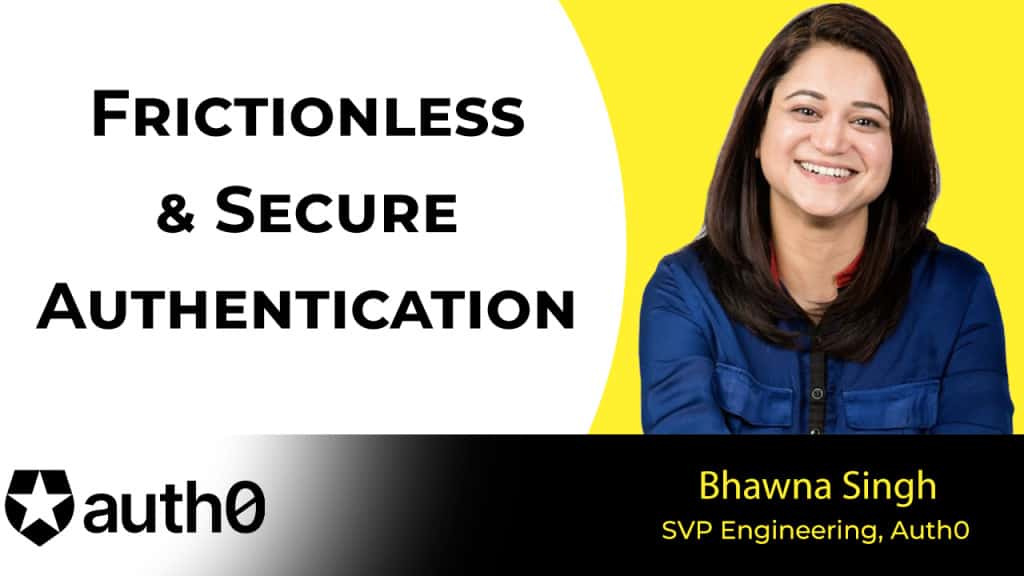
About Bhawna Singh:
Bhawna Singh is a senior technology executive with 20 years of experience in successfully building and leading talented teams of engineers to transform and scale technology for a global user base. Bhawna has led multiple tech transformations, scaled systems from 0 to 100 million monthly users, led global expansion of products, participated in multiple acquisitions and spearheaded innovation to drive user growth and engagement delivering multi million dollar revenue growth.
About Auth0:
Auth0 is the first identity management platform for application builders, and the only identity solution needed for custom-built applications. With a mission to secure the world’s identities so innovators can innovate, Auth0 provides the simplicity, extensibility, and expertise to scale and protect identities in any application, for any audience. Auth0 secures more than 100 million logins each day, giving enterprises the confidence to deliver trusted and elegant digital experiences to their customers around the world.
Transcript
(Joel Beasley at 00:00:03) Hello, my friends. Today we're talking to Bhawna, the SVP of Engineering at Auth0. And we discuss how to create a culture of sharing information openly at a company, how Auth0 simplifies implementing frictionless and secure user authentication, and why "move fast and break things" isn't always the best strategy. All of this right here, right now on the Modern CTO Podcast. Here we go.
(Intro Narrator at 00:00:33) This is the Modern CTO Podcast.
(Bhawna at 00:00:42) I started working with my dad, who is actually an electronics engineer, and we used to do many pet projects, you know: light-sensing components, cloud sensing. We even built transistors, our custom speakers. We also built our own CPU, and I used to help him with soldering. I used to help him with finding the components and all of that. And that took my interest in electronics, and I did my bachelor's in electronics, actually. And as I was doing my bachelor's in electronics, I really loved digital electronics. It was my favorite subject, and that's when I shifted my master's to computers. There is something, I would say, about writing in assembly language in 8086, a microprocessor, or coding in Fortran that could be—I don't know what's right—very stirring. And that's what was the interest in programming. And I moved my master's, and as I said, computers. I continued programming, enjoyed it, and that took my career path in that direction. And then as a career, I would say I continued as an engineer in my early career. I worked in distributed platform. I've worked in search and recommendation products and machine learning. But as a leader in my later half of my career, I have done all aspects of tech stack, and I've led teams working on desktop, mobile, product engineers, platform engineers, of course data and machine learning teams. So I've done all pieces of technology tech stack now as a leader.
(Joel Beasley at 00:02:30) That's cool. One thing that popped up to me there: you said you were working on some recommendation engine at some point. Where was that?
(Bhawna at 00:02:39) So search and recommendation—when I worked at Sybase, that's when I started working on more NLP-like systems for Answers Anywhere. This was one of, I would say, a business unit under Sybase. And then I moved to Ask.com, building their Q&A search, their smart answers, and other content search platforms. And that's where I moved into machine learning and building those kinds of services as well. And then I continued that at Glassdoor, which is my previous job, to build their search vertical for jobs. So it has been a long tenure in that world. But that's where, you know, recommendation of jobs, recommendation of employers, and other kinds of recommendation that I worked in and built out.
(Joel Beasley at 00:03:30) Wow, that's crazy. That's like what you were working on was having such a huge direct impact on the daily lives of people—getting recommended a job and then if they end up working that job, you know. I don't know. I think it's just search and recommendation is such an interesting area to me because of the immense impact it has had on society in the past twenty years or so.
(Bhawna at 00:03:59) Very, very true. And I enjoyed at every job that I have done, you know, making an impact on the customer side and helping them out. And every role or every project that I took had a big part of that mission, which is: how are we solving customer problems? And, you know, it was the same with Glassdoor. It was the same with Ask.com—by making sure how fast and how quickly we can answer our users' questions, you could say.
(Joel Beasley at 00:04:27) Yeah, that's really cool. So how did you end up getting involved at Auth0? That's where you're at today, right?
(Bhawna at 00:04:33) Yes. So I joined Auth0, and I'll say, you know, this might sound a bit like a one, two, three answer. But I've answered this question so many times now because, before joining, after joining, and of course the hiring that I do. So three big reasons that I would say why I joined Auth0. One, of course, the impact again. The problem that they are solving has a large impact. We're talking about billions of logins, which need to be secure, which need to be available and reliable. And we are talking about really high SLAs. And to be, as a technologist, to work in that environment, the kind of complexity that we have in that space is just, I would say, very exciting. That was a big reason. Another big reason was the growth. They are continuously moving in a high-growth environment. And as a technologist and leader who has worked in this industry for almost more than two decades now, working in a high-growth environment has tons of challenges. And who doesn't love challenge? So, you know, that was another big area or big reason why I joined Auth0. The last, I would say, were the people. As I was interviewing and talking to some of these leaders, the transparency with which they would share, you know, what are their challenges early on—there was no hiding. As well as, you know, what's working well. Those are all my area of interest. One big thing was, you know, their cloud deployment. It's humongous. And of course, with that comes challenges, but that's an exciting area for me to invest in. At the same time, with COVID, we have learned so much about remote workforce. But Auth0 was remote from the start. So, you know, this is a learning opportunity for me because I'm also learning as to what does it mean to have a very best-in-class, you could say, remote workforce and supporting them in their job day to day. So those were some of the points, I would say, why I joined Auth0.
(Joel Beasley at 00:06:42) That's really cool. And can you give, for those that may not have listened to our first episode—we did an episode with Javier from Auth0 as well—but for those that made it and listened to that one, can you give the overview of what Auth0 does?
(Bhawna at 00:06:56) Yeah, sure. I think in a nutshell, we offer authentication and authorization service for our customers so that they can make sure that they can provide safe login to their users. So that's in a summarized version that I would say Auth0 does. But, you know, there are few things that we watch for as we think our plan of our roadmap and offering, which is simplicity. We want to make sure that our offering is as much as possible out-of-the-box, plug-and-play, or, you know, integration is easy for the users or our developer community so that they can use it and they don't have to worry about the nuances of complexity behind it—security, privacy, and all of that. We take care of it. The second aspect is also extensibility. As we believe for simplicity, we do the—we cover the long runway, but we also want to give our users or customers the opportunity to extend, customize. You know, there's that 5% or 10% that we haven't done because everybody has their very unique use case. They're able to do that. And then, of course, with expertise, right? We have our identity and security expertise in-house because this is our core business, and we do a lot of training around it. So we, of course, help our customers with those areas of decision-making. If they are building any architecture or changing anything, we help them there as well. And then the last bit, I would say, like I said before as well, is trust. I think reliability is key. If I have to say, we are tier-zero service. We are at the forefront of our customer. If we are down, you know, nothing will work. We are helping be the face of them. So we have to be absolutely reliable. We have to be absolutely secure. So that's top of mind for us in every decision we make, every release we make. And, you know, that's what I call a high-stakes environment as well. So, yeah, those four things is what makes our product decision-making throughout the process. But, yeah, in a nutshell, authentication authorization service for our customers.
(Joel Beasley at 00:09:07) Very cool. Well said. So you mentioned something in there about how you do education with your customers to help them use your product. What does that education look like? Do you have courses, or is it more like being a consultant a little bit? What does that look like?
(Bhawna at 00:09:26) Well, if they are making some architecture decisions or they have some custom setup that they want more in-depth understanding of, you know, how will our product work with them, or they need some other customization—our architects do get involved, help them make proposals as well to say that if you're looking for this level of latency or reliability and other things, you know, what can they do and how can they shift their setup to achieve that? So we help with that. If they have questions around, you know, how is our system working in helping their overall architecture and where do we sit, we help with those understandings as well. So it could be one-on-one. It could be overall. We, of course, do a lot of identity podcasts as well as, you know, we host a lot of sessions around identity as well to help them understand the, I would say, the new things or new compliance aspects around identity or security aspects around authentication services and standards. So certainly we do that part as well and share openly.
(Joel Beasley at 00:10:32) So does Auth0 put out a podcast, or are you referring to coming on kind of like what we're doing right now?
(Bhawna at 00:10:38) We—one of our engineers, Vittorio, he has his own session around identity, and there are a lot of sessions which we share about identity and how things are behind the scene.
(Joel Beasley at 00:10:54) Really cool. Yeah, I'd love to check that out. It's always cool seeing because, I mean, I'm sure, you know, we've talked to a lot of companies on this podcast, and it's fun seeing more podcasts crop up in the individual niches that we're seeing. Like we talked to this company called LaunchDarkly that they do feature flagging, so you're able to publish a feature and then turn it on or off after it's out so you can debug a certain feature without having total downtime, and it makes continuous delivery a lot easier. But, yeah, I interviewed their CEO, and she has a podcast all about continuous delivery called To Be Continuous, which I think is funny. And, yeah, there's another company we had on called Inidata that they actually just launched an AI podcast because they clean training data for it to go into AI algorithms. But, yeah, that's super fun. What did you say the name of the podcast put out by the engineer at Auth0 is?
(Bhawna at 00:11:58) It's called Identity Unlocked, and there are a lot of sessions. He also brings other people in the identity space, you know, to talk about the latest and greatest. So, yeah, that's going on there as well.
(Joel Beasley at 00:12:10) Nice. Yeah, I actually just pulled it up. Identity Unlocked. That looks cool. All right, so back to business. So I do want to hear more about your approach to scaling because you said that's something that's a big focus for you. So what are some of the key considerations that you prioritize when you're thinking about scaling?
(Bhawna at 00:12:38) That's a good question. And, you know, yes, I said we are in a high-growth market. And I would say, you know, when we are in high growth, we are also—I also said we are also in high stakes, right? So when you are in high growth, innovation plays a big role. You have to keep fueling with your new ideas and new features so that, you know, you continue to stay and build on to the momentum of high growth. But at the same time, there was this term that was used post-Facebook, which is, you know, "move fast and break things." That's not an option for us. As much as that helps with growth, especially in early stage—many companies and startups use that to get the momentum and product-market fit faster—for us, given our high stakes, that's not an option. So some of the things, of course, would match to all high-growth environments, such as communication, I would say, is very key. And the communication flowing both ways. And because we were built from the start as a remote workforce, you know, this area has matured or has a lot of, I would say, culturally built, ingrained things such as, you know, blogging. Engineers would write their point of view and blog internally so that everybody can collaborate with that thinking. Leadership, all of us, we blog about what's going on, what's coming, what to expect, how are things shaping. And we don't wait for things to be done. You know, it's in progress, and we start sharing about it. All-hands are frequent and common at multiple levels. Our CEO, Eugenio, he writes weekly blogs to talk about what's going on with the company, which plays a big role because, you know, it brings everybody along the journey and where we are going. And that's very culturally fitting for us because it's important that we follow the culture of, you know, "one team, one score," which is everybody is in this together. So that just brings us all together. So communication both ways. And then we intentionally talk about the other side of communication, which is feedback. You know, many of our processes have intentional feedback loops built in, starting from incident responses to, you know, regular all-hands or anything. You know, there's a feedback loop built in as part of the process. So that's one thing that I would call out. Second, I would call out is talent management, of course. You know, hiring, growing, scaling your team is important, but also retaining the resources. And when you are in a high-growth environment, your leaders, engineers, they're all growing with you. So making sure that we have our proper training process to help them scale—people scaling is equally important as processes of technology. So we have training processes. We have onboarding processes in place to make sure that we are bringing everybody along and growing people from within as much as possible. Because it's very relevant is, you know, deployment. So release and deployment process is so critical. And I sometimes feel that if you have a healthy deployment process, you will automatically have a healthy team culture because it's just so critical to make sure, especially in a high-growth environment when teams are innovating, it's very important that their work starts to move into the release and production setup faster. But then in a high-stakes environment, you can't do that. Everything cannot just land in production. So we have to have a robust pipeline of CI/CD, which is what we have built, and with strong checkpoints for security, privacy, and compliance guidelines, because that's certainly something that we take care of within our setup. And then every release goes through, you know, like moves from smallest to the largest so that the blast radius is as small as possible as we are releasing. You talked about the feature flag for a point. We have feature flags as well so that we have fine-grain control in production of, you know, any feature being available or not. So a lot of checkpoints in our release process makes a big difference. And having a robust CI/CD is key to that aspect of us being in high growth so that, you know, features and ideas are coming out.
**Bhavna Singh at 00:17:13**
But at the same time, it's coming out with robust checkpoints and testing and load and performance testing, and moves in a process where we have control so that we can give our users and customers the best reliability as possible. So that's something that I would call out. One thing I would say, you know, as I said, I can keep going on this topic, but just to bring everything together, the culture plays such a big role to make sure that you are bringing everybody along in the process and in the journey. So as we work and we invest a lot in innovation, making sure that there's a good stream, healthy stream of new work coming along. But I would also say, you know, communicating frequently, like I said, or the path that we are taking is very important for the big aspect of empowering the team to make decisions as much as possible.
**Bhavna Singh at 00:18:15**
So the more they know, they can make their decisions in the right direction. So collectively, all of this together. But again, I can keep going. This is a very rich topic. But yeah, those are the three things that come to mind as I think of it.
**Joel Beasley at 00:18:32**
That's cool. I think the culture item of blogging is really interesting and productive to hear about because, I mean, it helps people stay on the same page with each other throughout the company just because they're able to read it. Also, I'm sure it helps the people that are writing the blogs. I mean, that's kind of what makes this podcast cool is that when you're speaking out loud, you just kind of develop a better understanding while you're going. And that's where some of the best stuff comes out.
**Joel Beasley at 00:19:06**
And the same thing happens when you're writing. So that's two great things about that. And then I think another really cool thing is that they're public and, especially, I mean, Auth0 is one part of the background of technology that just shapes so much of everybody's life today. And it would be cool if there was more transparency like that across the industry, I think, where the general public can have a better idea of what all is going on behind the scenes. I don't know. It's just that was one thing that really stood out to me there. I thought that was...
**Bhavna Singh at 00:19:49**
You make great points. You make great points, and you're absolutely right. In the past, we have worked in a space where, of course, there's nothing about technology that you should need to hide, so we share openly. But you pick and choose who you are sharing with. With blogging, you don't have to pick and choose. Of course, you pick and choose to make sure some people definitely lean in and engage. And that's why we follow a DACI model to make sure the decision making has a framework. But at the same time, it's openly blogged. So there are some topics you can see a lot of people engage their thoughts. And just in general, reading it, it just excites and motivates people as to, oh, we are doing that work. And it just goes a long way in inspiring other engineers and other leaders to also think in that direction. So it's kind of like an organic motivation and inspiration, which is healthy in our remote setup, which is another thing that I would call out.
**Joel Beasley at 00:20:53**
So it sounds like you have a strong culture of promoting growth within the company, because I know you also, I also heard you mention how it's important to bring the people along with the scaling. Can you expand on that concept a little bit, bringing the people along with the scaling?
**Bhavna Singh at 00:21:10**
Yeah. So the more information is given to the team and the people, the decision making can then be closer to them because they know all the information and where we are going. So it helps empower the team, which of course is a motivating factor for them because they are playing a very visible role in the company's growth. Right? The other aspect of talent management is also bringing in new engineers, new leaders into the space because, of course, identity is a very niche space.
**Bhavna Singh at 00:21:45**
So how do you bring in people who are strong technologists, but haven't worked in identity? How do we train them, onboard them in this space, which is another area that we invest in? And then the career path. Right? Everybody, when you are growing, you need to be ensured that everybody sees where their career path is going. So of course, they are seeing where the company is going, but can they also see where their career is going? How will they grow? That's key to, again, inspire them and retain them as part of our culture. Of course, hiring has some work to do. I think, as you said, with Auth0, there's a very clear understanding that we are in the security space and identity space.
**Bhavna Singh at 00:22:32**
I am working on bringing the awareness that we also need people who are strong engineers and technologists who might not have this background and understanding but are eager and curious to learn. Right? Because if we are growing at the pace that we are growing, we need background around cloud and platform and deployment as well. We need background around developer experience, which is very key for us to build that relationship with the developer community. We invest a lot of effort around that.
**Bhavna Singh at 00:23:05**
And also, we are structured within our teams towards the product that we deliver so that we can think for the customer obsessively as we are planning a roadmap. So those are also pieces that we have to plan for. So there's so much more in terms of technology stack as well as categories that we need people to come in and join us to make this a more impactful product. But, you know, so that's where I think some more work for me to do. Of course, we are known more as authentication and identity, but we do so much more, and we need so much more background of people.
**Joel Beasley at 00:23:47**
Yeah. On the topic of hiring, I was just thinking of an episode we did a little bit ago with a guy named Greg. I believe he's the cofounder and CTO of JumpCloud, which they do cloud directory and also help with consolidating the tool chain involved with that. Really cool, interesting company. But he was talking about how when he's hiring, he's really passionate about not focusing on how good an engineer is with a specific tool and more focusing on their adaptability and ability to learn. And I'm just curious what are some of the most important things that you think about when, like, important traits you think about when hiring engineers?
**Bhavna Singh at 00:24:35**
I think you just said those two, and Greg is spot on, I would say, which is, you know, curiosity is key for us. And I would say a mindset of learning is very key for us because there's so much to learn. And with growth, there's so much more new things that we are trying to do that that mindset is very important for us when we hire and look for engineers. I also in leadership, I also look for leaders who have taken on a big, I would say, a change and led it and brought it to the other end, because there's so much risk taking as part of when you're trying to bring in a big change or to break a new technology, completely transform a setup and something. So I also look for that aspect of risk taking as well because when you are at a growth speed and a scale that you're talking about, there are times when we have to say, okay, this technology is not going to serve our purpose anymore.
**Bhavna Singh at 00:25:37**
We've got to shift. And being able to openly say it and not worry about the investment that we have made in a certain technology, but which is not going to get us to, it got us from A to B, but it's not going to get us to, I don't know, Z. So, you know, having those kind of leadership traits is also something that we look for. Primarily, collaboration is very key for us as I said a few times. Working in a remote environment, being open to collaborate, being open to take feedback, being open to share your viewpoint openly with everyone and okay to hear their, I would say, suggestions and feedback. Those are all key aspects in an engineer and leader.
**Bhavna Singh at 00:26:20**
So that you are not taking it as an offense, but more as a learning. And, you know, oh, I did not know that. Let me, now I know aspect, which is very key to be successful in our environment. I would say one thing that I, as in the last few months that I've been here, that I learned is, we also look for very vocal engineers as well who are not scared of pointing something that feels right or feels obvious. It's a very welcome environment. And, you know, if you have a point of view, we welcome you to make it, and we talk about it openly.
**Joel Beasley at 00:27:02**
That's something I've heard a couple times about, uh, defensiveness and...
**Bhavna Singh at 00:27:07**
Mm-hmm.
**Joel Beasley at 00:27:07**
How that can be really damaging in a collaborative environment. Because, yeah, obviously, you want to be able to bring up and tell someone, hey, that idea might not be the best idea in the best interest of the company, not at all in an attacking manner because that's never how that's intended. And, yeah, I think that also ties in with the concept of always assuming positive intent with your coworkers, which is just another thing I've heard over and over again and has really stuck out to me as a core leadership tenet.
**Bhavna Singh at 00:27:50**
No. That's a very good point. Yes. Always assume positive intent. You know, just to point out that something can be done better or what you see in front of you is not right, we don't have to be rude about it. Right? We can point out and, just like you said, assuming positive intent and sharing our point of view. So I think spot on. And it's very key for our culture to work and thrive.
**Joel Beasley at 00:28:14**
So I just pulled up the Auth0 LinkedIn, and it's shown on here we got, like, almost 1,100 employees. Is that about correct?
**Bhavna Singh at 00:28:23**
Yes. Yes. And we are growing. And, you know, if I can shamelessly put a plug for engineering, we are hiring more than 50, almost 100 people, please, with every category, every level, so much to do, and I am just excited to be here to play my part in all of that.
**Joel Beasley at 00:28:44**
That is crazy. But so also at the same time, I feel like the company is getting really large to the point where I feel like it might be now getting challenging to move fast and pivot with the sheer size you're getting to. How are you preparing to stay nimble as you continue to grow so large?
**Bhavna Singh at 00:29:11**
So large. Yeah. Here's what I will say. The three things that I called out, which is communication both ways, very key, and of course, our process and practices and platform that we have in place with checkpoints and guardrails so that we can empower the right group with decision making closer to where the information is, is also a big aspect of us continuing to scale. And like I said, hiring in a very well-oiled hiring machine. And I make sure any company I join, the first partner relationship is with the recruiting team, so that we have a strong recruiting and a healthy recruiting machine. When you talk about scaling at the speed at which we are and minding for the challenges, culture plays such a big role. The values play such a big role. And I don't know if I can share, but in our leadership team, our CEO still says, okay, so what are our three or four culture aspects and values aspects, and what do we do? And it's kind of like a constant reminder back to us as to this is what we stand for. Right? One of our big themes is "one team, one score," which is that we are not a product-driven team or engineering-led team or sales. We are one team, one score.
**Bhavna Singh at 00:30:37**
And that really grounding that point of view is so important. That brings everybody together. It's not my problem or your problem. Everybody together. We talk about n plus one is greater than n. Yes. Of course, mathematically, yes. But the idea of making sure that we are of that point of view that we are making, which is n plus one, which is we need to motivate ourselves to do one more thing. And what's that extra pathway or you can say that extra mile that we're walking to make us better, which is always on our mind even in our roadmap efforts as we talk about.
**Bhavna Singh at 00:31:16**
And then the last one, we have is also very openly, we give a shit about everything we have in front of us. So, you know, our theme of "we give a shit." And that actually is very ingrained when I said we have a vocal team. The important point is very much about, we want everybody to care because it's their product, their company, their growth. And that's what the point of view of "we give a shit" is so that everybody leans in and engages with everything that we are talking about because it's everybody's success.
**Bhavna Singh at 00:31:52**
And I would say that reminder of going back to our culture and what are our foundational things that drive everything else is a key aspect of, I would say, how we are containing our challenges or growing pains. But, of course, a lot of investment goes into technology as well. And that's why the heavy work that I'm doing right now is putting together an engineering roadmap that helps with reliability, that helps with making sure that we have technology that can be controlled, fine-grained controls. Do we have good process and setup for and tools for incident response so that we can be quick about it, which is very key and it goes hand in hand with our reliability posture. And then of course, communication aspect and growing the leaders aspect so that it all comes together.
**Bhavna Singh at 00:32:48**
So it's a very, I would say, orchestrated process right now, and I lean in heavily in many areas to make sure that we are on top of it. And there are some innovations that we are planning for in a few areas that is key for us to kind of continue on that process. We also have a framework around security by design and privacy by design so that it's not an afterthought. It shouldn't be just a checklist and a checkpoint. It's also intertwined in all of our processes to make sure that we are thinking about it as we are designing and planning for a new idea and a project.
**Bhavna Singh at 00:33:26**
So a lot of framework. I won't say a lot, but quite important frameworks are in place. Culture is in place. Leaders are in place. And we actively lean in wherever we feel we have growing pains to address.
**Joel Beasley at 00:33:41**
Yeah. Having the security built into every step of the process, just, I mean, it's pretty much what you do now. And it kind of baffles me thinking about kind of what we'll call it the old way of doing things where you would, like, create your entire product and then just be like, alright, now we have to make it secure. Like...
**Bhavna Singh at 00:34:08**
That's the point.
**Joel Beasley at 00:34:09**
I cannot believe that that's how it used to be. Like, where, like, there used to be so much separation. And I'm sure there still are companies like this where the separation between, like, the product teams and the security teams where, yeah, it's just mind-blowing that that was okay. But really cool that now it is built in at every step of the process, especially as, like, with what you're doing is like you said earlier, you called it a tier zero operation. Right?
**Bhavna Singh at 00:34:44**
Tier zero service and operation. Yeah.
**Joel Beasley at 00:34:46**
Yeah. Very, very critical stuff when you're talking about identity and login. Where are some places where if I'm logging in, I'm actually logging in through Auth0? What are some of your customers that I might know if you're allowed to share?
(Vavna at 00:35:00)
Yeah, I can share some. Although, you know, I think I might have mentioned we have more than 9,000 customers right now, globally located and pretty much in multiple categories. So some of the categories I would share, you know—I don't know if you—so you must have heard Headspace. It's in that meditation and coaching area.
(Joel Beasley at 00:35:20)
Yeah.
(Vavna at 00:35:21)
So then there's Dick's Sporting. We have Kiva, and they have a very interesting, I would say, business case as well. They provide micro loans to women to start their startup or business, which is very cool. And it's amazing to solve for customers who are so mission-driven.
(Vavna at 00:35:45)
And there's so many more, I would say. You know, Imperfect Foods. So we also have in the food industry using us. Motley Fool. So, like I said, finance is another big area where we have many customers. Toast. Education—Blackboard is another of our customers, and, you know, they help provide materials online, especially with the remote schooling time period. Their business was very helpful for many of our students.
(Joel Beasley at 00:36:20)
Yeah. Blackboard was the site that provided, like, the online resources for my classes in my first year of college, actually.
(Vavna at 00:36:29)
Perfect. And I'm pretty sure you logged in for that?
(Joel Beasley at 00:36:32)
I did. I did. I had a login.
(Vavna at 00:36:34)
Well, what? Yeah.
(Joel Beasley at 00:36:35)
There we go. We found one we found one that I use. So before we wrap up, I want to talk a little bit about how you personally structure, like, your goals for yourself. So, like, how do you think about planning your personal and career goals? Like, do you structure in, like, quarters or months or weeks? Like, what kind of time frame do you think about?
(Vavna at 00:37:03)
For personal growth, it depends on which one. So if I'm talking about, you know, helping my team, mentoring, growing my leaders, also my next in line, in some time to start putting a plan together for that—those are all the things that I would say monthly, which is I put in a time organizationally. How is my organization moving forward, and what are the things that I need to do to structure and help them? But there are aspects that I also think weekly, which is, you know, in the next week, what are the technology efforts that we need to talk about or go deeper into? Because just with so much going on, it's not that everywhere that I can be, but what are the key items and how are we doing there? Are we healthy? How's the team doing? So checkpoints around that is equally important. My own—you know, I like to network as well.
(Vavna at 00:37:58)
So meeting some of my colleagues, because there's so much you learn from how are other leaders solving problems or how are they thinking about a situation. So I like to meet my network as well and talk about how are they thinking about, you know, remote workforce or COVID, coming out of COVID, and even technology for that matter when we are talking about, you know, our level of reliability. So a lot of conversation that goes there as well, and that's also a key opportunity to learn and kind of share with each other.
(Joel Beasley at 00:38:32)
Do you have any advice for new leaders that are trying to get plugged into a network of fellow leaders to have those conversations?
(Vavna at 00:38:43)
There's surprisingly post-COVID—or maybe that's when I started to pay attention, either whichever was true—there's a lot of groups where leaders' forums are there that you can connect with. I think I'm part of Enriched Circle and part of Chief, Athena Alliance, Natré. I have my personal interest of my growth. I'm also part of First Board I-O. So there are a few groups that I am part of who are all mission-driven to make an impact, who are all helping drive the future. And, you know, we also have a chance to connect with each other at personal growth of soft skills as well as technology aspects of how they're thinking about team or technology, and very helpful.
(Joel Beasley at 00:39:33)
That's really cool. Thanks for sharing that.
(Vavna at 00:39:35)
And, of course, listening to Modern CTO. Maybe I should—
(Joel Beasley at 00:39:37)
Of course. Best advice straight from the source. What are we going on? So close to 400 episodes.
(Joel Beasley at 00:39:47)
All right. So, well, before we wrap up, is there anything that we didn't get out there that we want to make sure we touch on today? I know we have talked about you're hiring a lot. Would, if anyone's interested, would they reach out directly to you, or is there, like, contact on the careers page? What do people do?
(Vavna at 00:40:07)
Yeah. I think there's contact on the careers page and a lot of information there. If you see something, apply directly. If you want to reach out to me or our recruiters on LinkedIn, feel free to do that as well.
(Vavna at 00:40:20)
I think the one thing I would just repeat is, you know, yes, we are in identity and security space, and we certainly look for that skill set. But we are doing a lot more. We're looking for all tech stacks and technology backgrounds or people who have worked around cloud and cloud-native technologies. We are looking for engineers who are solving for developer experience and, you know, integration aspects. Platform is very key for us. So certainly, join us in this mission of, you know, keeping the world secure and, you know, helping build this authentication authorization service with all features that can help the very large global market, which is very important. You know, Auth0 is very globally located, and we have our customers across the globe. And some of the use cases become very unique. We have critical use cases. We're talking about medical customers who are in the medical world to banking, financial world, and, of course, consumer and B2B and SaaS businesses. So we are serving a very large customer base with very many unique use cases. And with every use case, there's so much to learn. There's so much to, technology-wise, as well as, you know, use case and domain-wise. So learning is a big aspect of our culture as well.
(Vavna at 00:41:45)
And, of course, we give a lot of opportunity for our engineers to be exposed to all of that.
(Intro Narrator at 00:41:56)
Thank you so much for listening. And if you found this episode useful, please share it with a friend or colleague who you think would get value from it. And if you have topics that you would like to hear discussed on the podcast, either add me on LinkedIn or send me an email, [email protected]. Every time I get an email or LinkedIn message, it absolutely makes my day and inspires me to keep going.