
Episode 324 ·
David Mazières - Co-Founder and Chief Scientist at Stellar
Today we are talking to David, the Co-Founder of Stellar. And we discuss the founding story of the Stellar Cryptocurrency. We dive deep into the benefits and inner workings of blockchain technology, and what the world will look like as more innovation is brought into currencies.
All of this, right here, right now, on the Modern CTO Podcast!
Check them out now at Stellar.org!
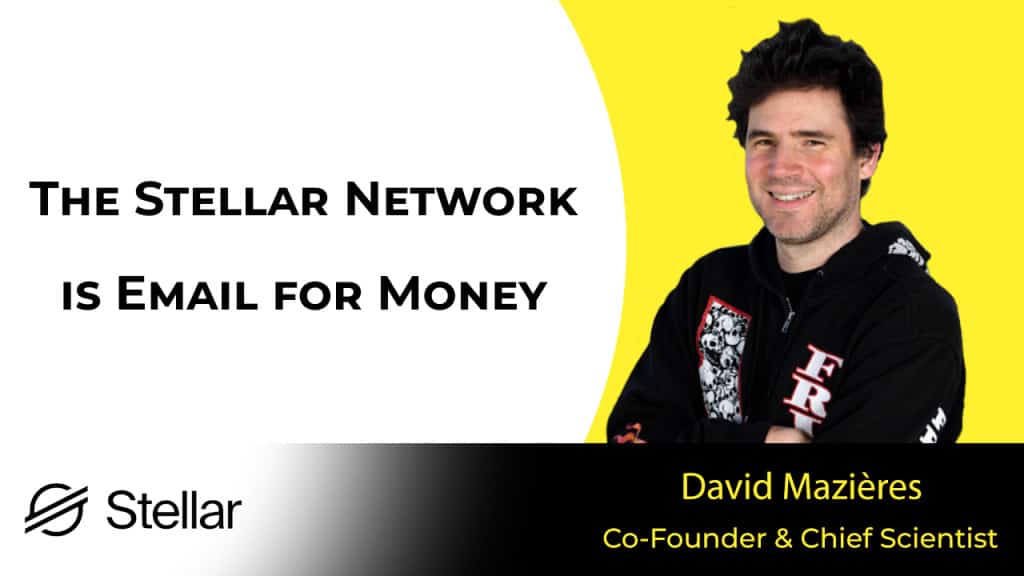
About David:
David Mazières is a professor of Computer Science at Stanford University, where he leads the Secure Computer Systems research group and co-directs the Center for Blockchain Research and Future of Digital Currency Initiative. His research interests include Operating Systems and Distributed Systems, with a particular focus on security. He is also a co-founder of the Stellar Development Foundation.
Some of the projects Prof. Mazières has collaborated on include SFS (a self-certifying network file system), SUNDR (a file system that introduced the notion of fork linearizability), Kademlia (a widely used peer-to-peer routing algorithm), Coral (a peer-to-peer content distribution network), HiStar (a secure operating system based on decentralized information flow control), tcpcrypt (a TCP option providing forward-secure encryption), Hails (a web framework that can preserve privacy while incorporating untrusted third-party apps), Dune (a driver granting linux processes safe access to privileged CPU features), and the Stellar blockchain (for which he developed the Stellar consensus protocol, SCP). Prof. Mazières received a BS in Computer Science from Harvard in 1994 and a Ph.D. in Electrical Engineering and Computer Science from MIT in 2000. His awards include an Oakland distinguished paper award (2015), Sloan award (2002), USENIX best paper award (2001), NSF CAREER award (2001), and MIT Sprowls best thesis in computer science award (2000).
About Stellar:
Stellar's mission is open source financial access for all. The Stellar Development Foundation is a nonprofit organization based in San Francisco. We’re building a common financial platform, designed to be open and accessible to everyone. Just as the internet allowed anyone to send an email or create a blog, Stellar now allows people to easily send, save, and receive money, without large fees or hassle.
Transcript
(Joel Beasley at 00:00:00) Hello, my friends. Today we are talking to David, the co-founder of Stellar, and we discuss the founding story of Stellar cryptocurrency. We dive deep into the benefits and inner workings of blockchain technology, and we look at what the world will be as there's more innovation brought into digital currencies. All of this right here, right now on the Modern CTO Podcast. Here we go.
(Joel Beasley at 00:00:25) This is the Modern CTO Podcast. Dude, this is exciting though. I like the fact that I'm gonna get to talk to you about cryptocurrency because you're like Mr. Crypto.
(David Mazières at 00:00:43) Maybe. Probably a lot of people who are even more Mr. Crypto than I am. But I mean, I guess relatively speaking, I was a somewhat latecomer to the whole blockchain scene. But, you know, I got into it with Stellar because Stellar had kind of a slightly different take that seemed more interesting to me.
(Joel Beasley at 00:01:08) What was more interesting about it?
(David Mazières at 00:01:09) Well, the thing that never quite made sense to me is that, I mean, the way I look at it is blockchain gave us these two really amazing things that, you know, before Bitcoin, like if you'd asked me at either one of them, I would have said this is impossible. Right? So one of them is how do you commit transactions irreversibly and atomically across sort of mutually distrustful parties who maybe don't even never even heard of each other before. Right? So the idea that we could both agree that I've sent you a Bitcoin and we can never go back and change that. That was pretty surprising. And then the second thing that was pretty surprising is that we could create some new virtual currency and distribute it in such a way that there was a limited supply, but people actually believed it had a huge amount of value. Right? I mean, the idea twelve years ago Bitcoin would be worth $50,000 is unbelievable. Right?
(David Mazières at 00:02:06) So that said, the virtual currency thing never interested me as much because it seems like we already have money. And we also have economists who study it and who manage central banks and try to set monetary policy in a way that's good for the country and so on. And so I was never on board with the idea of replacing money with an and replacing economists with an algorithm that no one can change. But, you know, I did agree that sort of payments were broken and that there's a lot of people in the world who are underbanked, and it's very expensive to provide financial services to people, and there's very little innovation. And so the idea of creating something that could have the benefits of blockchain in terms of being, you know, self-serve for developers to come and implement things, but that also worked really well with just normal money or other sort of traditional assets seemed really appealing to me. And so that's how, when Jed approached me in 2014, I got branched and said, yeah, maybe I could actually join you guys and work on this.
(Joel Beasley at 00:03:12) What were you doing at the time?
(David Mazières at 00:03:14) Well, I mean, my what's still my day job, which is that I'm a professor of computer science at Stanford. But Jed approached me, I think it was June 2014. And we had a mutual friend. I mean, I'd known him before. I'd invited him to give a keynote at a workshop on peer-to-peer systems many years before. But he approached me through a mutual friend and then turned out his office was relatively near my house. And so we went and talked, and he explained the Stellar thing to me. And he said, well, you know, one of the things we wanna do is we wanna fix our consensus. We wanna come up with a good consensus algorithm for this. And, you know, maybe you have some students who might wanna work on this or something. And I said, well, you know, this is kind of right up my alley, this distributed systems and consensus. You know, maybe I could be an advisor here. And so he wrote me an offer that was sort of multi-tiered that could have multiple levels of involvement. What I found was that the entire next week or whatever I was supposed to be doing at Stanford, I was actually daydreaming about this problem. And I was like, wait a sec. You know, this problem is hard enough that nobody's solved it yet. But it's tractable enough that I think I can crack it. And here's this immediate application that could potentially, you know, make the world a better place and, you know, help underbanked people and promote innovation and, you know, sort of bring transparent markets places where we don't have them. And so I was like, that's kind of really the sweet spot for research. So I said, well, Jed, why don't I come actually join you guys full time? And because it's summer, so I can easily sort of change my involvement at Stanford. And so then I just went for the next three months full time, then I've been sort of on and off full time or part time since then.
(Joel Beasley at 00:04:59) So have you done this advisory thing before? Was this the first time that you've ever done it?
(David Mazières at 00:05:05) Oh, yeah. It's pretty common for faculty members at Stanford to advise companies. And it can go, you typically normally, when you're full time at Stanford, you have approximately 20% time to consult. So it's normal to spend a day a week someplace outside of Stanford or, you know, up to 130 a quarter if you're doing it hourly. And so yeah, so that involvement can take any number of forms. It can be just a couple hours a month kind of thing, or it can be a one day a week thing. Or you're allowed to take leave where Stanford doesn't pay you, and you just work someplace else. And, you know, at Stanford, because they want you to commit it to Stanford, I think you can take two years to leave every seven years. Right? So they want you on campus at least every five out of seven years, but there's no problem taking a quarter off. In summers, you can always take off because you're not on hard money for the summer.
(Joel Beasley at 00:06:04) That's pretty cool. I saw, I was doing my research and talking about you with the team. I was like, dude, this guy is super smart. I was laughing because you're, like, you got MIT, Harvard, and then just now you tell me you're a professor at Stanford, and you had done work with those other. I was like, is he did he just write a list of logos that sounded awesome and then went around and collected them? Tell me about your upbringing as a kid. Did you desire to go to these schools? What were you into?
(David Mazières at 00:06:33) What was I into? Well, I guess from an early age, I was kind of into locks and keys. So I guess there was there's that which maybe is indicative of how I ended up getting into my career. So, but I would say through, you know, in high school, I was mostly into music. And I grew up in Boston. Well, when I was, you know, I moved there when I was about 10 years old. And so, you know, there was a thriving sort of underground music scene in Boston, so I was really into that. I was doing a zine with a friend to interview bands and stuff. And then I did radio when I got to college. But, you know, I always had a little bit of a, you know, sort of thing about authority, I guess you could say. And so one of the things that kinda drives me crazy is when in the name of security, less smart people prevent smarter people from doing what they need to do. Right? And so this could take the form of, like, you're just a software developer and you need root privileges to do something. And the policy says you can't because some system administrator won't let you do that. Right?
(David Mazières at 00:07:52) But one of the formative, one of my formative experiences after college, so I applied to a bunch of grad schools, and I actually got rejected everywhere I applied, except the University of Illinois at Urbana-Champaign, which lost my application. But anyway, I didn't have any options. And my undergrad advisor was like, hey, well, why don't you just stick around at Harvard? I'll just hire you as research staff for a year, and then you can apply again, which is a really good deal. So I got a job working for my advisor, Mike Smith. It was his name. And, you know, one of my jobs was to kinda, at the time, even PhD students didn't have root privileges on their workstations on their own desks. And, you know, things were different back then. Like, this was before the days of SSH. So most login remote logins involved sending passwords and clear text over the network and stuff. So you didn't want people snooping on the network. But still, it's very restrictive to people who wanted to do operating systems research. So one of the things that I did was sort of break this monopoly that the system administrators had on sort of administrative privileges. And, you know, I even did some things that were a little bit pushing the envelope. Like, I wanted to have DNS control and so that we could add our own hosts and stuff. And we'd had some problems where we wanted to make some changes to host names, and it required, there was some it took some time for those to go through. And so at one point, one of the updates didn't go through in time. And so as a result, it went through much later when we didn't expect it. And somehow, sendmail started failing on a faculty member's machine, and that faculty member ended up losing an entire day's worth of email because, I guess, you weren't saving copies of outgoing emails by default at the time. And so that person was extremely upset. And so I was like, you know, damn it. I wanna get control of this. So I found, you know, I kinda read the source code for the script. I found that there was this ambiguity between calling the isspace, which is a function that returns true for spaces tabs, but also a couple of other characters like control-k and control-l, and actually, parts of this script that were just searching for spaces and character returns. So I somehow, by embedding some ctrl-k characters in the script that they were processing to do the DNS, I was able to kind of force them to delegate our subdomain to us. And so I kind of did that on a Friday. And then on Monday, I told IT, this kind of central university IT people, I was like, so guys, this is what happened. And after I'd requested several times to do this, and I was like, so this is what happened. And this is how it's working now. And if you change it, you risk, you know, losing faculty members more email or whatever. And at that point, they were just like, fine. We'll just take the path of least resistance. So when I left that job, they gave me a little plaque saying, creator of the eecs.harvard.edu domain because I sort of created that DNS subdomain through sort of somewhat illegitimate means.
(Joel Beasley at 00:10:53) I love it.
(David Mazières at 00:10:53) But anyway, that, you know, you can sort of trace that. That's why my thesis was on a network file system in which sort of anybody could unilaterally add their own file server and be part of the namespace. And then you can trace that into my work in peer-to-peer systems. And that's obviously what appeals to me about blockchain. That, you know, if I wanna set up a traditional financial services company, you know, I need to get payment rails and banks and stuff. And these people have first-class access to the payment networks, and I'm kind of a second-class citizen. Right? I'm programming to whatever APIs they deem, you know, necessary to provide me, which might not be what I need. And so the idea that you can have a sort of egalitarian API where I don't care if you're a PhD student at Stanford or, you know, a giant company like IBM. If you're programming for blockchain, everybody has access to exactly the same APIs. And that sort of forces you to, it sort of makes it inevitable that anybody can innovate. So there's no longer this sort of gatekeeping function that if you have ideas, but you don't have access to the payment rails, you can't necessarily implement those ideas.
(Joel Beasley at 00:12:04) Yeah. But that's how you maintain control.
(David Mazières at 00:12:07) Sure.
(Joel Beasley at 00:12:08) Right? Like, I want my fees. I want my money. Right? When I saw you got to do, I was like, this is awesome. I wonder what type of legislation is gonna come out. Because I have a very small amount of experience, about three years in the financial services industry where I was building large-scale applications. And so I know enough to understand this concept of like, I wanna send money to someone in another country. It will hop several times through diff, the wire will go through multiple systems. It's craziness. And everyone's kinda taking a little fee and a little chunk as the money's going. But if I could just send the money directly to the person, right, that would make so much more sense. But it would cut out all of these existing networks and all of these fees that they're getting.
(David Mazières at 00:12:55) Yeah. I mean, look, I don't mind fees as long as, you know, either it's not rent-seeking, as long as I'm getting something in return. And in particular, as long as there's competition so that if you're charging too much, someone else can come along and compete. I mean, I don't think that, I don't think blockchain is the right, I think it's a good infrastructure. I don't necessarily think it's the right sort of end-user interface for, you know, 6 billion people who might wanna, you know, send money at some point. But what I don't wanna, so there's value in sort of owning the end, the customer experience, being able to provide services like password reset when, you know, when people lose their ATM card or their password. But what's bad is when you have, you know, sort of you no longer have the need to innovate because you can sort of lock out because nobody else can, you know, the people who can innovate don't have access. And since you have access, you don't really need to innovate. And the innovation, of course, also includes better experience, lower prices, lower latency, things like that.
(Joel Beasley at 00:14:02) So what does Stellar do? How does Stellar help solve these problems?
(David Mazières at 00:14:07) So Stellar is specifically designed around the idea of issued assets. So the idea is there's, you know, sort of in contrast to algorithmic stablecoins, you know, things like MakerDAO, where there's some fancy algorithm that manages to keep this coin in line with the value of the dollar. What we do is we say, look. Actually, as a society, we have invested a fair amount in sort of this whole regulatory infrastructure to make sure that our banks are solvent and, you know, ideally, don't rip off customers and things like that. So we should leverage that, and we should have our banks and other regulated financial institutions issuing digital dollars and other digital currencies that then have all the advantages of blockchain. Like, you can send them around the world in just seconds. You know, in particular, one thing that happens a lot is if you get between, if you're going between sort of two currencies that are not, you know, like G7 currencies or whatever. You know, if you wanna get from Philippine pesos to Nigerian naira or something right now, you probably have to buy a dollar. And so now you're taking exchange rate risk on that dollar. If your money gets stuck in the middle and doesn't make it in Nigeria and has to get converted back to pesos, you might not get the same exchange rate.
(David Mazières at 00:15:27) There's all this complicated stuff, and so what we want to do is allow people to issue all these various currencies and allow anyone to trade atomically currencies that were issued by different parties, like maybe a Nigerian bank and a Philippine bank, and also potentially trade through intermediary currencies without ever taking either exchange rate risk or even solvency risk on the intermediary currencies. We call that a path payment where you go from currency A to B to C, and there's never a scenario in which you end up holding the bag on B. You either have A or you got all the way to C.
(Joel Beasley at 00:16:04) Interesting. And so this is something that's available to happen right now?
(David Mazières at 00:16:10) That's right. So basically, anyone can create an account on Stellar. I mean, we do have a cryptocurrency. It's called the Stellar Lumen, and there's a minimum balance. So to create the account, you need one lumen, which is worth about 50 cents.
(David Mazières at 00:16:26) And then to add extra balances in other currencies, you have to add like half a lumen. So let's say for the price of a dollar, you can create a Stellar account. What you do is you generate a public key, and you have the private key. The public key names the account. You create this by depositing your two lumens, which are worth about a dollar, into this account.
(David Mazières at 00:16:49) And then you can add balances of various currencies that you want to hold. But also, as the owner of an account, you can issue your own currency. And the only catch is, of course, that the name of your account is part of the name of the currency that you've issued. Right? So you can't just issue US dollars.
(David Mazières at 00:17:07) You have to issue US dollars that were issued by your particular account. So in my case, you shouldn't trust a dollar that I issue because I'm not a bank. You know, who am I? How do you know I'm going to redeem my dollar? But there are organizations like Circle and Paxos and others who have issued dollars, and they have a way that you can redeem these dollars.
(David Mazières at 00:17:27) And so as long as those organizations and their banks stay solvent, then you can basically trust that this digital dollar is equivalent to a real dollar.
(Joel Beasley at 00:17:41) Interesting. Okay. So where did that name Lumens come from?
(David Mazières at 00:17:47) Well, it's kind of funny. Initially, when we launched, we had this older code base that was a fork of this other blockchain, Ripple. But we wanted to start over and not do backwards compatibility because the original Stellar didn't have my consensus algorithm in it. It was just a way to get us out there. And so we decided that we should change the name when we switched over to the entirely new blockchain that we'd written from scratch.
(David Mazières at 00:18:19) And, you know, I like biking. I commute by bicycle or bicycle and train, but sometimes just bicycle. And at nights, visibility is an issue. But nowadays, you can get these really powerful bike lights that illuminate like they're brighter than a motorcycle headlamp, and these things will run for like an hour. One brand that I like is Light and Motion, for example.
(David Mazières at 00:18:49) I wouldn't say their lights are that durable. I've had some batteries burn out, but the beam pattern and the brightness, really phenomenal. So anyway, when I first started getting these lights that just transformed my experience biking at night, I was so excited that I wanted the light with the most lumens. I even named my desktop machine at Stanford Lumen, and this was before. And then they were talking about, so should we change the name?
(David Mazières at 00:19:10) And then someone else actually—I think it was Joyce—suggested the name Lumen. And I was like, yeah, I love Lumen. We should totally do that.
(Joel Beasley at 00:19:22) I love it. That's good. That's good.
(David Mazières at 00:19:23) A lot of people think my machine is called Lumen because I'm naming it after Stellar. It's actually the other way around.
(Joel Beasley at 00:19:29) That's beautiful. That's beautiful. I actually got to do an interview with one of the creators of Ripple. So that was some of the initial inspiration?
(David Mazières at 00:19:39) Yeah. So Jed McCaleb, who is my co-founder at Stellar, was a co-founder of Ripple as well. In some sense, Stellar was—he basically had differences with his co-founder at Ripple that were irreconcilable. And so Stellar is his attempt to do it right.
(David Mazières at 00:20:01) And so that's why he got in touch with me. There were several things that he regretted about Ripple, including the for-profit structure that left ambiguity about are you serving the network, or are you serving shareholders? But one of the things he regretted was the consensus algorithm. And so that's why he got in touch with me. And, obviously, that's where the Stellar Consensus Protocol came from.
(Joel Beasley at 00:20:27) We have such a wide audience, people that specialize in all sorts of different things. So can you, like, just give me—pretend I'm a three-year-old and explain to me what a consensus algorithm is?
(David Mazières at 00:20:39) Sure. So consensus is this problem in distributed systems where you have a bunch of agents who can communicate by sending messages to one another. And you give each of the agents an input. And the goal is for them all to create an output. And you want everybody to create the same output.
(David Mazières at 00:21:00) And you want that output to actually be equal to one of the inputs that you provided. Because if you don't have that, then everyone could just always output zero, and that would be an easy consensus algorithm. So, typically, there's three properties that you would want of a consensus algorithm. One is agreement. You want to make sure everybody outputs the same value, or at least all the nodes that haven't failed.
(David Mazières at 00:21:23) Second, validity. That's that the output value actually equals one of the input values, so it's not a trivial problem. And third is fault tolerance, which is that you'd like to be able to survive the failure of an agent at any point in the execution of your system and still have the non-faulty nodes output a value. So sounds like something reasonable to want. However, it turns out that there's this seminal result in distributed systems due to Fisher, Lynch, and Patterson, which says that in a purely asynchronous system, meaning if you don't know how long the delay is on messages, it's actually impossible to achieve all three of safety, liveness, and fault tolerance.
(David Mazières at 00:22:06) So liveness would be termination, the fact that the thing will actually terminate and output a value. Right? So this means if you want a protocol that can survive failures, it's consensus in the sense that it will output a value that was an input value, and everyone will output the same thing. And also it won't get stuck. It will definitely complete and output a value.
(David Mazières at 00:22:28) That's actually impossible unless you start making some assumptions like saying, well, you know, if a node hasn't responded in an hour, then it's really dead. This means that this seemingly simple problem of consensus is actually fairly complex because you can't have it all. And so what people typically do is they design protocols that are safe and fault tolerant always, but are not guaranteed to terminate. So they lack liveness. But they will terminate in practice and also can be guaranteed to terminate if you make other assumptions, like, for example, the delay of messages doesn't go without bounds.
(David Mazières at 00:23:11) So the typical setting for a consensus algorithm is to say you have some number of nodes, like n nodes, and you have some quorum size that might be n over two plus one or some majority of the nodes. And so then as long as there's a quorum that's alive, they will be able to achieve consensus, basically, subject to certain timing requirements. So that's a typical consensus setting. What I said where you have n over two plus one, a majority of nodes, that only works if you assume that nodes that fail do so by just crashing and dying. Right?
(David Mazières at 00:23:55) If you assume that the nodes that are faulty start acting arbitrarily, like maybe they're taken over by an attacker whose express goal is to try to mess up consensus, then it turns out that you need something like—well, you basically, out of three f plus one nodes for some integer f, you can survive only f failures. So basically, you can survive less than a third of the nodes failing.
(Joel Beasley at 00:24:19) You must be talking to some smart three-year-olds, dude.
(David Mazières at 00:24:22) Sorry. Yeah. I guess this is—
(Joel Beasley at 00:24:26) I'm learning a lot. I'm following it, but I am not this smart.
(David Mazières at 00:24:33) Well, maybe I should back off and say, so why do we care about consensus?
(Joel Beasley at 00:24:37) There we go.
(David Mazières at 00:24:37) And the answer is that if you want a replicated system, you actually need all the different replicas to agree on what has actually happened to the system so that they end up with the same state. And so the typical way that you build a distributed system, and in particular, most blockchains work this way, is that the blockchain itself is what's known as a deterministic replicated state machine. So everybody agrees on the initial state of the machine. Everybody agrees on the entire history of operations that have happened to this. All the operations are deterministic.
(David Mazières at 00:25:11) Therefore, everybody ends up in the same end state.
(Joel Beasley at 00:25:15) All right. So the consensus is you're just trying to get everybody to agree on something?
(David Mazières at 00:25:19) Exactly. Exactly. And so Bitcoin does this, for example. So Bitcoin has a solution which is actually not safe.
(David Mazières at 00:25:28) So it is guaranteed to terminate. It is guaranteed liveness, and it is guaranteed fault tolerance, but it does not have guaranteed safety. But what they do is they make it so safe in practice because in order to compute the Bitcoin blockchain, you have to spend a huge amount of computation. And this computation takes into account the entire history of all transactions. So as you add more and more blocks and more and more transactions to Bitcoin, the amount of work that went into this blockchain grows greater and greater.
(David Mazières at 00:26:01) If you want to rewrite all of history in Bitcoin, you have to redo all the work that these miners have done. And the thing is, even though the work itself is very hard to do, it's very easy to verify that someone has done the work. So you couldn't just create a fake Bitcoin and say, well, I've just done all this hashing work because people would just check your blockchain and say, oh, no. You haven't actually done that work. Either the hashes don't match or there aren't enough zeros.
(David Mazières at 00:26:25) The hardness factor wasn't there when you did the work.
(Joel Beasley at 00:26:29) Is Stellar, like, a currency that you can mine? Can you explain to me, like, minable versus non-minable?
(David Mazières at 00:26:35) Yeah. So this is—remember how I said at the beginning that the two amazing things that Bitcoin brought us were this consensus essentially across mutually distrustful parties who've never heard of one another in an open membership setting. And second of all, the ability to create a new currency out of thin air distributed in such a way that there's a limited supply and people believe it has value. So that's where the mining comes in. The mining is the work done to compute over the Bitcoin blockchain and extend it by one additional block so that the history grows.
(David Mazières at 00:27:19) And basically, what mining is, is it's the reward. It's the process of obtaining new cryptocurrency as a reward for making it harder for people to rewrite the history. So basically, as a reward for increasing the security of Bitcoin, you get some new Bitcoin, like, you know, 6.25 Bitcoin or something. Right? So this is really cool, and there's open membership.
(David Mazières at 00:27:41) It has a reasonably high degree of security, although there have been forks or times when the history has been rewritten by some number of blocks. But by and large, it's worked pretty well. It has a pretty high ecological impact because it requires electricity to run all these machines to solve these mining problems, and it adds latency. In the case of Bitcoin, if you really care because it's a high value transaction, you may want to wait for like five block confirmations. And so that could take, you know, the better part of an hour, for example, to do.
(David Mazières at 00:28:22) And so with Stellar, we went in a different direction. We said, look, we don't want to do this mining because we want to concentrate primarily—our use case is people issuing assets on this network. And so you don't want to be in a situation where maybe you're super successful and your cryptocurrency has a market cap in the tens or even hundreds of billions of dollars. Right?
(David Mazières at 00:28:47) And then some central bank comes on and says, great. We want to issue, you know, a trillion dollars worth of currency on this thing. Well, now if the security of these transactions that are happening depends on the mining rewards, those mining rewards depend on the value of the cryptocurrency. So you now have this cryptocurrency, which is worth less than the digital fiat currency that's been issued on the network. And so you're using the less valuable thing to secure the more valuable thing, or the value of the less valuable thing to secure the more valuable thing.
(David Mazières at 00:29:14) And that equation doesn't work. So it'll work fine up until people start using the network for—the most of the value starts being not the cryptocurrency, but the other currencies. And so what's different in Stellar's setting is that if we're primarily designing for these people who are going to be issuing currencies, well, then you're trusting the people who are issuing the currency—the digital currency—to be solvent and to be either honest or in a country where they can be held legally accountable if they do something bad. And so if we're trusting them for solvency and being honest and to redeem these digital assets, why don't we also trust them for consensus? Right?
(David Mazières at 00:30:01) And so that way, you could say, hey, you issue on Stellar. You tell people that, hey, this thing is worth a dollar because you can redeem it with me, and I'll give you a dollar. But by the way, you know, here's my server, and this is a server that I listen to when I'm redeeming these digital dollars you're sending back to me.
(David Mazières at 00:30:16) So if you care about my digital dollar, then you should listen to my server and make sure that you agree with it before you think anything has happened. So the central idea behind my consensus algorithm, which is called SCP, the Stellar Consensus Protocol, is that you have all these nodes in the system, and each node says, hey, these are the other people that I want to agree with. So basically, I won't believe that anything happens unless you also agree that it has happened. Right?
(David Mazières at 00:30:43) And this ensures that you and I, our views of the database will never get out of sync. And so the assumption underlying Stellar is what I call the Internet hypothesis. It says that, basically, if you look at the organizations that everybody wants to stay in sync with, that each organization wants to stay in sync with, that transitively, any two participants that you care about will share some transitive common dependence. Right? And I call it the Internet hypothesis because this is true of the Internet.
(David Mazières at 00:31:14) Right? There's no formal definition that the Internet is the particular IPv4, IPv6 network that contains, you know, Google and Amazon and Apple and whatever. But if I showed you another network that had the same network protocol but didn't have any of the existing websites, there's no way you'd believe that that's the Internet. Right? So we all kind of have this notion that we know what the Internet is even though it's not strictly defined.
(David Mazières at 00:31:38) And the Internet has this sort of transitive connectivity property where if you're in China, you can't access Google. Right? But you can certainly access Stanford, and Stanford can access Google. So kind of, transitively, it's still one Internet. And if you created a network that was entirely disjoint from the existing Internet, you know, no one would think that was the Internet.
(David Mazières at 00:32:01) So that's the same way in which we want to tap these relationships, these dependencies between people, to have the whole world agree on what the state of the Stellar network is without sort of having to prescribe it in a centralized way.
(Joel Beasley at 00:32:15) Yeah. As you were explaining it, it sounded like decentralized consensus. I don't know if that's correct.
(David Mazières at 00:32:20) Sounds right. That's basically what it is. I mean, so, you know, you could argue that it's on a spectrum. Right? That it's maybe not quite as decentralized as Bitcoin, but it is open membership.
(David Mazières at 00:32:34) And more importantly, there's no central party that decides who has what importance. It may turn out if the Federal Reserve came and issued a digital dollar on Stellar, you can bet that almost everybody would want to be in sync with whatever the Federal Reserve—we call it a validator. That's, like, their copy of the ledger state. But, you know, not everybody would have to. And, certainly, people could ask to be in sync with other organizations like, you know, the European Central Bank.
(David Mazières at 00:33:04) And so if then the Federal Reserve and the European Central Bank started disagreeing, then I would just stop, and I would not accept anything. And I would say we got, you know, like, hold on. I don't believe anything anymore because, like, these two people I think are so important seem to be out of sync.
(Joel Beasley at 00:33:18) Oh, interesting. So that can be configured. Yeah. Oh, that's fascinating. You guys are blowing my mind. This is actually really, really interesting. You know, I found you because I saw on the news, I think you were doing some work with Ukraine, like the Ukrainian government chose you to help figure out their strategy for digital currency. And I started reading about it and looking into Stellar. And I was like, this looks really, really, really interesting. And I was thinking to myself, okay.
(Joel Beasley at 00:33:48) Well, these Ukrainians, if they're picking them, and they're a country and they need help with their strategy, there are a lot of countries out there. And so other countries are going to start looking like, who can I use for this? And then they're going to get all Ukrainians friends. And then eventually, this is just going to grow and grow. And this company, Stellar, is going to get good at helping countries deploy these digital currencies.
(Joel Beasley at 00:34:09) So I want to experiment and own some. So I bought some Lumens, I think is what we're calling them. Right? They're Stellar Lumens. That's what I bought on Coinbase. So I'm going to buy some of these Lumens because I want to keep up with what's going on with Stellar.
(Joel Beasley at 00:34:23) I think it's just cool. When things are out there that I don't understand, but they're interesting enough for me to keep checking in on them, I like those types of things.
(David Mazières at 00:34:33) Right. Yeah. I mean, I think that ultimately, I think that Stellar can be the glue that allows all these different, you know, digital currencies to be able to interoperate. I mean, sort of one of the things that we've often said is that we want Stellar to be like email for money, basically. So most, a lot of people who send email, they use Gmail.
(David Mazières at 00:35:04) Right? And, you know, that's fine. So Google might own some, like, large fraction of the email, you know, in some countries. But the point is that email itself is an open protocol. And so if you want to use Yahoo Mail or you want to use, you know, Hotmail or whatever, like, you can use that as well, and they can sort of interoperate with all these other email providers.
(David Mazières at 00:35:28) And, also, if you're crazy like me, I wrote my own mail server from scratch. Right? And so I had the ability to innovate and interoperate with all these other systems because it's on a level playing field. And I don't know. You know, my email system might not be right for most people, but it's right for me, and it's open source.
(David Mazières at 00:35:47) And so other people are welcome to use it.
(Joel Beasley at 00:35:50) What's it called?
(David Mazières at 00:35:51) It's called Mail Avenger, mailavenger.org. So this is in contrast to something like Facebook Messenger. Right? Where, like, you know, Facebook Messenger is whatever Facebook says it is. You know, you can use Facebook software if you want to interoperate with that.
(David Mazières at 00:36:10) You know, they own all the messages and it's kind of like you can't innovate if you have some cool idea. Even if they did let you innovate, if you built a company around Facebook Messenger and you were successful, Facebook could just pull the rug out from under you. They could say, that's a nice profit margin you got there. How about you give us 50% of your profits and we won't, like, shut you down. Right?
(David Mazières at 00:36:30) And, like, you'd be at their mercy, basically. Right? And so we're specifically designing Stellar such that, like, you can't be at anybody's mercy. Like, if there were some issuer that issued, you know, super valuable—like, let's say someone put, like, a trillion digital dollars on this thing. Right?
(David Mazières at 00:36:47) Then everybody would want to be in sync with that person's validator because that would be, like, such an important asset trading on the Stellar network. But if that person acted, like, too erratically and started, like, not approving transactions or trying to block things, the rest of the world could say, like, you know what? We're going to remove you, and we're no longer going to listen to you. We're going to come to consensus on our own because, like, you're basically hindering the operation of the network. So you can still follow us, but we're not going to listen. We're not going to wait for you for agreement.
(David Mazières at 00:37:15) And, ultimately, I think that that's really the only model that works where, like, different people have different amounts of clout, but the clout is determined in a kind of decentralized way. And that's how the Internet works, which was a huge inspiration for Stellar's consensus algorithm. Right? There's no kind of Internet authority that, you know, designates tier one ISPs.
(David Mazières at 00:37:43) Right? So there are these tier one ISPs that are so big that they don't buy transit from anyone. Right? But what's a tier one ISP is kind of in the eye of the beholder, and it actually changes over time. And there's very interesting market dynamics.
(David Mazières at 00:37:58) And sometimes people play chicken. Right? Like, there was a famous case where level three was this ISP that went to this other ISP called Cogent. Cogent is a famously kind of low price ISP. So, typically, you'd use them wherever you can and other people for where Cogent doesn't work too well.
(David Mazières at 00:38:21) But level three went to Cogent, and they were peers. And they said, hey, Cogent. You're not really a tier one ISP. How about you pay us for transit, or else we'll de-peer you? And Cogent was like, okay. We dare you. And so then there was a period of time when suddenly people couldn't communicate because Cogent level three had, you know, level three had de-peered them. And this was a big deal. And then finally, you know, they came up with some settlement, which, of course, is confidential, and they reconnected. My guess is they're still peering, but, like, Cogent had to, like, carry more of the long-haul traffic.
(David Mazières at 00:38:56) But the point is there was so much pressure from customers on both sides, particularly level three's side since they were a more—they weren't, like, a budget ISP. But then this kind of turned around, and the precedent might have bit level three in the future because then what happened was level three, I think, had a contract with Netflix. And Cogent, which is, like, typically not viewed as a tier one ISP because they just have the end users. Right? So they just have the eyeballs.
(David Mazières at 00:39:21) Comcast went up to level three and said, sell level three. It's a pretty nice contract you just inked with Netflix. It'd be a shame if, like, suddenly everybody started having, like, really crappy experiences with Netflix. How about you pay us for transit to, like, reach our customers? Right?
(David Mazières at 00:39:38) And level three actually had to cave to that. So there's this sort of game of clout that goes on. And, you know, some people do have a lot more clout in the system than others, and maybe they abuse the clout. You know? But it has actually worked to create this global network called the Internet that is not centrally managed and that works pretty well.
(David Mazières at 00:40:07) So it's kind of remarkable that this works. And that's why I want to do the same thing for consensus so that you could basically not only communicate with anybody in the world, but perform secure atomic transactions with anybody in the world, you know, trading arbitrary assets that kind of any two parties in the world have issued, just the way sort of anyone can send email to anyone today over the Internet.
(Joel Beasley at 00:40:32) That's interesting. Has anyone used the phrase Internet of payments yet?
(David Mazières at 00:40:36) I mean, I think a phrase that we've used as Stellar is email for payments. Yeah.
(Joel Beasley at 00:40:42) Yeah. Because I understand how email servers work. So I do know some stuff. So my background is software engineering for seventeen years. I primarily focused on, like, B2B, large scale applications.
(Joel Beasley at 00:40:54) And so when you started explaining about email servers, right? Because it goes email server to email server. There's lookups and everything. But I don't have a great verbal explanation for it, but there's an excellent mental picture in my mind about how email works and exchanges and that format. But when you said that format applied to payments, it just instantly clicked.
(Joel Beasley at 00:41:15) It's like, I get what you guys are doing now. So tell—explain to me. So I'm only 33. Right? So I grew up and the Internet, the browsers were, like, super, super basic.
(Joel Beasley at 00:41:28) Right? I think at some point, or at the beginning, there weren't even really the browsers. But I do remember because my dad was an engineer, so he would give me little projects and things like that. But help me understand the Internet without HTTP.
(David Mazières at 00:41:42) Well, I mean, so that you had email. You had things like FTP. You had things like Telnet and rsh, rlogin, which were precursors to SSH. You know, I mean, network time protocol. I mean, there's all kinds of—DNS for looking up host names, you know, like stanford.edu.
(David Mazières at 00:42:03) So all of those things predate the web. Interesting. I mean, I remember when I think I was in grad school. The first time I saw a URL in a Subway advertisement, I was like, wow. This is kind of a big deal.
(David Mazières at 00:42:17) Like, this thing is kind of, like, really mainstream. I was in Boston at the time.
(Joel Beasley at 00:42:23) Are you following Sir Tim Berners-Lee's work with his, like, new Internet concept?
(David Mazières at 00:42:29) Not super closely, but what I've seen, I like a lot. You know, I mean, again, should, at this point, probably be clear from context in terms of the things that I care about. Right? Like, I don't like the idea of being locked into some service, you know, like, all my photos are in—if they're all in Instagram, then I can only access them through, like, Instagram's API. Whereas if you could sort of disaggregate that stuff and, like, the storage is separate from, like, the service on top of that, then the minute I get sick of Instagram, I could, like, go someplace else and, you know, use them to serve my photos.
(Joel Beasley at 00:43:08) Yeah. I like that independence. Right? Or how, like, Apple will ban an app, you know, from their App Store. It's like that kind of sucks.
(Joel Beasley at 00:43:17) Like, where's the App Store that doesn't get banned? Right? I like to police ourselves. And I know, right when you started talking at the beginning and you said that you have a problem with authority, you became my best friend. I was like, you too.
(Joel Beasley at 00:43:33) I don't like being told what to do because often the people that are making those rules are less intelligent. And it's like—
(David Mazières at 00:43:42) Yeah. I mean, I would argue given the status quo, I think you actually need people to police the App Store. But part of the reason is that, like, most people don't have root on their own phones. Right? So this drives me crazy. So, of course, I would never carry around a phone that I can't root.
(David Mazières at 00:44:01) But because I've rooted my phone, I lose access to a bunch of services. Like, I can't use Google Pay. Right? Because Google Pay doesn't work. Even if—even if you haven't rooted your phone, just unlocking the bootloader on your phone means you're not allowed to use Google Pay because there's hardware attestation of whether your bootloader is locked or not.
(David Mazières at 00:44:19) And so, yeah, you've basically got a situation where there's, you know, maybe a thousand engineers at Google who, like, basically decide what the ground rules are for everybody else. And then how many Android developers are there? You know, probably, like, you know, tens, hundreds of thousands. They're just working in these little boxes that, like, Google is putting them in. And, you know, that drives me crazy.
(David Mazières at 00:44:42) Right? You know, I want everybody to be able to innovate on an even playing field, everybody to have access to the same APIs. And, again, that's kind of what drove me to work in security because, yeah, you have to worry about security in that case. But, you know, in a lot of situations, I feel like you can actually improve security and improve freedom because the less you need to trust people, you know, the higher your security because your perimeter of trust is smaller. Your—so called, we think often called the trusted computing base.
(David Mazières at 00:45:14) Right? Smaller attack surface, you know, smaller trusted code base and more freedom because, you know, more of your code is untrusted. Therefore, more of your code doesn't need access to special APIs to, you know, do what it needs to do.
(Joel Beasley at 00:45:30) Dude, this is awesome. I really enjoy, like, you helping me wrap my mind around these concepts and what Stellar is doing. To me, I'd say, I always look at things or when I give talks out in public, which used to happen, right? I would always say what are the things I want people to walk away with. Right? Because you remember, you have the forgetting curve, the rate at which you forget information.
(Joel Beasley at 00:45:50) And it's like, what do I want them to walk away with? And so I was thinking, you know, if anyone's going to walk away with, like, two or three thoughts about Stellar, what would those be?
(David Mazières at 00:46:01) Well, about Stellar, I guess that it's possible—we have an existence proof that it's possible to have an open payment network, which is entirely self-serve. So if you have an idea you want to implement, you can unilaterally implement that on top of Stellar, basically.
(Joel Beasley at 00:46:21) So if I wanted to make, like, a podcast token. Right? And then it would somehow be currency, maybe, like, past guests. Like, he would come on my show and I'd be like, alright. You were great. I'm going to give you some of this currency and we could somehow set up a network and it could, you know, between other podcast hosts. I haven't really thought about this. But is there—you can just do that. Right?
(David Mazières at 00:46:44) Yeah. And you can create a market between assets. So, you know, if you want to know whose podcast is worth more—I don't know if that necessarily makes sense. But I've often thought that, do you know the website Stack Overflow or the Stack Exchange? Right?
(David Mazières at 00:47:00) It's a network of websites. And you get reputation on one website, but it doesn't really help you on another website. And that's too bad because it would be cool if I could, you know, earn a bunch of credit answering questions about Linux and then trade that in to add bonuses for legal advice or something on a different Stack Exchange. So, you know, certainly, I don't know whether this makes sense from a business point of view. But from a technical point of view, you could totally tokenize your reputation and create a market for reputation.
(David Mazières at 00:47:32) And then, you know, websites could actually—we actually have some kind of measure of how much reputation is worth on different websites. Now that might or may not work. Right? So, economically, it could turn out that there's well-resourced attackers who, for them, it's worth a million dollars to buy up a whole bunch of credit and then spread misinformation on some platform or something. So I don't know.
(David Mazières at 00:47:57) But, you know, it's at least technically possible to build that kind of exchange.
(Joel Beasley at 00:48:02) Interesting. Okay. Yeah. What brought it up is I was just curious when I heard that you can create your own tokens. I was like, what's the fun example to talk about that would work?
(Joel Beasley at 00:48:14) And we're making a decent amount of money from the show. And I was talking to some other podcast people and they are too. And I was just like, I wonder if there's a way for us to exchange value somehow with a token. And without it being cash. Like, maybe I have some sort of credit and they have credit. We can somehow exchange them—introduction to other guests, things like that. But I don't really know.
(David Mazières at 00:48:41) I think, basically, I think that the way I look at it—and I don't know exactly how it applies to podcasts—but there are a lot of situations where there's a lack of sort of transparent, well-functioning markets, and that's causing inefficiencies. Right? Or it's causing unfairness. Right? Like, people might not be getting fairly compensated for their labor or their goods because there's not a transparent market.
(David Mazières at 00:49:07) And so, you know, ultimately, you know, I'm a big fan of regulated but very transparent and liquid non-monopoly markets as a way to kind of, you know, increase opportunity and increase fairness. And so anything where you think, well, if there were a market for this, if there were a liquid sort of good market for something, then Stellar is a great way to bootstrap that market. Because you can create the asset, and you can instantly list it for sale in exchange for any other asset, like, say, USDC, which is worth a dollar, or Lumens, which is our native cryptocurrency.
(Joel Beasley at 00:49:48) Yeah. My last question about Lumens. So, like, I own, I don't know, like, 2,500 Lumens or something. Right? What can I do with them?
(Joel Beasley at 00:49:58) Like, what do I do with them? Are Lumens your proof of concept for what you're allowing other banks to do?
(David Mazières at 00:50:07) So Lumens are—there's a difference with Lumens, which is that they're the one currency that doesn't have a counterparty. So it's kind of a neutral currency that has value as long as the whole network stays together. Right? These Lumens will have value. And there's a couple of reasons why it's useful to have a neutral currency.
(David Mazières at 00:50:32) One is that it's just an anti-spam feature. Right? We don't want someone creating, like, you know, a billion accounts on the network just to spam us. And so each account has a minimum balance in terms of Lumens, which I said is a Lumen. Now you can get that back. You can merge your account with another account and get back the Lumen. So it's just a deposit. But that limits, you know, creating too much ledger state if you're not willing to pay for it. And the second thing is the transaction fees, which are pretty small. But if the network ever becomes congested, then essentially, it turns into an auction where, like, the more you bid in Lumens, the more likely you are to get your transaction into the block.
(Joel Beasley at 00:51:14) Oh, so it's a way to bid on the network.
(David Mazières at 00:51:16) That's right. Like, if there's limited capacity on the network. Now there's a second use, which is that it's maybe useful for market makers, you know, in terms of—if you want to—like I said, we have these path payments where you can go from, like, A to B to C or A, B, C, D even. But different assets might have sort of different regulatory requirements attached to them. Like, maybe in order to hold dollars, you have to get approval from whoever issued them because they're responding to whatever regulatory pressures.
(David Mazières at 00:51:51) And so there might be a lot of people in the world who just don't want to touch dollars. And today, sort of by necessity, just a lot of stuff ends up going through dollars even though the two ends of a transaction don't care about dollars. And so Lumens provides, you know, an alternative. And, you know, we're not forcing this on people, but, certainly, if everybody who created a new asset decided to make a market for that asset in terms of the Lumen, then you'd sort of be able to get between any two assets in a, you know, sort of a two-hop path payment.
(David Mazières at 00:52:23) Or they can choose to use dollars for that as well. Right? But it's another option that we have on the table.
(Joel Beasley at 00:52:28) Interesting. Alright. Cool.
(David Mazières at 00:52:31) And every account can hold Lumen. So there's a slight benefit. You have to consent to hold other assets because we don't want people spamming you with assets that you don't care about. But, you know, it's convenient that everyone can hold Lumen. So I guess that's the value of the Lumen.
(Joel Beasley at 00:52:47) Nice. How will the price of the Lumen go up? Because the network gets bigger?
(David Mazières at 00:52:51) So, you know, first of all, we don't—Lumens are a utility token. Right? So we don't in any way promote it as something that's intended to increase in value. Right now, to be honest, it's—I mean, I just think a lot of the—there's a lot of volatility in the blockchain space, and a lot of it is due to speculation and exogenous events. Like, at some point, this NFT craze is probably going to crash, and that's probably going to hurt all the other cryptos, including things that aren't particularly doing NFTs like us.
(David Mazières at 00:53:26) So I just think a lot of it is speculation and not necessarily grounded in the economics of these tokens right now, unfortunately. So.
(Joel Beasley at 00:53:39) And context specific, like, what would—alright. So there's two parts. There's the people and the hype that's making things go up or down. Then the context of your example of how you can use Lumens, and they're used to help bid on fees if the network's congested. Yeah.
(Joel Beasley at 00:53:59) And is there anything built into that concept? Like, let's take hype out of the equation. Okay? If the network gets bigger, will the Lumens be worth more? Or is there, like, infinite Lumens? Or, like, how does this work?
(David Mazières at 00:54:19) No. There's a fixed number. There's essentially 50 billion of them or maybe less because now the transaction fees get burned. So, well, there were 100 billion, but then we decided that we just had too many of them belong to the foundation, the Stellar Development Foundation. So we burned about half of them to leave 50 billion.
(Joel Beasley at 00:54:37) Yeah. That was the same XRP problem. Right? That was similar to the XRP problem.
(David Mazières at 00:54:43) Well, but one of the things that we tried—we wanted to give them away to everyone. So we were doing Facebook giveaways. So before airdrops were such a trite thing, we were one of the first people to try really large-scale airdrops.
(Joel Beasley at 00:54:55) Oh, cool.
(David Mazières at 00:54:56) And, honestly, what happened was it worked at first, and then it sort of seemed to get spammier and spammier, you know, as we went along. So it's kind of one way to view cutting supply in half—it's a way to double down on the early distribution that went well without sort of continuing now that people—now that airdrops seem like a scammy thing and that people know how to game them better. Anyway. So, but, you know, one of the reasons that we're a nonprofit is our goal is to promote adoption of the network. And, you know, in general, our mission at the Stellar Development Foundation is to create equitable access to the global financial infrastructure. Right?
(David Mazières at 00:55:43) And right now, we think that the best way to do that is through the Stellar network. And, you know, probably, we're going to continue to support Stellar and do that. But we're definitely not—our goal is not to, you know, increase the price of Lumen or whatever. You know? It is to create this equitable access to financial markets.
(Joel Beasley at 00:56:02) I love it. I love what you're doing because, I mean, I think I already said it, but the way it looks to me is all these banks have their own APIs and they're trying to connect with each other. And you're like, oh, let's create this standard or this API over here that anyone can plug into. And that just sounds really, really smart because what it does is it lets everybody come online in their own timing versus if I were a commercial entity and I was trying to push an API and get adoption within a market. I would have to go around and set everybody up and teach my methodology and put cost and then there would be a cost structure behind that and then the deployment of it.
(Joel Beasley at 00:56:35) But if you say, hey, we're like this open solution. Here's the information. You can just go ahead and do it on your own timing. Then people can come and mosey on in as they see fit or as the needs arise to them. And, honestly, I think that's a beautiful thing.
(David Mazières at 00:56:51) And, I mean, you know, there's Metcalfe's law. Right? The value of the network increases quadratically with the number of participants. Right? This is one of the real value propositions of the Stellar network that you integrate once.
(David Mazières at 00:57:02) And maybe you initially integrate with Stellar because there's one particular, you know, organization that you want to partner with to say, do remittances to one particular market. But now, if you suddenly want to access another market through Stellar and there's a payout partner there who's already integrated with Stellar, it's trivial. You're already integrated with Stellar. Right? So you kind of integrate once, then you can interoperate with everyone.
(David Mazières at 00:57:24) And right now, this is the thing that totally doesn't work with remittances, where it's just so much labor goes into setting up the payment rails to each individual market that it's crazy. Right? And that's why sort of people who are, you know, lower down on the kind of size of the economy—right? They just aren't going to get the same priority, and therefore, they're just not going to get, you know, the same level of service and the same cost structure. Right? That's why, like, you know, if I want to send money to Europe, I pay well under 1%. Right? But average remittances are, like, you know, 7% fees, say.
(Joel Beasley at 00:58:05) That's smart. How much coverage do you guys have now? Like, can I look at that on the website? Or how do I find that out? Like, how many currencies do you support? Yeah.
(David Mazières at 00:58:14) I think we probably have links to various people. So we ourselves are just maintaining the network. Right? So think of us like the IETF. We're specifying the email protocol.
(David Mazières at 00:58:25) We even put out a, you know, reference implementation, which is the one that everybody is using.
(Joel Beasley at 00:58:30) Where's my Google? Where's my Google?
(David Mazières at 00:58:33) Like, where's your Gmail or—yeah. Who's your Gmail on there? And so, you know, I would say, you know, it's Cowrie in Nigeria. And if you look at—we did actually put this—we made this product called Vibrant that is an app for people in Argentina and other places to be able to—I think we've at least launched in Argentina, possibly other places—to save US dollars. So this is something there's a huge market for, is the ability to save US dollars in some way other than sticking actual bills under your mattress.
(David Mazières at 00:59:08) And, you know, if you're not a US citizen, if you're an Argentine citizen, you can't just, you know, open a US dollar-denominated bank account. So this app is filling a—is meeting a demand that's currently unmet.
(Joel Beasley at 00:59:23) Oh, and that's how you're making banking more accessible. Yeah. That's smart. Dude, David, this is amazing. I want you to know, huge fan of you and what you're doing.
(Joel Beasley at 00:59:34) If there's ever information that you want us to push out or share, be more than happy to. Just send us an email. Get some more people informed out there about what's happening in the cryptocurrency world and what's going on with Stellar.
(David Mazières at 00:59:46) Cool. Alright. Well, thanks. It's good talking to you.
(Joel Beasley at 00:59:52) Thank you so much for listening. And if you found this episode useful, please share it with a friend or colleague who you think would get value from it. And if you have topics that you'd like to hear discussed on the podcast, either add me on LinkedIn or send me an email, [email protected]. Every time I get an email or LinkedIn message, it absolutely makes my day and inspires me to keep going.