
Episode 279 ·
Daniel "Spoons" Spoonhower - Co-Founder at LightStep
Today we are talking to Daniel "Spoons" Spoonhower the Co-Founder at LightStep. And we discuss taking an outcome driven approach to time management, how to set the foundation for building successful teams, and what managing change looks like when raising the next generation of leaders.
All of this, right here, right now, on the Modern CTO Podcast!
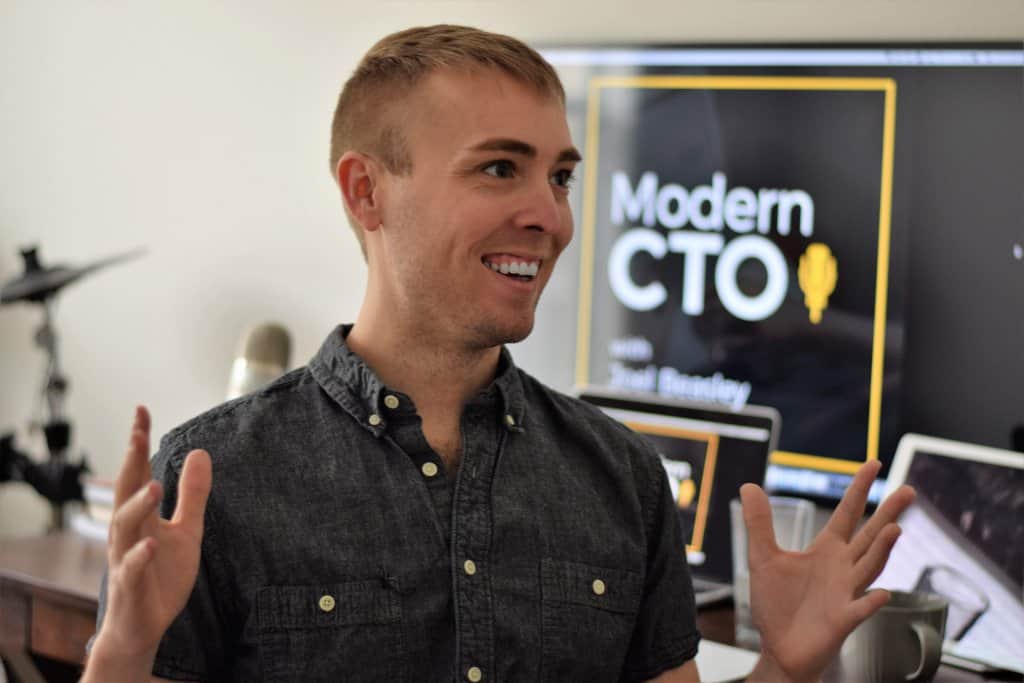
About Daniel:
Daniel “Spoons” Spoonhower is a cofounder at LightStep, a company that makes complex microservice applications more transparent and reliable. An expert in distributed tracing, he is a core contributor to the OpenTracing project, a CNCF project. Previously, Spoons spent almost six years as a staff software engineer on Google’s Infrastructure and Cloud Platform teams, where he ate lots of snacks and worked on various products. Spoons holds a PhD from Carnegie Mellon University in computer science.
About LightStep:
At LightStep, our mission is to deliver confidence at scale for those who develop, operate, and rely upon today’s powerful software applications. LightStep analyzes 100% of unsampled transaction data from highly-distributed, large-scale production software to produce complete end-to-end traces and robust metrics that explain performance behaviors and accelerate root cause analysis. LightStep is backed by Sequoia, Redpoint, and Altimeter. We are headquartered in San Francisco, CA.
Transcript
(Joel Beasley at 00:00:02) This is the Modern CTO Podcast. Mr. Spoons.
(Daniel Spoonhauer (Mister Spoons) at 00:00:15) Hello.
(Joel Beasley at 00:00:16) Hey. I love your name. Thanks. Were you born with that? You came out and your parents are like, "Mr. Spoons, that's what we're gonna call you"?
(Daniel Spoonhauer (Mister Spoons) at 00:00:24) My full name is Daniel Spoonhauer, but I've worked for and with a lot of Dans, and everybody in my family uses Spoons or Spoon to some extent.
(Joel Beasley at 00:00:34) Nice. Did you play any sports?
(Daniel Spoonhauer (Mister Spoons) at 00:00:37) I did. That also helped. I played ice hockey and a little bit of lacrosse in high school.
(Joel Beasley at 00:00:42) There you go. Where'd you grow up? In the North?
(Daniel Spoonhauer (Mister Spoons) at 00:00:44) Upstate New York. Outside of Rochester.
(Joel Beasley at 00:00:46) Yeah. Buffalo, Rochester. I know that area. Cool.
(Joel Beasley at 00:00:51) By the way, this is the podcast, by the way.
(Daniel Spoonhauer (Mister Spoons) at 00:00:53) Yeah.
(Joel Beasley at 00:00:53) We just record the whole time. It's just us hanging out, talking about lacrosse, whatever you would like to talk about. Cool. So I am curious. I was reading about LightStep, and I didn't really understand what it did.
(Daniel Spoonhauer (Mister Spoons) at 00:01:08) Sure. Yeah. So LightStep's a tool that helps other software developers. My wife always gives me a hard time because she feels like it's the most Silicon Valley thing ever to be a Silicon Valley startup selling technology to other Silicon Valley startups. But we also sell to other companies outside of the Bay Area. But the goal is really to help those developers understand performance and how that software works. So one example I use a lot is we have a bunch of ride sharing customers. If you use any ride sharing, it's probably pretty important to you that you get a ride pretty quickly. And if you don't get matched within a few seconds, you're probably gonna go to one of the alternatives. So those companies use LightStep to understand, "Why is it taking three or four seconds? Is it because of computing the ETA for a driver? Is it because they're trying to figure out surge pricing?" Whatever they're doing, basically helping those developers understand what's going on.
(Joel Beasley at 00:02:00) So, okay. That was a very specific example, which I love. But I'm—my background's engineering. Right? I've been writing code for 17 years. I also was talking recently to—I talk to a lot of different development companies. This one specifically, Uru IT. They're on the show. They make products for different customers, things like that. And if I go call up Marcelo and I'm like, "Hey, Marcelo. You own Uru IT. You've got hundreds of developers, nearshore type company. You gotta check this out." What do I tell Marcelo?
(Daniel Spoonhauer (Mister Spoons) at 00:02:33) Yeah. So it's sort of one of two ways. One, if he's having an issue with outages or downtime, we help adjust that more quickly and reduce that downtime. The other direction is just on a productivity point of view. So letting those developers get back to building new features and spending less time tracking down performance problems.
(Joel Beasley at 00:02:53) Okay. So it's like performance analytics.
(Daniel Spoonhauer (Mister Spoons) at 00:02:55) Yeah. Yeah.
(Joel Beasley at 00:02:56) Okay. So, yeah. I'll be like, "Marcelo, check it out. They do performance analytics so that all your customers are super happy."
(Daniel Spoonhauer (Mister Spoons) at 00:03:01) Exactly.
(Joel Beasley at 00:03:02) Okay. See, I like to really understand the products because people walk up all the time at conferences and stuff and are like, "Hey. Do you have something for this?" And I'm like, "I don't know. Maybe LightStep." Right? So how did you originally get into technology? You were playing sports, doing some lacrosse. Did you get a computer for your birthday?
(Daniel Spoonhauer (Mister Spoons) at 00:03:24) Yeah. I remember my dad brought home an Apple IIe. Maybe I'm dating myself a little bit. But I remember being in elementary school and getting that and then just trying to figure out how it worked and writing a bunch of BASIC programs and HyperCard on a Mac later. But basically, just trying to think of it as a tool. I guess I always liked building stuff in a way, and I think of software as a way of building things that's pretty unconstrained. You can move fast and you can build big things.
(Joel Beasley at 00:03:56) Or break them. We like to build—I like to build things.
(Daniel Spoonhauer (Mister Spoons) at 00:03:59) Yeah. Oh, I do too. I actually think unbuilding things is pretty interesting and something that we don't do very well in the software industry. I watched—they've just built, I guess it was a couple years ago now, but they built a new span of the Bay Bridge here and they had to then once they built the new one, they had to unbuild the old one and it took them months and months to do it because you can't—I don't know. I mean, it's a bridge. Right? You don't just knock it down or something like that. So they had to construct pieces of it to help deconstruct it. Anyway, I think it's super interesting.
(Joel Beasley at 00:04:30) So have you ever—how do you deconstruct software?
(Daniel Spoonhauer (Mister Spoons) at 00:04:35) Yeah. I'm not totally sure. I mean, I do love deleting code. That's one part of it. But also just thinking about things from maybe as specific as how do you version APIs, how do you think about backward compatibility—making room for yourself to change it in the future, I think, is pretty important.
(Joel Beasley at 00:04:53) So what was some of the first early technology that you made? First usable technology that you made?
(Daniel Spoonhauer (Mister Spoons) at 00:05:03) Yeah. I can think of just silly programs that would give you quizzes or, you know, basically try to not really create conversation, but as a, whatever, 12-year-old or something like that, create a conversation. I remember some courses in school that I really liked around hardware design. I thought that was super interesting, just starting from scratch and building a processor and then synthesizing it on an FPGA and running a program on it. I thought that was super cool. That was super fun. Yeah. I guess I think of it many times as, for myself, "How can I build software to make things that I do easier or more fun?"
(Joel Beasley at 00:05:47) So how many people do you get to build software with at the company?
(Daniel Spoonhauer (Mister Spoons) at 00:05:50) So product and engineering here is about 50 people.
(Joel Beasley at 00:05:54) What are you learning right now? What's really difficult?
(Daniel Spoonhauer (Mister Spoons) at 00:05:56) What is difficult right now? We are sort of in an interesting point, I think, where we're kind of between having one team and having lots of teams, if that makes sense. And in particular, how that affects our software architecture. So we, I think, rightly started with a monolith. Right? We had one sort of big thing that did everything in LightStep. And we slowly have been pulling parts of that apart for now almost five years. Sort of whenever we would get to the point where something wouldn't scale or we needed to decouple logic in some way. But we're kind of at a point now where we've done that a bunch and yet we have enough of those pieces now that different people on the team don't necessarily have complete understanding of all the different pieces and figuring out, "What is enough knowledge? Who needs to have it? How do we divide that responsibility?"
(Joel Beasley at 00:06:47) So how do you know about that? You're there right now. We're getting raw. Usually, we don't get raw this early, by the way.
(Daniel Spoonhauer (Mister Spoons) at 00:06:52) Usually, we—
(Joel Beasley at 00:06:53) Wait until later in the episode. But yeah. I know. Our job is just to—there's so many people out there, and there's definitely people going through this right now. So what will happen is after the show, people reach out to me. I'll maybe connect you with some people who are at your exact stage or who just went through this in the last quarter. This happens all the time.
(Daniel Spoonhauer (Mister Spoons) at 00:07:12) Cool.
(Joel Beasley at 00:07:13) Yeah. So how do you go about approaching that? Do you have a group of two or three people that you've put together that you guys kind of brainstorm on it? How do you approach making this decision?
(Daniel Spoonhauer (Mister Spoons) at 00:07:23) Yeah. Part of it is, I guess, giving some people some of that responsibility. So we have the beginnings of what we call a foundations team. It's a little bit like a platform team, but part of their charter is to help build tools and help set standards for how the rest of the organization works. So they're sort of thinking about, "What defines a service? What tells you that a service is doing well?" And that way, at least if you identify who's responsible for it, at least you can measure whether or not they're doing it. But, yeah, I think part of it is just finding people to take charge of it. Maybe that's the main thing that I think about these days, is that I actually don't have enough time to really follow through on a lot of stuff because I'm doing a lot of different things. And so finding the right people to help follow through on stuff.
(Joel Beasley at 00:08:14) And then after, you can write a blog post on it called "Scaling the Spoon." Okay. Yeah. Yeah. Yeah. That's kind of fun. So what technologies are you really excited about that you're using at the company?
(Daniel Spoonhauer (Mister Spoons) at 00:08:29) What do we use? I mean, we write a lot of Go. I have mixed feelings about Go. One thing I really like about it is that it really encourages people to write readable code. I have sort of a functional programming language background, which I think that's sort of the opposite you could say about a lot of functional programming languages. They almost encourage you to write really dense code. On the other hand, I do miss some parts of the way those languages work, and I feel sometimes in Go, as someone who's writing it, there's a lot of typing involved. And I just have to remember it's not meant for me now. It's meant for me a year from now or for somebody else on the team to read it. Right? We run on Kubernetes, use Envoy for some things. I think that stuff is super interesting. Having come from Google, it was kind of weird. So maybe a little bit of my history. I graduated from college. I went to a startup, worked there for a couple of years, then went back to grad school, lived in the magical world of functional programming for a while. And then I went to Google, which is like another magical world of its own sort. And then I came back out to the real world when I helped start LightStep. And it was sort of a weird place to be because I hadn't worked with the technology that other people around me were using in, I don't know, a decade or something, more than a decade. So it was like, "Oh, we have a JavaScript front end." And the last time I had written JavaScript was 2003 or something like that. So this is long before jQuery or any of these sorts of things. Right? So it was just a whole new set of technologies. And one thing that I sort of missed a little bit about Google was it was really easy to deploy code into the cloud. It's just like you didn't think too hard about it. You compiled your binary and then that was kind of it. Right? Anyway, so some of the technology that I'm excited about, Kubernetes sort of starts to get some of that feeling back, I think.
(Joel Beasley at 00:10:22) That's exciting. Everyone's been talking about Kubernetes.
(Daniel Spoonhauer (Mister Spoons) at 00:10:22) Well, that's true. I was just at KubeCon earlier this week, and it is—I mean, insane is sort of one word for it. A lot of people there, a lot of energy. It's really cool to see, but it's also, for me, a little bit daunting just to be in this room with whatever, 10, 15,000 other people or something like that.
(Joel Beasley at 00:10:43) Wow. Yeah. So what's the culture like over there at your on your teams?
(Daniel Spoonhauer (Mister Spoons) at 00:10:49) So I think one thing that we thought about when—so my two cofounders are both named Ben. So Ben and Ben and I. When we started, it was like, "How do we build a company that we want to work at for five or 10 years?" And that meant we probably—I guess, we thought we might have to shift a little bit what we were working on. Ben and Ben actually just had come off another project where they were building an anonymous social networking app. So LightStep was kind of a crazy transition for them. Anonymous social networking to enterprise software performance analysis. But I guess we thought that would mean that we might have to shift again or adapt over time. And so for us, that meant finding people that were really good at communicating that we could make sure that as a team, we could take on those shifts. So a lot of the culture is really, I think, about talking to others, understanding what they're thinking. I guess, we think a lot about, "How do we help each other?" Right? What are things that we can do both on a small scale? Like, "How do I sit down next to someone and help them work through something?" And also at a bigger scale, like, "How do I put a process in place that's gonna be helpful for the next 50 engineers?"
(Joel Beasley at 00:12:05) So what are you super excited about right now? What are you guys working on that you're really pumped up about?
(Daniel Spoonhauer (Mister Spoons) at 00:12:10) So to me, the thing that's really fun is—I mean, it sort of sounds kind of silly, but there's a lot of low-hanging fruit in performance monitoring and analysis. People used to ask me if we do data science, and I'd be like, "Well, you know, we compute the 99th percentile accurately." That was a step up from where a lot of the state of the art was, and it's not PhD-level statistics or anything like that. That's just kind of doing the dumb thing. Right? And that was a couple years ago, and we've moved on since then to do some other things. But to me, it's just like there's so many interesting opportunities where the way that people are used to working in this space is they stare at a big dashboard of graphs and kind of use their visual cortex to try and figure out what's changed or what could have gone wrong. And so, I think for us, what's really exciting is that we are now getting to the point where we can actually do some more data science and sort of model building and actually try not necessarily to—we're not at the point where we're predicting things going wrong, but we can start to give you our best guess. Maybe our top three guesses about what's happening. And then as a human, you don't have to sift through quite as much data. It's more about taking these guesses and invalidating them. So that's pretty exciting to me. I guess I'm also really excited about—I think one thing in the infrastructure space is a lot of tools start off for experts. And LightStep, I think, in a lot of ways started off for experts and had a chance finally in the last year to really build out some of the usability features and make it a little more approachable, make the audience a bit wider. And that's also pretty exciting to me.
(Daniel Spoonhauer (Mister Spoons) at 00:13:45) That was part of the goal for me in the end, was not just to build an expert tool, but to actually change the way a lot of people build software. And I think finding that broader audience is an important part of that.
(Joel Beasley at 00:13:58) And so you said there's three co-founders, right? There's two Bens and Spoons. And then how do the Bens differentiate themselves?
(Daniel Spoonhauer (Mister Spoons) at 00:14:09) One has a beard and one doesn't.
(Joel Beasley at 00:14:12) Verbally, though.
(Daniel Spoonhauer (Mister Spoons) at 00:14:13) We're all technical. I mean, we're all engineers before this. So one thing that has been fun for me is just seeing how our roles shift over time because we didn't come in as the business expert and the software expert and the operations expert or something like that. So we've had to sort of flex a little bit.
(Daniel Spoonhauer (Mister Spoons) at 00:14:35) And so we've done different things at different times. Often, Ben Sigelman has done more of the external-facing work. You know, he led the sales team until we had a sales leader. But right now, Ben Cronin's doing a bunch of partnerships work, and that's also pretty external-facing. And so it sort of depends on what's needed at a given time and what else is going on.
(Joel Beasley at 00:15:00) Do they have nicknames? Is it internal?
(Daniel Spoonhauer (Mister Spoons) at 00:15:02) No, it just has to be Ben S and Ben C.
(Daniel Spoonhauer (Mister Spoons) at 00:15:07) Yeah, yeah. BHS or Ben Cronin, or Cronin. Those are sort of as short as it gets. It's a little bit funny that I have the nickname.
(Joel Beasley at 00:15:20) I love it. So how do you see your responsibilities today? Where are they today?
(Daniel Spoonhauer (Mister Spoons) at 00:15:26) Yeah, so today, one thing we did in the last year is we brought on a VP of Engineering who actually runs all of product engineering and design right now. So part of my work is just partnering with him. And, you know, I think the way that we often divide things, although it's not a strict division, is that he focuses a lot more on the organization and on working with the product team to develop a roadmap there. And I work to think a little bit more about the technology and sit down with the Foundations team, sit down with some of the other engineers, and think about what are the technical choices that we should be making to enable product six months or a year from now.
(Daniel Spoonhauer (Mister Spoons) at 00:16:04) So that's part of it. Sort of related to that, I also do a bunch of security and compliance work, so working with our consultants and other external folks to think about penetration testing and compliance processes and how we think about security, and I work with the Foundations team on that. I also work a bunch with the marketing team, so helping to build content, both with folks on the team but also for myself, whether it's blog posts or giving talks and things like that. And then I also manage the finance and HR teams. And so that means, you know, checking in with them on how we're thinking about burn rates, how we're thinking about performance reviews at LightStep, how we're thinking about our next office space, all these sorts of things. So it's kind of a lot.
(Joel Beasley at 00:16:57) So what do you—do you just block time in your calendar? How do you deal with all those things?
(Daniel Spoonhauer (Mister Spoons) at 00:17:02) Yeah. I mean, I try to have a couple priorities for the week, and then, you know, of course, things come up as well. And I think part of it is, when we're talking about enabling service owners and things, it's finding who are the folks that are really gonna end up doing a lot of the work and seeing it through. And then for me, it's thinking about what are the outcomes that we want to achieve, what are the ways that we can prioritize work. I guess one thing that's been interesting, in terms of for me doing a bunch of this security and compliance work, is that a lot of that is new to me, and it can be a little bit mind-bending at times.
(Daniel Spoonhauer (Mister Spoons) at 00:17:42) Because even if you hire a security consultant, they will very rarely tell you, "You must do it this way." They'll tell you, "Well, best practices look like this," or you can ask them what their other clients do. They'll say X or Y or Z. But they'll also ask questions like, "Okay, well, how are you going to build evidence that you're actually following through on that policy?" Or, "Who is going to be the person that is going to be responsible for that?" And so thinking less about, for example, when we patch our VMs and who's the person that's going to do that and how are we going to know that it's done, and if it's not done, who's going to be the person that follows up—thinking about security compliance really, I think, forces you to think about questions a little bit more from the outside, and that's been useful in some of the other areas that I work in.
(Joel Beasley at 00:18:32) So which area do you enjoy the most?
(Daniel Spoonhauer (Mister Spoons) at 00:18:36) That's a good question. I like doing new things a lot, so they're all kind of fun. I guess I like different things about them. I'm not a people ops or an HR person by training, but that stuff is really important to me. So I get a lot of energy just from being part of it. I also do like teaching a lot, and I kind of think of the marketing work that I do as a kind of education. And so working through how to best explain what we do, working through how best to—even some of the best practices around performance monitoring and just explaining those, I find really energizing. And, of course, I mean, I do also like the engineering part of things and building stuff. So that's pretty fun too.
(Joel Beasley at 00:19:22) So do you focus on more of the application? That's what it sounds like. Or the actual engineer's performance, of the engineers?
(Daniel Spoonhauer (Mister Spoons) at 00:19:32) It's more on the application. So the way that we think about it is you're running some software. You should think about what your users care about, right? Do they care about how snappy the app is? Do they care about how fast their video is displaying or rendering, things like that? And then being able to measure those things, we can help with that. And then really where LightStep shines is we're tying changes in those metrics back to changes in the software itself. So you just did a new release, or maybe one of the teams that sits next to you just did a new release. And how that could impact you either directly, because maybe you depend on them, or maybe you're just running on the same host and there's some interference that's happening. Those are all kind of signals that we try to gather, but it's really about the software's behavior.
(Joel Beasley at 00:20:19) Okay, so if I'm an engineer at Vimeo and I do some release that affects our video speed, you could tie that change in performance back to the release?
(Daniel Spoonhauer (Mister Spoons) at 00:20:29) Exactly. Yeah, exactly.
(Joel Beasley at 00:20:29) That's pretty cool.
(Daniel Spoonhauer (Mister Spoons) at 00:20:30) Yeah, yeah. I mean, ultimately, computers are deterministic, right? They don't just do stuff differently for no reason. It's either you change something or somebody else changed something, or maybe your users changed something. Maybe they're behaving differently. But there's always—I think, at least in my experience, there's almost always a change that affected that change in performance in some way.
(Joel Beasley at 00:20:53) Yeah. Humans too, but with the computer you can go see their logs.
(Daniel Spoonhauer (Mister Spoons) at 00:20:59) True, true, true. That's funny. Do you ever hear of writing a readme for yourself?
(Joel Beasley at 00:21:06) Oh, yeah. We do that.
(Daniel Spoonhauer (Mister Spoons) at 00:21:07) Yeah, you do that kind of thing. The other side of that maybe is having a log file for yourself. Like, can someone just go grab your log?
(Joel Beasley at 00:21:15) No. You cannot grab my log, sir. Absolutely not. No. But that's an interesting thing, right? Because there's always reasons. It's just as humans, we don't tell them, right?
(Daniel Spoonhauer (Mister Spoons) at 00:21:26) Yeah, yeah, yeah. But the computers are great because you can just go and see black and white exactly what the deal is.
(Joel Beasley at 00:21:27) So we're talking about people. How do you recruit people, or how do you raise up that next generation of leaders within your teams?
(Daniel Spoonhauer (Mister Spoons) at 00:21:40) Yeah. I mean, for us, recruiting is in part about the team and the chance to work with other great people. For me, that's—I feel like I've always been most successful when I've made that highest priority in thinking about where I'm going next. And then I think from after that, the impact that we can have on how people build and run software. I guess, you know, software is sort of everywhere at this point. And that's not—I think even—I mean, for me, going to Google was kind of fun in some ways because then I could go—before that, I was in grad school doing obscure programming language semantics. Before that, I worked at sort of what you would call fintech now. And when I went to Google, at least I could go back to my family and be like, "Yeah, I work on this thing." But I think it's even easier now, right? I can talk about ride-sharing as an app and talk about how performance would affect you as a user of that, and you don't have to be a software expert to understand that anymore.
(Joel Beasley at 00:22:37) Yeah. I want my Uber there immediately. I'm sorry, I want my ride share there immediately.
(Daniel Spoonhauer (Mister Spoons) at 00:22:44) Yeah. We have a couple of them, so I always try to keep it generic.
(Joel Beasley at 00:22:47) There we go. I did not say Uber. I think that made it worse, actually. But I use different apps in different cities. Some cities I noticed have different—I won't get into naming the cities and get into all of that mess, but some cities are different. And so, yeah, you just have different apps, different cities.
(Daniel Spoonhauer (Mister Spoons) at 00:23:03) Yeah, exactly. Anyway, yeah. So the next generation of leaders—I guess the thing about an organization is, I mean, we were tripling year over year for a while. We've kind of slowed down. We're just doubling year over year. But that just means that responsibilities are going to change a lot, right? When we were—we're over a hundred people overall now, and that is—I mean, we're going to double when we get to January. I think we were about 60-something this past January. So I think part of making part of operating opportunity for leaders is just making room for them, right? And acknowledging that the organization is going to build, hopefully, twice as much stuff than it did last year, which means that there's twice as many decisions to make, twice as many opportunities for folks. And so in some ways, it's not hard. I think maybe the thing as a founder is just being ready for that change myself and then talking to other people and making sure that they're ready for that change too, because the opportunities are going to be there. We don't really have to manufacture them. We just have to recognize that they're there.
(Joel Beasley at 00:24:19) So the first time you went from individual contributor to team leader at an organization, where was that? Was that at Google?
(Daniel Spoonhauer (Mister Spoons) at 00:24:22) So actually, when I was at this fintech startup, I did some management there as well. That was an awesome team in a lot of ways. I left sort of—left undergraduate a little bit early to go work on that team. I just had a couple of classes, so I used to fly from San Francisco back to Ithaca once a month to take a test or something like that. But the team was basically my undergraduate adviser and a bunch of his students from the past decade. So it was an incredibly high-powered team, but no one on the team—I mean, they cared about people, but they didn't care about people, I think, in a way where it was easy for them to kind of step into more of a leadership role. And so that was something that I worked with him on, and that was interesting. So even back then, though, we were 20 people or something like that. So it wasn't like we had a rigorous training program. It was really just kind of working with this guy. His name was also Dan, which is part of the reason why I'm Spoons. But, yeah. And at Google, I started as an IC and became a manager as well, and there was a lot more structure there, which was also super valuable. I took a lot from that, and that actually prepared me, I think, in a lot of ways for things that we do at LightStep.
(Joel Beasley at 00:25:39) So as LightStep doubles and grows, you have a bunch of ICs going to managers. What advice would you give those first-time leaders?
(Daniel Spoonhauer (Mister Spoons) at 00:25:49) I can think of some examples. We had a couple folks actually make that transition, and I think—I mean, I guess I can tell you what I should have told them because this is what they told me six months later or whatever. One big thing is that the pace of work changes a lot. So I think as an individual contributor, you get feedback much more quickly. You write some code, you get a review, you can check it in. Maybe you can even deploy it in the same day. You can see the output. You can see the impact super quickly. And as a people manager, that almost—I mean, sometimes you have a really good one-on-one and you can see some people, you know, maybe they see what's happening in a new way. But usually, the actual impact of that is days or weeks or months later. So I think there's just a pacing thing that's pretty different for folks, especially maybe on the engineering side where you're used to moving pretty quickly. And I think as an engineer, if you're like, "If I can't deploy the code today that I wrote yesterday, I'm going to start complaining," right? I expect to be able to move hyper-fast. But on the people management side—I mean, I guess you could complain to your boss and say, "I'm not seeing the effects of my one-on-one yet." It's like, well, yeah, take a breath, right?
(Joel Beasley at 00:27:05) So patience?
(Daniel Spoonhauer (Mister Spoons) at 00:27:06) Yeah. Maybe that's the sharp version of it.
(Joel Beasley at 00:27:09) Yeah. So when they move from individual contributor to manager, patience is an important factor.
(Daniel Spoonhauer (Mister Spoons) at 00:27:17) Yeah, yeah. I think, I mean, there's longer-term impacts of engineering, right? I mean, you can push out some new code, but it might take a while for it to be adopted or it might take a while—there are things I think that take longer. But I think there is a visceral thing for them, right? In at least in one case, maybe they rationally knew that things were going to be different, but they didn't quite understand how it's going to feel different.
(Joel Beasley at 00:27:45) Because you don't know until you're actually there.
(Daniel Spoonhauer (Mister Spoons) at 00:27:47) Yeah, yeah. And that they hadn't really considered how that quick feedback loop was an important part of where they get energy from. And so then when they just didn't have energy, it was sort of a question, like, "Well, why not? What happened?"
(Daniel Spoonhauer (Mister Spoons) at 00:28:00) I'm still working hard. I'm still doing good work, I think, but something changed, right?
(Joel Beasley at 00:28:06) So you got the company's growing. You've got some people that are first-time managers, but you're also going to have some people that you put in more leadership positions, right? So what traits stand out to you? When you see these traits happening, you're like, "Ah, that's one of the people I want to put in one of the better leadership positions."
(Daniel Spoonhauer (Mister Spoons) at 00:28:27) Yeah. I think part of it is about communication, so being able to convey what you're thinking and convey that to a bigger group, right? Because now it's not just thinking about what you're going to do next, but what your team is going to do next. I think there's a prioritization component that's really important, and maybe that ties into being able to communicate that prioritization well. But there's just always so many things to do with a startup. There's always so many things that could be better, so many features that people are asking for. And you feel like you can move fast, so you kind of just want to do a hundred things. But really, you can only do a couple. A team can only do a couple, right? So I think that's pretty important. And maybe there's a part of leading through example, which is just being able to kind of ruthlessly cut through and get the pieces that really need to be done done, and showing other people how to do that as well.
(Joel Beasley at 00:29:23) Nice. Those are some good qualities. Some good traits. Yeah. So what is the—we talked a little bit about what you're excited about, but what's the thing happening that's making you so excited you want to jump out of bed every morning, mentally? What's that? Is it the doubling and the tripling?
(Daniel Spoonhauer (Mister Spoons) at 00:29:44) Yeah, I think just seeing some of the people grow and the new things that they're doing. I guess part of hopping around between all these different areas is a lot of the way I think about my time is, "How do I unblock them?" And so, seeing what they're capable of and what they can do, and then being able to kind of jump in and say—either just from a higher altitude or because they're asking for it—being able to find those obstacles and get them out of the way.
(Joel Beasley at 00:30:16) Nice. Yeah. So you like helping?
(Daniel Spoonhauer (Mister Spoons) at 00:30:20) Yeah. I mean, yeah. I mean, maybe that's the short version of it. I guess part of building a team that I really like working with means—maybe that's the other part of building a company that we wanted to stick around for a while—is finding the people that we wanted to come and work with every day. And so that has always been a priority, and then there's a nice virtuous cycle to that, right?
(Joel Beasley at 00:30:44) Is there a specific place that you recruit, or how you attract the people that you want?
(Daniel Spoonhauer (Mister Spoons) at 00:30:50) Not especially. I mean, it's changed over time. Initially, it was just, obviously, our network in a lot of ways. We've had a couple of—I guess one thing that I feel like we've been lucky in is finding other people, even when we can go outside of our network, that then turn have pretty strong networks. And so pulling those folks in as well, even across departments, which I think is pretty interesting. So where, you know, someone on the technical side will refer someone for a sales position or something like that. So we still do a lot of referrals in terms of recruiting. I think one thing that's kind of interesting about building a developer product is that we actually recruit among our audience as well, right? So when we're advertising stuff, we're partly advertising the product, but we're also advertising a thing that you could come work on.
(Joel Beasley at 00:31:43) Yeah. Because you use a product that you fall in love with, then you want to go work there, right? Nice. Well, Spoons, we did it. We made a podcast, dude.
(Daniel Spoonhauer (Mister Spoons) at 00:31:54) Awesome. You feel good? Yeah. Yeah. Thanks for your help.
(Joel Beasley at 00:31:57) Awesome. Thank you for coming on and sharing so much useful information. Yeah.
(Daniel Spoonhauer (Mister Spoons) at 00:32:01) Yeah. All right. Thanks for having me.
(Joel Beasley at 00:32:03) Have a fantastic day.
(Daniel Spoonhauer (Mister Spoons) at 00:32:04) Okay. You too.
(Joel Beasley at 00:32:04) All right. Talk soon. Bye. Thank you so much for listening. And if you found this episode useful, please share it with a friend or colleague who you think would get value from it. And if you have topics that you'd like to hear discussed on the podcast, either add me on LinkedIn or send me an email: [email protected]. Every time I get an email or LinkedIn message, it absolutely makes my day and inspires me to keep going.