
Episode 245 ·
Rathi Murthy - CTO at Verizon Media
Today we are talking to Rathi Murthy, the CTO at Verizon Media. And we discuss her 5 C’s of leadership during Covid, how women can advance in their careers, and thoughts on the connected and immersive future that awaits as 5g continues to roll out.
All of this, right here, right now, on the Modern CTO Podcast!
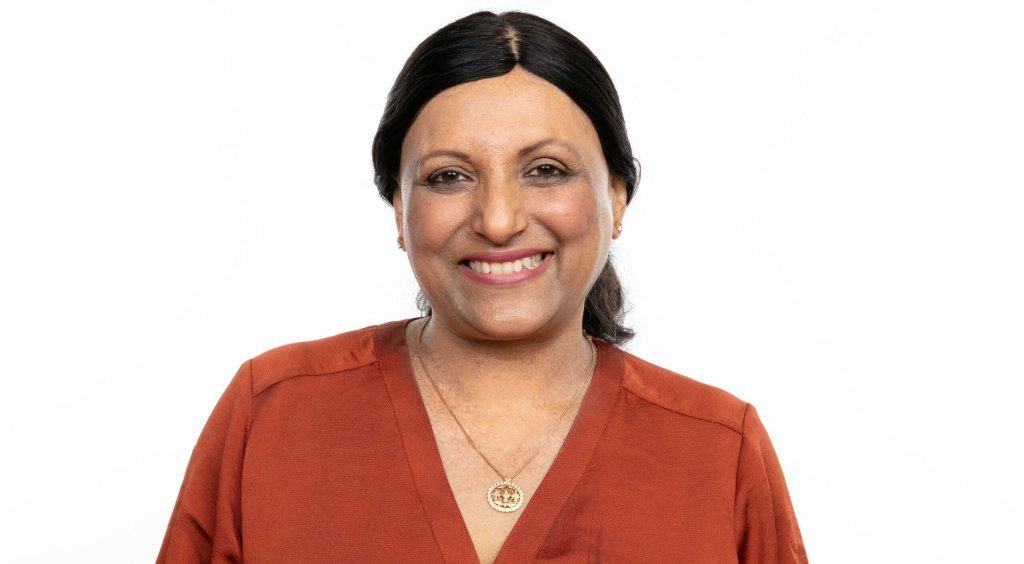
About Rathi:
Rathi Murthy is CTO for Verizon Media. Recognized as a transformative technology executive, Rathi oversees Verizon Media’s global technology strategy, leading the company’s continued innovations in 5G while also managing the platform technology and infrastructure.
Previously, Rathi was Senior Vice President and CTO for Gap, Inc. where she developed an end to end technology strategy for Gap Inc.’s broad portfolio of brands. Prior to Gap, Rathi was CIO for Enterprise Growth at American Express, where she managed end-to-end platform technology, infrastructure and operations for the suite of American Express pre-paid products. While at American Express, Rathi was named Top Woman in Cloud Innovation in 2014, and Most Influential Women in Payments in 2015.
Rathi has held senior technology leadership roles at some of the world’s best technology companies including eBay, Inc., Yahoo, Sun Microsystems and WebMD. Rathi also currently sits on the board of directors for PagerDuty.
Rathi has extensive technology and engineering experience and has spent most of her career developing and building platforms and products for emerging technologies. Her expertise lies in her ability to manage engineering teams and drive change. She is also an Art of Living Teacher and has a passion to help spread Peace in the community.
Rathi holds a Masters in Computer Engineering from Santa Clara University, California.
About Verizon Media:
As Verizon’s media group, our brands like Yahoo, TechCrunch and HuffPost help people stay informed and entertained, communicate and transact, while creating new ways for advertisers and partners to connect. With technologies like XR, AI, machine-learning, and 5G, we’re transforming media for tomorrow, too. We're creators and coders, dreamers and doers creating what's next in content, advertising and technology. We transform how people communicate and transact by creating new ways for consumers, advertisers, and partners around the world to connect
Transcript
(Joel Beasley at 00:00:00) Hello, my friends. Today we are talking to Rathi, the CTO at Verizon Media, and we discuss her Five Cs of Leadership During COVID, how women can advance in their careers, and thoughts on the connected and immersive future that awaits as 5G continues to roll out. All of this right here, right now on the Modern CTO Podcast.
(Rathi at 00:00:24) Here we go.
(Joel Beasley at 00:00:25) This is the Modern CTO Podcast. Hello, hello.
(Rathi at 00:00:37) Hi. How are you, Joel?
(Joel Beasley at 00:00:40) Fantastic. Is that a video game chair?
(Rathi at 00:00:45) Everybody comments about it. Life has taught me through this period to be really comfortable, and given how much I'm sitting on my chair, I've decided to become a gaming person anyways.
(Joel Beasley at 00:01:01) I love it. You look comfortable. You have a nice background and everything.
(Rathi at 00:01:06) Thank you. I built myself, believe it or not, with the amount of video recordings and the meetings I'm doing, I built myself a she shed so I don't have my husband running around. It's beautiful.
(Joel Beasley at 00:01:23) So did you just put it in the backyard? Yep. That's so cool. Do you have an air conditioner and everything?
(Rathi at 00:01:31) I have it all set up. I've got my air conditioner, and I have a sign outside that says, "What happens in the shed stays in the shed." So this is mine.
(Joel Beasley at 00:01:43) I love it. I like the adaptation to the environment. It's very admirable.
(Rathi at 00:01:51) You've got to figure something out, right? Given how we are set up, I think we're here in this mode for quite a while, so I decided might as well make the best of it.
(Joel Beasley at 00:02:04) Where do you live?
(Rathi at 00:02:06) I live in the Bay Area in a place called Portola Valley near Stanford.
(Joel Beasley at 00:02:11) Very cool. So you had room for the shed then. Oh, this is so much fun. I was curious, though, because the company's named Verizon Media. Is that connected to Verizon? There's Verizon Video, there's Verizon Wireless. Are they all kind of under the same family? How does that work?
(Rathi at 00:02:31) So Verizon Media is the family which has the video and then the old Yahoo properties. So if you think about Yahoo Sports, Life, News, Finance, it's that arm of the business. And yes, it's all connected. It's one big family, but we are the division that's predominantly focused on the consumer side, which is the finance, sports, news, the ads and the subscription and that business, and of course, all that we do with the media platforms.
(Joel Beasley at 00:03:08) And when you were a small child, is this what you imagined you'd be doing?
(Rathi at 00:03:12) Never. Not even close.
(Joel Beasley at 00:03:17) You're running the technology for a media company sitting in a gaming chair in my she shed. That's every eight-year-old girl's dream, isn't it? There's gotta be a unicorn in there.
(Rathi at 00:03:30) Oh, God, no. Believe it or not, when I was growing up, I thought I wanted to be a dentist, and I just hate going to the dentist. I'm like, what was I thinking? Clearly not thinking when I was growing up.
(Joel Beasley at 00:03:44) So you went from dentist, and then how did you get involved with technology?
(Rathi at 00:03:49) I think at a very small age, so I grew up in a family of—my dad's side, everyone was a civil engineer. So there was engineering. The whole family, generations, were civil engineers, and I decided I didn't want to be building buildings, but I wanted to be building something. I like the action of building. That's how I got attracted to that notion, and I thought technology seems like the best place. I started with electrical engineering. I did my undergrad in electrical engineering because at that time, computers was still not born. But when computers came around, that became my next passion of really building new products and transforming the way people live, I guess. Kind of taken after my dad, where he'd build new homes, build new concepts, and change the way people live.
(Joel Beasley at 00:04:51) Yeah. Well, now people live partly in their phone, and so you're building products in that space that people are spending time in. So very similar, right?
(Rathi at 00:05:03) Yeah.
(Joel Beasley at 00:05:04) So what was the first product that you built? I know everyone always tinkers around with a couple things, but what's the first memorable product that you got to work on?
(Rathi at 00:05:15) I feel the one that piqued my interest of really transforming the way people live day to day was when I worked with WebMD. So I actually joined Healtheon, which then got acquired by WebMD. And at Healtheon, this was during the time where it was pre-IPO. They were really trying to revolutionize the way physicians did their day to day, so bringing in terminals or computers into the lives of doctors' offices so we didn't need to use that old paperwork and patients having to carry their medical history from doctor to doctor and move around. They wanted to bring that to life. That was my first product that I thought can really transform people's lives in a big way. The amount of resistance we got there was, of course, incredible, because real estate was prime in a doctor's office, and so they were not ready to give up any space. So it took a lot to design and build a system that would be adopted in the market. So that, for me, was the first start of what it could be in terms of building products, leveraging technology, and transforming businesses.
(Joel Beasley at 00:06:46) Yeah. I understand the doctor office thing. My brother and stepmom are both physicians, and I don't go to them because you're not supposed to have your direct family treating you. But when I get frustrated going to my doctor because of how archaic it is, all the technology is so old. They don't have all of these things that they could be doing. Like, why can't I just automatically schedule? I can automatically schedule anything, you know. I can do plane flights, anything I need I can schedule automatically. You just integrate the calendars and it works. But you still have to call, wait on hold for five minutes, and then talk to someone. And so what I realized from a business perspective, this was a fun point in time for me, was these markets that are so in demand, they don't have to keep up. They've got a queue. They're overwhelmed markets, and so they don't have to be as advanced with the technology or the consumer experience. They don't have to care about it as much.
(Rathi at 00:07:46) It is true, but I always feel there is that pivotal point. So now you go—so at that time, it was struggling. I mean, it was so many visits to say, give me that space, and this is how you can transform the way you operate. Your run rate will become much faster. You'll be able to see more patients because wait time to bring in records, everything shifts dramatically. How you prescribe medicines and your records, that whole concept was new. But then there's this pivotal point. Today, you walk into a doctor's office, and they love it. Doctors love it. They're not afraid of the computer anymore. So I always feel there's crossing the chasm at some point.
(Joel Beasley at 00:08:31) Oh, yeah. Yeah. They definitely love it. And as our technologies get better, we can assist the physicians, make their lives easier, allow them to treat more accurately. And that's the promise of technology, right?
(Rathi at 00:08:45) True. True.
(Joel Beasley at 00:08:47) So you've gotten to work at a whole slew of great companies from Yahoo to eBay, American Express. The list goes on, and then now you're at Verizon Media. How did you do that? Did you sit down with the Fortune 500 logos and you're like, I want—I'm gonna pick this one and that one and then create a vision board? Like, how did that happen for you?
(Rathi at 00:09:10) Unfortunately, I'm not that strategic, I don't think. No. I actually have, if I think back, I've always followed my heart. So it's been a journey of following where my passion is and wanting to do something different that's transformative, that's leading and driving a change somewhere. So I think I started, of course, when I got out of school, I was hired directly into Informix. At that time, they were trying out this whole new notion of object-oriented databases, and I wanted to be part of that journey. Then I jumped into JavaSoft because they were launching JDK 1.0, and I wanted to be part of that big wave. It always felt like the next big wave, and I wanna be part of something big that could transform. That was one aspect. The other aspect was really following strong leaders. So I would say I had a really, really strong leader and mentor in Neil Roseman at Yahoo, for example, who helped me find my strength and my passion of leading and driving digital transformation. And so I did follow him. I went to eBay and was driving digital transformation across the marketplace, and then went to American Express to truly drive not just technology digital transformation, but participate in a company that was pivoting from being exclusively catering to the rich, white, 60-year-old male to being more inclusive and catering to the underbanked and underserved. And retail was going through a huge transformation, and it still is, trying to understand their omnichannel experience. How can you connect from the supply chain to the brick-and-mortar stores to online and mobile and make that a seamless consumer experience. And I think technology can be hero in all these stories. So that's kind of where my heart led through this journey, because I found those areas that were transforming as a business, and I felt technology could be the hero in pivoting that transformation.
(Joel Beasley at 00:11:41) So is this what you share with, I think, the people you're mentoring or the people that are looking up to you—to follow their heart and work on what they feel called to work on?
(Rathi at 00:11:51) I 100% feel follow your heart, not really going after titles, but really following your heart and your passion and leaders. I think someone that you can learn from and inspires you and brings out the best in you. I think the combination of those two lead to great outcomes.
(Joel Beasley at 00:12:16) I agree 100%. And then so what was it about Verizon Media where you were like, this is the world's changing, this is where I wanna be?
(Rathi at 00:12:26) One, I'm a boomerang. I came from Yahoo, and I think ever since I left Yahoo, ever since I was at Yahoo, I've always been bleeding purple. I think Yahoo stood for something iconic, both in terms of being really strong in technology and also having one of the best cultures I've been at, the work hard and play hard, and truly exemplifying the pride people took in their work was something I carried with me. I tried to replicate that culture wherever I went. So Verizon Media was definitely appealing to come back to the culture I love most. Especially in this time and day where we have 5G, I think the combination of 5G and media can have a huge impact on transforming consumer experiences. That's what brought me back to the company.
(Joel Beasley at 00:13:26) I like it. So what's the most exciting thing that's happening today at Verizon Media?
(Rathi at 00:13:32) I would say a whole bunch of things. We're doing a lot in terms of connecting people to their passions. That's our motto, and we have been leading and driving both from consumer experiences, leveraging really, really amazing technology. Think about 5G and AR, VR, AI, ML, bringing all the strong technology with, of course, our big data that's been core to everything we do. Bringing all of that together to really power new consumer experiences has been amazing. Most recently, you might have seen the Watch Together in NFL. So especially during the pandemic when none of us are able to go and watch games in the stadium, coming up with new creative, innovative solutions to bring us together and watch games with our friends. I think it's amazing. It's only the beginning, though. As we can leverage some of these new technologies, I think we can transform the way we connect people together virtually.
(Joel Beasley at 00:14:43) I like it. I like it. And because I'm trying to connect my outsider's view of the brand with how the executives inside see. Because what I see from the outside is, you know, Yahoo, Huffington Post, a bunch of different media brands that have sort of come together. Right? And then I imagine that the business model would be operating those brands. But it sounds like that's not the only thing happening over there. There's a lot of other lines of business and things you are doing.
(Rathi at 00:15:17) Absolutely. Yes. And they are some of the powerful brands that bring great trusted content to our users. But what powers it and how we bring content to our users can completely change with the new technologies that we're bringing to life.
(Joel Beasley at 00:15:34) So you could read some articles with Neuralink or something?
(Rathi at 00:15:42) I think reading—more video streaming. I think people are moving a lot to looking at dynamic content, and video streaming is really prime. We're seeing a huge spike in our consumer base really going into watching events and live streaming all over. So I think that could transform the way we're doing our business. And also a lot of relevancy, right? Especially with a lot of our AI, ML, personalizing content to what matters most. We're flooded with so much happening in the world today. Being able to personalize that is amazing. But even if you think about looking at our fan experiences, you know, taking a look at Yahoo Sports,Playar, just providing that augmented reality experience, which gives you 3D replays in real time, ability to add stats on a player, ball tracking information. It just brings to life things that you cannot do sitting remote. Live NBA games in VR. There's a lot that we're doing leveraging our 5G production studios. It can transform the way people think about media.
(Joel Beasley at 00:17:07) What's a 5G production studio?
(Rathi at 00:17:11) We have one of the first studios called Ryot. It's Verizon Media's Ryot Studios that really brings to life some of the AR, VR capabilities that I've been talking about.
(Joel Beasley at 00:17:25) That is so cool. So is that a division of Verizon Media, or is it a partner, or how does that work?
(Rathi at 00:17:34) It is within Verizon Media. It's our own studio that has low latency and enables us to power much of our production in real time.
(Joel Beasley at 00:17:46) That is so—so what type of content are you producing?
(Rathi at 00:17:50) Everything we do, from our live events. Like I said, the power of bringing to life our Playar, for example, was all done through our studios. Our live NBA games in VR was produced by Ryot Studios as well.
(Joel Beasley at 00:18:09) Oh, okay. So you guys are actually out there filming the sporting events. Okay. See, this is now it's connecting because you guys do so much more than I could figure out from just the website and stuff. So that is really, really neat. So you're actually sending video crews out there, and you're filming it in an AR, VR compatible filming style.
(Rathi at 00:18:38) Yeah. And working with our technologies in the background.
(Joel Beasley at 00:18:42) Okay. And then you license that to the TV networks. Is that how it works?
(Rathi at 00:18:48) We launch it on our sites and build our partners and leverage our partnerships to distribute this content as well.
(Joel Beasley at 00:18:55) Okay. So you distribute it through your properties, right? And then other people may be able to use that feed, but it may have your logo on it, or they may pay you for the feed or something like that. Oh, see? That is so cool. How many people—what's the, if you can share, what's the size of Verizon Media?
(Rathi at 00:19:19) We are a little over 10,000 people.
(Joel Beasley at 00:19:24) And what's, like, if 80% of the people were working on something, what would that be?
(Raffi at 00:19:30) I would say we have about 50—I would say 70% of the people really working on core technologies, between core platforms, all the platforms that power us. We have a very, very large lot of platforms around our data centers, if you will, actually around driving really high efficiency data centers. We were the first to come up with Hadoop, which is our grid and our data grid, if you will. So there's a lot of the underlying platforms and our consumers, which is all the properties I talked about, our ads, and our video media platforms.
(Raffi at 00:20:13) So we have those as our four core pillars. I would say 70% actually are on platform.
(Joel Beasley at 00:20:21) That is very cool. Yeah. See, this is why I'm glad I had stumbled across, you know, Verizon Media, and I saw that they were a combination of these, and I started reading about it and the histories of the companies that had come together, and I was reading like the story of your CEO and all of this, and I said, these people are fascinating. Like, I want to go talk to them and better understand, because it just wasn't clear. You know, I just may not have enough experience in this industry, right, to understand exactly like what the standard business models are, but it's always an opportunity to learn, and that's what I really like doing. So thank you so much for sharing about all of this.
(Raffi at 00:21:02) No, most welcome. Joel, I think I might have misspoken on the filming line live events. I do believe that we create the experiences, but we don't really film the event at the event. So just correction there.
(Joel Beasley at 00:21:19) So you create—like, I talked to Brad. He's at this company called AVI, and one of the things that they were doing or working on was like when the baseball stuff happens, all the lower thirds and the interactions, and then they had like some sensors. But they weren't filming it, but they worked on the experience and allowed it to be something different for like the video editors, and it helped to, like, had AI that helped like determine, you know, different shots that could possibly be together, right? So tools like in that nature?
(Raffi at 00:21:55) We provide, yes, we provide that immersive experience on top of the live experiences. Yeah.
(Joel Beasley at 00:22:01) That's pretty cool. Yeah. All right. I like that. That makes sense too, because there's so much work to be done there, right? It's almost as if one of the easiest things is just filming it, and then you have to do all the interactive elements on top of it that could end up needing like, I don't know, 10,000 people.
(Raffi at 00:22:25) Actually, there's a lot. Like, it sounds really simple, but like I was trying to exemplify, when you think about connecting our ecosystem, there's a lot of underlying systems like the data. The data needs to connect all the way from our ads to our commerce to our consumer experiences. The power of the underlying platforms is tremendous. So it does take a lot of AI, ML, XR. Like, it's really core strength in our platforms and technology.
(Joel Beasley at 00:23:02) So how does a consumer experience come together? I know you mentioned one about like the NFL and the watching together, but like how does that project happen?
(Raffi at 00:23:13) Can you ask me that differently, Joel?
(Joel Beasley at 00:23:16) Yeah. Does the NFL come to you and say, hey, we want to do an interactive experience, and we know you're Verizon Media, you're the big name in the world here in this market, and so we want to collaborate with you? Or do you approach them? Or like, how does it happen? Like, how did that event come together?
(Raffi at 00:23:33) We have a business partnership team that really works on building those partnerships. So it works both ways. One is we have the capabilities. We work on those capabilities and work closely with our business partnership team to build those alliances and work with, whether it is the NFL or NBA, and sell the capabilities in conjunction with these partners. So I think about ourselves also as a platform business where we build strong capabilities that can be leveraged across many verticals.
(Joel Beasley at 00:24:11) That makes sense, because I'm a creative person, and so I know that when you scale creative things, you've got unique issues, right? So that sales process would probably require like a bunch of different pitches or partners and people pitching ideas back and forth, and then, you know, you have a suite of tools that have this capacity, and then you come together on one.
(Raffi at 00:24:33) Absolutely.
(Joel Beasley at 00:24:35) Cool. I was just trying to figure out, you know, being a business owner, I was like, how does the sales process work? Like, how do these things come together? How do they happen, right? And yeah.
(Raffi at 00:24:46) I think the power is in really coordinating your capabilities with the partnerships, and we work really, really closely as a leadership team to really align all of our pillars together so we can focus on core experiences across this marketplace.
(Joel Beasley at 00:25:06) I love it. I love it. And I heard you talking in some of your content about like the five C's of leadership, because you're just talking about leadership pillars, and so I wanted to ask you, what are the five C's?
(Raffi at 00:25:21) Oh my God. I hope I remember that. I keep saying things and I forget what I say.
(Joel Beasley at 00:25:26) I'll hook you up. If you forget, I'll let you know what they are.
(Raffi at 00:25:32) So, you know, when we started this whole COVID work-from-home space, again, I was thinking we've got to change the way, pivot to how we operate as leaders. We're not there at our workplace walking the halls, talking to people. We need to figure out how to stay connected and motivated and inspire our teams the way we used to. So I came up with the kind of five C's as our golden principles that we worked with our leadership team. The first was connect. We have to constantly find new ways to connect with our team. I've been doing it. Being a media company, I've been doing a lot of videos and streaming because we have really, really globally distributed organizations. So again, eating your own dog food, as they say. So take our own technologies and connect with our people in fun, interactive ways, whether doing happy hours, simulating walk the halls, if you will, and just providing new connection streams.
(Raffi at 00:26:47) And the second is really collaboration. We have to—like I talked about, and you hit on so many things, Joel, yourself—how do you coordinate with business partners? How do you understand the customer? How do you build platforms and technology to service the customer? It's truly by making sure that we are working in a connected ecosystem and collaborating really well across the different business units in Verizon Media. So collaboration and customer centricity has been key to the way we have been operating. The third is create. Especially through the pandemic, one of my big themes has been we have to constantly watch the customer trends and the consumer patterns. It's been shifting. Customer behaviors have been shifting significantly, and we have to be ready as a business to pivot. So really focusing on creation and innovation so we can experiment and be able to pull out new themes that will enable us as a business to get ahead of our customers has been really key. So we have done hack-from-home events, different ways to continue to keep that spirit of innovation within the company even through these times. The fourth is culture. Culture is really key. It's not just about getting work done, but also bringing all of us together. And like I said, one of the pivotal things that brought me back to Verizon Media was Yahoo's fun culture, work hard, play hard. It's continuing to keep it fun where we all feel a sense of belonging, and our company has really shown up so, so well. Like, our leadership team has been doing open houses and daily connect with the teams that everybody really feels connected to the mission and feel that they are being taken care of. The last but not least is community. Like, we can only win when we bring everyone else together. Like, taking care of the small business. Verizon Media has been contributing a lot to support the small business community. As you bring our surroundings together, we also thrive. We are here for our customers and everybody around us. So for me, the five C's was connect, collaborate, create, culture, and community.
(Joel Beasley at 00:29:34) Yeah. And that's why you're you, because I would not have remembered that. You nailed it. That was amazing. I'll be giving a talk, you know—well, not this year, but last year I'd be out on the road giving talks, and people would say, you know, oh, in episode, you know, 126, you said, you know, this, this, or that. Can you elaborate? I'm like, look, I'll talk in the area of that topic, but I'm a human. My thoughts change, and I'll do the best I can.
(Raffi at 00:30:05) That is me too. It's what comes out once rarely comes out the second time.
(Joel Beasley at 00:30:11) I know. Well, lucky for you, we've got this recorded. We can make a clip of it, put it on your profile, your portfolio. I love it. Now, do you get to do much mentoring with your current role?
(Raffi at 00:30:26) Yes, I do. I actually—I'll tell you a funny story. Actually, this happened when I was at Yahoo. I think I was a senior director at that time, and one of my mentors—I've had a lot of really, really great mentors all through my career—and one of my mentors, Cheryl Yeoh, she had asked me, why don't you start mentoring a bunch of people? There's so many women leaders who are seeking mentorship. And I said, I don't quite know what I could share. I'm pretty ordinary. I don't know quite what I can share. And she actually woke me up. She said, you know, don't you think you have grown by watching so many people and so many women leaders who showed you the path forward, and it's time to give back? And that really stuck with me. And I think ever since then, I've always taken all opportunities that come my way to give back. Give back not just to women and other female leaders, actually across the globe. I spend a lot of time mentoring people in different countries as well, just because I know it's difficult, especially for women in technology. We're not too many of us. So I take every opportunity I can to be there and mentor the best and just share my experiences.
(Joel Beasley at 00:31:56) What are some of the trends that you see amongst women leaders? Like, common advice that you give or patterns? Because I know that there are, you know, a number of women that listen to the show. They come up and talk to me after the talks, and I'm just curious what you're seeing being involved in that community and mentoring there.
(Raffi at 00:32:15) I would say a few things. One is reach for the stars. Often, women seem to limit ourselves just to not dreaming big enough. I suffered from the same. I didn't ever dream that I wanted to be a CTO, and I often felt like I'm happy. I'm very happy where I am. I don't need to move further. And I was being egged on by my husband as well, who would say reach for the stars, keep reaching higher, because you pave the path for so many other women to dream bigger and reach for the stars. So reach for the stars. Think really big. Be confident. Oftentimes, we really suffer from not knowing 100%, and we want to be experts in everything before we take on a challenge. So really be confident. You know enough. You know you have the capability to learn what you don't know, leveraging the power of others and strengths. So be confident you can do whatever you need to do. And third, I would say is support everybody else around you. We need to stick together, and women leaders need to really help each other. Where, again, very few of us, being there for each other to pull us up will really make us a very strong community and help bring more of us into this field.
(Joel Beasley at 00:33:50) I like that. I like the community growing together. I love the positivity, right, because that's even something that I always work on, and I always think it's really important too. Like, when I talk to some women leaders, I'll, you know, suggest something that I noticed once, and it was that I found Mel Robbins. She's like a female author-type motivational person, and I really, really enjoyed her. But what I noticed was I was listening to like motivational stuff with my wife, and there was mostly like males speaking. And then I found, you know, this Mel Robbins, I was like, oh, that's cool. And a switch flipped in my wife because it was like for some reason, it did something for her hearing the same, like, words but just come out of a successful woman's mouth. And like she identified with it differently. And so I always share that observation with people, because now, you know, my wife's like changed her entire life and improved and started her own business and is hiring employees and having success now. And so, you know, I really think it's important to explore that, like, not just listen to one sex of a specific topic, but try both and see what happens.
(Raffi at 00:35:10) One thing I will add, Joel, and this is just something that has been coming up lately in a few women forums through this work-from-home, whole new lifestyle. I think a lot of women leaders are really having a very, very difficult time because they're doing the work of homeschooling and, you know, bringing up the children, taking care of their home, taking care of their jobs, and really being able to manage all of this while they continue to progress in their career has been really super, super demanding. I would just like to give a big shout-out, and one shout-out to all those women, brave, brave women who've been carrying a lot, lot of workload during these times. But to just hang in there and not give up on their dreams, and we will come out together more successful.
(Joel Beasley at 00:36:10) Absolutely. Yes. Preach. I love it. I just went on a one-week trip with my wife, and I have two kids that are ages three and like 1.5, and so I got like a full five days of like nonstop interaction with them, where normally I'm leaving during the day and coming back. And they're usually in daycare because my wife's running her business during the day, but us together as a family unit full-time just reminded me of like how difficult it is, but also how rewarding it is to come together as a family. Yeah.
(Raffi at 00:36:46) So true. So true. I'm only beginning to get to know my husband now. I haven't spent this much time at home ever.
(Joel Beasley at 00:36:56) I don't know. We'll wait for like five years and look back to determine if it's a good thing or not. Oh, man. By the way, earlier you said this thing, you said you were talking about Verizon and eating your own dog food. Well, I met this amazing woman named Archana, who's a CTO at a company out in San Francisco, a large technology company—or a CIO—and she had a version of it called drinking your own champagne. And so now—
(Raffi at 00:37:26) Oh, that sounds more appealing than dog food, don't you think?
(Joel Beasley at 00:37:30) Right? So now at our office, at our company, we always say like drinking your own champagne.
(Raffi at 00:37:36) Oh, I might pick that.
(Joel Beasley at 00:37:39) Yeah. I'll send you that episode after. It was a really good one. She was like incredibly sharp. I really enjoyed her. Her and I also enjoy Sheila Jordan. Do you know her? She was like—
(Raffi at 00:37:48) Yeah, absolutely. Yeah. She's amazing and iconic.
(Joel Beasley at 00:37:53) Yes, she is. Yeah. I really enjoy like finding bright people that have incredible insights and experience and then bringing them together.
(Raffi at 00:38:03) Absolutely.
(Joel Beasley at 00:38:05) So I read that you take meetings on your Peloton bike. Is the Peloton bike in the she shed?
(Raffi at 00:38:14) Oh my God. You have been reading all sorts of things. No. In addition to building myself a little she shed, I built myself a small exercise room. And it's always amazing. In Zoom now, you can set your background. So sometimes it's excellent. Look, at the end of the day, I am a strong believer that we've got to figure out a work-life balance. And for me, I feel balanced when I get time to meditate and time to work out.
(Raffi at 00:38:50) I need both. So I figured out some places where I'm going to jump on my bike and take this meeting, and my team has got used to that. They're like, "Oh, she's doing something." I'm like, "Yep, but I'm listening to you."
(Joel Beasley at 00:39:05) It's like, "Who's breathing heavy on the call?" Right? That's hilarious. I love it.
(Joel Beasley at 00:39:13) I like the Peloton bikes. The first time I got to use one, I was at a hotel in San Francisco, and they had the Peloton bike there at the hotel. And so I made my Modern CTO account there and got on, and then it was such a cool experience because you can ride with other people.
(Raffi at 00:39:33) I know. But I must tell you, Joel, especially when you're taking this in the meeting and then you're not going as fast, and then for people who are competitive like us and you see yourself coming last, you're like, "Oh."
(Joel Beasley at 00:39:46) "Sorry, guys. Not feeling well." He just, like, leave the team call, and you turn up your music, and you can't fall behind. Right?
(Raffi at 00:39:55) Yeah. But I love my Peloton. That has been a blessing, especially now that you can't go to any gyms.
(Joel Beasley at 00:40:02) That's true. Yeah. COVID's really interrupted everything. I saw you guys made a COVID database. Can you tell me a little bit about that?
(Raffi at 00:40:11) Yeah. Actually, we have a small team called the Vespa team. And this Vespa team, a bunch of our groups actually came up with, "Let's look at many ideas on how we can help the community during this time." So this was actually an effort that was grassroots first, very small team in Norway. Six of those engineers actually came together, and they pulled together this idea we have. So it all started with, you know, we had big data experience. Like I said, we were the inventors of Hadoop. And so knowing our data, we said, "We have this whole big open source data serving engine that we call Vespa," and we decided to take all the medical articles that were out there and create a searchable engine, contextual search. So it is very hard for the researchers to process content easily and access all these—I think there was, like, 65,000 reports or articles. So how to access this just through contextual search? So they built this engine out there to help process all of this information.
(Joel Beasley at 00:41:32) That is pretty cool. And so then how do you let, like, researchers and everybody know about it?
(Raffi at 00:41:39) We participated—there was a competition at the White House, actually, that they put out there. So we did participate there, and I won a place with them. So we did allow this became part of the system.
(Joel Beasley at 00:41:55) Oh, cool. Now did you win the competition?
(Raffi at 00:41:58) This was the Allen Institute of AI that they added us as a key resource for that challenge.
(Joel Beasley at 00:42:05) Oh, nice. There you go. Yeah. That's how scientific papers work. Right? You get cited, and based off how much you're cited, that's how much you've contributed to science or the research industry. That's really cool. So if you had to pick one project, right, that's going on right now that you're most in love with, right—and we can edit it out so you don't offend any of your teams if you want—but what would that project be?
(Raffi at 00:42:34) It'd be a challenge.
(Joel Beasley at 00:42:37) All of them. I love all my projects.
(Raffi at 00:42:40) I will tell you that, and I'm hoping my PR will allow me to say this. So I'll tell you what I'm super excited about. You said one project. And I've spoken enough about 5G and the power of 5G and others. Commerce. Commerce really excites me. I think we have a whole new opportunity to be able to leverage some of our inbox commerce opportunities. We have a new partnership with Walmart, and I think there's a huge power and momentum that I see by being able to take advantage of some of our capabilities and data. So I am super excited about that.
(Joel Beasley at 00:43:25) I've actually noticed a trend that I've run into a lot of great leaders who used to work at, like, Walmart or Walmart Labs. They apparently have a really great technology culture over there.
(Raffi at 00:43:39) Yeah. I think they're also innovating quite a bit, and they've been doing really well during this pandemic. I think the digital-first mentality—I think digital-first, any company that has put digital first is actually thriving at this time.
(Joel Beasley at 00:43:58) What is—I'm gonna ask you a pretty open-ended question. What does the future look like, at least in your mind? Like, let's say, I won't put a time frame on it. Where do you see the future, maybe for your industry or a specific technology?
(Raffi at 00:44:14) I think there's—I really see a lot of personalization. The whole aspect of our industry moving to "Give me the content the way I want it, how I want it, when I want it," in the format being rendered to you. And much more interactive consumer behaviors. It's even though you're virtual, you're gonna feel connected to your experiences in a way you couldn't imagine. That's really how I feel. The end result is going to be very, very immersive content and experiences. All the technologies are leading and driving to bringing that personalized immersive interaction in our lives.
(Joel Beasley at 00:45:06) I love it. All the way up until, like, simulation. Correct. Right? That's like, that's the dream of the video games and the virtual reality.
(Raffi at 00:45:15) You can go land yourself somewhere, plant yourself somewhere sitting in your drawing room.
(Joel Beasley at 00:45:22) And then that's when, you know, it's important. You know, we have the same problems, like, as humanity. And since, like, the beginning of time, they just look different how they play out in everyday life because this concept of, you know, personal responsibility and individual ownership, you know, the fact that, you know, you're on your Peloton getting your exercise, you disconnect and take care of yourself. You build relationships with other people and mentor and help and grow and give—all of those things they require discipline. They require, you know, personal responsibility and focus. And when these new technologies come out, I hear a lot of people, they, you know, get very fearful. Right? And for me, it's just a sign that, well, yeah, there's always been, like, addictive things or distracting things available to you. Right? Since the beginning of time, you could eat different plants. Right? You go eat mushrooms. Right? They've been around forever. Right? And so, I just I kind of like that. It gives the opportunity for people to build their discipline muscle and choose to become better because it absolutely is a choice.
(Raffi at 00:46:40) And I think it is—I know we overstate this a lot—but having that growth mindset, I think, is everything. Because if, like we talked about earlier on the medical field and the speed to adapt to new technologies, I think people who have the growth mindset and can adapt quickly to something new, a new wave, is gonna win everything. I think the way we drive education will change. You know? Very immersive, remote, virtual. We've been talking about 5G enabling medical students, you know, go through their experiences with patients, et cetera, completely differently, interact with dissection and the bodies differently. Like, you could do so many things.
(Joel Beasley at 00:47:36) Oh, I've seen some really cool future stuff. Look, one stood out to me where it's like a lens that a firefighter would wear, and they can see through walls and temperatures, and they can map the building in real time. It's just unbelievable, some of the technology. And I've even seen some of the medical stuff, how they're doing. You know, they've got, like, the, uh, I can't think of the word. Whatever the word is for knife, a medical knife.
(Raffi at 00:48:07) Scalpel?
(Joel Beasley at 00:48:08) Yeah. There you go. Thank you. Sometimes—
(Raffi at 00:48:10) Are you the one in the medical family? Like, I am. That's just the sharp thing you don't touch. You know?
(Joel Beasley at 00:48:20) Yeah. Yep. See, the problem is, like, there's—I'm around so many smart people who are all—what will happen is you'll notice, like, in your relationships, when you have experts around you, your brain will forget easily these things because you're confident that you can just text them or that you can call them or that they're there at dinner or whatever it may be.
(Raffi at 00:48:41) No. Absolutely. I'm so with you.
(Joel Beasley at 00:48:43) Oh, yeah. They actually—I learned about that in a study I had read about couples. So when people, when humans couple, your brains kinda sync up on knowledge that you have. And that's why in a couple, often certain people remember certain very specific things. Like, one couple may remember all the birth dates and holidays. Another couple may remember other types of facts. It's like an efficiency thing.
(Raffi at 00:49:09) It's called delegation, Joel.
(Joel Beasley at 00:49:11) Yeah. That's true.
(Raffi at 00:49:13) Certain facts.
(Joel Beasley at 00:49:14) That's what we realize. It leads to stack overflow at some point. We've gotta take a—
(Joel Beasley at 00:49:20) All right. We'll get nerdy. We'll call it, like, autonomous sync or something like that. Autonomous delegation. We'll come up with some cool acronym for it, like, background processing. We get real nerdy all day here. Well, thank you so much. You have an open invitation to come back on. Maybe we'll have you on next year and catch up.
(Raffi at 00:49:43) Thank you so much, Joel, and stay safe. Bye.
(Joel Beasley at 00:49:46) Thank you. You too. Bye. Thank you so much for listening. And if you found this episode useful, please share it with a friend or colleague who you think would get value from it. And if you have topics that you'd like to hear discussed on the podcast, either add me on LinkedIn or send me an email: [email protected]. Every time I get an email or LinkedIn message, it absolutely makes my day and inspires me to keep going.