
Episode 241 ·
Frank Eichstadt - Chief Architect at Orion Span
Today we are talking to Frank, the Chief Architect at Orion Span. And we discuss his experiences from working in aerospace over the last 4 decades, leadership lessons from working with astronauts, and what living in space will look like.
All of this, right here, right now, on the Modern CTO Podcast!
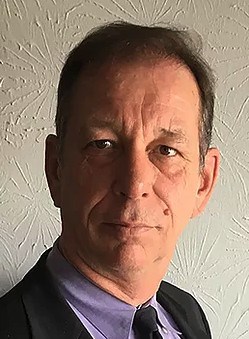
About Frank:
Over a career spanning four decades, Frank has provided conceptual development, detailed design and engineering for award winning commercial and NASA space flight projects including the first robot to operate alongside astronauts aboard an orbiting spacecraft (Charlotte on STS-63), primary payloads flown aboard the Space Shuttle, and a commercial module on the Russian segment of the International Space Station (Spacehab's Enterprise module). Frank’s work is evident in several major components of the International Space Station. Frank‘s appreciation for the space flight environment benefits from several hours of valuable zero-g and hypo-g exposure accumulated as a principal investigator and test engineer aboard NASA’s KC-135 parabolic flight aircraft. His experience includes creative coordination of multinational/multidisciplinary teams to achieve complex projects on time and below budget.
About Orion Span:
The advent of commercial human spaceflight will be a defining period in human history. It will mark the beginning of humanity's expansion into the solar system. To enable this expansion, various destinations need to exist. Orion Span is developing a next generation space station platform to address this need. We are re-imagining space station design from the ground up, making it simpler and much more affordable to build, and operate. Unlike custom-made one-of-a-kind modules that have been used on the International Space Station, our modular architecture can be configured in many different ways to support various missions. From pure research, to manufacturing, logistics, and tourism. Our first space station will be Aurora Station - a multipurpose platform for Low Earth Orbit designed to be used by governments, industry, and private citizen astronauts.
Transcript
(Joel Beasley at 00:00:00) Hello, my friends. Today we are talking to Frank, the Chief Technologist at Orion Span, and we discuss his experiences from working in aerospace over the last four decades, leadership lessons from working with all of these great astronauts, and what living in space will look like. All of this right here, right now on the Modern CTO Podcast. Here we go. This is the Modern CTO Podcast.
(Joel Beasley at 00:00:34) Hello, hello.
(Frank at 00:00:36) Hey, how are you doing this morning?
(Joel Beasley at 00:00:38) Hey Frank, how are you?
(Frank at 00:00:39) I'm great. Where are you coming to me from?
(Joel Beasley at 00:00:42) Sarasota, Florida.
(Frank at 00:00:44) Okay. Well, I'm coming to you from my living room in Kemah, Texas. So we both share this Gulf of Mexico exposure thing to the hurricane season. So I'm glad that you guys survived as well as we did here in Kemah over these past few months.
(Joel Beasley at 00:01:01) What's the nearest major city to that?
(Frank at 00:01:05) I'm about 30 miles south of Houston, right on the Gulf Coast.
(Joel Beasley at 00:01:09) Okay, cool. I'm actually headed out tomorrow to spend a week in the Dallas-Fort Worth area.
(Frank at 00:01:16) Okay, yeah. I'm right across Clear Lake from Johnson Space Center. You know, that's why I live here. So anyway, it's your podcast, so off you go. I'm excited to be here.
(Joel Beasley at 00:01:28) Yeah, this episode is all about you though, Frank. You're the main event today, my friend. We're going to shine on the line, make you the rock star. I'm actually very excited. I'm a super big geek. I love space, and we were searching for really unique guests that were doing amazing things in space. And we came across you, and I was like, oh, that's so cool. Our team pitched it to us and they said we've got this guy Frank at Orion Span. And I read your bio and your background, and I was just like, this guy, this is cool. You got to work on the ISS in the eighties, right?
(Frank at 00:02:06) Well yeah, I became involved in the space flight stuff when I worked for McDonnell Douglas beginning in 1984. At that time it was Space Station Freedom, and we were competing for one of the work packages. So it was very conceptual at the time, and I was working with a group of people, engineers, industrial designers, basically starting on things like how big is the door going to be, and then taking it from there through all the constraints and drivers that you deal with on a project like that. And it was a very unique opportunity to get in on the ground floor of something that huge and do work that, you know, much of that work ended up actually surviving all of the design reviews. And many of the drawings that I was doing on a drafting table back in 1985 and '86, if you were to look at the space station today, those configurations are evident in the hardware. So, you know, it's been a tremendous opportunity.
(Joel Beasley at 00:03:07) Yeah. When you talk about those drafting stations, my dad would take me to work with him, and he was an engineer, and I remember he had one of those big drafting tables. And I got to play with the, there was an electric eraser that could erase better than anything in the world, and that's a huge memory for me.
(Frank at 00:03:24) Well, you know, it's not only been an interesting thing to be involved in in terms of the technology of space station, but also the evolution of the development environment. And I'm very interested in that going all the way back to Skunk Works and Kelly Johnson and the culture of innovation that has happened over the course of, you know, my lifetime, let's say. And we've gone in the last 40 years from drafting tables to virtual reality development models that are highly interactive. And the process had to come up with new ways of working together, you know, new ways of dealing with not only these tools, but how they affect people's means of conceptualizing and sharing their concepts with each other. So that's been really exciting, you know, not only what you're working on, but how you're working on it, the tools you use, and the culture around those things. So if you'd like to talk about that, I find it very interesting, and it's probably one of the most exciting aspects of my career going forward is to see how that continues to transpire. Right?
(Joel Beasley at 00:04:31) What type of technology are you using at Orion Span to, you guys are building space stations, right?
(Frank at 00:04:37) Well, Orion Span is a startup, and what we have been doing is using state-of-the-art tools, whether they're adopted from the architecture field. We have virtual reality models on our website that were built by a guy named David Gull, who works in the VR world. And his fundamental focus from a business perspective is supporting the real estate market. So he creates high-resolution interactive models of condos and homes so that people can experience that virtually before they invest in it. And we saw his capability as being directly applicable to the Orion Span project in terms of putting something out there that people could really interact with and get a sense for what this thing would feel like.
(Frank at 00:05:26) And we would like to take that whole virtual reality development environment and apply it to the greatest possible degree to accelerate our program, reduce cost, and reduce risk. Now, this is something that Bell Helicopter has done, exploring the whole realm of virtual development environments. And another thing that ties into that is the idea of a digital twin model. And we've worked with a company called Visco who developed a digital twin technology that's really being applied in the energy sector to create digital twins in the development phase of offshore platforms, and then use that digital twin as a management tool once the asset is real. They can actually go into the digital twin and query the various elements of that to determine what their performance characteristics are in real time and feed the whole acquisition and logistics planning environment with the resulting data. So, you know, these are things that are next-generation tools that Orion Span would love to apply if we have the opportunity to move that program forward.
(Joel Beasley at 00:06:38) What's standing in the way?
(Frank at 00:06:40) No bucks, no Buck Rogers.
(Joel Beasley at 00:06:42) I know that, yeah.
(Frank at 00:06:44) Yeah. I mean, if you look at the world of commercial space flight, there are a variety of players in there. You have your Bransons and your Musks and your Bezoses and your Bigelows, and everybody has to have critical mass. If you can't achieve critical mass as a development team to have the resources available to make all your concepts real and push them along, you can't get anywhere. So as this commercial space flight environment has evolved over the last three years since we launched the Orion Span project, NASA has made some decisions on who's going to attach to the front end of ISS, for example. Axiom Space has won that game, and so they have that momentum. And other players in the field are reacting to that. And, you know, the opportunity here really is to figure out a way where this industry can collaborate as a whole instead of competing. We need to collaborate in such a way that collectively we make this new economy, this commercial real economy happen.
(Frank at 00:07:58) And Orion Span is, you know, we're a small dark horse in that race. I think we've got some great concepts that could play out whether it's on our platform or in the context of other people's commercial space platforms. I'm looking for opportunities to build that collaborative environment. And it is growing organically, if you will. You know, the players in the field recognize that this is something we're going to have to collaborate on in order to make it work. So there's some very interesting players there that Orion Span is one small part of.
(Joel Beasley at 00:08:36) Well, it's also really positive because, you know, you look up to a decade before this past one, there wasn't a whole lot of things happening. It was stagnant, right? And then you get the SpaceX and the Blue Origin as you mentioned. And now it's opening up, or at least, I don't have subject matter expertise on the space investment market, right?
(Frank at 00:09:02) Right.
(Joel Beasley at 00:09:02) But it's got to seem, you know, reasonable that with all of these companies doing well and advancing in space, that more private money would start to pop up there.
(Frank at 00:09:14) Yeah, and that's true. You know, people like to bet on a winner. But in terms of, you know, whether this is something new or that has happened over the last 20 years, there are really precursors that go way back to the time when I started working on space station in 1984. There was a company called Space Industries that was started up by Max Faget, who was the chief architect over at JSC, in collaboration with people like Professor Larry Bell at University of Houston. And they had a concept for a free-flying space station that would have been a commercial space station way back before the ISS program started. It would have been delivered by the shuttle to low Earth orbit. It would have been maintained by the shuttle on crew visitation flights. And so, you know, their program became a political football in the whole ISS political environment because they were a little bit of a threat to the funding for the ISS program, space station program. So, you know, those are the kinds of things. It's not a technical environment that you're dealing with always. It's a multidimensional thing, and there are a lot of different aspects of it that can harpoon a program. In their case, they became a political football.
(Frank at 00:10:24) And then later on there was a company called SpaceHab that I worked with. I was actually employee number 33, and my role there was Director of Product Definition, which is a very kind of big fuzzy role. But we were providing commercial space flight services with pressurized laboratories and unpressurized cargo carriers that would fly in the orbiter's cargo bay. And the company essentially had a service contract with NASA, and we told them, hey, we'll show up with our commercial assets, and when it's time to launch, we'll be ready to go. We'll pass a flight readiness review, and when you guys get on orbit, your astronauts can come operate in these commercial facilities. And after the mission is over, we'll take that hardware back and prepare it for our next commercial mission. At that time, this was in the eighties and nineties when SpaceHab was doing really well, but NASA wasn't really designed at that time to deal with commercial services as they are now. So SpaceHab ran its course. We actually had a commercial space module program that's very similar to what Axiom is doing today. We had a model similar to that that we were working on in the late 2000s called Enterprise Commercial Module Program that would have been doing many of the things that the commercial environment would do now. They would have started 20 years ago.
(Joel Beasley at 00:12:02) And so speaking of the past, have you ever gotten to, or I guess a better way to say this is, have you ever gotten to go up into any of the space stations?
(Frank at 00:12:13) No, I haven't. As close as I've gotten is doing some parabolic flight experiments when I was working here in Houston in the nineties. I was involved with the crew health care systems development program, and that involved a lot of medical capabilities that they wanted to develop in advance of putting people at risk on orbit, as well as environmental health and crew fitness capabilities, exercise capabilities, and what have you. A big part of that had to do with the interaction of human beings with the hardware. And so I flew on about 40 parabolic flight sorties on the KC-135. So that amounts to, let's see, 40 flights, 40 parabolas per flight, amounts to like 12 hours of total exposure to micro-g. And I also had a tremendous opportunity to fly in one-sixth and one-third g to simulate Martian and lunar environments, which was a lot of fun. And as part of that experience, I got to fly flight experiments with Joe Kerwin, one of the Skylab astronauts, on things like crew emergency return vehicle operations development. It was really a lot of fun and great experience for a designer. Believe me, if you haven't experienced it, you don't get it.
(Joel Beasley at 00:13:32) I haven't, and I've actually been looking at the different, you can, private people can now go experience this. I would call it weightlessness as a layman, but you called it micro-g?
(Frank at 00:13:46) Right, yeah. Weightlessness is a phenomenon. And depending on where you are and what the conditions are around you, there's always some influence of gravity. You know, when you're in free fall in orbit or whether you're in free fall on a parabolic flight aircraft, we call it weightlessness. But if you're actually attached to a spacecraft, unless you're exactly at the center of mass of that spacecraft, there are some micro-g effects that occur due to the rotation of the spacecraft, for example, or vibrations on board, what have you.
(Joel Beasley at 00:14:20) But it's an incredibly unique experience. It's not like being, I do some diving, so it's not like being underwater. It's a completely different thing.
(Frank at 00:14:29) Right. Well, when you're underwater, you still know which end is up because your otoliths are still working, right? Now the first time when you float off the floor in parabolic, it's really a lot of fun. I highly recommend that you do it.
(Joel Beasley at 00:14:42) I'm going to come out to Texas and do it. Let's do it.
(Frank at 00:14:45) Well, you know, Zero G, I don't know where the Zero G Corporation is flying their missions from these days, but you can, I'm sure, go online and find them and book yourself onto a flight.
(Joel Beasley at 00:14:56) That's who you would recommend, Zero G Corporation?
(Frank at 00:14:59) Yeah, that's who you'd go to right now. And I believe NASA is currently contracting Zero G missions with a commercial contractor, Zero G Corp.
(Joel Beasley at 00:15:11) I love that we've started to do that. When there's commercial ability and the potential for people to make money, it just drives the industry forward. It drives the technology forward, and I want space to be something we explore. I'm an explorer at heart, right? And at first I was a big fan of, I heard Musk, heard him talking about Mars, and I was like, interplanetary species. But then I heard Bezos talking about essentially giant mega floating structures that can be placed, you know, relatively close to Earth, you know, essentially like a cruise ship in space, right? And I thought, well, if it can mimic gravity and it's like this whole experience, why would we need to go be on a rock, you know, another rock? I don't necessarily need to be an interplanetary species. We just need to be a space-exploring species.
(Frank at 00:16:06) Right, yeah. Well, it kind of goes to the whole, what is the experiential objective of all of that for a person like you who would like to go and do and explore and experience, okay? If you look at a platform that would offer you a one-g environment while you're on that, you know, have that perspective from Earth orbit or wherever, that takes away one of the unique aspects of the space flight experience, which is that zero-g experience, right? Everybody thinks, you know, I'm in space, I'm going to float, okay? So, you know, looking at things in terms of experience design, the commercial sector is looking at it that way as well. If you have a high net worth individual who wants to go to orbit for 10 days, that experience starts long before launch.
(Frank at 00:16:57) That experience starts when they make the decision that they're going to commit to that activity, and there are companies out there right now that are addressing that full spectrum of the mission from when someone has an initial interest in that, and they might want to go take some training, dip their toe into the water and see if they like it. Jason Andrews has a new company called Orbeet that is addressing that whole market for high net worth individuals who want to enter that process and then go as deeply into that process as they choose. But to gain the experience and, you know, that's kind of similar in a way to someone who wants to climb Everest, for example. You don't start by climbing Everest. You start by doing a little bit of rock climbing and see if that's your cup of tea.
(Frank at 00:17:47) And if it is, you might find yourself at some point at a base camp on Everest or at the summit. But that summit experience is a very, very small fraction of the overall experience that you're looking for. And then it doesn't end then. Okay? Because you still have to come down from the mountain, and then you have to deal with how did that influence the rest of my life?
(Frank at 00:18:09) How did it influence my relationships? How do I look at the world differently having experienced that? So that's really a fun aspect of development environment for commercial space flight is to look at it from that experiential perspective. It's not all about the technology.
(Joel Beasley at 00:18:27) Have you gotten to spend a lot of time working closely with astronauts?
(Frank at 00:18:32) Yeah. I've had tremendous opportunity. One little story I'll tell, when I was working on the Space Station Freedom program in Huntington Beach, California for McDonnell Douglas, we had an underwater test facility. It was a 40-foot deep tank, and they wanted to test out the processes of building truss structures out of the orbiter payload bay. And at the time, Pete Conrad, third man to walk on the moon, he was a VP, and he came out to the site where we were building this hardware, and I was in charge of assembling the hardware.
(Frank at 00:19:04) He got out of his car one morning. He said, "Hi. I'm Pete Conrad. I'd like to come out, work on this stuff with you so I know what I'm working with when I get in the pool and do the testing. You mind?"
(Frank at 00:19:14) And I said, "Do I mind it?" You know? And he came out for a whole week in his t-shirt and boots and was drilling holes and lifting beams and essentially working side by side with us. So I had that opportunity to meet him. I met Bruce McCandless, Neil Armstrong, and Gene Cernan, and Joe Kerwin, and Dave Wolf, and Bob Overmeyer, and Beau Bobko, and Mike Lounge, and Bernard Harris and all these guys that I've had tremendous opportunity to work with and learn from.
(Joel Beasley at 00:19:49) Yeah. I was reading one of the articles you had written, and you were talking about how you got to work with Mike Lounge. And he was, or could you describe it? He was the astronaut that went up directly after the Challenger incident?
(Frank at 00:20:02) Right. Mike Lounge was the guy who hired me at SpaceHab, and he was a VP there in charge of advanced programs. And Mike was a space shuttle astronaut on two missions, one of which was the mission immediately after that vehicle came apart on reentry. And I asked him one day, "Were you concerned on ascent day, on launch day about that?" And he said, "I was not concerned because I knew that everybody on that team had done the absolute best job of preparing a perfect vehicle for that flight."
(Frank at 00:20:38) So if there was any time to not be concerned, it was on that flight because the vehicle was immaculate. But I learned a lot from Mike Lounge. He's a tremendous mentor, and we lost him to pancreatic cancer a few years ago, and I miss him a lot.
(Joel Beasley at 00:20:53) You can tell a lot about his character, though, when, you know, as you talk about him and for him to feel that way about the team and to understand that and to show that, you know, courage and faith for the team and the work that you were doing and knowing those people and being around them while they're preparing and, you know, as you mentioned, like, you call it the vehicle. Right? I'm learning all these new words today. It's like the common terms. Right?
(Joel Beasley at 00:21:22) I like the vehicle and, you know, ascent and reentry. I'm upping my space knowledge right now. So thank you so much for that. But yeah, that's a really good story, and I think that, you know, we could write a whole chapter in a leadership book about that guy.
(Frank at 00:21:40) Leadership. When you look at where these astronauts come from in their careers, they have all come from environments where they understand what leadership is all about. You know, and typically, they say a great leader comes from being a good follower. And, you know, when I was fortunate enough to have Mike as a mentor, I studied his leadership approach. And, you know, there were things about like any individual, you always learn to be sensitive to their cues.
(Frank at 00:22:12) And sometimes, Mike would reprimand me, but I would be telling him about the solution to something, and he would say, "No, Frank." And after those two words, the wisdom was about to emerge. Okay? So you start taking notes after the "No, Frank," because he always had a very insightful way of communicating why or why not. And he also had a very interesting approach to calculated risk and intuition.
(Frank at 00:22:40) Sometimes it was hard to determine when he was acting or deciding things based on intuition or on fact, because he did have that leadership quality of conveying a sense of confidence, where when the leader says that's the way you're going to go, you might question him, but be ready for "No, Frank." Okay? So there's always calculated risk, and that was evident in the way he played golf. It was evident in the way he operated in a professional environment. Always very consistent with Mike.
(Joel Beasley at 00:23:15) Yeah. And where are you spending the majority of your time today?
(Frank at 00:23:20) I'm working from my home, whether it's consulting with the Orion Span project or working on Green Tech Motors, which is another project I've been involved in for a number of years. But with the COVID environment being what it is, everybody's adapting and doing the best we can, making progress as best we can, and looking forward to when this is no longer an issue.
(Joel Beasley at 00:23:44) What's the Green Tech Motors like?
(Frank at 00:23:47) Green Tech Motors is a company that was founded in 2010, and they are licensing patent and technology from the Boeing Corporation that was invented by a guy named Mark Cleveland. Mark Cleveland is best man in his wedding. We've known each other for 40-plus years, and he and three other guys and myself started developing motor technology in his garage with the idea that we would build electric human hybrid bicycles. And Boeing found out that he was developing technology in the garage, and under his employment contract, they said, "Well, you can develop that inside Boeing or you can stop right now." So they brought the project into Phantom Works, where he was an employee at the time.
(Frank at 00:24:30) And that resulted in a number of patents that were licensed to Green Tech Motors, who then reached back to the original five guys and said, "You guys can be our brain trust for developing this technology." And so here we are years later, and I'm involved in helping steer that company toward its goal of commercializing new technology electric motors mainly for the heating, ventilation, air conditioning space because that's where there's great opportunity to replace existing motors with higher efficiency motors. The preclusion there has been that higher efficiency motors are bigger and heavier than the ones they replace. So it costs a lot of money to make that decision. And it's not just the cost of the motor, it's the cost of re-engineering the motor driven system to deal with this bigger, heavier, larger motor and then getting limited benefit out of it.
(Frank at 00:25:23) So our value proposition is efficiency density, where we can bring a replacement direct drop-in replacement technology that saves money and is affordable to integrate into existing systems.
(Joel Beasley at 00:25:38) And so you get to geek out all day back and forth between space, new building, new space stations and building high efficient motors.
(Frank at 00:25:47) Yeah. I mean, being a creative individual, you never really turn that off. You know, I've got half a dozen projects I would love to launch, everything from exercise devices to children's educational toys and, you know, there's always something. But you only have so many hours in a day and you have to prioritize. So...
(Joel Beasley at 00:26:12) Well, so how do you, like, what's your framework for prioritization?
(Frank at 00:26:18) Well, it's variable, really. You know, some days you wake up and you're dealing with intellectual property issues that have a limited window of opportunity. You have to meet the deadline. Some days you're dealing with corporate structural issues or issues associated with stockholders as a board member. You know, I'm always concerned about looking after the interest of our shareholders.
(Frank at 00:26:47) Sometimes it's doing research into technologies that might be glued together into a solution. So, this being a CTO podcast, we talk a little bit about, you know, the role of the innovator in our commercial economy. It's a great place to work, you know, as a chief technology officer, chief innovation officer, or space architect. You're always looking for the collective being more than the sum of its parts. Right?
(Frank at 00:27:20) So and that not only transcends the areas of technology into the areas of business development and, you know, product definition and strategies and everything that goes with it.
(Joel Beasley at 00:27:32) Yeah. I like that. I never heard that title before, product definition. That sounds like an interesting title.
(Frank at 00:27:39) It's a title that I assigned to myself. They said, because they were looking for, well, how do we characterize your role in the organization? And so that's how we chose to characterize it. And I think that from a professional perspective, it makes it difficult to find a job application that you can respond to because nobody asks for that. Okay?
(Frank at 00:28:04) They ask for this particular type of engineer or that particular type of engineer. But seldom do you find a job requisition for somebody who's like a universalist. Okay? I've been called by my coworkers a combobulator because, although the concept of discombobulation is very familiar to everybody, the concept of combobulation is exactly the opposite, where you take a bunch of stuff that doesn't seem to go together and presto, you create something that's amazing. Right?
(Frank at 00:28:40) And so there's a certain amount of combobulator in me, and there's a certain amount of right brain, left brain thinking as a dichotomy that people tend to refer to. And then there's that third lobe in your brain that is the combination of the two. And I think that's the space where a lot of people in this world, that's where they occupy. It's a combination of intuition, fact, belief, you know, creativity versus analytical reality. It's the world that chief technology officers, I think, really live in and are most comfortable in.
(Joel Beasley at 00:29:19) How do you know when to go with intuition over fact?
(Frank at 00:29:24) Well, there's a leap of faith. At some point, you know, if you have a limited amount of time and resources available to support a decision, sometimes you can do the best you can to get the facts, and at some point, you are forced to make the call. You know? It's like when you're in the red zone in the Super Bowl and it's a broken play and you know you've got so much time to get rid of the ball, at some point, you don't know that it's going to be a completed pass, but you do the best you can to throw the ball and get it there. Right?
(Frank at 00:29:56) Sometimes it works, sometimes it doesn't. Sometimes it's intercepted. But, you know, under the circumstances, it's intuition, and then skill and talent kind of takes over, and then there's always a bit of luck involved.
(Joel Beasley at 00:30:09) Yes. And I find that the more prepared I am in life, the luckier I get, like, just repeatedly. I know I've heard it a lot before, but then when I started actually acting on it and preparing better, I just realized it's like, luck seems mysterious until you realize that you can create an environment where it's more common.
(Frank at 00:30:32) Right. Right. Well, what do they say? Luck is when preparation meets opportunity. Right?
(Frank at 00:30:38) And, you know, then there's always that aspect of perceptiveness. If you don't look for, if you don't keep an open mind as to where those opportunities are going to come from, you'll miss them. They'll go by. You know, an opportunity is like, it's like a moving series of windows. You know, at some point, you got a window moves by, and it may not have been the entire opportunity, but there might be another window moving by, and the two will intersect for a certain period of time.
(Frank at 00:31:09) And when you see that intersection happen, you go. Okay? And sometimes that's intuitive. The sense to which it's intuitive is how broadly are you setting your antennas? How much are you really taking account of and looking for those intersections of conditions that provide that opportunity?
(Joel Beasley at 00:31:29) I know, I want to be, like, preach right now. This is great because I'm experiencing intuitively right now as you're describing this, like, I feel that. Like, I know that to be true. And there are some, you know, other interesting things like, first of all, you can hesitate and miss the window.
(Joel Beasley at 00:31:45) I've done that before. You can take the shot and it just looks like it doesn't work out in the next six months and maybe other people from other perspectives are looking at it and saying, "Not failure. You know, I told him we shouldn't have done that or I knew that wasn't going to work out for them." But then a year later, that ended up being the best move of your entire life and you could take a victory lap. Right?
(Joel Beasley at 00:32:08) And so it's just fascinating. I'm always trying to understand better about life. But one of the things, one of the lessons that I've been learning more recently is that if I'm, and we'll go back to, like, the prepared thing. If I'm prepared, if I have my ducks in a row, if I'm in a clear state of mind and have all of my loose ends tied up, then it's easier for me to sit back with clarity and watch those windows align. I can't make them align, but I can be prepared and patient and kind of just be ready. But if you see those windows starting to come together and you've got a messy room, you've got a bunch of loose ends and a bunch of commitments that you haven't fulfilled that you've agreed to, you've got too much weight to try to make that shot. It just doesn't work.
(Frank at 00:32:58) Right. Well, you know, it comes down to a question of how much time and how much bandwidth do you have. Right? I mean, if you're carrying a lot of things with you that you have yet to complete for whatever reason, because you don't have data available to you, or you don't have what you think you need to make a decision, or you're striving for a level of perfection that might not be appropriate for that particular need, sometimes it's better to just get things off your plate and free up that bandwidth so that you're ready to do what's next, because there's always going to be something more than what you expect coming at you. There are surprises coming at you.
(Frank at 00:33:36) And if you don't retire those processes at some point and get happy with them, you don't have the bandwidth to deal with what's next. Now I could tell another story about Mike Lounge. For example, I'd go golfing with him. He would walk onto a golf course with a seven iron and no other clubs, and play with a seven iron and beat me. Right?
(Frank at 00:33:57) And he was standing on the tee one day, and I said to him, "Mike, I look at you analyzing what you're going to do next and having an approach for exactly what you're going to do." And he said, "No, Frank. Sometimes you just have to step up and hit the ball." And he stepped up and hit the ball. Okay?
(Frank at 00:34:13) So, you know, that's the question of are you prepared? He was prepared. He'd been playing with a seven iron all day. You know, he wasn't going to be any better prepared if he waited for another five seconds or took another 10 practice swings. You know?
(Frank at 00:34:26) Sometimes you just have to go with it and either trust yourself or trust the rest of the people that you're working with, that they are also on a similar wavelength with you, that they are also paying attention to all these things. And that gets into the whole interpersonal dynamics of creative environments. That's an interesting place to work.
(Joel Beasley at 00:34:50) Have you gotten into writing a lot? Like, do you regularly write?
(Frank at 00:34:55) Oh, I write a lot, probably too much. But as a creative writer, no, I haven't. I would love to do that. Actually, I've got a bachelor's degree in fine arts from University of Illinois, which is really the foundation of my career as a designer, as an industrial designer.
(Frank at 00:35:18) And over the course of time, I've had the opportunity to work in space technologies and space-related projects, and I consider that my media as an artist. Pursuing my degree as a space architect was a bit of a concession toward that. University of Houston provides a unique program to get a master's degree in space architecture. So having known the faculty there for a number of decades prior to making the decision to get that degree, I knew who I was going to be studying under, and I just wanted to add that to my resume to sort of solidify the whole idea that space architecture is a media. It's a creative media, and that's the way I approach my career as a creative person. Still, my mindset is that of an artist more than a technologist.
(Joel Beasley at 00:36:13) I love it too, because when you have a strong foundation in creativity and then you apply the engineering skills to it, it's like a dual threat. It's a very useful combination to have. It's like a programmer who's also a really great designer. Right? They're very rare. They're like unicorns, but they're unbelievable when you find them.
(Frank at 00:36:34) Right. Well, take you, for example, as the host of this podcast. You're a communicator. And as a person who's not a subject matter expert in anything, the effectiveness I have in a team of subject matter experts is the ability to communicate with them and enable their communication with each other in such a fashion that everybody has that freedom to be creative in that environment and still get the job done. That's kind of a skill set as a communicator, and you can do that many different ways.
(Frank at 00:37:12) You can do it standing at a whiteboard and doing a chalk talk in front of somebody, which I think is a dying art in the world of PowerPoint and sophisticated models. I've been in a situation where I've watched people stand at a whiteboard with a dry marker and explain things to me in a form of a few diagrams in minutes that would, in a lesser communicator, have taken hours or days. But the skill that that person had in addressing this particular person's need for information was just amazing. And I think that's a role that can be played in organizations, is to be that facilitator amongst all these various different subject matter experts that helps them to weave together into a fabric that really makes sense. Gets into the whole nature of interfaces, which we could have a whole discussion on interfaces. I'd be glad to dive into that if you want.
(Joel Beasley at 00:38:15) Yeah. Let's talk about it. Like, interfaces as in the dashboards of the vehicle or the user interfaces of software?
(Frank at 00:38:26) All right. Well, every time you have two functional items that intersect with each other, you've got interfaces that occur. And in our common structuring of projects, we look at the spaces between interfaces, and we try to fulfill the functions in those spaces. Right? You have a subject matter expert that works on a propulsion system or a guidance system or a power system or environmental control life support system. All those subject matter experts, they've got their boundaries, and they need to stay in that boundary and solve that problem. But at the interface, that solution should be a black box at that interface. And there needs to be people who focus on the functional relationships of interfaces between systems, between components, between the user and the technology, if it's a dashboard or a display or whatever it happens to be. That's where the problems really occur. Because if people are solving the problem within their black box, nobody needs to know how that problem is solved because it's predictable at its interface. Now, if you leave that predictability to the end of the development program and say, "Okay, well, we're going to all work on our little black boxes, and we'll figure out the interfaces later," that's kind of doing it in an inside-out manner because you're leaving all your problems to the end. Those problems should be anticipated at the beginning so that you first design the architecture of interfaces so that it's very viable and it's very inclusive. And then you let people solve their black box issues in between those interfaces however they want, because you know what the behavior is going to be. At the end of the day, the behavior is going to be this or the behavior is going to be that.
(Frank at 00:40:15) And if those people working that black box solution recognize, "Oh, look, something's changed about my interface here," now you can deal with that problem proactively instead of at the end of the day when it's going to cost you more time and more money. It's going to break your schedule because you had something you didn't anticipate at the interface. Right? So this is something that happens in terms of a technology development program, something as sophisticated as a commercial space station. There are thousands of interfaces going on. There's a whole hierarchy of them. And similarly, in the development team that's associated with that end product, there are interfaces between all these people and all these subject matter experts and products of their efforts that need to be predictable and dealt with in an affordable and rapid manner so that people can make their decisions.
(Joel Beasley at 00:41:12) I like the way you describe that. It's like an interface stack. It's pretty cool. Now, based on how you think and what I've been learning from you in this conversation, I'm really curious to know, for yourself, how do you define success?
(Frank at 00:41:32) Wow. Personally?
(Joel Beasley at 00:41:33) Yeah. Yeah. You as a human. Yep.
(Frank at 00:41:35) Right. If I have an opportunity to apply my skills, my unique set of perspectives in a way that helps other people achieve their goals, then I feel like I'm achieving my professional objectives, which are very closely tied to my personal objectives as an artistic person. Everybody's looking for satisfaction, regardless of how you measure it. So there's one measure. Am I enabling other people to succeed through my efforts? That goes back to a very Zen approach to the concept of wealth. I worked with a guy one time who said in the Chinese culture, a person's wealth is measured by how many other people have an opportunity to make their living based on you making your living. So that applies in a sense. Financial reward, security, that sort of thing is something that I think anybody has a right to if they're applying themselves effectively.
(Frank at 00:42:40) There should be that. It's not always the case, but there again, there's risks involved and there's decisions involved in how you want to manage that aspect of a career. But I think success for me is really based on, am I achieving my potential? And that potential, in this career, learning is something as a continuous process. Right? You're always learning something. And if you're not learning something every day, you're blowing it. So I do spend a lot of time researching various... every time I'm interested in something, I'll give 10 minutes to it to see whether it's something I need to dive into deeper.
(Joel Beasley at 00:43:24) Do you feel like you're achieving your potential currently?
(Frank at 00:43:28) No. No. Frankly, I don't. I feel that, you know, earlier there was a comment, "No bucks, no Buck Rogers." And if you don't affiliate yourself with a team that gives you the opportunity to satisfy those particular needs of fulfillment, it can become very frustrating. And in the COVID environment right now, there are a variety of different things that are impacting this commercial space sector, whether it's restrictions on how many people you can have in a given work environment. That affects how rapidly can you build a team. Does your team development strategy match what you had planned for a year and a half ago? And how is that burning down your schedule?
(Frank at 00:44:19) And how is that burning up your budget? So that's where a bit of the frustration comes in. And so, I mean, I could be much happier. We could all be much happier. Right? So I'm never really satisfied. No.
(Joel Beasley at 00:44:36) Me either. Like, I'm a pretty hungry person. But when I do have those moments feeling out of sync with what my current routine is versus what I believe my potential could be... and I have them several times a year, maybe. Right? Because it's not something to get perfect all the time. And if somebody's figured out how to get it perfect all the time, let me know. Right? But one of the things that I've developed, and my driver is really from my mom passing away a few years ago. That was like the big thing that clicked in me. When you think about losing a parent or something, that's one thing. When you hold their hand while they pass away, it just gives you this unique understanding, I guess, similar to what you were describing with the zero g. The only way you can know it is to experience it. And when you experience the finite nature of life and you stare it right in the eyes, it just, for me, it lit a fire, and then that fire burned for a long time. And then it started to become this thing where I had to figure out how to keep it going.
(Joel Beasley at 00:45:44) Right? Like, I knew what it was like to live with a fire in my belly, and now I had to figure out how to keep it going. And so syncing up my schedule or my habits. I read this one fantastic book called Atomic Habits. And I'll tell you what, Frank, that thing... you know, I'm sure I'd heard the advice before, but the way this author described it was phenomenal. Have you come across that book yet?
(Frank at 00:46:10) I haven't. But if it deals with the limitations of time available for all of us and how precious time is, and then you've experienced those situations where you realize that some things are irreversible... The Green Tech Motors team recently lost one of our subject matter experts who was a guru in electric motors. Everything that man ever knew about how to solve our problems is gone with him unless he communicated to the rest of the team. And everything we should have done or could have done or did do up until that moment of time, that's all you're ever going to do because that time has passed. Right? So there's definitely, I think, under-appreciation of the value of time is probably one of the most dire problems that people face. You know, go back to your earlier question about reaching satisfaction on things. There's another aspect. I've been a bicyclist since I was a kid, and when I want to feel like I'm successfully doing something, I look to other activities. Like, I'll go out and I'll jump on my bike, and I'll try to set my new record for covering 35 miles or do something that makes me feel like I'm achieving something that's completely within my control, whether that's riding my bicycle or cutting my grass. There are certain things that you know they have a beginning, middle, and an end. And at the end, you're going to be able to look at it and go, "I really like that." Or, "Gee, I could have done better." But at least it's measurable in a very limited context.
(Joel Beasley at 00:47:55) Yeah. I call them fire starters. Like, you can clean up your desk, you can clean up your room, you can clean up your office, and you know that, okay, I'm going to do this for 20 minutes. I know how the energy in the room is going to feel. This is a guarantee. I've got certainty around this payoff, and then you can get that boost to that feeling of control, and then you can leverage that into the next activity that might be like a longer duration goal that you're just going to chip a little bit away at today.
(Frank at 00:48:24) Right. My brother was a master carpenter, and he used to say if he has time on his hands, he's going to sharpen his saw. And that wasn't a figurative thing. If he had time on his hands, he'd be out in the garage sharpening his saws because he knew the sharp saw is not only going to cut better, it's going to be safer, get the job done fast and more predictably with a higher quality. Right? So if there are things you can do during those windows of time where you have the freedom to do it, and those help sharpen your saw, hey, that's a great investment of time. Right?
(Joel Beasley at 00:49:00) Yeah. I'm going to send you... I don't even think you need the book at first, because I didn't read the book until years after I watched his hour-long keynote. Or I think there's like a 45-minute keynote. But this Atomic Habits thing is just, I'm just a huge fan. I think for some reason, you know, sometimes you just get like a feeling. I just have a feeling that if you, that I should send you the link and give you the option to check it out because I found it incredibly eye-opening and useful.
(Frank at 00:49:30) Right. Well, I'm always looking for good books to read and to share with other people. And you never know where that's going to come from. I recently read a book that was shared with me by one of my Green Tech Motors board members, and it was about Roald Amundsen and his exploration of Antarctica in the early 1900s. And it contrasted Amundsen's approach to his competitors at that point in time. And it was a very interesting study on problem-solving and on the strategy of exploration and on the acceptance of knowledge that was gained in a number of different ways. Amundsen was a very big fan of gaining knowledge from native peoples who lived in cold environments. He went and lived with the Eskimos. He understood why their clothing was designed the way it was. And he applied that knowledge to exploring the Antarctic continent and applied it very effectively.
(Frank at 00:50:33) He also took certain approaches to navigation and risk mitigation and preparation and secrecy and team building and team management. And the book contrasted that against his competitors who took a different approach to those same problems, and why they failed and why he succeeded. That book had nothing to do with my challenges of every day, but when you read between the lines on things like this, there's great learning. And when you earlier referenced this whole notion of windows of opportunity going by and you find yourself maybe six months later, you realize what the value of that was. Sometimes the value in attempting to do anything is, did I fail well? Because in the development world, they say, "Prototype early, prototype often, fail early, fail often, learn as fast as you can, repeat." Right? If you're not failing at things, there's a lot of things you're not learning. Babies learn to walk by falling down a thousand times.
(Frank at 00:51:44) Right? They're small and the risk is low. That's when you learn to walk. You don't wait until you're 21. So the same thing with organizations. There's a point in time in an organization where your failures are relatively cheap, but the failure to learn from failure is highly, highly expensive. The risk of not failing is greater than the risk of failing. Right? So I don't know how you got your Smarter CTO thing going, but as an entrepreneur, you recognize that, and you're having a vigorous success. So more power to you.
(Joel Beasley at 00:52:25) Yeah. You want to hear the backstory real quick?
(Frank at 00:52:27) Sure. Yeah.
(Joel Beasley at 00:52:28) Yeah. So my dad, when I was around eight, I had two siblings, and so my mom would say, you know, take Joel to work with you so that, you know, one less kid to manage. Right? And we grew up pretty poor. And so I'd go and he'd do some freelancing jobs. He was an engineer, technologist, and everything from, like, putting in, you know, the first computer systems in the banks to, like, hotel key card rooms. He would just have all of these oddball projects all hours of the day. And so I'd go with him on these rides and sit in all these empty offices, and he would give me little programming tasks on these computers to keep me busy. And at the time, I'm like, you know, when I was first telling the story, I was like, oh, he was such a good dad teaching me young. And then now that I have kids, right, now I realized he was just giving me something to keep me busy so he could get his work done.
(Joel Beasley at 00:53:19) Right? So I was like, oh, it always works out beautifully. And then, you know, fast forward to that, around age 13, I get hit by a car, and I'm in a wheelchair for a year. So I come out of school, and I just get to spend a lot of time on the computer, end up, you know, building software, doing freelancing, ended up building some real estate software at age 18. And then I, you know, sold the rights to that.
(Joel Beasley at 00:53:44) And then I opened up a development agency and built apps for people and investors and companies for about a decade. And then when I was having my first kid, like, right around that time, that's when my mom passed away. And I was like, okay. Well, I could either do—I had some money saved. It's like, I could either do apps, you know, for the next two decades and watch my kids grow up, or I could, you know, take some more risk.
(Joel Beasley at 00:54:05) And I saw all these people and, you know, scrolling through feeds, and they're all raising hundreds of millions of dollars and having exits. And I'm like, you know, I'm smarter than that person. I looked at their GitHub. I'm better at coding than that person. What's wrong?
(Joel Beasley at 00:54:18) And I realized that the common connections, they all had good relationships. They all knew good people, and they had good reputations, and they were good people. Right? I wasn't, you know, saying that they were bad people. I was just I envied them, and I wanted to figure out how to have, you know, more and a better life.
(Joel Beasley at 00:54:35) And so at the time, I said, alright. Well, I've got two options. I can either go pursue this idea for, like, AI memory storage that I had, or I could go and I'm listening to this social media guy talk about relationships and bringing value and just starting where you're at and sharing the experiences you know and just doing what you can with what you've got. Right? And I said, okay.
(Joel Beasley at 00:55:02) Let's go with that because if I go invest all my money into this AI startup idea that I have and I'm off by three years of commercialization timeline, then I'm gonna be broke. Right? If it can't commercialize quick enough. And so I was unsure. I was like, it could be three to five years before that's needed.
(Joel Beasley at 00:55:18) And so I said, I'm gonna go do this blog, book, podcast thing where I just start sharing everything I know and then inviting people and growing it. And I just fully committed to it. And it was a long, long, difficult road. And then, you know, about a year in or so, we got, like, a break and had, like, you know, CTO of Microsoft on and Verizon. And then we had Douglas, the current CTO of NASA.
(Joel Beasley at 00:55:47) And then it kind of took off. Right? I was at the point where I was having walks with my wife after work, and I couldn't talk. I was losing my voice because I was doing three shows a day. And so we had to back it down and back it down and figure out how to make money from it too because I was, you know, at the end of my savings.
(Joel Beasley at 00:56:05) And but it all kind of came together.
(Frank at 00:56:07) Right. Well, that's interesting that you should have ended up on this path kind of as a happenstance. It's not what your intention was. But over the course of time, you recognized the opportunity. Right?
(Frank at 00:56:24) So, you know, and the timing was right. You know, we talked a minute ago about the value of time, and the other thing is the value of timing. You know, sometimes there's—I've been told there's a name for a good idea that's ahead of its time, and it's called a bad idea. Right?
(Joel Beasley at 00:56:44) I haven't heard that. That's good.
(Frank at 00:56:46) Yeah. Well, that's a Mike Longism. And that's absolutely true. So, you know, sometimes there's just the right time for when it's time to railroad, you railroad. Right?
(Frank at 00:57:00) And if you happen to be there at the right time with the right resources and the right team and the right idea, boom, things can happen. If you're two years early or two years late, maybe not so much.
(Joel Beasley at 00:57:12) You just gotta get up and try again. You just get a little bit smarter with each failure and keep going back at it. And now we're sitting in a new season here in our lives and the growth of the company where we're asking ourselves, you know, what's emerged organically and how can we amplify that? And so one of the things we get a lot is people reaching out to us saying, oh, you know, I heard some advice on the show. It was fantastic. I implemented it. Thank you. And or I had a call with, you know, I heard one of your guests and then I set up a call with them and they gave me some really great insight that actually got me promoted. And so now we're trying to—like the next step in our business is trying to bring the audience from the podcast and connect the people who want to be connected into, like, groups and stuff. So that's what we're trying to do.
(Joel Beasley at 00:57:59) We're just trying to be, like, the intermediary or, like, the catalyst that helps people, you know, connect and grow their leadership as a technology person.
(Frank at 00:58:09) Right. Well, the conditions are right for all of that to happen. You happen to be in the right place at the right time. You know, to get back to your earlier topic of commercial human space flight in lower orbit or even, you know, off to the surface of the moon, NASA is looking at commercial solutions for landing things on the moon, whether it's payloads or human beings, commercial solutions for providing logistics support, all of that stuff. The time is now.
(Frank at 00:58:39) Okay? This is when it's finally happening. Okay? And everybody who's properly positioned to make that happen, their window of opportunity is open. There's, I think, a universal understanding amongst all these different entrepreneurs who have been watching for this opportunity that if they don't figure out how to work together in new ways to make this happen within this window, then that opportunity might not happen again for another so many years.
(Frank at 00:59:11) But if they work together now and achieve some momentum, now it's not a closed-ended window anymore. It's an open-ended window, you know, and it might take fifty years before commercial space flight services are operational to the surface of Mars. It might take a hundred, but it's a continuum now. Okay? We all get on this continuum together.
(Frank at 00:59:36) That's where the fun is. Okay? Because it's not—again, it's not about technology so much as it's about coming up with creative ways for people to work together and make progress collectively, you know. Let's assume a common goal and get there, you know. I had an opportunity to work a number of years ago with a team of people on a space project.
(Frank at 01:00:01) We had a goal of creating a certain capability that would enhance our commercial services to NASA. And we didn't have enough people on staff, so we went to Germany and we hired people from what is now Airbus. At the time it was Daimler Chrysler Aerospace. And we went to Russia and we hired people with Energia. And we put together this team and made all these people recognize a common goal and work together.
(Frank at 01:00:28) Now that was an interesting challenge, because we had a group of American young entrepreneurial engineers who were the client, and we were looking to deliver services to NASA. And then we had this big organization in Germany, huge engineering company. And we had this huge engineering company in Russia. And if you know the history between Russians and Germans, it hasn't always been that great. Right?
(Frank at 01:00:53) So taking these people and collectively forming a team that had a very aggressive schedule. I mean, we went from concept to first flight in, like, twenty-four months with a primary payload for a very small fraction of the cost of what it would have cost NASA in a very small fraction of the time. So making that project happen on time, it wasn't about the technology. I mean, it was about the relationships and making the relationships work. The Germans have a saying, das ist auch mit Wasser gekocht, which means that's also cooked with water.
(Frank at 01:01:31) So if you can figure out how to make those solutions work in one technological project, a lot of that is gonna apply directly to the other technological project. Most of that has to do with people because they're the universal constant. Right? I don't care what you're doing. There's gonna be people involved.
(Frank at 01:01:48) So making those relationships work is really a skill set and always learn about that.
(Joel Beasley at 01:01:58) You mentioned Russia. I'm a fan. I've known, like, a lot of great people from Russia. But I did see that they, there was, like, an article and I saw that Russia claims Venus. And I didn't look into it, so I don't know, like, how hyperbolic the statement was.
(Joel Beasley at 01:02:15) But you're in the space industry full time. What was that about?
(Frank at 01:02:20) Well, I don't know, but they're welcome to it. You know? I mean, I'm of the opinion that, you know, they're welcome to it just like, you know, if somebody thinks that they want to go colonize Mars, they're welcome to it as far as I'm concerned because everybody who goes to Mars, the only thing they're ever gonna want to do is come back. Because that's a crappy place to live. You know, there's no birds or grass or air or water or fish or anything else.
(Frank at 01:02:49) Okay, you would live in a completely synthesized environment that's highly constrained and not a very good place to raise kids. Alright? So, you know, they're welcome to it. Now, you know, in terms of the relationship with Russians, I feel very, very privileged to have had the opportunity to travel to Moscow and to Korolev and work very closely with Russian engineers and develop relationships with those people that were beyond just sitting across the conference table. But, you know, over the course of a few years, you see the same people often enough, and you drink enough vodka together that you tell enough jokes that you really get to know each other on a personal level.
(Frank at 01:03:35) And, you know, I highly respect the skills and the knowledge that those people have. They have developed on a parallel path in this, you know, the space race over the course of decades. They developed on a parallel path, and they have their heroes. We have our heroes. They have their approach to doing things as do we.
(Frank at 01:04:00) But, like so many things, there are more similarities than there are distinctions between the two. And it was very exciting to explore that and develop those relationships.
(Joel Beasley at 01:04:11) Yeah. One of my friends, Alex here or Alexei, but he, when I first met him, I said, hey. What's the Russian word for vodka? And he said water.
(Frank at 01:04:25) Right. They never put a cap back on the bottle. Once you open the bottle, the cap goes in the garbage can. And so they've got some very interesting cultural traditions. You know, we would go over there and have meetings for a week at a time.
(Frank at 01:04:39) At the end of the meeting, you have a document that everybody signs. It's called the protocol, and it is officially what happened and what you're gonna do next and the action items and everything else. And that goes to upper management over there, and they all have to answer to that document. And then there's the real agreement, what you're really gonna do. And that's what happens in the bathroom when you're standing there next to someone and you say, okay, that's what the protocol says.
(Frank at 01:05:03) But what we're really gonna do is this. Right? And nobody needs to know. Right? And you nod your head.
(Frank at 01:05:09) And if you violate that trust, you're not gonna work with that person very well, because that's the way things worked under the Russian system. There was what people needed to know, and what people didn't need to know. And then it was what really got done. And that's the way their culture worked. Now, if you're gonna work with those people, you have to recognize the best part of their culture.
(Frank at 01:05:32) It's like working with Brits, working with Germans, working with Americans. That's the rules. And we had a guy on staff when I was working with these people who was a Russian, and he would coach us so that we were aware. If you make—if you establish a confidence with a person and you give that person your word, you do not break that word or you do not make that agreement. If you know you're not gonna be able to fulfill it, don't make it because you will burn down the relationship.
(Frank at 01:06:00) Right? So anyway, at the end of the day, after all these meetings, we have a protocol. They would go into a separate conference room, and there were always a number of bottles of vodka on the table, and hors d'oeuvres and things, and generally, like, one bottle of vodka for every three people. And the objective seemed to be how quickly can we empty bottles. And nobody walks out of the room sober.
(Frank at 01:06:24) Okay? But under those conditions, you really find out who amongst those people that you were just working with for the past week and a half, a month, who those people speak English, and who of our team actually speaks Russian? Because you start telling jokes and people start letting their guard down, and you establish that relationship that's deeper than the working relationship, which is really—it's the lubricant that makes those situations work. And it's not just true for Russians. It's true for any team.
(Frank at 01:06:56) Right?
(Joel Beasley at 01:06:57) It is. It's just how we all just have different ways of going about how to achieve that result, how to achieve that depth of relationship and trust.
(Frank at 01:07:06) Right. Right. And, but the opportunities are always there. You know? You're always meeting people in your world who you gauge, and if you both see the same opportunity, that relationship starts to grow.
(Frank at 01:07:22) But, you know, and some people you find that, you know, that person's gonna be difficult to work with, and you try to realize why, and then modify your own behavior to achieve some success. So, you know, in the creative field, especially working with a lot of engineers, there is that effective communication that has to happen where they learn to respect my perspective, let's say, and I have learned to respect their perspective so that we have that open communication as nonthreatening intersection between their factual bent and my creative bent. And, you know, what I found out is that a lot of those people—you look at a lot of engineers, for example, among those very, very talented people, there are a lot of musicians. Okay? Because I think there's an aspect to that type of a mind that looks at the beauty of music as a structure, as a mathematically rational art form, and it just appeals to them.
(Frank at 01:08:34) So, you know, I really think that if you find that creative common ground, it can help make relationships work.
(Joel Beasley at 01:08:42) I love how you brought in the music there because I happen to play music. And one of the interesting things that was running through my mind as you were saying that is, like, when I'm playing with other people or when I'm making a song and layering tracks or whatever part I'm in, I'm always trying to figure out what is the best for this song. And it's like a—it's a step outside of ego. It's not like what's—how can I be the, you know, the star of this song? It's like how can we work together to make this song great or let's all freestyle a little bit until this thing starts to take on a personality of its own and then we can just kind of, you know, fan that flame.
(Joel Beasley at 01:09:22) Right?
(Frank at 01:09:23) Right. Well, there's a degree to which creative teams can operate in analogous ways to musical ensembles. You know, you have the approach where you have a composer sitting somewhere who's composing all of the different score for all the different instruments of an orchestra. And now you've established this thing. You put it in front of an orchestra, and you have a conductor who's going to give you a certain interpretation based on how he wants to conduct that orchestra.
(Frank at 01:09:55) He's going to give it a certain tempo. He's going to give it a certain emphasis, certain sections of the orchestra. Okay? And then you've got the opposite end, you know, where you've got Eddie Van Halen and his brother standing on stage just riffing on things, and it's absolutely amazing, but it's totally improvisational. No note has ever been written or ever will be written, and it will never be played the same way again.
(Frank at 01:10:20) But there's a certain elegance and beauty to it. Okay? Because the chemistry is amazing. Right? So if you look at organizations like GreenTech Motors as an organization, we're challenged to essentially play improvisational jazz, because we don't have the resources and the time available to script every single thing that we're going to do.
(Frank at 01:10:47) There's a dynamism to it. There's a real-time creativity to it that is dependent much on communications and common goals. Okay? But it is certainly we don't have time to orchestrate. You know, if we stop to orchestrate, it's going to be too late.
(Frank at 01:11:04) We're going too slow. Okay? What did somebody say about in jazz, there are no wrong notes. Right? So that's I really I feel that in this whole creative world, there are a lot of interesting analogies and metaphors that I find myself going to in order to kind of put things in shorthand, get point across in shorthand.
(Frank at 01:11:32) So, I'm often accused of mixing metaphors, but I try not to.
(Joel Beasley at 01:11:38) You're just combobulating. Right?
(Frank at 01:11:40) Hey. There you go. I get it.
(Joel Beasley at 01:11:42) I get it. I totally get it. Is there, as we start to wrap up, I have a last question here. The Orion renderings were beautiful. The Orion Span renderings.
(Joel Beasley at 01:11:52) Like, I was just blown away by them. I said, this looks like it should exist. This is the future. And you mentioned a couple times your artistic side. And I was wondering if you have like an art habit or a blog.
(Joel Beasley at 01:12:06) Do you generate renderings of other things? Do you, like, generate concept art for space regularly that I could follow? Or
(Frank at 01:12:16) Visual communication by art form. To me, it takes the form of sketches, diagrams. I sketch as well as I speak, I guess. It's to me, it's a communicating media. It's not an art form, if you will.
(Frank at 01:12:35) Alright? And I believe that children should be taught to draw every much as they should be taught to write, because it's not an artistic skill. It's a communication skill that should be developed in people. But the renderings and the models that you see on your Orion Span website were produced by a guy named Bob Sauls, his company here in Clear Lake named XP4D. And Bob's a long time friend of mine.
(Frank at 01:13:05) He produces CGI, let's say, for many different customers in the space field for NASA, for Blue Origin, SpaceX, Relativity Space. He is a maestro of producing CGI, whether it's still renderings or animations. And if you recall the twin landing of the SpaceX boosters last year when they flew the Falcon Nine Heavy for the first time, and there was video of those two boosters coming down simultaneously. Boom.
(Frank at 01:13:41) Hitting. And Bob created some videos of that event months before. And if you look at Bob's animations and the actual footage side by side, his ability to render that kind of reality with the tools at his disposal is just amazing. So, you know, like so many other things, you don't necessarily do it yourself. You find the pro from Dover to do that for you, and then develop a great relationship with this person where, you know, my sketches inform Bob's models in a matter of minutes rather than a matter of weeks because we have such a great relationship.
(Joel Beasley at 01:14:25) I love it. Well, Frank, this is awesome. We made a podcast. How do you feel?
(Frank at 01:14:29) Oh, I feel good. I'm glad you contacted me. And, you know, if you all don't mind, I'm going to put this on my LinkedIn page as a way for people to get to know me. And I appreciate your great skill in hosting the podcast. You do a great job.
(Frank at 01:14:45) I've looked at a bunch of your podcasts, so very comfortable. Love the beard, by the way.
(Joel Beasley at 01:14:50) Thank you. I really appreciate the kind words.
(Frank at 01:14:52) You know, as things go forward, if you have any questions for me, never hesitate to call. I'm always available and always available for anybody else who wants to reach through this podcast and connect with me. Please do.
(Joel Beasley at 01:15:05) Okay. And we'll post links in the show notes to your LinkedIn and connection information as well.
(Frank at 01:15:11) Alright. Very good.
(Joel Beasley at 01:15:12) Talk soon.
(Frank at 01:15:14) Bye bye.
(Joel Beasley at 01:15:17) Thank you so much for listening. And if you found this episode useful, please share it with a friend or colleague who you think would get value from it. And if you have topics that you would like to hear discussed on the podcast, either add me on LinkedIn or send me an email [email protected]. Every time I get an email or LinkedIn message, it absolutely makes my day and inspires me to keep going.