
Episode 235 ·
Tammy Nam - COO at PicsArt
Today we are talking to Tammy Nam, the COO at PicsArt. And we discuss items that technical founders might overlook when creating a startup, how entrepreneurs have the opportunity to positively affect the world and why having the right people positioned correctly is a recipe for success.
All of this, right here, right now, on the Modern CTO Podcast!
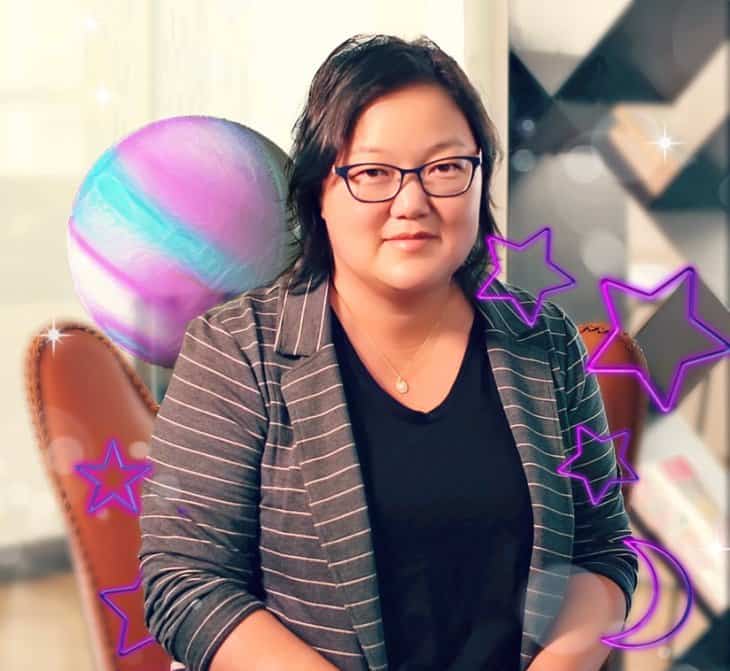
About Tammy:
Tammy H. Nam is the COO of PicsArt, the world’s largest creative platform and social editing app with more than one billion downloads and 150 million monthly active creators. She oversees business and operations for the 600+ person global company headquartered in San Francisco.
Prior to PicsArt, Tammy was CEO of the global streaming service Viki (acquired by Rakuten in 2014). She was also a marketing executive and leader at Scribd, the #1 e-reading subscription service, and Slide, the social entertainment company started by PayPal founder Max Levchin (acquired by Google in 2010). Tammy has 25 years of experience advising dozens of brands such as Akamai, Visa and Starbucks to grow leadership positions and identify new opportunities. A graduate of Northwestern University, she studied journalism and economics and was named one of “25 Women to Watch in Tech” in Tech by AlwaysOn and mBolden’s “Mobile Growth Leader” winner in 2020.
About PicsArt:
PicsArt is the world’s #1 creative platform and social editing app leading the visual storytelling revolution. With more than 150 million monthly active creators, the PicsArt community creates, remixes and shares nearly 1 billion images every month. The company has amassed one of the largest open-source collections of content in the world, including free-to-edit photos, stickers and more. PicsArt is available in 30 languages for free and as a subscription on iOS, Android and Windows devices. Headquartered in San Francisco with offices in Yerevan, Armenia; Moscow; Beijing; Tokyo; and Los Angeles, PicsArt is backed by Sequoia Capital, DCM Ventures, Insight Venture Partners, and Siguler Guff and Company.
Transcript
(Joel Beasley at 00:00:00) Hello, my friends. Today we are talking to Tammy, the COO at PicsArt, and we discuss items that technical founders might overlook when creating a startup, how entrepreneurs have the opportunity to positively affect the world, and why having the right people positioned correctly is a recipe for success. All of this right here, right now on the Modern CTO podcast. Here we go. This is the Modern CTO podcast.
(Joel Beasley at 00:00:36) Hello, hello.
(Tammy at 00:00:38) Oh, sorry. Can you hear me?
(Joel Beasley at 00:00:40) Yep, we can hear you. Look at that background. You better have made that with PicsArt. Did you make that background with PicsArt?
(Tammy at 00:00:47) I did. It's a shameless plug.
(Joel Beasley at 00:00:50) I love it. It's good. I was actually just listening to my own intro episode so I could pronounce Hovhannes's name correctly. How do you say it?
(Tammy at 00:01:02) Well, I pronounce it Hovhannes.
(Joel Beasley at 00:01:05) Hovhannes?
(Tammy at 00:01:06) But I'm sure that's also not quite correct either. But that's why I call him Hov.
(Joel Beasley at 00:01:14) Oh, you call him Hov. Okay, I'll adopt that new nickname too. How did you end up meeting him and getting involved with PicsArt?
(Tammy at 00:01:25) I met him about two and a half years ago, maybe almost three years ago at this point. At that time, I was on a sabbatical from my previous company. I just needed to take some time off and rest after many years of just nonstop, nonstop going. So I actually took one year off, and toward the end of that time I was thinking about what it was that I wanted to do with my life next and had actually come up with two ideas for startups that I wanted to start. And then I got a call from the founder of my previous company, and he's on the advisory board of PicsArt, and he said, "You have to talk to Hovhannes. This is a really amazing company, amazing growth, and they're looking for an operator who also happens to have a marketing and a community building background. So you're the only person I know who has that background. So you have to talk to him." So I met him, and I spoke to him, and once I learned more about PicsArt, it was very clear that this was the future of communication. And at that time my kids were young teenagers—now they're 17 and 16—but it was very clear to me that they represent the future of how people will communicate, which is just visual. They prefer to communicate through memes and stickers and short form videos, and PicsArt was such at the center of all of that trend that was happening. So I thought, okay, this company is going somewhere.
(Joel Beasley at 00:03:07) Yeah, it's an interesting way to communicate because we use words and conversation that creates emotion, but you can do it faster with GIFs or memes or whatever type of graphic you want to call it. It reminds me of the Egyptians on the wall. We saw them as so old, and now I'm seeing them as, oh, they might have been even more advanced and more intelligent.
(Tammy at 00:03:32) Right, exactly. And, you know, the other thing that I realized after digging into it a little bit more, even with my kids—my daughter especially, she's such a social media maven—you know, there's a language to this visual communication that I had no idea. There's so much nuance between one emoji to another to a series of emojis and the meaning that, you know, if you do it wrong or the series wrong, then it's laughable. I think it's kind of funny.
(Joel Beasley at 00:04:06) Yeah, and then there's different—yeah, it's just communication through the emojis. There's some emojis that you only use with your partner, your spouse, and it's just so interesting how we're evolving as humans with this communication. I also think it was really cool—one of my favorite things about PicsArt was it feels like a Photoshop meets a social network because people were engaging and doing these things like remixes and sharing. And, you know, now it's no surprise that, you know, he brought in you with community and then the product ended up having that community aspect to it. I think that's pretty neat.
(Tammy at 00:04:46) Yeah, Hovhannes had a really great vision very early on. If you see very early versions of the pitch deck, you see that he had envisioned this combination of what we internally call the three Cs, which is the creative tools, the community, and the content. And it really has remained true to this day, and I think it's a huge reason why, one of the big reasons why PicsArt has become as big as it has and it sustained its growth over, you know, since it launched in 2012.
(Joel Beasley at 00:05:19) Can you give me some ideas, some context—how big is it?
(Tammy at 00:05:24) PicsArt now, we have an install base of more than a billion. At some point, more than a billion people have downloaded the app. What we're really proud of, though, is the fact that more than 150 million people who use the app on a monthly basis are all creators. They're not passive observers. They are all creating something, so they're very engaged and doing something on the app. In addition to that, we have a very high percentage of daily usage. So it's more than, I think, 35% at this point that's a daily usage. So if you think about the editing activity, which is theoretically an occasional use activity, the fact that people are doing it so frequently, even on a daily basis, is pretty impressive.
(Joel Beasley at 00:06:12) And what's, looks like the average—do you have an average use case that somebody's using? Is it, you know, middle school kids? Is it businesses for posting content on their social media?
(Tammy at 00:06:25) The use cases range quite a bit. So we do have, I think a little over 50% of our users are Gen Z, so we do have quite a bit of young users as well. So they may be using it for, you know, applying a filter and sharing it on social media. They may be creating a meme or collage or editing a video and sharing it on TikTok. We also have about 30% of our use case that's non-personal use. So it would be things like I'm creating a flyer for my college organization or I'm a small business and I'm creating an ad for Etsy. So the use cases vary quite a bit, and we're always constantly surprised about the new ones popping up all the time. One of the interesting ones that has become more popular, especially over the last six months, is uses for PicsArt specifically for the intent of stress reduction. And so that's been increasing and what we're hearing from users post-pandemic.
(Joel Beasley at 00:07:32) Like stress reduction like they're frustrated with other tools, or like those videos that you see sometimes on Instagram where they're cutting clay or something?
(Tammy at 00:07:43) Oh, you mean like the ASMR? It's, I guess, sort of like an ASMR but active. So instead of watching someone else doing something, you're actually doing it yourself. So the process of doing it, creating creative art, it's very soothing, and I've experienced it myself. So if you're editing something, it's like painting a picture or drawing. It's just, it's stress relieving.
(Joel Beasley at 00:08:15) Oh, I get it. I get it. Sorry, no, I 100% agree. For me, playing the piano or something like that, I can go into a flow state and a creative state, and it's absolutely one of my good—for stress reduction, I like to work out and I like to play music. Those two things I can just go in, get in the zone, you know, almost instantly every time, and then it just kind of resets my frame of the world.
(Tammy at 00:08:44) Right, right.
(Joel Beasley at 00:08:45) That's cool, though, that you're—how do you get that feedback? Do you run questions in the app? How do you do that?
(Tammy at 00:08:52) We do occasional surveys at least once or twice a year. We survey our entire user base. We might do spot surveys. I think we did one recently specifically on pre- and post-pandemic activity and how that's changed. The other really great group of people that we are talking with on a very regular basis is what we call the PicsArt Masters. So these are people who are super users of the product and really active members of the community. We have direct relationships and communications with them. So these are people who spend probably, you know, 10, 20, 30 hours a week or more on the app, and they are helping to educate other users. They're showcasing inspirational edits. So these are people who give us very specific feedback about—give us suggestions for products and what's going on in the community, that kind of thing.
(Joel Beasley at 00:09:49) Nice. Yeah. So I was curious to know about your role as COO. I was reading through some of the research the team did on you, and you mentioned a couple times about the COO playing a role as assisting technical founders of a startup. Could you share a little bit about that?
(Tammy at 00:10:10) I think, well, Hovhannes is an engineer founder, but he's also a very savvy businessperson in that PicsArt is his fifth or sixth company. So he's a very experienced entrepreneur. That being said, a lot of founders are technical founders. So they have more of a technical background. They may be engineers or they may be starting out or new. That's not the case in Hovhannes's case, but a lot of times they still want to focus on product, they want to focus on engineering, they want to focus on, you know, other things that have nothing to do with people or less to do with people. But at the end of the day, when you're growing and scaling a company, it all comes down to people one way or another. So when you can have someone to handle and manage the scaling of the business, managing people issues, whether that's hiring or, you know—having essentially, it boils down to having the right people in the right places focused on the right things. So that's not necessarily a skill set or even, honestly, a good use of some founders' time. So when you have that balance, I think that's the best situation.
(Joel Beasley at 00:11:28) Well said. Often people ask me about different roles, you know, the three letters and what they should be doing and their responsibilities. And, you know, I guess I've learned over the past couple years after talking to so many people that if you're in the C-level, it's really exactly what you just said, Tammy. It's the ability to figure out, you know, what you need to do, who the right people are, and putting them together in the right ways based off of the needs of the business, not based off of a blog post of what the 17 responsibilities of a CEO are.
(Tammy at 00:11:58) Right, exactly, exactly. And it will be different for every single company. But yeah, it's really at the end of the day, it's removing barriers to your objective. And that just comes down to people.
(Joel Beasley at 00:12:13) Yeah. Actually, we were talking a little bit about this yesterday, talking to the author of a book called Team Topologies. Now that book is amazing when it comes to structuring teams because they provide an entire language and framework around how to discuss it with stream-aligned teams and all of this stuff. But I had had so many conversations about structuring teams and, you know, similarly connecting them back to what I was just talking about with the title, where your team structure is going to be dependent on your business needs, right? But then he took it to this whole new level, and so now I'm just kind of on a high, you know, excited about these new concepts that I was learning from him and Team Topologies. But I like to, whenever I find good stuff—when I find PicsArt or this book—I like to share it with people because, I don't know, I just found that people, when you bring good content into their lives, they like you. I like to be liked, right? So you have a lot of experience with marketing startups, right?
(Tammy at 00:13:16) Yes.
(Joel Beasley at 00:13:16) Yeah. So walk me through how you do that from an early stage. So I'll give you some more context. We're a startup right now. We have about 10 employees. We do the podcast, and we primarily sell advertising and things like that. But how should we be thinking about marketing at this early stage?
(Tammy at 00:13:38) I think marketing works best when you are taking advantage of something that is already organic or innate for you. So, for example, if you have any kind of community, that is a really great place to start—getting feedback from them, incentivizing them to share on their social media, word of mouth, et cetera. Almost all products will have some kind of core rapid user base. If you don't, there's probably a problem with your business. So I would take advantage of that. There are a lot of growth marketing strategies that you can employ. A lot of them involve paid marketing. Some companies that makes sense, and some companies it doesn't. There's what they call an LTV-CAC analysis that you can do to see, based on the lifetime value of your user, how much does it cost to acquire that user? So if the unit economics make sense, it makes sense to put money behind it. So if there's an LTV-CAC of, let's say, plus three or something along those lines, that's probably pretty good. Most of our marketing—the vast majority—is, I would say maybe 90% of our marketing is organic. So that's the best situation to be in. It's hard to sustain paid marketing growth over time for obvious reasons, but organic marketing would include channels like social media, email, win-backs, that kind of thing. But typically you would look at it in terms of what are my organic marketing channels and what are the opportunities for paid marketing that's going to be a good return on my investment.
(Joel Beasley at 00:15:35) Okay. Yeah. So right now we do a couple of things for outreach. We focus on two areas—more listeners and more sales, right? So in the more listeners area, we do things like we put an outro on the end of the episode asking people to share if they find it valuable. We do outreach, like email campaigns, where every week I sit down and find 50 different CTOs and send them an email and ask them, you know, what should we ask upcoming guests? But we were considering the idea of running Facebook ads or YouTube, things like that, but I couldn't figure out how to really justify it because there's—it's not like a direct return on investment. It's not like if we get a new listener, we know the exact dollar amount or they're purchasing something. So we weren't really sure how to grow it with paid advertising. And then when I saw your experience with marketing, I was like, oh, maybe I'll ask Tammy and she'll have some good ideas on where to start. Like, do we find a person that knows how to do this and have them help us, or—
(Tammy at 00:16:42) I think it really depends on your business model. So you're ad-based, right? So that's a little bit trickier.
(Joel Beasley at 00:16:52) Ads, sponsorship. Yeah. So people pay—we don't run ads on the podcast, but people will pay—we have a six-month backlog of, like, we're booked six months in advance just naturally. And then if people want to come on sooner or if they want us to make clips and promote the episode, we've got three packages that they choose from. But we never do interrupt advertising because I hate that stuff.
(Tammy at 00:17:15) Oh, right, right, right. Okay, got it. So I think you do have a built-in network effect in that your guests and the companies that you invite are incentivized to promote the content afterward. So that's a great model, and it makes sense. You don't want to interrupt the user experience with advertising, but at the same time, you can tap into the network of your guests as well as the companies that they work for. So that's a great idea. Yeah, I mean, one thing that you might consider is maybe having an advisory panel or maybe even of people who are in the media space or publicists or, you know, influencers in the community, tech people, industry people, that kind of thing. The great thing about advisors is they are helping you for the sake of helping you, and they tend to be really well connected in the right spaces.
(Joel Beasley at 00:18:21) And then what do you suggest for startups? And sorry, I'm just picking your brain here. I don't know if you were expecting this, but I'm excited. And we can edit out anything that you don't like either.
(Joel Beasley at 00:18:33) But when you see founders or a company and they have many available paths, like they could do a lot of things, there's a list of like 40 different things they could do, how do you help them figure out the things to actually take action on? Like for marketing, if you had 40 possibilities of marketing, like 40 different things, how would you as a marketer early stage startup figure out which of the two or three that you focus on?
(Tammy at 00:19:03) I think great marketing, as with great product development, there's a lot of trial and error and A/B testing you should do. A lot of the strategy is dependent on your situation at any given time, so that will include things like how much money do I have to spend? What is my business model fundamentally? Does it even make sense to do paid marketing? Is there an ROI to that?
(Tammy at 00:19:31) What other assets do I have to work with in the beginning? I don't necessarily think that a lot of what you should do in the very early stages, I think, is start to experiment with a lot of different channels, test it out and see what the results are. That's also dependent on who you have to work with on the team. So there might be people who are early stages. Probably the best people to hire are generalists or people who are what I call figure-it-outers.
(Tammy at 00:20:01) People who are really good and comfortable with not having done something before, but who can learn quickly and act and pivot quickly. That's probably the kind of personality that you want to have early stage because then they can wear multiple hats and they're okay with it. Later on it makes sense to specialize and hire people who have very specific experience in a particular channel, whether it's influencer marketing or social media or email, et cetera. You want people with experience because otherwise, you know, you don't know what you don't know. So yeah, that's what I would recommend early on.
(Joel Beasley at 00:20:42) How do you identify those figure-it-outers? Like, have you found a good reliable source to find those people or good questions to ask during interviews to find them?
(Tammy at 00:20:55) Yeah, that's a good question. I've been interviewing people, probably thousands of people in my career, and have gotten much, much better over time at spotting the people who are more inclined toward that way. I guess this doesn't apply just to early stage startup. It applies to any company that wants to be innovative, and increasingly that's not just startups. That's any enterprise period. Even big companies want to have people who are entrepreneurial-minded in their thinking.
(Tammy at 00:21:30) So in terms of spotting those people who are more inclined toward that direction, it's hard to say. I think if you have been doing it for a long time and you've been interviewing so many people as I have, you tend to kind of spot those. A lot of it is sort of instinctive. So I would say listen to your instinct for sure. Another important aspect is the referrals.
(Tammy at 00:21:56) So even though the candidates are giving you the references, first of all, you want to try to back channel when you can, not the formal references but back channel. But even when you are talking to, for instance, a lot of the people who I am interviewing, I will do reference checks myself rather than having HR team et cetera do it because I think there's a lot that you can pick up between the lines in reference checks. So when I've made mistakes or big mistakes, it's when I haven't listened to my gut. Either in the interview or in the reference check where people are, they want to tell you something, but what comes out of their mouth is actually different than what they may be saying. So either facial gestures or pauses in what they're saying.
(Tammy at 00:22:44) So you have to really kind of listen and pay attention rather than going into it thinking I really desperately need to hire this person. So you don't want to jump to make decisions out of desperation for sure. You want to listen to your gut. And one of the questions that seems pretty obvious that I like to ask in interviews is, do you love your job? And surprisingly, a lot of people either, they don't outright say no, but a lot of people are not that enthusiastic in their response.
(Tammy at 00:23:20) That's a big, big, big red flag. That's one.
(Joel Beasley at 00:23:24) I agree. Like, the past couple months, I've been waking up and just thinking like, I am the luckiest person in the world. Like, I get to do these shows four days a week. And honestly, this hour of the day right now talking with you, Tammy, is like my favorite hour of the day because it's, I don't know, it's just like a dream that came true. And so it's really exciting, and that feeling of knowing you're in the right place or on the right track is really, really great, especially when we have it within, you know, the other members of our company.
(Joel Beasley at 00:23:59) Right? Like everybody's really pumped up to be doing what we're doing and building that type of momentum is critical to having success. Because like, I'm sure you know that over at PicsArt, you guys have, you know, lots of employees in multiple countries all over the world. What's the culture like there?
(Tammy at 00:24:19) Yeah. I mean, before I get to that, I wanted to respond to one of the comments that you made about you loving your job and you feel like the luckiest person on the planet. I think that's awesome. And I firmly believe that, you know, actually, I mentor a lot of young people and what you see common in a lot of young people early in their career is they have this existential angst about what do I want to do with my life and am I doing the right thing and am I contributing to the world, et cetera. And what I often tell them is the best thing that you can do for the world is to do what you're really great at. Usually when you're doing something that you're really great at, that means that you are contributing the maximum capacity and it usually means that you're very happy doing what you're doing, which also has a ripple effect on everyone around you.
(Tammy at 00:25:15) So I think that's great. Then that means that you're in the exact right place. So to your question regarding the culture at PicsArt, culture is not one of those, you know, here's a list of five bullet points of what our company's culture is. Culture is very organic. A lot of times it's both top down and bottoms up and it needs to be reinforced in actionable ways constantly.
(Tammy at 00:25:46) So it's something that you need to be very, very thoughtful about. So for instance, one of my favorite entrepreneurs of all time is Jared Friedman who's the former CTO co-founder of Scribd and he's now a partner at Y Combinator. I love Jared, and he was very well known at Scribd for having built really great engineering teams and hiring really great engineering teams. So one day I asked him, Jared, what's your secret for doing that? And he said, it's really simple: No assholes and no crazies. And I thought that is a really brilliant boiling down essentially of a baseline that you want to have. And it seems pretty obvious, but a lot of companies don't enforce that. So that's a number one rule of culture, I think.
(Joel Beasley at 00:26:47) Yeah, and they probably don't enforce it because of things like what you mentioned earlier about shopping hungry or, you know, feeling the need to fill the position just because you have the quota to fill.
(Tammy at 00:27:00) Mm-hmm. Exactly.
(Joel Beasley at 00:27:02) What else in culture? Open my eyes.
(Tammy at 00:27:07) I mean, culture is, it's one of those things that it's really hard to put a finger on. But it is incredibly important for hiring. It can be a strategic advantage for hiring, definitely for retention, definitely for word of mouth. Because if you have an employee base that's not really happy in their company, it also shows up in the end product, in the customer support and everything. So it is something that we're constantly thinking about. And it really, luckily, you know, in our case, I think it's relatively easier to enforce because Hovhannes as a CEO founder is not an asshole.
(Tammy at 00:27:55) He's not crazy. He's very supportive of the employee base. He cares. He loves doing offsites. He loves recognizing people, that kind of thing. So that's awesome. That's another thing that if you don't have, it's really hard to manufacture. The other is consistency and hiring policy.
(Tammy at 00:28:15) So interviewing and infusing into this, incepting into the hiring managers that, you know, qualities that you want in people who are collaborative and low ego, that kind of thing. You need to actually specify that to hiring managers. I think in engineering teams, it tends to be a little bit harder because it's a category of people who typically are valued based on their technical ability. So you have to really ask yourself the question, how important is that versus, you know, if they're really crazy or they can't work with others or they can't communicate with others, how much more do you value that? So it's kind of sometimes a fine line.
(Joel Beasley at 00:29:03) And how do you do that with the technical or with the hiring managers? Is that, like you mentioned, you explain to them the qualities of the people that you're looking for and you bring that up frequently because that's a culture point you made too. But like, how does it actually look? Are the hiring managers going through like a training program? Is it when they meet on a recurring weekly or monthly meeting that the leader of the hiring managers is bringing this up?
(Joel Beasley at 00:29:30) Like, how do you reinforce that constantly?
(Tammy at 00:29:34) I think a lot of it is reinforced through the daily culture of the company itself. So what are you, it can't be just a prescriptive, you know, here's a list of things that you need to look for. It has to be just infused into every day. So it's things like, how do you communicate to the company? What is it that you highlight as important on a daily basis?
(Tammy at 00:30:01) How are managers communicating with their direct reports? So it's an unspoken sentiment, I guess, that permeates the company first and foremost. Then secondly, as part of the interview process, so we, for example, have, depending on the location, we may have a cultural interview. So someone from the HR team in our Armenia office, for example, will do a cultural interview as part of the process. So they actually do specifically interview for culture fit.
(Tammy at 00:30:35) One of the other things that we're evaluating is a software that has people fill out a series of questions that's designed to identify, you know, various strengths in EQ as well. So we're looking into those kinds of softwares as well.
(Joel Beasley at 00:30:57) Yeah. That's a pretty cool category of software. I took one a while back, and it was arguably the most favorite one I've ever done. And it was just showing me pictures and asking me questions about the pictures. And that was like the entire thing.
(Joel Beasley at 00:31:14) And it was like a hundred or 200 of these pictures. And then it spits out this like personality, psychological profile type deal. And then I was like, I want to see how accurate that is. And so I was like, this is pretty accurate, at least about how I feel about myself.
(Joel Beasley at 00:31:32) And I then gave it to my wife and had her do it, and I was like, yep, this is very accurate.
(Tammy at 00:31:38) Did you feel like a lab rat when you were taking it?
(Joel Beasley at 00:31:43) No. I always feel like a lab rat when it's like a text question with like a one to ten, and I'm just, it reminds me of standardized tests in school, and it's mentally hard for me to care, to feel like I'm feeding data into a big machine. But when it was images, like and it was asking me questions about the image or select, you know, which of these four images, you know, how you feel or whatever it is. Those, for some reason, that just connected with my personality type or however I am. It connected with me really well, and it didn't feel like a standardized test.
(Tammy at 00:32:21) Right. We're going back full circle to the visual communication.
(Joel Beasley at 00:32:25) We are. We are. And who knows? They might have even used PicsArt for some of those images. So I want to talk a little bit about leadership, if that's okay.
(Joel Beasley at 00:32:36) What's some of the best leadership advice that you've ever received?
(Tammy at 00:32:42) You know, one of the very early bits of advice that sticks out in my head very clearly is, early on in my career I had this boss who was always very positive, very chipper, always looking on the bright side and just generally extremely well liked. And I asked him, and you should ask people things when you're curious about it. I'm obviously asking people a lot. I asked him, how do you do that? How do you maintain this positivity even though I know all this craziness that's going on around you?
(Tammy at 00:33:20) And he said my motto, my life motto, my business motto is don't let the assholes get you down. Again, it's with the assholes. But I thought, you know, that's really great advice. So it's in startups in particular, in tech and in business in general, there's always going to be, there's a category of people who are just sort of inclined to be negative and that's their sort of default way of being. So in response to any situation, they'll always immediately think of the negative, what not to do, why I shouldn't do it.
(Tammy at 00:33:56) You need some of those people to sort of balance, especially in a very kind of crazy entrepreneur background, but it just kind of reminds you that, you know, sometimes you don't necessarily want to, especially for people who are being negative unnecessarily, you don't want to let it weigh you down.
(Joel Beasley at 00:34:17) Yeah. There's definitely something to be said for people that, like a positive outlook or the ones that can, like, the hardest thing I have found is identifying the problem and then presenting it in a non-negative way because it's shorter and faster often just be like, nope, stupid, you know? But it's much harder to be like, yeah, okay, that was good. Have you thought about this? Like tweaking it like this. And it takes more work, but it makes people respond better to you.
(Tammy at 00:34:51) I would say probably the lesson that I learned the hard way, and most people do, and I've been very thoughtful about being aware of this myself and the advice that I would give to other people is in terms of leadership is try to remove your ego as much as possible. There is really no room for ego in business. If you want to do a good job, if you want to get to the result, you want to remove your ego. And by ego, I mean being able to spot the issue very clearly in a sea of craziness. There's, you know, if you have a thousand red balls into a pit, how do you spot the one red one?
(Tammy at 00:35:39) Right? That's something that, let's say, that's the goal that you want to achieve or that's the objective or something. In order to be able to do that, you need to clear away all this clutter that's in your head and to think more clearly. But a lot of the clutter that's in people's heads is self-imposed. So it's things like this inner conversation that people have with themselves on either negative thinking or they must be thinking this, projecting into, you know, other, what other people may be thinking or scenario thinking in their head. I mean, there's just so much clutter in people's heads that sometimes it's really hard to get out of that.
(Tammy at 00:36:25) So that's something that I very actively worked on. I think it's very important because it will really help you to see the issue as it is in a straightforward manner, if that makes sense.
(Joel Beasley at 00:36:36) A hundred percent. Tell me how you're working on it. Tell me how you do it tactically.
(Tammy at 00:36:46) I think the number one most important thing to remember is to be aware of the fact that you're doing that. When you're aware of this inner dialogue that you have going on in your head, you can see it more objectively and understand that you're doing it in the first place. And then you can intellectually rationalize that I have this conversation going on. It's really, you know, not only is it not helpful, but it's probably not true. Even if it is true, there's nothing I can do about it anyway. So why spend the energy thinking about it?
(Tammy at 00:37:24) And so that's probably the number one thing that you can do to help, and it takes practice. It takes practice.
(Joel Beasley at 00:37:32) It absolutely does. You're giving me goosebumps over here because I remember one of the first times I realized that I had this conversation going on in my head. I was in my early twenties, and I'd actually made a Facebook post to my family asking them, does anyone else talk to themselves? It was like, I don't know, just maybe because with age in the mind, you know, maturing in the early twenties, it just kind of happened one day.
(Joel Beasley at 00:37:59) And then I was talking to other people like, well, yeah, we all have voices in our head and we all talk to ourselves. And I was like, well, I'm aware of it right now, and this feels a little bit weird. And then that's when I kind of found books like Untethered Soul, you know, books that cause you to, or like meditations, things that cause you to think about the person who's thinking or the observer. And those areas were really cool, and it gets a little bit abstract to a degree, but they're definitely interesting exercises to go through. I think Sam Harris has some pretty cool ones.
(Joel Beasley at 00:38:35) There's a couple great people out there that can help you get out of your, or get awareness. So do you meditate?
(Tammy at 00:38:44) I thought you would ask that question. I actually don't meditate, but my husband is a long time meditator and he tells me that I've been able to accomplish what he still yet has not been able to accomplish after meditating for twenty years. So I think it's just kind of naturally, I'm just more inclined towards that more meditative state, whereas some people may take a lot longer and more work to get there. But yeah, I do recommend meditation in general for people where it's harder to accomplish that.
(Joel Beasley at 00:39:19) Yeah. I've done the meditation stuff for a while, but what I found is similar to you. And here's another interesting thing to kind of add to that. Me being, the amount of alone time I receive is directly related to my ability to control that internal dialogue. So I happen to actually measurably know how much alone time that I need in order for me to have control because I have, you know, two little kids.
(Joel Beasley at 00:39:50) And so I've slid across the spectrum of having zero time, negative time, positive time from being single before, you know, having the kids for several years. And so I figured out this balance for me. I need quiet time alone. And if I get enough as I need, then I have control. And if I don't get as much, then I get more susceptible to burnout and loss of control. And what I do now is I just try to minimize the time between when I'm aware that it's not going well and when I start giving myself more time, if that makes sense.
(Joel Beasley at 00:40:30) Try to make that window small. Yeah.
(Tammy at 00:40:32) Yeah. Yeah. Yeah. You need to recharge.
(Joel Beasley at 00:40:35) Yeah. How does he, anybody, for meditating? Does he just do it quietly? Does he listen to guided meditations?
(Tammy at 00:40:44) Yeah, he does it quietly on a meditation pad thing. Yeah.
(Joel Beasley at 00:40:51) Oh, cool. That's pretty cool. Now over this year that you spent taking off, what was that year like for you? What were you doing?
(Tammy at 00:41:00) Me personally? Oh, yeah. That time. You know, I feel like I've been working non-stop since I was, because my parents had a small business when I was growing up so I worked for their business. So from the age of maybe twelve, thirteen, I felt like I was non-stop. So I just really, I love my job. I love tech.
(Tammy at 00:41:22) I love entrepreneurs, working with entrepreneurs. It's so fascinating and fast paced and smart. This category of people. But I really needed that time to do nothing. So what I did was I did nothing. I played tennis, you know, two or three times a week. I read books.
(Tammy at 00:41:44) I didn't read a lot of media. I took walks. I learned how to cook. I was not a cook during that time. So that's what I did and not thinking or worrying about, you know, what I need to do next until the end of that year was coming and I said, okay, now I'm ready to go back and then, you know, back to more directed mode.
(Joel Beasley at 00:42:10) Nice. That's fine. Learning how to cook and all that, could be some of the more interesting things or different things in life. Right? Yep.
(Joel Beasley at 00:42:18) Yep. So I guess the best question would be, what is your daily or weekly self-care routine look like now?
(Tammy at 00:42:29) You know, it's different since COVID. There's, I guess, more limitation on at least activities that you would normally do with other people. So I actually haven't played tennis for a long time, even though it's an outdoor sport, I still haven't. So I've moved over to Pilates, which is also, I mean that one is a little indoors, but it's significantly fewer people and the regimen is very specific for sanitizing, so I do that. I walk my dog.
(Tammy at 00:43:03) So there's just little things, you know. I'm not a big fan of these grand gestures that people, that a lot of people feel like they need to do in order to feel like they're balanced or whatever. I, for example, I generally don't like to travel, which is kind of a sacrilege I think to a lot of people who love to travel. I love the experiencing new locations, for example. But I hate, hate the process to get there, the airports, the airplanes, et cetera. Now It's much less of an issue and it's been significantly better for my health the fact that I haven't had to travel as frequently as I have before. So over the last, I would say, you know, almost ten years, I've been traveling way too much nonstop. So I think that's actually pretty bad for your health, especially as you're switching time zones all the time.
(Joel Beasley at 00:44:02) Oh, yeah. I mean, the year before COVID, I did 50 different places over the course of a year, and there were definitely times when I was just like, I need to just sit still or times where I forgot where I was. I'll wake up and feel like, where am I? Right? And that was a weird feeling.
(Joel Beasley at 00:44:20) I am curious a little bit. So you have a degree in journalism. Correct?
(Tammy at 00:44:26) Yeah. Journalism and economics.
(Joel Beasley at 00:44:29) Okay. So I'm just curious. What's your perspective of how journalism's changed from when you were studying it in college to today?
(Tammy at 00:44:38) Journalism has changed so much. It's incredible. I mean, I graduated in 1995 and even back then there were hiring freezes at media companies, especially I would say print media, even back then. But since then, the entire landscape has massively changed. So when I was in college, one of the internships I had was at the LA Times. So I had a reporting internship at the LA Times during that summer. I was working in the Orange County Bureau of LA Times and that was 200 people. Today, the LA Times has zero, no one in Orange County dedicated.
(Tammy at 00:45:21) So it's changed so much. So just the number of people, the economics of media, the sprouting up of people like you who are self-made, individuals who have found a really great niche and an audience that you're directly talking to. You know, the fact that everyone is doing kind of all the end-to-end stuff. So they're writing, they're taking photos, they're doing videos themselves. The propagation of media content through the distribution channels on social media platforms has also been a massive change. So just the landscape of media industry and press is phenomenally different.
(Tammy at 00:46:06) And I wish, the one thing that I wish that there was more of was investigative journalism. So I feel like that's harder to find.
(Joel Beasley at 00:46:17) Where do you find it today? Are there individual people that you follow that take it upon themselves to do it? Like, where do you get that in your life now, investigative journalism?
(Tammy at 00:46:30) I think it is harder and harder to find. There are some media outlets that still put more effort into it. So I would say there's still the long form journalism, you know, New Yorker, maybe Vanity Fair, Mother Jones, outlets like that, but then also more independent outlets that are pretty. Like ProPublica I follow as another, non-U.S. centric media outlet. I follow Al Jazeera.
(Tammy at 00:47:03) It's a great one. And so, yeah, I think if you can expose yourself to different points of view, it's good because the U.S. media is pretty, it's U.S. centric and it can't help being that because it's Americans who are writing for an American audience. But when you follow other media outside of the U.S., it just reminds you that there's another world and different perspectives. So hopefully more people are doing that, especially these days when they're exposed to so many different options.
(Joel Beasley at 00:47:40) Yeah. I actually started doing that a few years ago where I would go read UK news or Australian news, and it's so interesting how their news feeds are all talking about the entire world. Right? And then we don't see a, they're just different. I don't have great words to articulate it because I haven't had to before.
(Joel Beasley at 00:48:02) This is the first time I'm talking about it doing this. But it is definitely interesting to, you want to get different perspectives. And then I would say a lot of the news, regardless of political affiliation, a lot of the news in the United States today doesn't have nuance or details. It's more just incitement or something. And so I'm always looking for good sources. I found this one newsletter that I like called, for tech, called TLDR, and they just kind of summarize across, you know, everything geeks or technologists would be interested in. And it's just reporting on what happened. You know, like Ring Doorbell released this new thing or they'll cover all sorts of stuff from products to policy, things like The Social Dilemma documentary. Have you gotten to see that yet? No.
(Joel Beasley at 00:48:54) Oh, man. That is a good one, Tammy. It's on Netflix, and they get a bunch of Silicon Valley tech executives together, and they talk about concepts like, you know, echo chambers and algorithms, and it was pretty well done. It brought up a lot of thoughts on how we're going to handle algorithms and the future as far as a society. Things I'm sure you guys are thinking a little bit about too.
(Joel Beasley at 00:49:23) You guys have an ethics or data person? Like, how do you do that at PicsArt?
(Tammy at 00:49:29) Yeah. This also goes along the lines of another threaded conversation in business these days about the importance of having people who are in positions of power in companies that come from non-technical backgrounds. So people who are sociologists, psychologists, anthropologists, more of the soft sciences, but people who are thinking more from an ethics point of view or humanity or larger picture thinking rather than a very specific, specific sort of line item, you know, A-B type of view. And I totally agree with that trend. I think it is important.
(Tammy at 00:50:14) And I'm happy to hear that or see that the social sciences majors also potentially have a future in tech more so.
(Joel Beasley at 00:50:28) That is true. Yeah. Because now the anthropology degree could be in high demand.
(Tammy at 00:50:34) Right. Right.
(Joel Beasley at 00:50:36) Yeah. I think ethics will become a bigger part as the future unfolds. I'm always, it's hard for me. One of the things I like about the podcast is I can explore undeveloped ideas, things that are new and hard to talk about. And then, you know, over the course of 10 or 15 episodes, you just get better at talking about them.
(Joel Beasley at 00:51:03) Right? And so when at first, it started out as, you know, algorithms and ethics. And then I was like, well, what's the better question? Like, where is it really going? And so far, I haven't gotten it yet.
(Joel Beasley at 00:51:17) So we're still working it out.
(Tammy at 00:51:20) You know, another way to approach the, I guess, the larger issue is one way that we're doing it is through our diversity and inclusion initiative. So we have a task force that is made up of employees from all different departments, locations, et cetera, people who volunteered to participate in this internal task force. And so what they do as a team, in addition to coming up with recommended policy and changes to existing policy and practices, is that they weigh in on ethical related issues. So for example, you know, we have a feature called Beautify or it's, you know, something that allows people to change aspects of their face. So just weighing in on certain elements of that feature and asking the hard questions like, are we propagating this idea that people are not perfect and they need to alter themselves in order to be better versions of themselves? Those are really great questions to ask and we should ask those questions. So one way or another, we happen to be doing it in this way.
(Tammy at 00:52:44) But one way or another, I think that increasingly consumers are demanding that businesses take a position. Right? So it used to be that businesses were neutral and you see this, it's playing out in Facebook very publicly right now, this shift, this consumer shift that's going on. You can't be a neutral platform anymore. You have to have a stance one way or another and a lot of times you have to publicly comment on what that stance is. So it's, I agree. I think all of these really tough questions are forcing companies to evolve maybe much faster than they're comfortable with. So that's what I'm seeing right now is this rapid kind of evolution that's going on for, you know, platforms that really were happy to sort of hide in their platformness.
(Joel Beasley at 00:53:35) I like that word. They hide in their platformness. No. That's true. And it's, you know, it's awkward and hard, especially, you know, I don't envy Facebook at all for having to deal with these things because there's no, it's not like a hard science.
(Joel Beasley at 00:53:52) You know, things change based off of cultures and countries, and it's not clear what's acceptable everywhere. And one of the things I was thinking about is, you know, I think we can all agree that some content needs to be taken down. Right? Like certain types of content need to be taken down, like, you know, via horrible things. Right?
(Joel Beasley at 00:54:13) And but those, even the definition of horrible things can vary by culture and country. So I was almost curious, you know, maybe countries will come out with some sort of, if we all voted on what content would be removed from platforms. I was just, I think it'll eventually, as it matures, abstract out of individual companies and maybe go to some sort of general country ethics code where they say, okay. In this country, we don't allow this type of content on platforms, and then sort of all the companies agree to that. Right?
(Joel Beasley at 00:54:49) I think that's one potential because then it could go to a democratic situation, like a voting situation where we could actually, in elections, vote if we wanted to have certain content not available. I don't know. But it's happening and we can't ignore it and we need to have nuanced conversations about it and definitely people that are smarter than me on these topics.
(Joel Beasley at 00:55:13) But I think more data or more ethics people will start to emerge in the next ten years.
(Tammy at 00:55:22) Yeah. It's moving very quickly. This idea of what is the responsibility of companies to, yeah, what is the responsibility of companies beyond just building the base or building the place for people together? On top of that, what else do they need to do to help create or facilitate a more positive world?
(Tammy at 00:55:48) I think, you know, people's reaction against that, against the content, against the negativity, it's a balance. It's a balance against what has been happening to date. So I'm not sure how it will evolve. I'm sure there will be some messiness along the way, but it's clearly rapidly progressing. So we happen to be, I think, a little bit in the middle of it.
(Tammy at 00:56:11) So it'll be interesting to see how it plays out.
(Joel Beasley at 00:56:14) Yeah. I think definitely with the example you brought up, I don't think there's necessarily right or wrong answers that at least come to mind, but at least having the discussion with, you know, putting together your group and having the discussion about things like the Beautify feature. The fact that you're having the discussions is one step you can take to then help get clarity and new ideas. It's pretty exciting. But I am optimistic on the long term though. I am.
(Joel Beasley at 00:56:47) So when I look out, I'm optimistic that we succeed, get our stuff together, become a multi-planetary species. Maybe put some more test vehicles into space with rocket ships. I don't know.
(Tammy at 00:57:02) Well, there does seem to be some science fiction that's coming true. So maybe Star Trek, a future reality where people are more humane. Hopefully that will come true too.
(Joel Beasley at 00:57:15) I think it will. I think the technology is going to help us do that. And I think that we're on the right track. I feel really like we're a society that's in the middle of puberty. Right?
(Joel Beasley at 00:57:27) We just, for the first time, got connected. We took all of these people and we just connected them 24/7 for the first time. There's not going to be some difficult stuff to work out? Of course, there will, but there's such a net positive to it. I think we'll get through it, overcome.
(Tammy at 00:57:45) You know, that's interesting, your perspective, which is inspiring to hear. I would argue that probably a lot of people are feeling the exact opposite right now, especially this year with the multitude of things that are going on that may not be so positive. How are you taking that perspective? How do you, what's your secret? What's your secret?
(Joel Beasley at 00:58:09) Which perspective? The perspective of puberty?
(Tammy at 00:58:12) Yeah. Just being positive in general because I think there's a lot of negative sentiment or people feeling like, oh my God, you know, I have no faith in humanity with what's going on in the world today.
(Joel Beasley at 00:58:24) Okay. So I used to be not a positive person. And then I came to the most logical conclusion, or the conclusion I found that was most logical, was that positive is the best way. To think positively is the most life-giving sustainable way. If you look at it maybe Buddhist-y, right?
(Joel Beasley at 00:58:49) Life is suffering. I'm stuck in this body for X amount of time. You kind of get one result going through life. If you look at it like it's a gift, you kind of get another result. And so I lived both ways. And what I found was that the more positive way was just preferable to me.
(Joel Beasley at 00:59:10) Just to think that the more positive things are going to happen, I think it calms me down. I think it reduces my anxiety, which helps me control the internal dialogue better. And I think there just needs to be more positive people out there. And then the way I deal with it when I'm getting down or low on energy is I step back, either take some time away or I go watch some, you know, Neil deGrasse Tyson talks, things like that to realize how small we are and how long time lasts. Right?
(Joel Beasley at 00:59:49) And then I just think about life. And when I do that, I don't know, I see positive. So I believe that we do win. I believe that things do end up working themselves out. That's not to say that it's gonna be all fluffy clouds and rainbows along the way.
(Joel Beasley at 01:00:10) There's definitely some difficult things that we have to work through. But in my personal experience, the most difficult times in my life, things like getting hit by a car or holding my mom's hand as she passed away, those types of things ended up creating the strongest version of myself. So I believe that adversity in life or those difficult moments in life create strong people. We need more strong people. And so when I see this difficult moment happening, I'm like, okay, the worst thing that's gonna come out of this is a whole bunch of people who are gonna be stronger.
(Tammy at 01:00:49) That's great. Yeah. I mean, people do definitely have a choice. So if you can choose to think in a particular way, that's great. You know, there are two things that I see that are positive trends, speaking of the positive impact of tech. One is, as someone who's been observing the evolution of communities online over the last few decades, I would say the evolution of communities, my theory is that, you know, initially it started out as very utilitarian, like information sharing, communication, et cetera. Then it evolved into self-expression, so people who were using communities to express their love or their interest in something. But I feel like what we're moving into is online communities and gatherings, whether it's people you know or don't know, that's trending toward meaning and trying to find meaning. So I think that that's a great evolution of community.
(Tammy at 01:01:49) So I'm bullish about that. The other trend that I'm seeing among entrepreneurs specifically is asking themselves before they start a company, a lot of people, is how can I affect positive change in the world and how can I address a fundamental problem that people have? Not necessarily people with money, but people without money or people who are struggling or disenfranchised in one way or another. So the entrepreneur community globally is always really great at identifying the need and then filling whatever holes that there may be or vacuums to address that need. So I think that's my call out to entrepreneurs around the world to continue to think along those lines because collectively we can solve a lot of problems.
(Joel Beasley at 01:02:43) I 100% agree. You know, the way I started this podcast, I was listening to a guy named Gary V. talk. You're in marketing. I'm sure you've come across Gary V.
(Joel Beasley at 01:02:52) And he was saying that 99% of the people he gives advice to about building a community and starting and bringing value to others and wanting nothing in return, 99% of the people won't do it. There will be 1% of the people that do it, and they'll have success, and they'll go at it long term. So, you know, the first several years of the podcast, multiple episodes a day, losing my voice, making no money, putting all of my savings into it. And then, you know, these things kind of happen naturally where we just didn't have any, we were booked up in advance. And then so we started saying to people that wanted to come on earlier, okay, well, here's a paid package.
(Joel Beasley at 01:03:30) And then they're like, well, we wanna run ads. And we're like, nope. We're not doing ads. I don't listen to podcasts that have ads. It bothers me or I skip them.
(Joel Beasley at 01:03:39) And it's frustrating because I don't go there to listen for the ads. I go there to listen to the guest, the person who's there, their insight. And so we just said let's just build it slow, take time and build something the best we can. But I like that. When I was starting, I Googled for a CTO book and couldn't really find one. I couldn't really find a CTO community or anything like that.
(Joel Beasley at 01:04:05) And so I said, alright, well, how can I bring value to other people who have my experience? And that I think goes along with what you were saying about, like, how can I affect positive change? So our goal here when we first started was to get the best insight from technology leaders to pass down to the next generation so they don't have to go through the same pain or make the same mistakes that we did. And that was the original driving mission of the podcast.
(Tammy at 01:04:34) That's great. It touches on a lot of the topics that we talked about earlier too.
(Joel Beasley at 01:04:39) Yeah. And I like what you said about finding meaning too. I like that. The evolution of communities. Yeah.
(Joel Beasley at 01:04:46) I think we need to explore more. What do you think? Are we gonna become a multi-planetary species soon?
(Tammy at 01:04:54) I really hope so. I really do. You know, I was, I'm a big fan of Star Trek. I will admit it. I'm a little bit of a Trekkie. My favorite series is Star Trek Voyager.
(Tammy at 01:05:07) But anyway, that being a sign, maybe it's because it's a woman captain. But the fundamental premise of the Star Trek universe as it exists is that, yeah, interplanetary species, but within the planet of Earth that the human species has evolved to be much more humane, you know, the best version of themselves. And that's what humans aspire to be. So I have always thought that if we can accomplish that, that would be amazing. Right now, I don't see it, but hopefully that becomes a true thing.
(Joel Beasley at 01:05:58) Yes, I hope it does too. We're working on, and our production team are working on, a series called At the Movies where we look at things that were in movies or TV several years ago, and then those ones that have actually come true today. And so that's a fun experiment that we're going through. There's actually, we have a list of 15 or 20 different things that were perceived or thought of in movies and media. And it almost makes me feel like, if you look at humans as one organism, it's like that's the media type thing is almost like the imagination part of the organism. Not everything comes true exactly how it is, but you can get a good idea on looking at what are we imagining today, and then how the future will look in 20, 30 years.
(Tammy at 01:06:48) Yeah. It is amazing if you look back on science fiction from, you know, mid-century or even earlier in the century and how much of it has actually come true.
(Joel Beasley at 01:06:58) Yeah. It's like a feature of us as a species. We can imagine, our imagination. It's almost like we build it. Right?
(Joel Beasley at 01:07:06) We, one generation imagines it, and the next generation gets raised as, like, that's the exciting future, and then we all kind of build it. It's like, humanity never ceases to amaze me. It's just absolutely fascinating.
(Tammy at 01:07:20) Yeah. Now the trick is to get humanity to imagine a very positive, collaborative, humane world. That's what we need to collectively imagine and hopefully that will come true.
(Joel Beasley at 01:07:33) I agree. I 100% agree, and I hope that that does happen. And honestly, you know, I woke up this morning because the debates were last night, and so I woke up and I Googled news from both sides of it. And for the first time in a decade, all the news outlets agreed to the same thing, that it was not great. It was just not a great institution of America, how it went down on either side.
(Joel Beasley at 01:08:01) And I think that, you know, I've been feeling the change in debates over the course of my lifetime, and they've gotten crazier and crazier and less important and less important and then just weirder and weirder. And I think we're kind of cresting right now at this moment where there might be enough pressure here in the marketplace all across to actually change the structure of how we do presidential debates, which I hope happens.
(Tammy at 01:08:28) You know, my husband was telling me last night when we were watching the debates that, he said that when you watch the debates in other countries, including Korea where he sometimes watches debates, he said the moderator has control over the microphone. So if people are speaking, they'll just mute the microphone or that's just part of the process. And I was thinking that's really simple but brilliant. That would have made so much difference, wouldn't it?
(Joel Beasley at 01:08:51) That's the exact, so my wife comes in, in the room, you know, twenty minutes after the debate starts. We were just watching in separate rooms, and she comes in and she goes, this is crazy. And I'm like, yeah. And I go, you know what? I don't understand why they just don't have a button to turn the microphones off.
(Joel Beasley at 01:09:11) One person doesn't get to talk and then the mic, or just put it to a timer so it's not even a person choosing to press the button. Just put it to a timer.
(Tammy at 01:09:19) Right.
(Joel Beasley at 01:09:19) And the microphone's on and they can say words, and then it's off and they can't. And let's give more than two minutes per, it's like, oh, here are the most important things in our country, and you're gonna talk about it for two minutes and we're gonna vote on, you know, your... It's like, let's have detailed nuanced conversations about what the problems are and how we can achieve better results.
(Tammy at 01:09:40) Yeah, it's interesting how that debate last night sparked a lot of conversation about tactical elements of the debate. Like, here's how you should tactically manage it going forward. A lot of people are talking about it. It's interesting.
(Joel Beasley at 01:09:54) Yeah. You can Google, I came up or I started having thoughts about this in the last election. But you can Google for high school debate club YouTube stuff, and it's amazing. These kids have, they're in high school and they're having these unbelievable amazing debates, and they're getting points and it's a debate.
(Joel Beasley at 01:10:15) And I was like, okay, they're not the same thing. Whatever we saw in the past, you know, I don't know, since I've been alive, they just weren't debates. They're somebody setting up a question and then the person talking about whatever they wanna talk about for two minutes.
(Tammy at 01:10:31) Mhmm. Mhmm. Yep. Yep. We can learn a lot from kids.
(Joel Beasley at 01:10:35) Yeah. So this may be, Tammy, this may be the thing that's gonna unify America. Right? This may be the thing. We all agree that the debates are horrible.
(Joel Beasley at 01:10:44) We need to change the structure of it.
(Tammy at 01:10:47) That's interesting. Yeah. I mean, that is an interesting view of it. It's the common enemy theory.
(Joel Beasley at 01:10:55) That's what we can all agree on.
(Tammy at 01:10:56) Yeah.
(Joel Beasley at 01:10:58) Yeah. I think we can all agree on either side that both sides have a bad system for getting a good person to the top. Right? It's not a good system on either side on how they collect the people and then choose which one's going to represent each party. That's not a great system.
(Joel Beasley at 01:11:16) And then the secondary system of those two selected people engaging is not a great system either. We need to fix those areas of our systems and improve them. And man, do we have a lot of bright systems engineers in this country. We should be able to do that relatively quickly.
(Tammy at 01:11:36) Yeah. People in tech are crazy smart. If they were to get together and try to solve, you know, problems outside of just the industry, there's limitless what they can do. Do you ever have debates or panels on your show?
(Joel Beasley at 01:11:57) So so far, we haven't really had a debate or panel. We pitched the idea, but no, we haven't had it yet. Alright, Tammy. Anything else we wanna get out there into the world?
(Tammy at 01:12:10) No. I mean, there's probably a lot. We should get a lot of positivity out into the world. And I feel like our topics were pretty wide ranging, but maybe that's what the world calls for now. And that's kind of the reality of business too. It's pretty messy.
(Tammy at 01:12:26) But, yeah, I enjoyed being on your show. Thank you for having me.
(Joel Beasley at 01:12:31) Oh, I enjoyed having you. And so we'll tell people download PicsArt, make some positive universe memes, and then push them out into the Internet.
(Tammy at 01:12:41) Right. I mean, even funny memes are good for the world too because we can all use some lightheartedness right now.
(Joel Beasley at 01:12:49) Yeah. That is one of my go-to moves, clicking into Netflix and watching some comedy because that will, there's nothing like laughing. Right?
(Tammy at 01:12:59) Yeah. Honestly, I think 80% of the accounts that I follow on Instagram are dog Instagram handles. I feel like the best part of humanity is dogs.
(Joel Beasley at 01:13:10) The best part of humanity is dogs. Alright. Okay. I could see that. I think there's a high percentage of people would agree with that. Tammy, this is great. And if there's anything else that we can help with or if you see any past guests you want connections to or however we could be useful to you in your life, just let us know. Okay?
(Tammy at 01:13:33) That sounds great. Thanks so much.
(Joel Beasley at 01:13:35) Awesome. Have a wonderful day.
(Tammy at 01:13:36) All right. Take care. You too.
(Joel Beasley at 01:13:40) Thank you so much for listening. And if you found this episode useful, please share it with a friend or colleague who you think would get value from it. And if you have topics that you would like to hear discussed on the podcast, either add me on LinkedIn or send me an email: [email protected]. Every time I get an email or LinkedIn message, it absolutely makes my day and inspires me to keep going.