
Episode 233 ·
Tomas Siebel - CEO at C3.AI
Today we are talking to Thomas, the CEO at C3.Ai. And we discuss the world wide race for AI domination, The current mass extinction event in the business world, and how the companies adopting digital transformation have a chance to create both social and economic benefits.
All of this, right here, right now, on the Modern CTO Podcast!
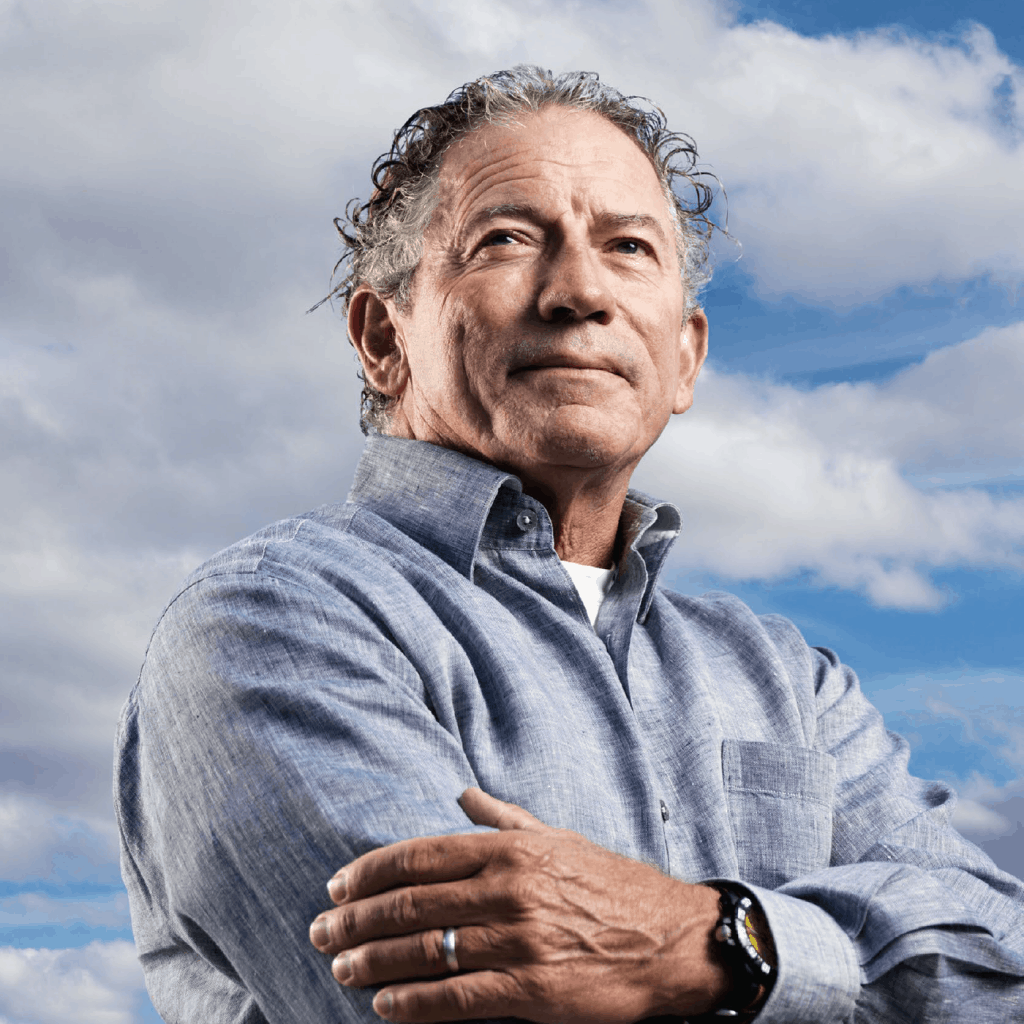
About Thomas:
Mr. Siebel is the Chairman and Chief Executive Officer of C3.ai. Mr. Siebel was the Chairman and Chief Executive Officer of Siebel Systems, which merged with Oracle Corporation in January 2006. Founded in 1993, Siebel Systems became a leader in application software with more than 8,000 employees in 32 countries, over 4,500 corporate customers, and annual revenue in excess of $2 billion.
Mr. Siebel serves on the board of advisors for the Stanford University College of Engineering, the University of Illinois College of Engineering, and the University of California at Berkeley College of Engineering.
Mr. Siebel is a graduate of the University of Illinois at Urbana-Champaign, where he received a Bachelor of Arts in History, an M.B.A., and a Master of Science in Computer Science. He is the author of ??????? ??????????????: ??????? ??? ?????? ?? ?? ??? ?? ???? ??????????.
About C3.AI:
C3.ai is a leading enterprise AI software provider for accelerating digital transformation. C3.ai delivers a comprehensive and proven set of capabilities for rapidly developing, deploying, and operating large scale AI, predictive analytics, and IoT applications for any enterprise value chain in any industry. The C3 AI Suite and C3.ai applications are proven and tested at petabyte scale, solving previously unsolvable challenges. At the core of the C3 AI Suite is a revolutionary and powerful model-driven AI architecture that dramatically enhances the productivity of data scientists and application developers while future-proofing applications against underlying IT evolution. The C3 AI Suite is 10 to 100x faster and more reliable than other solutions or DIY approaches, enabling robust delivery of production applications with 100x less code and cost. The C3 AI Suite seamlessly works with existing data storage, sources, tools, and infrastructure investment, while flexibly operating in a private, hybrid cloud, or multi-cloud environment. The C3 AI Suite supports configurable, pre-built, high value AI applications for predictive maintenance, fraud detection, sensor network health, supply chain optimization, energy management, anti-money laundering, and customer engagement.
Transcript
(Joel Beasley at 00:00:00) Hello, my friends. Today we are talking to Thomas, the CEO at C3.ai, and we discuss the worldwide race for AI domination, the current mass extinction event in the business world, and how companies adopting digital transformation have a chance to create both social and economic benefits. All of this right here, right now on Modern CTO Podcast. This is the Modern CTO Podcast. Hello.
(Joel Beasley at 00:00:38) Hello.
(Thomas Siebel at 00:00:40) Good morning.
(Joel Beasley at 00:00:41) It's Tom. How you doing, bud?
(Thomas Siebel at 00:00:43) Doing great. How you doing?
(Joel Beasley at 00:00:45) Man, life is beautiful. It's good. It's my wife's birthday coming up, so getting to hear all about birthday week. I'm sure you know how that goes.
(Thomas Siebel at 00:00:54) No, it's never. It's endless. And Joel, you are in Florida?
(Joel Beasley at 00:00:59) I am in Florida, about an hour south of Tampa in a town called Sarasota.
(Thomas Siebel at 00:01:04) Okay.
(Joel Beasley at 00:01:05) What about yourself?
(Thomas Siebel at 00:01:07) I am in Silicon Valley in Redwood City.
(Joel Beasley at 00:01:11) What's the feel out there right now? What's it like out there?
(Thomas Siebel at 00:01:16) That's a great question. That's what I almost ask everybody when I talk to people from other parts of the world. Well, I'd say it feels generally pretty normal. You know, the restaurants are kind of where you have to wear a mask and the restaurants are all outside. Most businesses are not able to go to work unless you're a critical infrastructure provider, which we are. So we're able to come to work, and we have about, normally there'd be about 250 people in this office, and I'd say about 50 people show up any day. So we kind of work from, it's voluntary as to whether people come to work or not. This whole COVID thing has been highly politicized. And if you look at the actual death rate or hospitalization rate in Northern California, it's very low. But they're keeping businesses closed, keeping Main Street largely closed. And I think it's unfortunate because it's hurting a lot of people who can't afford this. You know, people who work in retail outlets and hardware stores and restaurants and barbershops and whatnot. I mean, I don't know how they get by. How do they pay rent? How do they buy food? And then you have this other issue where, I don't know what they're doing in Florida, but are the schools closed in Florida?
(Joel Beasley at 00:02:55) No. They're open.
(Thomas Siebel at 00:02:57) Yeah. So the schools are all closed here. And now that's really tough for most parents because that means that mom and dad can't go to work. You know, they have to stay home and monitor their kids. If they can't go to work, again, you know, how do you pay rent? How do you buy food? So it's, I don't think there's any science behind the school closing. I think this is largely politically motivated. And it's, you know, I think it's okay for people that have pretty strong nuclear families. I think for people who are single, I think it's pretty lonely.
(Joel Beasley at 00:03:42) Right.
(Thomas Siebel at 00:03:43) You know? And we, you can feel the anxiety. You can feel the stress. And we have a lot of young people who work here from Boston and Chicago and Wisconsin and London. And they're now in their studio apartment in San Francisco or wherever, and they're alone. And they kind of can't go out. And it's, you know, it's tough.
(Joel Beasley at 00:04:06) It's like the worst punishment. Like, in jail, that's the punishment, being by yourself. Tough. Yeah.
(Thomas Siebel at 00:04:12) So Joel, how long have you been doing this podcast?
(Joel Beasley at 00:04:15) Oh, about three years.
(Thomas Siebel at 00:04:18) Really? And how frequently do you, is it once a week or once a month? What's the frequency?
(Joel Beasley at 00:04:25) So we do about three or four episodes a week.
(Thomas Siebel at 00:04:29) Oh, really?
(Joel Beasley at 00:04:30) Yeah. Yeah.
(Thomas Siebel at 00:04:31) This is like a real job.
(Joel Beasley at 00:04:33) Yeah. Do you want the background of it real quick?
(Thomas Siebel at 00:04:35) Yeah.
(Joel Beasley at 00:04:36) Okay. So, started, my dad would take me to work with him around age seven, learned how to program. He would give me these small tasks so he could get his work done because I had siblings and my mom didn't want to take care of three kids after work. So she would send me off with my dad to go with his freelancing projects. So I got to learn some programming at a young age through high school. Ended up doing a lot of different software building, then built some real estate software and sold that. And then I had an agency where I just built applications for about ten years. And then when my wife was pregnant with our first kid, I had some money saved, and I said, you know what? I could build apps for another twenty years, but I see these other people getting further ahead in business, and it's usually because of relationships. And I need to be less introverted and get to know more people. And at the same time, I was listening to a gentleman named Gary Vee on social media talking about how to bring value to others' audiences. And so I said, all right. Let's take a stab at this and start this podcast. And we did. It was, you know, we're doing three shows a day when we started, just to anybody who would talk to us. After a couple months of that, we had a nice breakthrough and, like, CTO of Microsoft and Verizon asked to come on, and so we had them on. And then it just booked up six months in advance. So we had episodes booked two or three times a week, six months in advance, and then we ended up building a premium product so companies could sponsor and get on the podcast sooner. And we've grown, and today we're at about ten people. And this is, it's turned into a full time deal.
(Thomas Siebel at 00:06:20) Congratulations.
(Joel Beasley at 00:06:21) Oh, we're just getting started. It's like day one over here.
(Thomas Siebel at 00:06:26) It's kind of interesting. What are your thoughts on this, you know, it really looks like we have a spectacular crash and burn. What is that called? I don't know how to pronounce it. It's a horrible name. Quibi? You know what I'm talking about? This is the video product that Meg Whitman was doing with Jeffrey Katzenberg out of Hollywood, where they were delivering video content on your, and they put a ton of dough into this. Really? Video content, produced the video content, I think, like, ten minute shows on your iPhone. That was the idea. Very heavily financed. Meg Whitman, you might recall, she was the CEO of Hewlett Packard and the CEO of eBay. She was the CEO. I'm not sure she and Jeff got along, but it looks like it crashed and burned. And it looked, well, also looks like it's some kind of product that might have been quite successful in the, you know, during the COVID crisis.
(Joel Beasley at 00:07:25) I mean, I would, when I hear ten minute, when I hear short stuff like that, I would tend to disagree that it would be successful because of my own, just subjectively, like, without any research. Because for myself, when I listen to content or conversations or entertainment, I like longer form stuff. I want to understand an idea. Like, I want some purpose or some meaning behind it. And in ten minutes, like cliff notes style, I could see myself going and using that as reference material if I wanted to look something up, but I don't know. I just, it's hard to monetize the videos.
(Thomas Siebel at 00:08:04) Well, you know, I tend to go for longer form things also. But if we look at what's going on with TikTok or what's going on with Instagram.
(Joel Beasley at 00:08:12) I know. It's crazy.
(Thomas Siebel at 00:08:13) That's pretty short form stuff. Right? I mean, what's the average, you know, maybe one second is the average, you know, time on outside.
(Joel Beasley at 00:08:23) Yeah. I think, like, scrolling through. If somebody told me we're going to make ten minute shows, I'd probably say no. But if they were like, we're going to put a bunch of pictures in a feed and let you scroll through them, I'd be like, oh, okay. Yeah. That sounds, we're like, we're going to put a bunch of short videos that you don't need your audio on for to scroll through. I'd say, okay. I'm so surprised by TikTok, by the way. My wife downloaded it, and she showed it to me. And I was just like, I got a headache from looking at the home screen. It was all jittery with all these animations going. And I said, I'm old because my internal dialogue was like the kids these days.
(Thomas Siebel at 00:09:01) How long, how many minutes did you use it?
(Joel Beasley at 00:09:04) How many, I looked at TikTok for less than thirty seconds.
(Thomas Siebel at 00:09:07) Oh, really? Not for me. You really did not like it.
(Joel Beasley at 00:09:11) I very, very much disliked it. Yeah. It hurt my eyes, like, the way that the...
(Thomas Siebel at 00:09:17) Does your wife use it?
(Joel Beasley at 00:09:19) She made, like, two and then no. She doesn't use it anymore. Okay. Yeah. Yeah.
(Thomas Siebel at 00:09:24) Oh, it's a hit. That's for sure.
(Joel Beasley at 00:09:26) I know. Right? And then they just got through to, they're going to be in the US now. Right? They did the deal with Oracle and Walmart?
(Thomas Siebel at 00:09:32) Yeah. I'm not sure that, uh, friends in Beijing have bought off on the deal yet. Mhmm. And so we'll see. But, you know, Larry Ellison's back, and we'll see how he does in the consumer world.
(Joel Beasley at 00:09:48) What do you think about AI in China and US? Because there's obviously a race going on. I think Canada is pretty in the race too. But what do you think of that?
(Thomas Siebel at 00:10:00) Well, I think that there is a, you know, we are engaged in non-kinetic warfare with China where AI is one of the major fronts. And space would be included in that, but AI is probably the most important. Vladimir Putin said in, like, 2017, whoever wins the war on AI dominates the world. I believe that's true, and it's not going to be Russia. So I think it's between us and China. They're, I think they're spending as much as, you know, $60 billion this year on AI research. And I think this is going to be the ultimate test of two, you know, fundamentally opposed political philosophies, where we have kind of the idea of the top down command and control totalitarian state that would be the China model, where the NRDC tells people what to do, and they put out $70 billion, and everybody kind of operates in lockstep. And let's acknowledge that these people in China are very well educated. They have, you know, very hard, strong work ethics, and they are capable of succeeding at this. I think that, so this is going to be a test between that type of political philosophy and then this very messy system that we have in the West where everything is kind of very democratic and we have, you know, kind of a thousand points of light where AI research is being done in, you know, storefronts in The Bronx and garages in Palo Alto. And, and, you know, the winning technologies will surface to the top. Yeah. I think if we lose this war, we'll be very sorry. I think if you listen, you know, I think Kai-Fu Lee wrote this book, AI Superpowers. And, you know, I think he will argue that China is going to win. And if they do, the story does not end well. So I think it's a critical issue. It needs to be much, much more central to our political agenda and political discussion. Candidly, I think most of what these people talk about in both the Republican and Democrat parties is, like, absolute nonsense and drivel that doesn't matter. Okay? But this does matter. This has to do with the security of the world. And I think that, you know, there's a lot of people who believe that, you know, World War I and World War II are, like, ancient history, and they put those in the same category as maybe the Peloponnesian wars. And, well, they're not ancient history. And, you know, we're living in the shadow of World War II. And pure evil does exist. There's no question. It does exist. And we need to be vigilant about that. And if we lose this battle on AI that's going on between the US Department of Defense and China, this story will not end well.
(Joel Beasley at 00:13:24) Is some of the pros that they have going for them data? Right? So AI needs data. Data is very important. And they have direct compliance across all the companies operating in their country. They can get as much data as they need. If we were trying to do something like that, we'd have to all chip in the data. But they can just walk right in and just say, give us all of your data.
(Thomas Siebel at 00:13:50) Yeah. I think they have a number of advantages. Number one, their ability to access data. You know, they have no respect for personal privacy, no respect for individual liberty, and they operate with a different moral compass. So, you know, the people in the Pentagon, okay, and in Western Europe have very strict kind of guardrails on what's ethical and what's not ethical. You know, for example, everybody stays away from things where you have the machine pulling the trigger. Pretty good idea that the machine should not be pulling the trigger. We should not have autonomous weapon systems where, you know, AI makes the decision to pull the trigger. This goes to a really bad place very quickly. Or where we're using AI, for example, in, you know, systems that intersect with sociology, human resources and deciding who we're going to promote, who we're going to assign to what billet. And these are the type of systems that tend to, or in the criminal justice system. And these are the systems where we have, you know, enormous bias in the data that will result in the propagation of social bias. And so China is not constrained by these ethical constraints. And this lack of constraint gives them an advantage, you know, as a warfighter. And so, you know, they will build autonomous systems, and these systems will be highly efficacious. And sometimes they will make enormous mistakes. Okay? And, and, you know, tens to hundreds of thousands to millions of people will die, and, oh, well, it happens. You know, they'll bury it. And so I think that's one of the advantages they have is they're not constrained by the type of, I think, moral compass that people in the Western world tend to be driven by.
(Joel Beasley at 00:15:56) Yeah. Also, their level of discipline is really high. That's one of the things I've always found interesting. And I like that you brought it up because I was having a similar thought a year or two ago when I was listening to some of their, I, like, watched some translated talks from some of their leaders. And it was like, like you say, they didn't, they don't forget that, I think that they're patient and disciplined and are playing a really long game. Meanwhile, over here, we're just like, I guess war is done. We're not doing war anymore. Like, you know, because we tend to forget pretty fast as humans. So it takes that discipline being there in order to hold the line. And then I could see, for some reason, it's just really easy for me to believe that, you know, they would raise generations of people with very specific beliefs because we already know they audit their content and what information they have access to. And so whatever they're pumping into their people is what they're going to believe, and then that is, it's just like a, I'm curious about what are, like, where the positive here is. Like, where are our strengths or where is, what's a path where we win? And not necessarily, like, nation, but what's the path where freedom wins, like, on this planet?
(Thomas Siebel at 00:17:17) No. There's no question these guys are playing the long game. You know? And they're thinking, you know, maybe a hundred year cycle. And they're quite confident that the kingdom of heaven will, you know, China, okay, will, you know, return to its natural place at the top of the stack. And it's all a matter of time.
(Thomas Siebel at 00:17:38) And right now, well, I think, you know, there's certainly been a massive setback as a result of COVID in China, so things have slowed down. But, you know, I think that we need to be afraid. And, you know, we know what they stand for. I think that right now with all the discussion going on in the United States, I'm not sure that anybody here in the Western world knows what we stand for anymore. I mean, we used to stand for American exceptionalism.
(Thomas Siebel at 00:18:11) And, you know, we had the greatest generation that won World War II and did save the world. And now, you know, people tend to forget about all these things, and everybody's right now focused on the negative and focused on not getting along. And we have this highly toxic political environment that is, you know, I mean, unfortunately, we all get exposed to it every day on the television. It's really unfortunate.
(Joel Beasley at 00:18:46) How do we, once I saw a model, and it was like a model of the universe as far as, like, patterns that happen. And this model, I think it was on Wikipedia, and it kind of was an animation, a GIF, and it looped. And the takeaway, like, what it essentially showed is everything coming together really close and tight, and then everything kind of, you know, disintegrating and going off into these small little fractions, and then coming back together, and so on and so forth. So, like, right now, I feel like we're pretty far apart. Right? Like, I feel we're more segmented from each other. We're more siloed than ever before. And I'm hoping that, like, there's something that brings us back together. Is there a way we could, like, make the AI race similar to how we did the space shuttle trip where, like, we get the whole nation focused and gathered and rallied around this?
(Thomas Siebel at 00:19:41) Yes. And I think that, you know, there is an opportunity for a leader to set a goal, you know, just like President Kennedy did with the moon shot. And there is an opportunity for a leader to set a goal, and then as a nation, we step up our game and do it. And it doesn't have to be top-down, federally driven with federal money. I mean, it can be, you know, entrepreneurs and scientists and research scientists, and we all rise to the occasion.
(Thomas Siebel at 00:20:14) But what we need is some leadership. And unfortunately, you know, I would argue, you know, in the past decade or so, we've seen very little leadership out of Washington. It's mostly just a bunch of bickering and people who are positioning for their political agendas. And it's sad to watch. And, you know, it's very clear that some of what's going on in AI is being used against the country.
(Thomas Siebel at 00:20:45) You know, one of the largest users of AI would be the social media companies, Facebook et al, that have figured out how to use AI to manipulate people at the level of the limbic brain. Well, the limbic brain is that part of the brain that evolved maybe a couple hundred million years ago, and it's what we have in common with the lizard. It deals with the stuff of survival, you know, food, water, sex. Right? And this is what releases a neurotransmitter called dopamine.
(Thomas Siebel at 00:21:20) And dopamine is kind of the pleasure center of the brain, and it's closely associated with addiction. Various addictive agents like methamphetamine, for example, release kind of massive amounts of dopamine into the cerebral cortex, and then your brain kind of goes off like a pinball machine for about, you know, twelve to twenty-four hours. You know, I don't personally know the experience, but I suspect it's quite remarkable. Now, unfortunately, there's some significant deleterious consequences that follow. But, you know, there's no question that social media companies have figured out how to use, you know, when somebody likes your photo, you get a release of dopamine. You know, when someone thumbs up your message, you get a release of dopamine. When you see your friend who is becoming an Instagram influencer, you know, with her in her bikini with the Grand Canyon behind, you do that, you get a release of dopamine. And so these guys are able to manipulate, say, a couple of billion people at a time around the world. And now we've had bad actors getting involved in the mix, be it Iranians, Chinese, Russians, North Koreans, who are weaponizing these media.
(Thomas Siebel at 00:22:46) And very much the way they're weaponizing it is to turn us against ourselves, where they become active in these little kind of bubbles that exist, whether the bubbles, you know. And so they have all these communities, you know, whether the community is Black Lives Matter or whether the community is the white supremacist league. And they become leaders in those communities. And then they manage to, they arrange for a rally of both these communities at, you know, noon on Sunday at People's Park. We get both these communities together in the same place at the same time.
(Thomas Siebel at 00:23:25) I mean, surprise, surprise. It's gonna be violent. And, you know, they're doing a pretty good job of turning us against ourselves. And it's, and, you know, the people who are running these businesses are just turning their heads. They're looking the other way, and it's really unfortunate.
(Thomas Siebel at 00:23:49) If this does not come under, get under control, it might be impossible to conduct a democratic society. And so this really cuts to the foundation. In one of the books that I'm rereading right now, and it is probably for the time that's gone, is 1984 by George Orwell. And it rings pretty true to what's happening today. It's very disturbing. We're living very disturbing times.
(Joel Beasley at 00:24:22) What are some of the, I know you're, like, in the middle of rereading it, but what are some of the items that you're seeing today that are in George Orwell's book?
(Thomas Siebel at 00:24:31) You know about newspeak and, you know, war is peace and, you know, I mean, it's just, you know, and kind of Big Brother is always there watching, and, you know, you're kind of, you know, everything's being monitored, and it's, you know, basically, it's just a large totalitarian state where there are clearly no First Amendment rights. And I think First Amendment rights are something that, you know, everybody is trying to deny now, you know, even at the college campus where, I mean, you, you know, I can certainly remember, and maybe you can, or places like UC Berkeley, University of California, Berkeley, and other places used to be extraordinarily outspoken advocates for First Amendment rights. And universities were places where people with different opinions on the same subject could hold a debate, could hold a civil debate about the issue. Okay? And it was possible to have, you know, either people would have well-informed different opinions that were mutually exclusive, and people could debate and discuss these in front of others.
(Thomas Siebel at 00:25:42) And today, that's largely not possible. You know, I think particularly on the university campus, almost especially on the university campus, we have these class of topics that are woke, and those are okay to talk about, and those that are not, and those are not okay to talk about. And, you know, if you advocate for one of these topics that, you know, are not, you know, PC woke in 2020, you become isolated by the group. And so it's a little bit unfortunate that we're not able to have, you know, free and open discourse about topics that intelligent people disagree about. This, I think, is very
(Joel Beasley at 00:26:27) I fully agree. I actually just started really grasping this in the past couple weeks because I heard about, like, the Bret Weinstein, or Weinstein, however you say his name, at Evergreen State University. I heard about that, but then I watched, like, I paid on Amazon Prime, like, $4 to watch this documentary where they actually went. It was about free speech. That's the thing we can all agree on regardless of what side people are on. It's like we all, free speech is just, like, number one. It's the thing we have to protect. And it's, I was just blown away. I was blown away by the exact same places where free speech, where you go to experience it and exchange ideas, is the place that it's not happening anymore. I have two young children, a three-year-old and a one-and-a-half-year-old, and they get so frustrated when they don't know how to communicate, when they don't know how to tell us what they want. You know, we're just like, hey.
(Joel Beasley at 00:27:25) Tell us, you know, we calm them down. They get angry and frustrated. They turn beet red. I'm like, hey, just, you know, tell us what you want. We're here to help you. We wanna get you what you want. You know, just let's learn to communicate and use our words. Well, if you don't get an environment where you have people that have opposing views, if you don't have that environment, then you don't develop the skills of dealing with people with opposing views. And so all you know how to do is scream and yell and throw your hands around and tell people to shut up. And if that's what you're learning as your communication skills, that's not a healthy future for anybody because you can't talk anything out. It's just be quiet, get on board with me, or be quiet and go away.
(Thomas Siebel at 00:28:09) And this cancel culture with all these ad hominem arguments where, you know, if you take an opposing position from me, you are a Marxist or a racist or a white supremacist. I mean, this is, I can't believe it. It's just crazy.
(Joel Beasley at 00:28:27) Yeah. I know. I know. And I'm curious, like, what, well, so, you know, my wife and I were talking about, like, how much to prepare for the election. So I'm curious to talk about election security and technology with you, but I'll share this small story first. So, you know, we're starting out. We're younger, young in our careers, and we're building the business. So it's not like we have unlimited resources. Right? And so we're sitting there looking at our finances, deciding how much preparation is enough preparation for, like, a worst-case scenario without breaking the bank.
(Joel Beasley at 00:29:01) And so we decided on, like, the most important things were shelter, water, food, and protection. So we're, like, we're gonna focus and do what, split our budget amongst these areas because that's, like, the basic needs for survival. So, you know, we did our preparation because we believe that there could be some really tough moments coming with this next election. And I just, you know, I was just sitting and reflecting before going to sleep. I'm like, okay, like, this is real. This is something that we're doing. It's important because we can't be, you know, I used to be, Tom, I used to be one of those people like, I spent probably, like, a year or two of my life living, like, in a very positive way. Like, positive mindset twenty-four seven, no negative thoughts, negativity doesn't really exist, all this type of stuff that, you know, just experimenting and growing as I got older. And then I started to realize that you can have a positive perspective and a realistic perspective, but things like you mentioned, like evil, evil does exist.
(Joel Beasley at 00:30:06) It just does, and you can't bury your head in the sand about it. And so, like, from that perspective, like, a pragmatic, like, practical perspective, it's like, okay, you have to prepare somewhat. You know? But it's just, it's a weird time because we're in the best time we've ever been in technologically and great, and it's almost like all these good times created really weak people, and now these really weak people are gonna screw everything up. How do we get, I hate to look to you for answers, but I'm just curious about if you have any interesting thoughts on this. So it seems like if you draw a line back to, like, the root, it seems like a lot of this stems from the twenty-four-hour news cycles, right, on either side. How do, it's like if we could clean those up, like, if we had, if we turn on the TV, Tom, and every day, it was us talking about how we're doing something interesting to win the AI race or some new interesting thing that's happened, like a breakthrough in medicine, or if we turn on the news and it was, like, useful, knowledgeable, like, stuff. Right?
(Joel Beasley at 00:31:17) Stuff that made you excited to get up and go work and participate in an economy that's yielding these types of results. If we could get that to happen, that seems like we'd be in a better position than we are today. If we could get unifying news cycles that bring us together. But, like, how do we do that? Do we organize, do you and me form, like, a SPAC and go buy up these media companies and change their content? Like, how would you actually do that?
(Thomas Siebel at 00:31:46) It's a great question, Joel. I mean, from my perspective, there is no news. Certainly on TV, there is no news. We have a half a dozen channels that are basically mouthpieces for the Democrat Party, and we have one channel that is generally a mouthpiece for the Republican Party. And, you know, each of those audiences, they're telling the audiences what they already believe and reinforcing what they already believe and telling them what they wanna hear.
(Thomas Siebel at 00:32:20) So everybody's kind of living in these filter bubbles. And, you know, when you get in these filter bubbles, it tends to reinforce radicalism, whether that radicalism is on the right or the left. So I think we're coming apart, and I don't know what it's gonna take. I mean, where is Walter Cronkite? I mean, he doesn't exist anymore. There is no Walter Cronkite. And you know as well as I do that these people on all these channels are just looking us straight in the eye, and they are lying. And they know they are lying, and they have no compunction about lying. And so, you know, news is pretty hard to watch. And, you know, it's very difficult to find the truth.
(Thomas Siebel at 00:33:05) Everybody is very selective about what they report. You've seen the data for the murder rates in Chicago. How can that not be news?
(Joel Beasley at 00:33:16) We should be doing something about it. Like, we should be, we should say this is unacceptable. Let's go in and just shut it down.
(Thomas Siebel at 00:33:22) Let's take a look. Taken away the guns. That didn't work so well. I mean, I think what maybe they ought to think about, you know, this idea that we're going to, we're gonna defund the police. I mean, are you kidding me? The people that get hurt, I mean, you know, the governor, the mayor, okay, the president, you know, I mean, all these people, you know, live in secure facilities surrounded by security, secured by, surrounded by security guards with firearms.
(Joel Beasley at 00:33:52) Yeah. They're
(Thomas Siebel at 00:33:53) safe. They're okay. Okay? And but for the rest of us, you know, it's every person for themselves. You dial 911, nobody answers the phone. You're on your own. And so it's, this idea that we're gonna live without law enforcement in the twenty-first century strikes me as a little kind of a crazy idea. And do I think that there have been abuses occurring in law enforcement? Absolutely. Okay. Do the law, do, okay, do these people abuse their power? Absolutely. Okay.
(Thomas Siebel at 00:34:20) Do underrepresented minorities, are they disproportionately on the receiving end of that abuse? Absolutely. Is police brutality a problem? You bet. Is prosecutorial access a problem? You bet.
(Thomas Siebel at 00:34:43) Okay? But it's not, I mean, it's a real problem, and it's not isolated to just one community or one minority. It affects all of us, and it needs to be fixed. Okay. So, I mean, I'll acknowledge that's an important problem. You've been on the receiving end of it, and I've been on the receiving end of it. Now neither of us have been arrested for driving while black, which I'm certain happens every day. Okay? And is a very legitimate problem.
(Thomas Siebel at 00:35:19) But, you know, it would be nice if we focus on the real problem of police brutality, prosecutorial access, writ large. And, but the idea that we're gonna live, you know, without law enforcement, strikes me as a little scary.
(Joel Beasley at 00:35:29) Yeah. It's preposterous, right? It's just not gonna happen.
(Thomas Siebel at 00:35:35) But no matter what the outcome of the election is, it looks like this could end someplace between horrible and really horrible. So how does this ever resolve itself? Now, unfortunately, the way it probably resolves itself is through some existential threat. Okay? Basically—and I hate to get into a wag the dog story here.
(Thomas Siebel at 00:36:03) But the time when the nation has invariably come together and risen to the occasion is in times of war. World War II being perhaps the ultimate example of the nation aligning, mobilizing, and candidly saving the world with the leadership of FDR and Dwight David Eisenhower, and then later, Truman. So the sad story is it might take that to bring this all together. And hopefully, when it happens, we will not have been rolled in AI, in space technology, in autonomous vehicles, in cryptology. We'll not have been rolled by the bad guys so that we can win the war.
(Thomas Siebel at 00:36:58) And it might take that. I mean, whatever. And what a sad story that is, because what a sad story that is. But certainly nobody hopes for that, but that seems to be the single thing that brings the country back together again.
(Joel Beasley at 00:37:21) Yeah. Difficult moments create resilient people. If you grow up and your entire life you don't have a difficult moment, you're just not gonna have the capacity to deal with it. And if you get that across generations, then you end up raising the weakest version of people that you could possibly raise. And that's for me, when I think about this stuff or I hear myself talking about it, I was like, you know, for a superpower like China, that's the leveraging time is the best thing ever.
(Joel Beasley at 00:37:53) They're just like, "Oh, just let them—let time pass, and then they'll multiple generations, then they'll get weak, and then we'll ultimately win because they're making all the stuff." When the COVID thing happened, we found out how much of our critical medications are manufactured there. I mean, that's crazy. I thought after hearing that that I would see a massive uptick in venture capital building and investing in factories and things in the United States, so at least we could have some sort of version of maybe our top 10 medications that are all manufactured here. I haven't seen much of it at all.
(Thomas Siebel at 00:38:36) No. It's very troubling.
(Joel Beasley at 00:38:39) But let's bring it up and end it a little bit on a positive. So you have a book coming out or you have a book that's out?
(Thomas Siebel at 00:38:46) Yeah. The book has been published. It's called Digital Transformation. It was published by Rosetta Books, an imprint of Simon and Schuster.
(Thomas Siebel at 00:38:55) And in Digital Transformation, I talk about a number of forces in information technology—vectors in information technology—that I think are fundamentally changing the nature of computing, okay, and changing the nature of the way that we think about building and managing businesses. And so now in this post-COVID world, digital transformation seems to have risen to the top of every CEO's agenda. And in this book, we try to describe what it is, what it means, why it's important, why it's on the CEO's agenda, and how to go about attaining the benefits.
(Joel Beasley at 00:39:39) Yeah. No. It's very, very smart book. I didn't read it cover to cover, but I read through it a little bit. And my favorite part was when you were discussing the CEO action items because I'm very action-oriented.
(Joel Beasley at 00:39:54) It's like, okay, we get it. There's these four technologies that are transforming companies going in and out of business, mass extinction. But now what? Like, what do we actually do?
(Joel Beasley at 00:40:04) So I was hoping you would share some thoughts on that.
(Thomas Siebel at 00:40:07) Well, the big picture, if we look at the information technology business, it's grown from about a, say, couple $100 million business in 1980 to close to a $3 trillion industry today. And we've seen large, continuing innovation in information technology that has driven this from mainframes to minicomputers to personal computers to cloud computing, from COBOL to relational database systems to client-server systems, again, to cloud computing. And now in the 21st century, we have a new—I argue that we have a new step function of information technology that is changing everything. And that step function of the technologies includes elastic cloud computing, big data, this phenomenon called the Internet of Things. And then these, in turn, enable us to build classes of applications that were previously impossible in the area of predictive analytics or AI.
(Thomas Siebel at 00:41:14) And so—what struck me as curious about this phenomenon of digital transformation is I've been in the information technology business now for four decades, and I was involved in the early days of Oracle Corporation when we brought relational database technology to market. I later founded a company called Siebel Systems, as you may know, where we embedded this field called CRM with the application of information technology and communication technology to sales, marketing, and customer service. And as the business moved from a couple hundred billion to a couple trillion, all the decisions were being made by the CIO or the CTO at every corporation in the world. And now I find, as we get into the 21st century, and as you move from boardrooms in Shanghai, Paris, London, New York, Chicago, San Francisco, all of a sudden, the CEO is at the table, and the CEO is banging the table about this thing called digital transformation.
(Thomas Siebel at 00:42:20) Where did the CEO come from? And why is he or she there with what used to be IT decisions that were delegated to the CTO or the CIO? And where did this person come from, and why is this important? And as I poked at it—I found the term digital transformation really curious. And I was thinking, you know, digital transformation, what does this mean? As opposed to what? As opposed to analog transformation? I mean, hello.
(Thomas Siebel at 00:42:55) And as I probed—Enel and Shell and Volkswagen and Daimler and you name it, Société Générale—as I probed to try to find out what people were talking about, it became apparent that there was very little in common with the idea of what digital transformation meant, but they knew it was important and they had to do it now. So I thought about that a little bit, and I looked back at it. And if you look at the data in the 21st century, we're going through a mass extinction in the corporate world. Okay?
(Thomas Siebel at 00:43:32) In the last twenty years, 52% of the Fortune 500 companies have disappeared from the planet. I mean, Westinghouse is gone. Kodak is gone. Toys "R" Us are gone. Sun Microsystems is gone.
(Thomas Siebel at 00:43:49) So these huge juggernaut companies have just disappeared. And it's estimated that of the current companies that exist, 40% of them will not exist in ten years. So this is continuing. Look at retailing. Retailing in the United States, 8,000 retailers have shuttered their doors in the last year, and this is now accelerating.
(Thomas Siebel at 00:44:11) It's being accelerated by COVID. And here we have Amazon that's walking in with elastic cloud computing, big data, AI, and IoT, and they're upending retailing. And in automotive, we have our friend Elon Musk, who's upending the automotive business, or Uber, who's upending the transportation business, Airbnb that's upending the hospitality business. And in every case, what these companies are doing, these companies with new DNA, okay, are applying these new technologies to simply completely capture these industries. And those people who are not awake and not on the ball are going out of existence.
(Thomas Siebel at 00:44:57) And so these CEOs realize this, and they realize, "Hey, we need to find out what this is. We need to take advantage of it because our job is to survive." And so I think this is an existential event. It's happening in Asia. It's happening in Europe.
(Thomas Siebel at 00:45:12) It's happening in the United States. It's happening in every industry. Defense, intelligence, manufacturing, aerospace, telecommunications, you name it. And it is dramatically accelerating post-COVID. So this seems to be a mandate today in every company to take advantage of these new technologies to fundamentally change the way to deploy these classes of applications to solve problems that were previously unsolvable in the category of commercial and industrial AI.
(Thomas Siebel at 00:45:49) And these fundamentally change the way we design products, we deliver products, we manufacture products, and create services and deliver products and services to our customers. So it changes everything about the way that we manage businesses. So this is what digital transformation is all about. This is very much what we're engaged with at C3.ai. And I'm certain in your audience, your CTO audience, it's inconceivable to me that this is the first time this topic will have been mentioned, okay, in your podcast.
(Joel Beasley at 00:46:21) No. But I liked it, and I wanted to push it forward because of the fact that you articulated things in some unique ways, and that perspective helps. It helps fire the neurons in my brain when I'm reading it. You have to be around smart people with unique ideas as you're going through these processes. As you're going through this digital transformation process, reading this book would definitely give you some added perspective.
(Thomas Siebel at 00:46:50) I mean, the projects that we're seeing succeed—there are companies that are being enormously successful at reinventing themselves for the 21st century. And in every case where it's being successful, the project is being driven by the CEO, him or herself. Okay? And the CEO will very frequently assign a chief digital officer to partner with the chief technology officer and the CIO to get it done. And rather than get a review quarterly, the CEO will be involved in this discussion daily.
(Thomas Siebel at 00:47:25) And the projects that tend to succeed are where the team will pick a tractable project. And by tractable, I mean something that can be live and in production in six months to a year. Okay? Where we can apply predictive analytics and artificial intelligence to create substantial social and economic benefit. Okay.
(Thomas Siebel at 00:47:52) What are examples of social and economic benefit? Well, for example, in precision health, okay, we can aggregate large sets of data, genome sequences, okay, healthcare histories, and whatnot. Look at large populations, say the population in the United States, and build machine learning models that will predict with very high levels of precision who's gonna be diagnosed with what disease in the next five years.
(Thomas Siebel at 00:48:19) Well, if we know that, we can intervene clinically now and avoid the diagnosis. How about AI-assisted medicine? I mean, I don't believe all this hoorah that was popularized by IBM and others that AI is gonna replace the physician. It is not going to happen, but AI certainly will inform the physician so that physician can make better-informed diagnoses and very better-informed treatment plans. How about genome-specific treatment protocols?
(Thomas Siebel at 00:48:47) All of these happen, right? And so we'll have lower-cost medicine, okay, more generally available. We'll have a healthier population. And so this is an absolute layup. But what many organizations try to do in these digital transformation projects is they think, "Well, first, we need to build a data lake." So maybe we're Exxon or maybe we're—think of a large bank. "Well, we're gonna build a unified federated data image of all of the data associated with maybe a UBS or a Citicorp or a JPMorgan Chase." I mean, or UnitedHealthcare. I mean, that is a nontrivial problem.
(Thomas Siebel at 00:49:31) So we get into these data lake projects, and they last five to ten years, and they bring in Accenture or somebody to help them. And they aggregate, attempt to aggregate all these data in the unified federated image. And five or ten years later, they've created no value for their customers, and they've created no value for their shareholders, and they've created no value for society at large. Okay. And yet, were we to—I'll give you an example of a project that we're involved in recently with Royal Philips.
(Thomas Siebel at 00:50:00) Philips, as you know, is in the business of manufacturing healthcare equipment out of Europe and a major health equipment manufacturer. And during COVID, they wanted to maximize the production of ventilators. And so this was a digital transformation problem. It was certainly a predictive analytics problem. And the problem is generally in the class of problems that we call stochastic optimization of the supply chain, which means we have the right amount of stuff in the right place at the right time to be able to fulfill the demand function.
(Thomas Siebel at 00:50:34) Most organizations have much too much inventory in their supply chain, and we can use AI to reduce that. But in this case, that was not the goal. The goal was, in COVID, to maximize ventilator production. So in four weeks, we aggregated those data that were necessary to solve that problem, and we built machine learning models necessary to solve that problem. And we reset their inventory levels and safety stock levels daily using AI, and we were able to increase ventilator production by 400% in four weeks.
(Thomas Siebel at 00:51:12) Okay. So my recommendation is—the projects that we tend to see succeed are projects that are driven by the CEO in combination with the CTO and the chief digital officer. The problems that they're addressing are tractable. Okay? And they're looking for economic and social benefit, and they want—and this is how they're measuring success is by economic and social benefit.
(Thomas Siebel at 00:51:37) And that should accrue, and it should accrue, let's say, in six months to a year and in a big way. Where we do, for example, we do customer churn at Bank of America associated with our cash management business. And the cash management business at Bank of America is huge. I mean, they handle cash management for everybody. GE, Cisco, Oracle, 3M, CAT, they move everybody's money around.
(Thomas Siebel at 00:52:06) And their cash balances that they have on any given day are staggering. And they don't wanna lose customers. And so the idea is that this is a customer churn problem. And we demonstrated in sixteen weeks—rather than solve the universe of all AI problems at Bank of America or build a unified federated image for all the data at Bank of America, which I assure you is a nontrivial problem that would take years, okay? Nothing would really be accomplished and no economic benefit would accrue.
(Thomas Siebel at 00:52:36) We stood up that application in sixteen weeks, and that allowed Bank of America to identify those customers who were going to result in what they call permanent balance reductions. That means they're leaving. Where we could identify them a hundred and eighty days before they left, allowing Bank of America to intervene and get on a plane to Cupertino or Detroit or wherever they need to go and meet with the chief financial officer of their client and say, "Okay. What do we need to do to make you happy?"
(Thomas Siebel at 00:53:10) And so the economic benefit of that application to the Bank of America is on the order of $10 billion a year. Well, this is significantly non-zero. So we're able to be CEO-driven, looking for immediate benefit, taking problems that are tractable. Okay. That means it's solvable.
(Thomas Siebel at 00:53:28) Many times in AI, people want to address problems that are not solvable, or they want to address problems that candidly we shouldn't solve. An example would be we need to be very careful about applying AI into sociological processes. For example, many people want to apply AI into human resources. That's very scary stuff.
(Thomas Siebel at 00:53:54) And I was talking with the secretary of one of our military branches who, and the military, of course, is highly interested in AI, and they're doing very sophisticated work. And this person wanted to apply AI to that branch's HR system to decide who to promote, who to assign to what billet. And I said, you know, Mr. Secretary, I think this is a really bad idea. And if you decide to do it, we're not going to do it with you. Because I think, I can tell you in advance what this AI algorithm is going to do due to the biases that are in these data.
(Thomas Siebel at 00:54:32) So we can save six months of work in terms of building this application for the, you know, whichever service it was. And I'll tell you what the answer is. The answer to the person you're going to promote is white, male, and went to West Point. Okay? Well, I don't think this is what you want in the twenty-first century.
(Thomas Siebel at 00:54:50) And if we build this application, we're going to have to read about ourselves on the front page of the New York Times in about two years, and it's not going to be a good article. So why don't we just not do it? So we need to pick problems that are both ethical. I think that's one that's marginal on the ethical side. I would argue actually unethical.
(Thomas Siebel at 00:55:08) I think it definitely perpetuates social bias. We need to pick problems that are solvable, and many people think AI is magic, that it can do anything. It's really not magic at all. And there are certain classes of problems that are previously unsolvable that AI can solve really, really well.
(Thomas Siebel at 00:55:27) Let's focus on those. And focus on it. And, you know, keep it simple. Get it done quickly.
(Thomas Siebel at 00:55:33) Look for economic benefit, and then do it again and do it again and do it again and come up with a roadmap. Maybe I'll say 24 applications you want to deploy over a period of about three or four years. At the end of the day, you will have, you'll operate differently. You'll design products differently. You'll manufacture products differently.
(Thomas Siebel at 00:55:54) You'll deliver products that are safer, more environmentally friendly in the hands of more satisfied customers at lower cost and be in a position to compete in the twenty-first century economy.
(Joel Beasley at 00:56:09) Oh, mic drop. You nailed it. Yes.
(Thomas Siebel at 00:56:11) I think we—
(Joel Beasley at 00:56:12) We just became best friends, Tom. We're a little bit over. We're eight minutes over your hard stop. So I just want to let you know that we can go ahead and wrap up right now, or one more question. You let me know.
(Thomas Siebel at 00:56:25) I think we'd declare victory on this, Joel. It was very nice to meet you. I wish you, congratulations on your business, on your venture. It sounds very exciting, and it sounds like you're enjoying it, which is most importantly. But I really enjoyed meeting you. And as somebody who has started a few businesses myself, I congratulate you on your accomplishment. I know it's not easy.
(Joel Beasley at 00:56:54) Oh, yeah. I know you know that. And, yeah, it's like our friend Musk says, it's like staring into the abyss and eating glass. Well, Tom, hey, how about this? How about we have you back on next year, and we get to catch up, talk more about the progress of C3 and the election, all this good stuff. Is that okay?
(Thomas Siebel at 00:57:14) Absolutely. Let's do it. I look forward to it. I really enjoyed talking with you, Joel, and I wish you all the best with what you're doing.
(Joel Beasley at 00:57:20) Me too. Thank you so much, Tom.
(Thomas Siebel at 00:57:23) Have a wonderful afternoon. Bye-bye.
(Joel Beasley at 00:57:26) Thank you so much for listening. And if you found this episode useful, please share it with a friend or colleague who you think would get value from it. And if you have topics that you would like to hear discussed on the podcast, either add me on LinkedIn or send me an email, [email protected]. Every time I get an email or LinkedIn message, it absolutely makes my day and inspires me to keep going.