
Episode 225 ·
Soma Somasundaram - CTO at Infor
Today we are talking to Soma, the CTO at Infor. And we discuss the rapid acceleration of technology over the last decades, how to build teams that are focused on the future, and the hardest lesson to learn as you transition into leadership.
All of this, right here, right now, on the Modern CTO Podcast!
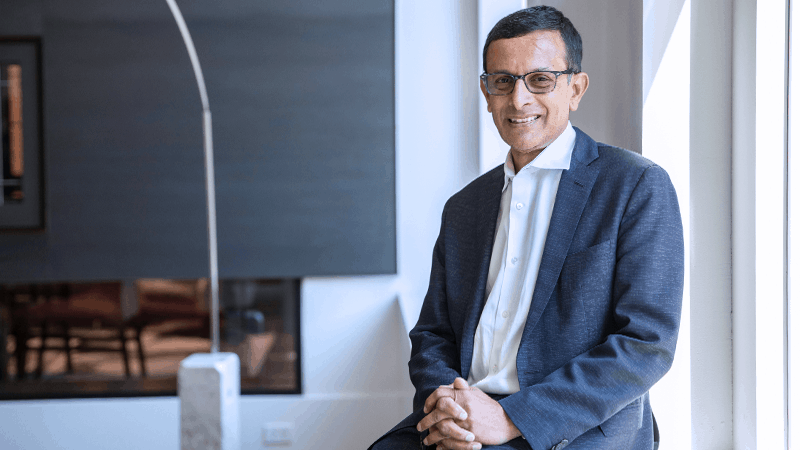
About Soma:
As the President of Products and CTO, Soma Somasundaram defines Infor's technology strategy and manages the design and rollout of the company's full suite of business applications. He also makes sure that Infor's unique technology platform creates the seamless connections between all applications that give customers unmatched flexibility.
Somasundaram has more than 30 years of experience in enterprise resource planning, supply chain, and financial applications. He also brings global business experience to Infor, having worked in many countries around the globe, including India, Germany, Australia, the UK, and the US. Soma has been with Infor from the start and has continually applied his comprehensive understanding of the IT industry to play an integral role in the growth and development of Infor.
About Infor:
Infor is a global leader in business cloud software specialized by industry. With 17,300 employees and over 68,000 customers in more than 170 countries, Infor software is designed for progress. To learn more, please visit www.infor.com.
Transcript
(Joel Beasley at 00:00:01)
Hello, my friends. Today we are talking to Soma, the CTO at Infor, and we discussed the rapid acceleration of technology over recent decades, how to build teams that are focused on the future, and the hardest lesson to learn as you transition into leadership. All of this right here, right now on the Modern CTO podcast.
(Soma Sundaram at 00:00:21)
Here we go.
(Joel Beasley at 00:00:22)
This is the Modern CTO podcast. It's Soma.
(Soma Sundaram at 00:00:35)
Hey, how are you? Good afternoon.
(Joel Beasley at 00:00:37)
Good. Am I pronouncing your first name correctly?
(Soma Sundaram at 00:00:39)
Perfectly.
(Joel Beasley at 00:00:40)
Oh, awesome. How do you say your last name?
(Soma Sundaram at 00:00:44)
It's Soma Sundaram. It just sounds the way it's written.
(Joel Beasley at 00:00:49)
Yeah, it sounds beautiful when you hear it. When I was reading it, I was like, oh no.
(Soma Sundaram at 00:00:55)
So actually, the previous CEO always used to introduce me as, you know, "Here's Soma. He's one of those, like Madonna or Sting or Prince. There's only one name."
(Joel Beasley at 00:01:11)
That is actually pretty cool. I like that. I think that gives a certain—it sets the tone for the interaction, right?
(Soma Sundaram at 00:01:19)
Yep.
(Joel Beasley at 00:01:20)
There's only one, and he is the best, and he is here. I'm so excited. I was really pumped up to talk with you today. I feel like I have no idea what this ERP thing is. So, to me, I'm a small business owner. Under 15 people. I've experienced different-size companies, maybe up to like 200 or 300 people, working directly in them. And I kind of get the idea of, like, when I see the graphics or read it, it's a little bit ambiguous. But I was really excited to talk with you because I was hoping that you could explain ERP to me like I'm a two-year-old.
(Soma Sundaram at 00:01:58)
I will definitely attempt to do that.
(Joel Beasley at 00:02:01)
And usually we don't jump right into that. Usually I'm like, "Oh hey, let's become friends." But I was just so excited to get this answered because I Google around, I see the graphics, I see the softwares, and I just couldn't wrap my mind around it. I was hoping you could help me with that.
(Soma Sundaram at 00:02:18)
Yeah, no, we could start with that. So if you look at any organization, right, whether it's a healthcare provider like a hospital or a manufacturing company—you know, in process manufacturing, like a food and beverage company or what have you—all these organizations tend to have a lot of processes, right? So they buy things. You need procurement. You write a purchase order. Somebody puts in a requisition which becomes a PO. Somebody decides which vendor I should go to, and the vendor then sends in an acknowledgment and so on and so forth. I talk to my customer and take an order. So these are business processes that in the olden days before ERP, they weren't digitized. So people filled out forms. I lived in that world. I may not look that old, but I am. So in the 1980s, people had carbon copy forms, right? So if I'm a sales rep selling hair care products, I walk into the salon, I make a deal, I fill out a form. Here are the products you bought, here's the quantity I'm selling you, here's when I'll deliver it to you, here's the price you're going to pay, and here's the tax. And then I tear a copy, give it to the salon owner, take a copy, give it to my sales department for my commissions. Third copy goes to a credit manager who approves the credit. You get the idea. So all of these, if you put all of these forms into a system to digitize and store that information, that's basically what ERP does, right? So it basically automates the business process so that you don't have to repeatedly look at forms. You know, imagine a huge office covered with a bunch of forms floating around. That's not how you run your company, right? So that's what ERP does. It automates the order-to-cash process, procure-to-pay process, plan-to-produce. All of those processes become automated in the system. That's ERP.
(Joel Beasley at 00:04:18)
Got it. Because the way I came across this was we have these processes—we call them processes—that run at the company, like a new guest process. We go through this routine of finding new guests. There's a system, there's documentation on how to do it, examples. And so we have that, and then we have our different sales processes. We have marketing processes. We have all of these things that we've essentially found to be true that we just need to maintain and then constantly improve. And so we were trying to figure out the best way to do this, and we ended up with a spreadsheet. So we have all of our departments, the different processes, and the way we differentiate between processes that should be on the sheet or not is just how closely they're tied to revenue. Like, if it's very clearly something that impacts revenue, then it goes in the process sheet and we constantly monitor it and improve it. But I was trying to figure out, we have all these different parts of the organization. And so I've been asking around, like, how people do that at scale. And when I hear "enterprise resource planning," ERP, and I read some of the definitions, it sounds like the software should be to help with that. But then, like, an actual application of me trying demos or exploring different softwares, it seemed everything was—this has to be more logistic or form-driven, like everything starts with a form entry, and they didn't seem to—they didn't seem to be softwares made for smaller startups managing their business processes that aren't the more order-driven type flows that you described.
(Soma Sundaram at 00:05:54)
Yeah, no, I think that's fair. Different ERPs address varying different industries, right? So the company I work for, Infor, we specialize in industry-specific processes. Right? So if you're a food and beverage company, that's very different than if you're an aircraft manufacturer. Both are manufacturing companies, but they are in very different verticals, right? Or you're a healthcare provider, which we do serve. If you're a hospital, there is nothing to sell, right? You're basically buying, procuring things, and taking care of patients and delivering the outcomes that they need to get, right? So it depends on the industry. So the ERP basically digitizes the process. But more importantly, once you have all of this data, you can use this data to automate things where human beings don't have to actually go physically do things, right? Because you have the data in the system, in the cloud, presumably, as well as use this data to optimize, right? You can do machine learning and things like that. But the starting point is to get the process data. Once you have the data, then you can build all these different things that automate and optimize and make it easier to run in a repeatable fashion a large company. Can be applicable to small companies too, right? So if you look at—I don't know if you're familiar with a product called NetSuite. NetSuite addresses the smaller end of the market, not the Boeings of the world, right? So ours goes from mid-market to upper end of the market. So that's what ERP does.
(Joel Beasley at 00:07:33)
Thank you for helping me with that. I saw on your homepage you guys actually have HCA as a customer, and I've gotten to go to their headquarters and meet with them and talk with them. And I was pretty impressed with the roots of their organization and how many companies have spun out of them. After my trip up there, I went and bought some of their stock. I was like, I like this company. They had a chart in their headquarters of all the offshoots that came out of HCA. There was at least 80 to 100 of them. It was pretty ridiculous.
(Soma Sundaram at 00:08:03)
Yeah, yeah, yeah. Very, very large organization. I think the largest for-profit provider in the country, HCA.
(Joel Beasley at 00:08:12)
And you guys have around 17,000 employees. You're a pretty large company. But I read that you were employee number one. Is that true?
(Soma Sundaram at 00:08:21)
Correct. Yep. So, you know, my story is I'm a nomad, lived in lots of places. You know, grew up in India, then went to work in Germany for two years. I went to UK for a year. Lived in Singapore, lived in Bahrain in the Middle East, then lived in Australia for five years. So when I was there, it was a startup company. ERP was getting some traction at that point, early '90s. I wrote a product for food and beverage and chemical companies. Companies like Albertsons were one of the first customers to implement that. So that product got bought by a company in—I used to live in Melbourne, Australia, and a company in Melbourne, Pennsylvania bought that company. So I moved from Melbourne to Melbourne. Somebody told me it would be an easy move. Not quite. But that started Infor when I came here. So 25 years ago, I moved from Australia to US, and that started really the roots of Infor.
(Joel Beasley at 00:09:29)
So how did you meet the founders? Or are you considered a founder?
(Soma Sundaram at 00:09:34)
Yeah, I mean, I'm founder as in I came in as employee number one. The company earlier on was owned by an investment company called Golden Gate Capital out of San Francisco. So they had this idea in the early 2000s, right after the dot-com burst and 9/11. The market was kind of dead for ERP, right? So it was like a nuclear winter. So Golden Gate had this idea. Right? We have a couple of big players like Oracle, SAP, who are going to this market with a horizontal application, whether you are a healthcare provider or an aircraft manufacturer or a potato chip processor. It doesn't matter. It's the same product, same application, right? So the idea that Golden Gate Capital had was if you actually have products that are specific to certain industries, you can actually go deeper and you can solve problems better, right? So that's how they started Infor, and they bought the company I was with as the first company that started that, right? Because I wrote product, like I said, for food and beverage and chemical companies. The product inherently understood butterfat content in milk, right? You don't pay the farmer based on the gallons of milk you get. You pay based on the butterfat percentage. Because if I'm an ice cream plant, that's what matters to me, right? So that level of functionality in the product is what Infor is about. So that's kind of how they thought of this being the thesis and started Infor and acquired companies that specifically go after specific industries.
(Joel Beasley at 00:11:18)
And when did you meet the CEO, or do you just have the relationship with the people at the fund that are sort of quarterbacking it?
(Soma Sundaram at 00:11:26)
No, so there was the CEO who was the first CEO of Infor, right? So his name is Jim Schaper. I still have good contact with him. So he took the company from $30 million or $40 million in revenue to about $1.7 billion over the course of 2002 to 2010. And that phase was about getting more assets into specific industries, so we were accumulating good assets. Then there was a different CEO who came along after that, Charles Phillips, who came from Oracle as the CEO. So we went through the next phase, on cloud transformation because everything was moving to the cloud. We partnered with Amazon AWS. We're a very, very large partner for AWS. We have thousands and thousands of customers running our products on AWS, and that phase was about R&D, innovation, and all that. So now there's a new CEO who used to be the CFO. So he and I were peers. So he's Kevin Samuelson. We are in the next phase where we need to operationalize, get more customers into the cloud. Not that innovation stops, but along with it, we need to get the rest of the organization to ride along with it and get customers to get the benefit. So you can look at it as three different phases of the company that I've been with. So I met the CEO, to your earlier question, on day one when this thing started. So it's a pretty remarkable journey. I was lucky to be part of that.
(Joel Beasley at 00:13:02)
And like, why do you stay? Like, 25 years is a long time. I'm just curious, like, what goes on inside of your mind?
(Soma Sundaram at 00:13:09)
Yeah, it's an interesting question. So sometimes what happens is you're looking for opportunities and you keep moving to different companies to seek those opportunities. In my case, I stayed put, and the company started expanding. We were in food and beverage, then we were in discrete manufacturing like aerospace and defense and high tech and so on. Then we went to healthcare, and then we went to hospitality. You know, many of the hotels, like Kimpton Hotels, run our software. So as more and more opportunities came along, my role expanded. I was, like I said, fortunate to be part of that journey, but it kept me really interested to learn more about these industries and innovate in a way that I can actually bring these innovations to multiple industries in a unique way. So that kind of kept me interested, so I stayed on.
(Joel Beasley at 00:14:04)
So there's, like, you know, new problems, complexity, things that—you seem like a pretty curious person, right? And so having to learn these new skills and navigate the different maturity levels of the business has just held your attention. It's kept you interested.
(Soma Sundaram at 00:14:19)
Exactly. It did.
(Joel Beasley at 00:14:20)
I'm curious. So you got to spend time all over the globe and for long periods of time, like more than just visiting for a couple weeks—like India, Germany, Australia. I think you also said UK. But I'm always curious because I'm newer in life and just started traveling in the past like two years. And so I haven't experienced a whole lot yet. But I do notice that there are some differences in different cultures and work ethics and just how they have different mindsets. I was curious, have you noticed any different patterns throughout the cultures that you've gotten to experience?
(Soma Sundaram at 00:14:58)
Yeah, very much so, actually. You know, different cultures—I mean, today, I have, even without travel as part of my life, about roughly 9,000 people in my team. They are spread all over the world. And when you're working with people in different parts of the world, the way they communicate, the way they think, their desire to please somebody—there's so much difference culturally, right? So I would say, like, for example, we have a big office in Netherlands. As people say, if somebody's Dutch, they're very direct, right? If you ask them, "Hey, can you do this?" "No, I can't do it. Sorry, this cannot be done." Versus you go to a place like India—"no" is generally not part of the culture. You ask something and they say, "Yeah, sure," right? Doesn't mean that they'll actually get it done, but it just means that they have a desire to get it done. So you just have to understand the cultural differences and what to interpret when you hear that, so that you set, you calibrate yourself in terms of what you're going to get and guide accordingly. And that's true for many, many cultures. We have offices in Philippines.
(Soma Sundaram at 00:16:18) You know, in some places, people work really late hours. Some places, they don't. It's pretty unique. Middle East is also very, very unique, the way they operate and how they conduct business. So, yeah, I mean, cultural understanding of how these different parts of the world talk, communicate, do their work, and do business, you gotta know that to be successful.
(Joel Beasley at 00:16:45) Yeah. And it seems like from a human standpoint, if you're just like a good person, if you're a high quality person and you have the basic principles of understanding to listen and read people and things of that nature, then you could navigate through these cultures without a whole lot of issues. You just kinda have to get to know the group of people, understand them, and then be cognizant or be aware of that when you're communicating with them.
(Soma Sundaram at 00:17:12) Absolutely. Yeah. It's not rocket science. You can just naturally pick that up.
(Joel Beasley at 00:17:18) But people feel like it is before they have the experience. So I get people that reach out all the time asking different questions and stuff or commenting on the podcast. And it's funny. One of the things I've picked up is that with the things we don't know, there's typically large amounts of fear associated with them. It's like, oh, I have awareness that I don't know this. Now I need to learn it. What's the skill or what can I do? And people say, you know, how do I understand multiple cultures and go through them? And my first question was like, do you really need that right now? Like, is that a skill that you must have right now? And the second thing is probably just be a really great human and listen, and that will get you to where you wanna go.
(Soma Sundaram at 00:17:59) Absolutely. Yep. Yep. I agree.
(Joel Beasley at 00:18:01) So I'm curious about strategy. Right? So in your profile, it had mentioned that you're like one of the heads of strategy, defining the strategy or finding it for Infor. And I was just curious. So I started reading about strategy, and this is not like a quiz or anything. This is just me. Like, we can cut anything we don't like out of the podcast, so it's cool. But I was reading about the difference between strategy and tactics because that just came up as a question. It's like, okay, you have strategy that seems to be like a plan, but then you have tactics and when do you use strategy? And it seems like the origin of all of this stuff came from war, right, from my research. But I wanna know from you, like, how do you see strategy? How do you think about strategy?
(Soma Sundaram at 00:18:51) Yeah. You know, strategy, by definition, you're thinking long term. Right? Tactics is much more about what am I gonna do today, tomorrow, or this week. So both are kind of important, but strategy is very important to define what your long term vision is and align on that. Right? So for example, the company Infor. Right? So what about industry? Right? So which means that we're not going to follow the philosophy that I write one piece of code and that I'm gonna sell to 7 billion people, like an Apple iPhone. Right? So it's very different. Here, we write something that is specific for certain industry. Right? So that is our strategy. So we're not gonna deviate from that. We also decided that we were gonna double down and do everything in the cloud, and that is a strategy. Right? So if you're going to be on premise, you want a CD that I wanna ship I need to ship to you, I can, but it's gonna be suboptimal. Right? I'm gonna optimize for cloud. So that's sort of how I would define strategy. And once you decide that, okay, you're gonna be in cloud. Like, do you want to build a cloud infrastructure, you partner with somebody? We partnered with AWS. Right? Our core competence is in the applications, not in the infrastructure. Right? So why not partner with them? Those are examples of what I would say, you know, how you define your strategy and that you will not revisit that and change dramatically within the course of few months or even even a few years. You would revisit strategy on a yearly basis and update as you need to. But that's sort of how I look at strategy. Tactics is much more about, you know, this is here's a customer who's in this particular industry. They have this particular problem. How can I solve that problem? Right? And get this customer to be successful. That to me is tactical. Right? So that's but both are important. You have the strategy first. It's not like, you've heard the story that if I have a bunch of rocks and a bag of sand and a jar, which do which one do you put in the jar first? Right? So you put the rocks in first and then put the sand. Right? So to cut to the chase. To me, the rocks are the strategy. Right? Everything else will fill in in the remaining space, but you gotta put the rocks in first.
(Joel Beasley at 00:21:25) I like that. That's a good visualization. So alright. I wanna know, like, what the next ten years are gonna look like. Are there gonna be huge sweeping changes inside the ERP world in the next ten years? Or will things be like about the same with some advancements and like machine learning or some other different technologies? What do you think the next ten years will look like?
(Soma Sundaram at 00:21:48) I think ten years in the technology world is a lifetime. It's a long time. And I think that there's gonna be some pretty major changes that'll happen. For example, you take health care. With the current pandemic, telemedicine is accelerating. Right? People are not gonna go to doctor's offices. You'll have probably a little kit that you have. You can scan yourself and do things to yourself, and the doctor can look at you through Zoom and they can dispense medicine. Most of the time, you don't have to go to a facility unless you need to have a procedure. Right? Same thing with, similar thing with manufacturing. Manufacturing went outside the US to China and other places where labor is cheaper. Right? But if I have a lot of automation and robots operating a plant, a factory, why couldn't I have the factory here at home? Right? So if I do that, I need a lot more automation, a lot more robotics, a lot more APIs to connect these things together, and those things are available. It's because of the cloud and all of the technology innovation that happened. I think those kind of things are going to become more common. So every industry these are just two examples. Every industry that's transforming itself is going to transform using technology as a means to get there.
(Joel Beasley at 00:23:21) Yeah. I was talking a little bit about like transformation and the future with Steve from Ciena. They make these underground cables that are like the backbone of the Internet. And we were talking about like R&D teams and building the future. And I was just curious, like, do you have teams that are like specifically dedicated to R&D or seeing out into the future?
(Soma Sundaram at 00:23:44) Yeah. We do. So the tech you know, just the example I just used. There is a common term people use called Industry 4.0. Right? Industry 4.0 is what I just described, automation, and you have robotics and things like that. Right? That's an example of that. In order to do that, you need to actually experiment with customers to work with them and see how these you know, the applications we have, what used to be ERP. ERP was monolithic back in the day. It's no longer. Right? These are set of services I offer, and these services can be put together to solve a particular problem for a particular customer. So this is very use case driven. And then if you want to do use cases, you gotta really experiment with teams that go work with customers to prove it. And, you know, so that's what we do. Right? So the one customer, as an example, you know, we've closely worked with this company called Flex, Flextronics. So if you bought a Microsoft Xbox or a HP printer, Amazon Fire Stick, the company that actually made that most of the time is this company. Right? Very, very large company. So they are bringing some of the manufacturing back to the US like I was describing before, and we're working closely with them to prove out that, yeah, this is Industry 4.0 is can actually be implemented, and you can actually deliver the outcomes that you decide to deliver.
(Joel Beasley at 00:25:13) And that company is called Flex? Flextronics? Or
(Soma Sundaram at 00:25:17) No. Flex. Flex as in flexible. Yeah. Flex, F-L-E-X. Yeah.
(Joel Beasley at 00:25:21) Nice. I'm gonna look them up. They sound like they make some really cool electronics. So they're actually in the US, and they're manufacturing. It's like Xboxes are manufactured in the US?
(Soma Sundaram at 00:25:30) Not Xbox, but I don't know specifically which part which ones that are manufactured here, but they have a large operation in China. And they've started setting up plants in the US where they can be closer to their customer like Cisco or Amazon and others. They're their big customers. Right? So getting manufacturing closer to the customer, having much more automation so your quality is higher, your delivery performance is higher, and you don't have to worry about the labor arbitrage. Right? Because it's automated. It's not like you need a thousand people to run a factory. So those are classic examples of how I think industry will transform.
(Joel Beasley at 00:26:11) Yeah. I watched a YouTube video of a tour of Elon Musk's Tesla factory. And there are just like rows and rows of robots, and like, you will rarely see like a technician walking by, and then they'll be working on like, you know, a section of the robots. And but, I mean, it is, I almost wanna take a picture of that and put it next to a picture of like the Ford car operating line like back in the day when there was just like hundreds of people on this, you know, conveyor belt. But, yeah, you're exactly right. Once you get the systems automated, there really isn't a reason why they shouldn't be here. You know? It sounds sounds smarter, just like logistically for humanity to have, you know, decentralized manufacturing, because then you increase your odds of complete failure. Right? Like if a meteor hit some part and like destroyed like half of a continent, you would still have manufacturing capabilities on the other half.
(Soma Sundaram at 00:27:14) Right. Exactly.
(Joel Beasley at 00:27:16) Yeah. No. This is good. Do you like Musk? Do you like Elon Musk?
(Soma Sundaram at 00:27:20) Yeah. I mean, he's an innovator. And, yeah, I like innovation is my it's in my DNA. So yeah. Absolutely.
(Joel Beasley at 00:27:28) He's a little bit of a wild animal, though, with his Twitter and his
(Soma Sundaram at 00:27:32) Yeah. People, you know, people are quirky. Everyone has their quirks. But he definitely knows what he's doing with with Tesla and SpaceX, and so, yeah, I like it.
(Joel Beasley at 00:27:46) Have you followed the Neuralink updates?
(Soma Sundaram at 00:27:50) No. I have not.
(Joel Beasley at 00:27:51) Oh, man. So they just they release one every year and they use it for like recruiting. So that he brings like his top engineers from all the different sections of the business, and they go on like YouTube stream type deal and you get to ask in-depth questions. It's not like marketing hype-y like type of presentation. It's just, this is where we're at today. And they've implanted these Neuralinks into these pigs, and it's just absolutely fascinating about what they're going to be able to do in the future. I just see it as they're progressing their ability to essentially turn the brain into like an API. Which is exciting.
(Soma Sundaram at 00:28:31) Yeah. Absolutely.
(Joel Beasley at 00:28:33) Yeah. So do you get geeky with that type of stuff?
(Soma Sundaram at 00:28:36) Definitely. Yeah. That's what I live and breathe every day.
(Joel Beasley at 00:28:40) That's what I'm talking about. So what are you into right now? Like, what sort of side articles have you been reading or technology you've been learning about that you think is pretty cool?
(Soma Sundaram at 00:28:50) I think, you know, I mean, AI, while it's been in the hype cycle for a while, but no one's really got embedded AI in a good way. Right? So in a useful way. AI has been more as a standalone science project. No pun intended. Right? So how do you get that embedded into everyday life? And that's something that intrigues me. So since we are automating business processes in a company, for example, or in a health care organization, can we embed AI? So the ideal scenario is the AI is the UI. Right? There's no UI for somebody to go to. Right? A shot of that, you have the UI like embedded with the AI that people can make better decisions. Right? So if you look at those two scenarios of what I would call embedded AI, there are just a lot of use cases that we can dream up that can actually bring a lot of benefit to humanity. Right? So and that's something that interests me a lot. You know, I don't claim to know everything I need to know, but that definitely is very interesting. And I think it's going to drive a lot more productivity and a lot less manual things that people have to do, you know, mundane things that people have to do. And I think that's exciting. I mean, that one topic to me is very exciting.
(Joel Beasley at 00:30:29) Yeah. It almost seems like it will be possible to have more of a utopian type society in the future. Like, you'd think not, and then you just see how robots, like, in just such a short period of time. I mean, we had electricity like a hundred, hundred and ten years ago. We got it, and look where we're at today. You know, we're beaming light across the globe talking to each other in real time. That's pretty nerdy.
(Soma Sundaram at 00:30:54) Yeah. No. Innovation always I feel like it accelerates because these are things that they have dependency on each other that occurred before. Obviously, without electricity, none of this will happen. And then you keep progressing with the computing that allowed us to digitize things. Right? So robotics allows us to do tasks that human beings would do, that can be repeatedly done in an accurate way. And these and then then came along the Internet. So if you just add all those technologies, the acceleration starts to really take off. And that's why the times time gets compressed more and more as technologies kind of compound on each other.
(Joel Beasley at 00:31:41) Yeah. And to even add a layer of complexity, as we age, we perceive time differently. So it's like you have all of this innovation on its time path while the individuals that are perceiving this innovation time path are on their own version of compressing that time throughout life. It's a really fascinating
(Soma Sundaram at 00:32:02) Very true.
(Joel Beasley at 00:32:03) Thing. Yeah. I built this, uh, way back in the day, I built this time perception calculator where you'd put in the age of two people and it would show you the difference in time perception between them.
(Soma Sundaram at 00:32:16) Cool.
(Joel Beasley at 00:32:16) Yeah. It was fun. I was actually asking for help online, like, on the formulas, and some people were yelling at me thinking that like I was a college kid and like trying to get a cheat answer on my test. And I'm like, no. I'm an engineer. Here's my GitHub. I'm just trying to build a fun project. Oh, man. Okay. So I'm curious about, like, you have a large amount of leadership experience. Right? And I get messages from people all the time. I even got a message like last weekend from this guy named Robin. And he said that he had used some insight or advice that he had heard on the podcast in order to get a promotion and move up in his career. And I was curious, and he went from engineer to manager.
(Joel Beasley at 00:33:01) And so I was curious, you know, what your thoughts are on that transition from engineer to manager and how that individual could have success.
(Soma Sundaram at 00:33:10) Yeah, that's an interesting question. So, you know, fundamentally, you're an engineer. If you're an engineer, you're an engineer from start to end. Right?
(Soma Sundaram at 00:33:18) So I am an engineer. So when you go from an individual contributor where you're actually touching and, you know, writing code to a manager and then progress from there, right? So as you start to do that, the ability to articulate how you guide people to do things in a way that come together. And when you have multiple individual contributors work together towards a goal, to me, I'm biased, but to be designed is something that you need to have clarity in your head as a manager.
(Soma Sundaram at 00:33:59) If you're managing in a technology world, it's not about just people. That's obviously important. But it's also about the design that you're trying to achieve. I mean, Elon Musk is a classic example. You know, he's got this design in his head, and he's gonna drive like a maniac to try to get that thing done. Right? So when you are trying to get a bunch of people to actually align on that design and work towards that design and get something delivered, so that in my mind, that's what I believe. I firmly believe that helped me in my career. I've been in this industry for thirty-eight years. You know, went from mainframe to where we are today. Right? So in order to make that transition, because you're not gonna get the opportunity to write a lot of code as you progress in your career, but you need to have the design perception and the ability to relate back to how you can achieve that design using modern technologies. Anyway, so it's a long-winded answer, but that to me is an important aspect.
(Joel Beasley at 00:35:04) No, it is. Yeah, we talk as much as you want, my friend. No.
(Joel Beasley at 00:35:08) I love that you said that with clarity because that's very true. And so it would be clarity of the objective or clarity of the outcome, the mission, the thing you're trying to achieve, and then focus on your path towards achieving that.
(Soma Sundaram at 00:35:25) Yeah. Yeah. I mean, you know, examples of, like, Steve Jobs when he, you know, designed something. People who have design skills are worth a thousand engineers.
(Joel Beasley at 00:35:36) That is very true. I remember this one guy who was a fantastic engineer, but he was equally good as a designer. And he's been my best friend for like twelve years, but when I met him, I was just like, I need to be around this person. Right? Because not only do they have like clean code and are very intelligent there, but they have great design. And you're right. They could get so much more done because they could see it easier, see the outcome easier and then focus on it.
(Joel Beasley at 00:36:03) Isn't it weird how, like, in life it seems the most difficult thing is persistence. It's, like, to continue to focus and to achieve. Though they're so basic and we hear them all the time, but they really are like the most difficult things you could possibly do. Like, the easiest thing to do is, like, change or give up. The hardest thing to do is to stick through it and push yourself when it's when it's hard or when it's unclear to make it clear. Right? Isn't that weird?
(Soma Sundaram at 00:36:34) Yeah. Yeah. That's, I think human beings in general are looking for instant gratification. And so that kind of is counter to what we just said. Right? Like, you gotta not look for instant gratification, but rather look for milestones that have clarity of thought in terms of where you wanna go. Right? So that's easier said than done. Most people don't have that level of perseverance.
(Joel Beasley at 00:37:00) Well, like, for me, I started out as a very impatient person. I mean, I'm still impatient, but what I found out is that when you're impatient, you want quick results and good things don't come quick. And so basically, you know, my twenties was me running against a wall, like, just making the same mistakes over and over and over. And then what happened was you get to this point where you just, you want it so bad and you've failed so much that you just do it right. You just say there's nothing that's going to keep, I'm gonna find principles, I'm going to understand how successful people think, and then I'm going to die executing on those types of advice.
(Joel Beasley at 00:37:43) And then if I don't make it by the end of my life, I will feel okay with myself because I pushed through, I overcame, I found the most successful people I could find, I learned how they think, I implemented it in my own life, I put in the work, and that's like the most comfortable way I could, or like, you know, fail. I could be okay with myself at the end of my life. And it turns out that, oh my goodness, it happens way faster than you would think. Like, if you start executing and adjust your twenty-four hours and just absolutely crush it and really care and try, then you can get incredibly far in, you know, three, five, ten years. You can go really far.
(Soma Sundaram at 00:38:28) Yes. Absolutely. I agree.
(Joel Beasley at 00:38:30) I just don't know how to tell that to my past self. Like, I don't know if, like, if I go back in a time machine ten years, like, how would I tell that version of me? And I guess I guess it's just the way life works. You just kinda mature and you get frustrated and there's people and then some people, you know, you shake out a certain percentage of the people figure it out. And then those are the ones that, I mean, there's the reason why, like, the successful people make up, like, one to 2% of the population. Right? Like, it's not for everybody. It's hard.
(Soma Sundaram at 00:38:59) Yes. Absolutely.
(Joel Beasley at 00:39:01) Do you think about this stuff?
(Soma Sundaram at 00:39:03) Yeah. I do. I do. I mean, like, like I said already, like, I've been doing this for thirty-eight years. Thirty-eight years is a long, long time. Right? So having that sort of building on your learnings, to your point, you never go back and revisit and try to relive the last ten years, but rather you want to use that experience, good, bad, and the ugly, to then shape what the next ten years is gonna look like. Right? So you'll always learn something new that you didn't think about, but it's that continuity, the thought process that provides that continuity and building on what you've learned to get better and better at what you do is something that's simple, but not many people do that.
(Joel Beasley at 00:39:48) Yeah. It's also, like, perspective matters, like the story you tell yourself. And I found that setting five-year goals and letting time do its work. It's like, okay, here's where I wanna be in five years. Here's my current habits and how I spend my day. And I'm going to set up my habits and actions throughout the day to give me the greatest possibility of hitting this in five years. And if I don't, I know I'll at least be closer than if I did nothing. Right?
(Soma Sundaram at 00:40:19) Correct. And so I'm on my second five-year plan in life because the first one worked, like, really well. But just that mindset of, like, putting the routine together and then letting time compound, like, letting time do its thing. That's a hard thing to do.
(Joel Beasley at 00:40:19) Yeah.
(Soma Sundaram at 00:40:34) It is. Because, you know, you may not necessarily see results on a daily, weekly basis. But it's sort of invisible, but you have to be able to see it, the progress you have made.
(Joel Beasley at 00:40:47) And I don't know, and I'm curious what you think. So part of me is thinking that, like, it's always been difficult to rise to the top. Right? It's always been difficult to be, like, in the top one or 2%. And part of me feels like society is getting more instant gratification-ish and wanting it quicker, faster. But I'm not, I'm not really sure, not really even sure what the question is. But do you feel like that? Or how do you, do you feel society is heading in, like, a good direction or it's about the same? Or?
(Soma Sundaram at 00:41:25) No. Like I said, the pace of innovation, the pace of how we consume things, everything is getting, you know, more accelerated. So the timelines for what used to take ten years for a transformation is now taking one year. And I think that the, you know, Microsoft CEO said in his earnings call they are seeing four years of transformation in four weeks or four months with the pandemic. Right? So as things become more and more compressed, people then tend to be impatient and they want to, you know, see more and more success or deliverables in short periods of time. However, as a human being, and if you are focused on, in our case, it's technology. Right? If you're a CTO and you want to really be a conduit to achieving these things, then you have to string them together. Right?
(Soma Sundaram at 00:42:20) So you have to string them together over a long period of time. Thirty years ago, how computing was and now is is night and day. But you need to be able to choreograph yourself through that three decades of innovation and getting your pace to be faster and faster as the pace of innovation is happening and transform yourself so that you have that continuity. Right? And that is what most people miss. People, you know, just kind of focus on one thing, and they don't have the abstract thinking in their mind. This can transform that particular thing that I'm working on to something different over the next two years and something different, and yet again the following two years is a hard thing to do because, you know, you're learning all the time. You stop learning, you're done.
(Joel Beasley at 00:43:14) A 100%. So I wanna learn a little bit from you. What's the hardest leadership lesson that you've learned or one that just repeats itself over and over?
(Soma Sundaram at 00:43:26) One thing that I would say that I've learned is that as a hands-on technologist, right, most of us are, right? So as a hands-on technologist, the temptation is to think that if you can do it, it'll be much faster to do it than explaining to someone else. But if you want to scale, you need to be able to actually let other people do things that you would have perhaps done sooner. But then if you have hundreds of people or thousands of people who do things the way you want it done, you achieve scale.
(Soma Sundaram at 00:44:05) And that is a hard thing to do for a technologist because you want to be hands-on. The second thing, which is an extension of that, is that you need to allow people to make their own mistakes. Right? That's just the way life is. So if people don't make mistakes, then they won't learn.
(Soma Sundaram at 00:44:26) Sometimes they will come up with design ideas that you may know intuitively that's not the right thing to do, but sometimes you may have to just let go. Just let them experiment and fail, or maybe you're wrong. Right? So it's those two qualities I feel helped me a lot that you don't have to be the master at everything. Right? You let people do their thing with your guidance, and that is what I would say that is a leadership style that can go over a long period of time.
(Joel Beasley at 00:45:04) Yeah. I like that you mentioned that the plus side too is if you, you know, mildly disagree or you just make a suggestion like, I don't know if that's the best route, or you may want to think about these two things, and then they say no, and they're gonna go on, you know, you encourage them, okay, do it because when you fail, you're gonna, you know, understand that there's, like, you know, other perspectives to consider. They'll listen to you the next time. I've always played with, like, how hard I push. Like, there's some things where I'm, like, not certain I just have some brief knowledge on, and there's some things I have, like, mild deep knowledge on, and I absolutely know that won't work.
(Joel Beasley at 00:45:41) But it's, it's always fun to, like, it's hard to articulate. There's no, like, book or there's no interview I'm going to do that one person is going to give, like, the magic answer. It really just seems to be about gaining experience and trying new things, but the difference in leaders that I see is some leaders try new things more often and experiment, and they have more iterations and cycles, and then they have just more experience. But experience is not, like, exclusively tied to age. It's how you spent that time as well. Right?
(Soma Sundaram at 00:46:16) Correct. Yep.
(Joel Beasley at 00:46:17) So how do you mentor and grow your direct reports?
(Soma Sundaram at 00:46:22) You know, this is, I'm a designer at heart, so so that's how I connect with my direct reports because they're all owning certain parts of our, you know, technology teams. And one, I have one-on-one conversations, design ideas. I brainstorm with them and give them certain ideas that they may either gravitate towards or not, and then I see what might stick. And then we build on that, like whiteboard sessions, you know, virtually these days, but do that. And then I have collectively bring my direct reports together on, like, strategy, you know, themes that we wanna execute on and then try brainstorm on those.
(Soma Sundaram at 00:47:12) So the one-on-one and then the team collaboration tends to work really well because individuals innovate and go at their own pace. And then those things in technology has a lot of interdependency. And bringing those individual team's innovations to be adopted by the rest of the teams is equally important because lack of that is actually gonna be a waste of time. The greatest technology, but it's not adopted, then what use is it? So that's sort of how I work with my teams. I wouldn't say mentor, but I learn as much as they learn. We work together in that fashion.
(Joel Beasley at 00:47:53) And what's, like, the one or two qualities that you really look for that people that have potential maybe that are, like, skip level that could become your direct reports? What are you looking for in those people?
(Soma Sundaram at 00:48:05) Well, you know, I always use these three principles. One, you gotta be a good human being. Two, you gotta be hardworking. Three, if you're smart, that's fantastic. Right? So in that order. And in people who are good people, they don't try to pull people down to gain attention or whatever. Right? So if there are people who are humble and they are very innovative, they, you know, I myself grew up like that. Right? So I was an engineer, right, to get to this role with thousands of people in my team. It just didn't happen overnight. And you gotta be patient. You work and make yourself visible in the right way.
(Soma Sundaram at 00:48:52) And be very collaborative, be innovative, and hardworking. And so you will get the visibility, you know, most of the time. Sometimes you can be unlucky, but most of the time you'll get what you need.
(Joel Beasley at 00:49:07) Yeah. That's why, like, systems for exact results, I like less than principles. For some reason, I read that Ray Dalio book Principles, and ever since then, you know, not necessarily just copying over everything he had learned, but just this concept of tracking because I'm always looking for, like, what's the least amount of things I can focus on to get me the best result. Right? Because you don't wanna focus on too many things. Otherwise, you're diluted. And so it seems like principles is the most important. It's interesting, like, how companies they'll have the culture items and for a while, like, they felt kind of cliche, but then I realized that different companies have different personalities. Right? And some of these companies that have really figured out how to make these principles, like, the core part of their organization, tend to have a lot of success.
(Soma Sundaram at 00:50:02) Yeah. Absolutely. Yeah, you're absolutely right. So human beings, I think, can probably grasp three things at the most. If you throw 10 things, some things are gonna drop off. So focus in having, you know, the three, two or three things that you wanna really achieve really well, then just go after that and relentlessly go after that.
(Joel Beasley at 00:50:26) What tool do you use to do the whiteboarding remotely?
(Soma Sundaram at 00:50:31) Well, we can use Microsoft tools. Right? So even in Teams, you can whiteboard and draw things. And so, yeah, we use that. You know, Surface allows you to do that.
(Soma Sundaram at 00:50:43) Nothing fancy. That's what we use to kind of draw and collaborate.
(Joel Beasley at 00:50:49) Did you ever take any, like, fun, like, one-day courses or anything like that in drawing to get better whiteboard skills?
(Soma Sundaram at 00:50:58) Maybe I should. I have not.
(Joel Beasley at 00:51:01) I haven't either, but I was trying to find an app the other day to improve my whiteboard skills. And they had all different types of apps, but I couldn't find one that would be a good use of that. Right? But whiteboarding, I'm gonna search after this to see if there's, like, a course on better technical whiteboarding drawing skills because I think that would be—it's something I can do. Like, I can doodle relatively okay, but it's something that I've never really put any time into trying to improve.
(Soma Sundaram at 00:51:33) Yeah. Yeah. No, I will do the same, actually.
(Joel Beasley at 00:51:36) Yeah. I'll let you know if I find anything too.
(Soma Sundaram at 00:51:39) Yeah. Absolutely.
(Joel Beasley at 00:51:40) Now, was there anything—we're coming up on the hard stop, so I wanna make sure. Like, is there anything that I didn't ask or topics that you wanna cover that weren't covered?
(Soma Sundaram at 00:51:51) No. I think we touched on several topics. You know, I would say that the world is more and more connected. Technology is what's making it possible. So to me, every employee, whether you're actually a technologist or not, you need to have technology in your skill set, whether that's you're the head of HR or, you know, supply chain or whatever the case may be.
(Soma Sundaram at 00:52:19) Technology is really, really important. I'll just say that my dad was a surgeon. Right? So back in the day, you cut open the patient and do your surgery, then laparoscopy came along. Right?
(Soma Sundaram at 00:52:31) That's technology. So you gotta be able to, you know, learn that and do surgery without major scars, but that's—you know, people don't want a huge cut. Right? So it's that kind of thing. Understanding, you know, where technology can influence your role is very important to not become redundant.
(Soma Sundaram at 00:52:53) So to me, there is a CTO in every human being.
(Joel Beasley at 00:52:57) I love that. That's good. I think that wraps it up. I guess I have one more, though. Like, who's the most influential person in your life?
(Soma Sundaram at 00:53:08) In my life, I would say that, you know, I've been married for thirty-three years. In the last thirty-three years, my wife has encouraged me to do whatever I'm doing. You know, without that support, and she's a technologist as well—so, you know, that helped me a lot to stay focused and do what I do. Early days, my mom was really, really relentless in pushing technology in the—you know, technology as it was in those days. Right?
(Soma Sundaram at 00:53:39) So let me be what I am. Even though my dad was a surgeon, I became a technologist, didn't go into medical profession. So I would say, you know, the two women really had a lot of influence.
(Joel Beasley at 00:53:54) Yeah. And I'm sure your dad had, like, an interest in, like, mastery or, you know, detail of the craft because I noticed that those things can often translate even when the exact topic doesn't translate.
(Soma Sundaram at 00:54:08) Yeah. Exactly. Yeah. No, he was passionate. He was a teacher as well in the medical school. So I probably picked that up because I love to mentor and work with people, hire people out of schools and become the future CTOs. That's interesting to me. So yeah. Absolutely.
(Joel Beasley at 00:54:28) Excellent. Well, thank you so much for coming on and sharing, like, your insight and advice, and I'd love to have you back on again next year. And it's been an absolute pleasure, Soma.
(Soma Sundaram at 00:54:39) Yep. Same here. Yeah. Loved talking to you and getting, you know, different perspective, right, from your questions and all that. There's always something to learn.
(Soma Sundaram at 00:54:47) So certainly, I learned something too. So thank you.
(Joel Beasley at 00:54:49) Thank you so much, Soma. Bye.
(Soma Sundaram at 00:54:51) Bye.
(Joel Beasley at 00:54:54) Thank you so much for listening. And if you found this episode useful, please share it with a friend or colleague who you think would get value from it. And if you have topics that you would like to hear discussed on the podcast, either add me on LinkedIn or send me an email [email protected]. Every time I get an email or LinkedIn message, it absolutely makes my day and inspires me to keep going.