
Episode 216 ·
Rafel Duran - Director of Cyborgs Among Us
Today we are talking to Rafel Duran, the Director of the documentary “Cyborgs Among Us”. And we discuss the underground world of human augmentation, how advanced bionics is bringing us one step closer to real cyborgs, and what human-machine interaction will look like as we advance into the future.
All of this, right here, right now, on the Modern CTO Podcast!
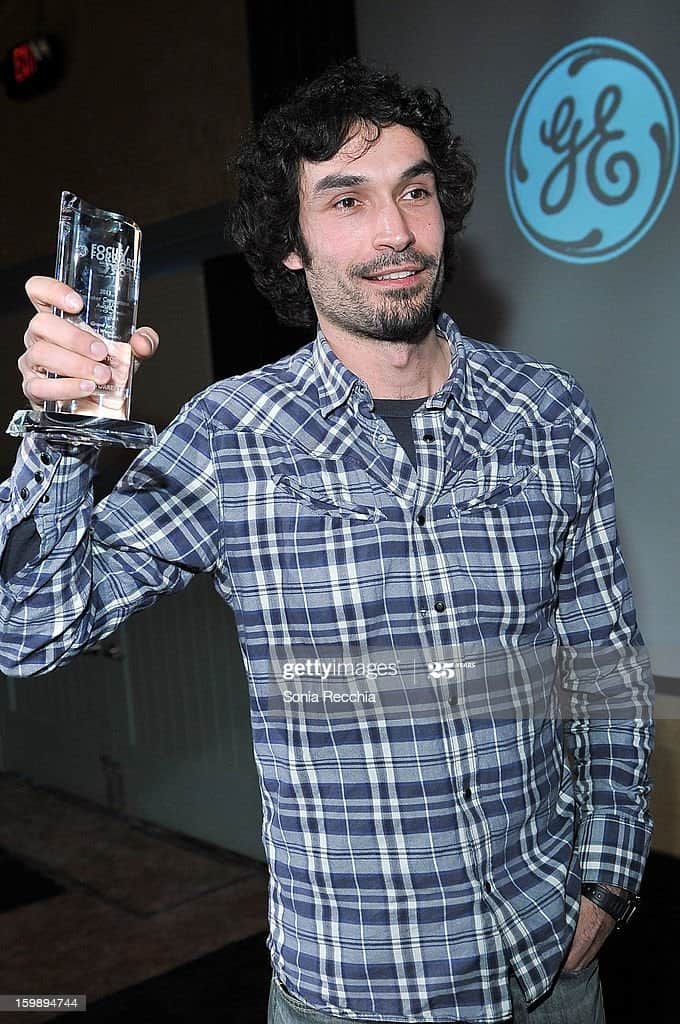
About Rafel:
I'm a freelance journalist and filmmaker based in Barcelona and Berlin, with Bachelor’s degrees in Audiovisual Communication and Journalism from Pompeu Fabra University of Barcelona. After starting my professional career in Barcelona in production in film and advertising, I later moved to Miami in 2004 where I continued working in production for major Spanish media company Grupo Prisa affiliate Plural Entertainment, which produces content for Univision -the largest Spanish-language network in the United States-, Telemundo and WSBS-Mega TV. There I also worked as assistant editor and video editor for docu-realities, magazines and show games. As a freelancer, I also produced the independent documentary La Gata-The nine lives of a tango singer (Best US Documentary Award in the Women’s International Film Festival, Miami, USA, 2008).
Afterwards, I worked in post production for television magazines, documentaries and reports produced for different TV channels and for the Argentinian Ministry of Information in Buenos Aires. I later collaborated with an international human rights NGO in a conflict zone in Colombia, contributing to the communications department.
I directed, produced and edited the short film documentary Cyborg Foundation, which won the $100.000 Grand Jury Prize in the Focus Forward Films Competition about world-changing innovation, awarded at Sundance 2013. The jury included actress Daryl Hannah and filmmakers Barbara Kopple, Jose Padilha, Joe Berlinger, Floyd Webb and Peter Wintonick. The film premiered at Sundance Film Festival alongside documentary shorts by Morgan Spurlock (Super Size Me), Alex Gibney (Taxi to the Dark Side), Lucy Walker (Wasteland) and Albert Maysles (Grey Gardens). It was also screened at Tribeca Film Festival and Doxa Documentary Film Festival in 2013.Cyborgs among us (2017) is my first feature documentary, co produced between Spain and France with the collaboration of Science & Vie TV (France) SVT (Sweden), NRK (Norway), DR (Denmark). It has been selected in several international documentary festivals and it has been broadcasted in more than 20 countries worldwide. I actually freelance as a video reporter and documentary director.
Transcript
(Joel Beasley at 00:00:00) Hello, my friends. Today we are talking to Rafael Duran, the director of the documentary Cyborgs Among Us. And we discussed the underground world of human augmentation, how advanced bionics is bringing us one step closer to real cyborgs, and what human-machine interaction will look like as we advance into the future. All of this right here, right now on the Modern CTO Podcast. Here we go.
(Joel Beasley at 00:00:27) This is the Modern CTO Podcast.
(Rafael Duran at 00:00:38) Hi. How are you?
(Joel Beasley at 00:00:39) Amazing. How are you, my friend?
(Rafael Duran at 00:00:42) Good. How are you, Joe? Nice to meet you.
(Joel Beasley at 00:00:45) Nice to meet you. We are building a new studio, so we're not completely 100% up and running. But I'd say after tomorrow or the next day—but it's exciting to be, like, we're in the new room. We're just waiting for the logos, the stickers, and then a new camera. So this camera is all washed out for lighting.
(Rafael Duran at 00:01:09) Cool. Cool. Looks like a radio station or something.
(Joel Beasley at 00:01:13) Right? We had to do something.
(Rafael Duran at 00:01:15) Yeah. Yeah. Yeah. I didn't recognize you. Saw a picture of you, but without, you know, so much hair.
(Joel Beasley at 00:01:21) Yeah. COVID started growing in the beard.
(Rafael Duran at 00:01:25) Yeah. Not leaving home for three months makes you change.
(Joel Beasley at 00:01:30) Have you been at home a lot lately?
(Rafael Duran at 00:01:32) Well, in Barcelona, the first three months of confinement were pretty hard here in Barcelona. It was really hard to go out, and there was police out on the streets. And yeah, the situation was pretty hard. And then we started slowly to get out, but yeah, it was a difficult situation.
(Joel Beasley at 00:01:52) And what's it like today?
(Rafael Duran at 00:01:54) Barcelona is kind of a phantom city because normally there are a lot of tourists all over the year, also summer. And now there are no tourists. Almost all the hotels are closed. Even the people from Barcelona left, which they normally do, but even more now. So it's pretty strange here, I have to say. Maybe I'm the only person in the city, probably.
(Joel Beasley at 00:02:22) I loved your documentary.
(Rafael Duran at 00:02:24) Thank you.
(Joel Beasley at 00:02:25) Yeah. It's on Amazon Prime and it's called Cyborgs Among Us. Can you give me the 30-second overview of the documentary?
(Rafael Duran at 00:02:33) Well, the documentary idea started because I made a short film which was called Cyborg Foundation about Neil Harbisson, which is the first recognized cyborg in the world. And I met this guy and he opened a whole new world for me. And suddenly I was interested in cyborgs, which I never thought I would be because I was not much into technology. But since then—it was seven years ago—then I made a long feature documentary about the subject, and it blew my mind, really, how the future will change, how technology will change the human species, you know, in the future. And yeah, it's just from this guy, really.
(Joel Beasley at 00:03:22) So the way I came across it was I was listening to Elon Musk give a talk, and he mentioned this concept. He goes, "We're basically all cyborgs. It's just a bandwidth problem." Right? Because we have to type in with our thumbs and then we're using the technology, but it's just because we're far away from it. So it's just a bandwidth problem. And then as we look over time, that will become closer and closer and closer, and then eventually we'll become more embedded as cyborgs. It'll be easier for us to access that information. And then so I started googling around. I was like, you know, sci-fi documentary, cyborg documentaries, and that's when I found yours. And I was just blown away. It's like there's this whole underground culture of people who are embedding electronics into their bodies. I mean, that's fascinating.
(Rafael Duran at 00:04:13) Yeah. Well, I became interested in cyborgs, as I said, because of Neil Harbisson. He's a kind of DIY cyborg. And after him, I discovered a whole new world of other DIY cyborgs in the world. And this kind of cyborgs are low budget ones, like just people that want to enhance their bodies, but they don't have really the budget or the tools to really develop this kind of technology.
(Rafael Duran at 00:04:31) But apart from that, then in laboratories and research centers, there's a whole new world of really serious science behind all these phenomena. So there's kind of these two levels I wanted to put side by side. Because on one side, there's these DIY cyborgs that they do really crazy stuff in the basement here in Pittsburgh, in the US. There's a group which is really, really cool, and they do really crazy stuff. And they have no fear. They experiment with their bodies. They use their bodies as guinea pigs, really, no? And they can do things that they're not really allowed in the establishment, you know, in medicine, because you have to follow a lot of rules, a lot of steps, a lot of, you know, FDA approvals and so on.
(Rafael Duran at 00:05:14) So in the real science, they start with animals. Normally it's rats, then it's monkeys, and then it's humans. So when they start with rats and then monkeys and humans, maybe there's a lapse of 10 years that these guys just do right away. Just, you know, they open their arm, you know, and they just implant the chip, you know, and see what's going on and what happens.
(Rafael Duran at 00:05:37) On the other side, they implant really simple things, you know. Technically, there's these RFID chips which you can just maybe unlock the computer, open the door, you know, maybe just open the car. Simple stuff like that. Another gadget that they developed, these cyborgs in Pittsburgh, was Circadia. It's pretty big. It's like a cigarette pack, which is kind of weird. But it takes biomedical data, you know, like your temperature and really simple stuff, but it's really low budget. And on the other side is the real science, which is another step, you know. It's two different things.
(Joel Beasley at 00:06:49) Yeah. When I saw the guys that had the cigarette pack-sized electronics that they were putting under their skin, I was blown away. And then I was curious. I saw them all, like, you had shots, they're all working in an area, and I was curious. Are they making money? Like, do they have a business? Is it something that's self-sustaining?
(Rafael Duran at 00:07:11) Well, good question. They're trying to sell, but maybe they sell maybe 10 chips every year. So it's not a big business. There's another guy in Vancouver. I think he sells RFID tags for, as I said, open doors and unlock computer and stuff like that. And he sells, I think, like 10,000 a year, which is pretty—he's the only one I know who can really make kind of a business from that. But these DIYs, they're not really successful. In Sweden, there's quite a big community. I think like 4,000 people in Sweden. I don't know why in Sweden, which are really fans of these RFID tags. And there's a whole neighborhood in the capital in Sweden where, like, three, four buildings where all the people that live there use these chips implanted in their hands to open the building doors and all these. So all the buildings are adapted to be opened with the chips. But it's like an alternative thing. You know? It's not mainstream, of course.
(Joel Beasley at 00:08:28) So how has this impacted your life as a human? I know you're a filmmaker. That's what you do, right?
(Rafael Duran at 00:08:36) Yes.
(Joel Beasley at 00:08:36) So are you—I guess you made your first one about seven years ago for the Cyborg Foundation, not necessarily your first film, but the first cyborg one was made seven years ago, right?
(Rafael Duran at 00:08:48) Yeah.
(Joel Beasley at 00:08:49) And then now, you know, recently this one's come out. And I'm curious, are you keeping in touch with these people? Has this become part of your life now?
(Rafael Duran at 00:08:58) Yeah. I keep in touch with some of them. But I never thought about implanting myself one of these chips because I don't think at the moment it's really helpful, you know, in my daily life. It would not make a big change in my life. What I appreciate from these DIY cyborgs is that they open your mind, you know. They open a whole new world, and they use their body to show that the human-machine interaction is possible, you know. And there will always be people that they have no fear to do it, you know, that implant things in their body, whatever you think, whether you approve it or not, or even society approves it or not. There's going to always be people who will do things that are illegal, and they would put things in their bodies just because, for the sake of it, because they believe in that, you know.
(Rafael Duran at 00:09:33) And they showed me things that you can already know when you read the Greeks, you know, from 2,000 years, that the humans always want to push boundaries and go beyond your biological limits, your physical or corporal limits, you know. And that will exist. So that's a phenomenon that's going to be really difficult to stop in the future, you know. There's people—there's kind of two movements, let's say, like the geeks or cyborgs or whatever you call them, people that love technology and love the human-machine interaction. And there's the bioconservatives who say, no, that is evil. You would never do that. That's against nature, and you would never do that. That shouldn't be allowed. But you will never stop these people because people in the basement, they can do these things.
(Rafael Duran at 00:10:42) The issue is that technologically they don't have the means to do it. You know, they don't have an operation table. They can't develop really important technology, you know. The real technology is done in research centers. But I think in the future, when all this technology is put—will be put in the market, you know—they will copy it, you know. But yeah, they show that this human spirit of always wanting to go beyond your biological limits is going to exist, you know. And you wouldn't be able to stop it, really.
(Joel Beasley at 00:11:35) It's like, how do you draw the line? Like, let's say you've got a person who lost an eye and then they got a bionic eye, right? Like, at what point do they become a cyborg? Like, if you get a pacemaker, are you a cyborg?
(Rafael Duran at 00:11:51) Well, there's a lot of theories and explanations. If you talk to an anthropologist, probably this person would tell you that we're already cyborgs since maybe 3,000 years ago or more when humans, you know, started using tools like a rock or something. You know, an external tool that enhances your capabilities. If you think about it, if you use a pen and you write, you're enhancing yourself because you can write down things. So you will remember them. So you're enhancing yourself. So from this point of view, humans have been cyborgs for a long time.
(Rafael Duran at 00:12:21) The definition that we use in the documentary is the one Neil Harbisson told us, but there are different ones. A cyborg is a person who implants electronic devices in their body that enhance their capabilities. So that's the definition that we use. So you need both things. It has to be implanted. So a wearable wouldn't make you a cyborg because it's external. It's not invasive. And then it has to enhance your biological capabilities. That's the definition we use. Because there are many, but we use this one.
(Joel Beasley at 00:13:07) So what was Neil's enhancement?
(Rafael Duran at 00:13:10) Neil suffers from achromatopsia, total color blindness, since he was born. With this—he doesn't want to call it disease, but it's kind of a disability compared to other humans. And as a kid, he was kind of weird. They didn't know what was wrong with him. He had problems dealing with the world and interacting with it. And then they discovered that he could only see in black and white. And when he was 20 years old, he was in contact with an engineer and they developed the Eyeborg, which was an antenna with a camera that transformed the colors to sounds.
(Rafael Duran at 00:13:39) And this antenna would end up in a chip that was not implanted but was next to the skull and was transferring the sound through the skull, like the dolphins. The sound through the skull to the brain, and he was hearing the colors. So the chip, what it does, was translate the light frequency to sound frequencies. So it's not like, for example, synesthesia, where some people, for example, hear C-sharp and then see a color green or vice versa. They would see green and one person with synesthesia would hear D and another F, for example. What he does is it's not arbitrary. So light frequency corresponds to sound frequency, and that's what he's hearing. So instead of seeing colors, he hears colors.
(Joel Beasley at 00:14:48) So it allows him to orientate a little bit better in the world because, you know, in a normal conversation when you say, you know, the sky is blue or, you know, take this lemon because it's yellow, he wouldn't understand it, you know.
(Rafael Duran at 00:14:50) So now it has helped him. And then he has also developed artwork using this Eyeborg. He now started to paint songs and vice versa. He started to make some portraits of faces, for example. So he kind of used art to use this new way of perceiving the world.
(Joel Beasley at 00:15:35) Oh, excellent. Is that providing him income?
(Rafael Duran at 00:15:39) Well, he does conferences all over the world, like promoting, you know, through his Cyborg Foundation. He promotes that people become cyborgs and use technology implanted in the body to enhance your biological capabilities, you know. Because what changed the vision that I had about cyborgs before and after meeting him was because I had this vision of a cyborg, you know, like kind of a Terminator kind of, you know.
(Joel Beasley at 00:16:10) Yeah. From the movies.
(Rafael Duran at 00:16:11) Yeah. The 20th century, they just gave this vision that, you know, a cyborg is like kind of a robot thing, you know, dangerous and makes wars and kills people, you know. And he's kind of a quiet guy, really thin, you know, vegetarian, you know, and doesn't really quite fit the image you have. And then he's kind of a hippie mentality too, and he wants to become a cyborg to become more united with nature because he thinks that if he enhances his capabilities, you know, and his senses, he will be more connected to the world and to nature. So it's another concept of a cyborg that most people may have.
(Joel Beasley at 00:16:55) That's interesting. Wow. So how do you get—when you have this idea or you meet these, you know, you meet Neil, how do you get funding in order to spend years of your life to make these films?
(Rafael Duran at 00:17:10) Well, the short film I made, I went in with no money. And I was lucky I presented to a contest was called Focus Forward Films, and they gave the prize in Sundance in 2013 in a parallel section. They made this worldwide contest of three-minute documentaries about world-changing innovation. And I presented this short film and I won, you know, the Jury Prize. And then it became quite famous on the Internet and had some repercussion. And then a producer in Barcelona called me and asked me if I wanted to go into this with cyborgs. And I said, yes. Okay. But I had done really—I had not much idea of what a cyborg was apart from Neil, you know. And then it was, like, three, four years of research of other cyborgs and also from this other level of medicine and technology-related subjects, you know.
(Joel Beasley at 00:18:15) Yeah. I think that's what's going to—and I'm not an expert by any means, but what it seems to me is when there's a legitimate business reason, then that allows for money and then that allows for improvements and, you know, greater research. So, for example, when I see something like Neuralink with Elon Musk, right?
(Joel Beasley at 00:18:35) Because they're meant, you know, where they want to go, where the end result is, right? But all along the way, they're helping people immediately with disabilities, and there's a business model there. And for me, it's exciting because there's some patience, you know, that you have to wait and watch the decades go by, but they'll continually improve it. And that, to me, is better than it not being improved.
(Rafael Duran at 00:19:03) So you said that you know what Elon Musk is looking for?
(Joel Beasley at 00:19:09) Where he wants to go?
(Rafael Duran at 00:19:11) What do you think he wants to go?
(Joel Beasley at 00:19:14) From the content of him that I've consumed, it seems like he wants to pair us with AI so that we can evolve alongside of AI instead of AI evolving without humans. So through the Neuralink, if we can connect our brains with the technology seamlessly, then we can evolve together. But if AI just ran off without any human need, it could evolve on its own and not need humans.
(Rafael Duran at 00:19:44) So basically, is this human-machine interaction?
(Joel Beasley at 00:19:48) Yeah. It's a human-brain interface, or there's some acronym for it, but that's how he describes it. He says by making this technology, it gives us a better chance of existing in the future, even though that existence will be slightly different—will be humans with technology embedded in us.
(Rafael Duran at 00:20:11) Yeah, that's what I read too. Every time I read what he says is that. But I think Elon Musk, like Kurzweil, they hit this vision, you know, like 2045 we're going to be cyborgs and singularity is going to come and all this. And it's what makes front page everywhere, is what people read. But then there's another level. It's when you go up to the research centers and then you touch reality. You know? What—okay, that's the idea. But then what happens in the laboratory? Is this possible? What difficulties you find on the way? You know? And he doesn't explain that. So you have to go really a little bit deeper to find how many difficulties you can find in this process. And there are many. You know? And we try to find the laboratories in the world that try to make a difference and to really work in this human-machine interaction. You know?
(Rafael Duran at 00:21:13) The problem doing this documentary, for example, was that there's not a university with a degree that's called cyborg or cybernetic. It involves so many things, you know, like material science, neuroscience, computer engineering, mathematics, you know. And now, since ten years ago, they're starting to collaborate. For example, MIT Lab or different universities, mainly in the States, different disciplines, they started collaborating to make this possible, you know. But there are many research labs in the world. You really have to find which ones make the difference, you know. And this was, I think, the most difficult thing. Because if you put "cyborg" or you put "Elon Musk" in Internet, you may find some things, but there's a lot of hype, you know. I respect him, you know, because he says, "Okay, we're going to jack our brain to the Internet," and so on. Okay, that's the idea. But behind that, there's the reality, you know, the real problems. And in these research centers, what we found is that it's going to be really difficult. It's going to take a long time. But the important thing is that the way has already started. And as I told you at the beginning, I think it's not going to stop. And they don't even know if it's going to take fifty years or maybe five hundred. I'm not sure that he's right and it's going to take only thirty years. I think it's going to take longer, but the important thing is it's going to take place.
(Rafael Duran at 00:22:36) And the DIY cyborgs, on the other side, they don't have the technology, but they show us the human aim that's behind that. That there's always going to be people able or wanting to do that, you know. And when you say it was important about these abilities, it has to do also with ethics and the social vision about the phenomenon is that most of these technologies starts to cure disabilities. So the main goal is, you know, to cure Alzheimer, degenerative mental disease, people that have no limbs. A lot of real problems, you know. So that's the primary aim. The interesting thing is that once you implant technology in the body, you are going to be able just not to become human, but it will leave you the possibility just to go one step further and to enhance yourself. So you will go from disability to an enhanced person. And this way is very subtle because if you analyze history, it changes over time, the vision that humans have of therapy and enhancement. What people thought as enhancement a hundred years ago, now it's seen as medicine, you know. I read a few times ago, two hundred years ago in Paris, in France, I think the life expectancy was 25 years old, you know. And maybe if you wanted to live 80, they would say that you were crazy. Today, it's something normal, you know? So this change from therapy to enhancement is the thing that technology will bring us, and that's the interesting thing.
(Joel Beasley at 00:24:38) Yeah. No, I agree. I actually learned something new a couple months ago when I was talking with some people in the research world, and I mentioned, you know, why are we living so much longer now? We used to die—a 25 or a 35-year-old person would be the most wise person. And who I was speaking to corrected me. So it gets lost a little bit, but what they talk about with the 25 and 80 thing is that 25 would be the average age. So many children were dying that it lowered the average age. So people were still living to 70 and 80, but there were just huge amounts of children dying under the age of five. And so the average age was 25. And then what happened is they kept all the—it's the average expectancy was 25. But they threw off the average because of the young ones dying. But then when they stopped the young ones from dying, the average life expectancy went up to the seventies because there were still tons of people living to 70 and 80. Does that make sense?
(Rafael Duran at 00:26:00) Yeah, I think you're also right. I think both things can coexist. I think you're right. The fact that so many children died really young made the percentage—I think that's true. But we can also agree that today people have a life expectancy—
(Joel Beasley at 00:26:18) Hundred percent.
(Rafael Duran at 00:26:19) That science—yeah, it's confirmed, you know—that they live much longer. And the big change is that, for example, big corporations like GAFA, you know, like Google, Apple, Facebook, Amazon, they all invest in companies that will promote or investigate to increase life expectancy. You know, Calico is a famous one at Google. And there are many more. You know, all these big companies in Silicon Valley invest in this kind of companies that want to achieve, I don't know, immortality, but really expand life really far beyond. You know? And we're not talking about 80 or 100, you know. Let's say 500 or 1,000, you know. Really a big change that has never seen human history. So I think that's the main difference.
(Joel Beasley at 00:27:15) I think we could do it. What do you think? That's your next documentary, right? Living Forever?
(Rafael Duran at 00:27:21) Yeah, Living Forever. Yeah, I think it's kind of scary. I don't know. If I live 500 years and my health condition is not really good, I wouldn't really agree, you know, being in a wheelchair. But it depends on the conditions. I'm really skeptical always because I also always try to be critical and not to believe everything that they want to tell us. What I discovered doing this documentary, and there are a lot of scientists pursuing that goal, you know, and that's the important thing. So as I said, they don't really know how long it's going to take, but they will do it, you know. Because even though if you're skeptical, if you look at the human evolution of technology, for example, you know, it's amazing. And to think that it's not exponential, it's to be a little bit naive because it is. You know, it's clearly, you know, the first neuron is, I think, 500 million years old, you know, the first neuron. And the transistor is 60, 70 years old, you know. And look at the evolution, you know. So if you think about how those technologies have exponentially grown and exploded, you really have to start believing that it might be possible. I think it's going to take much more than these gurus like Kurzweil and Elon Musk tell us. But all the scientists that I talk to, they work on it, and they believe it's possible. But it's going to take a long way.
(Joel Beasley at 00:29:05) I agree. And I'm trying to—a little project I'm working on for fun just, you know, by myself after work. I'm trying to figure out, based off of, or previously, I guess, what people would do is they would say based off of the technology and, you know, what's available and how fast it's progressing, and they would sort of use technology as a way to try to predict when future technology would come out. But I think a missing component to that is the money powering the evolution of that technology. So the more business models that are behind a specific technology or connect to a specific technology, the faster that will become mature because there's more people working on it because there's a business model behind it. Right? So I'm always asking myself the question, what are the humans building? And then from that question, trying to figure out where is the money flowing to what technologies? Because those are the ones that are going to mature the fastest. That's why I get excited when I see people working on these diseases like Parkinson's or maybe the COVID people doing vaccines with the biohacking. Because wherever there is money, the maturity of that technology will happen faster. And I think that's an important metric in trying to predict when new technology or how technology is going to evolve.
(Rafael Duran at 00:30:29) Yes. I think you're totally right. It's undeniable that when there's a business model or some demands on technology, it grows much faster, you know. There are many examples of that regarding cyborg technology. You can say cyborg technology. For example, in bionics, it's not a casual fact that in the last fifteen, twenty years, it has exploded, you know. Bionics, because the American government has put a lot of money on different projects. And one of the reasons is that a lot of soldiers came back from Iraq and different wars without limbs, you know. Or, for example, with post-traumatic disorders. Or, for example, the fact that cochlear implants exist, you know, or Parkinson's disease with this deep brain stimulation implant. You know, an implant that is implanted really deep in the brain with amazing effects. All this is possible because there's demand on it, you know. Who wants not to be healthy? You know? And there are a lot of diseases out there. You know? From all different kinds. You know? Physical, mental. You know? And there's another fact that will make this union between human and machine unstoppable because it will help at first place to improve health, and nobody will say no. You know?
(Rafael Duran at 00:31:47) Probably if I ask you, "Okay, you will put a chip in your brain to enhance your memory, what would you do? You would do it or not?" You would have doubts maybe. Maybe you're afraid. I don't know. Maybe you will do it. I don't know.
(Joel Beasley at 00:32:21) I would do it once I knew a person smarter than me that did it.
(Rafael Duran at 00:32:27) You're smart. You don't need that. You're smart. I would do the same. But if you had Parkinson's disease—
(Joel Beasley at 00:32:34) I would do it as a person—
(Rafael Duran at 00:32:36) That is in the documentary and you have no other choice, would you do it?
(Joel Beasley at 00:32:41) Of course. Yeah.
(Rafael Duran at 00:32:42) I would do it. And I'm not really for it at first place, but I would do it because, you know, it gives a solution. You know, it tries to improve a disability or a handicap that you have. And imagine that once you have this chip, someone tells you, "Okay, this deep brain stimulation device that you have in your brain can make you happier or can enhance your memory." Then maybe, I don't know, once you have it inside and, you know, you already know that it works. So I think it's one of the paradoxes of this technology that might—it's not a theory or an intuition that I have. It's that enhancement will come from implantable technology because once these patients have technology implanted in their body, you know, some of them will leave it to try.
(Joel Beasley at 00:33:39) Yeah. No. And I'll tell you what. So when I was around age 11, I was hit by a car, and I was in a wheelchair for about a year, year and a half. And going through that process of learning how to walk again—I'm fine now. But going through the process of learning how to walk again and then the pain associated with that, you are very open to trying anything to get your quality of life back.
(Rafael Duran at 00:34:05) Yeah. Yeah, that's true. I mean, in the documentary, there's—we portrayed this Parkinson's patient that I told you. A guy who got Parkinson's pretty early—normally it's around 60. He was 40. So when he was already 50, he was in a really bad condition because it's always degenerating your brain. And after ten years, when he was 50, it was so bad that, you know, he was falling on the street. He couldn't even walk, you know. He couldn't be alone anymore. He couldn't do anything, you know. And they put the chip and his life changed, you know. What was amazing was that these chips that go deep in the brain, they're next to a region, which is the pleasure region in the brain. They regulate it a little bit stronger than they should because it's a try and error, literally, when they implant you and they put you the voltage. So they try not to put it so high that, you know, it changes your personality, and it didn't happen to him. He was kind of a regular guy, and then, you know, the voltage was a little bit too high, but he didn't complain. So the doctor trusted him, and he left his wife, you know, and he changed his life and he's now an artist, you know. So there will be a lot of ethical issues, especially with brain implants, because it can change your identity, you know. And that's going to be a really important issue in the future.
(Joel Beasley at 00:35:38) Yeah. And that's—so I'll share a story. So my wife, when we had our first kid, she was paralyzed from the waist down for about three months. And we thought, when we were going to the doctors and stuff, they were saying that it could just be permanent. And so the discussions, you know, we were having faced with something very real.
(Joel Beasley at 00:36:05) I told her, I was like, look, if this is a permanent thing, if these therapies that we're going to go through, if they don't work, then I'm going to dedicate my entire life to building new bionic legs. Right? Because I'm an engineer by trade, and I could just lock myself in a room for five years and figure it out. But it's just that those feelings, those emotions that you get when going through those things, you know, as technology becomes more available and easier to access and better educational materials, people who face that... Like, thank God she went through the therapies and got her legs back and she's full capacity today, but those three months were really scary.
(Joel Beasley at 00:36:47) And, you know, those feelings that you get of wanting to overcome and achieve, and those motivations, people who aren't as lucky and those things do become permanent, I can see them or their people close in their network or their spouse—there's so much more energy, I would imagine, around this, around solving these human problems or loss of quality of life than there is of, let's say, starting a bank. Right? Like, opening a bank as a business. Like, oh, that's great. We're going to have a lot of money. But that doesn't compare to the raw emotion of your spouse losing their ability to walk and you wanting to solve that. And so I think that there's a really interesting dynamic to the progression of this technology.
(Rafael Duran at 00:37:35) Yeah. Yeah. You're totally right. I mean, the main issue of this technology is to improve the life of the people. You know? And one of the handicaps is to make all this technology available for the most amount of people, that it's not so expensive that only a few ones can afford it. That's going to be an important issue. And regarding your example, which is quite touching, there's a lot of people we interviewed too. They had no limbs. And because now the technology allows it, they're also kind of DIY cyborgs, and they develop their own 3D-printed limbs and so on. They start experimenting and implanting—not implanting, but it's external—making their own prosthesis.
(Rafael Duran at 00:38:29) And it's a little bit like Neil. You know, Neil had a disability, and then he tried a way to cope with this disability, and then it allowed him to enhance himself. I forgot to say that now his antenna is also capable of perceiving infrareds and ultraviolet. So he's now able to perceive more than a human. So there's an example of a disabled person that suddenly becomes superhuman at some point. You know? And there are other two examples which started from this, from a disability also, and they finished with an enhancement. Another example is this guy in the documentary. He has a cochlear implant, so it's not a DIY cyborg. He goes to the clinic.
(Rafael Duran at 00:39:22) He gets a cochlear implant, which, for the people who don't know, it's like you have an implant in the inner ear. So that makes him a real cyborg. You know, this human-machine interaction. It gives electrical impulses inside your hearing apparatus. And then he wanted the doctor to give him the codes of the software so he could change the range of frequencies and perceive more frequencies. You know? So in your case, for example, imagine you develop a prosthetic limb that allows your limb to have more power than a regular hand suddenly. Would you do it, or would you not do it? That's a question. You would do it.
(Rafael Duran at 00:40:07) Yeah. Yeah. You would do it. I know.
(Joel Beasley at 00:40:08) I would hack the bionic hand, and I would make it grip as—I would probably replace the motor in it to get as much strength as I could.
(Rafael Duran at 00:40:17) Yeah. Well, I don't know if you would be able to do that, I mean, at least with a real prosthesis from a company. You know? There's this company in Sweden that makes the most advanced bionic arms in the world, which are really implanted. So they are also integrated. That means that they make a hole in your bone. And then through a titanium plate, they couple the bone with the prosthetic limb, and then they put sensors in the muscles and nerves so it makes this person aware of the object he's touching. So that makes them real cyborgs. There are like four in the world right now in Sweden, and they're the most advanced limbs in the world.
(Rafael Duran at 00:41:07) And this hand can rotate 360 degrees. And the strength that they have in their hand, they're going to squeeze your hand and really break your hand in two. So that really exists. And that's a question that the doctor himself had to ask, you know, like, he can regulate the strength, but the guy's hand rotates 360 degrees. It's not a big thing, but it's just an example that it is possible, you know, and in the future, when more capabilities are developed, who is going to be able to stop them? You know?
(Joel Beasley at 00:41:42) Yeah. That's an interesting thing because there's definitely going to be all the people who get upset or have opinions about what's right or what's not right. But one thing that time has shown me, at least looking back, is that you just wait a human generation. You just wait for the next generation of humans to come where a bionic arm's normal. There's nothing wrong with letting it twist 360 degrees. Like, what are you guys even talking about? They're going to be debating even farther topics, like how much time you spend with your consciousness uploaded to the multiverse or whatever.
(Rafael Duran at 00:42:20) No, you're totally right. Like, it is really amazing. You thought of a really interesting thing, which is just the next generation can change completely, you know, the ethical vision of the whole world. You know, like abortion. Eighty years ago, it was totally unthinkable, you know. Or on the other side, for example, lobotomy. You know? I wrote a few time ago, like, in Canada in the sixties, they did lobotomies, which they would open your brain, you know, and extract parts of your brain because you masturbate too much. And your parents would bring you to the hospital because they thought they were doing a favor to you, you know. So that's an example that ethics change over time, you know. And what today is seen as enhancement, maybe in the future, is going to be just normal, you know, to live 200 years or to have an arm that, you know, like Doctor Gadget, that expands like two meters or whatever. Or you have a chip in your brain that enhances your memory.
(Rafael Duran at 00:43:33) And as you said, maybe our grandchildren would think that it's normal and who's going to stop it. And that's the—I think that we all have to think about because, you know, there's going to be limits of that or we're going to still be humans or not, or human will change the definition of what is a human or what is not a human. So it's interesting because I never thought that technology will change so much how humans are and think about ourselves. And it's the first time in human history that it's happening.
(Joel Beasley at 00:44:12) I'm okay with it. I'm—and I've—there's—I get in different moods where sometimes I'm not okay with it, like the future, and then I am okay with it. But one thing that helps ground me is like the age of the universe. Right? So it's billions of years old. And thinking of, you know, in the next 100 to 200 years, it's going to change drastically, and then it already changed drastically in the past, you know, 200,000 years. Right. And that whole timeline is, you know, two to 300,000 years. And the universe has been around for billions of years. Right. So I think it would be boring if it didn't change. Right.
(Rafael Duran at 00:44:53) Yeah. Well, I wanted to do this documentary because I was interested in the subject. Although, as I said, I'm not really much on technology, not a technology fan myself. But I also have fears, you know. So we wanted to explore a little bit, you know, what—why do I fear technology? And do we have reasons to do that, to have fear? And can we change something about that? So I think, you know, to reflect on these issues is also important, you know. I don't think we're going to have to adopt technology like blindfolded, you know. We have to reflect on that because it's going to have a big impact, you know, in our lives.
(Joel Beasley at 00:45:42) I fully agree. And whenever I feel fear, usually it's because I don't understand something.
(Rafael Duran at 00:45:50) And—
(Joel Beasley at 00:45:50) And then through the process of reflection, I achieve an understanding of it. And maybe I don't want it to go that way, but at least I have a sense of calmness. I conquer the fear by understanding it.
(Rafael Duran at 00:46:06) Yeah. What these DIY cyborgs showed me and taught me in some way is that they're regular people. You know, they are not like monsters or they are not freaks. On the other side, they are really aware of the ethical challenges that this technology will bring to humanity. You know? It's not—it was surprising to discover—it's not people that adopt technology, you know, not in a critical way. They really—most of them, they come from the hacker world, you know, and they reflect on the dangers of this technology. But at the same time, they love technology, and they think technology will improve their lives. And they promote, for example, open source technology. So all this technology is not only owned by companies, so also by society in general. So they give another vision of the phenomenon. Yeah.
(Joel Beasley at 00:47:06) I'm curious about you as an individual because I got to read, you know, your bio and your past, and I got to see that you've gotten to work at production companies around the world, and you've gotten to experience many different cultures through your travels. And I was just curious. I was thinking about the differences in cultures, and I had two questions for you. The first question was, which culture had the most fun? Like, when you got to work in different cultures, which cultures had the most fun?
(Rafael Duran at 00:47:40) In which sense? You mean in the cyborg sense? Or—
(Joel Beasley at 00:47:44) You as a subjective—as an individual, where did you have the most fun? What culture?
(Rafael Duran at 00:47:50) Most fun. Well, first, you have to define fun. What is fun? You know? Like, in South America, there are countries where they have a lot of fun. You know? They drink. They enjoy life. They go to fiestas. You know? But at the same time, it's dangerous. So, you know, the approach to life is different to us. You know, the concept of life and death, for example, you know, when somebody's dead, you know, they assume death not in such a tragical way as we do, for example, because they probably have to cope with it more often than we do. But at the same time, you feel that in some way, they enjoy more life than us, you know, in our societies where we have more stability and wealth. So I don't know, at the same time here in Europe, for example, or maybe in the States, you don't have to worry about what you will eat the next day and so on. So it's kind of fun to, you know, not to be worried about what you're going to eat the next day. But I find these countries a little bit boring. I don't know what you think.
(Rafael Duran at 00:49:05) Like, for example, Europe or the States or, I don't know, Australia. Like, the Western world, let's say, you know. Like, you reach a level of wealth, and then you don't have to worry anymore about essential things. But at the same time, maybe also, thanks to technology, you become more distant to other human beings, and that makes you less happy maybe.
(Joel Beasley at 00:49:32) Well, yeah. I mean, I fully agree. That's why I think it's so important, me developing my worldview, and I'm younger. So I'm always, you know, still learning, and I'll probably still have the same mindset when I'm older about always learning, but what I'm finding is life tends to really be like a one-player game. It's like you versus yourself, and pushing yourself and growing yourself and finding out what makes you excited and what makes you tick and understanding the rhythms of your personality and consciously choosing who you want to become, you know. I think that all these things that make life beautiful, all these stages that you go through happen—I think it's part of the human experience. I think it happens even through different economic situations.
(Rafael Duran at 00:50:28) Yeah. I agree certainly with that. I'm just thinking now, linking your question with the cyborg and technology in general, that there's this current inside this tech world that technology will be used to make us happier. And that's a good question because it already exists with drugs. I mean, that's not a new thing that technology will bring us. You can take drugs that make you happier or there are other means to do that. But there's this vision also that technology will not only make our lives healthier or longer, but also happier. And that's a question that we have to ask ourselves because I don't know if really technology itself or alone can make us happier, you know. Like, I—
(Joel Beasley at 00:51:18) I don't think it can.
(Rafael Duran at 00:51:19) I don't think it can. Maybe—well, but it's a question that maybe we will have to make ourselves in the future, like we said, our grandchildren, for example. If you have a—
(Joel Beasley at 00:51:27) If you have a—
(Rafael Duran at 00:51:27) A chip in the brain, you know, that stimulates a part of the brain, you know, that raises your traumas or enhances your dopamine levels in your brain, you know, at which point will you stop that? Is there going to be limits to that? Or do you have to look for happiness inside you or do you think that you can look externally? You know?
(Joel Beasley at 00:51:52) Yeah. And then it's also, happiness is an easy—big discussion. You can put a lot of focus on happiness. I think a lot of people do. And I have found that it's more nuanced than just the word. There's a gradient. There's different types of happiness, and you need different types. And then for me, I optimize towards growth. Right? So I tend to push myself really hard and then ease off. So I believe that you can choose to program yourself. I 100% believe that. You program yourself by your environment and your choices in your life. And so what I've done is I curated and designed my life to where my default programming is to push and grow, overcome, succeed, and then I monitor happiness as an attribute. Right? I also—I put more weight—I get more benefit from focusing on gratitude than I do happiness. Like, if I focus on being grateful for things, that's a better use of my time than focusing on ways to try to get me happy. If I focus on things that make me excited or bring me energy, focus on things that I'm grateful for, by doing those two things while also growing myself creates a sense of overall happiness. But I don't think happy is a destination or a place or just a single entity. I think it's a word that we use to describe this much more nuanced balance of all the components that make up our experience in life.
(Rafael Duran at 00:53:32) Yeah. I totally agree. I think happiness is something you have to look for inside you, you know. Yeah. Technology will help us, but the first place has to be something inside you. I have no doubt of it. And the question is if technology will help us to enhance this inner thing. And I think that was the beginning when you said about Elon Musk, the technology cooperates, you know, some technology and humans cooperate. And, you know, there's not a substitution, but a really, you know, a collaboration.
(Joel Beasley at 00:54:08) Wait. Which culture did you experience that had the strongest work ethic, that worked the hardest?
(Rafael Duran at 00:54:15) Oh, well, I don't know which is the best country in the world in that sense, but at least the one that I lived in was Germany. They're pretty serious and constant. Not everybody, because you can never say 100% of—I wouldn't put my hand on every German guy on the planet or woman. But their culture, for example, compared to the Spanish one, it's much more—I wouldn't say efficient because it sounds not really good. But I'm going to say, like, yeah, serious. I don't know what the English is exactly, but yeah.
(Rafael Duran at 00:54:56) Do you know?
(Joel Beasley at 00:54:57) Serious, yeah.
(Rafael Duran at 00:54:58) Yeah, but regarding work, you know, like, more, yeah. Yeah, yeah, maybe.
(Joel Beasley at 00:55:01) Yeah, we would say serious, yeah.
(Rafael Duran at 00:55:03) Serious, yeah. I don't mean that Spanish people don't work, because normally I've noticed that they work more hours, but probably less efficiently. That's another thing.
(Rafael Duran at 00:55:15) They're not lazy, but, you know, they just expand, you know. They work more. Maybe they could put it more together because they're more dispersed, you know?
(Joel Beasley at 00:55:26) Yeah, I think there's beautiful things about all the cultures. I'm just trying to calibrate my worldview. Like, for me, one of the hardest working—and I haven't spent a lot of time in Germany or worked with anybody in Germany—but for me, like, the Russians, the Russian culture, they are the ones that I've come across that work the hardest in my experience.
(Rafael Duran at 00:55:51) Cool. And I never worked with a Russian. I work with people from many different countries, but not Russians, so...
(Joel Beasley at 00:55:58) Yeah, they have a strong work ethic, or at least I've worked with—I've had like five coworkers who were born in Russia, lived in Russia, and all five of them were in the top ten of the hardest people I've ever worked with. Like, as far as hardworking people, not hard to work with. But speaking of German, I actually was researching upcoming interesting shows in this space of cyborgs and biohacking and stuff, and I wanted to know, did you have any part in the German Netflix series Biohackers that's coming out?
(Rafael Duran at 00:56:36) I've seen different series about biohackers. One was done in Germany, but was an American magazine, Vice Magazine, but with the German section, or, you know, like they were German but working for Vice. And they do a lot of stuff about cyborgs, by the way. I don't know. This series is from Netflix, you said?
(Joel Beasley at 00:57:02) Yeah, it's a—I don't know if it's going to be on the American Netflix, but it's going to be on the German Netflix, August 20th, and it's called Biohackers.
(Rafael Duran at 00:57:11) Biohackers. Well, I'll look for it. But, as I said, biohackers is what we're talking about before—like, DIY, these DIYers, you know, like people that do it themselves and, you know, with low budget. And yeah, that will be interesting to watch.
(Joel Beasley at 00:57:30) Are you getting to work with other people that are doing these types of futuristic documentaries? Are they calling you up and saying, "Hey, we want you to be a part of this"?
(Rafael Duran at 00:57:38) A few months ago, yeah, there was a documentary series. I think it was on Netflix, by the way. But that was about technology in general, and one chapter was about cyborgs, and they contacted me. And because of the corona, we couldn't do it. But, yeah, they contacted me. And sometimes, you know, like Field Fest, documentary science documentary film festival, was contacting me for the last three years regularly. And, yeah, there's quite an interest on that subject, you know.
(Joel Beasley at 00:58:16) If you were to get an enhancement, like any enhancement—like, pretend it doesn't have to exist today, you could just snap your fingers and have it, like maybe night vision or something like that—what would it be?
(Rafael Duran at 00:58:30) Well, every time they ask me that, I always say nothing, you know. But, okay, if I had to say something: memory, you know, because I forget things so easily, you know. Like, I have a friend, and I have so much envy of him because he can remember conversations you had with him like thirty years ago when you were kids, and he would remember everything. And I would love to do that, you know. It's not a thing that I really need in my life, but, okay, that would be nice.
(Joel Beasley at 00:59:01) If you have to pick, then memory.
(Rafael Duran at 00:59:04) Yeah, I think memory, probably, yeah.
(Joel Beasley at 00:59:07) That's a safe one. Right? It's good, too.
(Rafael Duran at 00:59:10) And now you open the Pandora box. There's a lot of things, you know—play instruments or—oh, yeah, there's so many, you know, like languages or, you know, swim really fast, fly, you know. But I know I was not supposed to say that, you know. When you do the documentary, you're supposed to be neutral.
(Joel Beasley at 00:59:28) No, you can—we're not doing a documentary right now. We're hanging out.
(Rafael Duran at 00:59:32) Yeah, I know. I know.
(Joel Beasley at 00:59:34) If we—we can make it say it.
(Rafael Duran at 00:59:36) I didn't want to say it.
(Joel Beasley at 00:59:38) We can edit it out if you want. But if we didn't have COVID, we'd have you here. We'd be having some beers and hanging out.
(Rafael Duran at 00:59:44) Yeah, sure. We could bring Neil and these really cool cyborgs from Pittsburgh. And, you know, they're really cool people. They're really crazy, really crazy, but they're really nice people. Did they give you a yes, maybe, or, you know...
(Joel Beasley at 00:59:58) Yeah, maybe I'll plug in the antenna, just some simple brain surgery right before the show.
(Rafael Duran at 01:00:04) Well, I won't do that in a basement, but yeah.
(Joel Beasley at 01:00:10) Yeah, it would have to be, like, before I get involved with it, it had to be mainstream. I'm hoping—like, when I think of the future, I'm hoping a couple things. The first thing is the most ideal situation where we can upload our consciousness and ourselves, essentially what we call ourselves, into a machine somehow. And then in the future, they will build sleeves, or we could come back into the human form, and we could be backed up and all of that good stuff so we could persist. Like, we could continue to exist. Now, if that doesn't happen by the time I'm old enough, what I hope happens is that through the DNA editing or the gene editing or hacking of our core human systems, we extend life, you know, like maybe like fifty or a hundred years.
(Rafael Duran at 01:00:59) Yeah.
(Joel Beasley at 01:00:59) And I think if we could extend our lives—like, by the time I'm 80—so I'm 32 now—so by the time I'm 80, if in there we can extend our lives, you know, thirty to fifty years and let the technology mature so that we could live forever, I think that would be cool. Because I would live so many different lives if I could. Like, there are so many things I want to do and so little time. I want there to be more time in a healthy state, of course. Like, all of this assumes I'm a healthy, physically capable, mentally sharp individual, right?
(Rafael Duran at 01:01:35) Yeah, I mean, maybe you will have some time for that. Transhumanists, people say that the persons that will live a thousand years are already born. I don't know if it's going to be true, but they say that. And as you say, through genetic engineering, you can look at CRISPR technology, for example, today. It's advancing so rapidly that it might be possible, you know. I don't know if we are young enough—or at least me, I'm a little bit older than you—to have the time for it. But, yeah, at the end, you know, there are things that a lot of people will hope to achieve, you know, like to live more in a healthy state, you know. So that's why this kind of technology is going to have a really intense future.
(Joel Beasley at 01:02:32) I think we will run into an issue, though, when—and this is controversial, but we're going to go here because we can, because it's fun. I think that there will be an issue when your physical representation of yourself isn't necessarily equal to your choices or your discipline on a day-to-day basis. Like, right now I look the way I look. I'm the size I am because of many of my choices, right? Like, I choose to be healthier. I choose to work out. I choose to do difficult things. And by choosing to do these things, when you see me, you can understand some basics about me, right? And so I think when, in the far future, when there's technology—like, one downside of it is if I could just press a button and go into a human sleeve that's jacked and ripped, and then I can do whatever I want and then just keep changing my bodies, it doesn't allow the outside world to see me based off of my past choices necessarily. And I think that's an interesting area of thought.
(Rafael Duran at 01:03:40) Yeah, that's an interesting reflection.
(Joel Beasley at 01:03:45) Right?
(Rafael Duran at 01:03:46) Something that also you said before about mind uploading—well, let's say that even the most optimistic transhumanists will assume that that's going to be, you know, the last point, you know. That's going to—it's really far. That's really far. But when I think about it, it's like cloning, you know. Imagine—it's not possible today at all, and I don't know if it's going to be able in the future—but let's suppose it is. It's like cloning. If they put your brain, you know, in an electrical device, it's going to be you. It's going to be like a clone. It's going to be like a copy. It's not going to be you, you know. And it's going to be you with the memories you have today. But then, once you upload the mind in this device, then it will start generating, you know, new memories, and it's not going to be you. So it's not going to be you anyway. That's what I mean.
(Joel Beasley at 01:04:50) Right.
(Rafael Duran at 01:04:50) The thing about it, I don't think—and I heard someone who said, and I think he was right. Like, I mean, do you really want somebody to have a copy in a computer of somebody who is so important, like maybe Einstein or, you know, like—regular people, we're just humans, you know, what I mean? And if I could live forever, maybe I would, but just a copy of myself, I don't think that—it doesn't interest me at all.
(Joel Beasley at 01:05:23) Yeah, I don't seem to be emotionally attached to the idea of a copy of myself. I kind of feel like my monkey-ness says, like, "Nah, I don't want a copy of myself." I'm only interested in it if I could persist. And then you get into really deep talks about, like, what am I? I'm this being that changes based on, you know, external stimuli and reflection, and so the person who I am today is not anything like the person who I was ten years ago, right?
(Rafael Duran at 01:05:54) Yeah, exactly, yeah.
(Joel Beasley at 01:05:56) So it's really interesting on, like, who you are and what life is. What is your next project? Do you have your next project lined up?
(Rafael Duran at 01:06:04) Well, I'm writing a TV series, and it has to do a little bit about the transhumanist issue that we talked about. It's life expectancy, so it's a kind of futuristic subject. And we're writing it, and we hope we'll find someone interested in it, so we'll see.
(Joel Beasley at 01:06:31) What's the format? What is it? Is it like a Netflix style? There's like ten episodes?
(Rafael Duran at 01:06:36) Yeah, yeah, yeah, yeah, yeah. Like a TV series. And yeah, it comes from this idea that someday, maybe life expectancy will grow, and how are humans going to deal with it, you know. Is it going to be available for everybody? Will you have to leave people behind? And a lot of ethical and philosophical questions, you know. Since we started, you know, we talked about more about philosophy and the meaning of life and technology, you know, because that's another thing that technology, or this technology, brings—is that, you know, it makes you reflect on a lot of things, you know. Because it affects our nature, you know, our bodies, our minds, you know, our personality, everything. You know, technology, this kind of technology—cyborg work or implantable technologies—has the possibility and the potential to change the human nature from scratch, and that brings us a lot of questions.
(Joel Beasley at 01:07:42) So you're writing it now, and then when are you going to go seek funding for it and start pitching it?
(Rafael Duran at 01:07:49) No idea. We'll pitch it somewhere and we'll see. We'll start making contacts in production companies. We hope somebody is going to be interested in it.
(Joel Beasley at 01:07:59) I'm interested in it. I would completely watch that. Your documentary, Cyborgs Among Us, on Amazon Prime, it was unbelievable. It was such a good look into this complex world, and you approached it from all of these different angles. You showed, you know, the underground part. You showed the above-ground, commercial part. It was just really engaging and interesting. And after I watched it, I said, "I have to talk to the person who made this."
(Rafael Duran at 01:08:29) Thank you very much. I'm happy that you liked it. It took me three years to make it—like, two years investigating all these research centers and technology, and one year making it. And as I said, it was hard because you have to really look all over the world to all different research centers and try to find the most advanced centers that investigate. And then all these crazy—on the other side, these crazy people that work in basements and they open their arms and put things inside, you know, just to explore, you know, the limits of their bodies. And it's really interesting.
(Joel Beasley at 01:09:14) Yes. Well, you have a new fan. Is there a website where I can follow your work or subscribe to get notified when you put out new content?
(Rafael Duran at 01:09:23) I have a website, rafaelduran.com, yeah.
(Joel Beasley at 01:09:28) And you post there regularly, or there's an email...
(Rafael Duran at 01:09:31) Well, yeah, supposed to, yeah.
(Joel Beasley at 01:09:32) Yeah, we post there when there's something new to watch, like when there's a new document...
(Rafael Duran at 01:09:38) Something regarding technology, we'll let you know for sure. Perfect. And congratulations, by the way, for your podcast. You have a lot of amazing interviews. I could not hear them all because...
(Joel Beasley at 01:09:50) There's too many.
(Rafael Duran at 01:09:52) There's too many. But, yeah, you know, like, that's the subject that I think interviews is a really nice format, you know, because you can learn from so many different people, you know. Like me, I investigated about cyborgs. You can learn from so many people, you know. And it's always interesting, you know, to listen. Everybody—we all have interesting things to say. So thank you very much.
(Joel Beasley at 01:10:21) How much does it cost or, like, what's the average cost to put together something like Cyborgs Among Us?
(Rafael Duran at 01:10:27) The producer would kill me because I'm not supposed to know all these things.
(Joel Beasley at 01:10:32) But you're a filmmaker. How do you not know how much it cost to make a film?
(Rafael Duran at 01:10:35) Because there's a figure that's called the producer, which I'm not.
(Joel Beasley at 01:10:40) Oh, okay.
(Rafael Duran at 01:10:41) All the money stuff. And every time there's a money issue, you know, he hides away, and he didn't want me to see.
(Joel Beasley at 01:10:51) Well, not your film, yeah. But, like, normally...
(Rafael Duran at 01:10:53) As I know, like, for example, Arte is like, you know—Arte is a really big station in Europe, like public funding, half French, half German. They produce a lot of documentaries. They didn't produce this one, but most of them. And their regular budget is about 100—500,000.
(Joel Beasley at 01:11:12) So 500,000?
(Rafael Duran at 01:11:14) Yeah, but we had to produce it with half the money because we didn't get their funding. So we had to go pick little bits of money from different countries: from France, from Denmark, Sweden, Spain, Norway, Estonia. So we had to find another strategy for funding because the big one, which is ARTE, was interested, and finally they said no. So we had to look for other teams.
(Rafael Duran at 01:11:45) Yeah.
(Joel Beasley at 01:11:46) They were wrong to say no. Well, it all worked out, right? You know, because that's just how life goes. Yeah.
(Rafael Duran at 01:11:52) Yeah, we could make it. Yeah, we could make it.
(Joel Beasley at 01:11:54) When you got that personality, right, you just don't stop until it happens. You just keep going.
(Rafael Duran at 01:12:00) You have to.
(Joel Beasley at 01:12:01) You have to. Well, some people don't. Yeah.
(Joel Beasley at 01:12:04) I mean, there are 7 billion people on this earth, and I have found that it's rare for people to continue to persist and to overcome and achieve regardless of how impossible it may seem. So whenever I meet people like you, I'm just—
(Rafael Duran at 01:12:18) You too. I guess that you had a lot of mental strength to pursue your dreams and what you believe in too. Yeah.
(Joel Beasley at 01:12:30) I ought to. As I start talking to people—I mean, I'm sure there's some, you know, there's definitely business models where companies would pay to have their technology included in the documentary. There's, you know, it might give you some ideas of how you can get money for films or to make some things without having to beg for money. Begging for money sucks, right?
(Rafael Duran at 01:12:54) Well yeah, it sucks, but I don't know. In the States, not everything, but many things are different from Europe. In Europe, when you look for funding, it's mainly public funding. So you have to go to public stations in different countries and then pitching forums and then look for—you know, in the States I think it's a little bit different. There's more private funding, and it's different in that way, which I find it better. But there's also more money in the States.
(Rafael Duran at 01:13:21) So yeah, you can do it.
(Joel Beasley at 01:13:24) Well, if there's ever any time where you think that I might be helpful or a recommendation or maybe a connection to an executive—like if you see all the episodes I've talked to and maybe you're thinking, "Oh, one of the companies might want to be a part of my film," I can introduce you to whoever. Whatever I could do, just let me know, and I'll help you as much as possible because I really do love your work.
(Rafael Duran at 01:13:48) Thank you very much. I really appreciate it.
(Joel Beasley at 01:13:51) Okay, and that's it, my friend. Just a couple short questions, just having some fun.
(Rafael Duran at 01:13:55) Yeah.
(Joel Beasley at 01:13:56) Just get to know you a little bit better.
(Rafael Duran at 01:13:57) Yeah, that was fun.
(Joel Beasley at 01:13:58) Thank you. We made a podcast. You feel good?
(Rafael Duran at 01:14:01) Yeah, we made a podcast. Yeah, you made it.
(Joel Beasley at 01:14:03) No, you made it. The guest makes the show, my friend.
(Rafael Duran at 01:14:07) Cool. Thank you very much. When I finish the project, well, I'll let you know, and I hope that works.
(Joel Beasley at 01:14:16) Yep.
(Rafael Duran at 01:14:16) Thank you.
(Joel Beasley at 01:14:17) All right, talk soon.
(Rafael Duran at 01:14:18) Yeah, thank you. Bye, Joel.
(Joel Beasley at 01:14:22) Thank you so much for listening, and if you found this episode useful, please share it with a friend or colleague who you think would get value from it. And if you have topics that you would like to hear discussed on the podcast, either add me on LinkedIn or send me an email: [email protected]. Every time I get an email or LinkedIn message, it absolutely makes my day and inspires me to keep going.