
Episode 201 ·
Steve Alexander - CTO at Ciena
Today we are talking to Steve Alexander, the CTO at Ciena. And we discuss how to build products that are better, faster and stronger, what the “T” in CTO means, and we dive deep into how the internet works and our current limitations.
All of this, right here, right now, on the Modern CTO Podcast!
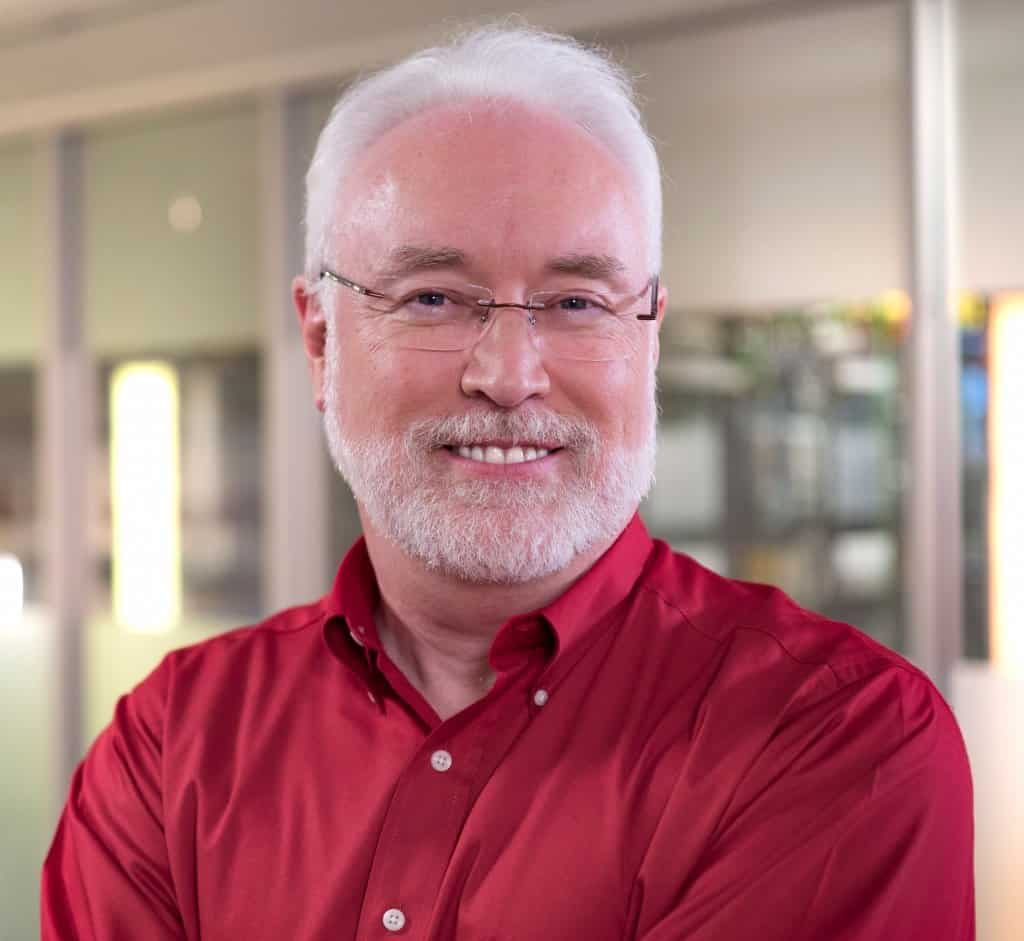
About Stephen:
Steve Alexander is currently Ciena’s Senior Vice President and Chief Technology Officer. He has held a number of positions since joining the Company in 1994, including General Manager of Ciena's Transport & Switching and Data Networking business units, Vice President of Transport Products and Director of Lightwave Systems.
From 1982 until joining Ciena, he was employed at MIT Lincoln Laboratory, where he last held the position of Assistant Leader of the Optical Communications Technology Group. He is an IEEE Fellow and is a recipient of the IEEE Communications Society Industrial Innovation Award. He is a member of the Board of Governors of 5G Americas and a member of the Board of Directors for the Alliance for Telecom Industry Solutions (ATIS). He has been an Associate Editor for both the IEEE/OSA Journal of Optical Communications & Networking (JOCN) and the Journal of Lightwave Technology (JLT) and has served as a member of the Federal Communications Commission Technological Advisory Council (TAC-4) and as a commissioner in the TechAmerica Cloud First, Cloud Fast Initiative. He was General Chair of the conference on Optical Fiber Communication (OFC) in 1997.
Mr. Alexander received both his B.S. and M.S. degrees in electrical engineering from the Georgia Institute of Technology. He has been granted 23 patents and has authored a text on Optical Communication Receiver Design as well as numerous conference presentations and journal articles.
About Ciena:
Ciena is a networking systems, services, and software company. We help our clients build more adaptive networks in response to the constantly changing demands of their users—businesses and consumers alike. We do this by delivering best-in-class networking technology through high-touch consultative relationships, backed by 26 years of experience in building the world’s most complex networks. From our founding, Ciena has always been a pioneer in the networking industry. Coupled with innovation, our growth and success have been built on our ability to partner with clients—delivering the solutions they require to evolve their networks. What they demand today is changing, driven by changing end-user behavior. End-users want more capacity, more content, and more flexibility while also demanding less overhead, less complication and less cost. Our clients and their networks must transform. Ciena is the best partner to guide them through this transformation to build a more intelligent and adaptive network. Only Ciena has the depth of expertise and the culture of collaboration and partnership required to help clients evolve. We do this by strategically integrating hardware, services, and software in an open environment to ensure our clients’ networks are ‘fit for flexibility’ today and into the future.
Transcript
(Joel Beasley at 00:00:00) Hello, my friends. Today we are talking to Steve Alexander, the CTO at Ciena, and we discuss how to build products that are better, faster, and stronger, what the T in CTO means, and we dive deep into how the internet works and our current limitations. All of this right here, right now on the Modern CTO podcast. Here we go. This is the Modern CTO podcast.
(Steve Alexander at 00:00:34) Hey, hey. Hello, Joel.
(Joel Beasley at 00:00:38) Steve, how are you doing today?
(Steve Alexander at 00:00:39) Doing good. Just getting read in on all the cool stuff you do with audio, and sounds like you got quite the team here. It's a good thing.
(Joel Beasley at 00:00:48) Yeah, we do. We have a great team, awesome production crew. And I like your background there on Zoom. That's a really high quality background.
(Steve Alexander at 00:00:55) That is right off the point here. I live in Annapolis, Maryland, and that's a picture my wife Edith took after one of the storms that we had here a couple years back. I just thought it was so cool.
(Joel Beasley at 00:01:05) Oh yeah.
(Steve Alexander at 00:01:06) But yeah, it makes a nice background because the regular room I'm in, I'm in a stand-up desk setup, but I just, you know, got tired of sitting, right? And it's a very boring background if I turn off the virtual stuff. So I've got a whole variety of it.
(Joel Beasley at 00:01:21) When did you start with the standing desk?
(Steve Alexander at 00:01:23) Oh, you know what? I've actually been using a standing desk probably about four years now. You know, it actually started out, so I have by virtue of a whole bunch of reasons, three different compressed discs in my back. And I noticed when I was standing around at trade shows I was getting just fatigued, and talked to the doc, and he said, "Hey, well, you know, try two sets of exercises," which I did. But he also said, "You know, you're sitting a bunch. Why don't you get yourself a stand-up desk?" And over a period, it took a little while, but over about a year's time, I found I mean, I could stand for hours now without any back pain. So it's actually helped quite a bit with that. You gotta, you know, pay attention to some other stuff, your feet and get a pad under it, that kind of stuff. And, you know, I'm using some Dansko shoes, which are good for arch support, that sort of stuff. But it's worked out real well for me.
(Joel Beasley at 00:02:13) Do you spend a lot of time improving your health and growing and working on yourself?
(Steve Alexander at 00:02:18) To some extent, I think everybody has to, right? You know, just by virtue of the pace at which everything goes, you gotta pay attention to that sort of stuff. You know, so you gotta watch what you eat. You know, I've had my moments when I wasn't, right? So my weight's gone up, weight's come off. You know, with the whole COVID thing now, it's nice because, you know, I can actually be home and work out. I got a little workout area downstairs. That's been a benefit. You know, I used to do a whole bunch of travel, and the travel's cut back quite dramatically now. So I can spend some of that travel time doing other things. Although I will tell you, you know, the meetings expand to kind of fill the pond available. So, you know, I think everybody's life now is, you know, Zoom, Webex, GoToMeeting, FaceTime, Teams. There's a whole variety of tools out there that people use.
(Joel Beasley at 00:03:06) I'm a fan of Zoom. I know they're a really great company. I had on Harry, and I was just really impressed with him as CIO.
(Steve Alexander at 00:03:14) Yeah, I think, well, I think Zoom of all the tools is probably the most user-friendly, and I think that's one of the reasons, you know, it took off like it did in terms of the number of people using it. You use some of the other ones and it feels fairly antiquated, right? And, you know, they put in place things like the virtual background and all the things that you, you know, would kind of think of being appropriate in a modern interface. So I think they did a great job with the toolset.
(Joel Beasley at 00:03:40) Nice. And you're in telecommunications background, right?
(Steve Alexander at 00:03:43) Yeah, yeah, yeah, yeah. I've liked communications pretty much for forever. And the company I work with, Ciena, right, that's the company I work for, we are the guys that basically light up the internet, right? We're the ones that light the fibers that interconnect the continents, like the submarine cables, as well as the big cities, the big metropolitan areas. So we've been driving connectivity and capacity out into the infrastructure for, wow, about twenty-five years.
(Joel Beasley at 00:04:11) Wow. I remember I saw a few years ago this documentary, and it had the ship and they were going, you know, in the sea somewhere. And they had this crane thing, and it would pick up this giant cable.
(Steve Alexander at 00:04:22) At the back, yeah, yeah, yeah. That's a submarine cable.
(Joel Beasley at 00:04:27) Yeah. The one I saw, that's what it's called, a submarine, because it's big and it's round. And so it's like this fiber of light. And then I saw him doing a repair on it, and I was just watching these, you know, it was a documentary or a show, and I was blown away by this. And at that moment I realized that, you know, we actually have this web of cables strung around the world, and that's part of the internet.
(Steve Alexander at 00:04:48) Well, it's fascinating. I mean, a lot of people still think, you know, the intercontinental communications is satellites, and it's not. Like 99.9% of it is all under the submarine cable. And the cables themselves aren't that big. Think of a big, thick garden hose where the repeaters are, which are the optical amplifiers, right, that, you know, allow the signal to propagate that long of a distance. They are, you know, beefier. They're bigger, but the actual cable itself isn't all that big. And you're right, they're what interconnect, you know, all the major continents and carry the vast, vast majority of all the, you know, internet communications and such. And it's one of these things that it just works so well that unless there's been a real problem, you know, an earthquake that cut a bunch of cables, or every once in a while you'll get a ship in an area where it'll drag its anchor and cut cables, you know, unless you get a lot of physical damage to the infrastructure, people pretty much don't even know it's there. It just sits in the background and works. It's just like air, right? It just, we got it, we breathe it, everything's good. Same thing with the network. And honestly, it should be that way, right? We strive, you know, the whole industry works hard. Ciena in particular has been, you know, very good at providing what we would call mission-critical or high-availability designs on all this stuff. So, you know, if there is a failure, it'll automatically find another path through the network and such. So it's, you know, it's designed to work really, really well and just sit in the background you don't even know about.
(Joel Beasley at 00:06:14) So I'm a super curious person, so I want to dive a little bit deeper on this because I don't—
(Steve Alexander at 00:06:19) Diving in submarines is a good thing, right? You got that.
(Joel Beasley at 00:06:22) That's why I make the big bucks, Doug.
(Steve Alexander at 00:06:24) There you go, dude. That'd be good.
(Joel Beasley at 00:06:26) So I want to understand the landscape of the internet. So let's say we got Ciena and they have one of those cables. It's thicker than a garden hose, right?
(Steve Alexander at 00:06:37) Yeah.
(Joel Beasley at 00:06:37) And do they have multiple ones of those stretching on the ocean floor? And are there different—
(Steve Alexander at 00:06:43) Actually, so actually inside the cable you'd have, you know, four, eight, now sixteen, people even looking at thirty-two, you know, pairs of fibers that will run in parallel inside of this one cable. Got it. And then each one of them carries, you know, information across.
(Joel Beasley at 00:06:58) And then will you have multiple of the big ones, or you just have one big one?
(Steve Alexander at 00:07:04) Well, so it goes with demand, right? So early on between, you know, any two landmasses, one cable. Then as population, you know, gets more and more on board with the internet, so Transatlantic grew the first, Transpacific grew the next. You know, if you go back and you look at all the different cables that have been deployed over time, it follows the deployment in some sense of the internet. And, you know, the internet kind of scales with eyeballs, right? So you can imagine as China, India, Southeast Asia, as all those countries became more and more internet-centric, the connectivity patterns changed and more and more cables were put down. So, you know, you can get maps, you can go online and look at some of the maps of the submarine cables, and you'll, like you said earlier, you'll see this whole web of interconnections, and you'll then see, "Okay, now I see how the world really does, you know, communicate."
(Joel Beasley at 00:07:59) Okay. So then help me understand, like, let's take one of the just a single garden-hose-size cable, and it's got several inside of it. And then that is going—it's connecting to where? Like, what are the buildings that they connect into? Like, you have two landmasses, right?
(Steve Alexander at 00:08:17) Yep. So years ago, what they would have done is they'd actually have buildings that were very close to the beaches, right? So you'd have a cable landing site, let's say, in New Jersey, New York. You'd have a similar one over in the UK or France, right? And you'd have a building there, and that would have all the electronics and the other equipment that would, you know, basically energize the cable and set up all the connections, the photonic load, the optical circuits and such. What, actually, one of the things Ciena has been able to do is by introducing a new technology we call coherent communications, coherent detection, we can actually extend that into the local data centers. And so what you really are doing now is you're connecting massive data centers together. So if you've got a big data center outside of New York or outside of Washington, D.C., on the East Coast, outside of Miami maybe, and there'll be a number of them up and down the coast, you can directly connect those to other data centers located, let's say, in Europe, South America, Africa, you know, whatever you need in terms of your topology. And the same would be true going, you know, from the West Coast, let's say San Francisco, L.A., over to Hawaii or directly over to Japan, over to Atlanta, Australia, New Zealand. All those are interconnected on these kinds of cables.
(Joel Beasley at 00:09:29) Okay. I'm good, I'm good. The cable landing site, that's an important thing. Now I guess I want to form a better question. Let's, so I need some background information before I form the question I want to form. I'm getting excited here.
(Steve Alexander at 00:09:44) This is a lot of fun for you. This is cool stuff. No, like I say, it's a wonderful technology. Again, it's something that a lot of people kind of know is there but don't really know about it because it does work so well. It just sits in the background and creates all this capacity.
(Joel Beasley at 00:10:00) Okay. So here we go. We're going to educate me, and you can boil it down to like I'm a three-year-old if you want. So the first question I have is, what is actually, like, how do you refer to the packet of data? Is that like a photon going through light? Is it an electron? Like, how do you refer to, like, let's say we're on a call right now and let's pretend we're on two different landmasses. Let's pretend you're in the UK and I'm in the U.S. And data is, you know, entering in through the camera, hitting the camera lens, getting turned into data, going out through, you know, my router, my ISP, and then what happens after it? Like, I'm very familiar with the, you know, the modem that's in the office. Then what happens when it hits that modem and then goes off into the internet? How does it get to you?
(Steve Alexander at 00:10:48) Okay. So, so why don't we start with, you know, you'll be just for today, because I really don't know where you are, I'm on the East Coast and you're in Europe just to make it up, right?
(Joel Beasley at 00:10:56) Okay.
(Steve Alexander at 00:10:57) I'll be in Europe. So we got this video link and an audio link going, right? So you're basically creating, you're taking information off your screen, you're taking your voice, you're digitizing it, right? You're forming packets. Those packets are then ultimately given an IP address, right? So typically starting as Ethernet, they'd be encapsulated with IP, and also it would flow into the grand internet, right, with an address that says you want to talk to me, right? Now in reality with Zoom, what you're doing is you're talking to Zoom. Zoom is making the connection in the background, and then Zoom is finding me. So we're not directly connected in that sense, but, you know, it basically works the same way. So you're generating packets with addresses that get routed to me, right? So they start as an electrical signal. Someplace within the network, they will be turned into an optical signal. So you'll do an optical-electrical conversion, right? You'll pick the electrons coming in, you'll use it to modulate light. That modulation on the light is that information that you want to convey. That would then go down into, in the case of this long Transatlantic cable, gets dropped in, let's say, just outside of New Jersey, transits across the Atlantic, comes out, let's say, on the UK, and goes back into an electrical signal and it finds its way to you. And vice versa, right? So same thing happens for me. My image, my voice, digitized, put into packets, given an IP address that finds its way to you.
(Joel Beasley at 00:12:30) Brilliant. Yes. You just made me smarter. Thank you. That's, you know, I'm a big nerd. I was curious to how, like, electricity turned into pixels, and so I spent like a year hunting down every step.
(Steve Alexander at 00:12:44) Yeah, yeah.
(Joel Beasley at 00:12:44) I learned about transistors and, you know, how does it come from the power station and step down through the transformers and then go into the computer and go through the—and then become data. And so I hunted all of that down, but I never did that variation with how data flows across the, you know, world. I just knew it was like a beam of light.
(Steve Alexander at 00:13:05) Yeah, very well. I mean, that's most people's experience is, you know, either the wireless device, in which case you've got a radio frequency that's been modulated and that's how you're getting connected to a tower or a WiFi access point, or it's, you know, a physical Ethernet cable. And again, it's electrons at that point, right? That RJ45, which is the same everyone in the world, that's what most people's experience is. But the reality is, generally, as soon as it gets inside of the network to the local central office, in some cases if you're in the office building, maybe down in the basement or even a local wiring closet, you're going to convert it into light. You know, you're going to do this optical-electrical, electrical-optical conversion right there, because the losses on fiber are very, very low, right? So you don't spend a lot of energy once you get the things into an optical format, and they're also very high capacity. So, you know, when you think about data rates, for example, right? So most people probably are okay with saying a gigabit, right? That's probably about the fastest you typically experience, most people, for, you know, a Cat 5, Cat 6 wire in your house.
(Steve Alexander at 00:14:08) That sort of thing might say, I got gigabit Ethernet. By the time you get into the optical domain, and this is actually one of the changes that Ciena has driven over the last 25 years, is we first introduced a technology called wavelength division multiplexing where you put multiple colors of light on the same fiber, and then you run all those parallel colors through one amplifier. Right? So that's dense wavelength division multiplexing. And we did that, by the way, about 1995.
(Steve Alexander at 00:14:38) So that's very old technology, very well established now. Around 2010, we also introduced this coherent detection model where you actually use a laser at the receiver to measure the incoming laser. Right? And lasers being very precise, you get a lot of information out of it that way. And so when you look at the rates on the optical lines, remember you got the gigabit electrical in your hand is pretty typical.
(Steve Alexander at 00:15:01) By the time you get to optical rates, you're talking 100 gigabits, 200 gigabits, 400 gigabits. The stuff that we're now shipping is 800 gigabits. Right? And that's per wavelength. Then you multiply by how many wavelengths you can generate.
(Steve Alexander at 00:15:16) And so a single optical fiber today, in general, you can think about 20 to 30 terabits on that individual fiber. Right? I mean, that's just a tremendous amount of capacity, and it's been that deployment to all this capacity and connectivity over the last decade or so. That's really put the kind of the connectivity platform in place. That's why we can do the things we're doing right now.
(Steve Alexander at 00:15:41) You know? You can imagine what the world would be like if we were trying to do this kind of connectivity, this kind of communications on a dial-up service. If you're back to the beginning for the Internet, it'd be game over. Right? You have to have this kind of capacity and connectivity built right into the infrastructure to make all this work the way we want.
(Steve Alexander at 00:15:59) So I think the whole industry is fortunate. The technologies that we pioneered got to be widely adopted, widely deployed. And so we've been able to push huge amounts of capacity out there, and that's what the digital economies are really thriving with right now.
(Joel Beasley at 00:16:17) Is our infrastructure keeping up with demand?
(Steve Alexander at 00:16:21) In a lot of places, yes, although I think you still have issues. Digital divide is a real issue.
(Joel Beasley at 00:16:27) I haven't heard this word before. You called it, what, the digital divide?
(Steve Alexander at 00:16:30) The digital divide. Yeah. I mean, this is the have and the have-not for good Internet access. Right? If you postulate that a lot of people are going to be doing work from home, learn from home, telehealth.
(Steve Alexander at 00:16:46) You better have good connectivity for that. So if you're in a rural area, if you're in an underserved area, if you don't have good connectivity, all of a sudden now, well, okay, how do I telework? How do I telelearn? How do I telehealth? Right? I don't have that connectivity anymore. So one way to think about it is if you say, historically, how did commerce occur? Well, you go way, way back, you needed a waterway. Okay.
(Steve Alexander at 00:17:14) Well, okay, then we could build railroads, but then we built roads. And the digital economies rely on the Internet. Well, those are the roads now. Right?
(Steve Alexander at 00:17:25) And if you don't have a good roadway right to your house or where you're working or getting educated or where you need health care, how do you get it? Right? So that difference between who has it and who's not is kind of considered or called the digital divide.
(Joel Beasley at 00:17:43) Yeah. You know what? Now that you're describing it, I hadn't heard that term before, so I'm glad I learned that. But I did read a while back that I think Starlink, one of Elon Musk's projects, they actually got some government funding through a project that was to help enable access to rural areas.
(Steve Alexander at 00:18:02) Oh, yeah. Well, there's lots of folks. Many of the big web-scale folks, the hypergiants, the Facebooks and the Googles have all had initiatives around how do we improve broadband access. It's just a fact that the cities are generally better served. There are some good rural areas, but there isn't this universal access to really good broadband available to people.
(Steve Alexander at 00:18:28) And you get outside of the major developed countries and it gets dramatically worse. Right? There's still people who really don't have any access to the Internet. Right?
(Joel Beasley at 00:18:41) How does demand... Like, how do you see... I'm trying to build a picture in my head for Ciena, because you build this infrastructure. And so you monitor, I guess, capacity, how much of total available capacity versus used. And then I guess you just build... You add more capacity and make improvements there as demand rises and it seems to all be in line. Do we have significantly more capacity today than we need right now? Or are we always riding on the edge?
(Steve Alexander at 00:19:12) Well, I wouldn't say we're always riding on the edge. We have, in a lot of places, it's kind of adequate. Right? Because, like I say, the kind of the digital economies are doing okay. Right?
(Steve Alexander at 00:19:23) But in general, I think humankind learns how to exhaust connectivity capacity just as much as we learn how to exhaust storage space. Right? We take pictures. We store them away. You know?
(Steve Alexander at 00:19:39) When was the last time you went on your hard drive and really culled out all the old stuff? You probably don't. What you do is you buy a bigger hard drive and make a folder called "old stuff," and you take all that stuff and you go in here, and then you got more space. Right? You know?
(Steve Alexander at 00:19:51) So I think we just have learned how to consume connectivity capacity, computational assets, storage, all that very, very well. And I think some of the learnings that are going to come out of COVID... We talked about the work from home, the e-learning, the e-health care, all those things. There's gaps in all those. We know every one of those kind of market applications could be better, in some cases, much better than what we're experiencing right now. And I think a lot of that is going to drive additional demands for capacity and connectivity.
(Steve Alexander at 00:20:29) I mean, a good example is collaboration environments. Right? What you really would like is something that's fully immersive. You know, if you remember the old holodeck kind of model, if you were a Star Trek fan or something where you can have a virtual world that you walk into and you can interact with, that's a much different experience than what we're doing. I mean, we're basically looking at a little flat panel.
(Steve Alexander at 00:20:51) You know, here's a face, and we can talk back and forth. But it's really not good for collaboration. You don't get the same feeling as if you were in a conference room with a whiteboard. Right? A lot of times, especially early in a company's life, a lot of the innovation and creativity is, you almost lock yourselves in the conference room and bring in pizza and, you know, we're going to go solve this problem, folks.
(Steve Alexander at 00:21:11) Right? Recreating that again, but in a distributed environment, we don't really have the tools for that yet. I'd say same thing on the distance learning. Right?
(Steve Alexander at 00:21:22) What I've seen a lot of parents have to do is become the teacher. Right? You don't have the teacher that walks through the classroom and says, okay, Steve, pay attention. Right? The parent has to do that.
(Steve Alexander at 00:21:33) So are there other things that we could be doing in terms of the distributed school environment that would be better than what we currently have, which is, again, it's kind of a replica of what you and I are doing right now. Telehealth. Right? The ability to remotely sense. It's kind of, you go for the dermatologist, take a picture of what you're worried about and send it to me.
(Steve Alexander at 00:21:54) Right? Are there things that we could do in terms of the resolution, multispectral? Are there other things that we should be thinking about or looking at in terms of ability to have remote sensing that would be of interest to the physician? Right? Those are all areas that I think are going to be ripe for innovation, and I think in a lot of cases, they're going to drive additional demands on connectivity and capacity.
(Joel Beasley at 00:22:18) Have you seen any, like, futuristic 3D holodeck-type conferencing stuff?
(Steve Alexander at 00:22:26) I've seen lots of proposals. Right? I haven't seen one where I said, wow, this is the answer. But usually, what I see are bigger versions of what we have now in higher resolution, which is all important.
(Steve Alexander at 00:22:39) Absolutely. But I haven't yet seen the real experience. It might be out there. I might not just know about it, but I just haven't seen it yet.
(Joel Beasley at 00:22:47) I'm excited for the future. Someone's going to crack it. I saw you had some articles that you've written, and I read through them. And one of the references was to, like, volumetric video, which I thought was really cool. That was just unbelievable.
(Joel Beasley at 00:23:02) It was basically like the one scene from The Matrix, but all the video is like that. Yeah.
(Steve Alexander at 00:23:08) Hell, yeah. Yeah. Yeah. Yeah. I mean, but that is the kind of experience and interaction that you really want to have. It can't just be the flat panel.
(Steve Alexander at 00:23:16) It can't be what we're doing right now. It's got to be better than that. If you really want to kind of transcend distance the way we want, there's a lot of visual cues that people get from being in the room together that get lost in this typical classical video conferencing environment. So bringing some of those back. I have seen some what I think are interesting ideas of kind of the virtual meeting room where you walk up and it's kind of a reflection of a room in a different location, a different building.
(Steve Alexander at 00:23:47) That looks like an interesting way to go. You still got to get people to come and sit down and chat with you and all that, of course. But so there are lots of good ideas out there.
(Joel Beasley at 00:23:57) Yeah. It'll be interesting to see because it's like either the headsets would have to get smaller and be more of, like, glasses that you wear that are very light and not a big deal, or it would have to be designed in a way that didn't need you to wear anything on your eyes. And then we would have... Our offices would still be our offices. They would just... There would be some different technology in there, and the interaction might be very different.
(Steve Alexander at 00:24:23) Yeah. And that's much more along the line of the old holodeck ideas, right, where you go into something and it creates that environment for you. It's not something you put on anywhere. But you're right. If it's this big, clunky... Got a huge 10-pound helmet you got to put on, you're probably not going to be that effective.
(Steve Alexander at 00:24:40) Right?
(Joel Beasley at 00:24:42) And until Musk gets his Neuralink going, then we can just build the app on that.
(Steve Alexander at 00:24:47) There you go.
(Joel Beasley at 00:24:48) So how did you get into all of this?
(Steve Alexander at 00:24:50) Oh, jeez. I was probably your typical nerd, I guess, from as early as I can remember. I was always interested in science, physics, electricity, electronics. My dad had been in the Signal Corps in World War II. He had brought home a surplus, what's called a BC-348-Q, which is a receiver that was in one of the... I think it was in the B-17.
(Steve Alexander at 00:25:16) It was tubes, you know, vacuum tubes, real old vacuum tubes. So those were actually the first electronic devices I ever used were vacuum tubes. And my first thing I ever built was a way to power that particular radio because it was designed to be used in an aircraft, which is a different powering arrangement than plugging it into the wall. So I figured out how to do that. That kind of launched me into a specific direction of electronics and communications.
(Steve Alexander at 00:25:43) Got hooked into the local ham radio, shortwave listening guys. Helped them... I always like to build stuff. So I was kind of just into communication. The fact that with the right knowledge, you could take these little devices and all of a sudden make your voice show up across the room with no visible means of interconnection, I always thought was just really, really cool. And then, I don't know, I think I was probably 12 or 13, and one of the local school teachers had a what's called a helium-neon laser, which was not a little thing. It's a pretty good-sized one.
(Steve Alexander at 00:26:16) But it would... Well, first off, you put a beam of light that you can't see, but the dot goes on the wall, which is, again, kind of intriguing. But then you could modulate it and, again, put your voice on it across the way. And I thought, oh, that's really, really, really interesting. So I got very interested in the combination of electronics, microwave, radio technology, and optical technology. And that's effectively what I spent my time in school on.
(Steve Alexander at 00:26:43) From there, I went up to MIT Lincoln Laboratory. They had a group that was just starting out in almost the same field, but focused on optical communications initially between satellites. Although later on, it was between satellite to ground and also ground networks. And I spent 12 years there and that was more almost a pure research environment. But about 1994, I realized that some of the technology that we had been using in the research labs and building up some prototypes...
(Steve Alexander at 00:27:19) There was a DARPA-funded project called the Optical Network that we had built that was... I was in charge of building up a testbed. I thought would be ideal at that point for commercialization. And by happy circumstance, right around when I was thinking, hey, this would be kind of cool to go commercialize, there was a company starting up in the Maryland area that was going to try to build WDM equipment for, initially, cable operators, but that was quickly changed over to be for what were then the interexchange carriers. And our first customer ended up being Sprint. Right?
(Steve Alexander at 00:27:54) And way back then, Sprint had just done the pin drop, which was a very popular commercial.
(Joel Beasley at 00:28:00) Oh, yeah.
(Steve Alexander at 00:28:01) First digital, all fiber-optic network, border to border, coast to coast. So quiet you could hear a pin drop. And that produced a lot of interest in their network. They built SprintLink, which was one of the first Internet service providers, and so they had lots of capacity coming on board. So they were looking for capacity solutions.
(Steve Alexander at 00:28:19) Ciena showed up with, hey, we got this thing called dense wavelength division multiplexing where we can multiply the capacity of that fiber by 16 times. And they were like, not only is it cool, it's like, you know, we need it now. And that's literally what launched the company.
(Joel Beasley at 00:28:35) That's amazing. And so you have over 25 patents? That's pretty exciting.
(Steve Alexander at 00:28:42) Probably right now. Yeah. I don't track them, but, yes, there's probably some number like that. Yeah.
(Joel Beasley at 00:28:47) I think that's what was in your notes or your bio. By the way, your PR team is really good. I get notes sent over all the time, and they were, like, short, succinct questions. And I told our production manager, I said, hey, screenshot this and send it to people in the future as, like, a good example of good PR notes.
(Steve Alexander at 00:29:08) Yeah. They are good. I agree with that.
(Joel Beasley at 00:29:10) So what is... I'm curious now, what is the patent that you find most interesting or that you're most proud of?
(Steve Alexander at 00:29:18) Well, there's probably a couple. There's a couple ones that went into the original Ciena product. One was, I think it was called Uniform Gain Optical Amplifiers. Right? So the way that this whole technology kind of emerged is around, let's see, around '89, out of the universities came Erbium Doped Fiber Amplifier, EDFA.
(Steve Alexander at 00:29:39) So basically, it's doped glass where if you illuminate at a certain wavelength, you provide gain in another wavelength, and that's how we build these amplifiers. What hadn't been done at that point was applying them into a WDM environment where you had multiple channels. And so I figured out a way to basically offset the slopes of different types of amplifier designs and get a uniform amplifier out of it in a very straightforward way. So it was something that, you know, a small startup could do. We provided what at the time was extremely good quality amplification, very low noise, broadband for the time, and that probably enabled as much as anything else we did the kind of system that we built.
(Steve Alexander at 00:30:19) So you take that one, you combine it with a couple of others that were more around the mapping of information on and off of the optical signals that we're creating, some of the higher level system patents. I think those are the ones that, you know, looking back probably had the biggest influence.
(Joel Beasley at 00:30:36) Does Ciena have a podcast? Or do you have a podcast? Have you ever done that?
(Steve Alexander at 00:30:40) I don't. I do them with other folks, and Ciena does, you know, a fair number of them often in collaboration with customers or other folks in the industry and such. So, like I say, our, like you identified it, our PR folks will get you hooked up with anything you need to know about the technology. We do have a whole series of what are called kind of chalk talks where we'll go through the different pieces of it and give it, you know, in a way that people can understand it. Right? Because this whole business is just a huge number of acronyms, and you really need to translate those acronyms into something people can understand.
(Joel Beasley at 00:31:19) I think you should have one. I think you should make one.
(Steve Alexander at 00:31:22) Cool. I'll let them know.
(Joel Beasley at 00:31:23) Yeah. That's my suggestion. I've talked with, and by the way, if you do it, we'll help you launch it too. You can come on the show.
(Joel Beasley at 00:31:31) We did that with Three Pillar. They're an amazing company, engineering firm. They're actually out up your way on the East Coast. But Jessica over there at Three Pillar, we actually ran into her at a wedding. Someone, this girl walked up to me.
(Steve Alexander at 00:31:46) Yeah.
(Joel Beasley at 00:31:46) I had interviewed her, and then, like, six months later, I'm at, like, my wife had a good friend from elementary school, and so we're at her wedding. Right? Old friend. And this girl walks up to me.
(Joel Beasley at 00:31:59) She goes, "Hey, are you Joel?" And I'm like, "Yeah." She's like, "Oh, I'm Jessica. You interviewed me, like, six months ago." I was like, "No way." Yeah. And then they had just started the—
(Steve Alexander at 00:32:08) Oh, that's cool.
(Joel Beasley at 00:32:10) Yeah. They had started a company podcast for Three Pillar, and I was like, "Come on." And so we did a special episode where, like, we introduced it. And then at the end of that episode, I think it was, like, one sixty something, one sixty-four. But we did an episode with them and helped them, like, launch their new podcast.
(Steve Alexander at 00:32:25) Oh, I see.
(Joel Beasley at 00:32:25) Yeah. So if you do it, let me know, and you can come on here and we can help you because I think it would be cool. I'd also recommend you for Kevin Scott who's the CTO of Microsoft, like, the whole organization. And he has a cool podcast where he talks to people that, like, have made, you know, meaningful contributions to technology, usually like older technology.
(Joel Beasley at 00:32:50) And okay, with all your patents—
(Steve Alexander at 00:32:52) More mature.
(Joel Beasley at 00:32:53) Yeah. More mature. But no, it's a really good podcast if you look up Kevin Scott in the podcast store. But—
(Steve Alexander at 00:33:03) Okay. Well done.
(Joel Beasley at 00:33:05) But mostly, you just do these? You just, like, go and do other people's podcasts, hang out?
(Steve Alexander at 00:33:10) Well, so we'll chat. We did one, you know, kind of on e-gaming. Right? Because one of the biggest kind of transitions that's going on, right? So we kind of talked about faster. Right? So if you came to me and said, "Hey, dude, what's gonna happen in the network over the next, I don't know, five to ten years?" what I would tell you is it's gonna get faster. You know?
(Steve Alexander at 00:33:30) So we're at 400, 800 today. It'll go faster. No doubt. Right? So that whole thing will just get faster, and we'll push it right out to the edge. We didn't get to talk about it so much, but when I referenced, you know, what we did back in the mid-nineties, 40 gig, you know, we talked about one gig in your hand. So 40 gig was a whole bay's worth of stuff. Right? So you're talking, you know, seven, eight feet high, 23 inches wide, you know, lots of stuff to do that. Middle to the end of next year, in the middle of 2021, we're gonna put 400 gig. The module that we can make for 400 gig is gonna fit in the palm of your hand. Right? So that's just a huge improvement if you think about it. Right? So, you know, that means that this technology can go in a lot more places.
(Steve Alexander at 00:34:14) It can come much closer to the edge of the network than it's ever come before. You can even see a day where that kind of technology makes it into, you know, the tall, shiny building or the shopping center, you know, the local central office, all those things. Right? So everything gets faster. The gaming guys sure want faster, but the other thing they want is they want closer latency. You know, from the time when I press a button till something happens, they want that to be as short as possible. And if you're really getting into this, you know, augmented reality, virtual reality thing, there's this thing they call motion to photon, right, which is when you move, things should move with you. Right? You know, if you look down, if you're wearing a VR headset, AR headset, you look down, if you don't see your feet, first time you do it, that's weird. A hundredth time you do it, you start to feel ill.
(Steve Alexander at 00:34:59) You know? So there's real limitations on this latency effect. And what that translates into is you gotta really pay attention to the architecture of the networks. And in fact, you're gonna start pulling some of this cloud computational capability, which lives in these big, massive, hypergiant data centers. You're gonna start pulling them closer and closer to you. Right? Now that doesn't mean it's gonna be right up the street, but it means that there's gonna be some kind of computational resources, just say, between 100 and 150 kilometers away from you to start to meet these latency requirements that you're gonna have if you want, you know, really good interactive things. Right? So, you know, we did one on that. There's another trend.
(Steve Alexander at 00:35:40) So you got the faster trend. You got the closer trend. The other trend that's out there is just playing smarter. You know, we touched on it a little bit earlier, Joel, when you talked about Zoom. You know, smarter is all about how you take this massively complex thing that's getting built, but you make it simple enough that people can really use it. Right? And I'll give you the best example of what I think has occurred in the industry. If you go back historically, you probably remember the feature phone. Right? You know, flip it up, open it up, whatever, and it came with a manual about this thick. Right? And we would go page through that thing and maybe in about fifteen minutes, you and I could figure out how to put each other on speed dial. You know? Today, you've got a smartphone. The thing is, you know, probably 10,000 times more complicated.
(Steve Alexander at 00:36:25) You can hand it to a five-year-old and they're gonna figure this thing out. Right? A two-year-old.
(Joel Beasley at 00:36:29) Two-year-old.
(Steve Alexander at 00:36:30) Exactly. Right? You can give it to them and they'll figure it out. Right? And the whole reason that happened is because, you know, the folks who created that technology were so good at the software, the human interface. Right? They used the software and the intelligence to mitigate all that complexity. And, you know, the premise that we've got, I certainly hold this to be true, is you gotta do the same thing with the network. Right? The network should be just as easy to use. You know, it shouldn't require all the complexity that's even there today because it's gonna get bigger. It's gonna get faster. It's gonna get closer. So, I mean, it's inherently gonna be more complicated, but we better be applying, you know, software intelligence to it to make it simple enough that everybody can use it for what they want. So when I talk about what's going on in the network, I try to break it down into, you know, faster for sure.
(Steve Alexander at 00:37:21) Everything's coming closer, but, boy, it's gonna get smarter also. So those are the big three buckets that we typically have been talking about.
(Joel Beasley at 00:37:29) That device you mentioned that was, like, 400—
(Steve Alexander at 00:37:33) 400 gig. Yeah.
(Joel Beasley at 00:37:34) 400 gig, it fits in your hand. Can you explain to me, like, dumb it down a lot for me. So what is that device? And you said that if it were, like, closer, it would help me. Can you explain that more?
(Steve Alexander at 00:37:48) Well, so it's the device that, if you think back to this electrical to optical, optical to electrical conversion we keep talking about, that's the device that does that. Right?
(Joel Beasley at 00:37:57) Got it.
(Steve Alexander at 00:37:57) And it does it in that kind of capacity of 400 gig. You go back twenty-five years ago, 40 gig took 16 different modules that were about the size of a good-sized book. You know, an older encyclopedia book, right, would be a reasonable size for those things. And with that, you would have gotten two and a half gigabits, maybe 10 gigabits. Right? 400 gig in the palm of your hand. Right? And the reasons for that, it's the things that allow us to have, you know, smartphones and everything else. It's the continued progression of silicon. Right?
(Steve Alexander at 00:38:29) We can now do, you know, seven-nanometer silicon. You know, that's the feature size on the actual silicon die. We're gonna have five nanometer coming next. We can build a lot of our photonic components that used to be, you know, lovingly crafted out of little lenses and such into silicon as well, into silicon waveguides. We'll be making patch. We'll make photodetectors. We'll make modulators. We'll make lots of things in silicon. And so we're benefiting from the continued development and evolution of silicon process.
(Joel Beasley at 00:38:58) So a lot of this evolution we're talking about is taking place at the point of conversion.
(Steve Alexander at 00:39:05) An awful lot. Well, so that point of conversion from electrical to optical is so critical because you've gotta get, you really, when you're building out a good infrastructure, you want a lot of capacity, a lot of connectivity. You wanna pay a lot of attention to that photonic layer. Right? You want that to be really, really robust because that's what's really creating all the capacity everything else is gonna consume.
(Steve Alexander at 00:39:26) So you pay a lot of attention to that. You'd like to get optical as soon as you can so you can take advantage of those kinds of capacities.
(Joel Beasley at 00:39:32) So why don't I have optical into my office? Why isn't my modem optical?
(Steve Alexander at 00:39:37) Like, why is it—
(Joel Beasley at 00:39:38) Well—
(Steve Alexander at 00:39:38) Up until now, it's been cost, complexity. Right? And, you know, give you an interesting story. So one of my summer projects, so we live here in Annapolis, but we have another house over on the Eastern Shore of Maryland. And it's four owners share. Well, it's basically a working farm. So it's nice to be able to, you go from, you know, what I currently do on the day is knowledge work. You get over there, and you're doing physical work. Right? You know? So you're gonna go cut a field. You're gonna go plant. You're gonna do something completely different than knowledge work. But I've got a neighbor there. He's in the IT space. Because of all the COVID stuff, he took his family there, sheltered in place over there.
(Steve Alexander at 00:40:18) Terrible connectivity. Just awful. We're fifteen kilo feet from the remote terminal. You're talking a couple hundred kilobits of DSL. That's pretty much all you're gonna get. There's some satellite alternatives. I mean, we're talking about the digital divide, you know, right here, you know, right across the bay here. We got together with them by just fortuitous timing. The local electric company had to replace some underground lines, got a hold of the contractor that was doing that work, said, "Hey, could you pull in conduit for us that we could then go and go to the local cable guys and get real Internet service down this road?" Because we're four houses about a mile off the main road there, and it's a gravel road.
(Steve Alexander at 00:40:58) Right? Long story short, pulled all this stuff in, got all connected up. When the cable guys came out there, what did they install from the pole down to the houses was fiber. Now they have to put what are called media adapters at either end of it to do this optical-electrical conversion back into something that speaks coax that can talk to a conventional cable modem. But all of a sudden now our, you know, our little neighborhood over there is ready for the next step, which is gonna be ultimately a fiber to the home kind of environment. Right? So why did they put fiber in? Well, you don't have to have amplifiers. It's actually easier for them once they get the fiber in because they don't have to have remote power and all the other things with it. So it is coming.
(Steve Alexander at 00:41:36) It's just slow because anything that takes time out in the infrastructure, if you're digging trenches, if you're hanging cable, if you're climbing poles, I mean, that's people and hours and equipment and time, and it just doesn't happen overnight. So it is getting better. You know, an awful lot of the cell towers now have fiber. You have fiber right to the cell tower. If you're in an environment where you can get things like a Fios or, you know, gigabit cable, any of the high-speed connections, you know, those all are based on having fiber closer and closer to the end user.
(Joel Beasley at 00:42:08) Okay. So I have Fios. Right? So at the office here. So when it's in that big fiber optic box, that's when it's converting to an optical signal.
(Steve Alexander at 00:42:21) So you'll see a cable come in the bottom, which is the fiber, and what's feeding into that is gonna be probably Cat 5 or 6 depending upon when the cable was put in.
(Joel Beasley at 00:42:31) Okay. So then help me understand with this Fios concept. If it's optical from the time it exits my building, does it stay optical? Like, when it, let's say it's going through one of your data centers, does yours recognize the incoming optical and then just pass it along, like, throughput?
(Steve Alexander at 00:42:49) No. In general, because of just the details of how Fios works, where it's basically what's called a passive optical network and the exact technology that's used there, what it'll do is be optical to the first central office. They'll convert it back into electrical, look at all the addressing, you know, look at the format of what you're doing, making sure where does it need to go, drop it back down into the, you know, they'll do effectively the routing function or the aggregation function. They'll combine you with your neighbors and all that stuff, put it into, you know, basically a format that the Internet can then recognize, drop it back into the Internet, which will then route the individual packets to wherever they need to go. Right?
(Steve Alexander at 00:43:27) Because, you know, what you're doing right now or what we're doing sure has to go to a certain location called Zoom, but you're also probably—I'm going to guess—you probably have email open. You may have a couple of apps open. You know, there's other things that are going on on your desktop right now. They're going to all other places than just Zoom, right?
(Steve Alexander at 00:43:46) So you can't really have an optical connection dedicated to you and me. What you do is you build that optical connection, aggregate all that traffic onto it, carry it very efficiently to the central office. Let the central office process it all and send it to where it needs to go. Some of it's going to go to Zoom. Some of it might be going to Microsoft. Some of it to Facebook. Some of it to Apple. And it just spreads it out to where it needs to go on the Internet.
(Joel Beasley at 00:44:10) Interesting. So it hits the central office and then it gets sent out to where it needs to go. I got it. Okay. I'm just learning a lot in this conversation. You're very good at explaining. So that's the benefit of getting to meet with all these experts—the experts can explain it in the most simple way.
(Steve Alexander at 00:44:30) Yeah. Well, you know, it's funny. One of the things I have a standing joke with my boss, Gary Smith, our CEO, about what does the CTO do here? Right? What's the T for? And I tell him it's absolutely technology, but it's also talking, traveling, troublemaking, troubleshooting, and the occasional tantrum. So it's just a matter of, you know, what do you need at that time. Now my travel, you know, used to be—look, I like to get out and talk to customers. I tell them that's really how I get my compass set, right? If you're a boater at all, you know, getting the compass set right. If you get the GPS, can you navigate just with the compass? Right? Now today my travels are all virtual, but I can still get around and do all that. But the other ones are just as important.
(Steve Alexander at 00:45:09) The talking one, you know, a lot of times the job of a CTO is translation, right? You've got to take these—you know, Joel, if I walk in and say, "Look, you know, we're going to use H.265 over QoS-enabled IP over 16 QAM DWDM at 100 gigabaud on SMF," you know, you're like, "Wow, okay, that sounds cool, but what does that mean?" If I tell you, "Dude, we're going to put a video in front of you that's going to make you feel like you're center stage at the theater," you get a much better impression, right? So it's making that translation of this is the experience you're going to have, but the fact that I'm doing it with these 25 acronyms strung together, well, okay, that's a detail, right? So but that communication function, that translation function, you know, taking what is kind of a complex, esoteric technology but turning it into, you know, "So what's it mean to me?" is actually part of the job from time to time.
(Joel Beasley at 00:46:06) At what point in your career did you realize that you had an affinity for that, that you were good at that?
(Steve Alexander at 00:46:13) Realizing you were good at it and actually just doing it, I guess, probably were different. I was probably doing it really early because, you know, I had friends in high school that weren't as much nerds as I was. I mean, I was really into the details of how the shortwave radio worked, how the ham radio worked, you know, how you optimize the impedance match to get the highest transmit power, all this sort of thing. But I would say, "Hey, you want to come over and we'll rag and we'll go talk to some guy in Sweden?" "Yeah, cool. How do you do that?" "Well, we got this ham radio thing," you know, or "Would you like to listen to Radio Moscow?" You know, just something different. So, you know, I had an eclectic group of friends that weren't all nerds and really into it, but I could talk to them in terms of, "Well, here's what I do. I know how to do all this stuff, but would you like to listen to, you know, something you've never heard before?" Right? And so I guess I started with that.
(Steve Alexander at 00:47:11) And then when I was at MIT—MIT is a wonderful environment because it is so diverse. And, you know, you're meeting people that are into just all sorts of other things. And, you know, you just get into conversation. "What do you do? What are you working on?" And you've got to be able to express it in multiple languages. And I don't mean, you know, French, English, Japanese. I mean, talk to a biologist, talk to a person who's working on astrophysics, talk to somebody who's into the Media Lab, and you're into the physics of propagation on fiber, you know? It's like, how do you make those conversations work? But you learn. And, you know, I think that was honestly one of the reasons I ended up in a CTO position at Ciena is when WDM went in its early days, it was all acronyms. So there were, you know—it wasn't something people used to. There weren't even places you could get this stuff built. There weren't even manufacturers for it. We had to kind of invent all that stuff, but we had to convert it into value our customers could understand.
(Steve Alexander at 00:48:04) And I still remember, I think, the first time that the sales folks needed somebody to come in and say, "You know, Alexander, can you go explain this stuff?" I was like, "Yeah, I can do that." And I did it with a couple of viewgraphs and a lot of talking, and they were like, "Okay, you're going on all of our visits from now on, right? Because the guy understood what you were saying and we were not able to do that before. So you come with us now, right?" So that worked out well. But I do think that kind of translation function of, you know, this very detailed technical language that we speak—you know, what does it really mean?—is part of the job. That translation function, I think, is critical.
(Joel Beasley at 00:48:42) So how are you preparing your team or the next generation, maybe the skip level? How do you prepare the leaders that are near you for this next wave?
(Steve Alexander at 00:48:57) Wow. So it's coaching, right? It's coaching. It's leading by example. You know, it's interesting—I mean, leadership is an interesting topic. I mean, it's written about a lot. It's talked about a lot. You know, it's one of these things that's kind of inherently social because leadership means you're influencing people to do something, and they don't necessarily do it because you're their boss, right? You know, that's different. That's more authoritarian stuff, right? If you really want to lead, you have to be able to explain it in a way—"What does this mean to me? Why should we do this? Why is this important? Hey, that sounds cool. I understand you're excited. Why should I care?" Right? You've got to be able to have those kind of conversations with folks. And to some extent, for some people, it comes naturally. For others, it takes a while to learn it, and, honestly, some never get it, right? They just—they may not care that much about it. They're much more into the "I want to know the details. I want to know every gory detail about this thing, and somebody else will translate it into value for them," right? So it's finding the people who want to make that translation function work well, I think, is part of the search, if you will, for the next, the follow-on talent.
(Joel Beasley at 00:50:08) And then what's the hardest lesson that you've learned as a leader?
(Steve Alexander at 00:50:13) Oh, boy. Let's see. I mean, you learn all sorts of them. I mean, I've done this job for a number of years now. What—so I guess it would vary depending upon the size of the organization and then where you are. I mean, one of the hardest ones I learned early on was—and you learn more, I guess, through failure, if you will, right? We failed on a couple of early customer engagements because we just were wildly overextended. And I don't think I appreciated how wildly overextended because I didn't pay enough attention to detail, right, which is a known problem with me. My skill set is around synthesis, distillation. You know, it's that side of the—they call it the yellow side of the brain, if you will, if you follow that kind of blue, green, red, yellow model, right? I tend to be on the yellow side, where green and blue is more the, you know, have a good project manager, make sure all the Excel spreadsheet—you know, all the cells are filled out with numbers that mean something, you know, that sort of thing.
(Steve Alexander at 00:51:28) So I always did best, I think, when I had a really good VP of Engineering, project manager. I would not make a good VP of Engineering, you know, for that reason. It's just a kind of separation of what you've got to do. I mean, early on, when you're a very small company, everybody does multiple jobs. The hardest one for me was the detail around making sure everything was done correctly on the engineering side. So I would, you know, naturally gravitate to get help from people who were really good at that. And I had a couple of folks who kind of explained it to me. "See, it's really simple. We use Critical Path Method here, CPM. Just stay off the critical path. You'll be fine." And I said, "Okay, I can do that." So, you know, I figured out what that meant, and we worked to move in that direction. But I was always good at taking the "Okay, you guys have got it figured out, and let's go change it, and we're going to go communicate this way," right? That was always a skill set that I seemed to do well with.
(Joel Beasley at 00:52:17) Nice. I like how, as you talk about yourself, you have a great amount of self-awareness, which is really exciting. And knowing what you—I heard this quote once that I really liked, and it's "Find out who you are and do it on purpose," right?
(Steve Alexander at 00:52:31) Yeah. Yeah. Yeah. No, it's true. It's true. Now if you put me into a VP of Engineering role with the—what?—and you absolutely have to have folks who do it. You just do. But, you know, I'll give you a real simple way of the spectrum of engineering in this space, right? It's called hanging a picture, right? You'll find two kinds of engineers that hang a picture. There's ones who will—they'll get out and they'll measure the wall and they'll figure out is it square and is it flat and everything, right? You'll have all the dimensions and all the rest of it. And there's others that will go, "You want it here, hon? Fine," right? And I'm much more on the "You want it here, hon?" Now I can do the other, right? I mean, if you have to sometimes—you know, we have these mirrors that were going to go up in a bathroom and the tolerances were tiny. You know, I got out the tape and measure. I mean, I can do it, but that just doesn't come as natural to me as "Do you want it? Doesn't that look good?" you know, that sort of thing, right? So you have to—that's an interesting way to find where you are in the engineering spectrum.
(Joel Beasley at 00:53:37) I think I connect with you a lot in that regard because I've been exploring a lot. I'm a very self-reflective, always trying to improve type of individual. And so figuring out what I'm best at and then how to double down on that is always interesting because I can get excited and I can do the engineering stuff, right? I can do it. But then I was trying to find—because I can do multiple things, right?—I was trying to find which one can I do best and how do I narrow that down? And wouldn't you know, just asking that question and allowing for a lot of time to pass gives you a pretty good answer, I'm finding to be true for most things in life. But for me, a couple years ago, I realized, you know, I'm best at ideation and sales, and then closing and, you know, like these very front-loaded things. But then my attention span wants me to move on to the next thing. And so I try to find people that I can collaborate with that can pick up where I drop off. Right? And so that way it's like a handoff, and then they'll actually enjoy doing the thing that I would not enjoy doing for a long period of time, which is, you know, like, the project management and the daily grind and the details. And I'm like—you know, but I find that if you empower people and bring them along for the ride, then you can go farther and have a better time doing it together.
(Steve Alexander at 00:54:40) Yep. Yep. No, I absolutely agree with you. Yep. I mean, it's good to know you can do it. I mean, I feel good I can do it, right? But would I want to do it continuously? Absolutely not, right? So what that translates into to me is I value it, right? I value the people who can do it like that, and I don't think any less of them that they're not like me. I don't want that, right? I want diversity. I want people who think differently. You know, there's this old saying about, you know, if everybody's thinking the same, no one's thinking, right? And that's very important on teams, especially when you're back in the ideation phase where you're putting things together, where you're solving the initial problem. You want people from all different perspectives to look at this thing and throw ideas up there. And some are going to be better than others. Absolutely. And, you know, but you've got to have that diversity of thought upfront. Otherwise, I almost guarantee, and I've seen this multiple times, is everybody's agreeing. Kind of like, okay, have you really thought through this thing, you know? And so getting diversity in upfront and talking it out and, you know, having everybody have their say has been a—certainly, I've solved more problems, really hard problems that way than any other one.
(Joel Beasley at 00:55:54) Do you have any other CTOs or CIOs off the top of your head that would be good for me to talk to, that I'd get some people that are similar to you or interesting?
(Steve Alexander at 00:56:05) I would actually suggest you talk to our CIO, Craig Williams, because Ciena found itself in a very good spot when everybody had to go remote, right? And he had come into the company a couple years earlier. And what he did was, you know, his objective was to create an environment for mobility. And he wanted to put in place, you know, the kind of cloud-based infrastructure, all the things that you would want for a mobile workforce, assuming that we would still have the very centralized workforces that we did. So it's kind of a hybrid model. But he did such a good job—he and his team did such a good job—that we find ourselves in pretty good stead right now for, you know, this kind of work-from-home environment, right? So I think he might—it would be an interesting chat about what he put in place, what he saw, why he did what he did, and how it ended up. Because we're in a reasonably good spot in terms of being able to facilitate the remote workforce and such. I mean, right from Gary on down, we get—you know, Gary kind of set the agenda around—and these aren't his words, but I would phrase it on, you know, "Take care of the people, they're going to take care of the company." And Craig had made sure that they had the tools to do it. I would encourage you to have a conversation with Craig.
(Joel Beasley at 00:57:30) Great. No, I love referrals and suggestions to people because that seems to drive the world. Well, thank you so much for coming on and hanging out with me.
(Steve Alexander at 00:57:41) Hey, no, Joel. This has been fun. I can see why you like doing this stuff. Plus meeting all those peeps. That meeting all the variety of folks, right? Talk about diversity. You must really enjoy this. It's a good thing. You know, it's one of those things, right? Do what you like or do what you love. The money will follow. One of those words out there. So that's good. Cool stuff.
(Joel Beasley at 00:57:58) Yeah. And it's not a straight line.
(Steve Alexander at 00:58:01) That is for certain. No. I understand that. You can't be in telecom and optical and not understand what ups and downs mean. Take care of yourself. Stay safe.
(Joel Beasley at 00:58:10) Thank you, Steve. Bye-bye.
(Joel Beasley at 00:58:10) Thank you so much for listening. And if you found this episode useful, please share it with a friend or colleague who you think would get value from it. And if you have topics that you'd like to hear discussed on the podcast, either add me on LinkedIn or send me an email: [email protected]. Every time I get an email or LinkedIn message, it absolutely makes my day and inspires me to keep going.