
Episode 200 ·
David Schwartz - CTO at Ripple
Today we are talking to David Schwartz, the CTO at Ripple. And we discuss the evolution of blockchain over the last decade, Thoughts on the future being decentralized, why the people you work with can be a limiting factor in achieving success.
All of this, right here, right now on the Modern CTO Podcast!
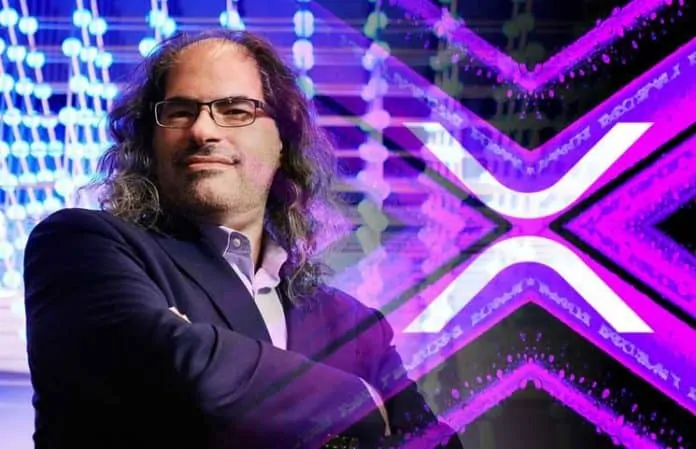
About David:
David Schwartz is Chief Technology Officer at Ripple. David is one of the original architects of the XRP Ledger. Prior to joining Ripple, David Schwartz was Chief Technical Officer for WebMaster Incorporated, a Santa Clara software developer. He developed encrypted cloud storage and enterprise messaging systems for organizations like CNN and the National Security Agency (NSA). Known as “JoelKatz,” he is a respected voice in the digital currency community.
About Ripple:
Ripple provides one frictionless experience to send money globally using the power of blockchain technology. By joining Ripple’s growing global network, financial institutions can process their customers’ payments anywhere in the world instantly, reliably and cost-effectively. Banks and payment providers can use the digital asset XRP to further reduce their costs and access new markets. Founded in 2012, Ripple's vision is to enable a world where value moves as seamlessly as information flows today—an Internet of Value. Ripple is the only enterprise blockchain company today with products in commercial use. Ripple’s global payments network includes over 300 customers across 40+ countries and six continents.
Transcript
(Joel Beasley at 00:00:00) Hello, my friends. Today we are talking to David Schwartz, the CTO at Ripple, and we discussed the evolution of blockchain over the last decade, thoughts on the future being decentralized, and why the people you work with can be a limiting factor in achieving success. All of this right here, right now on the Modern CTO Podcast.
(David Schwartz at 00:00:21) Here we go.
(Joel Beasley at 00:00:22) This is the Modern CTO Podcast.
(David Schwartz at 00:00:33) David.
(Joel Beasley at 00:00:33) Hey, how are you?
(David Schwartz at 00:00:35) Good. Your audio sounds fantastic, my friend.
(Joel Beasley at 00:00:38) Yeah, well, I've been doing some podcasts, so I had to get a mic that's a little industrial strength.
(David Schwartz at 00:00:45) Yeah, it looks good. You look like a professional podcast host.
(Joel Beasley at 00:00:49) Yeah, well, I have a podcast, Blockstars. That's got about eight episodes now.
(David Schwartz at 00:00:55) Oh, nice. What is it called?
(Joel Beasley at 00:00:57) Blockstars.
(David Schwartz at 00:01:01) Nice. And what do you talk about on there?
(Joel Beasley at 00:01:04) Just different technologies that relate to what's going on in the blockchain space.
(David Schwartz at 00:01:09) Oh, that's pretty cool. So here, we just kind of record the whole time and we just hang out and talk. Is that cool?
(Joel Beasley at 00:01:15) Sure.
(David Schwartz at 00:01:15) Yeah. And then Jake and the team, they'll edit it up to make us sound amazing.
(Joel Beasley at 00:01:20) I'll give them quite the challenge.
(David Schwartz at 00:01:22) How do you do your production of your podcast? Do you have an editor you send it to, or do you just record it raw?
(Joel Beasley at 00:01:28) Yep. Yep. We record independent audio streams from each participant, and then an audio team does their magic.
(David Schwartz at 00:01:34) Yeah, nice. I think it's so much fun getting to do the podcast and meeting great people. I'm super excited to talk to you today. I was doing all sorts of research, and, oh man, Ripple, right? So you're one of the creators of Ripple.
(Joel Beasley at 00:01:49) Yeah. I started working on what's now Ripple in the end of 2011. And I just wanted—I thought blockchain was super exciting, and I wanted to do something in the blockchain space. And back then, really, blockchain and Bitcoin were the same thing. And so the idea of doing something that wasn't Bitcoin was just completely radical. But what attracted me to Bitcoin was this spirit of, like, don't build on the existing system if it's bad. Figure out what you can make better and kind of design on a clean sheet of paper. And so we kind of took that approach and just built everything the way we thought it should be built. And to be honest, we did make a few mistakes. One of the things that tends to happen with new technology is you think that you can throw out everything because you think everything in the world that isn't perfect is something that you can fix with new technology. And of course, that's not true. You realize that, oh, there are good reasons for some of the things that seem kind of kludgy at first. But we, I think, did an incredible job of putting together a system that just throws away sort of all the legacy junk that had been accumulated over decades.
(David Schwartz at 00:02:58) So how is it different than Bitcoin?
(Joel Beasley at 00:03:01) Well, the key difference and the very first animating idea for what eventually became what we now call the XRP Ledger was the proof of work, the mining in Bitcoin, wasn't the secret sauce. Now this was a very controversial idea at the time. At the time, most people thought proof of work or mining was what made Bitcoin, Bitcoin. It was what was so amazing. We had an alternate theory, and our theory was that what made Bitcoin so amazing was not the proof of work, not mining. What made Bitcoin so amazing was the fact that all of the data was public and all of the transaction rules were public. So you don't have to ask anybody else if a transaction is valid or if somebody has a particular amount of Bitcoins or anything. Everybody can do that for themselves. And we felt that that was the key innovation to Bitcoin. So, like, if I go to my bank and it tells me I have $1,000 today, it could tell me I have $80,000 yesterday and $1,000 today, and there's nothing that controls how it does that. Imagine if in order to tell me I have $1,000 today after telling me I had $80,000 yesterday, it had to show me a debit chain. That was literally the only way it could tell me a different balance is to show me why. That eliminates entire classes of security problems that a system can have, like someone going in and editing data. You can't go in and edit data if you have to prove the chain of the data cryptographically. So we felt that was the secret sauce of Bitcoin. And what we felt was that proof of work was the weakness. It was just starting to show some of the cracks that it's really showing today. Centralization, problem with mining. If you have cheap access to mining hardware and cheap access to power, you're going to be able to do a lot of mining. If I don't, I won't. And all the people who can profitably mine are going to look kind of similar. They're going to tend to be in the same parts of the world. They're going to tend to be the same kinds of businesses. So it's going to cause a sort of centralization. And then the sustainability issue was just becoming visible, and it's huge now. You know, I'm sure you've heard the stats on how much electricity the Bitcoin network is using. So we replaced the proof of work with what you would call a distributed agreement algorithm, which is an algorithm that is faster and doesn't have the sort of power consumption. And then that created some differences in the characteristics. So the next thing to do is once you say, okay, we've built this new system and it works, the next question to ask logically is what is it good for? Like, what are its advantages? And sometimes it might have no advantages. Like, if you invented a new material, but it's really heavy, really expensive to make, water damages it, it's not very sturdy. Like, oh, well, I've developed this new material, but I can't find a use case. The next challenge for us was to find the use case that the things that made our system different made it good for. It's kind of the reverse. Usually you start with the use case, but when you're building something totally new, you have no idea what people are going to use it for. All you can do is sort of build it and see what it's good for. And the use case that we settled on was payments, internet, particularly international payments, simply because that's where there's pain. So you want to find a problem that people agree is a problem. And, ideally, the worse the problem, the less perfect you have to be to be better than whatever they've got. And so international payments were so bad, particularly things like remittances. They were just so bad that we could still be pretty bad and still be better. And, you know, when you're just starting out, people are going to have to take a risk. Like, what if the whole system just breaks one day? Or what if regulations destroy it? So you want to pick a problem that's really painful for people, and payments are really painful. Like, if you compare sending a payment to sending an email, you know, you could make a long list of all the differences. So that was kind of the direction that we launched on.
(David Schwartz at 00:06:28) I love it. And then help me wrap my mind around it a little bit farther. So can I buy an XRP token? Like, is that something I can purchase, or is it just something that's used in this banking system for debits and credits?
(Joel Beasley at 00:06:43) You can purchase XRP at exchanges around the world, so it's traded as a liquid asset. And I think part of our philosophy of how you would use it for payments would be that it would have to be a very liquid asset. So, essentially, you wind up with either two possible visions of the world. One is everybody uses the same asset for payment. So if you imagine, if we could get everybody in the world to accept dollars, then payments would not be all that incredibly difficult because you could build systems that sort of move dollars around. And one of the advantages is you wouldn't have to worry about exchange rates. You wouldn't have to worry about movement of exchange rates, changes in value in different parts of the world. The problem is it's a fundamental fact of reality that we have a global economy, and we have different countries that move in different ways, and some of them might have a disaster, or some of them might have economic growth. And they're not going to—you're not going to build one world currency that stays at some constant rate. And even if you did, regional economies would move with relationship to it. So you would still have this exchange rate problem. And if you accept that the exchange rate problem is fundamental and you accept that we're reaching a world where there are going to be international payments, you look at Amazon, Uber, Airbnb, all of these businesses need to make very rapid payments throughout the world because they have customers. You know, even if you're the Airbnb of Portland and all of your properties are in Portland, people are still going to travel from around the world, or at least they will again, you know, at some point, we hope. They'll travel to Portland, and they'll want to pay for the places that they're renting, and so you'll have to interact with all of these different payment systems. So if you're going to have to interact with all these different exchange rates and you're going to have this world where you have global payments, you have to have some way to convert between currencies quickly and efficiently. Otherwise, that system is just not going to work. And so that's going to mean, what we think is, that's going to mean different methods may compete, but one method that will be very successful is a sort of neutral central asset. So if you don't know what asset you're going to need to pay out, you might hold the neutral central asset, and you can hold one pile of it. And this is the unique thing about digital assets that I think a lot of people miss. If I have dollars, it doesn't mean that I can pay you dollars. If I have dollars in my pocket and you're on the other side of the country, what am I going to do? Put them in an envelope? Like, what if they're in my brokerage account? What if they're—dollars have to be somewhere. And if I have dollars in a different place from where you have dollars, it can still be awkward for us to pay each other even though it's the same currency. The interesting property about digital currencies like Bitcoin, Ethereum, XRP, and so on is they have a sort of one right place to be. If you say I have a thousand XRP, there's a presumption that you can make a payment on the XRP Ledger. If you say I have a half of a Bitcoin, you should be able to make a Bitcoin payment to a Bitcoin address. They have a sort of canonical right place to be. And not only do they have one right place to be, that one right place is very, very convenient. Like, unlike dollar bills in my pocket, you know, if I have dollar bills in my pocket and you want dollar bills in your pocket, that doesn't mean we can pay each other. Like, these ledger systems have the ability to facilitate the payments very directly. So that makes these currencies uniquely suited to sort of be that neutral currency that will interconnect the currencies of the world. That's kind of the vision that we have for efficient payments.
(David Schwartz at 00:09:57) Were you—have you been into payments and finances when you were younger, or is this something new that's come about through this technology?
(Joel Beasley at 00:10:06) Professionally, I was involved on the cryptography side. I was doing secure messaging, cloud storage, those kinds of things. But sort of philosophically and sort of in the way that I thought, the way I wanted to kind of leave my mark on the world, the thing that bothered me at the time early was information. Information as a tool of control over people. Like, the example that I always give people is, like, at the time, people in North Korea thought that Kim Jong-il, the leader of North Korea at the time, was considered a respected intellectual in the West and a snappy dresser. And I know it sounds ridiculous, right? But if all you have access to is North Korean state media, and that's what they're telling you. And then when the Berlin Wall came down, a key factor in that was people in East Berlin saw people in West Berlin having things like CD players and blue jeans. It sounds a little ridiculous now, but they're like, well, why don't we have those? Why don't we have the benefits of global trade? And it's information that sort of tore that wall down literally and metaphorically has torn down other walls. And so I missed really the chance by just a little bit. I got to watch that revolution happen, but I wasn't really ready to help it happen too much. And what I realized is that—and this was right around the time I found Bitcoin, right in 2011—I started to realize that finance was that next tool of control. Like, governments can fight wars by inflating their local currencies, and the people who live in those countries have no choice but to lose money because of that. And that bypasses the democratic process too, right? It's one thing to vote to send an army somewhere or to have taxes raised to send an army somewhere, but it's another when the government just sort of prints money to fight a war, and it sort of circumvents that democratic process. We saw hyperinflation. And so it was this idea of freedom to move your money the way you want and privacy and money as a tool of liberation against repressive governments that really motivated me. And when I saw Bitcoin, at the time, my views at the time would be considered naive today and unrealistic, but I think the concept was right. The specifics were probably a little bit off, but the concept was right. That this idea that if we had more democratic payment systems and more free and open payment systems, that would reduce repressive government's ability to use control over money as a tool of repression. And that was tremendously motivating to me in 2011, 2012, that time frame. And I think some of that is still—obviously, it's gotten a little more nuanced and sophisticated than back then, but that same idea is very important to me now.
(David Schwartz at 00:12:35) Yeah. That concept of freedom, you're really powering that for the next, you know, century here with payments going to be so important to build a system that empowers people and limits the government. That's fantastic.
(Joel Beasley at 00:12:53) And it's not just governments too. Some of it is large companies, and not because they're evil, but obviously they're profit driven. They're not going to necessarily—they're going to build a product if there's revenue to be made. And obviously, the wealthier the potential customers in general, the more revenue to be made, and that creates a massive amount of people who are underbanked or completely unbanked simply because it's not profitable to bank them. And it sounds uninteresting and unsexy to say, like, I'm trying to make banks make more money. Like, obviously, nobody's—well, maybe some people. I mean, I'm certainly not passionately driven by helping banks to make more money. But the reality is if you bring down the costs to service people, one of the things that will happen, at least initially, is banks will make more money. But then competition will sort of drive that out. And so that's not the—that's obviously not, if that's your long-term motivation, you're in the wrong business. But what that will do is that will make it possible for the financial system to serve people that it currently doesn't serve. And remittances are the most obvious example. Like, remittances are made by some of the—or received at least by some of the poorest people on the planet, and they're paying rates that are just, you know, shockingly high. And it's not just because companies are greedy and evil. It's because the systems that are doing these remittances are inefficient.
(David Schwartz at 00:14:06) It's not that they don't want to reduce those rates. It's that there isn't that efficiency in the system. Some of these currencies are very volatile, and the systems take several days to move. So remittance companies have to leave piles of money around the planet because they don't have this sort of marketplace for liquidity. And so that idea also of not just repressive governments, but also just people who are left out by the existing financial system because it's not profitable to serve them.
(David Schwartz at 00:14:33) I think that's also a motivating factor.
(Joel Beasley at 00:14:36) That's interesting. You know, I like the way you think. I was reading your blog a little bit, and you had a reference to some philosophical essays that you had worked on, but I couldn't find those. Are they still available on the Internet?
(David Schwartz at 00:14:51) They actually can be found, and I'm kind of glad they can't because I'm, to some extent, a different person than I was back then. I think they're kind of interesting to show sort of my philosophical evolution, and a lot of people have found them interesting. But I will, to some extent, partially disavow them and say that I am a different person who thinks about the world very differently now than I did then. But yes, I wrote a series of philosophical essays. But I will say one point that I do stand by, and I would say that my main thesis behind the essays—and this is philosophical, but I think it's also practical—is about the competence of human beings to understand the world that they live in.
(David Schwartz at 00:15:26) And obviously, science is a testament to that. We're able to go to the moon. We built the Internet. Human beings built the Internet. But it's more a philosophical defense against the argument that we're limited by our senses, and so everything we know could be wrong, and so we can't really draw any conclusions. And there's definitely sort of a subtext of that in a lot of what I would call quasi-philosophy. It's not really philosophy, but it's sort of quasi-philosophy.
(David Schwartz at 00:15:52) And the thesis behind everything that I've written is that human beings are competent to understand the world, that we really do know things. We don't just think we know things. No, we do have real knowledge, and we are competent perceivers. And it's about not having to accept what people tell you if they can't defend it. If someone tells you something—a lot of people will say if an expert tells you something, you're not in a position to contradict that expert because you're not an expert on it. And obviously, if you took a professional climate denier who had all the studies ready, I couldn't out-debate him. I believe human-caused global warming is real, but I'm not a climate scientist. Someone who could point out 50 studies that said it wasn't real—I don't know the flaws in all those studies, and I can't point out the 500 studies that say it is real. That person will sort of be able to out-debate me even though I'm right and they're wrong. And the thesis is that, or at least part of the thesis is that the reason experts are experts is because they can defend their claims. The reason someone is an expert on a subject is because—you know, if I went to a doctor and he said you should take penicillin, if I said why, he said, "I'm a doctor. I'm an expert. I think you should take penicillin." The reason he's an expert, the reason I go to him is because he can make rational decisions that he can defend, not because he's an expert and therefore I have to accept anything he says. And so it's that idea of human competence that's in those essays. And yeah, you can find them. Very hard, but you can find them.
(Joel Beasley at 00:17:18) I love that. I like the way you think. Okay, so I was actually thinking about this two days ago. This concept of—you know, when I was a kid, the context was I was thinking about different events in my life that have shaped me. And when I was younger, I specifically remember being at school and seeing these couple people having an argument or a conversation. And I knew the person who was losing the argument was right, and it was their ability to articulate their ideas that lost it. And at that moment, I realized this world is so interesting because this person was wrong, but the less intelligent person won because they could talk better. They could articulate their idea, and then they had things that they could reference. And that to me was just fascinating because you can be wrong and lose the argument.
(David Schwartz at 00:18:14) Yeah. It's kind of funny. There are some people I work with who will sometimes say to me, "David, you're so good at arguing and you're winning this argument, but I'm pretty confident you're wrong." You know, it's just because I—that's a skill set that I've honed over a long period of time. And I could easily become the climate denier who's the expert in the field and has all the data available to back up the wrong, the bogus argument. And the person on the other side may be right, but if they don't personally have that store of knowledge available, there's simply no way they can out-argue me. And this comes down to—if it's a public debating challenge and all I want to do is win, then maybe you can sort of say, "Okay, you know, all is fair. It's a debate."
(David Schwartz at 00:18:57) But obviously, if it's a business and we're making a business decision, and I'm wrong, but I'm really good at defending my wrong position, that doesn't—it doesn't help anybody for me to win that argument. And one of the things that I kind of do worry about is because I am so respected within the organization that if I say something, people will just sort of assume I'm right. And hopefully, most of the time I am, but the times I'm wrong, it doesn't do any—it doesn't help me if people agree with me. And one of the things that I do a lot is I constantly challenge people to show me where I'm wrong. The best thing—if you show me that I'm wrong about something, that's the greatest thing that can happen because now I'll be less wrong afterwards. I was more wrong before. I'm less wrong afterwards. And obviously, I want to be wrong as little as possible. And one of the things that I do a lot is I encourage people to question the decisions that I've made and the assumptions that I've made, particularly because I did a lot of stuff that was not solidly inside my area of expertise. I'm—cryptography is inside my expertise. If you found a cryptographic problem in what I did on the XRP Ledger, I'd be stunned. That'd be really—it could be. Obviously, nobody's perfect. But obviously, I'm not an expert in international finance. I'm not an expert in trade and exchanges, and I'm not an expert in a lot of things that I had to just build what I thought was right.
(David Schwartz at 00:20:15) And so questioning whether I'm right is important because we want the system to improve, especially when you have a system that's handling billions of dollars. And this is one of the interesting things that people don't realize about blockchain, and it's one of the reasons that there's a lot of thefts of cryptocurrency and a lot of fraud. These systems don't have a pause button or a rewind button. If a mistake happens, we pretty much have to live with the consequences or we sort of have to pay a very high cost to fix that mistake. One of the things I noticed in hiring people is that people who've built hardware get this, and people who write software generally don't. Because generally, when you write software, your philosophy is, "Well, if I make a mistake, we'll catch it later and we'll fix it, and then we'll release a new version." Whereas, obviously, with hardware, you know, if there's a flaw in a processor and there's a million of that processor deployed and it's in the machine in space—a mistake is a really big deal. And so people who get that—we can't deploy systems, particularly in public blockchains. If you deploy a system that does something wrong, someone could lose hundreds of millions of dollars, and there's no easy repair process. In the banking system, we've seen thefts on SWIFT, and you'll see sometimes 80% of the funds are recovered because they went to another financial institution. That financial institution knew who their customer was, and they could sort of sic local law enforcement on them or unwind some of those financial transactions. In public blockchains, it's much, much more difficult to unwind a mistake. And this slows down innovation a lot. This is one of the reasons why the field is somewhat dynamic. In the early days of Bitcoin, one of the things that Bitcoiners thought, and it seemed reasonable at the time, was that you couldn't out-innovate Bitcoin because these were all open source systems with technology that was available for anyone to use. And so if somebody built something that was technically better than Bitcoin, Bitcoin could just adopt it. There was no—it would be an open source technology. The software would be out there. If it was demonstrably better, Bitcoin would just adopt it. And now we can see that that's hopelessly naive for two reasons.
(David Schwartz at 00:22:18) One is you have a system that's running, that's moving billions of dollars. It can't turn on a dime. And there's high risk for one thing. What if this introduces a security flaw? And the other thing is that people just want different things. People want different things from payment systems. Some people want a system that's very fast. Some people want a system that's very cheap. Some people want a system that has lots of complex features. Some people want to do high frequency trading. This idea that we'll sort of all use the exact same system only works if that system is something like the Internet that's really incredibly flexible and really has tremendous ability to grow and evolve. The secret sauce of the Internet, I'll tell you what I think the Internet is—the exception and why it's so robust. There can be routers on the Internet that are many, many years old. They predate WiFi. They predate video conferences. But they're handling WiFi data and video conferences in the middle of the Internet. That's kind of the secret to the Internet is that the middle doesn't have to know what the ends are doing. And so we can be very, very innovative around the edges of the Internet, and still there's no reason to build another Internet because it doesn't limit what we can do with it.
(Joel Beasley at 00:23:25) How do you—I want to go back to some of the—you're talking a lot about the growth mindset as a way to wrap it up. It seems like you have a growth mindset. I think we share some similar concepts of, I like knowing when I'm wrong and being able to see information so I can adjust and be less wrong in the future. What are some of the other areas that you've grown in? You mentioned this one, the competence for humans to understand the world they live in, that being one that is probably still persistent, a good idea that you had before. What are some of the ideas that you've since changed your mind on?
(David Schwartz at 00:24:02) I think a big one has to do with the relationship with the government and regulation. I came out of a very libertarian family and moved into a field that has a lot of libertarian underpinnings. My philosophy, to some extent, connects to libertarian philosophy. And I expected to find government as a constant roadblock and something to sort of avoid and evade. And it can be that. It can be that. It's very much what you bring to it is kind of what you get out of it. There are also regulators who want to solve real problems. They have the same mindset that a technologist where they're like, "Look, there's money laundering, and there's terrorist financing. And there are these real problems that we want to solve, and we need the tools to solve them whatever they are. And if we have better tools to solve them, then that's great. But if we don't have good tools to solve them, then we have to solve them with whatever tools we have because we can't just sort of accept these things as things that are just going to happen." And my instinct for me would have just been to sort of avoid regulators as much as possible and kind of fly under the radar. And one of the things that I learned is that if you do that, your first encounter with regulators will be when something terrible happens.
(David Schwartz at 00:25:19) Somebody will use—some terrorist will use XRP to finance something, or some blackmailer will blackmail someone and demand XRP, and the FBI is like, "What is this XRP thing?" That's not—you don't want to be part of the problem in your very first conversation with law enforcement. It doesn't work. And they want the tools to solve, you know, the real problems they have. When we started, you know, in 2014 or so, Ripple had this idea that we were going to tackle enterprise payments. We said we're going to go to banks, we're going to give them software, and we're going to process their payments for them. That's an incredibly audacious thing to try to do. And it forced us to—banks have a level of regulatory hurdles that they need to go through that's unlike anything that you see in any other field. They're very conservative. They're very slow moving.
(David Schwartz at 00:26:10) And we were forced to engage with regulators, and I think it was an incredibly, incredibly good thing for us because I think that helps us to give regulators the tools that they need to solve the real world problems they have without them sort of throwing the baby out with the bathwater or without them kind of strangling the baby in its crib or whatever baby-killing metaphor.
(Joel Beasley at 00:26:31) I know. There's so many. Let's go to quantum computing. Do you spend any time there?
(David Schwartz at 00:26:39) Just enough to assess the risk. So for me, from a point of view of someone who's building systems based on conventional cryptography, quantum computing is a risk. We're not solving problems that need powerful computing, like payments and liquidity and so—it doesn't require very powerful computers. The work that the computers do is not that incredibly complicated. But because it relies on conventional cryptography, very fast computers present a risk to the security model that we use inside the ledger. Algorithms like SHA-2 and ECDSA, elliptic curve cryptography, these are sort of esoteric things deep in the plumbing. But if they were to fail, they would create—the whole system would collapse. The system's ability to say who owns Bitcoin or who owns XRP or whether or not a particular transaction is authorized would be compromised. So a lot of people in the blockchain space watch quantum computing very, very carefully. And what we're trying to do is have an assessment of how long before these algorithms are no longer reliable. And if it's less than eight years, that's the point where it's like, "Well, we should start thinking about some change now," because it takes a long time to deploy a new technology. But then you might think, why wouldn't we just jump to quantum-resistant algorithms right now? We have algorithms that are quantum-resistant. Why wouldn't we just put quantum-resistant algorithms, and now we wouldn't have to worry about it? Well, there's a somewhat perverse tradeoff, which is—I'll be blunt, the quantum-resistant algorithms we have now for the blockchain space are awful.
(David Schwartz at 00:28:10) They're just really bad. And if we were to adopt them, we would be stuck with them forever. So we're in this race to try to develop quantum-resistant encryption and hashing algorithms that are good for blockchain applications. For example, one critical thing in blockchain is they have to be cheap to verify. If I sign a transaction, everybody in the world potentially needs to verify it.
(David Schwartz at 00:28:30) If that's incredibly computationally expensive, that's a problem, or the signatures are very, very large. If I sign a transaction, everybody in the world needs to pass that transaction on. If it's enormous, if it's a giant amount of data, you know, so we are watching that space very closely to know when we're going to have to take the best of what we've got and start working on and deploying it. I think we have at least eight years.
(David Schwartz at 00:28:54) I think I have very high confidence that it's at least a decade before quantum computing presents a threat, but you never know when there could be a breakthrough. So I'm a cautious and concerned observer, I would say.
(Joel Beasley at 00:29:07) Also, if you said that it's mainstream enough that people are watching it, then there's people that are participating and trying to advance the quantum algorithms.
(David Schwartz at 00:29:16) Yeah. Well, the other fear would be what if some bad actor, you know, some foreign government, secretly had quantum computing way ahead of what's known to the public. And then depending on your threat model, you could also say, well, what if the NSA had quantum computing? Are you worried about the NSA breaking your payment system?
(David Schwartz at 00:29:34) Well, some people might realistically be, you know? It depends on your threat model. If you're just an average person or an average company, you're probably not going to be a victim of this, because as soon as, let's say hypothetically, some bad actor had quantum computing that was powerful enough to break things, they're probably not gonna go after you unless you're a target of that type of actor. And then as soon as it's clear that there's a problem, these systems will probably be frozen until they can be fixed or improved.
(David Schwartz at 00:30:05) So most people don't have to worry about it. But yeah, I think it's several years away.
(Joel Beasley at 00:30:12) Alright. I'm watching it. I was actually just talking with Tony over at Honeywell. They just released that they built the world's fastest quantum computer. And so I don't know.
(Joel Beasley at 00:30:23) I'm personally excited about it. At the same time, I took linear algebra courses to understand quantum programming and to get myself up to speed, because my background is seventeen years of software engineering. And so I wanted to understand what state this was in, and it's still like the computers the size of buildings, you know, essentially as if you were to make an analogy back to the traditional classical computing that we have now. I mean, it's really new. But people are building on it, and it's gaining some traction.
(Joel Beasley at 00:30:57) But yeah. I think it's still pretty far away.
(David Schwartz at 00:31:02) Yeah. But it is something that we have to monitor, because it would be really bad if we said, oh, no, quantum computing is gonna break all of conventional encryption in even three years. Even if we said, look, we think it's gonna break everything in three years.
(David Schwartz at 00:31:17) Having to not only design and deploy new systems in three years, but also get people to use them. One of the pain points you have is if you don't allow compatibility with existing algorithms, it's gonna be so painful and so difficult to transition. And if you do, you're never going to know that you're safe. One of the truisms in cryptography is that you can have compatibility with broken protocols or you can have security, but you cannot have both. Because if you have compatibility with broken protocols, then you can be operating in a way that's broken, and it will still appear to work. And if you don't, you know, we have to have that flag day where you break everything that hasn't cut over.
(David Schwartz at 00:31:58) It's gonna be fun. I hope, hopefully, I'll be long retired before that happens, and so I won't. That'd be like the Y2K problem. You know? But I'll be the people who built the systems that created the problem and not the person that has to fix it, maybe.
(Joel Beasley at 00:32:10) Knocking on your retirement door? We need you, David. Oh, man. This is exciting. So, you know, I've been thinking a lot, especially with the COVID stuff happening, about decentralization in general. Decentralization of, you know, the production of our medicines and all the way down to a state level. There should be some task force out there saying, what are our biggest points where we could be crippled? Right? And how do we engineer a better system that's more decentralized for our goods that we have, our basic requirements and medications and things like that. But when I read on your blog this concept of the future will be decentralized, are you extending the decentralization past the financial system and into other things?
(David Schwartz at 00:33:01) I think in that particular thing that you're talking about, I'm mostly talking about systems that process transactions of some kind. Now it doesn't necessarily have to be payments. You can break a lot of things into systems that sort of process transactions on a continuous basis. But I'm not really thinking about things like the physical delivery of goods. But I think even though I'm not specifically talking about them, I do think that idea of reducing the amount of central control, building systems that are more resilient.
(David Schwartz at 00:33:30) It creates challenges where you do need some level of control over the system as a whole. One example that I'll give is the power grid. So the power grid is fairly decentralized in that there are a number of autonomous agents that sort of produce power onto the grid or draw power off the grid, and there's some level of centralized control over it. But that centralized control typically just sort of lets everybody do whatever they wanna do on the grid until something goes wrong, or it just determines the rules for how the grid will operate rather than actually making those rules happen on a minute-to-minute basis. The interesting thing about that system, though, is what its vulnerability is, and I think that's very instructive to look.
(David Schwartz at 00:34:11) The vulnerability of the power grid is because it is so complex, it has failure modes that are very hard to understand. And that can cause power outages where, you know, one line goes down and that causes another line to overload, which causes that line to go down. And then something happens that we have no idea and the whole city is out. Complicated systems have very complicated failure modes if they have certain types of complexities. The thing that I've been working on for a very long time, and I think that the blockchain space as a whole is kind of the problem they're trying to solve, is how can you get this decentralization and this fault tolerance, but not in a complicated way?
(David Schwartz at 00:34:45) Not where part A has to figure out if part B failed and they have a controlled failover. No. Oh, no. What if part B and part A are both trying to do the same administrative function and then you have conflicting? What we're trying to do is we're trying to get this fault tolerance in a simple way, in a way that it's not possible for a part to fail by issuing bad administrative commands because there aren't administrative commands. But in order to do that, you have to design a system that doesn't need administrative commands.
(David Schwartz at 00:35:11) And it's this idea of decentralization and fault tolerance not through complex failover and recovery algorithms, but through the simplicity that individual pieces can do their job sort of regardless of what's broken in the rest of the system, so that we have simpler failure modes. And it's an interesting engineering challenge. It's very difficult to be simple. But I think that's also one of the innovations of Bitcoin. As I was saying, Bitcoin's innovation, this idea that everybody can validate every transaction, means that a broken part can't spit bad transactions into the system.
(David Schwartz at 00:35:45) It's not possible. There is no failure mode where bad transactions get into the Bitcoin system, because every single component can reject a bad transaction. That's an example of decentralization and fault tolerance that's simple. It does not have a complex failure mode because faults are sort of automatically isolated. If you inject bad transactions anywhere in the Bitcoin system, it'll go nowhere.
(David Schwartz at 00:36:07) The first working part that sees it will just throw them away. So that's kind of the model. And what I'm saying is that that's such a powerful thing that it can be useful in areas outside of payments. And I'll give you an example. Think about centralized services like Gmail or YouTube or Netflix or any service like that.
(David Schwartz at 00:36:28) They all have outages. They're not necessarily long outages, but they all have outages. Blockchains don't have outages. I mean, you certainly will have the occasional, Bitcoin had one in 2013, I think, was the last one. The XRP Ledger, you know, hasn't had one in six years.
(David Schwartz at 00:36:47) They're very, very rare because of the simplicity of the fault tolerance. And so if we could build systems based on these blockchain-type ideas that could take over for these centralized services, they could become more resilient. They could become more fault tolerant, and the security concerns could become less. If you run any kind of centralized service, you have this centralized data store that you have to protect, and somebody has to operate it, and there has to be rules, and you have to back it up. And blockchains do all those things as part of their fundamental design.
(David Schwartz at 00:37:14) And that eliminates complex failure modes like damage to the central data store.
(Joel Beasley at 00:37:21) You're very smart. Have you written a book?
(David Schwartz at 00:37:26) No. I haven't. I've thought about it. I've thought about it, but it seems like every time I start writing on something, by the time I get enough of it done, it's no longer relevant. So I'd have a book on the practical defense to the coronavirus that would be out in 2024. That would be.
(Joel Beasley at 00:37:43) I read your top 10 tips. You've got humor in your writing, and I like it.
(David Schwartz at 00:37:48) Yeah. Most of that comes from my wife, but yeah, she's a nurse, and she did public health nursing. And so she's kind of watching this thing happen and just in shock at how all the things that we think we have in a society fail under stress. It's just very frustrating and eye-opening. You know, you think that your governments and your country's infrastructure is ready to handle a response like this.
(David Schwartz at 00:38:17) And if you say, oh, well, the federal government's a mess, but, you know, my state government's pretty good. Well, then you expect your state government to, and just things like the conflicting guidance that's come out and everything. It's been quite frustrating as an outsider to observe that happening.
(Joel Beasley at 00:38:30) I agree. But I also use, so I had some experience. I built some technology for a couple of the parties. So I got to interact with those types of people a decade ago. You know?
(Joel Beasley at 00:38:44) So I got to understand how they think. And they're very, they're just people. Right? That's one thing that's very important to remember for myself. And the second thing is I always remember, what is it like to get 10 people to go to dinner and a movie together?
(Joel Beasley at 00:39:00) The coordination of that process and the texting and the back and forth and they can't make it and everything is at babysitters or whatever is happening. And I always just imagine, you know, I guess I got this thought back when I was looking into different conspiracy theories. You know, the first time you're ever exposed to conspiracy theories, you're like, what? I have to research this.
(Joel Beasley at 00:39:23) And then you kinda research them. You get to the end of them if you're an intelligent person. You kinda explore all of it. You're like, okay. I can kinda get out of the emotional state of the first experience with understanding it and take a more logical, scientific approach to it.
(Joel Beasley at 00:39:36) And then just trying to understand humans in general and psychology. And so most of these, I'm not saying there's no conspiracy theory ever. But I was like, a lot of these things are just the observation, abstracted, of just people interacting and doing life. You know?
(David Schwartz at 00:39:54) Yeah. And there's definitely, one of the interesting quirks about the field, about the blockchain space, is that the public is watching it very, very closely. And there are certainly a lot of conspiracies in the blockchain space, and some of them are promoted by people with financial interests in the space. This is something that I think is, to some extent, unique. If you work at a publicly traded company, then people are interested in what's going on with the company because they have an opportunity to profit if they sort of know what the company is going to do ahead of time.
(David Schwartz at 00:40:22) In the blockchain space, it's a little bit different. There are projects built around tokens that people can buy and sell and that some people hold in the hope that the value will increase. They treat it as a speculative asset. And so you will see people circulating conspiracy theories around particular assets, possibly as an attempt to pump up the price. And you'll see this thing where it's very similar to what you see in the political field.
(David Schwartz at 00:40:45) You'll see people in the political field who have some conspiracy theory. And as time goes by, evidence against that conspiracy theory sort of mounts. Every conspiracy theory sort of rots over time because the things that are predicted to happen don't happen. But, of course, you can repair the conspiracy theory. You can push the timeline out or you can say, oh, he doesn't seem to be working for us, but he really is. He's trying to convince everybody that he's not working for us so that when he does, he'll have this, you know, you can build a conspiracy theory up and you can defend it against facts. And we actually see that happening very dramatically in the blockchain space where people will construct these elaborate conspiracy theories. And every once in a while, I'll get asked, I'll do an interview where we take questions from the audience, and someone will ask me a question that's equivalent to, do you work for a lizard from Venus?
(Joel Beasley at 00:41:32) Are you serious?
(David Schwartz at 00:41:33) Yeah. I mean, not literally. That one.
(Joel Beasley at 00:41:34) I get it. I get it. I get it.
(David Schwartz at 00:41:35) Yeah. Yeah. And I have to say, no. There is not, at least as far as I can tell, there is not a vast conspiracy underlying the space I'm in.
(David Schwartz at 00:41:46) If there is, I'm not one of the conspirators. If there's a conspiracy like that, I'm definitely in the out group, not the in group.
(Joel Beasley at 00:41:52) That is super interesting. Yeah. Yep. So when I was preparing for the interview, PR sent me a note, which I loved. I thought I giggled a little bit at it.
(Joel Beasley at 00:42:02) They said, oh, we want you to know that he's not a traditional CTO. So I'm like, what's a traditional CTO? Because there is a large variety of CTOs. I mean, there's so many different types. It's actually a chapter in the book I wrote before, and then I'm actually expanding upon it in this next book.
(Joel Beasley at 00:42:23) But let's try to type you into a CTO type. How do you spend your day? If you're gonna take a pie chart and split it up into three slices, how do you spend your time?
(David Schwartz at 00:42:34) I would say the biggest thing is working with product managers and engineers to make sure that they're aligned on the problems that we need to solve. I guess if I had to break it into three pieces, I would say one piece is internal coordination. Sometimes technical teams with other technical teams, but also technical teams with nontechnical teams. Like, if legal needs to interface with a technical team, I would often be involved in that to make sure that they're talking to the right people and that that goes smoothly. I think another piece is the corporate vision and strategy side. We're uniquely working in a changing field.
(David Schwartz at 00:43:10) And so we have to be mindful of what's going on in the rest of the world that affects our strategy. So, like, if the regulatory environment is moving in a different direction than we think, or decentralized finance tools are changing in ways that we didn't anticipate, that requires us changing our strategy. And I think the third bucket is like a technical ambassador, both to our customers and to people outside the space, to keep them informed about what we're doing. And that's actually more important to us than you might think just because when we go to a financial institution, part of what we're delivering is what we have for them today. But another part of what we're delivering is the vision for the future. And if you think that Ripple is gonna fail and our vision doesn't make any sense and we're not gonna get anywhere, then us trying to sell all that vision is implausible.
(David Schwartz at 00:43:55) On the other hand, if you think Ripple knows what they're doing, they're building these cool technologies, their road map makes sense, then that message resonates. And so it is, to some extent, important to our ability to convince customers to commit to our products that they think that we're going to be successful. I think that's become less important now than it used to be. It's a weird nuance. Well, it kinda gets into a—sorry. I lost my chain.
(Joel Beasley at 00:44:22) Dude, it's okay. I do it all the time. I'll be interviewing the CTO of NASA, and I'll just be like, uh, oh, man. That's why I like the conversations, though. Like, I like—
(David Schwartz at 00:44:32) So let me tell you how I got to where I am, and that'll kinda help you to understand where I am. So I started out as the person who worked with the team that built all of the early technology. Like, I was involved in every single technical decision in the early days of the XRP Ledger. And then as we put the company together, I was involved in all of those things.
(David Schwartz at 00:44:54) So I have this vast storehouse of early knowledge. And in the early days, I was the go-to technical person for everything because I had all of the information in one head. And my early mission when I was given the title of chief cryptographer—I essentially decided that I would hand off every single one of my responsibilities except cryptographic security to somebody else. And I built a team now called the C++ team that would take over whatever work Ripple was gonna do on the XRP Ledger. And I handed off every single piece of the code to somebody else.
(David Schwartz at 00:45:31) I brought them up to speed on how that part of the code worked. And then now we have a team that's in charge of whatever work the company's gonna do on the XRP Ledger, and we have teams that do everything. And those—because I was very focused on the XRP Ledger side because of that high risk, the idea that, you know, if this screws up, it's gonna cost people billions of dollars. And we had a lot of technical debt. We were working very, very fast.
(David Schwartz at 00:45:55) And as soon as we got the system working, we went to venture capitalists. We opened the system to the public. And so fixing it's kind of like fixing a car's engine while it's doing 60 miles an hour down the highway. And so we built up a really good corporate structure, with me laser focused on these details and building a team of experts who understood everything about public blockchains and about the way the XRP Ledger worked. And then Stefan Thomas, who was our CTO at the time, left to build Coil, which is, you know, a fascinating project. I was super excited about that, but that kinda left a hole in the org.
(David Schwartz at 00:46:31) And his role was kind of like visionary. He was working already on technologies like the Interledger Protocol and web monetization. So I have my title as CTO. I have zero direct reports. Engineers report through the engineering side of the org. Product managers report through the product side of the org.
(David Schwartz at 00:46:51) The C++ team reports to the engineering side of the org. And so I focus on the things that literally only I can do. My philosophy is, like, everything I have to do is less choice than I have. I'm not gonna run out of things to do. So I wanna focus on the things that I feel like I'm in a unique position to do better than anybody else.
(David Schwartz at 00:47:13) And that's things like corporate strategy, coordination, new product features, making sure that our technical teams aren't painting themselves into corners. And so I would say, day to day, it's mostly the interface between the technical and nontechnical parts of the company because I have the time to maintain relationships with literally every single team in the company. And I know what's going on in the technical side. And I would say also the corporate strategy side of making sure that we adapt what we're doing to the changes that are going on outside the company. Hey, you sound like a normal CTO role.
(Joel Beasley at 00:47:49) No. It sounds like a founder, like a cofounder CTO role, how you spend your time, what you're doing. That's—I would not say that that's weird.
(David Schwartz at 00:48:00) One powerful ability that I have—I guess it's two. So one of them is I can go to any meeting, and no one is gonna tell me not to go to that meeting. Like, no one's gonna kick me out. So I can keep myself apprised of what's going on throughout the company with a holistic view, hierarchy of the system.
(David Schwartz at 00:48:22) So I don't tell people what to do, unless obviously, if I have to, I will go to the people who are in those positions. But I kinda—it's weird. It's like the commander who gives helpful suggestions kind of, but has the levers of power. Like, one analogy that I'll give is, I met the—I can't remember his title, but he's royalty, but he has no official power. But he can sit in any meeting. No one's going to kick him out. And his views are tremendously respected. And if he tells you that you should do something, you know, that carries a certain weight with it. And so I kinda have that. It kinda feels like that role.
(Joel Beasley at 00:49:05) I talk to a lot of people who get to, you know, be able to do that. They can kinda float around their organization and influence things and understand things, and they take these positions without direct reports because it allows them the maximum amount of freedom to understand their organization and influence it. And so I like that move. It frees you up from your time. You have direct reports, that's gonna instantly chunk, like, half your time.
(David Schwartz at 00:49:32) There is literally nothing that I have to do. Yeah. I mean, not—I shouldn't say literally, but almost nothing that I have to do. Like, everything is somebody else's primary responsibility. And to an extent though, that also means that everything is my secondary responsibility.
(David Schwartz at 00:49:48) So to some extent, it also—but it allows me the freedom to figure out where I think I can have the most impact and then focus on that without the fear that the things that I'm not focusing on will rot because there are people who are in charge of them.
(Joel Beasley at 00:50:02) Absolutely. So, like, let's say you're working all week. What do you do for fun to unwind?
(David Schwartz at 00:50:10) Well, before the coronavirus lockdown, I went to Warriors games. I was season ticket holder, so I enjoyed that. I love boating on the bay. It's just so incredibly beautiful. My wife likes sailboats. I like powerboats, so we compromised and got a powerboat.
(Joel Beasley at 00:50:29) Here's a fun fact about me. My grandfather is the 1988 world champion powerboat racer. Wow. Yeah. Yeah. He was on a crew. It was him, Don Johnson, who was a popular star. You remember him? Yeah. Yeah. And then a third guy. I don't remember his name. But he came over to America from Greece because America was putting together a pro soccer team. And then he was working on the—he was in Miami, and then he was working on the docks with the powerboats in off season of playing pro soccer. And then he got injured a few years into it.
(Joel Beasley at 00:51:10) And then he just started spending more time at the docks and then got into the boat racing with them. And then he did that for, like, 20 years and then won a world championship and then retired and started working with, like, Donzi, a boat company, designing boats.
(David Schwartz at 00:51:20) My wife crewed on a couple of racing sailboats, but none of them did particularly well. But I guess you kinda have to get the feel for what you're doing before anyone who has a chance of winning is gonna want you to crew their boat.
(Joel Beasley at 00:51:33) So what are you doing now that we are inside? Like, how are you unwinding now?
(David Schwartz at 00:51:38) Well, I have a new grandchild.
(Joel Beasley at 00:51:41) Congratulations.
(David Schwartz at 00:51:43) Yeah. I have four grandchildren now. So I do spend time with my grandchildren. It is kind of difficult, though. I'm fortunate in that at least I have a decent piece of property that I'm kinda stuck on with some space and some views. I can't imagine what it would be like if I was, like, on the 6th floor of an apartment building with no—with a window, and that was about it.
(David Schwartz at 00:52:06) Yeah. The funny thing is you miss things even if they aren't things that you would do. Like, I'm not particularly a person who enjoys going to the movies. But all of a sudden, I miss it terribly. Now how many movies would I have gone to if we weren't locked down? Maybe one or two, maybe. But when you can't do something, you really miss it. So I've—cooking. I enjoy cooking, so at least I do that. But I pretty much have used this as an opportunity to focus on getting more work done.
(David Schwartz at 00:52:35) I really have become more focused. And the downside of that though—this is, people when people switch to working from home, there's two ways that it can go bad. And one of them is you can always find an excuse not to work because you're home. But the other one is that you can just keep working forever and just not stop. And that doesn't work out so well.
(David Schwartz at 00:52:55) And I'm one of those people who, like, if I'm sitting in front of a computer, I'll finish work, but then I'll start doing something that's like adjacent to work, like doing research into some other project, and hours will pass because it's interesting. And then I look and it's like, oh, wow. It's way past dinner time. Did anyone eat or not? Or what happened? Or sometimes my wife will walk into my office and just put a plate of food down in front of me, and I look at my clock and I'm like, wow. Wait a minute. It's like 6:30 already? What happened to that time? And I like working without being disturbed because you can get deep focus.
(David Schwartz at 00:53:28) I'm also one of those people who will build a complex representation of what I'm working on in my head. And if any distraction occurs, I lose that, and it's just a little annoying, and sometimes it can take time to rebuild that representation. But the net effect of that is that you can stay absorbed in your work for long periods of time, particularly in the evening. And then, of course, you know, it's three in the morning.
(Joel Beasley at 00:53:50) Oh, I get it. A few, seven or eight years ago, I built a fairly complicated financial tool. It would scenario model different crashes or market corrections, and then it would put someone's complete portfolio through it, but it was very detailed, down, like, taxes and everything, withdrawal strategies. And so I built this by going and—I had a partner who owned a financial advisory firm. I'd go and I'd sit in the meetings with their people. I'd watch them. I'd sit with the analysts. I'd understand how things work, and I would just build this thing in chunks. And to your point of these models that you have to build in your head and then interrupting them levels the model, and you have to start back all over again. I think that's one of the greatest inefficiencies in, like, software engineering or any type of complicated process design that exists because I've lost more time to that than, like, probably anything.
(David Schwartz at 00:54:49) Yeah. And there's levels to that. So one of them is the immediate level. Like, you're working on something right that second, and I distract you, and you're like, oh, man. I have to rebuild the exact point where—and then there's another level that I noticed working on the XRP Ledger software back in 2011. There was a certain point where I could hold the whole thing that we were working on in my head, and I could move from piece of it to piece of it with no significant penalty. And then there is a very defined threshold where you suddenly reach the point where if you're working on one part of the code and you have to switch to another part of the code, you have a period of familiarization to remind yourself of what that part of the code does and how it does it. And then there's another level of that when you're working with multiple people where you're retasking people. There's a certain overhead to that person who's moving from one task to another. And then there's the overhead of coordinating. And when you get to a project that becomes enormous, this overhead can dominate over the actual work that's being done.
(David Schwartz at 00:55:47) Because what happens at first is, like, the amount of work that gets done adds linearly. So if you had a second programmer, you get twice as much work. You had a third programmer, you have three times as much work getting done. But then you start to get this coordination overhead that then increases. And it's a challenging task to figure out how to scale engineering teams without—inevitably, a higher and higher fraction will go towards this overhead. But keeping that higher fraction still as low as possible is quite the challenge.
(David Schwartz at 00:56:21) One thing that we do at Ripple is we're very, very willing to try changes in process to improve that. And we're introspective. Like, some teams will have meetings every week and say, what do we think could make our process better? And we find a suggestion and try it. You don't wanna try too many suggestions at once. You don't wanna cause too much chaos. But sometimes those suggestions, you know, don't work. And we're like, okay. That was a bad idea. One of the things that we're still struggling with is improving the coordination among technical teams. I would say we're probably—I'd give us, like, a B minus at that, which is, you know, not an A.
(Joel Beasley at 00:56:55) Right.
(David Schwartz at 00:56:56) Well, one other thing, though, that I'm very proud to say at my tenure at Ripple is that the problems that we have have become better problems. You know, like, it's worse to have a problem, like, "Why do we have no customers?" than "Why aren't our customers satisfied with our products?" Like, that's a better problem. Another one is, like, "Why don't we have more customers?" "Why aren't our customers buying more of our products?" And, like, another one could be, "Why are our engineering teams not executing?" But then, like, a much better problem to have is, "Why aren't our engineering teams coordinating as well as they—" We've moved from—in the beginning, you have the worst possible problems because nothing works until you make it work. And we've moved on to better and better problems.
(David Schwartz at 00:57:32) And I think one of the things that we're very focused on now is we have all of these customers. They're all using our products. How can we get them to interact with each other more? How can we get—we have two customers, one of them offers a service, and the other one could use the service, and our network can allow them to give that service to each other.
(David Schwartz at 00:57:51) Why aren't they doing that? How do we get them to communicate with each other more? And we launched a conference called Swell to aim at that problem. And then on the technical side, improving coordination among our teams—it's pretty good, but not as great as it could be. We have individually excellent teams, and now we're working on just making sure that they coordinate better than they have been.
(David Schwartz at 00:58:12) And so these are better problems to have than the early days problems. And meanwhile, we're scaling tremendously. The number of employees—it was three people, and now it's 425, 500. So I'm a little nervous.
(Joel Beasley at 00:58:30) I'm interested to talk a little bit more about this coordination amongst teams. So in the back of your mind, help me build a model in mine. Are you talking about coordination between different teams within the organization? Is that what we're talking about?
(David Schwartz at 00:58:48) Yeah. Mostly technical, mostly between technical teams where some new feature impacts multiple parts of the product. One of the things that we did to address that—and I think it made a big difference, but I think there's still a little bit of chaos just from a recent drastic change—we used to have teams built around products. So we had three products, and there were basically three main teams, and that was the overarching organization.
(David Schwartz at 00:59:13) And then within the—there would be team breakdowns within them with different features of the products. The problem with that is there's a lot that's in common to all of our products. So for example, all of our products are about payments. So they all have a notion of a payment. They all have some code that encapsulates a payment and some code that manipulates payments and so on.
(David Schwartz at 00:59:32) And there was no entity in charge of that because it was shared among the three product teams. And that caused a serious coordination problem where different teams would be using the payment objects in different ways. And so we reorganized to be much more functional. So instead of being organized by team, it's organized by function. So for example, there's a team that's responsible for how our code represents payments, and that's across all products.
(David Schwartz at 01:00:01) And I think that has helped a lot because we kind of evolved into that. We're going to launch a new product, so we'll get a new team to build the new features for that new product, and they'll own that. You kind of evolve and you get into that, and then you realize that things are not product specific. Because if you build a new product that has a new feature, then other products will want to have that same feature if they're all about payments. And it just doesn't well represent different solutions to the same problem when the same customer has different variations of the problem.
(David Schwartz at 01:00:32) If you're one of our customers, you don't just necessarily want to make payments to other banks. You might also want to do remittances, and you might also want to do loans. It's the same target customer. It's in the same place in the flow. And so it kind of needs to be more of a holistic set of solutions that work together. And so we're still adjusting to that change to being built around functions rather than built around products.
(David Schwartz at 01:00:57) And so, obviously, when you have any kind of a change that large, you're going to have a little bit of difficulty afterwards in smoothing where the lines are between the responsibilities.
(Joel Beasley at 01:01:07) Yeah. So with the coordination of the technical teams, what do you think the solution is?
(David Schwartz at 01:01:19) I think the solution is going to involve understanding when something impacts multiple teams at its earliest stage as possible. So what happens is product will decide on a feature in consultation with senior technical leadership, and we'll say, "Okay, this is the product, and this is the feature. This is where we're going to have it." And then each individual team is told about the feature.
(David Schwartz at 01:01:41) They build out their piece of it without some kind of coordination that's aimed at that particular feature. And we've tried having an architecture team. We tried that for a while, and there's inevitably friction between the architecture team and the individual teams. And so that didn't work very well. So there's two types of solutions.
(David Schwartz at 01:02:04) One of them is sort of stick with what you have and smooth out the edges, and the other one is try a radical new departure. We have tried a couple of radical new departures like the architecture team with mixed success. So still figuring that out. I think part of it might also just be very, very high expectations. There's going to be some inefficiency and some friction when you have a team that large that's working on something that complicated. And I think part of it might be that senior leadership, including myself, just expects a level of perfection and execution that may not be possible. I still think it's a good thing to try different changes in process that you think have a chance to create improvements, but it may just be that a certain level of inefficiency in execution and duplication of work is just too expensive to try to avoid it. And it may just be that my expectations and other senior leadership's expectations are just unreasonable.
(Joel Beasley at 01:03:01) Yeah. I'm very aware that I'm fairly unreasonable. And I tell people too. I said, if you think it's tough, me being unreasonable with you and your goals, you should understand what's going on inside my head with me and myself because I'm way easier on the people around me than I am on myself. And it's because I want to bring value to the world and be useful and grow.
(Joel Beasley at 01:03:24) And the way I can grow—and growth makes me happy—the way I can do that is by pushing myself.
(David Schwartz at 01:03:30) Yeah. We definitely do have a culture of pushing people to achieve more and a culture of shared responsibility. And it's amazing to me that we've maintained that given our rapid growth in the number of employees. It almost seems like magic to me. I kind of thought that was either something that happened or didn't happen, but the people on our human resources team tell me that, no, that's actually something that they engineer and they take credit for it.
(David Schwartz at 01:03:56) I'm happy to give them credit for it.
(Joel Beasley at 01:03:59) So as we start to wrap up, I've got a fun hypothetical question.
(David Schwartz at 01:04:04) Okay.
(Joel Beasley at 01:04:04) So let's say you're out on the bay in your powerboat, and then up comes next to you another powerboat, and it's just unbelievable. It looks like a starship out of this world. You're just like, jaws dropped, because it's able to fly way faster.
(Joel Beasley at 01:04:21) And so you pull up next to it because it's parked right now, and who is the captain but none other than Elon Musk. Okay? So Elon Musk is the captain of this Tesla Starship powerboat, right? And you guys get to talking. He's a big fan of your work. You're a fan of his work. And he wants to show you something down in the hull of the ship. And so you jump aboard, go down there, and it's a time machine. And that time machine takes you back to when you were five years old, ripping doorknobs off of your family's doors, and you get to give yourself one piece of advice. What would that be?
(David Schwartz at 01:05:03) Well, the cheat answer is Bitcoin's going to $20,000. So that would let me know when to buy and when to sell. But no, the serious piece of advice—and this is something that it took me a long time to learn. And the one caveat on this is I'm not sure how much knowing this would have helped me, but I didn't know it.
(David Schwartz at 01:05:21) And I'd like to think that if I did know it, I would have been able to take advantage of it. It is that the quality of the people that you're working with is the limiting factor to your own success. It does not matter how smart you are, how good you are at what you do. If you're working with people who don't have their act together, who don't know what they're doing, that's going to be a tremendous limiting factor to you.
(David Schwartz at 01:05:47) And I'm sure there are people who are incredibly smart, incredibly competent, who could change the world, who are in dead-end jobs, slaving away building products that are never going to work, not because of anything they're doing wrong, but because there isn't the marketing or there isn't the capital or there isn't the team coordination or the other pieces are missing. And if you're in an organization where you're doing great work, you're building stuff that you're really proud of, and you're like, "This is amazing," but it's never going to go anywhere because the other pieces are not there to make it happen. There's nobody to bring it to market. There's nobody to document it. There's nobody to support it.
(David Schwartz at 01:06:21) There's nobody to raise money to sell it. It's going to blow up at some point, and you're going to feel like, "Well, it blew up, but it wasn't my fault. I did good work." And I did that for a long time in my life. And, of course, I was happy that I was doing good work. What else am I supposed to do? But things like, if you want to change the world, if you want your work to have impact, the other pieces have to be there to get it to the world. And I was satisfied with the fact that I felt that I could stand by what I was doing, and it didn't much matter to me if the rest of the organization was falling apart around me. And that's just a waste of good work. I mean, yes, you'll get paid.
(David Schwartz at 01:07:00) Yes, you'll be proud of what you did, but your work won't have a life of its own like it should. It should be used by people. And I would tell myself, "Find really good people to work with." Now whether I would have been able to, I don't know. There's probably someone listening to this who's in that same situation. It's like, "Okay. Great. How do I work for Elon Musk on SpaceX?" Right?
(David Schwartz at 01:07:20) How do I work for a company that's—well, Ripple's hiring.
(Joel Beasley at 01:07:25) Ripple's hiring. You can Google Ripple careers, right? I'm sure they'd find the right page.
(David Schwartz at 01:07:30) Yeah. Exactly. And then you'll be working for people who have the pieces to put the rest of it together. It wasn't until I started working with people like Chris Larsen and Brad Garlinghouse and Stefan Thomas and people who have a history of building interesting—not just building things that are interesting, but putting all the other pieces together to bring them to the world. And sure, sometimes you're going to fail.
(David Schwartz at 01:07:52) But it's a lot better to think everybody did their best and we still failed than, "God, those idiots didn't sell it right, or they didn't package it right, or they didn't do this other thing right." And so that's just soul killing. And I let myself be in that position. I sort of found refuge in other things like intellectual pursuits and educating myself, and I built myself up as a way to kind of deal with that, which obviously worked out well for me later. But I think that had I been looking for the right people, I think I could have found them.
(David Schwartz at 01:08:23) And I wasn't doing that. I was just happy that I'm doing good work, and I'm getting paid. So why should I try for something else? Well, look around. You might find something better where your work can actually have a life.
(Joel Beasley at 01:08:35) Yes. Yes. Yes. I love what you were saying, and you just kind of glossed right over one of the things that I think is the most important. You spent time building yourself up, and I think that helped contribute to you having the realization and surrounding yourself with better people.
(David Schwartz at 01:08:54) Yeah. I think another thing that happened to me—and I'll share this because it might be happening to other people too—I was able to work from home a lot. And when my kids were young, that was fantastic for them. I could go to the recital. I could be there if one of them was sick. I had a lot of flexibility. But what happened after a while is when your kids are 15, they don't need dad at home. They don't want dad at home. What happened is I just kind of fell into a groove where I wasn't challenging myself professionally.
(David Schwartz at 01:09:24) I was growing intellectually, but I wasn't growing professionally. And it just became very easy for me. And it took me a while to think, "You know what? I'm telling myself that I'm working from home because it's good for my kids, and it was. But it isn't anymore. Now I'm just avoiding going out into the world." And so it took that realization too to say, "I can be doing more than I'm doing. I'm just being lazy, basically. I'm being lazy professionally because I don't like being aggressive. I'm being aggressive intellectually because I enjoy it, but I'm being lazy professionally because that's easier for me."
(David Schwartz at 01:10:01) And it took me a little bit of effort to say, "You know what? If I want my ideas to change the world, I can't be lazy professionally. I can't change the world by myself. I have to be able to scale myself. And the only way to do that is to get other people who are equally driven and equally good at what they do, and that requires professional growth."
(Joel Beasley at 01:10:21) I want your book to be half cryptography, half personal development. You do a lot of interviews, right? I mean, you get to do a lot of these things. You get to speak at a lot of conferences. Are there ever questions that you want people to ask you that they don't ask?
(David Schwartz at 01:10:40) I don't think there's anything really—I guess one thing is that these kinds of questions about my personal journey and my view of the world and my personal growth, I didn't really realize until you asked some of those questions how interesting the answers are to me. It I think it's helpful to me to verbalize. Sometimes you know something internally, but until you work on sharpening it and expressing it concisely, it doesn't really—you can't process it as a unit. It becomes this thing that's spread out all throughout your mind. But when you crystallize it into a couple of sentences, then it becomes this thing that you can manipulate.
(David Schwartz at 01:11:18) And I think those types of things about thinking back on what have I learned through my journey, what could I have done better in retrospect, or what did I do right—I think those kinds of questions are interesting, and it challenges me to sort of piece that information together into a digestible nugget. And that's how you make things understandable, not just for others, but also, I think I found, for yourself.
(Joel Beasley at 01:11:43) Yeah. Absolutely. I mean, I love that. I've said that a lot about my ability to articulate an idea just brings value because I like to think of it like—we've got chaos, right?
(Joel Beasley at 01:12:00) The future is just this big chaos thing that we're speeding into. And by pulling these things together, pulling these ideas and articulating them and using language to take the intangible and make it tangible, there's a lot of value there. And especially as I hear you light up, by the way, because we've gotten to sit here and talk for a little over an hour, and there is a different resonance in your voice when you're talking about this journey and when you're talking about the personal development type stuff here at the end, and it's magical. And I can tell that, you know, me as a participant of this conversation, I can connect to you deeper. The things you are saying are connecting to these core principles or how you're articulating ideas and thoughts. I couldn't say it that way, but now you're passing that knowledge to me because I felt that, but I couldn't articulate it that way.
(Joel Beasley at 01:12:50) And so now you're bringing value to me by giving me these words I can repeat, something that I know is true but didn't have words for before.
(David Schwartz at 01:12:58) Yeah. I'll make a philosophical point, which is people think of language as a tool for communicating between people, but it's also a tool of our own reasoning. It also allows us to encapsulate things so that we can manipulate them. And I will say, one of my intellectual superpowers, one of the things that I'm really good at is when other people express ideas that they can't really express well, I can figure out what that idea is and express it more precisely. And that sometimes will even help them manipulate that idea themselves better.
(David Schwartz at 01:13:27) But the dark side of that is my ability to, if I think I'm right about something but I'm wrong, I can express the wrong idea so forcefully that I can persuade other people who are right that they're wrong. So I have to be sure to use my powers for good only, but, you know, if I ever needed to.
(Joel Beasley at 01:13:45) What did your parents do? What type of roles, what did your dad do and mom do for work and life?
(David Schwartz at 01:13:51) My father wanted to be a mathematician, but he got a scholarship to medical school, and he knew what side his bread was buttered on. So he became a physician. He was very interested in mathematics and computers, and he was incredibly analytical. So he would actually, this is kind of funny, New York State has this competition where they give you all of the medical information about a person who died under mysterious circumstances, like where the medical team couldn't treat them.
(David Schwartz at 01:14:18) And then in autopsy, they found out what was wrong with them, but the medical team didn't know. And it's a challenge to piece together from the information what the person died of. My father was fantastic at that. He was a consistent winner in that contest. So he had that sort of scientific detective analytical mindset.
(David Schwartz at 01:14:34) My mother was a buyer for department stores, and she mostly spent her time as a homemaker. I think a lot of my intellectual influence comes from my father and my brothers and sisters who were very libertarian. Most of them aren't anymore. It's kind of funny. I actually think I'm probably more libertarian than, well, maybe not than one of my sisters, but yeah.
(David Schwartz at 01:14:56) And they actually took me for one of my birthdays to a libertarian presidential nominating convention. That's how libertarian my family is. Oh, nice. So I think that helped me philosophically, even though not necessarily specifically the libertarian views, but just the idea of you don't have to accept the information that you hear from other people. That you can look at the data and you can research and you can decide for yourself whether you want to agree with that or not. And it's okay to disagree and have a conversation and exchange views, and I think that is a tremendously valuable experience to have regardless of what the material that you're doing it with is.
(David Schwartz at 01:15:31) Just that idea that you don't have to accept information as it's given to you. You can dig in and draw conclusions.
(Joel Beasley at 01:15:37) Yes. I like that too. And if you surround yourself, back to your earlier point, if you surround yourself with people that you can disagree well with and move a project forward with, that's an unstoppable team.
(David Schwartz at 01:15:48) Yeah. Yeah. You have to be willing to challenge each other. You have to be willing to say, wait a minute, I have this other idea. You have to accept that you can be wrong, and that's all necessary for growth and success.
(Joel Beasley at 01:16:00) This is great. I encourage you to write the book. I think it would come out fantastic. I read some of your writing. I very much enjoyed it, talking to you and how you process data.
(Joel Beasley at 01:16:11) Well, I guess I could be as nerdy as I want with you.
(David Schwartz at 01:16:14) Yeah. You sound like that.
(Joel Beasley at 01:16:15) I like the way you process data, my friend. I think it's absolutely—
(David Schwartz at 01:16:19) That's high praise.
(Joel Beasley at 01:16:22) Is there anything that we didn't cover that you want to get out there to the world?
(David Schwartz at 01:16:26) I don't think so. This was a lot of fun.
(Joel Beasley at 01:16:31) It was. Yeah. Yeah. I want my show to be Joel and David hanging out. We didn't even get to your Joel Katz name when I read this.
(Joel Beasley at 01:16:39) Alright. So, because everybody asks that. Well, I read your blog post, but before there was miscommunication in our Slack, and my producer goes—I asked him, I said, hey, I have the right links in here because his name's David, and I keep seeing links to Joel Katz. Right?
(David Schwartz at 01:16:55) Oh, they got that.
(Joel Beasley at 01:16:56) And my producer goes, oh, no, that's his alter ego. And I go, what? This dude has a split personality? This is going to be the best interview ever. I said, which, I said, who am I interviewing? Am I interviewing Joel or David? He goes, no, no, no, no, no. Like this. And he sent me the link to your blog post.
(Joel Beasley at 01:17:12) I go, oh, it's just his handle. It's his digital handle.
(David Schwartz at 01:17:15) Yeah. Exactly. It's just that what happened is I used it so much. It's my account name on every service. And yeah, I probably should have cut ties with it at some point, but there was never a time where it seemed like the right time to do it. So it just kind of, you know—
(Joel Beasley at 01:17:32) And you know you share a name with a past motivational personal development author too.
(David Schwartz at 01:17:38) Yes. It's fun whenever you search for my name, you get mixed results between me and him, and it's always fine. I'm like, hey. Yeah. I could have written a book like that. That could have been me. I could have done that. I could have been a motivational speaker, you know, telling people to be the best self they can be or whatever it is that motivational speakers do. I don't know. I've never been a motivational speaker.
(Joel Beasley at 01:17:56) I think you could. I mean, dude, you were motivating me. I think just talking about your life and your story and what you believe, it's like I like to think that you are a motivational person. Right? And it's just like you happen to speak. When you say stuff, you motivate people. I mean, you motivate yourself to do things all day. You motivate teams to do things all day. Right? You're a motivational person.
(David Schwartz at 01:18:23) Well, you know, I haven't thought about this in probably about ten years. But one thing that I used to think about was, if I somehow had billions of dollars to put together some sort of project, what I would like to do is find people who are competent, but working on things that will never succeed because the people around them are dead ends. Like, because that's where I was for a very long time. Building things that, you know, I thought could have been successful and could have changed the world and never did just because the people around them were the wrong people. But I guess every founder feels like that's what they're doing, right?
(Joel Beasley at 01:18:57) Yeah. Well, I'll tell you what, you know, myself and my entrepreneurial background, the thing that's, I'll relate it to engineering. The phrase "everything is an object" has continuously meant new things as my growth from zero years of program experience to, you know, seventeen. It's just—
(David Schwartz at 01:19:15) It's an onion.
(Joel Beasley at 01:19:16) Yeah. Yeah. And then this concept of being around great people is starting now in my entrepreneurial success. It's constantly reinforcing. And now I have this craving for, you know, who's the next great person we're going to add to the team? Because we're small, we're less than 10 right now.
(Joel Beasley at 01:19:35) But it's exciting because we're doing something, David. We're out on our own, you know, we're making it happen. It's working. And so now we're like, oh, where's that next great person that's going to—
(David Schwartz at 01:19:46) Yeah.
(Joel Beasley at 01:19:46) Propel the organization forward?
(David Schwartz at 01:19:48) The opportunities are people.
(Joel Beasley at 01:19:50) Okay. I absolutely love that. Have you ever gotten to do any in-person podcast?
(David Schwartz at 01:19:56) No.
(Joel Beasley at 01:19:57) So I got these chairs, right? And we did this at the beginning of the year, and we had Lubo, amazing guy. He actually lives out near you in the Bay Area, but he's got a growth mindset. He's always building cool products and stuff. He's just a really, you would like him. He's just always improving and growing, and he's also in engineering and has engineering teams, stuff like that. But so we did a, he said, hey, I'll come do an in-person one. We didn't have any of this stuff, so we bought all this stuff to do an in-person podcast. And then he left, and then a couple weeks later, COVID happened. So we haven't gotten to do any of these in-person podcasts.
(Joel Beasley at 01:20:32) But maybe after this whole lockdown thing's done, or next year or something like that, we could do an in-person podcast.
(David Schwartz at 01:20:39) Yeah. We had studio space reserved for Blockstars to do in-person stuff, and, of course, none of that ever happened.
(Joel Beasley at 01:20:46) Let's give a promotion. So it's Blockstars, B-L-O-C-K-S-T-A-R-S, and you talk about blockchain and what else?
(David Schwartz at 01:20:53) Related technologies, people who are working on the space and the things that they're working on.
(Joel Beasley at 01:20:58) Nice. Are you enjoying hosting it, by the way?
(David Schwartz at 01:21:00) Oh, yeah. It's a blast. I love that.
(Joel Beasley at 01:21:05) Well, as we start to wrap up, what are you really excited about in the future?
(David Schwartz at 01:21:09) Well, so I've watched over the last ten years or so as blockchain and digital assets have kind of moved from the days of being something that very few people know about to something that's kind of mainstream in the popular culture. I watched this happen with the Internet. I was using the Internet before most people knew what it was, and I remember the first time I saw a commercial that gave a web address. And I'm like, whoa. This thing is real.
(David Schwartz at 01:21:34) We're in that corner now where digital assets are starting to become real, and it's hard to know what is going to succeed and where it's going to grow. Decentralized finance has been growing. I'm very passionate about sustainability. You know, I got my start working on the XRP Ledger as something with less energy consumption than mining. And so I think that's going to have to become something that people focus on.
(Joel Beasley at 01:21:58) I saw your solar power too.
(David Schwartz at 01:22:00) Yeah. Right?
(Joel Beasley at 01:22:01) Yeah. What size system did you get?
(David Schwartz at 01:22:05) Oh, it was just for a house, just for a typical house, you know, like a 13-kilowatt system, I think. And it was pretty big. I made every mistake designing that system, I have to say. I wanted to put in as many solar panels as I possibly could because I figured I use a lot of electricity. As a result, they couldn't be oriented properly because they would have shaded each other, and then they don't self-clean, right? Because the flatter they are, the harder they are to keep clean, the steeper the angle. Anyway—
(Joel Beasley at 01:22:31) I'm sorry for interrupting you too, but I just, I saw that solar thing, and I'm personally I'm a fan of the solar stuff, and so I was curious how your system was doing.
(David Schwartz at 01:22:40) Oh, I sold that house.
(Joel Beasley at 01:22:41) Oh, you sold the house?
(David Schwartz at 01:22:42) Yes. The people who own it now don't know that, don't know how that, I don't know. It would have been $14 million or something if I had sold the ether later instead of—so, getting back to what I'm excited about, watching the evolution of cryptocurrency, solving the payments problem, banking the unbanked and underbanked, building digital currencies that don't have the sort of carbon footprint and the environmental consequences of assets like Bitcoin. And I think just focusing on things like speed, reliability, cost. I know it sounds boring.
(Joel Beasley at 01:23:21) But no. That's how the markets move. Yeah.
(David Schwartz at 01:23:23) Yeah. And an analogy that I use is the difference between email and postal mail is cost, speed, reliability, and those differences add up to the point where you use email for things that nobody would ever imagine using. It becomes a different thing when it's that much faster, that much cheaper, that much better in those ways. And so I'm excited to see what kind of new use cases become enabled by these technologies.
(Joel Beasley at 01:23:53) Yes. Yeah. I mean, I got my start in understanding markets and things like that because of that wanting to scale yourself. If you want to scale and you want to do something great and you want to make an impact on the world, you have to understand how it works and then the principles that are driving it. And I came across this guy that I really like, Ray Dalio. Have you ever come across him?
(David Schwartz at 01:24:12) Sounds very familiar.
(Joel Beasley at 01:24:13) He's one of the most, he is the largest hedge fund in the world. It's called Bridgewater, but he's got these concepts. He's got this video on YouTube that is the most amazing video on how the financial system works. You may have already seen it, but just not connected Ray Dalio and him. But he just describes the financial system, and it's like you could show this to an 18-year-old, and they would just understand how the global economy works. It's a really great one.
(David Schwartz at 01:24:44) I will check that out. I'll make my son watch it.
(Joel Beasley at 01:24:46) Yeah. Ray Dalio. Very, very, very good. This is great.
(David Schwartz at 01:24:52) I can't make my son do anything, but I'll give it a shot. What the hell?
(Joel Beasley at 01:24:55) You can request or you can suggest. I think if you watch it, you would like it too. I mean, I think it's for everybody. But—
(David Schwartz at 01:25:02) Yeah. Well, my son definitely also has that sort of free-thinking spirit, and we argue every once in a while about, you know, all kinds of random things, and I think that's, I think it's fantastic for him and for me.
(Joel Beasley at 01:25:16) Did he get into technology, like family business stuff or no?
(David Schwartz at 01:25:20) Not really. No. My son is a musician, and that's what he's into. Uh, but my oldest daughter, actually this is fascinating. My oldest daughter is working on completely rethinking how we classify bacteria.
(Joel Beasley at 01:25:37) Whoa. Really?
(David Schwartz at 01:25:39) Yeah. I'll give you the blurb on this because this is fascinating. So in the early days of classifying animals, we just classified them by what they looked like. We didn't have the scientific understanding. And so, for example, the bald-faced hornet is not a hornet. We just called that because it looked like hornets.
(David Schwartz at 01:25:52) We didn't understand that it just happens to be a bee that looks like a hornet, or a wasp that looks like a hornet and should be classified. We actually did the same thing with bacteria. We had certain tests that we could do on bacteria. We had the gram test that would tell you if bacteria was gram positive or gram negative. So we said, okay, let's split the world into two types of bacteria, gram positive and gram negative. And we had other tests that we could do, like whether they react to a certain stain. And so we split the world in half.
(David Schwartz at 01:26:08) The thing is, we're seeing evidence now that when we call something E. coli, two things that we call—we call something E. coli based on these types of tests that are easy to do. And if two different bacteria have the same results on those tests, we call them both E. coli, but they could be genetically very, very different. Or they might have a gene that happens to cause them to be different on a test, and so we don't call it E. coli. But genetically, it's very similar to E. coli.
(David Schwartz at 01:26:41) And we're treating people medically based on what organism—oh, you know, you have this particular organism, so we should give you this particular medication. But if our classification is just based on what's easy for us to measure rather than the actual genetic properties, then we're not being efficient in how we choose medical treatments.
(Joel Beasley at 01:27:03) Whoa. My brother and stepmom are both physicians, so I get medical stuff constantly. Now this is unbelievable to me. So where is the tipping point that you could inject a better system?
(David Schwartz at 01:27:15) Well, so one thing that would help is if you could easily do genetic analysis in the lab, in the laboratory, easily. Let's say you were sick and we did a throat culture, and it was very serious. If we could actually get a genetic code, and we're getting close to that. The cost keeps coming down every year, right? So obviously, that's practical if it's life threatening for you, certainly. If it's a serious condition, we could analyze the genetic code and we could say, okay, we, without even having to trial these antibiotics, we know for sure it's gonna be resistant to these two and not this one.
(David Schwartz at 01:27:55) But she's not so much interested in the medical aspect. That's just an example of how the research could be useful. She's interested in, from a scientific standpoint, classifying bacteria based on scientifically, objectively relevant properties rather than just the ones that happen to be the easiest to measure. But you could see how that would make sense. If you were in a lab and you had some organism, you're like, well, how do I know which organism it is? You would want to do tests that were easy to do and say, okay, E. coli does this on the test and, you know, they're not this, and clostridium does this on the—you would want to use the tests that are easy to do to split the world in half.
(David Schwartz at 01:28:24) The problem is that biases your answer based on genes that happen to code for things that affect the tests and ignores genes that don't affect the test. And because bacteria are—they're messy. It's not like there's a tiny little box that's E. coli. E. coli is this big box with all these different genes in it, and we drew the lines around all of these different organisms based on the tests that were easy to do, which is not a very—
(Joel Beasley at 01:28:50) It's not a scientific—caveman stuff.
(David Schwartz at 01:28:53) Yeah.
(Joel Beasley at 01:28:54) Well, this is fascinating. Where is she at in the progress of this? Has she formed a company, or how is she moving it forward?
(David Schwartz at 01:29:01) She's doing her PhD research now. She got a very prestigious grant. Apparently, a significant fraction of her work is done in computers because a lot of it is doing analysis of comparisons of the DNA of different organisms. So she just recently got a grant that gives her the supercomputer time she needs to finish the work that she's doing now. So that's pretty cool.
(Joel Beasley at 01:29:27) This industry is actually one of the largest drivers for quantum computing too.
(David Schwartz at 01:29:31) Yeah. That makes sense.
(Joel Beasley at 01:29:33) The biology, because they can model with a higher degree—we model with abstractions in our softwares in the simulations, but you can model with a much higher detail with a quantum computer.
(David Schwartz at 01:29:46) So I'll tell you what she did in her undergraduate work because it's interesting too. And it seems like you like this kind of interesting stuff. So here's what she did. There are viruses that we've found in thermal vents, in volcanically active areas, and we don't know their host organism. They must have a host. If you have a virus, it had to reproduce inside. If I gave you a poliovirus, I didn't tell you what it was, you'd say, this is a virus. There must be some organism it could infect, but you wouldn't know it was humans. There are viruses whose hosts are unknown.
(David Schwartz at 01:30:12) And she's been studying them, number one, to try to identify the host, but she actually was part of the team that got the rules changed. It used to be that until you could identify the host, you couldn't definitively say something was a virus, and so you couldn't put it in the classification and taxonomic system. She actually got the rules changed so that you could use what's called epigenetic evidence to say, but this is obviously a virus. We found it, so there must be a host, and so we should be allowed to classify this virus. She actually got the rules changed so these viruses could be classified even though their hosts are still unknown.
(Joel Beasley at 01:30:40) Nice.
(David Schwartz at 01:30:40) It could be extinct. We don't know. Their host could be extinct, or the only clue we have is we find these viruses in volcanic vents. These are not deep undersea. These are up in geologically active areas like Mount Hood in Oregon is one of the areas where she found several of these viruses. So we would think that their host would be something that would at least be near, but it could be—it could be a fungus. It could be a bacteria. It could be an animal. We literally have no idea what organism the host is.
(David Schwartz at 01:31:14) So she started it first in the search for the host. And in the process, it frustrated her that she couldn't classify these things as viruses until she found the host. So she got the rules changed.
(Joel Beasley at 01:31:23) Does she blog about this stuff? Does she keep a blog?
(David Schwartz at 01:31:26) No. I should talk to her about that.
(Joel Beasley at 01:31:28) I would follow it. This sounds fascinating. I was like, where's this blog feed? I'm gonna hook it into my routine of—I love fascinating, interesting content. And this area is an area that I get to hear a lot about. I don't get to do it professionally, but I get to hear and have a lot of conversations because of my family being in the medical field.
(David Schwartz at 01:31:47) Well, getting the public interested in your work is helpful because that's one of the ways that you get funding. You know? So—and well, right now, she's well funded to finish the work she's doing now because she just got this grant from—it's from a government agency. I forget which one. But so she's not so interested in the fundraising aspect as long as she can do what she wants to do.
(Joel Beasley at 01:32:12) I love that. Yeah. She needs to find one of those great people that is and then partner up with them.
(David Schwartz at 01:32:18) She's found some great people who've helped on the research side. There's a guy named Ted Stedman who's at a lab in Portland called the Life in Extreme Environments Lab, and he helped to get the money to go to Mount Hood and collect the virus samples and those kinds of things. And now she's on the East Coast somewhere, in North Carolina.
(Joel Beasley at 01:32:41) Oh, really?
(David Schwartz at 01:32:42) Talk about a culture shock. Yeah. And that's where she's doing this work with classification of bacteria. So she kind of—it's funny that she kind of wasn't interested in computers and was more interested in biology, but the paths converged. It took her south right into computing.
(Joel Beasley at 01:33:02) Well, we're all gonna end up in computing thanks to Musk and Neuralink.
(David Schwartz at 01:33:08) Maybe. It'll be all there is for humans to do, right?
(Joel Beasley at 01:33:11) Yes. Awesome. David, this is fantastic. I would like to have you on again next year, another time, so we can talk about what's changed. You're the best, man.
(David Schwartz at 01:33:21) Pleasure. Thank you.
(Joel Beasley at 01:33:22) Alright, my friend. You have a fantastic afternoon.
(David Schwartz at 01:33:24) Thanks. You too. Bye.
(Joel Beasley at 01:33:25) Thank you so much for listening. And if you found this episode useful, please share it with a friend or colleague who you think would get value from it. And if you have topics that you'd like to hear discussed on the podcast, either add me on LinkedIn or send me an email, [email protected]. Every time I get an email or LinkedIn message, it absolutely makes my day and inspires me to keep going.