
Episode 179 ·
Joe Campbell - Energy & Manufacturing CTO for T-Systems International
Today we are talking to Joe Campbell, Energy & Manufacturing CTO for T-Systems International. And we discuss the evolution of industrial IoT and 5g, converting technology into business opportunity and how having a willingness to invest in the unknown can give you a leg up on the competition.
All of this, right here, right now on the Modern CTO Podcast!
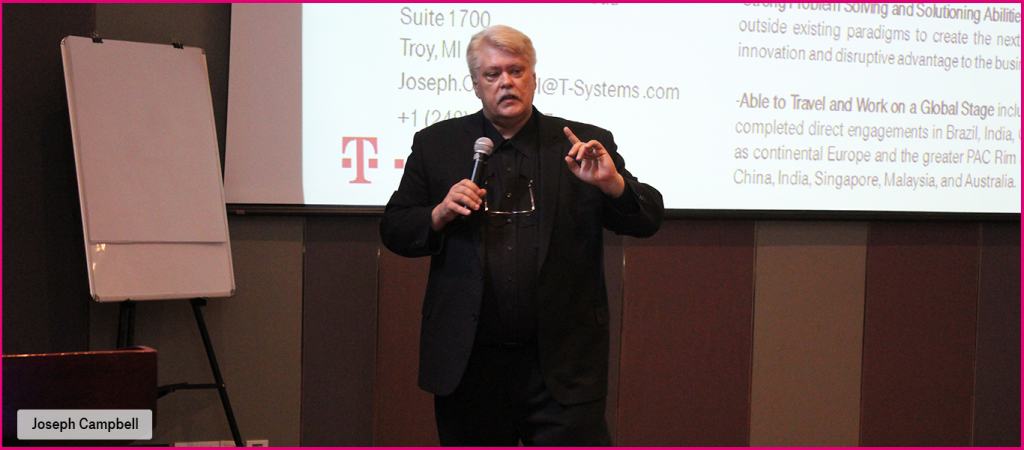
About Joe:
Joe is a Trusted Technological Adviser to global organizations operating at the C-Suite level regarding information technology services and the application of infrastructure capabilities such as Cloud Computing (Azure / AWS), Software Defined Networking, Edge Computing, Industrial IoT, and Quantum Computing with the goal of disruptive innovation.
An experienced international leader with over two decades of hands on experience with digital transformation and the build out of large scale globally based IT initiatives on time and budget with a multicultural workforce.
Joe has held Senior IT leadership positions in four major heavy manufacturing divestitures programs, as well as tactical roles for multiple Global ITO contract start-up transitions, transformations and run-downs across a varied set of industries with a focus on Manufacturing, Energy and Telecommunications.
ABOUT T-Systems:
T-Systems is the corporate customers unit of Deutsche Telekom. Building on a global infrastructure of data centers and networks, T-Systems operates information and communication technology (ICT) systems for multinational corporations and public sector institutions.
We have around 47,800 employees all over the world, around half of them outside Germany in America, Asia, Africa and Europe. It is clear that globalization, digitization and worldwide networking are not just changing our business processes but our working life too. Mobile working, flexible working hours and job sharing are becoming increasingly important.
Diversity is a key driver for change in our corporate culture – and at the same time our contribution to true appreciation and respect in society. At the moment key issues in the Group include, above all, gender, work-life balance, age and ethnic origin. We follow five Guiding Principles that shape the way we think and act within the Group. They represent our values and define what we stand for, how we work together and what we believe. Respect and integrity, guide our behavior and we overcome challenges with teamwork.
Transcript
(Joel Beasley at 00:00:00) Hello, my friends. Today we are talking to Joe Campbell, the CTO at T-Systems International, and we discuss the evolution of industrial IoT and 5G, converting technology into business opportunity, and how having a willingness to invest in the unknown can give you a leg up on the competition. All of this right here, right now on the Modern CTO podcast. Here we go. This is the Modern CTO podcast.
(Joel Beasley at 00:00:35) Joe.
(Joe Campbell at 00:00:37) Joel, you got a beard that's not on all your pictures.
(Joel Beasley at 00:00:41) It will be soon. I actually—something new.
(Joe Campbell at 00:00:47) There you go. What is it? All this quarantining, you don't know hair? I know my hair is rather long too.
(Joel Beasley at 00:00:54) Yeah. You know, it's a little bit of that. It's a little bit of turning 32. And when my dad, when he was in his thirties, early thirties, he got alopecia and just lost, like, all the hair on his body.
(Joe Campbell at 00:01:08) Okay.
(Joel Beasley at 00:01:09) Yeah. And so it was strange. It wasn't a hereditary thing that we knew about or anything like that. And so I said, well, if there's any time to grow my first beard, it's now. And give it a shot, and I'll at least have some pictures to say I did it and let's hope I don't lose my hair. Let's hope I didn't get that gene or whatever.
(Joe Campbell at 00:01:31) No. It looks pretty good. It looks pretty good. I've been fortunate down the hair front too myself. At 57, I still have a fair amount, so that's a good thing.
(Joel Beasley at 00:01:39) Dude, you look like a champion. You got a ton of hair.
(Joe Campbell at 00:01:43) I appreciate that.
(Joel Beasley at 00:01:45) I love your pillows. You got a Reese's Peanut Butter Cup pillow and a Hershey candy pillow.
(Joe Campbell at 00:01:50) Yes. Actually, those are for each one of our dogs. We have two Yorkie Poos. One's named Hershey because he's brown, and the other one is peanut allergies, or hence Reese's Pieces. Plus, it's my favorite candy.
(Joel Beasley at 00:02:04) The peanut butter cups, Reese's and then Reese's Pieces. Growing up, here's a fun story for you. So my cousins—I was a bigger kid, and my cousins thought it'd be funny to get me to do things for candy. And so they said if you can run around the house 15 times, we'll give you another Reese's. But I'd already eaten a bunch of candy before that, and they knew this. And so they got me to get sick because they were fun cousins. Right? In the pursuit of candy. And they just saw me in the front yard, and they're like, what's wrong with Joel? And my cousins are just laughing. And yeah, got a little tummy ache running around after eating a bunch of candy.
(Joe Campbell at 00:02:50) Well, it was just, you know, good thing that you didn't have farm-based cousins and city-based cousins because then there's always the electric fence story. So...
(Joel Beasley at 00:02:59) Oh, that's true. Did you live out on the farm?
(Joe Campbell at 00:03:03) Yes. It is true. I'm very experienced on the farm. Yes.
(Joel Beasley at 00:03:08) What do you think about—or at least it's new for me—but this regenerative, have you heard of regenerative farming?
(Joe Campbell at 00:03:16) Not really. No. No.
(Joel Beasley at 00:03:18) So it's basically, like, where—well, I should not be explaining it. But it's a concept in farming and it's like, you'll use your chickens and then maybe some of the byproduct from the chickens will help feed these other animals and sort of you have this ecosystem. It's a regenerative ecosystem. And so some of the people were talking about, like, taking that regenerative farming concept and applying it to organizational structure. And so I was listening to a couple of people talk about that, and it was actually pretty interesting, regenerative organizations.
(Joe Campbell at 00:03:50) I'm gonna have to look that one up. My background is actually organizational dynamics. My undergrad is in organizational dynamics, and my master's is actually in international finance. So, but my grandparents had a farm, and that's what we always used to do is the chicken and cow manure always went back out in the field as fertilizer. I mean, you know, back in the day, I mean, this synthetic chemical stuff didn't exist. So I guess what's old is new again.
(Joel Beasley at 00:04:18) Yeah. That's typically how it goes. That's the story of life. Right? It's regenerative in nature.
(Joe Campbell at 00:04:25) Exactly. Exactly. I have to look that one up.
(Joel Beasley at 00:04:27) So you got a degree in international finance, and then what else?
(Joe Campbell at 00:04:32) The undergrad is organizational dynamics and then the master's is international finance.
(Joel Beasley at 00:04:41) Did you do this, like, directly as you went through college, or did you come back later after you got business experience?
(Joe Campbell at 00:04:47) I basically came back after business experience because I had the undergrad for quite a while, and then I was working as an executive for Hewlett-Packard. And one of the things that they did as part of their organizational thing is said, well, if you're gonna be this level of an executive, I was a director level, you had to have a master's degree. So I went back and got a master's degree.
(Joel Beasley at 00:05:09) And so you chose international finance. Were you doing a lot of international work then?
(Joe Campbell at 00:05:13) Yes. Actually, for Hewlett-Packard, I sort of pioneered nearshoring for them to Canada at the time. You know, this is back 1990-ish. So that was a big thing because the Canadian dollar was very weak at the time, still sort of is, but not like then. And so, yeah, we offshored a lot of stuff to Canada. This is long before India came along.
(Joel Beasley at 00:05:35) That is so cool, man. Yeah. I was reading through your old bio and I was like, you're a man of the world. Lots of traveling, international finance. Was that a really useful degree? It sounds like it would be.
(Joe Campbell at 00:05:46) Yes. Yes. Because, you know, the interesting thing, what a lot of people miss about the role of a CTO—it's not just about technology, but it's the conversion of technology into business opportunity. And that's really what I focus on for T-Systems. How do I take technology and turn it into competitive opportunity for our clients?
(Joel Beasley at 00:06:08) That is a very succinct, clear way to put that.
(Joe Campbell at 00:06:11) Yes.
(Joel Beasley at 00:06:12) You've been doing this a while.
(Joe Campbell at 00:06:14) I've been doing—you can tell by the gray hair. Yes. It's been a number of years.
(Joel Beasley at 00:06:20) So, you know, I got to talk with some—I think it was another CTO at—so there's two CTOs at T-Systems?
(Joe Campbell at 00:06:27) Well, there's actually a number of us. You actually, I think, spoke to David Smith. He's part of operations for our North America cloud operations. So we have actually, inside T-Systems, we have, as you found out, I think, from David, we're part of the DTAG group. So, you know, our sister company is T-Mobile. And T-Mobile US, you got to meet, I think, Cody Sampson, who's their CIO working for Neville Ray, who's the CTO there. Great guys. And so with that, for T-Systems, we're really the business-to-business end of DTAG. And with that, Max Ahrens is our group CTO. And then there's a board, a CTO board for T-Systems. And on that board, I head up energy and manufacturing. There is a CTO for basically cloud services, and this is at a global scale. You know, what David is working at is for North America. So I actually work for T-Systems International in part of that board. So my focus is on energy and manufacturing.
(Joel Beasley at 00:07:31) Do you notice as you get to be a part of that board and the international organization, are you noticing that—or do you have opportunities to coach some of the other people? Like, do you get to do that? Or how does that work?
(Joe Campbell at 00:07:46) Yes. And that's actually part of the idea behind the board structure. We also have account CTOs because I also serve as the account CTO, for example, Shell and BP in the oil and gas is working with their CTOs and CIOs to, again, deliver competitive advantage in those spaces. I also, because I'm located here in Detroit, Michigan and have a big history, also help out the automotive guys in manufacturing.
(Joel Beasley at 00:08:14) Yeah. I think we talked to—I think it's Magna is out there.
(Joe Campbell at 00:08:17) Yes. They're one of our customers. Yes.
(Joel Beasley at 00:08:19) Oh, man. I got to talk with their CTO. Yeah. Great people, great company. We were talking a little bit about their talent pipeline, how they're interfacing with some colleges, and it was really cool.
(Joe Campbell at 00:08:28) Yes.
(Joel Beasley at 00:08:29) So you wanna talk a little bit about industrial IoT and 5G. What's going on there, my friend?
(Joe Campbell at 00:08:36) Oh, man. A lot. Especially pre-COVID. COVID set this back a little bit. But, actually, kind of interestingly enough, you know, the COVID-19 event has kind of put a spin on this whole piece because, you know, obviously, a lot of industry, you know, got the brakes put on. However, now what we're seeing is obviously, especially here in the United States, a lot of sovereign repatriation of business. And to be competitive or to actually do that repatriation is taking technology such as 5G and industrial IoT. You know, some of the things that we offer is, you know, obviously going back to our wireless heritage with the T-Mobiles. Because not only do we have T-Mobile here in the United States, it's T-Mobile Netherlands, Germany—we have the most, you know, around the industrialized world. So with that, we can provide the connectivity for, you know, edge compute infrastructure for industrial IoT, which allows us to help our clients do some really interesting things.
(Joel Beasley at 00:09:37) Any projects that you are, like, particularly excited about?
(Joe Campbell at 00:09:41) Yes. One of them that we've done—you know, the interesting thing, Joel, is when we really look at some of this stuff, you know, especially with, you know, 5G and industrial IoT, what a lot of companies miss out is that they look at it and say, alright, what's my return on investment or what's my goal out of doing this? And that's where I think they make a big mistake. One of the CEOs that I've worked with, their company—you know, his people came to him and said, hey, look, boss, we wanna do this big industrial-based IoT project. And he says, well, what am I gonna get out of it? And they said, I don't know. And, you know, his response was, well, you know, you're asking for millions of dollars to do this project and you don't know what the outcome is. And they said that's correct. What we don't know is more important than what we know. And I thought that was rather profound because at the end of the day, we came in and we did these things for them, and the result was amazing. They found out, you know, number one, that a lot of their product was being stolen and sold for scrap, which they didn't realize. You know, because when you have an enterprise that's globally based and they have a lot of materials, it's almost impossible to track all those. Well, with industrial IoT, 5G around the world, and all these things, we were able to help him do that. So he was very excited at the end of the day to, needless to say, that he spent these, you know, few millions of dollars, which saved him tens of millions of dollars, but also gave him new insight. And that's really what industrial IoT and 5G are about, is giving that, you know, new level of insight, which was impossible before.
(Joel Beasley at 00:11:18) So is 5G everywhere right now?
(Joe Campbell at 00:11:21) Well, as part of the deal with the government for the Sprint piece and everything, T-Mobile, you know, promised the early rollout, and it is a, you know, obviously, a competitive advantage for us. So a lot of the 5G components are out there. One of the bigger components where we're focusing on is 5G slicing. And have you heard of 5G slicing?
(Joel Beasley at 00:11:44) No.
(Joe Campbell at 00:11:44) Okay. Not a lot of people have, but what's really cool about 5G is in typical terms, you have your public radio network or what we call RAN, radio access network, or you have private radio access network. The private is very expensive. But with 5G, what we can do is we can virtualize a portion of that spectrum and then dedicate that to a business. And from that, we can localize cloud computing. So actually, you can have a pay-for-what-you-need model rather than dedicated radio, and you can localize a cloud solution to that, which makes it very unique for manufacturing.
(Joel Beasley at 00:12:27) That's pretty cool.
(Joe Campbell at 00:12:29) It is. It is.
(Joel Beasley at 00:12:30) So let's break this down a little bit. So you slice a spectrum. Right? Right. So that's where the slicing name comes from. Correct. And that creates efficiencies over what—me licensing a band of spectrum? Like, where is the efficiency created?
(Joe Campbell at 00:12:52) Well, the piece is if you're not using that private spectrum, say you don't need it all the time or you need various amounts throughout your manufacturing day. What's not being used can go back to the public side and be sold off there. So you don't have to buy dedicated radio equipment or anything like that, but yet you get the same advantage of having a private network at basically public prices. This is what's really unique about our solutions. And then to attach to that, we have, what we call EdgeAir, which is an industrialized edge solution, which connects into that radio access network and allows us to very economically deploy industrial IoT solutions.
(Joel Beasley at 00:13:39) Okay. So maybe, you know, I'm from the SaaS world, so this is actually very fascinating for me because I don't have a lot of experience here. So these manufacturers, like, in my world, I would never do that. Like, that concept is kind of foreign to me. What are they needing? Like, what are they—when you say manufacturers are using this band, these bandwidths or this slice, what are they doing with that? Like, what is that to them?
(Joe Campbell at 00:14:03) Well, let's take a refinery for an example. So in a refinery, one of the big situations you have is things, you know, obviously are very volatile. They explode. So there's a lot of regulation in deploying sensors in refineries. And one of the biggest problems for a long time in a refinery is deploying one sensor could be $10,000 to $25,000 to run a cable from, say, a central, you know, computing location, small data center closet out into the plant because all this has to go through conduit, has to be special cabling, all this. Well, what we can do now is we can take a sensor, put it out into the plant, it can use LTE to connect back to this private slice network, and then we can process all the information. So now, basically, you're installing sensors for pennies on the dollar. So you can do a lot of unique things, which you could never do before with technology.
(Joel Beasley at 00:15:00) Dude, that is—I get it. That is so cool. Yeah. So you're telling me before this slicing, people would buy these, like, radio control systems, kind of make their own little networks so that they didn't have to run cables, and now there's, like, a more cost effective way to do this?
(Joe Campbell at 00:15:15) Well, no. They would have to run cables. Now—
(Joel Beasley at 00:15:17) Oh, okay.
(Joe Campbell at 00:15:18) The LTE radio. Now here's the big thing to keep in mind. So what happened with the evolution of WiFi is a lot of people started to use WiFi sensors. It's a huge problem with WiFi sensors because number one, they're on an open frequency. There's tons of easy kit out there to disrupt it. And when you have a manufacturing operation, first and foremost is the health and safety of the people working in that plant, and then second to that is obviously the environment. So, you know, you can walk and download schematics on the internet, you know, to easily build a WiFi disruptive device where you can walk into a plant, push a button, and then put all the WiFi devices offline. With LTE technology, number one, it's a licensed spectrum. It's a little bit harder to mess with. You know, number three, it's encrypted.
(Joe Campbell at 00:16:11) So there's a lot of advantages from the safety side because one of the big things we look at in this solution is what I call is we want to avoid a Skyfall event. So are you a James Bond fan?
(Joel Beasley at 00:16:22) Of course.
(Joe Campbell at 00:16:23) Okay. So you probably remember the movie Skyfall. What happened in Skyfall?
(Joel Beasley at 00:16:28) I actually don't remember because there's like five, there's like 500 James Bond movies. I've seen them all. I know there was a guy. There was an attractive woman. There were gunshots.
(Joe Campbell at 00:16:38) Exactly. Exactly. Exactly. Well, in Skyfall, Javier, the villain of this, you know, a former agent, basically took control of errant IoT devices inside the headquarters and basically destroyed, what is it, MI5 or MI6, whatever they're calling it. And this is what we really strive to avoid first and foremost is to provide that level of security in an industrialized setting because we're not talking about event sensors here, if a door opens or closes or something like that. We're talking about pressures, pumps, you know, things that can go boom in the night. So this is what's real critical about these solutions we offer is they're industrially hardened and they're also economical.
(Joel Beasley at 00:17:26) That's pretty interesting too because I got out of the whole hacking game after I got 18 and it became like more of a problem. You know, as a kid, you're growing up, you're kind of playing with stuff, and for me, it was like right, I'm 32, so it was like right when things were emerging. Right? And so I was playing with the networks and everything and trying to figure out what this was. But, you know, I never thought about the difference in security of the Wi-Fi routers versus the cell towers that are essentially transmitting the whole county's data. There's, I don't know what they are because I haven't experienced them or looked into them, but it definitely, I mean, our towers aren't getting taken down every day by 13-year-olds. And, you know, when I was 13, we could take Wi-Fi offline all day.
(Joe Campbell at 00:18:22) Exactly. And you still can even with Wi-Fi 6. I mean, it's gotten better. However, you know, we could probably talk for an entire day on the whole Wi-Fi versus LTE debate. And, you know, naturally, me working for a carrier or a carrier-based organization, I'm leaning towards LTE. But the one thing is, if you just pile up the pros and cons from an industrial setting, LTE clearly wins in this case. And especially because what we can also do with 5G is we can regionalize spectrum and resell spectrum on a regional basis. We can't really do that under 4G. So 5G gives us a lot of ability to add a lot more sensors, to secure them far better than we could in the past. And so this is what's so exciting about this. And then also, because 5G has massive MIMO and beamshaping, we can go into a refinery. We can put these sensors in a high ferrous environment and not have the same issues we have with Wi-Fi or 4G because with the evolving 5G technology, we can bounce signals off pipes and things like that to cover the whole plant in a far more effective manner.
(Joel Beasley at 00:19:34) So are you mainly focused on, it sounds like you're mainly focused on infrastructure, but my next question is, do you also get into like predictive analytics and things like that?
(Joe Campbell at 00:19:42) Absolutely. Absolutely. So I've got a great story for you. So we were asked to come in by a refinery operator. So in the oil and gas field, you have downstream, midstream, and upstream. You know, downstream produces, basically the gas and sells it and that kind of stuff. Midstream does the trading. Upstream extracts it from the ground. So in the downstream scenario, this downstream refinery operator called us in and their Chief Operating Officer goes, look, Joe, we've cut costs as much as we could over the past five years. We now need to be more competitive and we feel industrial IoT will allow us to do that. So they actually had one of our competitors in there earlier. And number one, they could not throughput the amount of data they needed. Because here's the other challenge, Joel, of industrial IoT. You know, what we're looking at is we're not looking at event-based data. In other words, you know, like with LoRa or something, when we open or close a door, that's an event. It sends a little packet. Door open. Here's the time. Door closed. For predictive analytics, we have to stream vast amounts of data, and we have to do it 24 by 7. And this is the other place where the slice network comes in, is it's a cost-effective solution for me to move a bunch of data. So one of the things that we did is we took a $50 acoustic sensor, epoxied it to basically a 25-year-old pump, and we were able to show this Chief Operating Officer how we could do some really crazy things. Because we took this acoustic data at 48 kilohertz that we were sending over LTE. We processed it in some interesting math that actually came out of DOD work for submarine propellers because what's a pump but a big impeller. Right? So we were able to, number one, look at the cavitation of this pump. We were able to look at the performance of the impellers of this pump. We were able to understand the fluid that this pump was handling. So kind of back to my original piece, we were able to discover things that we weren't even looking for out of a $50 sensor, which would never have been possible in the old days because you'd have had to spend 10 to $25,000 just to wire this thing in.
(Joel Beasley at 00:21:57) Whoa. That is actually really cool. It makes for an impressive customer presentation.
(Joe Campbell at 00:22:04) It does. It does. It actually, we have these set up in our innovation center where we have a pump and we have these various sensors as I just mentioned. And we can put the pump into a certain state and we can help our clients visualize this. Because then what you do is you expand this out with vibration sensors and obviously other sensors and start adding artificial intelligence. So even if we go back in the same vein, you know, with industrial IoT, video is another important aspect of industrial IoT because video cameras are super cheap and you get a ton of information from them. You know, so for example, if you take your existing security system in a plant, so for example, like in the Middle East, basically, they mandated that all the critical infrastructure of the plant be monitored by a camera. And so, you know, what we suggested is take that data from all those security cameras which the company was seeing as a liability and just let an AI algorithm sort through it and see what it discovers. And it's literally amazing, you know, because here you have all this data you think is liability, the security footage, which really turned out to be a competitive advantage.
(Joel Beasley at 00:23:19) That's pretty cool. And you could like spend thousands of dollars engineering a special gauge or you just point a camera at the gauge.
(Joe Campbell at 00:23:29) Exactly. Exactly. And there are tons. You know, for example, as we look at the COVID situation, you know, so a lot of people are looking at thermal cameras for temperature sensing and things like that. We're actually looking at what about microflushing. You know, because as you and I are talking, you know, as our body dynamics change, you know, we're blushing in just a matter of a split second with every heartbeat. So if we watch with enough frame rate, we can actually see that and we can also monitor body conditions that, you know, for example, your heart rate, you know, potential blood pressure conditions. We can know all kinds of things from that video.
(Joel Beasley at 00:24:11) I want a little HUD heads-up display that shows like my current mood, my heart rate.
(Joe Campbell at 00:24:18) Yeah. Exactly. Well, actually, there are several apps out there for the iPad that actually do this, and they'll tell you your heart rate and a bunch of other stuff about you just from utilizing microflushing in the cameras because it just looks at the hue of your skin, you know, at a very fast rate. So there are tons, this is enabling tons of fascinating technologies to be developed because really the cost or the challenge has always been how do you move this massive amount of data to make value out of it? You know, because this is the one thing as you talk about predictive analytics. You need for predictive analytics to really work, you know, I see a lot of my clients, you know, they go to their historian, you know, their PI historian, and they take very low-frequency data and they attempt to utilize artificial intelligence and algorithms to predict the future. The problem is with coarse data, you get coarse prediction. To get detailed prediction, especially, you know, seven to 11 days into the future, you need high-frequency data. And we work quite a bit with National Instruments down in Austin to utilize a lot of their sensors and software to create these predictive analytics systems for industry.
(Joel Beasley at 00:25:37) So how connected are you? How close are you to the teams that are getting to actually make this technology?
(Joe Campbell at 00:25:47) Well, you're looking at the guy that dreams it up. So I'm the grandfather of basically the edge computing for T-Systems, the edgear offering, as well as basically most of these industrial IoT solutions. Because one of the things, you know, again, the viewers may be aware of, if they're in manufacturing is ISA-95. This is a standard created in 1995 and then updated in 2003 that kind of predicates how IT, or, you know, really OT, because when we're talking about plants, we're talking operational technology. So on one side, you have operational technology, OT. On the other side, you have IT. So the question for the past couple decades is how do you bridge this? And again, we could talk quite a bit about this, but in the simple aspect to really get business value out of it, you have to get real-time OT data into the IT side of the house, but yet you need to do it securely. And that's really one of the big things that we're working on is really bringing these pieces together because if I fall back to the slice model, because remember, one side's public, one side's private. So on the public side, I can do track and trace to trucks or trains coming into my refinery. And on the private side, I can do operations in the refinery. So I can take my logistics data from the public side, run it through a bunch of algorithms, you know, inside the edge, and I can tune my manufacturing process to match the arrival of trucks, trains, and all that kind of stuff. So we can really increase the efficiency because as I was sharing with the pump example, in the petrochem business, there's a process called tolling. You know, one day they may run one chemical, the next day they may run another, and the pump doesn't know what chemical it's running. It doesn't know the specific gravity. It doesn't know the point of shear or cavitation for that fluid. Well, with that $50 sensor, I can now say go from 80% productivity on that pump to near 100% productivity because I know when it's cavitating. I also know how that impeller of that pump is going to work with the fluid it's handling. So, again, I've done this all for basically $50.
(Joel Beasley at 00:28:05) And so then you provide these interfaces to them and train them. How does the training process go? Like, how do you train these people that previously didn't have this technology to now interface and make decisions and learn from this new technology?
(Joe Campbell at 00:28:18) And that's a great question. There's really two camps. There's one camp that asks us to help with that. There's another camp that says, hey, we want you guys just to be the plumbers. And we're good with both camps. You know, for example, with the one with the $50 sensor and the pump, their challenge to us was to be the plumbers, move a bunch of data, and their data scientists are making value of that at a higher level. However, we also work with many different companies. You know, we must have been about six, eight months ago. In the end of last year, we signed a deal with Siemens for MindSphere. So we integrate with MindSphere, and we integrate with a lot of these SCADA packages out there to create this value. So, basically, you know, they provide the top-level service, analytic service, and then we provide the data connectivity.
(Joel Beasley at 00:29:14) So from our conversation, I feel like a lot of the projects are almost like retrofits. Like, you have an existing refinery. It doesn't have sensors and you're putting in sensors. How are you dealing with the other side of the stream of business? Are you working with manufacturers to have them put in like sensors that will interface with your technology? How do you get the business of the people who are putting sensors in new equipment today?
(Joe Campbell at 00:29:38) Well, with that, again, it's providing the stable pipeline for that. Because, again, if we look at automotive manufacturing because of their changeover processes and manufacturing lines and things like that, they're far more advanced than say the refining business because when you build a refinery. And a lot of the refineries, especially in Europe, you know, some of them date back to World War II. I mean, some of the pumps are old and rusty. And so this is the thing to think about in that context is in a lot of manufacturing, the machines are actually very old because they're rather simple machines. And so this gives an easy way to retrofit them and obtain this Industry 4.0 value out of an existing machine. Now when we start looking at some of the more advanced pieces, again, they have these built in to the equipment today. And so we simply interface with them, obviously, through direct LTE and we process it on the edge. Just like we would the retrofit, but, you know, the sensors are integrated.
(Joel Beasley at 00:30:46) Oh, that's pretty cool. Because, yeah, like with cell phones, right, you have the manufacturer of the cell phone, but then they build it so that it'll work on, you know, the networks. Correct. Right? Different networks.
(Joe Campbell at 00:30:59) When do you think, like, consumers, when will I be able to have 5G in my iPhone? Do you are you familiar with that? Those?
(Joel Beasley at 00:31:05) Well, Samsung, I believe, has already released a 5G-capable phone. And I think Apple and their next version is going to release a 5G-capable. But that's not where the excitement of 5G really comes from. It's really in the industrialization, the sensors, and all that kind of stuff. So, yeah, your YouTube videos or Netflix is going to stream, you know, a little bit faster and a little bit less, you know, flickering. But, again, the exciting part I think people miss is 5G is going to enable all the stuff we were just talking about.
(Joel Beasley at 00:31:37) And so like sensor data that would travel on, so is this 5G slicing, is the slicing only available on 5G? There's no 4G slicing?
(Joe Campbell at 00:31:46) Yes. Yes. Because, you know, the interesting thing is one of the big differences between 4G and 5G is they virtualized a lot of the functionality of 4G into 5G. So that's how we can split this off. So, basically, think of it as running a bunch of your virtual machines or Kubernetes instances or containers that split that segment off. And so that's what 5G gives us. So rather than buying dedicated hardware, you know, the functionality is virtualized. It's one of the big pieces. That's what allows us to do this.
(Joel Beasley at 00:32:26) So what are you most excited about today? We know you've got the 5G stuff. I know you're doing a lot of cool projects with the refineries, but what's like the thing that is getting you up out of bed in the morning?
(Joe Campbell at 00:32:38) Basically, every day, we sort of discover something new that we can do with this technology. And that's what's really exciting. So, you know, before COVID came along, I wasn't messing around with micro flushing and now I am. A lot in the video detection arena, obviously, is coming up. So every day, I get to discover something new, and that's what's really cool.
(Joe Campbell at 00:33:04) And in getting to work with a lot of our larger customers in energy and manufacturing, I get to see all these different problems and challenges. And that's what gets me up in the morning is helping solve these problems.
(Joel Beasley at 00:33:17) Have you thought a lot about, like, the Starlink and the different things that, like, you know, Musk and some other companies are doing? How is that going to impact this world?
(Joe Campbell at 00:33:28) Well, I think anything that adds to communication is a good thing. You know, from the aspect of we're going to be creating more and more data. And, I mean, it's sort of an old cliché about this, but, you know, as I mentioned early on, predictive analytics, especially good predictive analytics, depends on lots of data. So the more data that we can get, the better off we are. And, obviously, there's, you know, some interesting applications for Starlink because, you know, one of the challenges I was given is autonomous vehicles in the Congo.
(Joe Campbell at 00:34:04) So, yeah, you don't have too many cell towers in the Congo, you know, in the deep jungle of the Congo. So that's something where potentially, you know, something like Starlink or, you know, non-terrestrial based, you know, would work out or be a use.
(Joel Beasley at 00:34:21) You put a bunch of wireless sensors inside of the snakes?
(Joe Campbell at 00:34:24) Yeah. Well, actually, actually the mining vehicles. So a lot of the mining operations now are autonomous, and a lot of the ships are now autonomous. And so, you know, because you really think about it, we went about this a little bit the wrong way with autonomous cars because there's a whole bunch of them packed together. You know, so it makes it far more difficult than you throw us humans in there.
(Joe Campbell at 00:34:49) But now, you know, our planes for many years have been flown on autopilot, so now our ships are being sailed on autopilot. And so trains operated like that, mining equipment. So the autonomous arena is really growing a lot faster than what people think. And this is one of the things that they miss about the bleed over into, you know, the automotive industry of autonomous driving. So it's really us humans that are sort of a little bit getting in the way of autonomous driving because we're so erratic.
(Joel Beasley at 00:35:20) Yeah. I was having a couple conversations with, I've got a few friends in Australia that do, like, big mining. Like, ore mining. So they've got the, you know, like, hundreds of acres, and they've got the vehicles that are 50 feet tall and giant wheels.
(Joe Campbell at 00:35:32) Those are the ones I'm talking about.
(Joel Beasley at 00:35:34) Yeah. And he was telling me, he's like, dude, they're autonomous. And I was like, what? He's like, yeah. They're mostly, they're dry because those are private lands, first of all, so you don't even have to worry about being on public roads and autonomy. And I was like, that's, he goes, yeah. He goes, the first few times you see one of these, like, skyscraper things moving and there's no one inside of it.
(Joe Campbell at 00:35:53) No one is.
(Joel Beasley at 00:35:54) Yeah. He's like, it's a little bit odd, but you get used to it.
(Joe Campbell at 00:35:57) Yeah. Exactly. And, you know, because, again, you don't need people. They can run 24/7. You know? And, you know, you kind of extrapolate that out in different perspectives to the industry as a whole that this technology is going to allow. And one of the things that's become very clear in artificial intelligence is that the more data we have, the smarter the intelligence becomes. And so we can take learnings, say, from these, you know, mining vehicles and then adapt the algorithms, refine them into the, you know, consumer automobile. So that's one of the things that are moving so fast.
(Joel Beasley at 00:36:40) Has anyone like, I know Musk is putting up Starlink, but has any of the other major carriers, like, announced any satellite projects to compete or be similar to them?
(Joe Campbell at 00:36:50) Not that I'm aware of. You know, Musk has sort of a leg up because he's got SpaceX. So he's got the transport into low Earth orbit. So that's kind of a no-brainer. And the piece is he can, and I don't know if he's doing it, but I would make the assumption that he's, you know, launching Starlink maybe as ballast for commercial payloads or something like that since they're LEO-based, you know, devices. So it becomes very economic for him where if we as Dtag or AT&T, you know, went out and hired Musk to put these into orbit, I mean, obviously, there would be a different, you know, economic model.
(Joel Beasley at 00:37:28) Yeah. That's, it's an interesting, I'm not saying anything. It might be cool to see some magenta satellites.
(Joe Campbell at 00:37:35) I, you know what, Tim? If you're listening to this podcast, I'm volunteering to head up that program. You know? We'll have, we'll have a Magenta Space Command. I'm in with you on that one, Joel.
(Joel Beasley at 00:37:46) We just need to reserve a band for stargazers. You know? Like, I want to go out to the mountains and look up in the sky and be able to, like, at least have, like, a band. Like, you know, I saw the renderings of the net essentially that they're putting around the Earth. And I realize on a scale, there's a lot of space in between them. But, you know, there is something to be said where I go out now and look in the sky, and I see, you know, more airplanes and satellites. I think I'm seeing a bunch of stars, and then I pull my phone app up and I'm like, oh my goodness. I'm seeing mostly satellites. But then you get the, you can see, like, the Milky Way or something that's something beautiful, and you're just like, you get to travel around the world a lot. So you've gotten to see the sky in many different shapes. Right?
(Joe Campbell at 00:38:31) Yes. Both northern and southern hemispheres. And actually, it's sort of one of my hobbies is astrophotography. So, yes, I mean, you're well educated on there's a lot of complaints in the community about the Starlink system because, obviously, you know, if you're an astrophotographer, there's going to be an impact on this because, you know, wide field astrophotography. But, you know, there's sometimes there's, you know, obviously, give and take if you want this. And, again, this is going to help, you know, Musk from an autonomous driving perspective because, you know, one of the things he's clearly moving into is commercial vehicles, and they need connectivity. You know, because this is one of the big challenges folks don't realize. If you take, like, a Tesla with, say, 250,000 vehicles on the road or whatever small number, you take a General Motors or a Ford, it's easy to get connectivity for 250,000, but it's hard to get connectivity for 5 million vehicles. And so this is, again, it's interesting to watch how Elon plays the corner cases to fill in the puzzle, if you will, of all the different pieces, you know. So he's in the autonomous driving business. Now he's putting up satellites to control his own connectivity into these vehicles. And so, yeah, Elon is an interesting character.
(Joel Beasley at 00:39:47) I know. He's a cool person to follow, and it's, I like how he's pretty human as far as, like, his interactions on Twitter. Like, he, it's just kind of, it's cool to see somebody when they're successful, like, be very themselves. Whether because, I mean, there's not this air of perfection. It's just like, dude, this is who I am. This is how I act. This is how I behave. This is what I do. And it's just nice to kind of see. And today, I think in about an hour, we're having our big launch.
(Joe Campbell at 00:40:18) About an hour. Yes. I'm excited to see them. I'm kind of glad they pushed it off. So, you know, obviously, being a child of the '60s, watching man first step on the moon, you know, it's exciting to see us take those steps back. However, you know, back to Musk, do you realize, let me ask you this maybe in different terms. Why do you think he's so successful?
(Joel Beasley at 00:40:40) His upbringing? I mean, I've been a fan of his story. I read his biography, and I've been following him for a while. His resilience at a young age, I mean, I identify with a lot of those things. I had, you know, got hit by a car when I was young. I had to learn how to walk again, and that taught me more about life than anything around the ages of 13, 14. And then just like difficulties and adversity and then deciding to make a conscious effort to overcome them, I think that is, like, at his core, shaped his character.
(Joe Campbell at 00:41:15) Well, the interesting thing I find, because at the onset of this discussion, one of the things we talked about is I shared the story of the CEO and his folks approaching him about doing a pilot with industrial IoT. And they said, we don't know what we're going to find. That's the thing I personally think about Musk is he's willing to invest, to explore, to find something he doesn't know is there. You know, for example, with the ventilators, I mean, I thought it just absolutely fascinating. They were able to take Tesla car parts and build the ventilator. And he didn't, you know, let the preconceived notions of the medical world, you know, stop him. And this is, to me, what excites me about Elon, is him looking at it that way. Because to share a little bit of an interesting story, obviously, in the oil and gas field, we do deal with a lot of subsurface data. You know, companies looking for oil. Right? Well, at least when oil was a little bit more per gallon than it is now. I was in a very high-level meeting one time, and this is going back about a decade ago. And they kept all their subsurface seismic data on tapes. And I looked at them and I mentioned, I said, why are you keeping this on tape? Why don't you put it on disk? And they said, Joe, it's really expensive to do that, and we've already ran all the algorithms against it that we could to look for oil and gas. I turned and looked at them and said, have you looked for the Ark of the Lost Covenant? And these five gentlemen just looked at me, you know, literally like I had a third eye. However, what I explained to them is, yes, you've looked for oil and gas, but you have this massive view into three miles deep into the Earth's surface. Why don't you let an AI and algorithm look for something else? Because maybe your business is no longer oil and gas. Maybe it's mining. Maybe it's something else. You know, we, I think, just allow ourselves to be bound by, you know, preconceived conceptions. And I think that's where Musk throws those away and says, everything I approach is an empty slate.
(Joel Beasley at 00:43:26) I'll take it a step further, and I'll say it's a trend of traits I see in successful people. They tend, like in the most, like, realistic way, you know, I'm on a path of self-discovery. Just that's me and that's my story. I'm always trying to figure out myself and, you know, figure out, you know, why I'm weird or why I'm different or why I see things differently. And one of the things I found is that, like, I have some filter on the way I see things that just happens to be different. I'm not great at articulating it, but I just see them in, like, very simple concepts. And I found that that ability to see things simply and clearly is a successful trait that I've seen across people.
(Joe Campbell at 00:44:08) Yeah. Because that's why I'm fascinated with Google's, you know, 10x thinking and things like that. You know, because that's one of the reasons I got the undergrad in organizational dynamics. It is everything we do is really about, you know, us as a person, you know. And it's not about the technology. We shape the technology. A lot of people think the technology shapes us, but we really shape the technology. And that's where I'm also a big Marshall McLuhan fan too.
(Joel Beasley at 00:44:37) I haven't heard of this. Who's this person?
(Joe Campbell at 00:44:40) Oh, you've not, oh, what? You're a youngster and only 32. Marshall McLuhan, where the medium is the message, you know, where the means of communication really shape the message.
(Joel Beasley at 00:44:51) Oh, I've heard those things. Yep.
(Joe Campbell at 00:44:54) Canadian. Yeah. He was a Canadian professor. Great guy as far as that, you know. So up there with Clayton Christensen, who unfortunately just recently passed away, but really did some great work in basically, you know, how people think about things, receive messages, and that kind of stuff through media. You know, various mediums, if you will.
(Joel Beasley at 00:45:16) Yeah. I actually watched a bunch of Clayton's TED Talks. He's good. Brilliant guy. Yeah. Yes. Yes. So okay.
(Joe Campbell at 00:45:27) Jobs to be done.
(Joel Beasley at 00:45:29) So I'm excited. I want to talk a little bit more about astrophotography. And the reason why is my wife and I were just thinking about our next vacation. I've been researching places to go, places where they're outside the city. You're not allowed to use white lights at night. You have to use red lights. They're like these little communities, and they're very specific about how to use your light because people are going out there to see the stars.
(Joe Campbell at 00:45:50) Right.
(Joel Beasley at 00:45:51) What are your recommendations on a couple areas that are good visits?
(Joe Campbell at 00:45:55) Now where are you located again?
(Joel Beasley at 00:45:57) I'm in Florida, but we can travel anywhere.
(Joe Campbell at 00:46:00) Yeah. There's a number of dark sky places in Florida. Actually, there is a community not far from Orlando that is dedicated to hobby astronomers. You know, they build houses and lights are banned around there, and people build big telescopes. If you get out California way, you can go up to just before you get to the top of Palomar Mountain where, obviously, the Palomar Observatory is. A lot of people go up there because, you know, in San Diego and that, they have the light regulation, so it's really great up there. I've been up there before. The Phoenix area is great. You get up around Sedona, beautiful area. So yeah. Those are great areas.
(Joel Beasley at 00:46:45) I'm making notes. And so, you know, my brother, he, my brother is a physician, and he recently got into night photography. And so he's been sharing pictures. He's done some, like, long exposures, and you can kind of see the rotation of the stars. And that is some trippy stuff. It's, I think it's, you know, it's a pretty simple thing, but it is so cool to go out on a clear night and look at the stars and actually watch how they're rotating imperfectly, it feels, as far as the horizon goes, how they rotate. And it's just, it's a, you know, for me, I found it a good exercise to ground myself when, like, I'm searching for direction or I feel I'm at a point where I'm lost in life. A trip out to nothingness to look at the stars seems to have some answers.
(Joe Campbell at 00:47:39) Yes. It does.
(Joel Beasley at 00:47:41) Tell me a little bit about the shapes behind you on your posters. You've got some geometric repetitive patterns going on.
(Joe Campbell at 00:47:49) Those are what I would call second generation Escher drawings from M.C. Escher. So I spend a lot of time actually in The Hague in The Netherlands. Actually, The Netherlands over the past 20 years has sort of been my second home. So my adopted favorite color is orange now. However, what's really cool, and if, you know, any of your listeners get out to The Hague, there's the M.C. Escher Museum.
(Joe Campbell at 00:48:16) And what they do is they allow you, unlike most museums, to take photographs of Escher's work. And so over a weekend where I was staying in The Hague, I actually took a bunch because photography is another one of my hobbies. I have a lot of hobbies. I actually went in there and they allowed me to set up my gear and photograph the original Escher drawings that are on display, and that's what's actually behind me. Because I just love the twisted nature of M.C. Escher, you know, basically the way he takes your perspective and distorts it.
(Joel Beasley at 00:48:53) Yeah, it's beautiful. And especially for the time, it was like unbelievable.
(Joe Campbell at 00:48:57) Exactly. You know, to me, I come in here every morning and look at them and, you know, I love the ants and the fish and the Möbius shapes. And so I highly recommend his museum there in The Hague.
(Joel Beasley at 00:49:11) How do you think our society is doing? Let's talk some abstract, fun stuff. Like, how do you think our society is doing as far as culture and getting space and deep thinking? Do you think we're overworked? Do you think we're finding balance?
(Joel Beasley at 00:49:24) Like, where do you think we are in the maturity of ourselves as a people?
(Joe Campbell at 00:49:29) Wow, that's a hard question. I think it's a tiered question. I think, you know, again, having organizational dynamics as a background, I've written a number of books. One of them is The Quincy Effect, where I talk about it because everybody's at a little bit different place on Maslow's ladder, if you will.
(Joe Campbell at 00:49:52) And this is one of the things when you're building a team, working together as a community, when you have people that are seeking safety and then you have people that are traveling to enlightenment, the two don't mesh. You know, in other words, the two can't see together. And I think that's in our society today, a lot of what we're looking at. I think there's a lot of dynamics that have changed in the socioeconomic profile that has created this mass separation. I don't believe it's the fact because people like Gates or Zuckerberg have so much money and the whole Pareto's 80/20 thing with, you know, those guys being so far in extreme, just to use them as an example.
(Joe Campbell at 00:50:33) But I do think that it is that dynamic in our society of we're spreading out Maslow's ladder quite a bit. And, you know, I think that's why we're seeing a lot of this political consternation that we have over the past four years.
(Joel Beasley at 00:50:50) I think that's put brilliantly too because I've been aware of the hierarchy of needs, but the way you described it, you're right. There are different collections of people at different stages in development. And I think it's amazing that we all work together. And then I also see the need for more nuanced thinking versus one rule applies to everything. I think, and that's what got me thinking through this whole COVID thing about decentralization of core services. And core services being housing, food, energy. Do you think that we're going to see decentralization of those things? Are they already decentralized and I just don't know it?
(Joe Campbell at 00:51:36) Well, I think in a certain way, yes, I believe you're correct. So, for example, 3D printing is another one of my hobbies. I have a lot of hobbies. And that is going to lead to a vast change in the way we do things because we can decentralize the production of goods with 3D printing really easily.
(Joe Campbell at 00:51:58) And so, yes, I think you'll see some of that decentralization from that effect. However, one of the questions I sit down—I do a lot of the panel discussions at conferences, well, at least pre-COVID I did—and one of the big questions I was always getting for quite a while is how do I see AI affecting, you know, basically the working population? You know, because Musk puts up Starlink, autonomous trucks. You know, look at the post office, employs 250,000 drivers alone.
(Joe Campbell at 00:52:30) You know, then you take all the commercial truck drivers. What are all these people going to do? In the pieces, you know, you look at people like Andrew Yang says, okay, we need this minimum basic income. That's fine. You're feeding those people.
(Joe Campbell at 00:52:45) But what are they doing for value? Because more important to me is the value I create rather than the paycheck I get. The paycheck's nice, but if I don't have that value in my heart, you know, I'm missing part of me as a person. And I think that's the biggest challenge we're looking at. Not economically, but that social fulfillment, that fulfillment of value.
(Joel Beasley at 00:53:11) Yeah, that need to feel productive.
(Joe Campbell at 00:53:16) Yeah, exactly. Useful, productive. Correct.
(Joel Beasley at 00:53:18) I mean, it affects me on a day-to-day basis. When I have down days, you know, that affects me. It's like I did not achieve my potential today. This is a problem. It's completely not connected to pay.
(Joel Beasley at 00:53:29) Obviously, there's a Maslow higher need coming into place.
(Joe Campbell at 00:53:31) Right.
(Joel Beasley at 00:53:33) But when basic needs are met, you know, I think it's going to be super important as an—I think education is going to be massively important. Like, how do we—we already have the infrastructure. We have K through 12, but how do we leverage our existing infrastructure to teach people or at least make them aware of these schools of thought, these educations of how to feel valuable, of how to find a pursuit of something worth doing? I think we need—I don't think that's being taught in K through 12.
(Joel Beasley at 00:54:07) I don't think it's being taught in middle school, but I think it should be taught. Like, we should at least say, hey, this is, you know—it's amazing to me, I watch Ray Dalio. I watch his YouTube video of how the economy works in 30 minutes.
(Joe Campbell at 00:54:25) Exactly.
(Joel Beasley at 00:54:26) Animated, beautifully explained, 100% understood, very clear, and introduced you into principle-based concepts too. And it's like, how is that not something we make people watch every month in third, fourth, fifth grade? You know what I'm saying? Like, because watching it once isn't enough. I have recurring events in my calendar that say go back and watch Ray Dalio's, and I do that on an annual basis.
(Joel Beasley at 00:54:53) I have Elon Musk in my phone on a quarterly basis saying go revisit, think first principles. And what I'm finding as I'm getting older, and I'm really obsessed with this journey of life because I'm just enjoying it, is that it's less about, like, new information to keep me excited. Right? I need to hold on to the things that are good and let them mean more things as times pass. So for example, in my career as an engineer, "everything is an object" was a sentence that meant something new to me every year as I gained knowledge.
(Joel Beasley at 00:55:30) Now I'm doing that same thing. I'm saying, okay, what is my thing in business or in thought? And so I was like, alright, I'll take Elon Musk concepts of first principles, and I'll remember to revisit that every quarter.
(Joel Beasley at 00:55:42) So it means something different. I grow a deeper understanding of it. And so I've kind of created this portfolio of my knowledge where I have these things that I constantly—I enjoy, so I keep them repetitive in my schedule.
(Joe Campbell at 00:55:56) And that's very interesting because, again, works like you're doing, Tim Ferriss, because I, you know, I love the stuff you do because you're very much—I consider you the Tim Ferriss of the CTO world because, you know, when you talk with someone, it's very smooth, and it's the same way Ferriss comes off, and he pulls a lot of stuff out just as you pull a lot of stuff out in this case. You know, so when we talk about, you know, Ray Dalio, which that dude's just a—when it comes to economic sees—the original Dune movie, I've watched that like 30 times, and I'm not a person to rewatch it because I've learned something new. Ray Dalio is the same way. Just like you said, you can listen to him 10 times, and you'll walk away with something new 10 times.
(Joe Campbell at 00:56:41) But, you know, that's where I'm excited about what guys like yourself and Ferriss are doing because, again, you're putting this stuff out there and you're also sort of, I think, bridging the gap between people like myself and the broader audience. You know, because again, you put me up somewhere, I do a lot of public speaking, I can get a little bit, you know, savant-ish myself and, you know, "hey, look at this cool thing way over here," but I think it then takes perspective like you're pulling in here, and Ferriss does, to, you know, here's the bigger humanistic picture, if you will. Because that's really what counts is the humanistic picture, not so much the technology.
(Joel Beasley at 00:57:19) Oh, yeah. I became really fascinated with this question: What are the humans building? It came to me like one day on a run, and I was thinking, okay, I'm talking to these different people. This person's in oil and gas. This person's health care. My brother and stepmom are in health care. My dad was in technology. And I'm sort of looking at—now I own a business, and so I have a sales team, and I have production teams. And I'm kind of—and then I'm looking at, you know, ants work and build a mound.
(Joel Beasley at 00:57:47) And if you walked up to the individual ant, you would say I'm doing my own free will, and I'm just enjoying life. But clearly, they're building something bigger than themselves. And so I was thinking, you know, or maybe I heard it from a thought experiment, like if I'm standing on Mars looking at Earth, what are the humans building? Right?
(Joel Beasley at 00:58:03) And the reason being is because I heard this really smart person say, you know, find out what's going to happen, and then you say it's going to happen, and that's how you look smart.
(Joe Campbell at 00:58:14) There you go.
(Joel Beasley at 00:58:16) Yeah, it sounds like, where is the world headed, and what are we doing, and what are we building? And then I've actually found, like, having these conversations is the thing in life I enjoy most. I'm sad when I don't get to do podcasts. Like, I like talking to people like you.
(Joel Beasley at 00:58:35) You've got your expert-level knowledge in multiple areas, extremely accomplished and someone with a wealth of experience. And if I had a dream, Joe, it would be waking up and talking to the brightest people in the world every day. And I think I'm living that dream as one of those people.
(Joe Campbell at 00:58:53) Exactly. So keep it up, Joel. We need it.
(Joel Beasley at 00:58:58) Thank you, and thank you for the compliment. Is there anything that we definitely want to point some people—how do we get business for you? Like, what's the call to action? Is there some way we can direct the right people to you?
(Joe Campbell at 00:59:11) Well, basically, if you're interested in, you know, any of the things that I shared today, please reach out to me via LinkedIn, or I'm sure that Aaron will give you some contact information. But your listeners should feel free to, you know, connect with me on LinkedIn. I think as you saw, I blog quite a bit. I do a lot of posts about this. And so because I'm also very passionate about this interaction too.
(Joe Campbell at 00:59:37) So they can reach me through LinkedIn. It's probably the best way and keep in touch.
(Joel Beasley at 00:59:42) Yeah, we'll definitely put you on as, like, a recurring guest because I really enjoy the conversation. I like you a lot. And I love that you were interested in talking about, like, higher level things too. You know, some people will just give you the media shutdown and avoid the question. Other people are interested in talking about it.
(Joe Campbell at 01:00:03) Maybe we could do one on quantum computing because I'm also working on our quantum strategy because that, you were asking earlier, that is another thing that gets me up in the morning is quantum computing, because I am utterly fascinated by the possibilities.
(Joel Beasley at 01:00:18) Oh, great. Okay, so we're actually—just talking right now, there's a good episode with Robert Sutor. I don't know if it was a Robert—but he's the head of quantum computing over at IBM.
(Joe Campbell at 01:00:28) Oh, okay.
(Joel Beasley at 01:00:29) So that's a past episode, but I really enjoyed that conversation. So we were just talking to his PR people about having him on again. So maybe we'll do like a back-to-back episode. We'll do like Quantum Week or something and have Robert come on, have some conversations. We'll give you like early edit access to it so you can listen to it right away.
(Joel Beasley at 01:00:46) And then you and I can come back and, like, sort of like have some conversations from that and discuss it. And then I'll introduce you to Robert if you'd like, if you don't already know him, but he's a cool dude.
(Joe Campbell at 01:00:57) Now I'd be—I can't remember the gentleman's name I deal with because we do a lot with IBM and their Q systems, but the gentleman I deal with is out of Zurich, obviously, because of the European thing. So, yes, that would be fascinating because the way—my turn on quantum computing is business application, is quantum refactoring, and how will businesses use quantum computing, make value out of it, not so much, you know, how do you invent a quantum computer or that kind of stuff. So that's the angle I'm looking at it from.
(Joel Beasley at 01:01:28) Well, yeah, that's—
(Joe Campbell at 01:01:29) So it's not a good addition.
(Joel Beasley at 01:01:31) I like that phrase too, quantum refactoring. That's a cool—that's something I haven't heard before. Is that a phrase that's common out there?
(Joe Campbell at 01:01:40) Yes. Yes. Maybe it could be because traditional binary programs or algorithms won't work in a quantum state because, you know, quantum computing is a probabilistic computing mechanism. So you're looking for probable outcomes where with binary computing, you have intrinsic outcomes. In other words, two plus two is always four, where in quantum computing, you don't ask what is two plus two. You ask for a range of answers.
(Joe Campbell at 01:02:10) And the range of answers is given with a probability assigned to each one. And so to be able to do that, you have to refactor, you know, existing applications and algorithms to work in a probabilistic manner.
(Joel Beasley at 01:02:23) It feels like how our brains work.
(Joe Campbell at 01:02:26) A lot of people think our brains are actually quantum mechanisms. So that could be a podcast in itself. We have to get some neuro guys on to really delve deep into that. But that's one of the things that they're thinking actually is consciousness is quantum driven.
(Joel Beasley at 01:02:42) And where are you located?
(Joe Campbell at 01:02:44) When I'm not on an airplane, which I haven't been because of COVID, I live about two hours north of Detroit, Michigan.
(Joel Beasley at 01:02:51) Two hours north of Detroit. Yep. Okay. Yeah. We've been thinking about doing some more, like, in-person stuff too for the podcast.
(Joel Beasley at 01:02:58) So, you know, it's just a different quality of conversation in person. You know that. Yep. But we'll keep you on the list for some of that. But, yeah, I definitely like the idea of adding you as recurring guest to talk about these topics. I really enjoyed it.
(Joe Campbell at 01:03:14) I enjoyed it myself, and I enjoyed finally meeting you. I've been a longtime listener for many years.
(Joel Beasley at 01:03:19) Oh, you have? Yes. I've been a longtime listener. That is great. Thank you.
(Joe Campbell at 01:03:24) I appreciate it. And like I say, you're right up there with Tim Ferriss. I like yourself, Tim Ferriss, and, you know, a few others, but you guys are the ones I really listen to. Because, again, you tease out—you know, we didn't spend the past hour just talking about technology. We talked about life and the application of it. And I think that's what's important.
(Joel Beasley at 01:03:44) Well, when you and I have lunch, because at some point we will, but if we did, we would not sit there and hammer one line of questioning the entire time and just leave. Like, I don't think that ever really happens. Maybe a real estate transaction. But it's like, it's part of the human thing.
(Joel Beasley at 01:04:07) It's like we get to know each other. We get to know how we think, and then that opens up probabilities for the future. It's like, okay, I really got along with this person. Let's definitely have them back on and build that relationship.
(Joel Beasley at 01:04:18) And then I look back at my life and I'm like, okay, I get to spend my time building relationships with people who are incredibly brilliant.
(Joe Campbell at 01:04:28) And that's gotta be a cool thing, Joe.
(Joel Beasley at 01:04:30) Yes.
(Joe Campbell at 01:04:31) Speaking of incredibly brilliant, I think you know another one of my friends, Eddie Satterley. Dude, you know Eddie? Of course. Who doesn't know Eddie? Come on.
(Joel Beasley at 01:04:41) That guy. Jake, we gotta put on the production notes to have him back. He was doing a startup at the time, but yeah, how well do you know him?
(Joe Campbell at 01:04:51) When I was at HP, we did a number of things together, and yeah, there's some interesting stories being with Eddie. So yeah, he's a character. I keep in contact with him. Yeah.
(Joel Beasley at 01:05:04) You seem like a guy that, like, if I go out and visit him in person, I would get better stories than he would share.
(Joe Campbell at 01:05:10) You would. You would. I can guarantee you Eddie has far better, I don't know if I want to call it technological stories, but he's got far better stories than I got when it comes to stories. Yes. Like, yeah.
(Joel Beasley at 01:05:20) That is great. Yeah. Thanks for bringing him up. We gotta—I gotta catch—you know what I need to do a better job of? Having people on multiple times.
(Joe Campbell at 01:05:27) Mhmm.
(Joel Beasley at 01:05:27) Right? Because that's some of the things like, I listen to some of the Joe Rogan podcast, you know, ushering fears. Yeah. And once they build that relationship and the person's been on a couple times, then you just get that. That's actually one of our goals for this year that we've been working on is to do that.
(Joe Campbell at 01:05:44) Sounds good with me, Joe.
(Joel Beasley at 01:05:45) Alright. So I'll have Jake and Chloe loop back with you and Aaron about when the episode's going to air and release. And then I'll keep you in touch and we'll put together with Robert some quantum week.
(Joe Campbell at 01:06:00) Perfect. And when you send that, I'll also do a posting to my several thousand followers on LinkedIn too, so it gets extra coverage.
(Joel Beasley at 01:06:09) Perfect. Let's do it. Let's blow it up. Hashtag it up. We'll push it out.
(Joe Campbell at 01:06:12) We'll get lots of love for you.
(Joel Beasley at 01:06:14) Alright. Thank you so much, Joe.
(Joe Campbell at 01:06:16) Take care. Cheers.
(Joel Beasley at 01:06:17) Thanks. Bye.