
Episode 178 ·
Nima Negahban - CTO at Kinetica
Today we are talking to Nima Negahban, the CTO and Co-Founder at Kinetica. And we discuss the risk associated with change in software development, Kinetica’s unique approach to making sense of data and what the next 5 years look like for artificial intelligence.
All of this, right here, right now, on the Modern CTO Podcast!
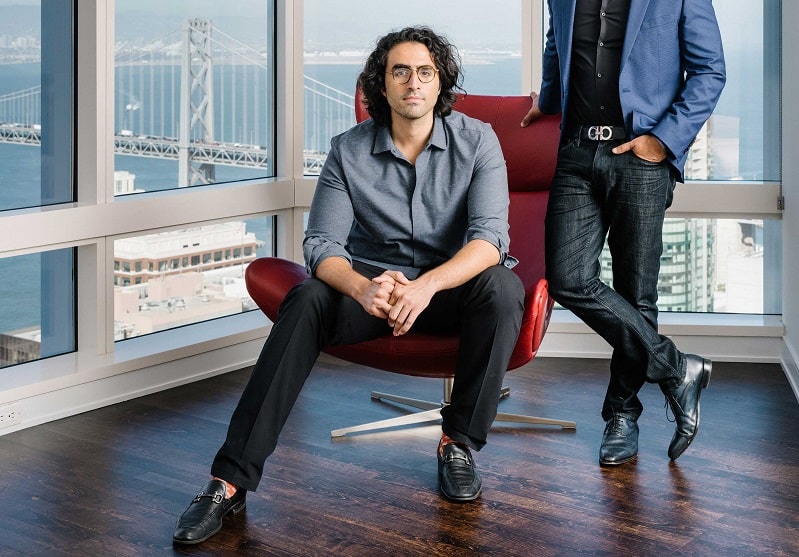
About Nima:
Nima is the Chief Technology Officer, original developer and software architect of the Kinetica platform. Leveraging his unique insight into data processing, he established the core vision and goal of the Kinetica platform. Nima leads Kinetica’s technical strategy and roadmap development while also managing the engineering team.
He has developed innovative big data systems across a wide spectrum of market sectors, ranging from biotechnology to high-speed trading systems using GPUs, as Lead Architect and Engineer with The Real Deal, Digital Sports, Equipoise Imaging, and Synergetic Data Systems. Early in his career, Nima was a Senior Consultant with Booz Allen Hamilton. Nima holds a B.S. in Computer Science from the University of Maryland.
ABOUT Kinetica:
Kinetica helps many of the world’s largest companies solve some of the world’s most complex problems, including Citibank, GSK, OVO, Softbank, and Telkomsel, among others. The Kinetica Active Analytics Platform combines streaming and historical data with location intelligence and machine learning-powered analytics.
Organizations across automotive, energy, telecommunications, retail, healthcare, financial services, and beyond leverage the platform’s GPU-accelerated computing power to build custom analytical applications that deliver immediate, dynamic insight. Kinetica has a rich partner ecosystem, including Dell, HP, IBM, NVIDIA, and Oracle, and is privately held, backed by leading global venture capital firms Canvas Ventures, Citi Ventures, GreatPoint Ventures, and Meritech Capital Partners.
Transcript
(Joel Beasley at 00:00:00) Hello, my friends. Today we are talking to Nima, the CTO and cofounder at Kinetica, and we discuss the risk associated with change in software development, Kinetica's unique approach to making sense of data, and what the next five years look like for artificial intelligence. All of this right here, right now on the Modern CTO podcast. Here we go. This is the Modern CTO podcast.
(Joel Beasley at 00:00:33) How are you feeling today? Feeling pretty good?
(Nima at 00:00:36) I mean, we're very busy. You know, just a little bit harder now because when you're all in the office, I mean, everyone's like—you always got people that are working remote—but you have a core nucleus in the office that makes things easier. But yeah, I mean, we're working through it. But yeah, we're just pretty busy.
(Joel Beasley at 00:00:57) Where are you physically located?
(Nima at 00:00:59) I'm in DC, and our engineering is in Arlington, Virginia, just south of DC, Northern Virginia area. And then, you know, we got sales engineers and stuff all over.
(Joel Beasley at 00:01:15) My sister lives out there in DC. What's that? There's a noise of scraping or something. Is that on your end?
(Nima at 00:01:21) Yeah, that's my son dragging a chair across the couch.
(Joel Beasley at 00:01:26) What's your son's name?
(Nima at 00:01:27) Hugo.
(Joel Beasley at 00:01:28) Hey, Hugo. So yeah, man, I've got two little ones too, so I get it.
(Nima at 00:01:34) That's the hardest part, honestly, because now you have the day care job also. You have to figure out the times with your wife and all that stuff. That's a whole new job, so it's tough.
(Joel Beasley at 00:01:47) So they didn't stay open, the day cares where you are?
(Nima at 00:01:51) No, it's all closed.
(Joel Beasley at 00:01:53) We got lucky. Our day care has stayed open, but they make—as young as two years old—they have to wear a mask, and all the employees have to wear a mask.
(Nima at 00:02:00) Yeah. Wow. Yeah. Where are you?
(Joel Beasley at 00:02:03) I'm in Florida.
(Nima at 00:02:05) Okay. Yeah, I mean, that's huge because it definitely makes things—just adds another dimension. So your children are used to wearing masks now?
(Joel Beasley at 00:02:18) No, no. They—so I have a three-year-old and a one-and-a-half-year-old. By the way, I always say that, and I'm always wrong about their ages. My wife will listen to the podcast. She'll be like, "You don't even know our kids' ages." But yeah, it's like, you know, I have trouble getting my two-year-old to keep her pants on—or three-year-old to keep her pants on—but we drop her off with the mask strapped, and that's their chore from there.
(Nima at 00:02:44) And then they keep track of it the whole day, or you have to get a new mask every day?
(Joel Beasley at 00:02:49) Oh, it's a new mask every day. Actually, no, I'm sorry. It's not a new mask every day. They manage to keep it. Actually, we bought it—the rule was it just has to be a barrier. So one of the moms in the group was making them for $5, so we just said, you know, buy them, because it's hard to get masks for two-year-olds.
(Nima at 00:03:10) Yeah. Yeah. It's crazy. Crazy times right now. I mean, it's so surreal.
(Joel Beasley at 00:03:18) But you will come out of this rested and stronger after you get them back into the day care.
(Nima at 00:03:25) Yeah. I mean, it's definitely making the team stronger, in the sense that, you know, everyone's just learning more about everyone else. Everyone's being more flexible, having a deeper appreciation for everyone else. You know, so in that sense, yeah, it is making us stronger. But yeah, it's tough. It's also doing a big release. You know, it's really nice to have everyone in a war room as you're doing the release and doing the first couple weeks of having a GA out there and dealing with any issues that make a lot. But we're going to have to figure it out this time around.
(Joel Beasley at 00:04:08) Have you had to put off any hobbies and things like that?
(Nima at 00:04:14) Yeah. I mean, I love ordering at restaurants. It's my favorite, you know, like, ordering off menus. So that, you know, that's gone. But yeah, I mean, you know, the work kind of consumes me most of the time. So yeah, I mean, Saturdays is the one day where we usually do stuff, and, you know, that's all gone. So, I mean, it gets so crazy sometimes, but, I mean, all in all, I'm usually pretty distracted into the work anyway. So right now, it just kind of doesn't matter because once you—you know how it is—once you start, you can't stop thinking about it, and then it kind of just consumes you. It's hard to turn off.
(Joel Beasley at 00:04:54) How's your team dealing with it?
(Nima at 00:04:57) Good. Good, I think. I mean, it's hard for everyone. I think it stresses everyone out in different degrees, whether it's childcare stuff or just general anxiety over this whole thing. You know, it makes it tougher, but, you know, what can you do? I mean, what have you guys heard?
(Joel Beasley at 00:05:20) Yeah. So it's not easy anywhere. Every team is impacted. You know, I'd say one of the biggest things is the uncertainty in the marketplace.
(Nima at 00:05:35) That's the biggest part. I mean, one of the biggest parts, where, you know, two, three months ago, everyone is fighting for talent and wages are growing almost month to month, it seems like. Right? And, you know, now it's like we're in this polar opposite world, and it's only been a month and a half or two months. Right? And that part is crazy to me. I mean, I haven't fully digested that, but, I mean, it's definitely happening before our eyes. I mean, obviously, there's still going to always be a market for top talent, but as tight as it was in January, I mean, it's not that tight anymore. I mean, it was extremely tight. I mean, you would vie for folks, and the competition on wages and benefits and all that was an arms race. And, you know, I don't know where the big guys are mindset-wise, but I mean, I've heard things around there's not necessarily cuts, but there's maybe hiring freezes or bonus freezes or, you know, no bonuses, no pay increases. So, I mean, that's just a one-eighty from where we were not that long ago.
(Joel Beasley at 00:06:55) Yeah. I actually studied this quite a bit because I just happened to be into the business side of things and the economy side of things—amateur into them. And so personal impacts for me, right? Let's break it down. Wife got furloughed. So she started—she took her craft of refinishing furniture, started spending $20 a day on Nextdoor running ads, and actually just helped her early this morning go pick up a piece of furniture. So she's going to refinish it for a neighbor. So she's doing that to pull in some cash because, you know, day care is $2,200 a month. It's ridiculous, right?
(Nima at 00:07:36) It's a Ferrari. I mean, it's like, you know, you ever just dreamed, like, "Man, I would love to have a fancy car"? Maintenance, day care—I mean, day care, somehow you can't imagine having a $1,500 a month car payment, but, you know, somehow you find $2,200 for day care. So, I mean—
(Joel Beasley at 00:07:53) It's worth it.
(Nima at 00:07:54) Definitely worth it. Trust me, I don't have it right now. It's worth it. But, I mean, it's expensive. I mean, I heard some politicians say, like, you know, you work or you put your kids in day care because you work, and then you work because you have day care. It's like, you know, it's just a real—I don't know how, if you weren't in the tech field, where we're kind of—I mean, not that we're lucky. I mean, obviously, you know, there's demand. But if you didn't have kind of our wage scale, I don't know how people afford that amount of day care. I mean, it's super expensive.
(Joel Beasley at 00:08:32) Yeah. Well, I mean, it just is, and it's important too because it actually makes a difference to their progression. We had actually not put ours in day care for the first year and a half, and then we saw the other kids that our friends had that were in day care, and they were learning to speak faster. They were learning everything faster.
(Nima at 00:08:54) You know, my kid's in nanny share, right? So it's him and another kid, and then a nanny that comes in during the day and leaves at night, and they go to a house, so it's not like a full day care. You know, I wonder, is it hurting his development compared to kids that are going to day care, a full day care, you know, where it's a real company that has curriculums and other kids around, a lot of other kids around? I do wonder about that too.
(Joel Beasley at 00:09:27) So we did what you talked about at first. We had a nanny share-type deal where, like, a couple days a week, they go for a couple hours to these—whether it was a church or something, some public center. But it is completely different at the day care because they give us these reports of, like, for this half-hour block, they worked on fine motor skills where they basically roll dough between their hands. And they do it scientifically, and they give—I get a report every single day of the activities that they did.
(Nima at 00:09:55) How do you deal with basically unemploying that person, like—that's my problem. It's, you know, we've grown and connected to this person, right?
(Joel Beasley at 00:10:04) That was tough. Yeah. So basically, the way—you know, shout out to Sandra—so what's interesting about them is people that tend to pick that career are the people that very much care about the kids. And so that's a bonus because you can just have an honest conversation and say, "Hey, look, we see other kids advancing faster. We want to get them into a structured program, and we're really grateful for you helping us get this far, but we're going to go ahead and pursue this route." And it's honestly—and we've done that twice, and both times, the individual was incredibly receptive. They're like, "Yeah," because for them in their business, that's a common thing because they don't stay with the kid until they're 18. They're always going into it knowing they're going to have to say goodbye.
(Nima at 00:10:57) That's good advice. I mean, it's tough having those types of conversations, whether it's in your professional life or your personal life. So it's good advice, and because I definitely have the same feeling. Yeah. Didn't expect to be talking about child development, but yeah.
(Joel Beasley at 00:11:18) Dude, it just goes where it goes. So in the economic part of the conversation, wife got furloughed, and so she did the cabinet thing. And then I had to furlough half my staff because numbers are numbers, and it sucks. It's the worst feeling in the world as a founder to have to do that. But you can't wish or hope—there's nothing you can do to make the numbers different than what they are. If the economy freezes up, it freezes up. You know?
(Nima at 00:11:52) You have to make sure that there's a company so that there is a company to have folks come back to. I mean, that's it. And the way it is—I mean, the level of free fall is so crazy. Right? When you have, you know, 5 million, 6 million claims every week, week after week. I mean, it's just—and I'm sure it's more because people can't even get in to make the claim. So it's, you know, maybe we're at 35, maybe we're at 40. Who knows? In the span of a month and a half or two months—that's never happened before. I mean, even the Great Depression wasn't this fast, right?
(Joel Beasley at 00:12:40) We were first-year live in '08, right?
(Nima at 00:12:42) Yeah. '08 was—I thought '08 was the worst thing we were ever going to see, and I wore it as a badge of honor. Like, you know, I grew up through '08, and I know what a shitty situation is. And this just destroys '08. I mean, this is—you know, it took a year and a half for unemployment claims to raise 15 million through the '08, '09 crisis. We did that in three weeks.
(Joel Beasley at 00:13:11) Mm-hmm.
(Nima at 00:13:11) Right? Now we're past it. Right? So, like, 20-something or whatever it is.
(Joel Beasley at 00:13:15) 26.5. And then, yeah, that was last week.
(Nima at 00:13:19) Yeah. And who knows what it'll be this week? I mean, and it's definitely higher because, you know, every person I've talked to about this—not even watching the news, but people that it's happened to—they're like, "Yeah, you can't call. It doesn't—you can't file. You can't call." I don't know how people are getting through at all. So, I mean, that's another crazy thing. It's like, they don't have basic scaling engineered, you know?
(Joel Beasley at 00:13:46) I know. Auto-scaling servers for unemployment stuff. How is that not set up?
(Nima at 00:13:50) Yeah, I mean, just—these are basic stateless app servers. Just put it in Beanstalk or something super simple, and I don't understand how they're still having these problems in the year 2020. So every state has this problem. It's like every state was just running on a single node, just kind of antiquated. I mean, even the SBA website, when they did this recent program, went down, and it's like, you know, you could definitely, in a week or two, put together a scalable platform for a relatively stateless app, which that is.
(Joel Beasley at 00:14:32) That's a good topic to bring up because I happen to have previously made technology for government officials, and so I communicated with some of my connections, and I said, "What's going on?" Because I live in Florida. My wife hasn't gotten her unemployment yet, and we haven't gotten the federal tax. We've gotten not a dollar.
(Nima at 00:14:51) Was she able to file? Was she able to get to the site and actually file?
(Joel Beasley at 00:14:56) No. So to file, it took her three days of trying all day. And I was trying to understand it because I'm saying, okay, let's say that they had an inefficient system, right? And they had it running on a server. Like, there's 21 million residents in Florida, right? And let's say half of them are in the job market because not everybody is—you have kids and you have adults. You know?
(Nima at 00:15:21) You have 10 million sessions you need to scale for across three, four weeks, let's say. I mean, that's not that much given your budget.
(Joel Beasley at 00:15:29) And they—get this—they put a tweet out after the first two weeks and everyone freaking out. They said, "We added 72 servers." And I'm thinking, what the hell? 72 servers? And what type—
(Nima at 00:15:43) It's a form, like, take, make, like, a flat file site, right, that's just serving up static, send the payload to a super scalable, low energy capture, put it in a Kafka queue, and just keep capturing them, and then process the request. Like, that's it. Done. It must be all those super heavyweight old school web app frameworks built on J2EE and Struts and all that legacy style stuff where all the logic, the control flow, all that is in the app, in the Tomcat or in the GlassFish or Jetty or pick your Java app container of choice.
(Nima at 00:16:32) I mean, it must be like, because this isn't hard and most frameworks right now are so lightweight. I mean, 72 servers should be more than that.
(Joel Beasley at 00:16:42) I know. Well, have you ever dealt with the government ecosystem for tech, developing technology?
(Nima at 00:16:48) Federal. Yeah. Not state. I mean, yeah. So we do stuff for DOD and stuff, and there, yeah, we do.
(Nima at 00:16:55) But yeah, not for—we haven't—we don't have a state customer.
(Joel Beasley at 00:16:58) Yeah. It's just difficult. They have different requirements. And then also I find that the ecosystem, right, you get these older companies that have been building the system since they bought their first system, and they're just old.
(Nima at 00:17:13) They're just—and it's not broken, and they don't, like—one thing that's a universal truth in software development is change equals risk. Right? If you change something, you are introducing risk. And no matter how beautiful of an algorithm or a data structure or whatever it is, if you have something that's very hardened and you're introducing this change, it's gonna bring in a whole new vector of risk.
(Nima at 00:17:40) So that's what it is for them too. It's like, well, this thing works. Right? We're happy. We're getting our O&M stipend every year from the state. We'll add some basic things here or there over the course of the decade, but we're not gonna really touch it.
(Joel Beasley at 00:17:57) There's no economic incentive for them to do so.
(Nima at 00:18:00) No incentive. I mean, the customer is happy because it works. They can rely on it. You're happy because you don't have to put any effort in, and you just keep collecting your management check or what—I don't know what each state has as far as these individual situations. But yeah, I mean, that's what happens in software development all the time. It's like you have something that isn't great anymore, but it works, and so you kind of just leave it because you don't wanna risk it. And then, that's—I mean, that's always the hard part. It's like, when do you make that decision to, whether it's paying down technical debt or from a go-to-market perspective, introducing a necessary feature when you have a user base that's very happy with the features that you have and also really optimizes for stability and really takes that stability, resilience—which is always such a huge issue, especially in enterprise infrastructure development. Folks are laser focused on that all the time, which they should be. So it becomes an interesting formula, and it's something that I've gotten better at now.
(Nima at 00:19:22) I mean, I was much more trying to get things out much faster back in the day. I mean, but I've learned—I had—the 7.0 release I did was a very, very big release, and almost every part of the stack changed and introduced a lot of new capability. Ultimately, it was a really good release, but yeah, it was a lot of change, and it was a tough initial release. Eventually, we smoothed everything out and it was really a good game changer for the company, but I kinda learned my lesson there and kind of trying to go more towards just rolling releases, very methodical, no big releases, and just really beefed up QA and stuff like that. But it kinda comes with it.
(Nima at 00:20:13) But I mean, you always have—but on the flip side, the point is you have to be thinking about how can I bring in that next game-changing feature that is gonna keep us ahead of the pack because, I mean, especially in my space, so much of it is race to the bottom. Right? Who does it the cheapest? Who does it the fastest? Who does it the easiest? Right? And everyone claims, we're the best, we're the fastest, we're the most resilient, we're the easiest. Everyone claims that. So everyone's claiming that.
(Nima at 00:20:47) And so at the end of the day, it comes down to your true unique capabilities that differentiate you, especially when you're smaller like us compared to a Snowflake or something. You know? You have to have that, and you can't let that go either because those guys are always improving. Right? They have limitless budgets, and so it's like two sides of the coin. Right? So that's one of the interesting parts of the—
(Joel Beasley at 00:21:16) Give me some context. What's the main line of business for you guys?
(Nima at 00:21:22) So from a business vertical perspective, DoD is really big. Telco is really big, and third would be retail finance. Right? And then if you kind of look at the technical kind of horizontal capability, it's streaming OLAP. So when I say streaming OLAP, I mean you have a Snowflake schema—I don't mean Snowflake the database. I mean Snowflake the database kind of ER diagram style relational model. And you have pretty big dimension tables like 100 million to a billion size dimension tables, and then you've got huge fact tables like 10 billion to 500 billion back size fact table or more, and then you've got billions of transactions coming in every couple minutes, and you want to basically query a rich OLAP query. You know?
(Nima at 00:22:22) So like, not like, hey, tell me the average of the last five minutes, but like a true proper OLAP query where you might be doing a couple of left joins and then an aggregate, and you want that to be representative of the data up to the second, not like a batch window where you did the ingest last night or from an hour ago. And so that's really where we excel, and the other key place where we excel is in location, so location analytics and then location visualization. So location processing in general, especially when it's very complex location processing, doesn't lend itself really well to the kind of classic data structure approaches that most databases use. Right?
(Nima at 00:23:11) And even things like R-trees and stuff, eventually, when the shapes and stuff are complex enough, it all breaks down, and you really need to have a new type of actual filtering kernel and processing kernel that is actually just able to do the scans faster. Right? And so that's what we had built first for the GPU and then for AVX-512. And that's really what is one of the things that sets us apart because we can do the geospatial processing, the location processing, much faster at a bigger scale and using—we have the whole ST_GEOMETRY kind of set of functions and then the visualization side. So we have—these shapes, like, telcos will have their 3G network definition or 5G network definition, and you'll have a single shape that has like 50,000 vertices.
(Nima at 00:24:02) So, and they wanna see a lot of those shapes going to their browser. Like, I don't know if you've ever tried to load a huge shape in your browser. Your laptop fan was gonna start to spin up, and your whole client session grinds to a halt. So what we do is we have an OpenGL accelerated distributed pipe, and so we're constantly populating this GL buffer. And so when the query comes in, you can say, okay, now render that result, right, either through WMS or through our APIs, and we'll just send you back a PNG. So long story—that set of capabilities where you can do that kind of processing and stream in data at the same time for location things is pretty huge.
(Joel Beasley at 00:24:54) Can I jump in? I wanna—because you got a lot of stuff. And alright. So so what—that part, I'm sure you do more than that. That part seemed pretty interesting. There's so many points in a browser for these visualizations. Like, if I was a telco and I wanted to pull up, see how I'm providing all this service to everyone—
(Nima at 00:25:12) Okay.
(Joel Beasley at 00:25:13) I would have like billions of points, and so you would act as like a processor over there. You would create that PNG, so it would be like me offloading. It's like a very specific process that you're optimizing right over there.
(Nima at 00:25:28) Yeah.
(Joel Beasley at 00:25:29) And then I wanna talk real quick about OLAP because whenever I hear the acronyms, I quickly Google them, and I was like, oh, okay. So can you give me the OLAP, if I were a three-year-old explanation?
(Nima at 00:25:45) OLAP, if you're a three-year-old explanation is basically answering questions that require reading multiple pages of a book rather than—or here's a better example—is answering questions that require you to read multiple lines of a book rather than answering a question that requires you to just look at one line in the book.
(Joel Beasley at 00:26:14) So like extremely complicated stacked queries?
(Nima at 00:26:18) Yes. Right. So not like a simple filter. I was gonna show you some of this demo we did for COVID for contact tracing. So we started out of the intel space, so the other kind of unique feature we have is this data modeling idiom called a track.
(Nima at 00:26:38) So a track is a grid, an X, Y, and a timestamp, and then a map of attribute keys that you want. And so the unique thing about that is that at every step of your track, you can have a unique set of values so that you can filter on those unique attributes, and then you can pull back the whole track where traditional geospatial is you're gonna represent that track as a WKT line, and then you can't have metadata attribution at every point in that line. Right? On the flip side, the other approach is have a table of Xs and Ys and have your attributes. Right?
(Nima at 00:27:19) But then when you go to query, right, like if someone draws a circle in the middle of the track but not on the point, you don't get a match. Right? But with our tracks, we'll do the line interpolation so you can draw a circle in the middle of two points, and we will actually pull back the whole track piece. Like when we started for ISR, like entities tracking, asset tracking, you could say, I know weird stuff is happening on this corner. And then you draw your bounding box on that corner, and we'll pull back every entity that's walked or any car or any tracked entity that has been given to us, pull that back for them and visualize it.
(Nima at 00:28:04) And yeah, I mean, the whole location space, I think, has kind of always been a second-class citizen in data processing, and I think that's starting to change. And I think it's being accelerated a little bit by this whole disaster and the need for contact tracing and all that. You know? We've had that for a long time because it just falls into our track capability. But location to me, I think, is—I'm hoping—going to really be gaining more prominence in the data processing needs of enterprise, and not just for telcos and automakers, but for a much broader swath of companies.
(Joel Beasley at 00:28:53) Yeah. We're gonna get the word out there. How does that fit into the concept of active analytics?
(Nima at 00:29:00) So I mean, active analytics is all around doing these type of analytics while data is coming in, and then you got your disciplines. Right? You got your classical OLAP, but then location is part of it because it's compute intensive and it unlocks a whole lot of correlative insight that traditionally has been forced or traditionally has been kind of siloed where developers can't unlock that converged effect. Like, when I think about active analytics, ultimately, my goal is for this case where you have large datasets where data is constantly streaming in, we put together the right compute processing disciplines in a single platform for you to enable you to quickly and easily do complex queries, complex analytics so you can focus on your application. Right?
(Nima at 00:29:55) And you can be more productive and you can be more creative. And those disciplines are OLAP, location, and ML.
(Joel Beasley at 00:30:04) That seems pretty cool. And so if I'm a—if I'm a—like, let's say I'm a CTO at a company, let's say maybe I've got a thousand-plus engineers on my team.
(Nima at 00:30:16) Mm-hmm.
(Joel Beasley at 00:30:16) And, you know, I'm kinda high level, but I think, oh, we do a lot of location stuff or we do a lot of this high bandwidth data with lots of points. Who on my team—where would I go to talk to someone who understands this part of the deal?
(Nima at 00:30:31) So I mean, it depends. Right? So traditionally, as it relates to understanding the data problem, you have the line of business person. Right? So you have the person that is, let's say, the network analyst. He's the head of network analysis for a telco. Right? So that's your line of business buyer. Right? And he's the one that understands the problem because he has the pain point all day every day. Right? And then you've got your, traditionally, not so much a CTO, but sometimes CTO, CIO, right, and they're, you know, part of their responsibility is basically all infrastructure, right, and all infrastructure purchasing, all infrastructure administration policy, blah blah blah. Right? He's trying to, A, reduce cost, but also give his enterprise all the tools and capabilities it needs to make sure the business runs as efficiently and as creatively as possible. So traditionally, what we've done right now is we go to the line of business guy who's having the pain point, or he comes to us and we have a POC and he's really happy.
(Nima at 00:31:54) And then basically, it goes from line of business buyer, who may or may not have budget. Right? Sometimes he does. But inevitably, as you mature in these organizations, you go under the infrastructure group. Right?
(Nima at 00:32:07) You may start out under the line of business budget, you know, as an app line item, but eventually they don't want to carry you under their budget for long because you're infrastructure, so they want to move you under that group. So it's different personas. Right? Because those guys, they're aware of pain points, but they're not under a deadline for a pain point usually, where the line of business guys, I need to get this done by Q1. Right?
(Nima at 00:32:41) So the infrastructure guys have a whole new set of things that they're looking for, and that's one of the things that we're always working on is trying to get better at that where we hit all the checkboxes and, you know, as we get more out there, it should get easier. But it's always, especially if you're a database, there's always—you know, if it's the first time that that company is seeing Kinetica, it's like there is not pushback, but there's some friction where you have to get people to trust on the infrastructure side. You have to get them to trust you. Right? You have to get them to buy into learning a new solution that might be spanning multiple data centers. Right?
(Nima at 00:33:25) So getting them comfortable because, I mean, there's multiple fear factors. One is, okay, this is a multi-data center distributed database. And one of the things that we're playing catch-up on is just getting all the ease of use really, really nice, and we made a lot of progress there. But that is something where, okay, I have never used your product before and it's responsible for this mission-critical thing.
(Nima at 00:33:53) You know, I might have some reluctance where maybe I'm really comfortable with Cassandra or some other cloud database or whatever it might be. Right? And so there's that part, and then there's also just the checkboxes. You know, do you have this type of resiliency? Do you have this type of security or backup policy capability? Which, again, we've made a lot of progress, but we're still—it's almost never-ending, but it's not.
(Nima at 00:34:21) But we're kind of getting further along there. But those are your kind of two major personas you're always grappling with when you're trying to sell into these places.
(Joel Beasley at 00:34:31) So what do you think the future looks like for artificial intelligence? And we can get crazy here. We don't have to be on script. What does the future look like?
(Nima at 00:34:45) In the short term?
(Joel Beasley at 00:34:47) Yeah, in the next five years.
(Nima at 00:34:50) I mean, I think it's basically a lot of the boring stuff. Right? I think making—so number one is the data science tool chain so far has been focused just all on training and training frameworks, and both us and other people are now starting to develop tool chain for teams to—you've got your model, you want to put it into production. Right?
(Nima at 00:35:18) And making what I call inference fabrics. Right? Because data science, up until maybe a year or two ago, for not the leaders like Facebooks and Ubers, but the rest of the Global 500 or 2,000, their teams may have really interesting models, but they're not always running them operationally. They might be using them for static reporting. They may be using them for ad hoc analysis, but they're not running as a fabric of models that are constantly decisioning and feeding the rest of the decisioning stack of the enterprise. Right? Your leaders are doing that, like your Walmarts, your Ubers, your Facebooks, your Googles. But everyone else is still kind of now getting to that point where, yeah, we trust these models. We've got a bevy of them.
(Nima at 00:36:18) How do we put this into production easier? That's going to be a major thing, and that's something we're focusing on, and that's something others are focusing on. But then on the actual model innovation side, it's—I mean, it's interesting. In the past two years, you know, BERT on the text analytics side or NLP side has been this huge explosion. Right? And I think you're going to see a lot more of those kind of tiny innovations, and I think the real hurdle—I mean, right now, if I'm someone that wants to get into data science, right, there's so many great tools out there that are either free or low cost.
(Nima at 00:37:08) The number one hurdle is data—labeled data. Right? So I mean, I think you're going to see a lot of innovation on supervised learning because the labeled data problem is a massive problem. Right? And just by necessity, there's going to have to be innovations in unsupervised learning because people don't have the labeled data.
(Nima at 00:37:31) And ironically, the whole ML/AI space really tilts advantage to the big enterprises because they have the data. Right? They have the labeled data. They have the events that they can use to train models. So I think by necessity, people are going to be innovating more and more in unsupervised space.
(Nima at 00:37:55) And, you know, I think that's the next one to five years. I mean, in general, AI still has kind of the closed loop problem. Right? We don't have a good framework for tying decisioning together between random models. That is—and part of that's because of the data, and part of that's just because of where we're at and kind of the breadth of models people have access to.
(Nima at 00:38:26) So I think after five to ten years, in the longer term range, you're going to see a lot of that coming online where people are generating frameworks for true dynamic problem solving that's not in a closed loop kind of input-output style, but doing really linked problem solving that dynamically creates model ensembles on the fly. I'm not saying that's now, but that's going to be maybe in the five to ten year range because that'll be the next great frontier. I mean, even if you look at automated driving, right, it's still—it's one of the biggest—it's one of the hardest closed loop, but it's still closed loop. You still have your finite inputs and finite states that you're really trying to train for, you're trying to model for. And when something doesn't fall into that, you see there's huge ramifications.
(Nima at 00:39:31) So we need to get past that. That'll be the next very big hurdle—not doing one-off examples of it, but really creating a framework that people can leverage that can dynamically do this. But that's going to take some doing, and it's going to take some more type of unsupervised capabilities that I don't think we have yet.
(Joel Beasley at 00:39:56) Do you think that the way you described it leads me to feel like these top 2,000, the exception of a few, that they're getting comfortable with the technology first inside of the reporting and the ad hoc and the non-customer-facing things?
(Nima at 00:40:12) I mean, I think if you said twenty years ago a model is going to automatically make decisions that your enterprise is going to conduct automatically without any human in the loop, it would have been unthinkable. Right? And now it's very commonplace, and I think that whole trust has been building up and the understanding of what these things actually are has been building up until we're at—we're actually a little bit past that kind of inflection point where it's like, yeah, everyone's kind of like, we get it. And it's fairly accessible.
(Nima at 00:40:50) Alright, now let's have a way of getting this into production reliably. You know?
(Joel Beasley at 00:40:55) You know, what's interesting for humans—I'm going to connect humans and AI here. Right? So I found that it's easier for me to make a decision based off of inputs and experiences than it is for me to communicate why I made that decision. It generally takes me significantly more processing power to articulate.
(Nima at 00:41:21) Think about how people learn and just think about your brain. I mean, it's just—it's not that different than a very, very, very, very layered set of models. Right? Neural nets. I mean, it's just the way—even with, you have kids, so you see the way they learn.
(Nima at 00:41:38) It's almost just like a model. Right? They track, they get feedback. Right? They take—and you are their labeled dataset.
(Nima at 00:41:48) That's the truth. Everything that the parent does, they see that as, okay, that's the thing to do. And that's their labeled dataset that they're training off of. Right?
(Nima at 00:42:01) So it's not all that different, but it's just way—it's a couple orders of magnitude more advanced. But yeah, what you said about AI and humans, that part is definitely common. Right? It's just how we can do that explain part, or how we can correlate things that seemingly have no value in a decision that you're being faced with, but you're able to take a prior experience in something completely unrelated and somehow use that as some fragment of input for your new decision. That's the part where AI doesn't have anything right now.
(Nima at 00:42:48) Right? And that's the five to ten year—that's going to be the big problem.
(Joel Beasley at 00:42:53) Yeah. Internally, I have this word—it doesn't necessarily make sense semantically, but I call it relational analogies. Because for me, I can take something I've learned over here, maybe while hiking or hunting or something, and I can apply it over here if the principles are solid enough.
(Joel Beasley at 00:43:16) And it's really interesting. That's almost like I have a model of knowledge on a topic over here, and I'm noticing a pattern in that model of knowledge that can be applied where I have a gap over here in a new model that I'm learning.
(Nima at 00:43:28) Right. And you're making those linkages on the fly too. Right? So it's not like someone gave you a graph that says, okay, at any time, if you have learning on this topic and you're in a situation about this topic, you can link these two together. Right? So somehow you know to do that. Right?
(Joel Beasley at 00:43:48) I think we have an observational—if we were to carry that train of thought, it would be like there's an observational model watching new models be created and also have an index of all existing models, and that observational model—
(Nima at 00:44:05) Yeah. Yeah. Yeah. And I mean, plus there's all sorts of inputs, hidden features that you're using that are extremely correlative no matter the situation, like your heart rate. Right?
(Nima at 00:44:17) Just think about that. When your heart rate's up, doesn't matter what the situation is, you are going to have a common set of behaviors, right, and decision trees. And so, yeah, I mean, it's similar, but it's just—you can see all the parallels. It's just we're just way ahead from the current modern AI tool chain.
(Nima at 00:44:41) But in ten years, it might be a very different story.
(Joel Beasley at 00:44:45) It's interesting now that I'm thinking about this, just random thoughts popping into my head. You know, especially when watching the kids, you can tell they have the intellect. Right? The, like, straight machine. Right?
(Joel Beasley at 00:45:00) No emotion attached, but then you have this emotional and survival components that are also streaming and everything has to happen. They're all simultaneously streaming because you can know something logically and be illogical due to impacts by current behavior. Hashtag sugar rush.
(Nima at 00:45:17) I mean, and with training and inferencing and getting labels on those inferences, it's all happening for them at the same time, and it's feeding back in at the same time. I mean, that part of it is also really crazy where, you know, our brain has the ability to do inferencing, training, and accept labels on things all at the same time. Right? And update all of the layers in our head instantly. Right?
(Nima at 00:45:56) That's crazy. There aren't accessible modeling frameworks out there right now that can do anything near that, especially in a totally unsupervised way. And that's why I think there will have to be an explosion of innovation in unsupervised space.
(Joel Beasley at 00:46:18) And I think, you know—so, historically, I was studying Ray Dalio, who's written this book called Principles.
(Nima at 00:46:29) Yeah. Yep. Awesome. Popular macro investor. And I've actually—weird story, but I once went to Bridgewater, and I have the Principles. They give it out. They give it out. And that place is a place, man. I mean, when you have a meeting there, they make you—they teach you their lingo. It's like they have slang, and they teach you—we're going to say this, that means this. They have a Wikipedia that you get briefed on that, and then you go into the meeting, and then there's just some—at the end of the meeting, they'll review everyone. They'll review how everyone did in the meeting. Right? It's pretty crazy.
(Nima at 00:47:22) I mean, I've never seen it before and I've never seen it after. I mean, it works for them. I mean, they're obviously insanely successful and Ray Dalio is a—you could say he's genius. So, you know, these are all his principles. So I mean, it's definitely really interesting and they just have a lot of really unique things about their organization.
(Nima at 00:47:47) But I mean, it works for them. But yeah, I mean, I digress.
(Joel Beasley at 00:47:52) Yeah. He's—I watched his video that he just did. He's doing a round of interviews on the economic impact of coronavirus.
(Nima at 00:48:00) Yeah.
(Joel Beasley at 00:48:00) And he brought, like, a really—he's such a calm guy. He brought such a—he delivered scary news in a pragmatic intelligent way. And just the way he discussed it is there's these two debt cycles. There's a long-term and short-term and long-term seventy-five years, short-term's like ten to fifteen. And we happen to be on the end of a seventy-five and a ten to fifteen.
(Joel Beasley at 00:48:25) So we're at the worst point in the past hundred years. And the positive that came out of that is the core services will continue to do well. Right? Core things that we absolutely have to need. But then this will stir up and create pressure and create a ridiculous amount of innovation that'll come out of it, and I love that.
(Nima at 00:48:46) I mean, I hope so. Definitely, things are falling. I mean, '08/'09 was good in the sense that people will realize the connectedness of the economy, and the Fed this time around has made everything available from the get-go. So, you know, banks and REITs and all of these entities should be having access to a lot of capital. But I mean, the amount of different things that are falling apart right now, it's pretty baffling. Right? Whether it's food supply chain or in the banking sector. I'm wondering how long we can just kind of keep things floating like this. Right? You know, if it keeps, because until there's a vaccine, is it not gonna be back to normal? Right?
(Nima at 00:49:37) I mean, people will try to open up, but it won't be quite the same. I mean, I don't think people will be embracing things quite the same until there's a vaccine and you can know, like, hey, there's no risk. Right?
(Joel Beasley at 00:49:51) Let's take a human behavior view of it. So I've tried to consume the media a short period of time, then I try to go digest and come up with a fresher model that I believe better. And I try to look at both ends of the spectrum, like what's the extreme conservative and the far view. What's the worst thing that could happen and what's the best thing that could happen? I try to—usually, the truth lies somewhere in the middle. And what I've done in those exercises is I found out that the worst thing in the world is complete shutdown of everything, right, forever, and nobody ever goes back to the way it was. And the best thing is that we flip a switch and it goes back. So it's gonna probably be somewhere in the middle.
(Nima at 00:50:38) Yeah. And I think there'll be stops and starts where there might be localized surges or something. But yeah, I mean, it's gonna take a—you know, when this first started happening, I was like, oh, it'll be done by June. But now that I've been thinking about it more, I'm like, no.
(Joel Beasley at 00:50:58) Three years. Dalio said three years.
(Nima at 00:51:01) Is that what he said?
(Joel Beasley at 00:51:01) Yeah. He said three years for it to get back to normal, the whatever you call normal. I mean, I think there'll be people wearing masks forever. I think they'll just—but here's an interesting thing. Here's an opportunity. We're getting older. I don't know. Are you in your thirties? You're in your thirties, forties?
(Nima at 00:51:20) Late thirties. Yeah.
(Joel Beasley at 00:51:21) Yeah. So I'm in my thirties, and when I look at the way our supply chains are set up and just, you know, it's a natural evolution. It happened, whatever. But it makes no sense. We need decentralized supply chains, 100%. It's the best way to do pretty much everything. You need these communities to be—
(Nima at 00:51:40) Same argument with blockchain. Right? Where it's better that it's decentralized, but when you create fixed path sequence systems, you can make them highly efficient. Now they're not as resilient, right, but they become highly efficient. Right? So that's, you know, it's like with blockchain, you can consider blockchain almost like a bad database, but it's got other properties to it. But when you want performance and efficiency, you make these very—not fragile, but fixed paths kind of sequenced, relayed systems like that. But, you know, I agree with you. I mean, globalization in general, I think that whole thing is gonna change after this or at least mutate significantly where people are gonna—every country is gonna think twice around, like, hey, you know, we don't have the ability to make these active ingredients for all these prescriptions, or we don't have the ability to make X, Y, Z device ourselves. Right? That's not gonna cut it anymore. Right?
(Joel Beasley at 00:52:52) No. I mean, the fact that, you know, this—like you said, you have to choose. You can't just blanket and just say, oh, it all has to be this way. You would definitely wanna choose. You would want your most needed medications to be able to be manufactured locally. Right? You know, even if you—
(Nima at 00:53:12) At least regionally. Right? Yeah.
(Joel Beasley at 00:53:14) Regionally.
(Nima at 00:53:16) You know? And there's some things that we just can't do. We don't have any factory that can do it. That's kinda sad, I guess. But I mean, it's just crazy. I mean, the reason for it is just we've been optimizing for capital efficiency this entire time, you know, the past—the whole basically the whole post-World War II period. So we were at the, you know, we're pretty far along in that, and now this has come along, and I think people are gonna optimize for not just efficiency, but resiliency and, you know?
(Joel Beasley at 00:53:54) I think we're primed for it. There's never been more entrepreneurs than there are now. You know?
(Nima at 00:54:00) I mean, the thing though is I wonder how—what is gonna be the—if I'm a—let's say, I need to—we need to make X, Y, Z active ingredient factory. What's gonna be the economic impetus? Or will it have to be government mandated or something? Because at the end of the day, when this is over, still, it will be cheaper to manufacture somewhere else. Right? So how would we incentivize or why would that entrepreneur decide to make it in America?
(Joel Beasley at 00:54:36) You would have to tax it. You would have to tax it coming in from—and this is me having virtually zero knowledge of this professionally, but I've thought about it a lot. And as long as I can go over there and get it cheaper, it won't come back home because the customers aren't gonna pay more. So you would have to make it so expensive to purchase it. There would be a painful period where everybody would be like, oh, it's skyrocketing in price, and then entrepreneurs would come in, see that as an opportunity because you would have to get investment capital. You'd say, look, it cost me a hundred dollars to buy this, right, from over there. But the cost to make it are four dollars, and we could charge fifty. And now we can be incredibly profitable, and then the money will flow.
(Nima at 00:55:22) And that goes—the whole post-World War II period has been defined by, you know, Adam Smith is not new, but this whole—you do what you do best, and if you don't do something best, let someone else do that, and you will benefit from that by taking all your resources and doing what you do best and buying what they do best from them. Right? So, you know, and to your point, anytime someone said that, you know, some other person says, oh, well, what about the invisible hand and that whole theory that has proven itself generally. Right? But that is too one dimensional and simplistic to me, invisible hand, because there are other events, vectors in other dimensions beyond just, like, hey, let's maximize for capital right now, right, or capital efficiency right now. Right? So, yeah, I think people are gonna have a much more nuanced approach to globalization and how we go after it. I mean, because I mean, this is, I think, a pretty big wake-up call for folks. I mean, the fact that we can't get masks, you know, people are having to source it from all these other countries. It's like—that's pretty strange. I mean—
(Joel Beasley at 00:56:47) It's like an overweight guy who has a heart attack and then gets his—two things will happen. You'll either go back to eating chili fries or he will get a gym membership and a trainer and be one of the people that is a success story. I think this is an important time for our humanity. And I think it's across the entire globe. I think all the humans and all of their respective countries should design systems that are more resilient.
(Nima at 00:57:12) Yeah. No, I mean, I agree. I mean, it's definitely gonna change—it's changed the world. I mean, I don't know what those exact changes are yet, but it's definitely gonna be something that we're gonna look back on and say, yeah, that changed that whole way we look at this or, you know? Some people say, like, oh, well, it's all gonna kind of maybe make us a little bit nicer, which would be great, but I don't know if that's gonna happen from this alone. So, but yeah, I mean, it's just unknown. It's just such a—you know, it hasn't happened in a century, and that world was way different than this world. So, you know, who knows? Like, that's the thing. But, you know, I think three years, that sounds like a very smart estimate where we'll be past this. But yeah, the effects, you know, I think it'll take more than three years to say, this is how the world changed after this. Right? It might take five, ten years.
(Joel Beasley at 00:58:18) Yeah. I think we're still in the spot of if you were to put this into an injury, like, we got—you know, I'll take it to my personal injury when I was a kid. It's like I got hit by a car. I was taken by an ambulance to the hospital. Right? They came in. They did a quick evaluation of me, essentially, triage type deal. And then they did some minor surgery type deals. And then I laid there for what seems like forever, and it was painful. And then eventually, a couple days later, the doctor is gonna come in and talk to you about what life is going to look like moving forward. And then start to get you into a mindset of, you know, how do we avoid this again? We're not—I don't think we're there yet. I think we're still in the trauma unit. And I'm just talking about the mental state of people because the narrative has to change once the narrative changes in the news to, like, what can we do now to fix it? And I think it's actually a good timing that there's an election happening simply because those would be great talking points. Right? Like, how are we going to—what are we gonna do? What are we gonna do to make sure that when this happens again or when it gets to this point again, we have a more resilient system?
(Nima at 00:59:35) Mhmm. I mean, yeah, I mean, I think definitely the whole thing was this is never gonna happen. You know, it's not something we need to be worried about, but then it happened. Right? So we have to be cognizant. I mean, as far as where we are, I mean, yeah. If you think about what was—what was the day when Tom Hanks said he had it and the NBA turned off and all that? Was that March 11th or March 15th? Right? It's only—it's only a month and a half ago. It feels like ten years ago, but it's only been a month and a half really when this has gone, you know, exponential. So, yeah, I mean, it's still early. It's still very early in what this is. Um, but yeah, I mean, that's only a month and a half ago. Right? That seems so long ago now.
(Joel Beasley at 01:00:26) I know. It's because the time seems to be passing. I'm having trouble differentiating between weekends and weekdays because there's no office commutes and—but human behavior though, that's a tough thing to change. Right? It's easy if you say everybody go home because we're mandating it and you get this fear. But it doesn't work the same way in reverse, like, to get everyone to go back out. It's just gonna take a lot longer to boot it up than it was to shut it down.
(Nima at 01:00:53) Yeah. And you got folks who, maybe they're not at risk, but have—I have some folks on my team that, you know, they're not at risk, but they have a spouse that's at risk. So, you know, they're worried, like, okay, well, what if I get it? Maybe I'll probably be okay, but my husband or wife won't be, you know, and then, you know, what if I don't know that I have that, you know? So that kind of thinking is gonna be around for a while. Right? It's, you know, how that affects people going into the office once they're allowed to. You know, I think it's gonna take a while to get comfortable.
(Joel Beasley at 01:01:33) It is pretty amazing, though, as far as what we've been able to do in a short period of time with health and distribution of—as much crap as we give to the government. Realistically, you and me as entrepreneurs, it's pretty cool that they got that many tests out and organized that much stuff in all—and it all happened so quickly. That was a pretty big feat for humans to come together and work on a project like that.
(Nima at 01:01:57) Wasn't bad. I mean, I mean, don't forget, they have limitless resources. So, you know, if they gave you limitless resources, you know, I mean, I guess don't sell yourself short there because, I mean, having limitless resources and the legal authority of the government also, that's like a superpower. But yeah. No. I mean, I just—
(Joel Beasley at 01:02:15) Like a noose though. Because have you ever seen people, younger entrepreneurs that get a bunch of cash and they try to throw it against the wall and engineers to build something and it comes out as garbage because you had too much resources? You can hang yourself with too much resources, but not knowing how to allocate them.
(Nima at 01:02:31) Right? You definitely can—that's definitely true. And, you know, the investor community, this event has—this pendulum is swung back. Everyone was top line growth, top line growth, top line growth, and now everyone's like, you know, what's your path to profitability? Right? So, um, you know, I've got friends at startups who were super lean and had good modest growth, like 70% year-over-year growth, but, you know, not like these exponential, you know, 200, 300%, you know, double, double, triple, triple. And so they weren't getting attention, and now they're getting a lot of attention in the matter of, uh, you know, two months or so. Right? So definitely, it's also changed what the investor community is prioritizing.
(Joel Beasley at 01:03:21) Yeah. They also seem to be doubling down back on their portfolio companies trying to get them to survive.
(Nima at 01:03:27) Totally. Totally. I mean, that's definitely a real thing, and, you know, I think all startups are trying to learn what we can learn from this and come away stronger. And, you know, it's definitely, like, you're seeing a lot of furloughs, a lot of layoffs of companies that are good companies with good products, and you're like, wow, you wouldn't think that happened to them?
(Nima at 01:03:55) Like, you know? So it's getting everyone. You know, it's like the fine point. Like, it doesn't matter how great of a product or company you think they are. I mean, it's touching a lot of entities. And so I mean, it's something that hopefully we can just look back on and say, well, it made us better, but, you know, it's definitely tough.
(Joel Beasley at 01:04:21) It's like anything, right? Like, building muscle or dieting or anything. It's painful, but you'll come out stronger.
(Nima at 01:04:30) Yeah.
(Joel Beasley at 01:04:30) Yeah. My hardest thing, as we start to wrap up here, one of my hardest things, you know, a couple weeks ago before I did the furloughs, I was talking with this guy, you know, guest on the podcast, Larry. I was talking to him about, like, you know, this being a tough moment. And then towards the middle of the interview, I was like, hey, we're gonna cut the interview because this guy was just really, really sharp, right, as a business person, very experienced. And I just said, hey, I need to run these numbers by you and get a perspective from someone who has no dog in the race.
(Nima at 01:05:03) Yeah.
(Joel Beasley at 01:05:04) And so I shared some personal details about the company and things like that and finances. And he came back to me and he shared a couple principles with me, but the thing that really stuck with me is he said, you know, as an executive, as a cofounder, founder of the company, he goes, you have a single primary goal at your root. And he goes, that is continuing the company, making sure the company continues. He goes, you can use that as a base decision. Like, to make hard decisions, you need solid principles, foundational things to rely on. And at the end of the day, this is something that happened to us, and we'll have to respond to it, and we have to make sure that we make it through it. And then we have to be able to build a healthy company so that as the market rebounds, we can share the culture and bring on even more people. And that's honestly the most difficult thing to do. It's very hard.
(Nima at 01:06:00) Well, I mean, you know, by your very nature, like, you are probably an optimist, and you're probably holding out hope that the right kind of exogenous strategic things will happen for you in this cycle so that you don't have to do that. But it's a roll of the dice where the upside is you make it through, you know, maybe a little bit better than others. The downside is you lose your company. Right? And so, like, with that in mind, like, you know...
(Joel Beasley at 01:06:31) But hope's not a strategy.
(Nima at 01:06:33) No. That's what I'm saying.
(Joel Beasley at 01:06:34) It's not a strategy. I usually fly by my vision, right? But the window's foggy, and it's chaos outside, and there's smoke everywhere. So now I have to fly by my instruments. And then it becomes, you know, he also said something else. He goes, you know, when you're flying by your instruments, it becomes really clear. He goes, usually the hardest times are the easiest because there's only one path. There's just what you have to do whether you like it or not. And definitely, yeah.
(Nima at 01:07:04) So I mean, and, you know, like, do you have a partner or anything like that? Or, you know, were you...
(Joel Beasley at 01:07:12) I've actually, through this, someone who got furloughed at another company reached out to me and ended up becoming a partner of the business. Yeah.
(Nima at 01:07:22) And then, do you guys make that decision together, or was it, like, you made it by yourself?
(Joel Beasley at 01:07:28) Well, I mean, I made it with him. Like, I saw the circumstances. We had the interest. We got to know each other, and then I was like, look, you need to come on. I wanna do this with you because he had a complementary skill set.
(Nima at 01:07:43) Like, did he come on before you had to make this, you know, the following decision around your team?
(Joel Beasley at 01:07:50) Oh, yeah. Like, as we were doing it. Yeah.
(Nima at 01:07:53) Yeah. Yeah. So, yeah, I mean, it sometimes makes it easier. Sometimes it makes it harder, right, when you have another person that you need to make the decision.
(Joel Beasley at 01:08:02) Oh, I definitely dealt with this. He came on the day. I didn't get to strategize this fully with him, but yeah.
(Nima at 01:08:13) It was your decision, basically.
(Joel Beasley at 01:08:15) Oh, yeah. Yeah.
(Nima at 01:08:16) Alright. I mean, but the nice thing is it's your decision. Right? So...
(Joel Beasley at 01:08:21) That's the good and the bad, you know, having majority control of the company. We have investors and stuff, but I still have control of the company, and so it's ultimately my decision. And it's tough, man. It's, there, it's, but you know what? At the same time, I didn't pursue this life because I'm weak. I pursued this life because I wanna do great things. And if you're gonna do great things, you're gonna get some cuts and bruises.
(Nima at 01:08:49) Yeah. I mean, it's tough. I mean, there's no two ways about it. I mean, and, like, you know, you start to think, like, okay, well, if this all doesn't work out, like, what are you gonna do? And, like, you know, I still think, like, well, I'd probably think of something and start something else. But, I mean, like, yeah, it's just a crazy time where, like, you know, I haven't asked myself that question. Like, if this does, like, you know, you don't think about that stuff usually, right? And all of a sudden, you're like, man, who knows what's going on? Like...
(Joel Beasley at 01:09:18) Well, let me share this with you, though, Nima. The amount that you've grown, right, or that we grow as individuals being entrepreneurs and doing these difficult things is so exponential. What you're doing is you're just massively increasing what your value in the marketplace is. Right? And so what can happen is the businesses can...
(Nima at 01:09:39) Yeah. As an individual, you're saying? Yeah.
(Joel Beasley at 01:09:41) As an individual. Businesses can be taken away through anything, through pandemics, lawsuits, whatever. Money can be taken away from you as an individual. What can't be taken away is your experience and who you are. And so that is the thing that, you know, you're always building.
(Nima at 01:10:00) That's very true. And that is a really good point. And, you know, I have felt that, but, yeah, like, it's a good reminder. I mean, it's definitely, you know, a unique experience. Like, like we're talking about before, it's a set of inputs and training that is gonna help you in other decisions. And you don't know how your brain is gonna do it, but it's gonna do it. Right? So, yeah, I mean, it's very unique training that not everyone gets. So, yeah, I mean, I'd love to, we should, you know, talk again in, like, you know, six months or nine months and see how we're doing.
(Joel Beasley at 01:10:32) Absolutely.
(Nima at 01:10:33) See how we're doing.
(Joel Beasley at 01:10:35) Yeah. It's like we were playing a game, and someone flipped the board over. It's like, what? I was doing everything right. I was playing with the right strategies. I had everything going, you know, and someone just came in and flipped the board. And so now it's like, alright, let's just figure out, let's rebuild the game and keep playing. You know? Like, let's just go again.
(Nima at 01:10:52) Or, like, you're going again, but, like, you're gonna be building with the sense that the board can be flipped at any moment.
(Joel Beasley at 01:10:58) Yeah. Yes.
(Nima at 01:11:01) So, you know, that'll be a really good lesson for all of us. And that'll make better companies for sure because everyone's gonna have this, kind of like the, you know, the toughness or whatever, like, that you got out of '08, 2009. Like, everyone's gonna have this kind of built-in paranoia, resilience, or, you know, kind of just expert thinking around exogenous events. Or just, you know, they're gonna think differently about how they're building these companies and what they're gonna be able to survive and how that affects their ultimate products and stuff is gonna be really interesting.
(Joel Beasley at 01:11:46) And I'm not, by the way, I'm not naturally an optimist. A lot of people think I am because they hear the podcast, and I tend to be pretty high energy and positive. But I'm naturally a pessimist. And what happened to me, and I'm also naturally a contrarian too, but what happened to me was, well, for the contrarian part, I need to interact with people, and I found out that people hate contrarians. So, right? But for the pessimist part, I got older and then I valued logic so much from engineering. And I came to this epiphany through a couple of life experiences that the most logical thing I can do is have an optimistic state with a real, and use realism as a baseline. Like, let's be aware of pessimism, let's get myself into an optimistic state, and then let's spend time planning and dealing with realism.
(Nima at 01:12:38) Real big picture. Right? Like, you know, when you're pessimistic, you're not enjoying life and you have a finite amount of heartbeats on this earth. So it doesn't serve you really any purpose as it relates to life enjoyment to be negative. Right? It's like, you know, if you're super rich but still a negative person, like, you know, are you really enjoying your life as much as someone that's just maybe moderately or just average and knows how to be happy? Right? Like, you know, that's something I would, like, my wife always tells me, like, you know, like, are you depressed? I'm like, no, I'm not depressed. I'm just thinking through all these things and, like, you know, you're spending all this time working and being stressed and, like, you know, you're gonna wake up and it's gonna be over. Like, you have to enjoy your life now. Right? Like, I think that's one thing with entrepreneurs I see, or I do it, is you put off enjoyment, right, of your life at all costs. Right? Like, when this is all over, I'm gonna enjoy my life. Right? And for right now, I'm gonna do whatever it takes and stress out and all this stuff. And, like, you know, this stuff doesn't follow your timeline. Right? And so it's gonna take longer or maybe shorter, but usually longer than you ever expected. So you gotta find a way to be happy right now. Right? So I've been thinking about that in the past, you know, couple years.
(Joel Beasley at 01:14:11) Me too. Because when I did my first startups, I went all in to the point where my immune system was shot down. I wasn't sleeping. Because you can. You can mentally work yourself to death.
(Nima at 01:14:22) In my twenties, forget it. I mean, like...
(Joel Beasley at 01:14:23) Yeah. Me too.
(Nima at 01:14:25) You know, when they failed, I mean, the startups failed. But, yeah, like, you know, yeah, I mean, I was just all in and just totally in this, like, I don't care about anything. I'm just gonna work on this. And, you know, and now I look back on all the time I spent on those things and, like, you're like, but those code bases don't exist anymore. Those companies don't exist anymore. Those users don't exist anymore, and nobody cares. Right? And that was your year 25, 26, 27. You know, some critical years that you spent just on that. It doesn't even exist anymore. But...
(Joel Beasley at 01:15:00) Well invested, though.
(Nima at 01:15:02) Because you get all the, you know, that kind of personal asset building that you're talking about. Right? So that...
(Joel Beasley at 01:15:13) Well, you also think about it like this. I've seen people or read stories or books and watched people do interviews. I could, you know, you get a sense for someone. I've seen people that don't figure this out until they're 60. And then they look around, and they don't have the time to spend an hour a day with their family because they didn't build a family or do anything, or they don't have time to do an hour. But we realized it earlier on, so I think that's a great, like, I'm really grateful for making those mistakes early on. And you can't be, you know, old and wise without being young and stupid.
(Nima at 01:15:49) Yeah. No. It's totally true. Totally true. So, yeah, I mean, it's definitely something that, I mean, I would have loved to have had, like, you know, you hear these other stories about folks that started and two years later, they're done. And they've made, you know, tremendous, some windfall. Right? And you're like, damn, like, and you look back on all the other things that you've done for two years or three years or, like, you know, I've been doing Kinetica almost ten years. Right? So it's like, you know, it would be great to have that kind of fast win, but, like, you know, also, you know, you don't get all that kind of internal toughness and, you know...
(Joel Beasley at 01:16:29) There's no fast wins. And if there's a faster win, you usually gave up an incredible amount of everything.
(Nima at 01:16:36) Yeah. That's true. Yeah. Yeah. So, yeah, it's definitely an interesting human experience. And I wonder how, in a hundred or a thousand years, people view this generation of entrepreneurs and what this was like and, you know, in the longer-term context.
(Joel Beasley at 01:16:57) I think it'll be like an explosion of entrepreneurial activity. I think they'll see it, like, maybe a little bit like that.
(Nima at 01:17:06) Yeah. I mean, I think, ultimately, it's a good thing. I mean, it's people wanting to, I mean, like, you know, what it means is you think you have something to contribute that is unique. And, I mean, the reason why I like to do it is, like, I just don't really like having someone to answer to. You know? Like, that's one of my main, like, back in the day, that's, like, you know?
(Joel Beasley at 01:17:27) Me too. That was a driving force for me too. But then I realized I have to answer to all my customers and my team.
(Nima at 01:17:32) Yeah. Like, so, like, if you realize, like, well, that's not really true. Right? Like, you're actually, it's like, if you're founder, like, you're answering to more people, you're answering to the investors, your folks that are on your team, you know, your customers. Right? Like, you know, so you're never really free of that. But, yeah, I mean, it is definitely something that builds up character.
(Joel Beasley at 01:17:55) It does have its benefits, though. Right? Like, it's difficult, and there's good reward for doing the difficult thing, and there's equal amount of, like, life seems very balanced in that way. Like, there's definitely, it's really, really difficult, but there's also a great reward. And I listened to this Navy SEAL guy and he says, like, you do what is easy or...
(Nima at 01:18:16) Jocko.
(Joel Beasley at 01:18:18) I think it's Jocko. Yeah. He's got...
(Nima at 01:18:20) The one, no one cares, work harder. I like that.
(Joel Beasley at 01:18:24) Yeah. No one cares, work harder. Yeah. But discipline, man, that's a rare thing, and it's difficult.
(Nima at 01:18:30) Yeah, it is. And sometimes I feel like I'm slipping, and then I have hot streaks and cold streaks. But when I'm down on myself, my wife is like, you know, I'm like, "I'm not working hard enough," and she's like, "You're crazy. If this is what you think is not working hard enough, you're working harder than any person I know right now." And it's just, I mean, I'm sure it's not true to that extent, but we are kind of maybe too hard on ourselves sometimes, and sometimes it's a good thing, sometimes it's a bad thing. Right? So I mean, even that is everything is, you gotta walk that fine line because it's a gift and a curse type thing.
(Joel Beasley at 01:19:17) Do you have older entrepreneurs that aren't invested in your company that you talk with?
(Nima at 01:19:27) Yeah, but I mean, they're not a lot older. But yeah, I have a few friends that have their own companies, and they're in different spaces.
(Joel Beasley at 01:19:37) People that are old enough to not be your friend? What I found that's useful for me, because I mean, I get to do the show, I get to talk to a lot of people, but diving really deep in with someone off podcast, things like that. I found a lot of help in finding a person or two who I really like, who I admire, who I found is a happy individual. Like, they have a life that's balanced where they're working hard, they're doing great work, but they also are happy, and they kind of met my mix for a vision I have for my life. And what I do is I put a recurring event in my calendar, once every three months, to reach out and talk to them, and I just fill everything. Like, I just say the stuff that you don't ever want to say and talk with them. And what they do is they come back with just some amazingly insightful things, and that venting strategy for me is really useful. And I never asked them, "Will you be my mentor?" No. I just find people and say, "Hey, I'm going through some entrepreneurial stuff, and you're 55 and you've seen everything. Can we have a quick chat?" And they know it. They get it. Because, dude, they're just me and you, but more advanced.
(Joel Beasley at 01:20:53) And so they, if we're 55 and we get a 30-year-old version of us that calls us up, we've already done it. There's nothing they could tell us that's going to shock us, and then we can provide some higher level insights, similar to how if you were mentoring a newer engineer, right? We've already made those mistakes, and so we're okay. Don't be shy about your mistakes, you know. We have to remember that we can look up and pull up in the chain. And I found that, man, that has helped me so much.
(Nima at 01:21:21) I don't have that. I'm gonna look for that.
(Joel Beasley at 01:21:23) Get that. Yeah. Listen to the podcast and see if you resonate with anybody. Search through some of the past episodes or find someone local. But I'll make an introduction if you find someone from the podcast you like and you want to talk to, I'll make an introduction personally. And then if you just find them in your life, just keep in the loop with me and let me know.
(Nima at 01:21:39) That's a really nice offer. I appreciate it. And, you know, let's keep in touch. I mean, obviously, it's the first time we've ever talked, but I'm definitely going to subscribe and listen to it because one of the bad things I have is, when I do have free time, I don't want to read or listen to anything about work. Right? Now, obviously, there's a part around reading to stay current and all that, which I do every day, but I need to break the habit because, you know, I don't even watch, like when Silicon Valley was popular, I'm like, "I don't want to watch that because it reminds me too much of my life." Right? And I think there's definitely a lot of value to hearing other people go through the same thing.
(Joel Beasley at 01:22:27) Do you have a side hobby that you do?
(Nima at 01:22:29) No. I gotta build that. I gotta build up my whole outside of work life. I got a real balance problem there. But yeah, I mean, I'm gonna get there, I think, eventually.
(Joel Beasley at 01:22:40) Don't let anyone tell you what the ratio is for you. But at the same time, me personally, my ratio is 80% work. Right? That's just, I tend to be happy working, doing a lot of technology.
(Nima at 01:22:50) I'm just work and family, basically. Right? And maybe it's probably 80-20, same thing. Right? So there's not much room for anything else.
(Joel Beasley at 01:22:58) But if you take a little bit away, here's something I know to be true. And it took me, it was a long lesson for me to figure out, and I ignored the first many times I've heard this. I took, if we were to say 80-20, if you take 15% away from work, right, and put that on something like, I don't know, a habit of photography or maybe learning to play a guitar or going for, whatever it is. Whatever your little thing is that you get into and you buy some stuff in that area, you know, whether it's running, you buy workout clothes, whatever it is. Get into that little thing. That will multiply the remaining, you know, 75%.
(Nima at 01:23:42) But you know what? The thing I really like to do is just think of a new idea and think and learn something new and start to build. I especially like the part where there's no consequences and you're just prototyping and playing around and you end up with something. And even that has a multiplier effect on, you know, your day job, so to speak. But yeah, I need to find something outside of that.
(Joel Beasley at 01:24:09) But think of that. Here's a visualization because I did that too, because, you know, I've been writing code for 17 years. And here's a visualization that helped me. Imagine that programming, engineering, is a muscle, and we have different muscles all over our body. If you do that for your extracurricular activity, you're going to keep straining that muscle. You need to work a different muscle. Find a different part of your brain to activate.
(Nima at 01:24:32) Totally right. I mean, I got you.
(Joel Beasley at 01:24:35) Gotta let it rest.
(Nima at 01:24:37) I'm gonna listen to this podcast. You may be a believer. I didn't know about it before, but I also have this, you know, I think I need to realize I need to listen to other people that are going through the same thing. Right? It's beneficial. But yeah, let's keep in touch, man. I mean, at least we can see where we end up through this.
(Joel Beasley at 01:25:00) For sure. And then if anyone pops in my mind over the next couple weeks too, I'll make an introduction as well. But, you know, definitely find someone to talk to, to hang out and talk with. Just even if they own a business in a different market, it works.
(Nima at 01:25:15) You know, you have friends in your age group, but I think that having the older person, yeah, that's unique. And the older person is not invested in your company. Right? So yeah, that's something I'm gonna look for.
(Joel Beasley at 01:25:27) Dude, this is an absolute pleasure. Let's stay in touch and keep growing the relationship more than just one interview. Okay? Because I really like you.
(Nima at 01:25:34) Yeah. No, I appreciate it. And yeah, I mean, whenever you want to have me on again, please just let me know. I'd love to be on.
(Joel Beasley at 01:25:41) Alright, buddy. I'll talk with you soon. You have a great day.
(Nima at 01:25:43) You too. Talk to you soon.
(Joel Beasley at 01:25:44) Bye. See you.