
Episode 164 ·
Jessica Hall & Scott Varho - 3Pillar Global
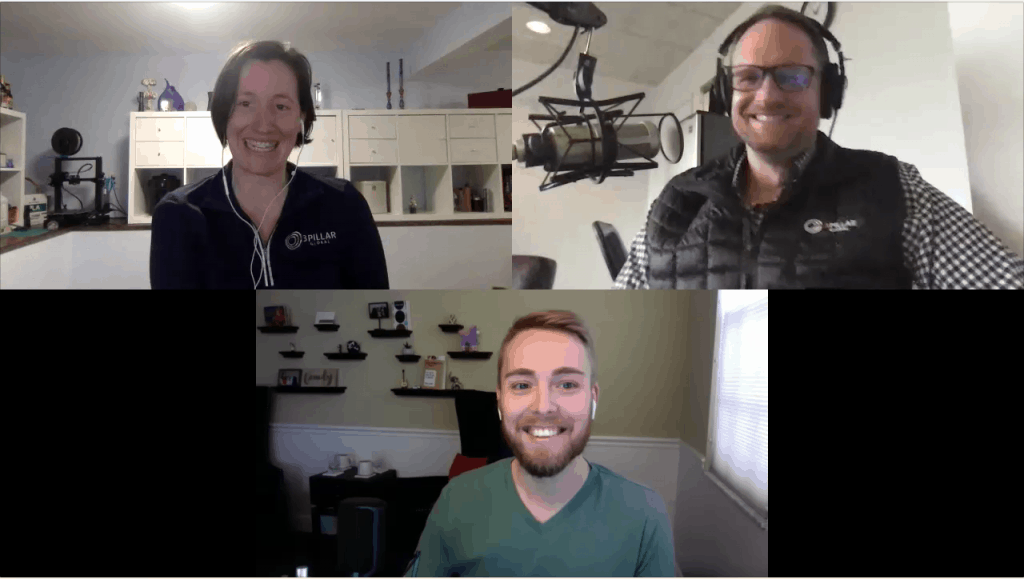
Today we are talking to Jessica Hall and Scott Varho from 3pillar Global. And we discuss their new podcast “The Innovation Engine”, why building products is a deeply human experience, and how language can be an unconscious indicator of team behavior.
Stay tuned after the podcast for a quick preview of their new podcast “The Innovation Engine”
All of this, right here, right now, on the Modern CTO Podcast!
About Jessica:
Jessica Hall is VP of Product Strategy and Design at 3Pillar Global, an Inc. 5000 developer of client-facing web and mobile applications, and co-author of “The Product Mindset: The Product Mindset: Succeed in the Digital Economy by Changing the Way Your Organization Thinks” (available Sept. 2019).
Previously, Jessica built the UX team at CEB, now Gartner, and led the creation of the Newseum’s interactive exhibits and websites. Her work has been recognized by the Web Marketing Association, American Association of Museums, The Webby Awards, Time, Graphic Design USA, Forbes, and The Washington Post. She holds a Masters in Design and Digital Media from the University of Edinburgh and a BA in Journalism from American University.
About Scott:
Scott Varho is the SVP of Product Development at 3Pillar. His passion lies in building cultures that sustain high performing teams optimized for return on investment for clients through a product mindset, craftsmanship, collaboration and technology.
Scott has spent close to 20 years working in or leading fast-paced delivery teams accountable for building products that support core business objectives. At Pearson Education (a Fortune 500 education services company), he served as Executive Product Manager for Identity and Access Management, serving business units responsible for over $3billion in annual revenue. As Vice President of Platform for EverFi, Scott led the initiative to merge the K12 and Higher Ed platforms, while simultaneously launching a new business model and accomplishing new levels of scale. Most recently, Scott was tapped by the CEO at Interfolio to organize the product, user experience, and engineering teams. He oversaw the rapid maturation of the team and business culture, a 3x increase in revenue, and played a significant role in the acquisition diligence and integration of the Data180 employees and technology.
Scott is a 2nd generation native of Southern California. He holds a BA from Amherst College and a Master’s in Political Economics from Palacký University in the Czech Republic. He used to speak Czech and German fluently, but now mostly struggles to keep up with his 2 children.
About 3Pillar Global:
3Pillar Global is a new breed of digital product development company. We are borne from the world of hands-on software engineering and place an acute focus on business growth.
3Pillar’s key differentiator is what we call the Product Mindset. Our development teams are empowered to focus on the business problems clients face and how a digital product will impact their customers. All 3Pillar team members around the globe are trained on the Product Mindset’s core values – Build for Outcomes, Minimize Time to Value, and Excel at Change.
Our teams apply this mindset to build digital products that are customer-facing, drive revenue, and monetize content and data. We work with clients at any stage of the product development process to help ensure what we choose to build together has the desired impact. Our business-minded approach to agile development ensures that we align to client goals from the earliest conceptual stages through market launch and beyond.
Transcript
(Joel Beasley at 00:00:00) Hello, my friends. Today we are talking to Jess and Scott from 3Pillar Global, and we discussed their new podcast, The Innovation Engine. We also discussed why building products is a deeply human experience and how language can be an unconscious indicator of team behavior. And make sure to stay tuned because at the end of this episode, we'll have a quick preview of their new podcast, The Innovation Engine. All of this right here, right now on the Modern CTO podcast.
(Joel Beasley at 00:00:29) Here we go. This is the Modern CTO Podcast.
(Jessica Schreindl at 00:00:40) Hello. Well, hello.
(Joel Beasley at 00:00:42) How are you guys?
(Scott at 00:00:45) All right. It's good to see you again.
(Joel Beasley at 00:00:47) Dude, it's a party in here today. Look at this. You guys, guess what? This is very special. Do you know why it's special for me? Very special day. Why? This is my first repeat guest podcast. First time we're having guests on. Yeah.
(Joel Beasley at 00:01:03) No way. Really? Yeah. Yeah.
(Scott at 00:01:05) Wow. Yep. So thank you.
(Joel Beasley at 00:01:07) Not you, Scott. Get out of here, Jessica. Thank you so much. Oh, I love you, Scott.
(Jessica Schreindl at 00:01:14) Oh, wow.
(Joel Beasley at 00:01:15) I met you before. Doesn't that count for something?
(Scott at 00:01:16) Yes.
(Joel Beasley at 00:01:18) That is true. This is a podcast where we—
(Scott at 00:01:20) We did a hyper memorable panel in New Jersey. So—
(Joel Beasley at 00:01:23) It was good. It was a good panel. Thought so.
(Scott at 00:01:26) It was fun.
(Joel Beasley at 00:01:27) I'm glad you did.
(Jessica Schreindl at 00:01:27) Into each other at a wedding.
(Joel Beasley at 00:01:29) Yes. I love that story. Yeah. So I'm at this wedding of a past employee, which shows our culture here is awesome. And yeah, a bunch of us were there, and Chloe, who books our guests and everything, was there. And then Jessica walks up to me and she says, "Hey. Do you do a podcast?" I was like, "What?" It's so amazing. So surprising. And then, what was the connection? So it's your cousin?
(Jessica Schreindl at 00:01:56) Tom is my cousin.
(Joel Beasley at 00:01:58) And Tom was marrying Courtney.
(Jessica Schreindl at 00:02:00) Yes. Yes. Well, there are 27 of us. So I kid you not, my mom was one of nine. So there's 27 of us. So I have a lot of cousins, and that's just one side of the family.
(Joel Beasley at 00:02:11) You have interesting backgrounds, Jessica. Where are you at?
(Jessica Schreindl at 00:02:15) I'm at home. I needed a sump pump replaced, and we had a flood because the sump pump had failed before. So—
(Scott at 00:02:23) Real life, Joel.
(Jessica Schreindl at 00:02:24) Real life. So I'm at home in my basement.
(Joel Beasley at 00:02:28) And where are you at, Scott?
(Scott at 00:02:30) I'm in the office, but our recording studio doubles as a maternity room. So, hence, the refrigerator located in the maternity room. So real life—
(Jessica Schreindl at 00:02:42) Yeah.
(Joel Beasley at 00:02:43) This is—
(Scott at 00:02:43) Real life all the time.
(Jessica Schreindl at 00:02:45) Two years pumping for my children. I'm very particular about that.
(Joel Beasley at 00:02:50) Oh, I thought someone gave birth in the lunchroom.
(Jessica Schreindl at 00:02:52) Oh, god. No.
(Joel Beasley at 00:02:53) Or the recording studio.
(Jessica Schreindl at 00:02:53) Most people would call it a wellness room or a mother's room. I don't know what you're calling maternity rooms. I don't—
(Scott at 00:03:01) Well, you know—
(Joel Beasley at 00:03:02) Okay.
(Scott at 00:03:03) Let me just get this on the right track. So my office at Pearson back—this is many ages ago when I was at Pearson Education. My office was a converted maternity room that when I first saw it, it had a cot in it where people could lay down and whatever. And I was like, "Oh, this is gonna be my office. Okay. Let's do this." So this feels very natural. This is a career theme for me.
(Joel Beasley at 00:03:28) And I learned that there's more to maternity than just giving birth. I know. Why have I thought that?
(Jessica Schreindl at 00:03:38) It's, yeah, it's a thing.
(Joel Beasley at 00:03:42) Yeah. I've got two kids that are under the age of two, and so I don't know. It's the beauty of life.
(Scott at 00:03:52) Insights come in all packages and in all kinds of interesting times. Right?
(Joel Beasley at 00:03:57) So is this what your new podcast is about at 3Pillar, the maternity room?
(Scott at 00:04:02) Insights, yes.
(Jessica Schreindl at 00:04:04) Insights, yes. Working mom problems, hashtag working mom problems. No. But I'm always available for consultation.
(Joel Beasley at 00:04:13) But I think there—
(Scott at 00:04:14) Is a theme there that we are trying to keep it real, you know, even as we talk about these big topics. We're trying to get to the really, really human side of doing these big things. So there's something to that, actually.
(Joel Beasley at 00:04:25) So what are you guys talking about on your podcast?
(Jessica Schreindl at 00:04:28) Lots of things. We have a couple of themes, things that we're interested in, things that we see a lot from our clients and the people that Scott and I run into in the world. They're about transformation and turnaround, prioritization and road mapping, user behavior insights, and growth and evolution are the big topics that we're interested in.
(Scott at 00:04:53) They're hairy. They're deep. I think we've had our own struggles with them. There's as much art as there is science. So they're definitely worthy topics, we feel, for people trying to build really great product organizations and work with these topics.
(Joel Beasley at 00:05:09) What's the name of it?
(Jessica Schreindl at 00:05:10) The Innovation Engine podcast. If you go on there, this is a bit of a reboot. So this was something we started a while ago, and there's a lot of great interviews with authors. And it's really interesting to hear from an author's perspective, but so often, it's hard to find people who've got dirt under their fingernails. They've got bruises. They've got scars. They're people who are dealing with the real life challenges of how to do this in their organizations who can share those lessons out with other people who are doing it. And sometimes the authors don't always live in the real world and don't always deal with some of those nitty gritty struggles. And we wanted to speak to the folks who are like us, who are just trying to make things work.
(Joel Beasley at 00:05:57) And so, how do you get those—so what I have found interviewing people is that all the people have the bruises and stuff. It's just trying to figure out the people that are willing to talk about it.
(Scott at 00:06:10) Yeah. Absolutely. Well, I mean, one of the things that we've been using as a methodology is you want to get the facts and you want to dive into some of the principles that you took into the situation. How did you navigate? What surprised you? And usually, that leads to some really interesting pieces of the conversation where you get some interesting insight. Or, as I think, the real human part—and Jess is especially keen at this—at seeing that personal moment where you probably struggled with this is what I'm hearing. And how did you get through that? Because those are the really meaningful nuggets. Right? Those are the things that if you have those moments in your career, we feel our podcast can unearth some insights that carry you through the hard moments because we know they're there. But to your point, getting them to be real about that. So you get at the story and the facts, and then you work into the meta. And it's worked so far. We've had some really successful guests on that have opened it up and said, "Yeah. That was really hard, and these are some of the tools and techniques and principles that I brought to it, and this is how we worked through it."
(Joel Beasley at 00:07:14) So these are guests that are talking about this transformation of their company, prioritization of road map, behaviors, insights, all of these topics. And so they're technology leaders, engineering leaders, managers, executives, these types of people, and they're talking about these journeys and basically what you guys do at 3Pillar. So there's definitely 3Pillar, I remember that from the podcast before. Give me the quick, like, 10,000 foot view of 3Pillar.
(Jessica Schreindl at 00:07:43) Sure. 3Pillar is a product development partner. So we work with clients from startup to enterprises from the first time they get an idea about a product through an existing product that would need to be replatformed or rearchitected or is struggling to engage with their customers. And we really help our clients achieve their business and customer goals through engineering, product management, user experience, cloud ops, architecture. We really have a lot of capabilities to bring to the table. But the one thing that's always true about everything we do is no one calls us because things are awesome. People call because they need help. They call because they are missing capabilities. They call because they've tried it by themselves before and it didn't quite work out. And so a particular interest for me and Scott is this notion of transformation, of turnaround, of how do you evolve? Because these are the things that we're seeing people go through all the time, and we want to help them. And so some of it is selfishly us nerding out. I'm not gonna deny that. Totally. Yep. And a lot of it is, you know, in a month, I might talk to four different companies having the same challenges. And those are the kinds of people who are representative of those challenges we want to have on the show and talk to other folks because we know folks are struggling with that. And we hope that our broad experience that Scott and I deal with every day is gonna help folks who are listening.
(Scott at 00:09:12) And I'll just glom onto that. The one thing that really strikes me about building products that I think catches people by surprise is how much it is a deeply human experience for the client, for the team that's building them, for the users you're trying to serve. Ultimately, you're getting at things that are not intuitive. It's not about the technology. We're really good at the technology. That's fine. But really, where great products get built is in that human journey, the how much patience should I have? When do I push for clarity? How do I get to clarity? How do I push through the emotional side of uncertainty? Because products are a journey. They're discovering. You're finding the right product, and that's really hard for business sometimes to metabolize, for organizations to be able to build in resiliency. And so we're really trying to push that humanity into the system of building products and acknowledge it. And that's why I think the podcast gives us a unique platform to explore those topics in particular.
(Joel Beasley at 00:10:10) Yeah. I really like the book. I really like the Product Mindset book. I've annoyed people with recommending it so much. I mean, I had a stack of like 10 of them on my desk, and I just slowly, every time it was relevant, was like, "You gotta read this book." And I'll—and then we just mail them out. And I don't know. It's when you refer stuff that you like, and then it brings value to people, then they remember you for that. And they're like, "Oh, that person refers you good stuff."
(Jessica Schreindl at 00:10:39) Yeah. Maybe book number—you know, book number one, David and I, it took us about two years to write it and a little bit longer than that to figure it out. Hopefully, in here is book number two. I mean, I'm not exactly ready to sign up for that level of work right now, but I think there's something in this story. And honestly, as I look around, I don't see a lot of people doing this. I mean, I'm a voracious consumer of podcast. Scott is too. Everyone should be listening to yours. But a lot of what we see, especially when out there looking at some of the books and the publications and things, it's somebody talking about the story of the startup from the garage to the Fortune 500 or something. Or it's somebody talking about their methodology or their method or what they should do. There's not a lot about either you just walked into a situation that's really, really rough and you've gotta turn it around, that you look around and the things that were working for you a year or two ago aren't working anymore and you need to figure out how to make changes. If you're in a company that has been in business for a while and now is dealing with a whole new set of things, there's not a lot of things that speak to those people, and we really wanted to talk to those people.
(Joel Beasley at 00:12:00) Oh, nice. So you guys researched the market and what was out there for available podcast and then built. And the way you named it Innovation Engine, you also give yourself a lot of flexibility for it to grow into different things as time goes on. Because for here, we started with the Modern CTO. It was the idea of talking about the topics that were in the book that I was writing, the Modern CTO book, which it's like building your first app. You look back on it, and you're like, "That sucks for a lot of reasons."
(Jessica Schreindl at 00:12:27) Oh, yeah. I know. I know. And you can't change the book. You can't—
(Joel Beasley at 00:12:30) It looks published.
(Jessica Schreindl at 00:12:31) No. Actually, it's worse.
(Joel Beasley at 00:12:34) I know. But then I was thinking, you know, a lot of our initial podcast, we were looking at the different episodes and what had happened and where do we grow? How do we change it and grow from here? Because this is something that I never imagined that I would like doing. It was something that just kind of happened. And then I was like, "Well, how do you steer this ship?" And so we've just figured out the thing I like is having conversations with people like you guys. This is fun. And then we are all kind of nerdy, so it's not off topic to talk about—not everything has to be about being a CTO. It could—my first branch out was like, "Oh, anything that brings value to a CTO is useful on the spot." So then we started to go find CISOs. Then say, "Oh, give us your security tips. What should we be thinking about as CTOs?" Totally. Yeah. And then we get Musk and Tesla, and you can go into SpaceX. You can go into different areas because it's fun. We're just all smart people. They like to learn and grow.
(Scott at 00:13:32) And it ends up being sneakily relevant, right, in really important ways. And so, yeah, why not explore? The world's connected. Right? We need all of these things in order to navigate the world. So—
(Jessica Schreindl at 00:13:43) We actually have to give credit to the name to our marketing team because we did not come up with it.
(Scott at 00:13:50) That is true.
(Jessica Schreindl at 00:13:51) We have a wonderful marketing team. They did a phenomenal job on the launch of the book. It's a really hardworking group, and this is all on them. We're just the pretty faces.
(Joel Beasley at 00:14:06) That is amazing. No one's ever called me that one for you. Scott is blushing. Interesting. Okay.
(Scott at 00:14:17) Is that how we got here?
(Joel Beasley at 00:14:17) That's how we got here.
(Jessica Schreindl at 00:14:18) Pretty much. Pretty much. You thought it was because you knew something. No.
(Joel Beasley at 00:14:23) No. And it's honestly amazing because from—we'll tell Scott's story from behind the machine. From behind the machine to the runway, Scott Varho.
(Scott at 00:14:37) This is really awkward. Can we—what's next?
(Joel Beasley at 00:14:41) We're talking about the 2020 Patagonia models.
(Scott at 00:14:45) This is fun.
(Joel Beasley at 00:14:46) Alright, so let's talk a little bit. I want to talk about exercise and health and fitness stuff because, you know, one of the things that comes up a lot is I get a couple responses when I talk to different engineering leaders. I get some people who have their stuff together, right? They're like, I know this rodeo. I've been here. But that's pretty rare. I'd say the majority of the time is I'm stressed out because stakeholders want X, Y, or Z from me. I'm stressed out because we're trying to hire 700 people this year. And, you know, basically I'm stressed because, and then that makes me think of the stress management techniques that have improved my life, and those have all been nontechnical things.
(Joel Beasley at 00:15:29) I've never looked and said Pivotal made my life less stressful. Like, it might, right? I haven't done that. I might have said a framework for organization, like some new organizing and getting the humans and the project under control has. But I found that the things that helped me are fitness related and or health related. And so I'm just curious, you know, both of you, both answer. And maybe Jessica first. Like, what sort of health things in your life have you found to be useful in managing stress?
(Jessica Schreindl at 00:16:00) Yeah, I think it's, you know, in our first episode of The Innovation Engine since the reboot, we talked to Tiffany Kleeman about her transformation. And she talks a little bit about that, of making sure she gets that time in, about how lonely it can be during a transition, and how an executive coach was really that person who was her sounding board that she could really trust and how she needed. I, fitness is really important to me. It's just always something that has been a part of my life, and I feel stronger and I feel more confident when I'm being active.
(Jessica Schreindl at 00:16:34) And so whether it's running or climbing or lifting or doing yoga, I try to make sure that throughout the week there are things built into my schedule and that I have time set aside for those. And that really helps bring down my stress level. If I'm working from home like I am today, I might go out for a walk or I might go out for a run so I can get some time outside. So it's a huge deal for me that I do it. I'm also going to be the first person to tell you I do not always get it right.
(Jessica Schreindl at 00:17:02) Like, and that's okay. You know, some days you're going to get the workout in, some days you're not, and it'll be fine. And the balance of them you get the workout in, or the balance of them you get enough sleep, the balance of them you drink enough water and eat healthy, you're going to be just fine. So don't be too hard on yourself to be perfect. You don't need to be a CrossFit king and a killer CTO and an amazing parent.
(Jessica Schreindl at 00:17:26) Like, that's just not, that's not going to happen. That's not real life.
(Scott at 00:17:29) That's adding stress.
(Jessica Schreindl at 00:17:30) That's, like, ridiculous. But give yourself these, you know, they talk about being compassionate to yourself. And if you had a friend that was trying to do all these things and wasn't making it, you would tell them to stop being negative. So stop being negative with yourself.
(Scott at 00:17:49) Yeah, I think what I love about Jess's point there and pointing out that the loneliness that we heard from Tiffany is to pay attention to your mental health. Like, while, you know, fitness is obviously part of a healthy regime, you know, for me before 3Pillar, basketball was a really important part of my fitness routine, mostly because I was so focused on basketball while I was playing it that I came out just kind of like cleansed all the plaque in my brain, for lack of a better term. And it was just good for me mentally even more, just as much as it was physical. And I haven't really been able to replace that since my ankles are, you know, I've gotten old.
(Scott at 00:18:23) So I have to find a new sport. I'm actually hunting for one now. But because I started to see the signs of just, you know, plaque building up for myself, I'm actually, it's very timely, I'm leaving for Costa Rica on Wednesday and I'm going on a solo surfing trip for a week because that is something I can do. It's really, it's intense and physically, but it's also really good mentally as a way to clean the mind out and be refreshed and just come back with clarity to the work.
(Scott at 00:18:50) So it's really, that's just something I have to be aware of, that every once in a while I've got to release some of that plaque and pay attention to that. So I think it's really important to have your temperature gauge on and be paying attention.
(Joel Beasley at 00:19:02) Yeah. Have you ever, so like, you were getting the stem cell therapy for your ankles? No.
(Jessica Schreindl at 00:19:09) I've heard about that for knees.
(Scott at 00:19:10) I'm writing that down.
(Jessica Schreindl at 00:19:11) Yeah, I've heard about people get them injected in their knees, but no.
(Joel Beasley at 00:19:18) Yeah, like any sort of like ligaments too. So my parents own like wellness centers, and so they're always on like the brink of like the latest stuff that works because they read the scientific papers. Wow. They're like, they're like the people that do that, you know?
(Joel Beasley at 00:19:34) And then, yeah, everyone else writes an article on top of it that's 50%.
(Scott at 00:19:38) So they're early adopters of health technology.
(Joel Beasley at 00:19:40) I guess they are. Yeah, they really are. Yeah. They wait until they see enough studies and then they try stuff in their patients. And yeah, they've had a lot of success. I was actually just up at their clinic this past week, and they, their ultrasound, so they'll use ultrasound to scan and be able to see like your ligaments and your muscles and, like, and then they'll actually inject like stem cells and some other things into it directly. And then they say some of the times they'll be doing the ultrasound and they'll actually find the person who has a tear and we'll send them away for surgery because it can't, they can't inject into it because it's torn. But it's really interesting how these are like technologies that we've had for a long time.
(Joel Beasley at 00:20:24) We're just using them in like new ways. We've had ultrasound for a while. Yeah.
(Scott at 00:20:27) Yeah, yeah, yeah. True. And I love that. I love any time we can do that, right? Where, you know, it's like the, my favorite example of this is the flathead screwdriver. Think about all the things that a flathead screwdriver gets used to do that has nothing to do with screwing a screw in.
(Scott at 00:20:43) Yeah. You know, it's a fantastically flexible tool, and I used to always think about APIs as products that way, that they, if they're built right, they're the flathead screwdriver of technology. They should be omnicapable in ways that the builder didn't anticipate. So super fun. That's, it's really neat to see it applied to health, though, where it can make, yeah, make humanity better. Yeah, that's great.
(Joel Beasley at 00:21:02) I am curious. So now we're talking about technologies and screwdrivers and them being like really applicable. So at 3Pillar, you guys have such a large engineering organization. You augment other teams, things like that. At what, like, how do you approach new technologies? Like when you see a new screwdriver or something coming up, like, how does that seep into like your tool belt?
(Scott at 00:21:28) So, a couple different, I'll comment on this. I'm sure Jess will have a different perspective from where she sits. But for me, there's a combination of trying to really understand like the technology, what its limits of its capabilities are, what it really does. There's always a hype cycle. So you have to, you certainly have to peel back the, you know, blockchain's going to solve everything. It's like, well, blockchain has a very specific purpose for what it was intended to do. It also has a number of limitations on what kinds of healthy systems you can build based on that technology. So part of it is just getting to the real, what does this thing really represent?
(Scott at 00:22:14) And then part of it is understanding the hype cycle. And then it's paying attention to demand. So I usually have engineers who are really interested in new technologies, the people who want to be early adopters, who want to get after the new thing. And so we have ways, we certainly have ways to do what I call tinkering. And so we have our communities of practice, for example, who might set up, you know, workshops to play with, let's say, voice or natural language processing or, you know, AI and ML toolkits as they develop. So we definitely encourage a lot of tinkering because I think tinkering can lead good technologists to lessons and insights that maybe don't apply to that particular tool set, that maybe apply to the tool set they're used to using on a daily basis. So I definitely encourage a lot of exploration that way.
(Scott at 00:22:49) But whether or not we're going to invest in it is going to be a, that needs to be a business decision. That is going to be one that's going to be driven by, are we seeing the demand in the marketplace? And if not, why not? Is it because we're not positioned in the marketplace to take advantage of it? We have great technologists with excellent instincts and judgment. They may not be familiar with a particular technology that you're interested in playing with, but technology should never be your starting point for building a product anyways.
(Scott at 00:23:07) So let's talk about the product you want to build, and we'll certainly put all the options on the table in terms of what technologies might support that product outcome that you're trying to accomplish. But, you know, I have a couple of really fun stories where someone came to us and said, you know, I need machine learning so that we can do like a product recommendation engine for our product catalog. And I was like, great, how many products do you have? Fourteen.
(Scott at 00:23:33) Oh, okay. How many products do you release a year? Like one to two. You don't need ML. It's, we can code up a recommendation engine for you. It's just a decision tree. It's not, it's not really, you know? So sometimes people are in love with the technology and not looking at value. And so we certainly want to be the company that can be that trusted advisor that guides them through that. If we see a technology that is needed for a particular use case like three times, then we'll start investing and having a perspective and a more strongly opinionated stance on that technology.
(Scott at 00:24:03) But ultimately, the utility of technology is entirely in service of business outcomes, and so we want to stick close to that as the way that we invest. But on the craftsperson side, yeah, let's play freely with technology because there's always a chance we'll get an insight just by looking at a problem solved in a new way. So we definitely encourage that.
(Joel Beasley at 00:24:25) Jessica, he mentioned these like communities or workshops or things. Is that happening internally at 3Pillar?
(Jessica Schreindl at 00:24:33) Yeah. Across all of our delivery centers and across the world, we have communities of practice, people who are really focused on a specific technology or specific practice who get together, and they're sharing challenges, they're sharing ideas, they're sharing what they've learned, they're investigating new technologies. And so the beauty of working at a place like 3Pillar is that it's exposure. You know, I have a good friend. He was in EdTech. He was in three different EdTech companies, and he was looking for his next role a while ago. And I'm like, dude, you've got to get out of EdTech. You're too narrow. Like, if you don't move now, you're going to get locked in.
(Jessica Schreindl at 00:25:13) And so I think you start to really know a few things, but there's so many blind spots that you have, so many things you can't see. And the benefit of being part of a community of practice is you can see how people are doing in financial services, in health and wellness, in media, in information services. You can take the things that your colleagues are doing in completely unrelated areas and bring them to where you are. It really enriches the work that you're doing on your project and really helps everyone learn from each other and expand your knowledge at a rate that is just not possible if you're at a company that only does one product in one kind of market.
(Joel Beasley at 00:25:49) So I think this community of practice is going to bring listeners a lot of value because I haven't had someone come in and explain it. So I want to dive a little bit deeper into that. So first, can you give me context? How large is 3Pillar as an organization?
(Scott at 00:26:04) Yes, we have roughly 800 practitioners, craftspeople at 3Pillar currently and growing.
(Joel Beasley at 00:26:09) And you're across the globe?
(Scott at 00:26:12) Correct, yeah. We, so right now we have five delivery centers, three in Romania, three different cities in Romania where we have offices, and one in Noida and one in the US with remote work in each of those countries.
(Joel Beasley at 00:26:25) And then so who organizes these communities of practice? How does this actually, like, let's say I'm a company, I'm about your size, I haven't implemented this concept yet. Do you have a person dedicated to organizing the communities? How does this actually roll out if I wanted to copy it?
(Scott at 00:26:39) This is one of my favorite stories in 3Pillar. So, yeah.
(Joel Beasley at 00:26:42) This is—
(Jessica Schreindl at 00:26:42) Oh, you just hit on his like favorite thing ever.
(Scott at 00:26:45) I love this. Well, the coolest thing about the community of practice, I think, is that it was a grassroots initiative. So there was an engineer in Timișoara, Romania that came to his boss one day and said, I really want to know what's going on in other projects. Can I do this? Can I organize a meeting where we talk about what's going on and just share some things? Like, I feel too isolated and I know I'm sitting around other people that I could learn from. And so entirely grassroots driven, this gentleman, he's now, he's a legend in 3Pillar now. Don't tell him that, though. And so he started this thing and he's a front-end engineer, a front-end JavaScript guy. And so he started this community to sort of talk about JavaScript and front end, and that just grew.
(Scott at 00:27:33) People gave up their time to meet with other people in their field, but they respect it and to hear their stories or offer comments and suggestions. And so as that began to evolve, this is all off the sides of people's desks. This is a grassroots initiative. You know, I, up to the gate, I was so in love with this that I did a tour of our delivery center. So this had gained traction before I took this role. And what I contributed is I said, you know, there's something really magical in seeing craftspeople explore their craft authentically and with their own passion. What can I do to help and not, I do not want to make this corporate. I want to keep it grassroots. This is driven by the people for the people.
(Scott at 00:28:12) This is all about your interests and how best you can serve each other and how you can challenge and support one another. So I let every community is organized differently. Our DevOps community, for example, tends to take in challenges that different individuals are facing, and they just work the problem as a group, so they can help each other where they struggle. So it's a lot more request response. It's a smaller community. And our front-end communities are huge, and they're organized by cities.
(Scott at 00:28:39) So there's a, you know, each city has their own chapter because they're pretty large. They tend to be presentation based. If you come, you present on a topic, you get feedback on that. And that's how they organize. They might run different community meetups and things like that, either try to help with recruiting. There was an interesting case.
(Scott at 00:28:58) I just heard about one of our communities, and so there's just such rich stories here. One of our QA folks who's in Iași, Romania invited one of the key developers to a WebKit that contributes to Selenium, and he invited him as a speaker to come. The entire community of practice is going to come to this event where he's going to speak internally just to our teams, then we're going to do an external event. So it's just a great set of things, and this is entirely grassroots.
(Scott at 00:29:29) Nobody from management asked anybody to do anything. It's passion driven. I was like, "Hey, can I give you guys pizza money or something? Like, what can I do?" And now we're aligning our conference attendance to the communities. I just love feeling this kind of grassroots, you know, grassroots interest and passion. And we're trying to do that in as many places as we can because why would you not? But it's wonderful.
(Scott at 00:29:53) But it is very self-directed, and that's something that I'm dangerously protective of. This is not—I don't direct it. I don't have any authority over it. I believe wisdom is in the craftspeople that do the work. And so this is all a platform for them.
(Joel Beasley at 00:30:07) So like, how did the word just spread? Like, the first community happened and then someone at one delivery center heard that? Like, how did that information spread? Like, just through Slack and talking or—
(Scott at 00:30:16) Something like that.
(Jessica Schreindl at 00:30:20) It's been—so years ago, it didn't. So I've been with 3Pillar for six years. I remember coming into a team to help, and it was Lucene Solr. And they said, "Well, we don't know how to tune Lucene Solr. We're going to really have to study." And I was like, "Guys, there's 800 of us. Somebody knows this." And so we didn't used to have this built-in sense that you were part of a larger organization that you could plug into. And even if you plugged into a larger organization, you'd probably keep it in your center, your office, to your city, and not necessarily think, "Well, you know, somebody in India might have the answer to this, or somebody in Romania or Fairfax might have this answer." And so I think as we started to use group messaging more—and we don't use Slack, we use a different one—is that that created opportunities for people to collide and then start to share. And the other thing is, in our group, the product development leadership group, there's a lot of people who aren't, as Scott's saying, controlling, but they're connecting. They're saying, "Hey, you guys are working on—have you talked to so-and-so? Have you—do you know these people over here? You might want to—you guys should talk. Like, you should be—" And so part of the nurturing is pizza money, or pizza and beer money depending on the situation. But also, the leadership of the organization using their networks in order to connect people together.
(Jessica Schreindl at 00:31:51) And that's a great way for leaders to nurture these things and say, "You two should meet. You two should talk. There's something to be exchanged here." And then let the people do things on their own. But I think create those opportunities for connection, that intersection. As if you were at a cocktail party and you have that person who, just when you walk in and you're like me, you're like super awkward—"I don't know. I got it. Oh, God. I don't know anybody. I'm like desperate to talk to somebody." Like, "Come here. You need to meet so-and-so. Talk to them about this thing." You're like, "Awesome, you just made my night." That's something that leaders can really do to nurture these communities. And you don't have to be as big as we are to make it happen.
(Scott at 00:32:36) That's right. Yeah. And I'll add too that this year is really interesting because our communities are mature enough that we've actually—now we've changed the model a little bit in that we're giving the communities authority to define the standard of 3Pillar and to iterate on it. So we've actually—you know, we have a quality framework that Jess actually works on in terms of packaging and client presentation around like, how we talk about quality at 3Pillar. But the actual nuts and bolts underneath that, we seed that to the CoPs now, to the communities of practice, and we ask them to iterate on what is—front end, so good example—what is front end development's, or front end practice's, view on security? How does that translate into that practice? How can we provide more support to other future front end engineers at 3Pillar so that they can achieve our very high bar for security and how we think about that? And so there's just so much rich material here for the community then to take on a business challenge. I still protect the principle of autonomy. The communities are the ones that are going to tell us the right answer. But also giving them a business objective.
(Scott at 00:33:42) And so more than just a, "Hey, we have things to share and things in common, we should get together," now it's, "No, actually, you're an important arm of the business," and then evolving our standard to be timely and hold ourselves to that high standard of quality that we have here.
(Joel Beasley at 00:33:58) So this community is saying—the episode hasn't aired yet, I don't think—but I talked with this guy, Bill, at GitClear. Have you heard of GitClear yet? They're like analytics, code analytics. That's probably the worst way to describe it, but you get the sentiment, right? You can look it up. I was looking through their features and stuff, and they had—one of the areas that I thought was pretty interesting because it comes up on the podcast a lot—was they hook into your GitHub or whatever your repo is, and they do all this analytics on your code, and it's supposed to help for developer productivity and these types of things. But the one—like, the small feature I found really, really interesting—was they can look at what areas engineers are spending time in, like, writing a lot of code in. So for example, if I was working a lot on Selenium, it could look at that and say, "Okay, like, here's all the people working on Selenium a lot, and here's all the people working on this technology," and you could see the people based on what technology they were working on. And that reminded me of—my first thought when I saw that was, well, you could probably expand that and help connect those people and build little communities around it. And because I don't manage 500-plus engineers, right, I don't have exposure to those types of problems, but I do get to talk to a lot of people. So now I'm kind of fishing around in the marketplace, and I'm asking you, are there tools that have done that before? Have you seen anything in that area?
(Jessica Schreindl at 00:35:34) I haven't. The challenge for us is we might have 200 teams who are working on for 50 different clients. They're deploying to 50 different repos, because we typically deploy to our client's environment and not our own environment. It's very rare that we're in one of our own managed environments. But even when we do that, our intention is to transfer to the client. So I think that's a really interesting tool for, you know, we have clients who have eight teams, 10 teams. They have some teams that are in-house and some teams that are external. That would be a really interesting one. But for us—we're working on ways of collecting that information—but right now, we have to kind of do it on a user-generated basis because we don't have access to our clients' repos.
(Joel Beasley at 00:36:26) Yeah. Because I'm still—I'm still curious about that problem because, like, this is definitely not the purpose of GitClear. Like, this was not the plug for GitClear.
(Jessica Schreindl at 00:36:35) Right? It's not like—
(Joel Beasley at 00:36:36) Go here. It was just one small thing I had noticed because people have been talking lately on the podcast about how they're creating Slack communities and Slack channels for specific technologies. And I keep hearing when I'm out there in public—and you know, Scott, we were out there in public—like, I keep hearing people talking about, "Oh, we're trying to connect people who are solving the same problems in our organization together." And so that's just been in the back of my mind, and then you guys brought up how you do it so well.
(Joel Beasley at 00:37:00) Yep.
(Scott at 00:37:00) Yeah. No, it's—well, it's interesting. So GitPrime is—I mean, the name similarity is there—but GitPrime is one that I've had my eyes on because, you know, part of GitPrime's stated value proposition is they're pulling out of the repos. They're pulling behavioral metrics, you know, cycle time, commits, rework, you know, things that are very aligned to some of the principles that we believe in. But I'm not sure they're measuring them the way that I would. So I'm being challenged more and more to articulate, what do I agree or like about GitPrime? What do I have an opinion that differs from them on? But this idea that we can look at behavioral analytics of our engineers and be able to give thoughtful insights back to them is a really neat concept. And like you said, it's not the commercial purpose for most of these tools. Usually, it's about something else. But it feels like there's potential to say, "Hey, there's something going on in the system here that maybe we're not looking at." That's always cool when you can do that. Same thing we would do with user analytics, right? Like, "Hey, everyone seems to be using this one feature a lot. Why? Do we know? What are we not asking?" Same concept.
(Joel Beasley at 00:38:12) And GitPrime's gone now. They got bought by Pluralsight. They're called something, some subproduct of Pluralsight now. But we had them on. We had Travis on. He's the founder of—
(Scott at 00:38:22) Really?
(Joel Beasley at 00:38:22) Yeah. He's out in Colorado. We talked about moose. Moose and meese, the plural of moose. Moose-es-es.
(Scott at 00:38:31) Moose episode.
(Joel Beasley at 00:38:32) But GitClear came out as—they have an interesting story because they saw a couple of them emerge. And they had seen GitPrime, and there was a couple other ones, like Pinpoint and some other ones. But they were like a spin-off of a company, like an internal product at another organization, and they were trying to figure out, like, how do we create something to actually help us? And then they used it for a couple years, and then they decided to spin it out. And so they didn't have any pressure of—like, they could screw around and come up with their own unique concepts. And you actually may want to talk to them because I think one of their concepts in their thing is that they can make their own analytic insights from it. So, um, yeah.
(Scott at 00:39:18) That's great. Yeah.
(Jessica Schreindl at 00:39:18) Interesting.
(Joel Beasley at 00:39:20) Who knows? I'll connect—Bill's a cool guy too, by the way. He, like, flew down here and we had lunch and stuff. He was, like, really cool.
(Jessica Schreindl at 00:39:24) Oh, wow.
(Joel Beasley at 00:39:25) Yeah. We have—we have a in-person setup now.
(Jessica Schreindl at 00:39:28) Oh, yeah. In-person. Yeah.
(Joel Beasley at 00:39:30) We do.
(Scott at 00:39:30) Yeah. We upgraded. Interview space.
(Joel Beasley at 00:39:33) We do. We upgraded. So I got off topic. But yeah, that's—
(Scott at 00:39:39) Well, what was the topic?
(Jessica Schreindl at 00:39:40) Well, anyway, we see it all the time, and I think it's one of the things that happens is that as an organization grows, it diverges. It diverges in technical people who maybe aren't talking to each other and sharing practices. It diverges in different departments that are focused on different things, and they aren't necessarily thinking about the connective tissue between those things. We see it diverge in prioritization and strategy. So it's a real common challenge. What we're really interested in on the Innovation Engine is to understand from people who've been through these cycles of rapid growth and transformation, how do you keep it hanging together? Because we see what happens when—and we're often coming into organizations, and I've done it a bunch of times—where they have lost that cohesion. And they've got a collection of stuff that doesn't seem to add up together. And so, you know, it's interesting—it's funny as you're describing that tool, I'm like, "Gosh, that also sounds like a strategy problem." Like, if they don't know what the whole technologies they're using—my second question is, do they know what mountain they're climbing? Do they know what they're trying to do? Do they have agreement on principles of what good software engineering is? Do they have agreement on principles on good design? Do they have a sense of what they're solving for? That just gets the consultant spidey sense pinging that there's maybe some interrogation in these organizations to see, like, are we all going—do we all know where we're going? Are we all headed the same direction? Because that seems to be a common problem in organizations. And as I've interviewed a lot of product leaders for some internal research, you know, number one thing they're telling me is, like, what they spend time on is alignment, alignment, alignment. Like, how do we get all these people focused on the right things, agreeing kind of what direction we're headed, what the prioritization we've made is. And so I think there's something to why does something like that have to exist? Like, I think it's because of these growing, scaling organizations have all these repercussions, and you're seeing people solve for bits and pieces of them.
(Joel Beasley at 00:41:59) Yeah. And I agree with it too because of the—it's also these conversations become a little bit clouded because, like, there's the context of the size of the company, like, the level of maturity and the rate of growth it's currently in. Because it's amazing because sometimes I talk to people, they've had no problem—like, no huge problems at all. Like, everything's, like, you know, running. It—they've got it down, at least for this, like, period of time. And it's just—
(Jessica Schreindl at 00:42:22) Uh-huh. Yeah.
(Joel Beasley at 00:42:22) But communication is—yeah. No, I'm serious. There's some—like, I really do because I go out and visit these companies. Like, some of these companies, there's no talent shortage, right?
(Jessica Schreindl at 00:42:38) Yeah.
(Joel Beasley at 00:42:38) They have no shortage of talent. I think one good example of it was, I think it was KAYAK I talked to. Because the culture there is just—they have an extremely good culture, and that's created this need of all of their friends wanting to come work there. So whenever they have openings, right, they can pull them in. That's a very different problem, like, KAYAK maybe going from 500 engineers to 700 engineers than it is when I'm talking with, like, the CTO of Walmart whose primary responsibility that quarter was finding real estate because they had to physically find locations to house 4,000 engineers this year. Right? So it's like, yeah, it's really interesting the different problems people are having, but I've noticed that it all can be boiled down to culture. Like, certain org—the culture within organizations. And that's one of the things that drew me to 3Pillar, especially interacting with all the different parts of your organization from marketing, to I talk to some of your business development people, to talk to, you know, the owners and the executive team. And one thing you guys have and one thing that I noticed the successful or the stable companies have—although waves come, they seem to handle them—is they all have a culture. They all want to achieve greatness. They all have a mission. They do have a good focus, and the leaders are really, really good at aligning that focus.
(Scott at 00:43:55) Well, and then, yeah, we talk a lot about culture. It's a very intentional part of it. But what's hard is exactly what Jess was talking about—is protecting culture when the conditions, the facts on the ground, have changed. You're gonna have to use a different set of techniques to accomplish the same principles. And so being really aware of what are the principles that lead you to that culture and then being thoughtful about, okay, how would I do this if we doubled size or if we had five offices instead of one?
(Scott at 00:44:20) You know, when it was six engineers and David DeWolf, the founder CEO, it was a very different set of techniques to maintain cohesion, right? It was a table. It was one table. It wasn't hard. Everybody in the same room together—you have cohesion. Now we have to invent things like leaders of practice. Now we have to scale them. We have to make sure they feel effective, they feel supported, while also not feeling corporate. They're still genuine. They're still every bit as authentic and genuine. So I really try to come back to first principles, and I encourage teams and companies to do that too. If we care about high-performing teams, you know, hiring GitPrime as a tool, for example, to develop performance metrics for individual engineers, there's a trade-off there to psychological safety. If we believe psychological safety is an important thing, then we need to think about, how are those metrics going to be felt and received by the team? How does that turn into a healthy culture and not a degrading one? Of course, there's no problem with accountability, and engineering teams are expensive, so we have to look at things like that. But understanding you're making a principal trade-off and then being very thoughtful about that is—if you want to maintain culture, you have to operate from principles.
(Scott at 00:45:34) And so a lot of the work that Jess and I do on the Innovation Engine podcast is to try to push on the principles and see how those evolve through these trying situations, because that's where the really interesting insights are to us.
(Joel Beasley at 00:45:46) Because the analytics software inherent in itself is not bad. It's how you start to interpret and enact the metrics that you're receiving from those. And that's where it can get out of hand really fast. That's how an inexperienced leader could be like, "We're gonna do this and we're gonna watch this metric and then we're gonna tie bonuses to it and everything." Yeah, it goes pretty fast.
(Scott at 00:46:07) A flathead screwdriver can be a weapon too.
(Joel Beasley at 00:46:10) Yeah. I just recently—
(Jessica Schreindl at 00:46:13) I recently read the book Upstream—I'm sorry, I've had a brain fart—Upstream by Dan Heath, and he talks about Andy Grove from Intel and paired metrics. And I love this idea of paired metrics. Because if you say what's really important is we get to market fast, you're gonna have probably some quality issues and potentially some security. And I think privacy is more and more and more important every day. But it's like, you have to put these two things together such that in order to win, you cannot let one overcome another. And so this idea of paired metrics: What are you trying to drive and what's gonna prevent harm when you drive it? And how do you put these things together? This is something that I—it was, I guess, something that I knew about, but you kind of love it when someone puts a name on something so it becomes very easy to convey that idea. And I thought that was a really good one. And that if you want to drive something, but you don't want to mess this other thing up, you've got to kind of look at both together.
(Jessica Schreindl at 00:47:19) And looking at different ways to measure—there's definitely a couple of guests on the list coming up who I've talked to in other venues and I feel like, "Oh, wow, that's really smart." And so my new favorite game is, "Do you want to be on my podcast?" And I talk about this. You know, we're always out talking to people, talking to our clients, talking to prospects, talking to people in the community, and now it's like, "Wow, that's an awesome idea. So many people need to hear about that. Can you come talk to me about it? Can you come talk about this thing?" And also getting to hear from people you haven't. There's definitely some luminaries who've been on a lot of podcasts and done a lot of shows, and they have great stuff. But I think they tend to repeat the same stories on every podcast, and I did that when I was doing a book promo thing. But we definitely want to have different and diverse voices of people that maybe you haven't heard of before, but they have a unique take on things. They've solved a unique challenge or a common challenge in a unique way that we think people want to hear from.
(Joel Beasley at 00:48:27) Yeah, I've struggled with that. You don't want to tell the same stories over and over. My recent one is a show—
(Scott at 00:48:34) Even if they're great.
(Jessica Schreindl at 00:48:37) I know.
(Joel Beasley at 00:48:39) I shut off notifications. I shut off 100% of notifications on my phone the past two—I mean, week two. And I wanted to tell every person I met that. And I'm like, "Jake, we're probably just gonna have to cut that story out of the podcast," because if people hear that back to back, they're gonna be like, "Shut up."
(Jessica Schreindl at 00:48:54) Oh, by the way, when you go on vacation, turn off all your—
(Joel Beasley at 00:48:57) Turn it off?
(Jessica Schreindl at 00:48:58) I actually, you know what? I turn them off when I go on a vacation and then I forget to turn them back on again.
(Joel Beasley at 00:49:03) Yeah. But I had to go through—I actually felt like an idiot because I emailed Tim Cook. I was like, "Hey, bro, Do Not Disturb is not working. Slack notifications are getting through." And what I found is that the Do Not Disturb only prevents your phone from lighting up. When you light your phone up, the notification stack is still there.
(Jessica Schreindl at 00:49:22) Wow.
(Joel Beasley at 00:49:22) So I can't check my time without my brain reading the other things. So I actually went into each app and I turned off—
(Jessica Schreindl at 00:49:30) Oh, yeah.
(Joel Beasley at 00:49:31) —except for text, because I have kids and a wife, and—
(Jessica Schreindl at 00:49:35) Yeah, no, no, no, that's the one that always goes through.
(Joel Beasley at 00:49:38) Your family—
(Scott at 00:49:39) Family, one channel open. Yes.
(Joel Beasley at 00:49:40) One channel open. Like it's 2012.
(Jessica Schreindl at 00:49:46) Well, that's what I tell my team. I'm like, "WhatsApp," because it's an international company, right? It's WhatsApp or SMS. If you want an answer now, you need me now, you call, you WhatsApp, you SMS—I'm on it. Otherwise, I get you when I get you.
(Scott at 00:50:00) I have to ignore everything else or else—
(Jessica Schreindl at 00:50:02) Yeah, I just turn that stuff on and I get to it when I get to it. But if you need me, I will be there. This is the path.
(Joel Beasley at 00:50:09) It's a productivity issue too, because what happens is you can't stop your mind from seeing it, and then your brain starts to formulate an idea and a response, and you're basically doing all the work twice. Because you can't respond right then because you're doing something else. So you then ignore it, but your brain still thought it. And then later, you go back—it's really, these notifications snuck into our life, the frog in boiling water. And I think we need to get rid of them. Just put a time on your calendar to check your phone.
(Scott at 00:50:37) I have a really funny podcast story that I'll tell about Jess.
(Joel Beasley at 00:50:41) I love it.
(Jessica Schreindl at 00:50:42) Thanks, Jess.
(Joel Beasley at 00:50:44) I mean, come on. The ball is on the tee.
(Jessica Schreindl at 00:50:47) I know. This way.
(Scott at 00:50:48) But we were in the middle of doing a podcast, and we're in this interview. And all of a sudden, I see Jess look down at her phone, and I just hear her face just drop. And I'm like, "Okay, well, you know, we're mid-podcast here, so we're just gonna keep going." But the body language and the facial expression completely changed. Afterwards, it was one of our peer leaders here, one of the executives here at 3Pillar. And, you know, Jess is an open book, as am I. We wear our emotions. And so it was just so funny. It was—
(Jessica Schreindl at 00:51:18) It was exactly a fire drill. Well, the funny thing is I'd made a point—we would record them back to back—I made a point of handing my—I will hand my phone over, especially if my husband's traveling and I'm the only person that our school is gonna call. I will put my phone in the hands of someone else, and I will take my watch off because I have a smartwatch. I had done that for the first podcast of the day and I had left my phone on the table for the second one. And I was like, "Never again." We did a quick retro after the fact and it's like, "Do not let me start with a phone anywhere near me, and I will take off my watch." Even if I have all my notifications off, I just don't want these things near me. And I think it was Adam Grant who posted some research about even if the phone is on—if you can see it.
(Joel Beasley at 00:52:13) Mm-hmm.
(Jessica Schreindl at 00:52:14) So being not a dude, I often have a bag, and so I would just keep my phone in the bag. The guys always just put it in their pockets or something, but I always try to keep my phone—
(Joel Beasley at 00:52:27) Speak for yourself. I carry a grocery bag with me. A plastic grocery bag. No, just kidding.
(Scott at 00:52:36) I fail to see how gender means I have a pocket, but okay.
(Jessica Schreindl at 00:52:39) Well, okay. Let me re—actually, I don't. Gender affects this because I often don't. Because if you wear a dress—
(Joel Beasley at 00:52:46) See, I carry the grocery bag, and that way everyone thinks I just went to the store. No one gives me crap for it. But if I carry around the leather bag, all my guy friends would hassle me for it. Do you just see me? The only time I get crap is when I'm in California because it's plastic. I probably need a paper one.
(Jessica Schreindl at 00:53:07) Oh, man.
(Joel Beasley at 00:53:08) I don't do this.
(Scott at 00:53:09) Okay.
(Jessica Schreindl at 00:53:09) But whatever, you know, whatever gets the job done. Everybody just got their something.
(Scott at 00:53:16) Oh my gosh.
(Jessica Schreindl at 00:53:17) Note to self: keep your things away from you.
(Scott at 00:53:24) I'm just gonna say that.
(Joel Beasley at 00:53:24) You wear dresses, Scott? You go grocery bag or you go extra-large 1980s father wallet?
(Scott at 00:53:33) I just tuck it into the top, you know?
(Jessica Schreindl at 00:53:38) Yeah.
(Joel Beasley at 00:53:41) This is great.
(Jessica Schreindl at 00:53:42) Yeah. Well, the other funny thing is that marketing approves certain clothes that I wear. So I'm like, "You can't be trusted to make your own decisions."
(Joel Beasley at 00:53:52) I like it. Well, I think you guys all look very stylish. Is that an actual 3Pillar jacket?
(Jessica Schreindl at 00:53:56) Yeah. No, we're definitely both wearing swag today.
(Joel Beasley at 00:53:59) Yeah. We're on brand. We're on brand. I used to be shy about it, but what I've started doing the past few times is requesting swag now. Can you send me one thing? You know, send me a hat or—because I actually—
(Jessica Schreindl at 00:54:12) We haven't given you anything before?
(Joel Beasley at 00:54:13) I mean, I bought a lot of the books, and I think you gave me a couple books, and then we bought some on top of that. But no. Because I've realized that if I get to wear it around, then I have cool conversation pieces. People are like, "Oh."
(Jessica Schreindl at 00:54:24) Yeah, yeah, yeah.
(Joel Beasley at 00:54:24) And I'm like, "Oh, yeah, I talk to these people. Go listen to their episode." I like doing that. It's a lot of fun.
(Jessica Schreindl at 00:54:30) It's cool. Yeah, it starts conversations too.
(Joel Beasley at 00:54:32) Yeah.
(Jessica Schreindl at 00:54:32) What? Well, you know what's funny is that we're in the DC area, and every other month or so it's a pretty frequent thing for us to be on the train between DC and New York. And you run into a lot of interesting people on the train, and more than once people have seen a backpack or a sticker on a laptop and said, "Oh, you guys," and then it's started a conversation. So, yeah, I was randomly sitting next to an SEC chairman, and I was like—this guy, you get to play a game where you're like, "This guy is someone important." I just got a sense of it. He's got a staff traveling with them. They're talking about stuff. He seems super political. And he finally says his name. I low-key Google him. And, yeah, he's one of the SEC commissioners. And the funny thing is it popped up really fast because I had listened to a podcast he'd done a couple weeks before. I'm like, "Man, this guy is really smart." And he was across the aisle from me. I didn't say anything.
(Joel Beasley at 00:55:30) You didn't tell him you should be on your podcast?
(Jessica Schreindl at 00:55:32) Until—I didn't realize that that was him until we had both gotten off the train, which is a total missed opportunity. Maybe he could be on the podcast.
(Joel Beasley at 00:55:41) Invite him on. Invite him on your podcast.
(Scott at 00:55:43) "You don't remember me, but I was the—"
(Joel Beasley at 00:55:45) I don't know if you would share the whole story. Yeah, I don't know if you would share the whole story because it'd be like, "Yeah, I was watching you on a train once. Can you come on my podcast?"
(Jessica Schreindl at 00:55:54) Let marketing figure out how to make the introduction.
(Joel Beasley at 00:55:56) Yeah.
(Scott at 00:55:58) I'm not gonna—marketing.
(Jessica Schreindl at 00:56:00) So here's a fun question that I think is—you mentioned we talked about culture and office space. So it got me on to an interesting topic that is very timely: coronavirus. We're about to see what many people think is going to be a massive work-from-home experiment. A lot of organizations who probably have work-from-home now, but they do it the way I am, which is, you know, the plumber's here, and so I need to be at home. What you've seen—how are organizations with these wildly distributed, where people are in the office together, how do they have community? And not just within the people on their team, but within the other groups in the company. Because I think we're all gonna have to do a lot more of it than we have before, at least in the short term. And I suspect it might be one of those kinds of things where once people get used to it, they do it more. So what are you seeing in terms of how people are creating community and connections when a lot of people are gonna be remote?
(Joel Beasley at 00:57:05) Well, so I like the concept talking about remote because there's a couple layers to it. So the first one is your organization is already remote because you have these different delivery centers, right? So there's that aspect. And when we talk about that, a lot of the feedback I've gotten is, well, we let each delivery center type area function of the business that's in one geographical location—they sort of have their own focus. Like, they connect back to our parent company focus, but they also have their own thing. But then this is sort of like a newer thought when you're saying, how do you take—I think if we're all in this office and then we all start to work remote, and at our company, we have had a hybrid. So, you know, we're smaller. We're like ten, fifteen people, but we've had it to where people were fully on location. We've had it to where we're kind of remote. And I'd say the thing that has helped us the most is we act remote first. So when we have meetings, even though we're in the office, we all run in different rooms and we'll jump on our Slack because then there's no differentiation between the person who's in the other room and the person who's in New York or in Denver, right? But I think it's—I don't know. It's a newer area. I'm gonna guess, in hindsight, it's gonna boil down to communication, right?
(Jessica Schreindl at 00:58:22) Yeah. I think most people—most—like, we have project teams that are in multiple countries, and they function really well. I'm particularly interested in connectivity between people who aren't part of your team that you're on, that you're interacting with every day. Because we do things like cameras should be on. And the same thing.
(Joel Beasley at 00:58:41) Oh, yeah. We always do cameras on. You have to have cameras on.
(Jessica Schreindl at 00:58:44) Cameras on.
(Joel Beasley at 00:58:48) Do people do cameras off? That's a thing. I guess that would be a thing if you're older. Sure.
(Jessica Schreindl at 00:58:53) Yeah. Yeah.
(Scott at 00:58:53) I mean, well, there are individual—I mean, it's all—it's just the lack of awareness, right? Like, when you turn your camera off, there's less human contact. And it's not obvious to an engineer who's like, I'm not even gonna speak in this meeting, or if I do, it's gonna be for two seconds in stand up. It's like, no. They need to see your body language. They need that. That actually adds value. And it's not always obvious to the people who are, you know, a junior engineer who this is their first time working in professional services where, literally, that video time is all they're ever gonna get to see of you, and they wanna know that—there is a hunger for that. So there can be the assumption that that's not valuable, but that's one of those insights that we can add or just the one you just shared. Like, equality of experience of the members of the call can be a big deal, because when you have a certain group of people in person and a certain group of people that are remote, you have a two-tier experience. And so that can make the remote folks feel not as included or not as much of a participant. And there's a way to mitigate that, right? Go to—everyone's remote even if you're next to each other. You give that. So those are sneaky—those are sneakier insights than I think sometimes we take them for granted once we're well past them, right? But they're not obvious.
(Jessica Schreindl at 01:00:05) Yeah. Silly jokes on Slack or whatever your Slack equivalent is. Random channels. You know, GIFs, those types of things tend to create that kind of, like, water cooler chat that you might have.
(Joel Beasley at 01:00:19) You wanna hear a learning? Do you want me to share a learning we have?
(Jessica Schreindl at 01:00:23) Oh, yes. Yes, please. I'm sorry.
(Joel Beasley at 01:00:25) This is very important. Very important stuff. So I learned this past week in our random channel that it's easier to find Honda Civic right front lights than it is to find Honda Civic left front lights on used parts. I was just looking through the thread in our house, like, what is going on? My whole team is sharing eBay links, and apparently our designer was trying to find—because he's in another country, and he was trying to find a replacement part. And there was a ton of right front headlights, but he couldn't find the one he needed, which was a left front headlight. And it was like this big thing. And I was like, I wonder what the statistics are. Like, why are all these Civics—have replacement parts with this headlight? And it made me smile. I don't know what my team thought. I think they thought I was being sarcastic in the random channel, but I popped in out of after like an hour-long catch-up of what was going on with this headlight. And I was like, I love this. And I think everyone was like, uneasy. They're like, is he being sarcastic, or does he really love it?
(Jessica Schreindl at 01:01:21) And I know—it was, like—I love it. Please don't ask me how he got started. But there was some joke that the Romanian started about how they went home to their villages and they had outhouses. And then for an hour, everybody posted pictures of outhouses. Well, here's mine. Here's mine. Here's what we do over this country and here's this other thing. And the latest joke was COVID-19, the coronavirus is really scary because it looks like a Jira ticket.
(Joel Beasley at 01:01:49) Oh, it does? Yeah. Like the molecular structure of it?
(Jessica Schreindl at 01:01:54) Well, is that is that a feature or a bug? Is that—is this—is that a steel thread? And then somebody had the world's best pun and I feel like I wanna look it up because Gary just slayed with it. But, yeah, I don't remember what it is, but it's really funny. And that—those kinds of silliness where you can get a whole bunch of people all over the place, I think that does give some of that connective tissue.
(Joel Beasley at 01:02:24) It does. It's like when—it's like a little reset. Like, there's a point in everything where every—like, you say some humor will do, and that'll just reset. Everyone will laugh, and then you oxygenate your blood, right? And then everyone just kind of—it just makes everything a little bit easier.
(Scott at 01:02:43) Yeah. I mean, inherently, what we—in the process of building products, and I think actually in business and probably life in general, there's inherently a level of tension. And so, yeah, I mean, humor is such a great lubricant and a way to reduce some of that interpersonal friction and tension that is just inherent. Like, it's nobody did anything wrong. It's just humans doing human things together. And, you know, you have constraints and you have objectives and those inherently yield this extra heat. And so humor is just a great way to metabolize and reduce some of that.
(Joel Beasley at 01:03:16) Fun fact for a second. So when you're laughing, the reason why it feels good is because you're jolting your organs around, and your body is releasing some chemical to help with, like, a pain killer.
(Jessica Schreindl at 01:03:32) With dopamine or oxytocin or something?
(Joel Beasley at 01:03:34) I don't know. I heard someone actually explaining like the science of laughter, and it was a while ago, so my memory—but if you wanna dig into that, like, your organs, like, convulsing and then your body is releasing, essentially, like, a pain killer type deal, which I'm absolutely slaughtering it. That's not what it is. But it's something that's making you feel good. But if you—because if you laugh too long or too hard, it starts to hurt because it wears off.
(Jessica Schreindl at 01:04:01) Yes. Yeah. It does. Yeah. All but those are the things they—those are the things that you get. Like, that's—but, I mean, that's the fun part, but I think people forget that the fun part matters too.
(Joel Beasley at 01:04:15) It does.
(Jessica Schreindl at 01:04:16) It's not just the exchange of information. It's not just the other things. But it's like you have fun. You have a sense that you're part of a community, and when you can get people from all over the place exchanging things, I think it's a lot of fun and a lot of—it helps. And the other thing I would encourage that I've heard from—I've heard other people do is they have, like, open sessions where, do you wanna see what the product team is up to? Do you wanna see what the UX team is up to? Do you wanna see what these—and then trying to cross-post into different channels to share across so that you're—you know, if you're in your project team and you're on your front-end community of practice, that someone from UX could crash in and say, hey. What about this, guys? And you can come into their channel and try to pop—try to cross spaces, I think, might be one of the things I think might be useful. Because, you know, there are definitely people in our organization who never intersect with our sales team, who never intersect with our commercial team. So they don't quite understand what they do. And so how do we create more cross-pollination? So when that salesperson is asking you to do something, you're like, that doesn't make any sense. Well, yeah. Well, you don't know them, and you don't know what they're trying to do. That's where I think it's gonna be interesting to see this experiment in this grand working from home. My husband—they're gonna have 50,000 people work from home on Monday. They wanna stress test their behavior.
(Joel Beasley at 01:05:42) Company is that?
(Jessica Schreindl at 01:05:43) Capital One.
(Joel Beasley at 01:05:44) Capital One?
(Jessica Schreindl at 01:05:46) Mhmm.
(Joel Beasley at 01:05:46) Wow. They got 50,000 people work from home on Monday.
(Jessica Schreindl at 01:05:49) Don't quote me on that because the number might be right, but that's what I recall.
(Joel Beasley at 01:05:53) Quoted. I actually wrote it into a book just now. Oh, awesome. History.
(Jessica Schreindl at 01:05:57) But yeah. They're gonna stress test their VPN and they're gonna have a lot—they're gonna—a lot of these VPNs and Zoom, their stock is up a bunch.
(Joel Beasley at 01:06:07) Oh, I love Zoom. Eric's the man, by the way. Have you listened to that podcast we had of Eric?
(Jessica Schreindl at 01:06:12) No. I'm going to have to.
(Joel Beasley at 01:06:13) Dude, that guy is so chill. Like, he is—he's one of those people that is just really—he's got this unique energy about him, and it's—there's a lot of gravity there, but just—yeah. Yeah. He makes you feel good, and he's got a very stable—yeah.
(Jessica Schreindl at 01:06:30) Yeah. On the Innovation Engine, we ask at the moment—we're asking guests two questions. And I'll ask you them in a second. But one of them is, what piece of technology that is not your phone—let's see his answer—do you use all the time?
(Joel Beasley at 01:06:43) Okay. Got it. I already know it.
(Jessica Schreindl at 01:06:45) Tiffany's answer was Zoom. What's yours?
(Joel Beasley at 01:06:47) Oh, a scale. Like a—what? Like I weigh my food.
(Jessica Schreindl at 01:06:54) You weigh your food?
(Joel Beasley at 01:06:54) I weigh everything I eat. Yeah. Like I—a scale. Since—didn't see that coming. Since January, since the beginning of January, I decided I wanted to understand how my body responds to different macro proportions. And then I also wanted to understand—because I used to be really fat. Like, I used to be almost three hundred pounds. And so—
(Jessica Schreindl at 01:07:14) Oh, really?
(Joel Beasley at 01:07:14) I lost the weight, but I basically did it just by starving myself for years. And then that worked, right? Because I—or I just ate less. It's not starving if you're—if you're three hundred pounds, you're saying you're starving yourself, but you're really just eating the appropriate amount of calories, right? But it feels like you're starving. But then I went up and down and maintained and, like, you know, about, like, six foot, like, one sixty-ish. And then I decided, you know, I did the maintenance thing, and I was happy not to be fat for about ten years. And then I was like, oh, I kind of wanna work out more and do better energy. And what happens is I travel extensively, and then I stop. And then I'm very active, and then I'm not active. And it really adjusts my diet and count. And so I was like, alright. For 2020, my thing this year is to understand everything about how my body works and processes foods. I got blood tests to understand what foods I've developed different antibodies to. So I know my body likes almonds more than it likes walnuts, things like that.
(Jessica Schreindl at 01:08:02) Oh, wow.
(Joel Beasley at 01:08:02) And I just got really nerdy about my health because I turned 32 and had two kids, and I was like, alright, I'm gonna spend a year focusing on my health. And so one of those things is you never know how much food you're actually getting. And when you start weighing it on the grams, you realize, oh my goodness, it is so easy to overeat or undereat in any given day. Your body through hunger maps it out. But if you wanna be exact—so the scale. The scale is one of the things I use a lot.
(Jessica Schreindl at 01:08:41) And once we said you're not allowed to say your phone, we've been getting some really, really interesting answers. Okay. So here's the other one. What do you look for to tell you that a team or an organization is healthy or unhealthy?
(Joel Beasley at 01:08:59) I wanna give you a better answer than culture, but, I mean, you know, definitely revenue is there because there's the financial side of health and then there's the psychological side of health. So I would look at how the—I guess, if you wanna tell if an entire organization's healthy, I would look at the executive team. I could probably just—yeah—look at them, a picture of them. Like, for real, like, how they actually look, not the picture they took for their stock price.
(Jessica Schreindl at 01:09:28) That's what I was gonna say.
(Joel Beasley at 01:09:29) Yeah. Not that. If you just put them all in front of me, I could probably tell you. If I could just walk around them, I don't even have to talk to them. I could probably just look at them because your physical health is—it's—you can't—we'd love to think our mind is separate from our body, but it's not. Like, you—I can tell how your mind's operating by looking at you. Like, I can have a good idea. And then, of course, you need to look at their financials to tell the health of the business. And I'll tell you what, if you look at a downturn of financials over a couple quarters—yeah—those people aren't looking real healthy. Usually, they're looking pretty stressed out. And if they are looking healthy, it's a problem, right? Like, there's something odd going on.
(Scott at 01:10:09) Right. The commitment's not there or something.
(Joel Beasley at 01:10:11) Burning at all.
(Jessica Schreindl at 01:10:11) Yeah. I mean, yeah. Well, when the exec team doesn't work, the company doesn't work.
(Scott at 01:10:18) Yeah. Of course.
(Jessica Schreindl at 01:10:19) When the rest of the company has to try to circumvent the exec team's dysfunction, and I've seen it a lot in working with clients. The one thing I looked at, did they say "we"? If they're like, "Engineering wants," and "Sales wants," and "These people want," it's like, "Well, we're trying to do here. Oh, okay." That's a good indication. If they're like, "Well, we really think it's important that we're doing these things and we're really focused on that," it's like, that sounds good. It's like, "Well, sales, you know, sales, they just care about their numbers, and customer success just cares about their numbers, and these people, engineers don't want to do the work." So it's like, okay, that's probably not healthy. But when people say "we," when they have that kind of shared sense of community, and that is simple and a kind of, like, they're not thinking about it. That's just a word that comes out of their mouth.
(Joel Beasley at 01:11:19) So it's how they talk. So that's better than culture because culture is too powerful.
(Jessica Schreindl at 01:11:22) I think the language is an indicator of that unconscious behavior that the culture is enshrined in them.
(Joel Beasley at 01:11:29) That's true, because I wouldn't single out Jake, like, production. I don't tend to single out people. I tend to talk about the ideas that we're trying to bring into reality. Like, we want to do this. We're trying to build this type of product. This is what matters to us. And I guess I don't think about it much because we're only a handful of people here. Right? We're under 20 people. But I guess if you amplify that forward and I think about the other people I've talked to that are running companies, they do talk like that still even though they're that big.
(Jessica Schreindl at 01:12:01) I've seen companies of, like, 10. Oh, there was a really funny thing. I had a company, a startup, using phones to measure how you're driving or making decisions based on algorithms. Technically, really advanced. But there were maybe 10 people. The head of product and the head of engineering had their own separate feature list and things that they wanted to do. And I'm like, that's the dumbest thing I've ever heard. And so I'm in the room with them and I'm like, "Guys, do you think that's a good idea?" And then I go and talk to the CEO in another room and I'm like, "You need to put a stop to that, like, now. Like, right now." And he's like, "Uh." And so we all go back into the room. I'm like, "Okay. This is done. We're not doing it anymore. It's not happening." That's ridiculous. You work off one backlog. And it was ridiculous that I had to be the one to do it, but it was like, that was like 10 people and they also tried to tell me that, "Oh, we, you know, we're in a different city." Like, I know teams that are in different countries that are 10 hours apart and they can do this. So, like, stop the excuses. Stop. I'm not usually that aggressive, but it's easier.
(Scott at 01:13:11) Yes, you are. And it's wonderful. You're opinionated. You have a point to make and it's usually really insightful and correct. But, yes, you are.
(Joel Beasley at 01:13:20) It's amazing how we're all adults, but you can go into a room full of adults and realize there's no adults.
(Scott at 01:13:26) There's no adults in the room. Or no one wants to do the hard thing. And this is what I think is so cool. It's like, to do this stuff, it takes a lot of humanity. Right? We talk about humility, vulnerability, courage. I mean, we are talking about themes that are incredibly human. And, yeah, technology is part of the picture, but it's not about the technology. It's really about the humanity. The humanity we serve, the humans coming together to adjudicate the constraints and the opportunity. Yeah, and it takes all of those things. So, yeah, you got to go in the room and have a hard conversation about priorities. You do. That's what good leadership is going to be about, and that's okay. And it's going to be hard, and that's okay too. But I think that's such an important part of it is to acknowledge that it's going to be hard, and it's okay. And it's normal. I mean, I remember I told a client, actually, that worked with Jess. She helped them with a transformation, and they came to an event of ours. And I hadn't met this individual, an executive there. And he was talking about, "You know, we're going through this replatforming now, and it's so hard. And if I'd only known then what I know now." And I was like, "Hey, I'm going to stop you there. Like, just, you know, the two things that I'd want you to think about." And this is literally where we just passed each other. "Hi. Nice to meet you," and having this chat. And I was like, "One thing is everybody accrues tech debt early. You make those short-term decisions because you don't have a long term. You're trying to get to a long term. Congratulations. You have a long term now. You get the opportunity to replatform. And everybody feels like, 'Wow, if I'd only known then what I know now, I would have made totally different decisions.' And that's wrong. Like, you should celebrate the success and understand that this is hard. It's always hard, and it's totally normal." And he was like, "Man, I can't tell you how much I appreciate hearing that, because, like, I've really been struggling with, like, 'Gosh, we made so many mistakes.'" It's like, you didn't make any mistakes. You were doing exactly what you should do under those circumstances, and it's okay. Now go back to the slog. It is a slog. That's what we get. It's hard as heck to navigate now, but the fact is you have a business worth replatforming. Congratulations.
(Jessica Schreindl at 01:15:22) I think when you talk about the humility and the vulnerability, but also, you're going to have to forgive others because we're all going to get cranky and misbehave.
(Jessica Schreindl at 01:15:30) And you're going to have to forgive yourself.
(Scott at 01:15:33) Resiliency. Yep.
(Jessica Schreindl at 01:15:34) That resiliency of, like, you will have made mistakes, and some of those are going to be harder to forgive than others. And something that I've had to go through fairly recently, having been through the massive growth that I've been at 3Pillar, all of a sudden someone shows up who tells you, like, "Wait, what? You're doing what? You're doing it how?" And you feel under attack. You feel, like, completely a mess, and it's rough. And now it's funny because now people come in, they're like, "Wait, you do it how? Like, this is all wrong. We have to change all this." You're like, "Great. Welcome. If we hadn't just made it up a while ago, you wouldn't be here today. Let's get to work."
(Scott at 01:16:20) And let's go make it better. Let's go make it work.
(Jessica Schreindl at 01:16:21) Yeah. And so I would say, like, me personally, having been through some of this rapid growth, there were definitely times where I had to forgive myself and I had to forgive other people. And I had to say, "Yeah. You know what? I would do it differently if I could do it again. But no one ever gets to do it again." All I get to do is try to carry forward what I've learned, to share what I've learned, to make other people not feel alone in that moment of turmoil. And hopefully I'm a good friend and a good colleague and we figure these things out. But, like, yeah. I definitely experienced that sense of, "Oh, God, I'm such a disaster. All these people have come in and said I'm a, you know, we're terrible." But and then only to realize, "Well, yeah, we got work to do. Let's go."
(Joel Beasley at 01:17:13) Yeah. And I like that you bring this up. So I tend to be like a perfectionist overachiever. And so I focus the context of most of my conversations of, let's assume that we start with a driven person. Because everyone can always flip the perspective and say, "Oh, but if you say 'good enough,' then they're shipping poor, like, horrible, sloppy stuff." Yeah. No. Let's start with somebody who's, like, driven and is trying to accomplish something. And because I can take someone who's running and I can, like, point them in the right direction. Or I can take someone who's, like, a perfectionist, and I can let them know how much we can pull back and it'd be good enough.
(Joel Beasley at 01:17:49) But one of the things that really stuck with me is when I heard Bill Nye, you know, the science guy. He was talking about evolution, and he's, like, "It's not perfect. But we have this concept of good enough. Does it get us to the next generation?" And when I heard that, I'm always like, "You know, if it's good enough for the evolution of life itself as a theory, then it's good enough for me to use as a valid point to get myself to let something go." Furthermore, I was then talking with our venture capital firm, and there's so many different people there too, like, different styles of people out of our VC. But there's one guy, and he's known as, like, a hard ass. His name's Tom. He's a great human being, but he'll make sure your company survives, but you're not necessarily going to like everything he says. He came in and talked to me, and he said, "You know, Joel, I can tell you're a smart guy. You're a product guy." You know, I was open that I don't have a sales background. And he says, "I know you really care about the product and you want it to be great, and you put a lot of focus on that. And he goes, "That's awesome." He goes, "But look, I want you to think about this. If you have money coming in, if you have revenue streams happening, you can solve anything with the revenue." He goes, "But without the revenue coming in, you're screwed. Like, you have to have revenue coming in because you're going to have lots of problems." And so you can make mistakes, you can do things, you can get the product out the door into the customer's hand and get that revenue coming in, then you can hire smarter people and you can do all of this stuff. But I had a really tough time finding sales, like, salespeople because I didn't know what it looked like. It was like a salesperson trying to hire an engineer. Right? Is that your cousin's nephew who built a WordPress site? Right?
(Scott at 01:19:25) Yeah. Like—
(Joel Beasley at 01:19:26) They code. Yeah. Yeah. Because they only have to know 1% more than you. Right? Like, to to pass. And so I got, one of the skills I've had to develop over the past years was understanding what does a salesperson, like, look like? What does a good salesperson look like? And what does a good salesperson look like in the context of the product I have? Yeah. And that's been a journey for me, and it's been really difficult. But I know you guys focus a lot on your products about making sure that they're revenue positive, and maybe that's a segue for you.
(Jessica Schreindl at 01:19:55) Yeah. I mean, we talk about craft a lot. Marketing's a craft. Sales is a craft. Finance is a craft. Leading and organizing people is a craft. They're all crafts, deserving of respect and consideration. I think sometimes sales is an under-respected craft, and it is truly a craft. It takes years to learn. It takes a lot of training investment. It takes good tools and processes. And one of the things I'm most excited about that we've done in 2020 is we hired a head of commercial enablement. We hired somebody who actually knows how to put in the right systems to onboard and train and the processes around our sales team. And to see that really and to also feel like, "Okay, I've been making it up for the last couple years, but you know what you're doing, so go have fun." I think it just transforms. Like, good sales is important. But there's also something to be said for, when product, as someone who spent the last six years of my life selling so that I could keep my P&L, I have a P&L and I got to keep those numbers looking good. You know, getting out into the world, having to describe your product, having to talk to your customers, knowing what they look like, what they're struggling with, what they're trying to do is tremendously important for any product leader. You can't be sitting in the building looking at a spreadsheet and think you're going to make a good product. You got to get outside and you got to talk to people. And if you can't explain in an easy, quick way why your product is valuable, you have a problem. And it's only by getting out into the world that you can really start to pitch. So having good salespeople also, salespeople who will tell you that your pitch is bad and that you need to, you know, thinking about the sales process, like, that's going to help refine what you're doing on the product perspective, on the marketing perspective, on all those other things that you have to do. And so selling is an important part of any good product leader's toolkit. The good news is most product leaders, they've been selling forever. I love it when people say, "Well, I'm going to go own this product." I'm like, "Okay. Good luck." Because what do you own? What do you get to make decisions on by yourself independently without having to get buy-in on those decisions from other groups and your boss? So you're going to have to get out in the world and sell. You're going to have to be able to explain yourself. You're going to have to understand their problems. You're going to have to connect their problems to your solution.
(Scott at 01:22:28) You're going to need insight and influence.
(Jessica Schreindl at 01:22:31) All of it. Yeah. And so that's a skill that anybody who wants to, if you aspire to be more than an engineer, if you want to be a CTO, if you want to be a VP of engineering, you're going to have to sell. You're going to have to sell.
(Joel Beasley at 01:22:46) Or if you just want to be the best engineer you could ever be.
(Jessica Schreindl at 01:22:49) Yeah. If you want to, all the best. If you want people to adopt standards that you think are important, yeah, you're going to have to sell that.
(Scott at 01:22:55) Yeah. Influence is hugely important in technology teams. Absolutely. The best ideas should rise to the top. You have to be able to talk about why a solution is better than another. Absolutely.
(Joel Beasley at 01:23:05) And I love that word, but it definitely has an emotional charge with some people. Some people really look negative at that word "influence," but I don't, and maybe even I did at first, but after I understood, like, there's not a better word, like, for it. And the only way you can get it is by being, like, exceptionally good. Like, to have influence is, like, to have trust. Right? It's to have respect for your contributions to moving yourself and your team forward. Like, it's a hard thing to get.
(Scott at 01:23:36) It is. And, you know, keeping with the humanity theme, like, authenticity can be so important to that as well. Like, in order to have influence and to engender trust, authenticity can be a really important part of it. Listening can be a really important part of it. So it's not, think about influence and it's about propaganda. It's about convincing you of something that isn't true. And it's like, no. Like, really good influence is advocating for the best ideas and being open to your idea not being the best, because that's going to, that's going to actually in a human system, like a team, that's going to create, that's going to give you more influence. Right? People are going to want to trust you more. You know, and I saw this in action when junior engineers would progress through their careers and seeing them grow to where they were like, "I have an idea what the right answer is, but I actually want to hear from the team first."
(Scott at 01:24:26) Yeah, because I don't want to make sure that I'm not blinded to better ideas, and I have enough respect for the team. And just to see how that increased their leadership and their influence with the team, because the best idea should win. And when you want that, that increases your influence and your ability to shepherd the flock through difficult decisions.
(Jessica Schreindl at 01:24:47) We have an episode that I absolutely love. We had someone coming on. His name is Artie Rivera, and Artie is the director of UX at Mobile Posse. And so Artie was actually on my team. And Artie, Stanford educated designer, loves the big words, and he's—
(Scott at 01:25:09) At the store.
(Jessica Schreindl at 01:25:10) Just so innovative and transformative and wonderful ideas, but sometimes struggled to connect. And then, you know, couple years have gone by, we kept in touch. We invited him onto the podcast. And what I saw there was I didn't see a designer. I didn't see a design leader.
(Jessica Schreindl at 01:25:28) I saw a business leader. I saw someone who truly understood the business he was in, the customers he was serving, the communication alignment he needed to drive through the organization to get them to do things like implement design systems. That transformation from a designer with brilliant ideas that people didn't necessarily always understand or didn't necessarily get behind to a true business leader who had outsized impact on his organization, not just in the design, but in helping grow the revenue and the customer satisfaction. Amazing. Like, it just warms my heart.
(Scott at 01:26:06) He talked about using design systems to change the culture and create alignment in the organization for sales who wants a consistent user experience and engineers who want to be able to get work done repeatedly and predictably. And it was really neat to watch. Yeah. That was a neat moment.
(Joel Beasley at 01:26:23) And I bet you he could not have made those transitions without people being direct and real throughout his growth and progress as an individual. I have found being indirect or passive is a disservice to the individuals that you work with. Because, you know, you rarely do you hear something once and make a change. And so if you start hearing things from all different people in your life, you're hearing it maybe from your family or from this group of workers or this group of workers, that's the only—like, it takes the village. Right?
(Joel Beasley at 01:26:55) Like, it takes being able to hear that feedback multiple times in order to do something, especially from people you respect. So whenever I see people shy to give that feedback, what I talk with them about is that that shyness is because you haven't developed the skill of framing. Because once you develop the skill of framing, you get this new ability to figure out how it could be valuable to them to share this information. And then once you figure that out, it's just about delivering it with candor. Right?
(Scott at 01:27:30) Yeah. Well said. Hashtag real talk.
(Jessica Schreindl at 01:27:36) I don't want to upset people. I don't. I mean, I want to be—I don't want to be mean. I don't want to hurt you. But what I always try to say to myself is, this is happening because nobody before said anything, and it will continue to happen unless I say something. And even then, I will be straight that I struggle with this.
(Joel Beasley at 01:27:57) And if none of those things work, I always just remind myself, if you love something, let it go.
(Scott at 01:28:06) And now we're in Frozen. Oh, yes.
(Joel Beasley at 01:28:09) Have you seen Frozen 2? Oh my goodness.
(Jessica Schreindl at 01:28:11) I have. Oh, yeah. Oh, yeah. Talk good chat. Oh, yeah. Dude, we—
(Joel Beasley at 01:28:15) It is good story. It is good story. Is it? As a fan of story, like, I read, like, Robert McKee and stuff like that. Like, story people that talk about articulating stories in different ways, and yeah. It's a good—I mean, it's Disney, but it's a good story.
(Jessica Schreindl at 01:28:32) I have the Frozen 2 dress in my house. I have hilarious video of my two-year-old singing "Let It Go." Like, they're really—they are such evil marketing geniuses.
(Scott at 01:28:41) Oh, they're pretty.
(Jessica Schreindl at 01:28:42) I thought we were going to miss the whole Frozen thing because of the ages of my daughters.
(Jessica Schreindl at 01:28:47) Oh, no. No. No. No.
(Joel Beasley at 01:28:48) No. No.
(Jessica Schreindl at 01:28:49) No. No. There's a long—
(Scott at 01:28:50) tail there. Yeah.
(Jessica Schreindl at 01:28:51) Frozen is downloaded on my Spotify and, like, phone. We listen to—two and five.
(Joel Beasley at 01:28:58) Okay. Yeah. So they're still in. Two and five. Yeah. Yeah. Yeah.
(Scott at 01:29:01) So I have a 10-year-old boy that, like, if Frozen comes on, he runs.
(Joel Beasley at 01:29:06) He runs?
(Scott at 01:29:06) He just can't handle it at all. And I've got a daughter who's like—so nothing good happens when "Let It Go" comes on.
(Joel Beasley at 01:29:16) Tell him to start studying it so he could talk to the other girls about it.
(Scott at 01:29:23) He hasn't discovered girls yet, so we'll—yeah. We're good.
(Joel Beasley at 01:29:29) Oh, that's Jessica's new podcast, the Product Parent.
(Jessica Schreindl at 01:29:35) The Product Parent. Yeah. There you go.
(Joel Beasley at 01:29:37) The Parent Mindset. Right?
(Jessica Schreindl at 01:29:38) The Parent Mindset.
(Joel Beasley at 01:29:40) I barely have this together.
(Jessica Schreindl at 01:29:42) It could fall apart at any moment.
(Scott at 01:29:44) It's all hanging by a thread.
(Jessica Schreindl at 01:29:46) It takes a village.
(Joel Beasley at 01:29:49) Um, that—
(Scott at 01:29:50) is mysteriously absent.
(Joel Beasley at 01:29:52) Yeah. I give my wife credit. Yeah.
(Jessica Schreindl at 01:29:54) Yeah. I was going to say that my mom has been on five business trips for 3Pillar.
(Joel Beasley at 01:29:59) Really?
(Scott at 01:29:59) Yeah.
(Jessica Schreindl at 01:30:00) Including going to Romania.
(Scott at 01:30:02) True fact.
(Jessica Schreindl at 01:30:03) When my girls were under one, they traveled with me. So my mom has been with me and had dinner with folks on my team. And my parents live three miles away from me. And so, yeah, I'm tremendously—it takes a lot of—it takes a lot of help.
(Joel Beasley at 01:30:24) I want a book from you about, like—so, actually, Sheila Jordan, former CIO at Symantec and now moved to some other big company, but I know it's on the East Coast. But she was awesome. That was a good past episode, but she wrote a book about, like, being a parent and an executive and having kids and things like that. And, you know, I didn't read it, but I bought it for my wife. But I would be interested because I actually have a two-and-a-half-year-old and a one-year-old right now, and I give my wife, like, infinite credit.
(Joel Beasley at 01:31:01) I was like, you're raising these kids by yourself. Like, this is amazing. This is amazing how awesome you are at this. And, like, I think I really respect you a lot, Jessica, and I think that there's, like, at least a long-form blog post that you could put out there that would help other people that are experiencing going through the same thing you are. Yeah.
(Joel Beasley at 01:31:20) Because, yeah, you've got unique thoughts, and I think you should put more content out there. That's something I actually recommended to Chloe. I don't know if she ever passed that along to you, but I was like, tell Jessica to put more content out because we tried to research you before, so. Yeah.
(Jessica Schreindl at 01:31:33) I mean, yeah.
(Scott at 01:31:38) You've got to practice what you preach to us.
(Jessica Schreindl at 01:31:39) I know. I know. I know. I've been putting out some, not as much because we had a lot of speaking and things around the book, but I'm starting to warm up again. I would encourage—I would say plug here—Uplift Parents.
(Joel Beasley at 01:31:58) Uplift Parents?
(Jessica Schreindl at 01:31:59) Uplift Parents. It's founded by a woman named Carrie. I'm blanking on her last name, but it is a coaching service for working moms.
(Joel Beasley at 01:32:08) And have you used this?
(Jessica Schreindl at 01:32:09) Oh, yeah. Yeah. Yeah. I was a client. I was, like, one of their first clients. And it's a combination of content and community and a coach who teaches you some practical strategies, but also helps you—you know, that the whole notion of self-compassion came from them.
(Jessica Schreindl at 01:32:29) And also, you know, I'm going to always support, you know, another woman who's trying to start a business. But it, you know, it takes a lot of support. I'm very fortunate to have people around me. I think so often, in business or tech, we try to think of it as one person's effort. And not a darn thing happens by one person doing it.
(Jessica Schreindl at 01:32:51) Everything takes a team. And being a parent takes a team. It takes—I'm so fortunate that my mom and my dad and my brother and his wife and my in-laws are on this team with me, that my colleagues are on this team with me, that my clients are on this team with me, and that, you know, people are flexing and being flexible and being supportive. And whether it's just saying, yeah, I know how it is. That sucks. To, okay, what do we need to do to make this possible for you?
(Jessica Schreindl at 01:33:24) Nothing is going to get done by yourself. It does take a really supportive environment and a group of people and people that you pay, too.
(Joel Beasley at 01:33:33) And you know what? I think now that you're talking about that, it reminded me about, like, the Capital One and the 50,000 people. What gave me the freedom to go from caring about everyone being in the office to being okay with, like, remote stuff as an entrepreneur is knowing that if these business value items happen, that that's the important part, and then giving them the freedom to, like, execute. Like, you execute on your own time as long as these things happen that tie back to revenue, so we can all get paychecks. But I think what that'll do for that company is it'll force them to define that for all the positions.
(Jessica Schreindl at 01:34:11) Yeah. And actually, I will say that they're pretty good. And I have looked through their benefits package because we have to, you know, open enrollment. But I think a lot of companies are coming around to this thing, and one of the things that makes me very excited that I think is good for everybody is there's more focus on parental leave.
(Jessica Schreindl at 01:34:40) And, you know, I don't know a man, a father that I work with or I'm friends with who doesn't want to be deeply involved in the lives of their children. I don't know a single one. I know a lot of fathers who want to be able to spend time with their newborns, who want to go to sports events, who want to have special outings with their kids. They want to be there too. They want flexibility too. And when we're all advocating for flexibility, that's better for everyone, not just moms. And so I think it has to not just be mothers telling the stories of what it's like to juggle, but we need more fathers telling the stories of how they juggle and the struggle that they have to balance their children and their family. We need everybody to kind of, like, you know—I know that men are feeling, but they're often not asked.
(Jessica Schreindl at 01:35:16) So if we're asking about how you balance stuff, we need to ask everybody. We need to ask dads. We need to ask moms. We need to ask stepparents to say, like, these things are happening. People are needing to do it. They need flexibility. They need programs that support them. And if you want to be a competitive employer dealing with these upcoming—these new parents, these upcoming parents—get with the program because the program is flexibility and the program is dads want to participate too. So we actually just changed our parental leave and we have a much nicer benefit for dads. My husband stayed home with me for the first month, and then he went back to work for a month, and then he stayed home with my younger daughter for another month.
(Jessica Schreindl at 01:35:59) So he had time with her that made a tremendous impact on their ability to bond. And so it's not just how companies need to support moms. We need companies to support dads too. And when they do, it's going to be less stigma on everybody to take advantage of those opportunities.
(Joel Beasley at 01:36:14) Yeah. And Scott and I—I think we need to as an entrepreneur and executives, we usually master some craft and we get to that stage and then we figure out how to manage a team and then we get to that stage and then we get to the stage where we're, like, teams of teams and we have to take care of ourselves and we're forced to do that because it's not just straight output, straight physical work. And then that's when we start thinking about these higher-level concepts and get, you know, out of the office and figure out how to balance our lives in different ways and how to structure things. But then we start to want that for our other people because it's like, once we figure out how to structure our lives in a way that we're not stressed out, but we're getting the things that need to be done done. We've focused—we figured out how to learn that skill of focusing on the right things, and we want to help other people get to that level.
(Joel Beasley at 01:37:04) And I want—like, I think the entire way we look at work is changing. I mean, for a hundred thousand years, we didn't go into offices and stuff. This only happened in, like, the Industrial Revolution. Right?
(Jessica Schreindl at 01:37:13) Right.
(Joel Beasley at 01:37:14) Right. Now, we're realizing that, okay, the way that we—there it's possible. You look at companies like Slack who is completely remote. They don't have, like—oh, no. No. Or I'm sorry. InVision, one of my design tools I like. Like, pretty much completely remote. I think I got, like—
(Jessica Schreindl at 01:37:28) Basecamp, maybe.
(Scott at 01:37:29) Basecamp, Atlassian, I think as well.
(Joel Beasley at 01:37:32) Atlassian, I think they're a lot remote, but, yeah. But it's the ability to give this quality of life of let's move the economy forward, let's do good work, and then spread that. I think it's super important because things like family and spending time, those make life—like, I—the re-energization from those types of moments and being flexible and not being tied to a desk, we actually say that in our company onboarding. I say every single time, I say, I never want anyone to feel like they're chained to a desk.
(Jessica Schreindl at 01:38:06) Yeah. Ever.
(Scott at 01:38:07) The principle that I always come back to is that because there is a class of human—so I'll come back to Marty Cagan, and he coined this phrase off someone else. But Marty Cagan talks about missionaries versus mercenaries and talks about it all the time. And it's so true. So if you hire missionaries, and this is important, you have to know what you're working with. Right? If you hire people who are like, hey, look at how much I get paid, and I barely do any work. Right? Those types of people, then you have to take a different management approach to.
(Scott at 01:38:34) But those aren't the people that I work with. People that I work with are missionaries. They show up because work is fun. Work is gratifying. It fulfills a need for us. And, you know, but I always remind everybody because I, you know, I tend to—I like work, and I probably work more hours than I should. But I try to be very clear with everybody around me. Real life happens outside of work. Work is for fun. Like, I get something out of this, and, yes, I have to do it for a paycheck, but I don't come here because of the paycheck.
(Scott at 01:39:01) I come here because I really like doing this. I like doing the work. But real life is out there. And so we have to keep that perspective in mind. I'm here to support the humans that I get the opportunity to work with. I respect them. I see them as humans. I don't need to know all about their personal lives. I'll obviously engage at any level they're comfortable with. But I think once you—if you want to build a healthy ecosystem, again, I'm going to come back to this catchphrase, but it's important.
(Scott at 01:39:29) You gotta bring the humanity in, right? And we have to see you as human. So a requirement to be here by 8 AM every day doesn't produce a result for the company, and it treats you like you have some really predictable life outside the walls of the company. How is that realistic?
(Scott at 01:39:42) That's not me respecting the fact that you lead a real life. At the same time, we gotta make informed trade-offs, and I need good judgment. What I always find really interesting is when we treat people as if they don't have good judgment, but the requirements of the job require good judgment, right? When you start requiring that someone show up at 8 AM regardless of whether the company needs it, you're saying, "I don't trust you," but "I want you to go make, like, a $100,000 or million dollar decision."
(Scott at 01:40:09) That'd be great. Like, that makes no sense. So how about this? You use good judgment, and we have a conversation about what are the principles behind good judgment. What are the things that when you're making these trade-offs, how do I see those things?
(Scott at 01:40:20) Let's have that conversation so that you can make a confident decision that I'm not gonna be a part of. And if you make it wrong, then we'll talk about that, and we'll try to adjust as we go. But I need good judgment to build products, for example, or to do mostly anything in business today. And so why would I not expect that they would use that judgment in all facets of work?
(Jessica Schreindl at 01:40:42) I do encourage people to design their weeks.
(Joel Beasley at 01:40:45) Oh, I like that.
(Jessica Schreindl at 01:40:46) Especially as a—so we're a global company. So I don't have a normal schedule by any stretch. So all of a sudden, everything can—you can look up and the whole day is gone because you're talking to people early in the morning from other parts of the country, and then maybe you have to talk to them on the West Coast. So it can become, like, all of a sudden the whole day is gone and I haven't—necessarily all that's in your inbox is somebody else's agenda. So think about, like, what do you actually wanna do?
(Jessica Schreindl at 01:41:17) What's important to you? Time every day with my kids is important to me. I put it on a calendar. Getting a good night's sleep is important to me. I put it on the calendar.
(Jessica Schreindl at 01:41:27) Working out is important to me. I put that on the calendar. Some people put date night on the calendar. Some people put—whatever you're saying is, it doesn't have to be family. Maybe it's painting.
(Jessica Schreindl at 01:41:39) Maybe it's hiking. If things are necessary to keep you healthy and happy in the sustainable world and you need to carve that out for yourself because you have kind of a funky schedule, just do that. So, like, for example, I'll do a morning block where I'll go early in the morning to mid-morning, and I'll just talk to people all morning. And then I'm gonna stop, and maybe I'll go for a run before I go to the office, or maybe I'll do some laundry before I go to the office. So those things are getting done.
(Jessica Schreindl at 01:42:08) So I think about, like, blocks of time for different things such that I'm not working—because I enjoy my work too—but all of a sudden other things that are important to me aren't happening because I've now let other people decide what's gonna happen with my time. And so, just like you pay yourself first with your 401(k) and your investments, put time on your calendar for you. Put time on your calendar for your family and for doing the simple—like, keeping your house clean or whatever kind of things that—or, you know, other people and other—and maybe you're taking care of a family member, or maybe you're passionate about volunteering for a cause. Like, put that on the calendar too. Because if you don't put it on there, other people are gonna take your time for things that may or may not be valuable to you.
(Joel Beasley at 01:42:56) Yeah. I've been—I like how you talk about those blocks of time because I found that too, and that aligns with what I've been thinking about lately about your brain being a muscle. Like, you're not designed to use it persistently. Like, if you literally lift things every hour of the day, your arm will just give out, and it'll be garbage, and it won't even heal properly if you do that the next day. You'll end up always walking around with a damaged arm.
(Joel Beasley at 01:43:19) Right? It would never have the time to heal.
(Scott at 01:43:22) Yeah.
(Joel Beasley at 01:43:22) So by using your brain and giving it breaks, like, I'm gonna use it for two hours, and I'm gonna go do some other stuff. Like, I really believe it's a break doing laundry or something like that as compared to trying to solve a brainy problem. Yeah.
(Scott at 01:43:35) Yeah. Yeah. Well, I mean, any system, any machine running at near capacity for any sustained amount of time will break down. Doesn't matter how much lubricant you apply to it. It will break down.
(Scott at 01:43:48) And so you do have to—I think the muscle metaphor works as well. But, yeah, I think about human systems the same way. You know, I even think about it when a product team runs really hard at a release. We have to take time back. We have to return a level of normalcy and sustainability to it, because you can't storm the castle every release.
(Scott at 01:44:08) You can do that every once in a while. And it can be really fun to do, by the way, and I love it when we get to—
(Jessica Schreindl at 01:44:12) It's a thrill.
(Scott at 01:44:13) I love it. But if you do it all the time, if you get addicted to it, it has all kinds of deleterious impacts on the human.
(Joel Beasley at 01:44:19) Well, it's the law of diminishing returns, right? You eat your favorite sandwich every day. It doesn't become your favorite sandwich. You storm the castle every day, people don't wanna storm the castle.
(Scott at 01:44:29) Yeah. Yeah. Yeah. The high is gonna wear off.
(Jessica Schreindl at 01:44:32) Yeah. I might have to go get a charger.
(Joel Beasley at 01:44:34) No. Look, we could wrap it up. Dude, we did a two-hour podcast.
(Scott at 01:44:37) We did.
(Joel Beasley at 01:44:38) A two-hour podcast. I was gonna say—
(Jessica Schreindl at 01:44:38) We haven't been going for a while. Alright. Yeah. I just got the message from my laptop, and it's like, uh, you're out. But I was like, I started with a hundred.
(Joel Beasley at 01:44:46) We wrecked it. We killed the laptop. This is great. We're gonna do this again. You were the first guest that's come back on, Jessica.
(Jessica Schreindl at 01:44:59) And then share.
(Scott at 01:45:00) There you go.
(Joel Beasley at 01:45:01) And then you're the first two-hour podcast. I've been excited to do more of these because, like, the conversation really gets good right around 45, 50 minutes. Everyone starts clicking. So I'm like, let's let the podcast go a little longer.
(Scott at 01:45:12) That's awesome. Yeah. This has been really fun.
(Jessica Schreindl at 01:45:14) Lots of fun.
(Joel Beasley at 01:45:15) Awesome. Well, thank you guys so much. I think later in the year I'll get to see you guys in person if we do one of those events, but, uh, send me a jacket or a hat. Either one is fine.
(Jessica Schreindl at 01:45:25) Okay. I will—we will talk to our marketing team.
(Scott at 01:45:27) We know people.
(Joel Beasley at 01:45:28) I like the hoodie style. I wear a lot of hoodies. I don't wear a lot of the—because it's Florida.
(Scott at 01:45:33) I didn't wear vest until this one, but, you know, I get it.
(Jessica Schreindl at 01:45:37) Yeah. We don't have any hoodies, but I have one, but it has—it says "one team" and it's like, it doesn't work. We'll figure it out.
(Joel Beasley at 01:45:44) I'm on the 3Pillar team. Come on. Yeah.
(Scott at 01:45:46) Yeah. Yeah.
(Jessica Schreindl at 01:45:47) It doesn't say 3Pillar in the front, which is what we want.
(Joel Beasley at 01:45:51) Awesome. Awesome. Thank you, guys. You have such a great day.
(Jessica Schreindl at 01:45:54) Thanks so much.
(Scott at 01:45:54) Alright. Thanks a lot, Joel.