
Episode 146 ·
Datadog CTO and Co-Founder Alexis Lê-Quôc
Today we are talking to Alexis, the CTO and Co-Founder at Datadog. And we discuss the data dog origin story, building a strong relationship with the open source community and the benefits of bringing in talent that is driven and excited by the day to day.
Also, our friends at Datadog have been nice enough to offer a free shirt to listeners of our podcast, all you have to do is head over to datadoghq.com/moderncto and check them out.
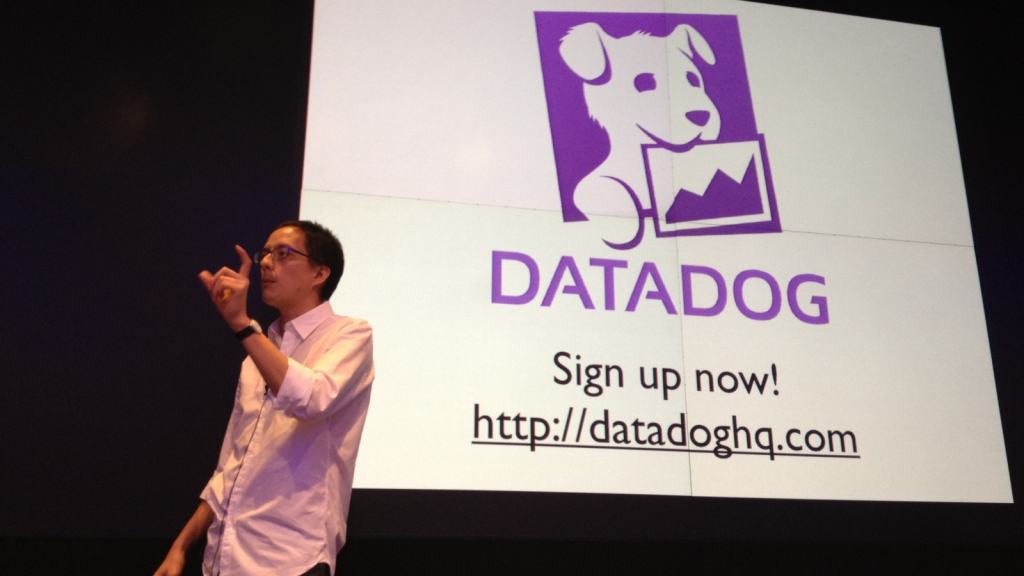
Alexis brings a strong focus on technical elegance and operational efficiency to Datadog. Prior to founding Datadog, Alexis Lê-Quôc served as the Director of Operations for Wireless Generation where he built the team and infrastructure that served more than 4 million students in 49 states. As a member of the original “devops” movement, Alexis spent several years as a software engineer at IBM Research, Neomeo and Orange. Alexis holds an MS, CS from the Ecole Centrale Paris and has presented sessions on cloud monitoring and server performance at conferences including AWS re:Invent, Monitorama, DevOpsDays, Velocity, and PyCon.
ABOUT Datadog:
Datadog is the essential monitoring platform for cloud applications. We bring together data from servers, containers, databases, and third-party services to make your stack entirely observable. These capabilities help DevOps teams avoid downtime, resolve performance issues, and ensure customers are getting the best user experience.
Transcript
(Joel Beasley at 00:00:00) Hello, my friends. Today we are talking to Alexei, the CTO and co-founder of Datadog, and we discuss the Datadog origin story, building a strong relationship with the open source community, and the benefits of bringing in talent that is driven and excited by the day-to-day. Also, our friends at Datadog have been nice enough to offer a free t-shirt to listeners of our podcast. So all you have to do is head over to datadoghq.com/moderncto and check them out. Here we go.
(Joel Beasley at 00:00:33) This is the Modern CTO podcast.
(Alexei at 00:00:43) Hello? Hey. Hey, Joel.
(Joel Beasley at 00:00:46) Hey, buddy. How are you doing, man?
(Alexei at 00:00:48) Good. How are you?
(Joel Beasley at 00:00:49) We're here. We're doing it.
(Alexei at 00:00:51) As well. Yeah.
(Joel Beasley at 00:00:51) You excited? Yeah.
(Alexei at 00:00:53) So happy New Year, by the way, I guess, to both of you.
(Joel Beasley at 00:00:56) Happy New Year. Yeah. Where are you celebrating? Where are you at right now?
(Alexei at 00:01:00) I'm in New York. So I'm just in the office. I don't know what you can see behind me. It's beautiful. Yeah.
(Joel Beasley at 00:01:09) New York City. What part of New York?
(Alexei at 00:01:12) New York Times Square.
(Joel Beasley at 00:01:14) Ah, all right. There you go. Is that pretty exciting?
(Alexei at 00:01:19) Well, you know, it depends. It's an acquired taste, I'll say that.
(Joel Beasley at 00:01:23) How was the big New Year's?
(Alexei at 00:01:26) I don't know. I never go there because it gets pretty rowdy. Actually, we're close enough to Times Square that it's really hard to get to the office that day. So most people just don't even bother. You have people standing in line for hours, literally for the entire day in Times Square waiting for the ball to drop. So that's the kind of thing you do once and then you never do it again.
(Joel Beasley at 00:01:49) I have no desire. There's not a bone in my body that desires to stand in a crowd all day to watch the ball drop.
(Alexei at 00:01:58) Yeah. When you're—yeah. When I remember, many, many years ago, I tried to do it, and then I got discouraged. And that's it. It's not worth it.
(Joel Beasley at 00:02:08) Yeah. There's not a huge reward or payoff because you can sit there on your couch and—Yeah. You can just watch it and you can—
(Alexei at 00:02:16) Not only do that, but you—
(Joel Beasley at 00:02:16) Get the music, you get multiple people in different cities. It's like, it's wonderful. It's a wonderful experience.
(Alexei at 00:02:22) Yeah. Yeah. That's all right.
(Joel Beasley at 00:02:23) Awesome. So I want to take it back to the beginning. Right? Like, where did you grow up?
(Alexei at 00:02:29) I grew up in France, in a medium-sized city, relatively far from Paris, you know, at least at the scale of the country. It's still a university town. My parents were teaching at a university. And it was kind of a quiet life. You know, not much—not compared to New York, not much—it's a very different level of excitement or of energy.
(Joel Beasley at 00:03:01) And so you grew up there, and then at the age of 10, you designed Datadog, or is there stuff in the middle?
(Alexei at 00:03:09) Yeah. No. It's a very long road before we get to Datadog. So I did get exposed to computers reasonably early on, I think. I remember my parents bought a ZX Spectrum from Sinclair Computers. It was, I think, a British manufacturer in the eighties. So that's the first computer I got ready to use at home. It had a tape player, a cassette player. That's how you load the software. And at that age, it was mostly games I was interested in, as you can imagine. But it was an early contact with computers. Then I picked up more, you know, got an upgrade to, I think it was an Atari maybe. And then started to dabble a little bit in encoding, but I'd say it remained mostly definitely a hobby thing and not really—I didn't go really deep back then throughout my youth. I was mostly, you know, in school studying. And so, you know, I'll fast forward a little bit. You go to college. When I graduated college, I got a chance to intern in the U.S. in New York. Well, New York State—upstate from New York City for IBM, one of their R&D centers. And I was really excited because I always had the desire to live and work, but live abroad for some period of time. So this is where, I'd say, you know, IBM is where I really started my career, but really to use computers professionally. Before, I was, you know, a lot of meddling around. When in college, I was—this is also the days when Linux was coming sort of coming out on the scene. So I had a pile of floppy disks to install Slackware. So again, that kind of dates when I went to college. And so I spent, you know, probably I spent half of my time installing that and then the other half of the time trying to make something useful out of it, which was, you know, I'd say, not always brilliant results. The one thing that came out of it which will link me to Datadog much later is when in college, I had a sort of brand-new Linux installation setup and I was trying to learn the tools and trying to figure out what was running on the network. So I was Nmap-ing around like crazy, and at some point, one day, you know, after a day of exploring the network, I come back—you know, I go to class and I come back—and there's no network. The port is dead. It's like, oh, this was fairly cranky hardware. I said, oh, maybe just the card died. I'm just going to go talk to the folks who run the network and they'll just give me a new card and I'll resume my exploring activities. But it turns out actually, no, the port was dead because I was disconnected from the network. Because somebody had figured out that I was looking around a little bit too, with a bit too much curiosity, and they decided to turn me off. The person—one of the persons who, one of the people who is in sort of part of that decision—is actually the CEO of Datadog. So I met him unbeknownst to both of us. We met, I don't know, twenty-two, twenty-three years ago. Me hacking, if you will, and him policing my behavior. But then that was that, you know. That's the, if you will, the genesis of Datadog twenty-five years ago. And then we met again by chance in New York, actually. This was somewhat random. He interned also in the same program, though a couple of years later. And so we started to work together. So we had met unofficially a few years before during that sort of hacking incident. And then we started to work together. And we've been working, he and I, almost continuously ever since. Not quite true—there were a few gaps—but fundamentally, he's somebody I've known for a long time. So during that long collaboration, at some point emerged the idea of Datadog. And that was, I'd say, 2009, so ten-odd years ago. That's when Datadog became an idea. Before it became a thing in a company, it started as an idea.
(Joel Beasley at 00:08:16) So were you guys hanging out after work hours conceptualizing?
(Alexei at 00:08:22) Pretty much. You know, in 2009, AWS had already come out with EC2, S3, and a couple of other services. But the level of sophistication and the level of power that they would provide was just not quite good enough for what was then the traditional enterprise workload. But it had that promise of being able to think about computing in a fairly different way. And I'll give you a bit more context. Back then, so about ten years ago, both he and I were working together in a SaaS company in education. And this was a thing for both of us—really interesting and formative years. It was our first real SaaS experience, and it was early 2000s, you know, 2001 through basically the first decade. And it sort of taught us some of the lessons on how to run a SaaS service. And so one of the lessons was, well, you need compute power. Back then, we had data centers and, you know, colocations, and it took time to provision that compute power. And that, I think, got us interested in the cloud and its potential. The second thing it taught us is, and this was fairly new, SaaS was teaching us that in order to run the service properly, you need all the stars to be aligned. You need the code to run. You need the code to be delivered. You need the code to run properly. You need people to react to failures and errors. And it ends up being much more of a team sport than what software engineering had been before, which was, you know, you build—and we did that prior also in the prior years—is you build some software, you put in a CD, you ship the CD, you're done. You never really see it again, and then just kind of move on to the next thing. I think SaaS broke that completely, and it had some good and some bad effects. The good effect is, I think there's no more like, oh, this is maintenance work, because maintenance work and new feature work is one and the same. And so that's been positive. The difficult part about SaaS is that you have to be running twenty-four seven, and that's something that's difficult. An organization cannot improvise itself as a SaaS organization overnight. It just takes time. Now, in the context of the founding of Datadog, with SaaS being a team sport, what we saw is that the team didn't exist per se. You had dev and ops, and they were two different groups, and they didn't collaborate together. And that was an issue because the quality of service does suffer if both groups don't work hand in hand. And so what it gave us as an insight is we need both groups of people who have maybe different day-to-days, but nonetheless congregate to make the service successful. We need to give them a sort of common reality. We need to give them the same data so that they can look at and understand the health of the service, the health of a particular component, the health of a particular system, you know, anything from the ground up. They have to be able to look at it and understand whether that's working properly or not. Because ultimately, not everything has to work properly for the service to be delivered properly, but you need kind of the baseline of things to operate as designed to be able to move forward. So for us to give—and then it takes visualizations for people to be able to see things. That was particularly important, I think. We didn't quite know at the time. And so when we went to, you know, when we discussed with our very first users and potential users, I think we thought, oh, they already got that visualization stuff. It's not going to be interesting to them. We're just going to move straight to the, you know, deep statistical or machine learning processing, and that's going to be what's going to resonate with them. But actually, at least back in the late, you know, in 2009, 2010, there was still the need for people to be able to see the data about their service, about their infrastructure, about their application. In a number of cases, that too was siloed. The teams were siloed. The tools were siloed. So you couldn't get a complete picture. Without the complete picture, it made, you know, thinking about the problem globally very difficult. And thus, the quality of service ultimately suffered. If you didn't have a unified view, just that you can see things, you couldn't think about that. And that's, I guess, you know, that's how we are as human beings. It helps tremendously to be able to visualize something, and it helps your mental model, if you will.
(Joel Beasley at 00:14:09) Yeah. We're hugely vision oriented. I want to get to this part of the conversation because I was really curious about it, because you guys, you know, you provide so many analytics. You obviously are involved with the open source community to some degree. But like, what is your relationship like with the open source community?
(Alexei at 00:14:27) So it's been one where that's largely driven, you know, by, I think, some level of pragmatism and some level of, let's say, goodwill. The pragmatism is the decision we made as a SaaS provider is to say, well, look, we're going to instrument your application and your infrastructure fairly deeply. You will need to run some of our code, you know, inside your, you know, perimeter. Not real perimeter, but, you know, on your stuff. And it's a lot easier for us to say, look, all the stuff you're going to run from us will be open source. From a security and safety and trust perspective, it's particularly important. Now that doesn't mean that all customers will necessarily look at every single line of code we give them, but nonetheless, they can always do so. And so that's the pragmatism in us saying it makes sense. And then there's the recognition that our back-end systems are, you know, largely based on open source components. You know, we're on Linux. We're running a number of SQL databases, NoSQL databases. We're in our own code as well, but it's really a mix. And so, you know, we're trying to be mindful of that and, you know, and support things wherever it makes sense, whenever we can. We're fairly involved in various, you know, CNCF projects or OpenTelemetry. I mean, there's a number of collective efforts we want to be involved in, not necessarily for the sake of, because, you know, because we think it's cool. I think because we think it's useful. And partially because we think it's—you know, we need to give back in a way that makes sense.
(Joel Beasley at 00:16:35) There is—I love the companies that contribute with purpose to open source. Right? Because it's so useful, and I really like that you guys are out there doing that. But you're not just doing it just because it's cool to contribute. You're doing it in a purposeful way.
(Alexei at 00:16:54) Yes. I think for the effort to be sustainable, it has to be that way. Otherwise, you know, the risk is, I don't know, the mood changes and then that support goes away. So I think it's never as effective as when it is purposeful. And it's useful both to the company as well as to its customers and hopefully to the ecosystem at large.
(Joel Beasley at 00:17:22) So what are your objectives? It's the new year. Right? What's going on? What are you pumped about in 2020?
(Alexei at 00:17:30) So 2020—it's the first full year of Datadog as a public company. And so that is—we went public last September, and that's pretty exciting. It's challenging. We'll see. You know, it's hard to say what will pan out. Generally speaking, I think what we've always believed, and we've communicated and shared that with everybody in the company, is while it's an interesting validation, you know, external validation going public and so on, the day-to-day doesn't really change. The focus was back then on the customers. It is still the customer. It will be on the customer because that ultimately is hugely important, what makes a company. It's, you know, customers, employees. And then at some point, yes, you need capital, but that comes as a distant third.
(Alexei at 00:18:38) So there's a level of excitement and, you know, I'm looking forward to 2020, but also I know it'll have its share of challenges and that'll be the good days, the hard days. So, you know, as the French expression goes, the more it changes, the more it's the same. I think that's basically true. I'm excited about seeing—we've grown the team. It's been almost ten years, and it's been always amazing to see people evolve with the company.
(Alexei at 00:19:23) And much like, I think, the company we worked for before Datadog was, I think, to both my co-founder and I, the formative years. I think that's my dearest hope is for a number of people, Datadog is their formative years. And that's been true, I think, for some people, and that's been a delight to watch.
(Joel Beasley at 00:19:47) That's exciting that you guys went public back in September. I'm gonna go buy some Datadog stock.
(Alexei at 00:19:52) Well, I cannot say anything for or against that. So yeah, you'll have to make your own decision there.
(Joel Beasley at 00:20:00) That's right. But it's cool because you got the stock symbol DDOG. I looked it up. I was like, oh, this is awesome. Congratulations. I was just talking with DraftKings who's out in New York too, and they said that they just announced, like, last week that they're IPO-ing somehow. I think through an acquisition strategy. I'm not 100% sure, but I was talking with them, and it was public news as of last week. I was like, oh, that's pretty cool. Do you know those guys over there at DraftKings?
(Alexei at 00:20:27) Yeah, they happen to be some of our customers. We have a number of customers in New York in particular. So yeah, we've had them as customers for quite some time.
(Joel Beasley at 00:20:41) Are you proud that you've become—the product that you helped build and the company you helped build has become a standard? Like, everybody knows Datadog. They use Datadog. I mean, it's just a really good product. It's a well-designed UI. It's a well-designed user experience. I was a fan of it when Chloe told me, "Hey, we could feature Datadog on the show." I was like, that is very exciting for me. So my background is engineering. And so, congratulations on building something amazing.
(Alexei at 00:21:13) Well, thank you. I'll say, you know, the interesting thing about this whole journey is when people ask, "Hey, how's it—" essentially a variation of the question, either it's building the product from the ground up or becoming a larger company. So how does it feel? What's—and the interesting thing is, to me, it feels very much like when you're between, you know, let's say, six years old and twelve. And I, you know, at least that's how it felt to me is from within, you know, of course there are changes, but they're slow and gradual, and you're not waking up at ten, you know, one day, it's like, "Wow, I'm so different from who I was the day before." I mean, maybe some people do, but at least I didn't. But then in the eyes of parents, of course, you know, from six to twelve, it's a massive transformation. And so that's always made it difficult for me to answer that question. It's like, how does it feel? Well, it feels like, you know, just come in day after day, solve the problem of the day, and move on and show up the next day. That's really how it feels. And then once in a while, yes, you sort of look back and you look at the path traveled, and you give, I think you can give yourself a half a second of, "Oh, okay, cool." You know, it's like you're hiking and then you're stopping at a viewpoint. You're taking stock. Like, "Wow, this is really—it's worth the trip." I think that's mostly that. But then you walk on. And so it's always difficult for me to feel, you know, anything as a milestone, if you will. It's much more a growing thing. I see its imperfections, you know, if anything, more than what works. And that's, I think, maybe the condition of having worked on something fairly singular, you know, the same thing for so long is you're sort of so accustomed to it that you're not realizing necessarily. That said, I was at re:Invent last month and this is always very energizing because you have new customers, existing customers, prospects that come by and then you just, you know, you can sense the excitement and the energy. And that's very positive. And this is why we made the decision early on to send people who actually build the product to the trade show. And it's something that typically, in normal companies or larger companies, that's, you know, this would be the marketing department that goes to trade shows because that fits more the description. For us, it's been, "No, no, no, you're going to meet customers. You're going to meet users. You're going to demo the product," which will maybe feel intimidating if you're not particularly, you know, let's say, extroverted or not particularly driven by or excited by that. But actually, everybody, I think, warms up to it and everybody kind of gets that energy, gets that excitement and that builds up and everybody comes, you know, I think, comes out of re:Invent really tired because it's a lot of work, but it's also really energized.
(Joel Beasley at 00:24:54) No, and I like that you do that too because I've seen a lot of people be resistant to it because they're like, "Oh, no, I'm a INTJ," whatever their acronym is. Right? Like, "Oh, I'm this or I'm—" or they build up the reasons about why they wouldn't want to go do that or couldn't do that. But it's like every human has the capacity inside. It's like, you know, no one's a runner until there's a tiger behind them. Right?
(Alexei at 00:25:17) That's right.
(Joel Beasley at 00:25:18) Then you're a runner. So I think people have that capacity. So if they tap into that, it's actually really valuable for them to have that relationship with the customer, to see it through their eyes, and then they'll come back with insights. And for you, when you do that, it keeps your product right on the cutting edge because you have these people who are influencing the decisions and the directions of the product engaging directly with the customers.
(Alexei at 00:25:43) Yeah, that's right. That's exactly right. And that puts a face also to, you know, to who's using your product. And one of the other—well, one of the many, many lessons we've learned, I think, in this journey is the customer—so, you know, you serve customers day in, day out. There'll be a number of successes. There'll be a number of failures. We will, you know, we'll trip once in a while, and that's, you know, that's what it is. I mean, there's no—not something we're looking forward to, but nonetheless, something that happens. And we've seen time and again customers who were frustrated initially. But rather than treat that as, "Oh my God, there's an angry customer. What do we do? Let's run away." I think we conversely try to run towards a situation like that, because we recognize that somebody who's frustrated and angry is somebody who cares. Now it'd be better if they were happy, and this is our chance to make them happy in the end. But nonetheless, I think the death of any service is just having users who don't care. It's like you—they effectively put your stuff, you know, up on the shelf and never look at it again. That is death for SaaS. Happy customers are great. You know, don't get me wrong. Frustrated customers are, for us, an opportunity to make things right, you know. And so that's been an important lesson for me, at least personally, throughout the years is to recognize that. That is—it's for us to rectify. And the reality is, I think, you know, in any normal relationship, if you're frustrated, someone helps you, even if you associated the person with the source of frustration, if the person is able to fix, you know, make the pain go away, alleviate the frustration, you naturally will, you know, sort of revert back to a much more positive interaction. And that's been something that we've seen time and again. And that's important. So when we put engineers in front of customers, you know, through trade shows and sometimes through a number of customer meetings, sometimes the interaction can start a little bit tense and that's happened. And we always see it as this is our chance to make it right. And, you know, that's the glass half full, I think, view of customer service is if we messed up at one point, then we can fix and correct.
(Joel Beasley at 00:28:37) And you need a lot of great people to do that. Right? Like, you have to have great people at your core. What's your strategy for developing or, you know, recruiting new talent?
(Alexei at 00:28:48) That's a great question. And this is, I think, ultimately, one of the key elements of generally fast-growing companies. So if you think about fast-growing companies that have a sort of viable business, what they've solved already is building something that people, that customers want. And so when that's solved, what remains is, you know, how do you grow? How do you keep growing? How do you control your growth? How do you bring great people in so that you can continue to execute at the same level? And that's a really difficult question. So I don't, you know, I don't really have a silver bullet there. We try to do a couple of things. One is, you know, around sourcing, we try to be fairly broad. We have offices in a number of places around the world, so it's trying to tap the global talent as opposed to being just focused on one particular area. The other thing is, throughout the hiring process, we try to keep it as repeatable as possible, as structured and repeatable as possible so that everybody effectively for the same job goes through the same process with the same questions more or less. There's always gonna be variability between, you know, the interviewer, the interviewee, and so on. So that's life. There's nothing we can do about it. But at least we try to eliminate, you know, sort of improvisation of interview questions and stuff like that because that makes the ultimate decision really difficult to make if everything is variable, then, you know, what signal can you derive? We also try to give people a sense of what it is they'll be doing. And ideally, they can give us a sense of what they can achieve as well. And the analogy that I have is if you wanna open a restaurant, you know, let's say you provide your capital and you found a place and so on, you have an idea of a theme. At some point, you need people to cook. Right? And so you're going to talk to people, you're gonna source, and so on, but ultimately, you'll make—likely, you'll make part of your decision based on, "Well, just please cook a meal for me, and then that'll tell me if that matches the idea that I have for that restaurant." And so for us, it's a little bit the same. It's like, can we give you, maybe in a contrived fashion, something for you to do that mirrors what it is that you'll be doing in your job? Not as, of course, not in full depth, not in full breadth, but just, you know, so if most of your job you're gonna be writing code and working with others, then can we think of a sort of contrived example where, "Well, can you give us some code? You know? Can you write some code for us in the context of this?" Or maybe you've already written code extensively and it's available on GitHub, then we'll take that. We're not gonna force you through the contrived exercise. But the idea is that we wanna separate how, in the hiring process, ways where we get signal about what you can do and ways where we get signal about who you are, how you behave in a group. And so these are fairly distinct questions we're trying to answer about new candidates. And then we go through the hiring process. We make a decision. Now we offer a job. Job's accepted. Then we continue to work for at least ninety days to figure out, you know, constant check-ins. Like, how is it going? Is this what you expected as a new hire? What you expected to do? And conversely, is Datadog the right place for you? So we—each, you know, both parties sort of assess continuously. And after three months, usually, you sort of kind of know where you are. And in the vast majority of cases, people are just happy and continue to refer their friends and so on. So that's particularly important. But you're right. It is—attracting and retaining great talent is essential. It's as important as serving customers, building great product.
(Joel Beasley at 00:33:15) So what are some of the behaviors that you value? What are some of the things that you value?
(Alexei at 00:33:20) That's always a—it's a deceptively simple but very profound question in the sense that—and I think you framed it exactly right. We don't have what we call values or, you know, a number of companies have that. And this is born out of the belief that of all companies that have values, a number of them will act, you know, poorly. And they have great-sounding values, but they will not live up to their values. So at some point, we said, "You know what? Rather than saying, 'Well, we'll be this and that and this and that,' how about we try to think about how we behave?" And this is how we work together, how we work as individuals, how we solve problems. And so that's a little bit more actionable for people also. Some of the things we—some of the behaviors we value highly is the absence of BS in normal interactions. And so we, I think we like when people say, you know, things directly and without embellishments, use, you know, simple words to convey simple ideas. That's important. We like when people, when they don't know, they say, "I don't know." I think the next thing is you could say, "But I can find out and here's how I plan to find out." But it's okay to not know. I mean, nobody knows everything. That's totally fine. I think, so honesty, just having people have honest, you know, just direct conversations, I think is easier. We like people to be pragmatic. And so pragmatism, in the context, for instance, the context of software, means sort of starting from the problem and going to the solution, not starting from the solution and going to the problem. And so ways of non-pragmatic behaviors can be, let's say, a bit more ideological. Somebody thinks that, you know, this piece of technology is the greatest thing since sliced bread and, you know, they are totally entitled to their opinion. That's fine. But that doesn't mean that this is the basis for a decision to use, you know, database X or framework Y or IDE V versus Z or things like that.
(Alexei at 00:35:55) I think we want to tie it back to what is the problem we're trying to solve, and ultimately, what is the customer? How does solving this problem help the customer? That is the thing that we try to never lose track of.
(Alexei at 00:36:12) Right, so to not fall in love with the particular technical problem we're trying to solve or how we're going to solve it. Particularly if it's material to the customer, it may be a worthwhile problem in its own right, but it's just not the right context for us to solve that problem. And, you know, generally speaking, I think there's a lot of choice for people in the industry of employers. So we want people who want to be here, who want to work—I'd say driven, generally speaking.
(Alexei at 00:36:50) Driven, not passionate, because I think it's a different thing. But driven by, you know, excited by the day-to-day. That's the important thing. I'll take passionate people as well, but I think I've always felt uncomfortable when it sounds like you have to—it has to be your passion for you to be able to succeed in this company. What we do is monitoring and analytics for software stacks.
(Alexei at 00:37:17) I doubt that there's that many people in the world who wake up in the morning and say, this is what I've been waiting my entire life to do. And that's fine. That doesn't have to be. For me, in my prior life when I was working in education, SaaS for education, this was not my calling to work in the education world. I supported the cause and so on, but I was not passionate about it. There were passionate people about it, but I was not one of them. But I think I still—what I liked about the environment back then, it let me still grow and develop, and that's exactly what we want to be for people here as well. We ask that you be committed and driven to do what you have to do, but it doesn't have to be a passion. You don't have to wake up Sunday morning and say, oh, I can't wait to write code on what I'm working on at work. That doesn't have to be.
(Alexei at 00:38:16) You're perfectly fine. It's perfectly okay to have different passions in life. That's fine.
(Joel Beasley at 00:38:24) Yeah, and they change and evolve as humans do, right?
(Alexei at 00:38:28) That's right.
(Joel Beasley at 00:38:29) Like, you're a new parent, right? All of a sudden you've got some family passion in you, right?
(Alexei at 00:38:37) Yeah, yeah, yeah. And I could speak from experience there, so yeah.
(Joel Beasley at 00:38:40) How many kids do you have?
(Alexei at 00:38:42) I have two kids, two little girls. They're just still, you know, two and four. So yeah, it's another amazing adventure, but probably not so relevant for this podcast.
(Joel Beasley at 00:38:58) No, it's perfectly relevant. People love it. I think people in technology have children. I hope they do.
(Joel Beasley at 00:39:05) I have two under two. So I've got a two-and-a-half-year-old girl, and then I've got a 10-month-old baby boy.
(Alexei at 00:39:14) Wow.
(Joel Beasley at 00:39:15) Yeah. It's a lot of work.
(Alexei at 00:39:17) Yes, it is a lot of work. It's an incredible amount of work. And the interesting thing is for me, it was—it had an effect that I did not anticipate before they were born. In the early years of the company, one of the things that I find difficult about startups is they consume all your mental space. They don't necessarily consume all your time, but they consume all your mental space.
(Alexei at 00:39:48) That's all you really think about. And this is difficult for people around you. They don't—it's hard for them to relate, and then you don't really—it takes extra effort to kind of include people in and say, well, this is what I'm going through. This is why if I sit at the dinner table and I'm sort of gazing into space, it's because maybe there's a problem I'm thinking through. Now, when the kids arrived, that sort of went out of the window really quickly because they obviously demand and require, rightly so, much attention that it creates for me, at least, it created a sense of balance that was maybe not there before.
(Alexei at 00:40:34) And so that wasn't expected, but I think it was great. I cannot imagine going through the growing of the company without the kids. And yeah, that's—I'm really grateful for that.
(Joel Beasley at 00:40:54) Yeah. I was listening to one of the leadership authors, I think John Maxwell. And it was just in a private interview deal. It wasn't like in one of his audible books or anything, but he was talking about specifically his grandkids or his nephews or something. He said the rule of thumb I have is when they come up and they interrupt me and I'm working, that I will pay attention to them every time that they interrupt me, because what he found out through measuring it is that they only ever have a two-minute attention span.
(Alexei at 00:41:23) Yes.
(Joel Beasley at 00:41:25) So when they come up to you and—I've been good about developing this habit of, you know, when the two-and-a-half-year-old comes up to me, Ario, and she's like, "Daddy, daddy," I'm like, alright, let's go. What do you want? Like, let's do it.
(Joel Beasley at 00:41:37) Let's go fairy tale, crush a mountain, monster truck jam, chase you, you chase me, whatever you want, because inevitably it lasts two minutes. And it's the equivalent of me going out and taking a walk, and it clears my mind, helps me solve the problem. So I just made a core decision after hearing that that I will adopt that fundamentally as part of who I am, because I don't want—in her memory for me to be the one that she's always pulling on my shirt and me ignoring her.
(Alexei at 00:42:10) Yeah.
(Joel Beasley at 00:42:10) Because it's so easy to do. It's like my default because I'm somewhere else in my head.
(Alexei at 00:42:15) Yeah, yeah. That's very wise.
(Joel Beasley at 00:42:17) Dude, we're getting some good stuff. See? We go down this kid path.
(Alexei at 00:42:22) Teaches you a lot.
(Joel Beasley at 00:42:22) Teaches you a lot about AI too. I'm like, give these computers a break. These little creatures, man, they're processing with billions of neurons for hundreds of waking hours before they even realize their feet exist.
(Alexei at 00:42:34) Yeah, yeah, yeah, yeah. That in itself is an amazing process. It's funny how you never remember—you obviously don't remember those important years, but when you watch the kids grow up and go through that, it's like, wow. This is—it's awesome. It's completely mind-boggling.
(Alexei at 00:42:59) Like, developing language, you know, just moving around, talking, forming, having conversations, the world they see. And oftentimes I found they see things—we don't as adults. We don't really see things anymore. It's all—for a number of reasons, but it's all filtered. But I remember one of my kids when I walk around the neighborhood with my kids, it's like, oh, there's this. It's like, wait, what?
(Alexei at 00:43:27) Where? You know, I don't know. They see a bird somewhere. And yes, there's a bird, or they see something that's interesting. But I've sort of edited that out because half of it is, you know, me thinking about some other problem, or walking around and kind of reading the signs subconsciously and ignoring half of it. But they see everything, and that's amazing.
(Joel Beasley at 00:43:51) It's like with the Christmas lights. We took them around the neighborhood to see them, and she just wanted to go run up on the lawns, and I'm like, oh, you have to understand that there's this invisible barrier.
(Alexei at 00:44:01) Yeah.
(Joel Beasley at 00:44:02) You can't go up into these people's property and start, you know, petting their inflatable unicorn, Christmas unicorn.
(Alexei at 00:44:10) Yeah, yeah. They teach you profound stuff too.
(Joel Beasley at 00:44:13) Oh, this is good. So as we start to wrap up here, let's say some people are listening and they love—they value what you value, right? You mentioned honesty, a little bit of transparency, pragmatism, like being real, focusing on customer value. Let's see, they're driven. They like to wake up—craftsmanship. They like to do quality work. And that sounds like it aligns with Datadog quite a bit, right?
(Alexei at 00:44:36) Yep.
(Joel Beasley at 00:44:36) So how do they go—where's your career page? Like, how do they go learn more about this?
(Alexei at 00:44:41) So, you know, datadog.com/careers, I think that's where they start. There's a number of openings by function, by city, and so on, by country. And then everything flows through the same system. So there's no fast track, no special way to get in and so on. You apply.
(Alexei at 00:45:06) When you refer internally even, the referral will go through the exact same system. You know, and then the mechanics of the process will unfold. But fundamentally, I think we're trying to understand who a particular candidate is in terms of what they can do, why they applied, how they think, how they function. And it's fairly—we try not to have any brain teasers and stuff like that. All the questions we ask tend to be related to, you know, software engineering, how you write software, for instance. It's fairly—we want people to be themselves.
(Alexei at 00:46:01) You know, think about behaving in a way that's going to be as close as possible as how they'll be once they join. And I know, you know, you go to an interview, you're nervous. It's normal. I've been through that. It's not—we try to make it as pleasant as possible.
(Alexei at 00:46:23) We try to make it as conversational as possible. We try to make it as close as possible as it'll be once you join and you have, let's say, a whiteboard discussion with a colleague and you're trying to solve a problem. So this is really the mode of operation we have. And I obviously encourage people who think what we have to build and what we have to solve is valuable to apply.
(Joel Beasley at 00:46:51) Now the blog or you go around, you do some talking at conferences and stuff, right?
(Alexei at 00:46:55) Yeah. So I think as a group, we're fairly active in conferences. We have an engineering blog. We have also—
(Joel Beasley at 00:47:05) What about you? You.
(Alexei at 00:47:07) Oh, myself.
(Joel Beasley at 00:47:07) People like you.
(Alexei at 00:47:09) Yeah, so truth be told, not as much as I used to, for one thing. And I think, you know, to some extent, the being a parent has played into that. I also—I want others to be the voice of the company. I don't—I mean, I can be a voice in the company.
(Alexei at 00:47:36) That's fine, you know, but I don't want to be—I don't like companies where, you know, let's say founders are lionized and this is something, you know, this is so special about them and so on. Because I don't think that's—I don't think it's very healthy. And, you know, it's sometimes I think I have interesting things to say. Sometimes I also have—
(Joel Beasley at 00:48:01) I think you do.
(Alexei at 00:48:02) Boring things to say. Yeah. I don't, you know, I've always been a little bit shy in a sense about putting things out there because the time of your audience is limited. There's—they should only—if I write something, it should be worth their while. And I think that it's always set me back a little bit and say, you know, should I—do I have really something that's both crisp and interesting to say? That's always been a little bit difficult.
(Alexei at 00:48:35) And I think in a—what I found is in a conversation like this, it's a lot easier for me to open up, if you will. You know, whatever. It is fine.
(Joel Beasley at 00:48:50) Talk about what you enjoy and what you know. And if you talk about what you enjoy and what you know, then you win either way, regardless of how the outside world sees it. Like, you win because you have to wake up that day, share some of your experience, do something you enjoy doing. And I love the fact that you mentioned that you enjoy empowering others and helping them rise up and develop their voice. I mean, that's a super attractive feature, something that you like. It sounds like the look on your face when you said you like to help other people and their voices—that's a really cool, honorable thing. I like that.
(Alexei at 00:49:26) Okay. Well, that's—I'll make that one of my New Year's resolutions is to communicate more, definitely share more with the rest of the world. I'll accept that.
(Joel Beasley at 00:49:38) So as we wrap up here, do you know Dailymotion?
(Alexei at 00:49:41) Yes.
(Joel Beasley at 00:49:42) Do you know Guillaume?
(Alexei at 00:49:44) I don't think so, actually.
(Joel Beasley at 00:49:46) Guillaume's been there for a while, and he goes between France and New York, NYC. And he's just like—man, this guy—I would suggest that you listen to the podcast I have with him because, man, he's got just this unbelievable original thoughts and content nonstop. I'm like, this guy was just unbelievable. And so because you have that background—France and then New York City—and then he does, I figure I'll connect the two of you, and you guys may, you know, do something awesome together, at least have a good conversation.
(Alexei at 00:50:22) Yeah, absolutely. You know, with pleasure.
(Joel Beasley at 00:50:25) Yeah. Alright. So I'll connect you with Guillaume, and then we'll put in the show notes for everyone about the Datadog career site. They can go do their best work there with you and develop their voice there as well. So that's exciting. And then if you need anything at all, if I can ever help or bring you value in any way—maybe you just want to call up and talk about kids and technology—feel free, my friend. The door is always open.
(Alexei at 00:50:52) Thank you very much. Thank you, Joel.
(Joel Beasley at 00:50:53) Alright. Talk soon. Happy New Year.
(Alexei at 00:50:56) Bye-bye.